Categories
TV & Movies

American Pastime: On the Sustained Power of Field of Dreams


Phil Alden Robinson’s “Field of Dreams” (1989) may not be one of the greatest movies of all time but it surely has earned an astonishing amount of affection. It belongs to a very select group of features in which the audience doesn’t need to be familiar with the core subject to get the feeling they are dealing with something very personal, though it surely doesn’t hurt. The film came out at a time when making a great baseball movie was deemed as something almost unthinkable. It is hard to imagine a greater achievement in Kevin Costner’s career than having made “Bull Durham” (1988) and “Field of Dreams” back-to-back, two entries that clearly fit the bill. Sadly, Costner’s eventual third turn at bat (so to speak) in “For Love of the Game” (1999) exemplified precisely what’s wrong with the vast majority of baseball movies to begin with.

“Field of Dreams” deals with Kevin Costner’s 1960s teen-rebel-grown-into-farmer Ray Kinsella in a very Smallville-like Iowa town. Ray builds a baseball field right under his crop following a “voice” only he can hear, and allows disgraced and long since dead Shoeless Joe Jackson (Ray Liotta) to come back and play the game he was banned from due to his role in fixing the 1919 World Series. Keeping the field becomes a nearly impossible journey, even as it becomes a cathartic site for a group of other characters of different backgrounds. Their common bond is the emotional void in their lives.

Like all great baseball movies, “Field of Dreams” is not propelled by the intricacies of game itself nor by the amazing plays that it can provide. The years have proved how easy and shallow it’s always been for Hollywood screenwriters to come up with these incredible feats for their baseball-related characters, like hitting a bottom-of-the-ninth, game-winning home run that completely destroys a stadium’s lighting system (by smashing a single fuse, or like throwing a perfect game while living through several of life’s crossroads. “Field of Dreams” proves that it’s much more rewarding to deal with the game’s subtleties or how it weighs on the lives of the characters from generation to generation. The film is really about how the game can mend the most common and painful mistakes people make, especially parents and their children. This cue was later followed by “Moneyball” (2011). I can recall how little sense it made back then to learn that someone was going to make a film based on a book about a new, scientific approach in putting together a baseball team, but it belongs on just about the same level as the Costner entries because it is really about not repeating life’s worst mistakes no matter how right the reasons seem.

“Field of Dreams” is among a few great films where audiences inadvertently find themselves dealing with their own deep personal issues. The movie explores several issues just like the true classics, like the loss of faith in what their lives have meant (“It’s a Wonderful Life”), doubts about their self-worth (“The Hustler”) or whether or not they’ll make it through life’s most difficult stretches (“The Shawshank Redemption”). It’s amazing how corny several scenes from “Field of Dreams” could have turned out, like the moment when Kevin Costner gives his famous, border line dorky “No, it’s Iowa” reply to the “Is it heaven?” question. But as things turn out, he’s the right actor, in the right part, in the right mood, and in the right movie to get away with something like that.

Here’s the main reason “Field of Dreams” works: If you believe a movie can have a soul, this is the prime example. It’s hard to recall another entry that provides as many pure chills as this one. There’s James Earl Jones standing in front of the lights of a simple van on that Boston Street, giving a sublime speech to reassure the Costner character (and the audience) that “people will come” indeed. There’s also that fantastic aerial, at night final shot of the seemingly endless line of cars that end up corroborating such a claim (though I’m under the impression most of them are going to have a hard time parking anywhere close to Costner’s farm). My favorite scene though is the one in which we see the face of Ray’s wife Annie, as she casually turns out the lights for her husband with one last act of support that will help him mend completely. Curiously enough, as unforgettable as these scenes became, they represent surprisingly little in by themselves. This must be the reason why when I first saw the trailer (which represents a perfect summary of the plot) just before the movie came out over three decades ago, it made no sense whatsoever. The devastating effect of “Field of Dreams” comes in part from the baggage the audience brings into it, but specially when one compounds all of its riches, including James Horner’s soundtrack, one of the most sublime in memory. 

Despite all of these virtues, in my experience I’ve learned that “Field of Dreams” does have an unusual, polarizing, and wildly varied effect on audiences. This brings to mind the sequence where the characters who are overly preoccupied with the financial side of Costner’s baseball field just can’t see the group of dead baseball players right in front of their noses. Through the years, I’ve run into several people who just can’t appreciate the film; I don’t think this has anything to do with how good, smart, or empathetic they are but rather with the moment in life each of them just happens to be living through, how much they are willing to give themselves fully into what on the surface may seem like just another sports movie, and, yes, also because of their origin. 

This is one of those movies that simply didn’t catch down here in Mexico at all. When I first saw “Field of Dreams” with my parents in the late ’80s, as much as I loved it, I was incredulous at their simple “what piece of crap did you bring us to see?” reaction when, curiously enough, having been able to see it with them was precisely what made me love it all the more in the first place. The term “Classic American Film” is often used simply because a movie is great and it is made in the US, but “Field of Dreams” more than lives up to such billing. Despite its very universal themes, this is a very American movie, dealing with a game that many around the world may love, but one that only carries true weight where it’s an intrinsic part of growing up.

Source link

Categories
TV & Movies

57th Chicago International Film Festival Announces Full Schedule; Wes Anderson’s The French Dispatch to Open


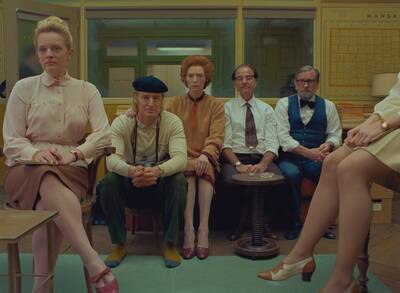
This morning the hard working folks behind the 57th  Chicago International Film Festival unveiled their full line-up, complete with nearly 90 feature films and four world premieres. From October 13-24, the festival will bring some of the year’s most anticipated films to the Windy City, starting with Wes Anderson’s “The French Dispatch,” which will be shown on Opening Night. The closing night movie will be Reinaldo Marcus Green’s “King Richard,” which features a performance Will Smith that was acclaimed after its world premiere earlier this month at the Telluride Film Festival. 

Other exciting titles include Todd Haynes’ acclaimed documentary “The Velvet Underground,” Mike Mills’ “C’mon C’mon” (which our Tomris Laffly loved out of Telluride), the Chicago premiere of “Dune,” Pablo Larraín’s Princess Diana portrait “Spencer,” and Ridley Scott’s historical epic “The Last Duel,” starring Matt Damon, Jodie Comer, and Ben Affleck, and which had its world premiere at the Venice Film Festival. As part of the festival tradition of honoring acclaimed filmmakers, this year’s honorees include Kenneth Branagh (with his new film, “Belfast”) and Rebecca Hall (who will present her film “Passing”). 

The festival will also host four world premieres: “Boys State” co-director Jesse Moss’ “Mayor Pete,” about Pete Buttigieg’s presidential candidacy; Joe Winston’s “Punch 9 for Harold Washington,” Rebecca Halpern’s “Love, Charle: The Rise and Fall of Charlie Trotter,” and Holly Morris’ “Exposure.” 

Looking at the line-up we spot other favorites we’ve had the chance to see and recommend you also consider: the Addams family’s “Hellbender” is a must-see playing during this festival’s Midnight section; “The Gravedigger’s Wife” and “Lingui: The Sacred Bonds” both received heavy praise from our Marya E. Gates. 

In a non-programming note, it’s exciting to see the festival return to its multiple venue format while simultaneously embracing virtual streaming format. Chicago-based cinephiles will be able to experience the fest at AMC River East 21, the Music Box Theatre, the Gene Siskel Film Center, the ChiTown Movies drive-in in Pilsen, along with pop-up screenings at Bronzeville’s historic Parkway Ballroom. For viewers attending virtually from Illinois, Indiana, Iowa, Michigan, Minnesota, Missouri and Wisconsin, nearly 50 titles will be made available for ticketed online screenings. 

Below is the festival’s press release in full. For more information about the festival, click here.

“Mayor Pete”

CHICAGO, Illinois — The Chicago International Film Festival announced today the full lineup of its 57th edition, running October 13 – 24, 2021. This year’s Festival expands across the City, with screenings at AMC River East 21, Music Box Theatre, Gene Siskel Film Center, drive-in screenings at ChiTown Movies in Pilsen, and neighborhood pop-up screenings at Bronzeville’s historic Parkway Ballroom. The program includes nearly 90 feature films and 70 shorts, four World Premieres, one International Premiere, 17 North American Premieres, and 17 U.S. Premieres, and showcases cinema from countries including France, Turkey, Colombia, Sweden, Japan, Canada, India, Chile, and Egypt, representing every continent – including the Antarctic. Nearly 50 titles will also be available virtually for in-home screenings via the Festival’s streaming platform to audiences throughout Illinois and six other states, including Indiana, Iowa, Michigan, Minnesota, Missouri, and Wisconsin.

The 57th Chicago International Film Festival opens at the Music Box Theatre with Wes Anderson’s THE FRENCH DISPATCH, a love letter to journalists featuring an all-star cast, and THE VELVET UNDERGROUND, the Opening Night at the Drive-In presentation at ChiTown Movies in Pilsen, with a special virtual Q&A with director Todd Haynes. The Closing Night film is KING RICHARD, the inspirational journey of Richard Williams (Will Smith), an undeterred father raising two of the most extraordinarily gifted athletes of all time — Venus and Serena Williams. The Centerpiece Film is C’MON C’MON, a powerfully resonant and hopeful portrait of our times starring Joaquin Phoenix and directed by Mike Mills. The Festival will also host the Chicago premieres of Denis Villeneuve’s hotly anticipated DUNEPablo Larrain’s portrait of Princess DianaSPENCER, starring Kristen Stewart; and visionary director Ridley Scott’s THE LAST DUEL, a gripping tale of betrayal and vengeance set against the brutality of 14th century France. The full schedule is available in the digital Festival Program.

World Premieres
The 57th Chicago International Film Festival presents the World Premieres of four films including MAYOR PETEJesse Moss’ behind the scenes look at the campaign of the first openly LGBTQ presidential candidate; Joe Winston’s PUNCH 9 FOR HAROLD WASHINGTON, telling the story of Chicago’s first Black mayor; Chicagoan Holly Morris’ EXPOSURE, following 11 women from across Arab and Western countries on a trek to the North Pole; and LOVE, CHARLIE: THE RISE AND FALL OF CHEF CHARLIE TROTTERRebecca Halpern’s absorbing, unvarnished portrait of chef Charlie Trotter. The Festival will host the International Premiere of THE LAST EXECUTION, a white-knuckle political thriller based on the true story of Werner Teske from director Franziska Stünkel. This year’s program sees the North American Premieres of 17 features, and another 17 films will hold their U.S. Premieres.

Honors and Tributes
The Chicago International Film Festival has a proud tradition of honoring the year’s most acclaimed filmmakers and actors. The 57th edition adds to the Festival’s rich tapestry of past honorees, bestowing a tribute and Lifetime Achievement Award to Academy Award©-nominated Sir Kenneth Branagh at a Special Presentation of his humorous, tender, and deeply personal BELFAST; and honoring actor-turned-director Rebecca Hall with an Artistic Achievement Award at a Special Presentation of her new film, PASSING, the story of two childhood friends whose reunion threatens their carefully constructed realities.

Local Stories In the Spotlight
Showcasing the best and the brightest local productions, the 57th Chicago International Film Festival’s City & State program includes six features and eight short films. Headlined by the World Premieres of PUNCH 9 FOR HAROLD WASHINGTON and LOVE, CHARLIE: THE RISE AND FALL OF CHEF CHARLIE TROTTER, feature films include Isidore Bethel and Francis Leplay’s exploration of gay hookup culture ACTS OF LOVEMargaret Byrne’s ANY GIVEN DAY, following a trio of participants in a probation program established for people with mental illnesses; documentary mavens Gordon Quinn and Leslie Simmer’s FOR THE LEFT HAND; and BROADCAST SIGNAL INTRUSION, a throwback thriller brilliantly channeling 70’s paranoid cinema from director Jacob Gentry.

25th Anniversary of Black Perspectives
Founded in collaboration with Spike Lee to showcase the excellence and diversity of films by African Americans and the African diaspora from around the world, this year’s Black Perspectives program, celebrating its 25th anniversary, showcases nine feature films and six shorts, including the Closing Night film, KING RICHARD and a Special Presentation of PASSING. Other features include Jaymes Samuel’s action-packed revenge Western THE HARDER THEY FALLMahmet-Saleh Haroun’s raw, honest celebration of the power of women working in solidarity LINGUI, THE SACRED BONDSCITIZEN ASHE, a profile of groundbreaking tennis star and civil rights activist Arthur Ashe from co-directors Sam Pollard and Rex Miller; and Francesco Zippel’s OSCAR MICHEAUX – THE SUPERHERO OF BLACK FILMMAKING; as well as the World Premiere of PUNCH 9 FOR HAROLD WASHINGTON and the U.S. Premieres of THE LAST SHELTER from Ousmane Samassekou and Khadar Ahmed’s THE GRAVEDIGGER’S WIFE.

In its 25-year history, the Black Perspectives program has premiered the first film by acclaimed director Ava Duvernay, and has featured the work of luminaries including Lee DanielsGeorge TillmanMaya AngelouSteve McQueen, and Ousmane Sembene, and has given tributes to film artists, including Viola Davis, Forest Whitaker, and Sidney Poitier.

International Competitions
The Chicago International Film Festival is the longest running competitive festival in North America, and in its 57th year, the tradition of introducing U.S. audiences to bold and accomplished new films from around the world continues with a slate of titles representative of their countries’ styles, stories, and cultures. Films vie for the Gold Hugo in the following categories: International Feature, New Directors, International Documentary, Short Film, and OutLook (LGBTQ+) Competitions.

Drive-In Screenings
Building on the success of last year’s Drive-In Screenings program, the 57th Chicago International Film Festival will present titles at ChiTown Movies in Pilsen, including a special Opening Night at the Drive-In event on Wednesday, October 13, featuring documentary THE VELVET UNDERGROUND, with a virtual Q&A with director Todd Haynes. Other Drive-In screenings include THE HARDER THEY FALLMichael Pearce’s thriller ENCOUNTER, starring Oscar-nominated actors Riz Ahmed and Octavia Spencer; and a late-night presentation of indie coming-of-age occult horror hit HELLBENDER

Virtual Screenings and Programs
The Chicago International Film Festival proudly offers nearly 50 titles virtually to audiences across Illinois, and throughout six other Midwestern states including Indiana, Iowa, Michigan, Minnesota, Missouri, and Wisconsin, via the Festival’s online streaming platform and Festival apps for Roku and Apple TV. Virtual screenings are ticketed, and streaming movies will be viewable in the comfort of one’s home beginning Thursday, October 14 at noon CT through Sunday, October 24, 2021.

Ticketing
Festival Passes are on sale now, with individual tickets going on sale September 21 for Cinema/Chicago members and September 24 to the general public. Passes can be purchased at www.chicagofilmfestival.com/festival/tickets/.

About the Chicago International Film Festival
Celebrating its 57th edition October 13 – 24, 2021, the Chicago International Film Festival is North America’s longest-running competitive international film festival. Showcasing the best in international and independent films from around the world, the 57th edition will be held in person and virtually. From dramas and thrillers to documentaries and comedies, the Festival presents a vast diversity of offerings, featuring competitive categories and programs including the 25th anniversary of Black Perspectives; Cinemas of the Americas; International Comedy; Women in Cinema; OutLook; After Dark; and the City & State program, showcasing films made in Chicago and throughout Illinois.

Festival Sponsors and Partners
The 57th Chicago International Film Festival’s sponsors include Major Festival Sponsors: Goldman Sachs, Xfinity; Festival Sponsors: Baker Tilly, Cinespace Chicago Film Studios, ComEd, Dark Matter Coffee, Goose Island, Hamilton Watch, Heineken 0.0, Panavision, Light Iron, SAGindie, The Seeker, William Blair; Official Agency: Ogilvy; Official Publicity Agency: Acacia Consulting Group; Festival Supporters: Chicago Film Office, Consulate General of Canada; Canada Now, Consulate General of Italy, Italian Cultural Institute, Goethe-Institut, Gene Siskel Film Center, Camera Ambassador, Cinelease, and HI Chicago; Media Partners: CHIRP Radio 107.1 FM, WBBM, WTTW, Make It Better Media Group. This program is supported in part by an award from the National Endowment for the Arts, a grant from the Illinois Arts Council Agency, and a CityArts Grant from the City of Chicago Department of Cultural Affairs & Special Events. With additional support from John and Jacolyn Bucksbaum Family Foundation, Paul and Ellen Gignilliat, and Susan B. Noyes.

For more information about the Chicago International Film Festival, click here.


Source link

Categories
TV & Movies

Walking in My Mother’s Shoes


I read an email warning me about my mother’s impending death on a Wednesday in May 2021. It was just before I was to drive across town to a screening of “In the Heights.” Someone thought this film might take my mind off of my mother’s mortality, but I’m sure he didn’t know the themes explored there. While the musical celebrates young love and the immigrant experience, the less glamorous subtopic is the suffering of immigrant women, faced with prejudice and its attendant indignities. It’s here that Lin-Manuel Miranda music and lyrics and Quiara Alegría Hudes book gave me a lesson about perspective. 

Looking back at my mother’s life and the life of so many women of her generation, it’s easy to dismiss them as just housewives and women who were mere clerical workers and had hobbies. Their main achievements were their children, if they had any. With the “In the Heights” evening screening, my mother’s life and death is forever linked to musicals in my mind.

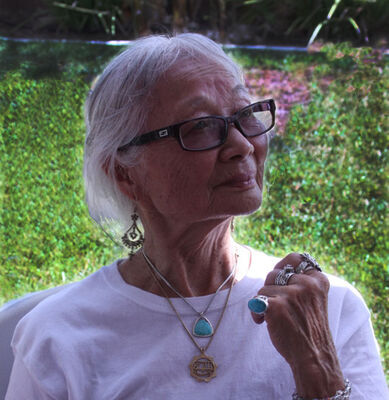
Both Miranda and Hudes are US-born—New York City and Philadelphia, respectively. So was my mom. She was born in Los Angeles, not far from where I currently reside. Unlike the Washington Heights of the musical, the Japanese-American community she was born into, Terminal Island, no longer exists. But my mother’s family had left Los Angeles for San Diego County when she was six, buying a farm in an American-born infant’s name, because the alien land laws (California Alien Land Law of 1913) prevented my grandparents, Sueichiro and Tora Azuma, from owning land. They could not become citizens, but their children were citizens by birth. That circumvention of the laws was legally challenged by the state of California in 1944 in Oyama v. California. I wonder how my grandparents, my mother and her siblings felt as that Oyama case worked its way to the US Supreme Court where a decision was made in 1948 that would help dismantle the alien land laws in the following decade. Oyama was in Chula Vista, California, my hometown. 

My first memories of Los Angeles, a place I now call home, are about shoes. My mother, older sister and I were preoccupied with shoes, but not in an Imelda Marcos way. Finding adult shoes was hard work when your shoe size is women’s 3.5 or children’s 2.5. Ordering shoes online was a hit or miss.  After I left for college, my mom would often save mail-or online-ordered shoes that were too narrow for her and give them to me. 

Driving in my red hybrid to the “In the Heights” press screening, I was both following a path laid out by my mother and rebelling against it. She didn’t want me to learn how to drive, to drive alone or to drive at night … or, when I was younger, to wear cowboy boots. 

I was, my mother had told me, that stubborn nail from the Japanese saying, “deru kugi wa utareru.” (出る 釘は打たれる) or deru kui wa utareru (出る杭は打たれる). “Deru kugi” is supposed to contrast the American proverb: “The squeaky wheel gets the grease” and expose cultural differences, but in the US, we also have the saying, “Don’t rock the boat.” But even common day Japanese women rocked the boat. Think of the Japanese mothers portrayed in “Ikiru,” complaining to the bureaucrats until the dying Kanji Watanabe (Takashi Shimura) decided to be their champion.

Daniel Crump Buchanan’s Japanese Proverbs and Sayings translates “Deru kugi” as “It is sometimes better to lie low than to be forward, for the latter will certainly cause trouble.” Besides suicidal battle proverbs, under the category of courage, Buchanan listed “Gi wo mite sezaru wa yū naki nari” or “He who sees righteousness and does not do it is not brave.” There’s also “Un wa yūsha wo tasuku” or “Luck saves the brave.” There are different kinds of courage. Not all courage is displayed on the fields of battle. There is everyday courage in the lives of many minority women.

A key figure in the musical and movie, “In the Heights,” is an elderly woman, an abuela. She is nobody’s grandmother, but everyone’s grandmother and she has taken the main character, Usnavi (Anthony Ramos), and his cousin, Sonny (Gregory Diaz IV), under her wings. She, we learn, is from Cuba, while Usnavi is from the Dominican Republic. These are both islands, but different cultures. Usnavi tells the audience, “Abuela Claudia never had kids, so she adopted the whole block as her own. Adopted our sueñitos, too.”

Abuela Claudia (Olga Merediz) suffered, but she survived with faith. She felt the prejudices, both class and toward her ethnicity, but she wore gloves to cover the cracked skin on her hands, damaged from the caustic cleaning chemicals. She says, “We had to assert our dignity in small ways. That’s why these napkins are beautiful. That’s why my mother’s gloves were beautiful. Little details that tell the world, we are not invisible.”

My mother had dreams. She briefly attended college classes in art. I have one of her books which displays naked women as objects of desire and men in modest trunks in heroic athletic poses. As I studied art history on the way to my bachelor’s degree, there were no women in the art history books and Japonisme was a craze for Japanese art and design. A woman’s gaze and East Asian aesthetics were both foreign interlopers in the studio classes taught predominately by White men.  How much worse it must have been in a generation where anti-Asian laws were accepted as was everyday racism and sexism. My mother and father grew up in a time when Filipinos and Latinos were being lynched in California. She lived long enough to receive reparations. (My father did not.) But also to have racist words bleached on her lawn while I was away at college.

Preparing to visit my dying mother, I searched through my CDs, picking out Mary Martin and Rodgers and Hammerstein musicals. I only had the Julie Andrews version of “The Sound of Music.”

I drove down Thursday afternoon, leaving my husband with our dogs, and spent a few hours singing from “The Sound of Music,” “Annie Get Your Gun” and “Jungle Book” to my mother. My childhood soundtrack had been dominated by the original Broadway cast recording of “The Sound of Music.” Thursday night back from San Diego as I attended to the needs of our increasingly infirm eldest dog, I ordered it from Amazon for my next visit. It arrived on Friday night. My mother died early Saturday morning.

The 1959 stage musical included songs that were dropped in the movie, including “No Way to Stop It.” This song addresses differing political viewpoints toward the annexation of Austria to Nazi Germany. Captain von Trapp’s fiancée, Baroness Elsa Schräder, and his friend Max believe the best thing to do is to pretend one is on the side of the Nazis.

The Captain sings, “I will not bow my head to the men I despise!”

Max responds, “You won’t have to bow your head, just stoop a little.”

Within those two lines resonate the differing points between the European culture, even amongst aristocrats, and the East Asian culture. In Japan, everyone bows to everyone. It doesn’t necessarily have the same meaning of subordination. Yet think of how the Chinese practice of bowing (叩頭 or 磕頭) became, kowtow, an English expression with, according to Merriam-Webster, the first definition of “to show obsequious deference.” Rodgers and Hammerstein did attempt to bridge the cultural gap between Asian Americans (“Flower Drum Song”) and Pacific Islanders (“South Pacific”). For their time, they were progressive.

In many ways, “The Sound of Music” is part of the same story as “In the Heights.” At the end of “The Sound of Music,” the von Trapp family is illegally immigrating, fleeing from Nazi-occupied Austria to neutral Switzerland. The real family didn’t escape so dramatically, taking a train to Italy before their US tour and they even returned to Saltzburg in 1939 as war was breaking out. They made it safely back to the US and the von Trapps settled in Vermont.

“In the Heights” is about different immigrant families and their dreams in the NYC neighborhood of Washington Heights. This is a community that both rejoices in their Latino roots and recognizes how prejudices hold them back (with the film being more overtly political than the stage production). Their community swirls around the bodega and they almost seem to live on top of each other, a foreign concept to some West Coast ethnic communities entrenched in rural to semi-rural areas. When my mother was a child, on any given day, you’d more likely see a rabbit or rattlesnake than your nearest human neighbor from my grandmother’s farmhouse. When I was a child, that was the place we gathered for New Year’s Day to watch the Rose Parade. The four-legged coyotes singing broke the silence of the late afternoons and nights instead of your garage band neighbors. Yet like the dreamers of “In the Heights,” some Japanese Americans dreamed of returning to the motherland and the only way out of life as a farmer seemed to be college.

My mother, widowed when siblings and I were all still dependents, took us on adventures to dig for buried treasure–rocks and minerals. She sent me across country to Chicago one summer. She worried. My high school French teacher joked that she always seemed worried while I always seemed assured and sociable in classes. My mother worked as the counselors’ secretary at my high school, but at the time, I didn’t understand that secretaries and clerk typists were raising some feminist hell that resulted in a movement (“9to5: The Story of A Movement“) that birthed a musical (“9 to 5“).

I don’t know how active my mother was. My impression was she was more a supporter/follower than a trailblazer, but she raised three first-generation college students. My sister and brother received degrees in science. My sister left to live abroad and sells her art. And I got a degree in art, the degree that my mother had wanted, and I traveled as an exchange student to Japan, Taiwan, Korea and Europe. My mother did travel nationally and abroad and take art classes. In her later years, she grew forgetful. Her friends tell me she was always cheerful. As I waited for my two jabs, I worried about her, particularly when I was faced with anti-Asian confrontations or read about Asian-American seniors being beaten.

During the pandemic rest-in-place mandates, I worried about how my mother. My aunt could remember San Diegans buying tickets to sell-out houses of George Takei’s “Allegiance” at the Old Globe. She marveled at the predominately White audience and some of our family members’ names could be found in the accompanying local history display. She died before the pandemic. My mother, who could not talk about those days when her fellow Chula Vistans and San Diegans betrayed her and her family, didn’t want to see that musical. On the Saturday she died, I was glad that she didn’t seem to be aware of the growing animosity toward people of East-Asian descent and had not, during her last days, felt the rage.

Now when I hear Mary Martin’s clear tones singing as the novice Maria, I think about my mother. I’m filled with the hope I had as a child. When I hear “In the Heights,” there’s a poignant haze of the end of days. At the burial, my brother gave me a bag of shoes and some East Asian style paint brushes. Two pairs of boots, I had given her. The others were ones that had been too small for her and must have been waiting for me. Certainly, there were times when people try to beat minorities down even now. So there are more mountains to climb and I believe that the brave are lucky, but not all of us are brave in the same way. We must have patience and faith and those are lessons that I learned from my mother.


Source link

Categories
TV & Movies

TIFF 2021: A Hero, Drive My Car, Sundown


The Toronto International Film Festival is well-known for being a layover location for major films that premiered at European fests earlier in the year. For those of us who don’t get to go to Cannes, Berlin, or Venice, it’s wonderful to use TIFF to catch up with some of the most acclaimed films of the year before they release in theaters. Such was the case this year with several high-profile dramas, including a 3-hour award winner from Cannes and the latest from one of the best living filmmakers.

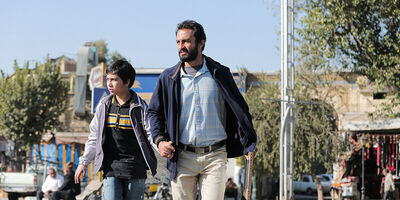
Let’s start there as the incredible Asghar Farhadi (“A Separation”) proves why he’s such a beloved artist with “A Hero,” one of his best films, which is really saying something. Farhadi delivers yet another deeply empathetic and heartbreaking drama that focuses on character while also embedding some interesting commentary about the complexity of heroism. Farhadi is one of the most talented auteurs when it comes to unpacking situations in which there are no easy answers and black & white are more likely to blend to gray. His films defy easy moral judgments of their characters, keeping viewers engaged in nothing less than the complexity of the human condition. In what is easily one of the best screenplays of the year, Farhadi unfolds a saga that feels increasingly like it’s trying to defy its title: there are no heroes in the real world, only people trying to do what they think is best.

Rahim (the riveting Amir Jadidi) is a calligrapher who has been in debtor’s prison over a loan gone very wrong. He is forced to live in this medium-security facility while he tries to figure out how to repay his debt. On one two-day leave from the penitentiary, Rahim’s girlfriend (Sarah Goldoust) finds a purse at a bus stop. After learning that the contents of the purse won’t cover his financial liability, Rahim decides to track down the owner of the purse and return it. Is this act heroic? Or does he realize that the public outpouring of goodwill could prove more valuable than the coins? And what of the man whose life has been ruined by the debt incurred by Rahim? As he watches someone that he loathes become lionized and turned into a hero, his skin crawls. The systems around Rahim, including his jailer and the charity that supported him, start to collapse with some of the craftiest writing of the year.

Every choice that Farhadi makes resonates, and yet his films also feel incredibly genuine at the same time. They’re not overly precious or scripted, feeling as if they emerge from the characters and their lives. It’s really only when the emotional journey is over that one looks back and admires its construction and craft. Is Farhadi commenting on the impossibility of perfect heroism? Or how systems are designed to destroy them? There are also clear cultural undercurrents here about the broken dynamic of debtor’s prisons in the first place. It’s a blazingly smart movie, one of the best of the year.

There’s also a sharp intellectual quality in Ryusuke Hamaguchi’s highly acclaimed “Drive My Car,” already a bit buzzed for cinephiles as the 180-minute movie that doesn’t feel nearly that long. It’s really a conversation between three artists—Hamaguchi, writer Haruki Murakami, and Anton Chekhov—in a story about the art of collaboration and how relationships aren’t really about deciphering what’s in someone else’s heart as much as they are about figuring out your own. It’s a bit self-indulgent at times (and the reports of not feeling the length are a little overblown), but there’s also a great degree of confidence here as Hamaguchi lets his characters bounce off each other, connecting and the pulling apart again, until he lands in an incredible ending that drive homes (sorry) so many of the themes at play here with unexpected emotional weight.

In a 40-minute prologue before the credits even roll, we’re introduced to an actor/director named Kafuku (Hidetoshi Nishijima) and his wife Oto (Reika Kirishima), a playwright who has some of her most creative moments after sex. She often details her writing ideas to Kafuku, using him as a sounding board and creative partner. They have a supportive relationship, even though Kafuku catches her with another man. Perhaps he knows it’s just part of her process. And then Oto dies, leaving Kafuku with only the questions he still has about the love of his life, and recordings of her reading Chekhov’s Uncle Vanya, which he listens to as he drives.

The problem is that he won’t be able to do that for a few months. Two years later, Kafuku is hired to direct a version of Vanya at a theatre festival in Hiroshima. The rules of the theater company, along with Kafuku’s glaucoma, means that Misaki (Toko Miura) will have to be his chauffeur. The two form a friendship as Hamaguchi really turns the film into an ensemble piece, one that includes a confident young actor in Kafuku’s lead role and the producer of the play.

In one of many fascinating choices that amplifies the overall theme, Kafuku’s production of Vanya is multi-lingual with subtitles up on a screen behind the actors. One of the performers even speaks Korean sign language. It’s a startling idea that a text can be so powerful that a cast can find its themes across multiple languages, including one that’s not even verbal. And it’s really at the core of what Hamaguchi is doing here, weaving the source material, his vision, his performers, and even many of the themes of Vanya. The result is a captivating commentary on collaboration and connection that somehow allows all of its many voices to be heard, both individually and together.

You could watch Michel Franco’s “Sundown” twice during the runtime of “Drive My Car.” The writer/director reunites with the star of his “Chronic” for another drama about an unusual man, one who barely speaks and seems to have lost his moral compass, only for some twists in the final act to cast everything in a different light. It’s a smart, engaging drama that will first frustrate some viewers looking for something more traditional and then anger the folks who feel the final scenes reduce some of the film’s intriguing ambiguity. I found a bit minor, especially compared to the Farhadi and Hamaguchi films, but also immensely watchable. And I think there could be some very interesting writing that unpacks the gender and class issues at play in Franco’s script once it’s eventually released.

Tim Roth plays Neil Bennett, a man on vacation with his sister Allison (Charlotte Gainsbourg) and her two children in Acapulco. She gets a call their mother has died, and everyone packs their stuff and heads to the airport in a hurry. When they arrive, Neil reveals that he left his passport at the hotel and that he will have to catch the next plane. He doesn’t. And he didn’t. He goes to another hotel, spending his days on the beach, lying to Allison about consulates and getting a new passport. What has happened to Neil? Has he just given up on a normal life? Is he grieving? Is he kind of a sociopath? Franco’s film is at its best when it seems stubbornly uninteresting in answering any of these questions, just allowing Neil to be.

Which makes it a little surprising that “Sundown” does start to get a little more traditional instead embracing its uncertainty. However, this is where it feels like Franco is trying to inject commentary on class and mortality. Maybe I just wanted to hang out on the beach a little longer. After TIFF, who can blame me?


Source link

Categories
TV & Movies

The Girl Next Door: Jane Powell (1929-2021)


Any list of actresses from the classic, golden-era age of Hollywood who fit the term “sultry” would be a long one. But the list of actresses who could be described as cheerful pretty much comes down to just Jane Powell, who died on September 16, 2021 at age 92. While other actresses played up their vampish, mysterious qualities, playing temptresses and heartbreakers, Jane Powell was somehow able to make cheerful characters relatable, not sugary, and irresistibly appealing. She starred in two of the all-time classic movie musicals and a number of lesser, still entertaining films, singing like a lark and bringing all the optimism and spirit of the girl we wish lived next door. 

She said she played the same character in all her movies “just different clothes and hair,” and was a bit rueful that all the fan letters she got from men wrote to her as a little sister, no suggestion of romance. “Being older to me was very important but [the studio] never let me grow up,” she said. She played that character in real life, as well, feeling that she always had to be positive and cooperative in her personal and professional relationships. In her 1988 memoir, The Girl Next Door and How She Grew, she talked about feeling disconnected from her career, wishing for the life of the friends she had left behind when she went to Hollywood, when she read their letters about going to dances and dating. “I envied them so much,” she said in the SAG-AFTRA interview, “though if the shoe was on the other foot, I know they would envy me.” 

Tiny (just over five feet) and with a pure coloratura soprano voice, when Powell made her movie debut at age 15 she was already an assured professional who had been performing for a decade with two radio shows on the CBS network by the time she was 12.  The network arranged for her to appear on a talent show hosted by Janet Gaynor called “Stars Over Hollywood,” and the next day she met with David O. Selznick. The day after that she was signing with MGM. 

MGM loaned her out for her first film, “Song of the Open Road” (1944). Powell had the lead as an exhausted child star who runs away and finds a better life picking crops with other teenagers to replace adults who have been called away to support the war. The most important impact the film had on her career was a new name.  She was born as Suzanne Lorraine Burce, but was given her “Song of the Open Road” character name for the rest of her career: Jane Powell. She never liked the name, complaining that there were already a lot of Powells in Hollywood, but she got a call from the studio telling her that was who she was from then on and that was it.

Her next few roles were also as a singing teenager, mid-budget films with silly plots and supporting performances by major comedy stars like W.C. Fields, Edgar Bergen, and Carmen Miranda, with appearances by musicians like José Iturbi, and bandleader Xavier Cugat. To publicize “Song of the Open Road,” she played the girlfriend of ventriloquist dummy Charlie McCarthy for months on the radio. Her favorite performer was Jeanette MacDonald and she was thrilled to co-star and duet with her in “Three Daring Daughters.” 

In 1948, she had the title role in “A Date With Judy,” based on the popular radio series. Powell played the title character, a high school senior in rehearsals for a performance at the big dance, and she introduced the standard, “Most Unusual Day.” But most of the attention was on her impossibly beautiful co-star, 16-year-old Elizabeth Taylor, who got a lot of publicity for her first screen kiss (with Robert Stack). Powell and Taylor became  friends and were bridesmaids at each other’s weddings. Well, at the first wedding for each. She said, “After that we had to stop or it would become a full-time career.” 

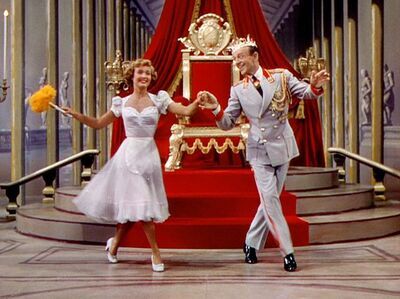
Powell’s first significant film was “Royal Wedding” in 1951. She was the third choice; June Allyson had to drop out when she got pregnant and then Judy Garland had to drop out when she became ill.  Powell found herself for the first time with a top musical co-star, Fred Astaire, and a top musical director, Stanley Donen. The film generated extra interest by giving US audiences their first chance to see real footage from the wedding of Queen Elizabeth and Prince Philip, and featuring a co-star with a famous name, Sarah Churchill, daughter of Winston. In other words, the plot didn’t really matter. The set-up was inspired by Astaire’s pre-Hollywood dance act with his sister Adele. Astaire and Powell played sibling song-and-dance performers appearing in London as the royal wedding was about to take place. The most memorable musical numbers in the film are Astaire’s solos, making a hat rack look as graceful as a ballerina and dancing on the walls and ceiling. But Powell was terrific in “I Left My Hat in Haiti” (unfortunately, in brownface) and in the improbably titled, “How Could You Believe Me When I Said I Love You When You Know I’ve Been a Liar All My Life,” a comic vaudeville-style number that gave her a chance to show off her comic timing, New Yawk accent, and dance skills. 

Her best-remembered film is “Seven Brides for Seven Brothers,” again directed by Donen and with the unforgettable dance numbers choreographed by Michael Kidd, including the barn-raising scene always included among the all-time greats. Howard Keel played the oldest of the seven brothers, who impetuously marries Milly (Powell) without telling her that he expects her to do the housekeeping for six other men. She did not do much dancing, but sang “When You’re in Love” and “Wonderful Wonderful Day.” Her own favorite of her films was “Two Weeks With Love” because she loved the very feminine Helen Rose costumes and so many of her favorite co-stars were in the cast.   

Powell was at MGM in the last years of the studio system and the last years of the old-school movie musical. She went the MGM “little red schoolhouse” with Debbie Reynolds, Margaret O’Brien, Elizabeth Taylor, and Roddy McDowell.  She said she always felt isolated and disconnected from her success in part because it was more about pleasing her parents and the studio than about what she wanted. It was not until her fifth husband pointed it out that she realized how unusual it was that she had the lead in every one of her films. 

“The studio always said, ‘Stay as sweet as you are and never change,'” she said in the SAG-AFTRA interview. She did what she was told and “never thought beyond my nose.” Even if she had, she could not have predicted that the market for old-fashioned movie musicals was ending. “And if you were in musicals, they very rarely let you do anything else,” she said. She continued to work, mostly television, including “Growing Pains” as the mother of Alan Thicke’s character, and musical theater, starring in “My Fair Lady” and “The Sound of Music” and in two musicals with her “Seven Brides” co-star Howard Keel.  She was a guest host on Turner Classic Movies and a special guest on one of the channel’s cruises. Her final role was in an episode of “Law and Order: SVU.”

After four marriages she met the love of her life in a real-life meet cute. One-time child star Dickie Moore interviewed her for his book about child actors, Twinkle Twinkle Little Star (but don’t have sex or take the car). They fell in love and the girl next door finally had a happily ever after ending—just like in the movies.


Source link

Categories
TV & Movies

Everybody’s Talking About Jamie


The stage-to-screen adaptation of “Everybody’s Talking About Jamie” still keeps many of its theatrical stylings intact but it doesn’t make its core story any less affecting. It’s a familiar coming-of-age tale along the lines of “Billy Elliot” or even the Harry Potter series. A young boy, in this story his name is Jamie (Max Harwood), fancies a life beyond the doldrums of his working-class English city. His mother Margaret (Sarah Lancashire) tries her best to support him even as his classmates mock him for being gay, a stern-faced teacher disapproves of his behavior, and his father (Ralph Ineson) rejects him outright. Instead of hiding himself and his outgoing personality, Jamie decides to pursue his dreams of becoming a drag queen with a little help from his friends – Jamie’s best friend and aspiring doctor, Pritti (Lauren Patel), and a newfound drag mentor named Hugo (Richard E. Grant), the once former Loco Chanel. 

As far as coming-of-age musicals go, “Everybody’s Talking About Jamie” sends a charming, feel-good message of self-acceptance. True to his 16-year-old self, Jamie has some growing up to do, and not just as a soon-to-be drag queen. He must learn more than just how to walk in heels—a ruby slipper pair—but also how to craft an on-stage persona and knowing when to let her fight Jamie’s battles or let Jamie forgive those who wronged him. From the start, Harwood’s performance as Jamie is as sparkling as the tiaras and glittery shirts his character wears. He commits himself to the highs and lows of Jamie’s story with a wide-eyed enthusiasm that suits the character just perfectly, throwing his long limbs into dream sequences-like dance routines that show off Jamie’s confidence and joy but also a sense of vulnerability and shyness. As Jamie’s best friend, it seemed at first that Patel’s character would be outshone, but over the course of the musical, her role also begins to change before her own turn at the spotlight. 

Director Jonathan Butterell uses those dream sequences to tell more of Jamie’s story as well as Jamie’s fantastical imagination. For example, when a teacher punishes him for asking Pritti to fix his badly drawn-on eyebrows, Jamie tumbles through an art-themed song of rebellion expressing his frustration but also embracing himself as a “work-of-art.” Greeting him at the start of the song is none other than the drag queen legend herself, Bianca Del Rio, one of Jamie’s heroines. She’s also a nod to the mainstreaming of drag culture and the lasting influence of “RuPaul’s Drag Race.” Tom MacRae, who adapted his stage play and musical with Butterell and Dan Gillespie Sells, guides Jamie through his journey of self-discovery, but seems hampered by the inclusion of so many of Sells and Anne Dudley’s songs into the movie’s running time. Some numbers, like the ballad Jamie’s mom Margaret sings, slows down the film’s momentum while other songs happen back-to-back, with little in-between time to reset the tone. 

But one new addition to the movie is perhaps its highlight. With “This Was Me,” drag shop owner Hugo shows Jamie not just his fabulous past as Loco Chanel, but also what his gay community went through during the AIDS crisis, the death of Freddie Mercury, the street protests, cops arresting queer clubgoers and the radical moment when Princess Diana talked with AIDS paitients. All this through the lens of a camera held by Hugo’s lover, who we see does not survive. In one emotional song, using recreated historical moments and archival footage, Hugo shares just a small part of the history behind drag culture in Britain, something Jamie and other young queer people of his generation may not have fully understood or reckoned with in an era where drag queens have global followings, discrimination laws protect queer communities from being targeted and medicine has advanced to help manage HIV/AIDS. Grant, a charming addition to an already endearing movie, shifts his performance from an exasperated gay elder to a teary-eyed storyteller who still feels those losses from decades ago. It’s in those moments of honesty and vulnerability, like Jamie’s apprehension before taking the stage for the first time as a drag queen, that makes “Everybody’s Talking About Jamie” a heartwarming musical with the performances to really make it shine.

Now on Amazon Prime.


Source link