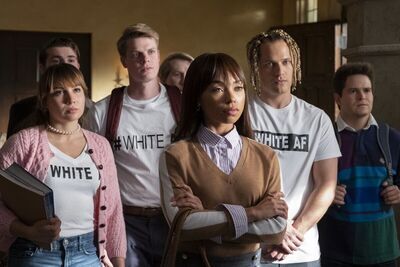
The fourth and final season of Netflix’s “Dear White People” feels a bit like an afterparty. It’s not as sharp, profound, or consistent a season as the first three, but it’s loaded with empathetic goodwill, a season that seems designed as a celebratory goodbye for the people who love these characters, and a reminder that creator Justin Simien clearly loves them too. While the ambitious construct of the fourth season has moments of sharp ingenuity, it’s also a season that reflects both the pandemic conditions under which it was shot and the plight of college graduates in 2021 with its uncertainty. This series has been sharply unpacking race, sexuality, and class for three seasons—that the final season sometimes feels like it has no idea how to bring all of its many themes to a satisfying conclusion almost makes sense given the crazy state of the world. How else could you capture a graduating class in 2021? At least it’s got a catchy song or two to make the graduation party more fun.
Yes, believe it or not, the fourth season of “Dear White People” is a jukebox musical, using songs from the ‘90s in elaborate song and dance numbers. After a set-up set in “The Future” that will give the season its construct, wherein Sam (Logan Browning) and Lionel (DeRon Horton) reunite to discuss his work on a fourth book in the Dear White People series (very meta), the bulk of the season unfolds as a flashback to the students of Winchester University, as the characters prepare for a musical show that sees them routinely break into song. For example, as Sam walks the campus already trying to figure out what’s going to happen next, she leads a rendition of Tevin Campbell’s “Round and Round,” about the difficulty of dreaming, complete with back-up dancers. Simien and his writers use pop music to express their characters and their themes in a new way (although they seem to lose interest in the concept a bit mid-season as the show spends more and more time in “The Future”).
In some ways, this is a good thing. A lot of the music choices are a bit too on-the-nose (like Gabe singing “I’m Gonna Be (500 Miles)” to express his love for Sam) and can feel like they work against the nuance of the show. (Although I did admire the brazen choice of trying to turn *NSYNC’s “Bye Bye Bye” into a legitimate, emotional break-up duet.) Simien and the writers end up shifting a lot of energy to a reality show called “Big House,” on which Coco (Antoinette Robertson) competes. A “Big Brother” spoof (complete with the racial issues that have dogged that show), the broad material here plays like a different kind of satire than “Dear White People” is at its best.
The more character-driven stuff that develops is more interesting, although some of it is repetitive. Lionel continues to deal with his sexual expression, including coming out around his family, while Sam continues to try to pull his creativity and talent from him, no matter the personal cost. The trauma from the end of the first season also continues to shape the arc of Reggie (Marque Richardson) as he tries to reclaim some of his fear of violence by taking up shooting.
While every episode is enjoyable on its own terms, the problem with the fourth season of “Dear White People” is almost one of abundance. The momentum often derails in ways that didn’t happen in the past by dividing among so many styles—a let’s-put-on-a-show structure, a character drama, a jukebox musical, and a reality TV spoof is a lot for one season of comedy television. However, it’s not common to criticize a modern TV comedy for trying to do too much. And it’s indicative of Simien’s love for his creations. He wants them to have a bit of everything in the final season, to send them off into TV history with all the joy, passion, and creativity he can muster. If the show about them sometimes feels like the party went on a little too long, it’s still a damn good time.
Seven episodes screened for review. Premieres on Netflix today, September 22nd.
Maya Cade is the compiler and curator of Criterion’s new Black Film Archive, a treasure trove of films from 1915-1979, ranging from the notorious to the neglected. Most encouraging, all of the films she has collected are available for streaming, bringing audiences to a selection that includes and transcends every genre and extends from the era of Jim Crow through the Civil Rights movement and Blacksploitation. In an interview, Ms. Cade spoke about her hopes for the archive, which she will continue to monitor and expand, some of what she discovered, and her plans for the archive’s newsletter.
Before we get to The Black Film Archive, tell me a little bit about you up to this moment. When did you fall in love with movies and what brought you to this project?
The first film I remember seeing is “Willy Wonka and The Chocolate Factory.” The second film I remember seeing is “The Wiz,” and both of these are guiding points for my life. The fantastical imagination of “Willy Wonka” and the celebration of Blackness in “The Wiz” are both things that I still hold really dear to me. But when did I really fall in love with film? I think that really happened while I was at Howard. I was the arts editor of Howard’s paper, The Hilltop my sophomore year. I was writing about film and music and all these other things that I’m deeply interested in. My teachers noticed that I had this really intense love of film and that I was deepening my knowledge and would give me all kinds of resources to read. Also, just over time has really just gravitated towards Black film books. The kind of conversations people are having more widely about trauma now, those conversations happen on HBCU campuses often. What does it mean to be Black? And what does it mean to be represented as a Black person? That question guides me as well.
TCM was my entry point to classic films. I was looking through my old tweets recently, and I when I was a senior in high school, “Why isn’t anyone watching classic films?” It’s been clear to me that I’ve gravitated towards this for a while.
It’s always so transformational to be in a place where you are the majority, the norm, you’re just you, you do not have to assimilate or explain yourself.
Yes, I think that’s it’s something that was so special and it really solidified my ethos of only doing things with Black people in mind. That’s something that’s very, very true. For me, that’s at the heart of all the things that I do, whether it’s my personal work, or how I show up in other capacities. That is my main frame of mind.
I know it is just outside of your time period, but as that will be expanding and as it was filmed in your home state of Louisiana, I have to ask you about “Cane River,” which we showed at Ebertfest in 2019.
Oh, my gosh, what a film. It is one of those films that challenge this idea that Black films are on a binary. It is a film that can talk about serious things, but also it holds you in how loving it is, and the depth of the film. It does challenge this idea that trauma is the ploy that people play with. But really, we can discuss our traumas, and also our love and have an impactful film. So, yes, I love “Cane River.”
I’m sure it will be included when you get up to 1982. What are your criteria for this database?
It has something significant to say about the Black experience, and it can either speak to Black audiences, have a Black star, writer, producer, or director. And in the first iteration of Black Film Archives, that criterion for selection is broad. Because my intention, really is to that people aren’t feeling left behind. So really, for the first iteration. I wanted every film that has something significant to say about Black life is included, from the 1915 to 1979. And that it is available streaming. I had to leave out “Killer of Sheep” because it is not currently streaming anywhere and that breaks my heart. It’s one of those films that kind of pops up and goes away. Milestone has it and it was available for rent I would say, within the last six months, but for some reason it no longer is.
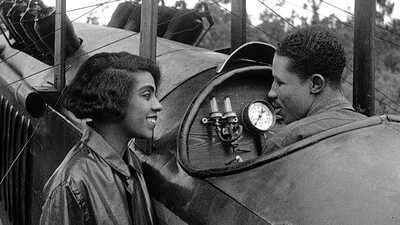
You could not have picked a better image for the site’s home page than that mesmerizing mini-clip of a gorgeous dancer. What is that from?
That’s “Birthright” (1938) directed by Oscar Micheaux.
These films tell us something about the era when they were made but distance can give us an appreciation beyond what viewers saw at the time.
Yes, for example “Sounder” is another film that challenges the conventions of what a Black film can be because it’s a film that talks about some of the worst atrocities that can happen to a singular family, but also does understand the love that exists there, and also talks about the role that Black women often have to do of stepping up for whatever reason when the patriarchy leaves. I just hope that this gets its due again.
I think some people will be surprised by the wide range of genres in the archive, everything from romance to thriller, horror, western, musical, drama, and comedy and films that transcend and play with genre. And there are some remarkable, even revolutionary gender issues.
Yes, we will be launching genre categories on the site soon. And a search box. “Aaron Loves Angela” is a great romance. There are those 30s thrillers, a lot of these films still religious allegories, but still playing with form, I think it’s quite fascinating. “Heaven-Bound Travelers” is a film made by a husband and wife, James Gist and Eloyce Gist. She wrote the scope for this 1935 film, and they were true companions in making the film. Even though it only exists in fragments, it’s really such a special film. This man falsely accuses his wife of adultery and abandons her and the child. It’s fascinating, what it says about womanhood.
“Killing Time” is about a woman who decides to kill herself but cannot decide on the appropriate outfit to die in. It says a lot in seven minutes. And then there is “A Dream Is What You Wake Up From” (1978), co-directed by Carolyn Johnson. It delicately balances a mix of narrative and documentary techniques to showcase how gendered violence keeps Black women behind in their pursuit for the “American dream.” When women are at the helm, there is such innovation and when we have the opportunity to say what we want and how we want to represent it, it really is fascinating. There really are a lot of great things that happen when women are at the helm of their own stories and their own reputations.
Tell me about the site’s newsletter.
The newsletter is going to be where I have the most in-depth conversations about Black film. So I really want the one I’m writing for this month to really talk about Black trauma. I think there’s been this broad misunderstanding about my intention about what Black trauma means in movies. Another journalist gave the example of “Boyz n the Hood” as a traumatic film, but I was just like, “the people in that film are so loved, I wouldn’t consider that.” But I think that’s the point, right? What my intentions were, the next newsletter and the newsletters to come is to really dig into conventions that people have and how we subvert them and how we push past them and really hone in on the idea that Black cinema’s past really does lead the way to Black cinema’s future.
“Intrusion” is the latest middling Netflix thriller to hit the streaming service, this one coming with the angle of being more about a marriage’s problems than a home invasion. Call it “Scenes from a Marriage in a Netflix Thriller,” but then again those are generous qualifiers. The scenes from this marriage run flat, the thrills even more so.
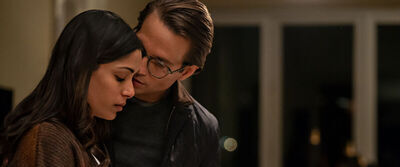
Freida Pinto and Logan Marshall-Green star in the movie from director Adam Salky as Meera and Henry, a married couple who just built a slick, expansive, modern home in New Mexico. They return from a date night, which includes playing Scrabble and drinking wine, only to find the place ransacked. No matter for Henry—he fixes up the place while she goes back to her job as a youth counselor. But then another home invasion! This time it’s much worse, with dead bodies made possible by a secret gun Henry had been hiding. It’s also when the movie starts to show its limits as a thriller trying to BS its way through the moments that matter most, with weird cutting and sometimes sideways camera angles that just obscure the action.
This scene happens about 20 minutes into “Intrusion,” which is beyond the cut-off point that Netflix requires for a viewing to be considered official. It’s a downhill coast from there, as the script combines mysteries that are neither tactfully planted nor answered to in all that surprising of a fashion. Who were the thieves that came from a trailer park, and what did they want? Why did Henry have a gun hidden away? There’s also a missing girl in the mix. A lot of curious pieces in play, and the movie handles them as bluntly as lazily as seems possible, unable to sow a sense of distrust beyond relying on ugly class bias.
“Intrusion” benefits most from when you can still squint and see the underlying anguish that went into the story, and must have been part of the pitch when Chris Sparling (“Buried”) threw it together. As various mysteries add up, the relationship dynamics become more of a question—warmth leaves, and distrust, control, and lies settle in. Everything is still played very on the nose, given how blunt this mystery can only be, but it’s the thematic visibility here that briefly gives it a bit of soul.
But for a movie about these two lovers and the stakes of their bond, it’s got a major problem with its performances. Marshall-Green is a boring, lazily scrawled question mark in this role that never makes him all that endearing or seem sincere; the evolution to his character is not rewarding. Even more unfortunate is how the movie traps Pinto to a series of connect-the-dot scenes of her snooping around, looking aghast at images on computer screens, or bungling through a trailer park. She would be more interesting to watch drive a car for 90 minutes, instead of trying to make the dull mechanics of this mystery appear more outlandish than they actually are.
Even on a more basic Netflix level, on the standard of whether the movie will hold your attention and make you glad you stayed, “Intrusion” is a bust. It proves only slightly stronger at piling on mysteries more than giving fulfilling answers to them, especially as its script has about a half-dozen too many conceits. There are simply too many moments here in which the characters, who we are supposed to care about in some form, are conveniently dumb. The kind of faint, cheap thrills make apparent how everyone is a pawn here—not just the characters, but the subscribers too.
New York filmmaker Rebecca Huntt puts her all of life into the malleable form of documentary filmmaking in “Beba,” a gorgeous visual memoir laced with poetry, memory, and truth. Among its many fascinating components, it’s a great example of someone following the unbeatable advice of writing what they know. In this case, Huntt shares her life story about the different ideas that make up who she is: a New York resident, an Afro-Latina woman, the child of first-generation immigrants, a lover of Bob Dylan, a sister, a lover, a tourist in other parts of the world, a learner from all of the above. We are collages of the places we’ve lived and the people we’ve loved, and Huntt colors all of these components vividly so that we can zoom out and see her in full.
“Beba” tells her story chronologically, using grainy film stock used for dreamier inserts, while crisp digital filmmaking captures candid interviews with her family members and friends. In these interviews, Huntt’s filmmaking goes beyond collecting stories from the past, but also about confronting certain modern behaviors or perspectives, sometimes leading to caustic interactions like with her mother. (They get into a divide about microaggressions, which in the context of the doc seem part of Huntt’s emotional growth in their recognition.) This active approach creates a lively portrait of not just Huntt but her family members, in which no one is given a safe presentation (not even the storyteller). Honesty is Huntt’s guiding virtue, even when confronting the family’s history of mental illness and abuse, which she echoes with some of her own actions; even in sequences that are effectively staged so that we can feel what she felt at one moment in time; even in moments that aren’t meant to be for more than family. She films her sister smoking, and the sister asks her to not include it in the film. As we know now, Huntt did.
“Beba” shows how much wisdom and perspective comes from life experience, whether it’s based in immense pain, or curiosity, or outrage, or love. The story becomes its own adventure, in which you love the storyteller more, because of how much they are giving every bit of themselves to the project. That itself creates a sense of awe, and a great desire to see what they do next.
Alison Pill and Sarah Gadon star in Michael McGowan’s “All My Puny Sorrows” as two sisters who come from a history of mental illness, with their father (Donal Logue) having died by suicide. Pill’s Yoli is a writer struggling with the next book; Gadon’s Elf is a concert pianist who is having heavy ideation and then makes an attempt on her own life that puts her in a mental hospital. The chemistry between the two actresses helps give some emotional dynamic to a very sad idea at the center; Elf wants to go to Switzerland for assisted suicide, so that she does not have to die alone, and she can’t get Yoli to ultimately accept her wish. “All My Puny Sorrows” is about a very specific melancholy life experience, and recognizing it, sitting with it, living in it.
The story is adapted from a book by Miriam Toews, and while the film didn’t move me a great deal, it made me curious about the experience of the book. McGowan’s cinematic storytelling tools make the movie all the more familiar and numbing, like austere flashbacks to youth, Yoli’s intermittent voiceover from her book-in-progress, and establishing scenes of wintry Canada that make things seem all the more monochrome. Pill remains at the center, giving a performance with immense range and passion, but one that’s not supported by the writing. Part of the story belongs to Yoli and how Yoli changes, but those undercooked chapters—like about her as a mother, a soon-to-be ex-wife, and bed-partner to a scrub named Finbar—make the flatness of the narrative all the more evident.
“All My Puny Sorrows” feels oddly weightless, and its mix of heavy drama with brief comedy makes for a pretty bland tone, in spite of its inherent emotional demands. McGowan’s film focuses on this one specific conflict, but it also seems content that because the movie is so bold to bring up these ideas that it doesn’t have to challenge much else. It’s more like the film is made for recognition of this type of experience, and indeed could be of use to viewers going through something similar. But the movie has its own clinical air, only it’s that of going from one sullen, straightforward passage about the process to another.
“To Kill the Beast” has the sound of a horror movie—like “The Beast Must Die”—but it’s more of a fear movie, albeit with a very gentle senes of unease. Written and directed by Argentinian filmmaker Agustina San Martín, the film is comprised of many painterly images and long gazes, creating a sense of space more vividly than it does dread.
Tamara Rocca gives an effectively brittle performance as Emilia, a young woman whose brother has gone missing. He does not answer the phone when she calls his house, and images of the empty abode haunt the movie throughout, creating just one of its senses of loss. Emilia’s search takes her to the house of her Aunt Ines, who lives at the border of Brazil and Argentina, in a jungle. The land has been haunted itself by a beast, which brings out search parties and Catholic figureheads alike, adding a bit of chaos to the land. While staying at Aunt Ines’ hostel and going in circles about what happened to her brother, Emilia befriends a guest named Helena. Moments of closeness with Helena accompany Emilia’s arc of understanding how she wants to be seen as a woman, and by who. Like everything in the story, San Martín does not overplay this but let it be known.
San Martín script favors atmosphere more than story, it’s more about inhaling and exhaling with the space more than character actions that deepen our curiosity. It makes the experience gradual, but one more defined by its soundscape—birds chirping in the background, sometimes with spare chords from a church organ mixing into the austerity. Meanwhile, the script’s ideas of fear—of one’s identity, of the the other, of loss—stare at each other in the face through a fog that Martin uses for more than just visual effect. The effect is sporadically involving, but things are presented at such gradual stakes that appreciating the cinematography seems to be its primary goal. With multiple shots made from the reflections of dusty mirrors, and images of Aunt Ines’ house in blue twilight, there are enough flourishes in the film that you might want to hang on a wall, but they don’t sink in their teeth as much the story might hope.
2021 marks my twenty-fifth year attending the Toronto International Film Festival as accredited press, and it most certainly was the strangest yet by far.
Over this quarter century I’ve witnessed TIFF emerge as the leading fall festival and most important public film gathering in the world (sorry, Berlin). For at least two decades, it’s been the best Oscar prognosticator, and home to more than its share of films celebrated for Acting, Directing and even Documentary as well. I was here when it was still emerging from its Festival of Festival status, a provincial collection of titles from mostly European premieres making their way to local audiences, until it grew to showcase hundreds of films from around the world.
I was there on that Tuesday morning 20 years ago when dozens of New Yorkers watched the news of Twin Towers collapsing with a keen helplessness, far more surreal and shocking than any film. I was here when the beginnings of the 2008 market crash happened, making certain producers all the more financially jittery. I’ve seen the rise of the streamers and the contraction of the independents, with television shows added to the selections. I’ve seen programming tastes shift from the bold, experimental, shocking and occasionally disturbing to a more generally palatable slate, where content warnings are added to the bottom of each description and distinctions between the proclivities of the artist and the caliber of their art are no longer made with the same sense of resoluteness.
Last year’s online-only festival felt like a blip as we were getting used to life during a global pandemic, but this year feels even more like something has fundamentally shifted, and often not for the better. Unlike all the other major festivals of this period—Venice, Telluride, NYFF, San Sebastian—TIFF made the decision to showcase the vast majority of films on its digital platform.
For COVID reasons, of course, this decision makes perfect sense. For this freelance journalist, personally, it’s been a death knell to many opportunities, given that many editors could simply cover the exact same titles as me on the ground, thus eliminating any advantage for the cost outlays or time spent navigating protocols to attend in-person. To make things even worse, many key titles were actually blocked for Canadian press (or even Canadians such as myself covering for international publications), while free to stream for those outside the country where the festival was taking place.
This “inside baseball” nonsense may seem trivial in the grand scheme of things. Yet when you pair that feeling of loss with a genuine sense that things were not quite right, and that the descent had begun well before a plague changed the rules of the game. It seemed pretty dire this year. Much of the electricity of the festival had been shorted out, and the streets, as well as most screenings, were bare beyond the 50% capacity due to COVID restraints.
The majority of films lacked the usual glitz and glamour, and there was a clear recognition that many A-list titles, be they arthouse or Hollywood, were skipping Toronto to gain attention elsewhere. Throughout there was a pallor, with a palpable feeling that this festival’s reputation as the bulwark of the late-summer festivals and the central home for the vast majority of films that would dominate discussion during awards season was being burnished.
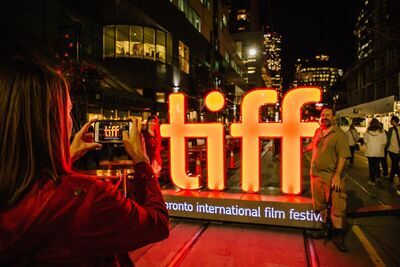
King Street is usually home to thousands of people milling between screenings as part of “Festival Street” celebrations, and despite the complaints from local commuters truly does help make the downtown core feel like the home for cinema during this window. Obviously this was dropped, but the sense of the event’s place within the city was diminished even more due to the vagaries of the ticketing system. Forced to pick 10 titles, no matter how many were being used, many simply reserved tickets they never had intention to use. This, combined with a general unease about public gatherings, resulted in events that were targeted as “sold out” with their 50 percent capacity yet often had far fewer actual attendees, making the usually packed premieres feel all the more sparse.
Then there are the films of world class caliber that played the other festivals that simply were not screened here as they have been in the past. Some may have been rejected for programming reasons, but given the caliber of films like Paul Verhoeven’s “Benedetta” (playing NYFF) or Sean Baker’s “Red Rocket” (that played Telluride), and how previously “Elle” and “The Florida Project” saw great success here, it’s hard to make sense of it all from the perspective of an audience member who cares little about the vagaries of distributor contracts, the divide between screening rights vs streaming rights, etc.
Yet despite all these challenges and complications, there were still moments to cherish, discoveries to be made, experiences to remember and many, many films to celebrate.
Take “Saloum” as a prime example, Jean Luc Herbulot’s wild tale of mercenaries who crash land and find themselves wrestling with demons from the past. Programmed as part of the Midnight Madness slate, the storied sidebar that has showcased exceptional films over the years including “The Raid,” “What We Do In the Shadows” and “Man Bites Dog,” this film felt more fresh and exciting than a dozen other dreary offerings in the general sections.
While I caught “Titane” at Cannes, I was pleased that local audiences favorably responded at TIFF, especially given the obvious aesthetic connection to Toronto’s favorite body horror auteur David Cronenberg. And Arsalan Amiri’s Kurdistani demonic thriller “Zalava” builds its slow boiling dread to a climax which is fabulous, making for a film that feels philosophically rich, politically astute, and absolutely thrilling.
I couldn’t stomach more than 40 minutes of “DASHCAM,” Rob Savage’s follow up to “Host” that again uses the shtick of witnessing a film through the filter of technology—the whole thing is as insufferable as its lead character. As someone who almost never bails on films, no matter the circumstance, this was that rare occurrence where I simply had to throw in the towel. Yet given that many responded favorably, this is indeed the kind of provocative film that has helped make the sidebar so exciting to explore, where the highs are high, and the lows so very, very low.
On the local front, “Scarborough,” named after the region of Eastern Toronto, which is home to a wide and diverse community, is a touching, effective look at underserved populations. Thanks to strong performances and a well-crafted narrative it achieved runner-up status for the People’s Choice Award, a rare accomplishment for a Canadian film.
The main People’s Choice Award winner, Kenneth Branagh’s “Belfast,” echoes “Roma” with its hazy, black-and-white remembrances of a childhood in transition, and while it may have lacked some of the urgency and anger of Cuarón’s fellow People’s Choice winner, it’s still an exceptional movie with a fantastic lead by Jude Bell that’s certain to be talked about next Oscar season.
The third runner up for People’s Choice, Jane Campion’s “The Power of the Dog,” took home the directing award in Venice, and for me had pleasant echoes to Paul Thomas Anderson’s sublime “There Will Be Blood” (this before I realized it was Jonny Greenwood doing the score for both!). TIFF Tribute winner Benedict Cumberbatch appears in superior form, but it’s Jesse Plemons’ quiet grace, and Kodi Smit-McPhee’s subtle, riveting performance that truly make the film shine.
There were showcases of a couple other major works by those with strong Torontonian roots. Denis Villeneuve, who shot “Enemy” here in all its arachnid glory, brought “Dune” to my beloved Cinesphere, the geodesic dome on the waterfront that’s home to the world’s first permanent IMAX theatre. After so much anticipation I was thrilled with the results of the film’s character development and visual style, even if it was a bit unnerving to see how the exposure of the narrative’s shortcomings were laid bare. I truly believe this adaptation to be perfectly in keeping with the requirements of Frank Herbert’s tale, and thanks to an incredible ensemble it all feels very much like we’re witnessing something grand and dynastic while keeping things impressively intimate.
Edgar Wright, whose “Scott Pilgrim vs. The World” is perhaps the most globally recognized ode to Toronto, focused a dreamlike gaze on his own city of London with “Last Night in Soho.” Borrowing liberally from the metropolitan thrillers of Polanski, this musically savvy, boldly-lit psychological thriller lived up to heightened expectations.
TIFF has an absolutely epic track record with non-fiction cinema, and once again programmer Thom Powers and his team have found some exceptional titles outside the Sundance/IDFA/True-False/HotDocs slates. A wonderful paring was made with Stanley Nelson’s “Attica” and Stefan Forbes’ “Hold Your Fire,” two remarkable takes on American society, the engagement with law enforcement, and the vagaries of the justice system.
I got to see two scuba-related, National Geographic docs at Cinesphere over two days, with Liz Garbus’ wonderfully nuanced take in “Becoming Cousteau,” which provides a great deal of depth in the story of this iconic inventor, educator and provocateur, and “The Rescue,” Chai Vasarhelyi and Jimmy Chin’s follow up to their Oscar winning “Free Solo,” which also won the TIFF documentary People’s Choice Award. Telling the 2018 true story Thai kids trapped in a cave system, this is an absolutely riveting film that plays with a certain degree of anxiety for non-divers, and for this cave-diving veteran was quite literally the most effective horror film I’ve seen in years, even knowing how it was going to end!
We shouldn’t be surprised that Penny Lane can take a challenging topic and make it sing, but her “Listening to Kenny G” is a fascinating look at the divide between critical appreciation and commercial success. It’s likely the title that would need the most convincing to get people to give a try, but the end result is truly worth having “Songbird” lay a discomfiting egg in your earholes.
There was a celebration of a Canadian Jazz legend in “Oscar Peterson: Black and White” that did what it set out to do, similar to “Julia,” the warm take on celebrated cook Julia Child and her effect on American cuisine. Rebecca Hunt’s “Beba” found plenty of fans, but my reaction was mixed, vacillating between its moments of abandon and self-analysis while slipping occasionally into the indulgent and narcissistic. It’s a tough story to navigate, and some truly appalling behavior is shrugged off within larger conversations about race and belonging, but it’s clear that it’s a film that’s well worth confronting.
Bianca Stigter’s “Three Minutes: A Lengthening” is both emotional and cerebral, taking a rescued clip of life just before annihilation in pre-war Poland and looking ever closer at the faces of those long passed. At times it feels a bit like the end of “The Conversation” or even “Blow Out,” where the closer you observe the more is illuminated. Yes, it’s dry at times, but it’s a fascinating process that by the end has you living in the spaces of these ghostly individuals captured inadvertently on film.
There were more than a few titles that were immediately forgettable, and I managed to navigate around seeing many of the truly egregious (though attempts to get people to skip “France” after its Cannes debut seem to have backfired). “Wolf” was probably the worst I saw in person, but even that seemed not worth howling about. Some bigger titles, like “The Eyes of Tammy Faye,” felt all the more insignificant with each passing day, while some like “Silent Night” may have pleased from the outset but, as in the case of several titles, were completely undone by a misfired ending.
It’s titles like “I’m Your Man,” the unassuming sci-fi romcom, that really stuck with me. Ditto regarding “Petite Maman,” Céline Sciamma’s positively brilliant tale of two young people connecting through time. I liked “7 Prisoners,” Alexandre Moratto’s morality play about when the jailed become the jailer, and “Encounter,” the Riz Ahmed-starrer about a father tearing himself up in an attempt to save his kids from an enemy he can’t quite get a handle on.
Regarding some of the splashier titles, I found Kristen Stewart in “Spencer” enjoyable, if a little slight compared to the far superior film (and more fascinating character) in “Jackie.” And while most of the world was set on mocking Ben Platt for not looking his age (let alone the age of his high-school character), I will steadfastly state that “Dear Evan Hansen” is perfectly … fine? If anything, the social media outrage surrounding the premiere from those that hadn’t even seen the film was so twistedly ironic given the subject matter of the musical that it made for some interesting debates over socially distanced drinks.
There were agreeable diversions, like Will Sharpe’s “The Electrical Life of Louis Wain,” where Cumberbatch fell into some of his traditional quirks that made him famous on shows like “Sherlock.” I caught “Mothering Sunday,” the Eva Husson post-Great War tale that I had missed in Cannes and was treated to a predictable tale predictable elevated by the ever sublime talents of Olivia Colman and Colin Firth.
In the end, the festival managed to screen a share of selections from other major festivals around the world, and didn’t particularly land big with any title that was unique to Toronto. Whether or not this is an increasing indication that TIFF is once again turning into a “festival of festivals” is up for debate, and one can only guess what 2022 will bring in terms of audience involvement, how much will remain in-home and virtual, and so on. It’s a precarious time for cinema in the best of cases, and festivals bear the brunt of much of the shifting changes in the industry and viewing habits of its patrons. Yet concerns about the decreasing importance of TIFF on the calendar were increasing before COVID ever happened, and for many the need for international press and patrons to join locals at this celebration of cinema was already being questioned.
I love this festival, and it’s been my home for much of my cinematic education and many professional opportunities. I worry tremendously about its future well beyond concerns about the current plague, and see seismic shifts affecting its future. Witnessing a downtown core near empty of patrons felt all the more gut wrenching, even knowing the cause, a stark reminder of a diminished festival that we were spared during last year’s lockdown-only event.
I do not for a moment begrudge the protocols put in place to maintain a secure health environment. While that process worked fantastically well, there was a myriad of other logistical elements that were downright embarrassing. From ticketing to screening windows nothing quite felt like it was working as it should, even though by the end of the festival many of the truly egregious elements had been repaired. Still, it was clear that in so many ways TIFF 2021 felt more than a bit broken. Time will tell if it can be rebuilt to what not so long ago it was, and whether the right people are in place at all levels of the organization to make this happen and steer things back on track.
There were moments of absolute joy, as there always are. There were brief encounters from friends from all over the world that come to attend. There were cinematic marvels that filled with joy and wonder, and even a gathering or two that felt, if very briefly, blissfully normal, where new friends are made and passionate discussions are held. It’s this that I cherish about all festivals, but since TIFF is home, its diminution pains even more on a personal basis.
I can only hope the future for TIFF shines far brighter than it did in this challenging year, as we firmly take hold of this pandemic and find a way of making the festival recover its stature. For the heart of TIFF, beyond all the baggage that surrounds its selection process and logistical concerns, is to gather en masse, bathed in a flickering light from a projector, sharing that rare experience of discovery and wonder, and finding collectively something to truly cherish. I believe there are thousands, be they local or from around the world, that share this same hope.
Having earned countless millions of dollars for Blumhouse Productions and Universal Pictures with “The Purge” and its sequels, writer/director James DeMonaco has been given the chance to make a film that is presumably closer to him on a personal level and which does not center on people being torn apart like fresh bread. The only problem is that the resulting movie, “This is the Night,” is such a spectacular misfire on every imaginable level—and even some you haven’t begun to imagine—that there are times when one might mistake it for an especially clever and relentlessly deadpan satire of the type of film it’s desperately trying to evoke. If that had been the case, it might have become some kind of masterpiece. Alas, it is relentlessly sincere throughout and that somehow just makes an already terrible film even worse.
The film takes place on May 28, 1982, a date you will all no doubt recognize as being only one week before the opening of the monumental “Star Trek II: The Wrath of Khan.” It turns out that it was also the opening day of “Rocky III,” the Sylvester Stallone-directed sequel to his 1976 Oscar-winning hit about a palooka boxer who unexpectedly gets a shot at the heavyweight title. Now I am old enough to have actually seen “Rocky III” on its opening weekend and while the crowds certainly came out, I don’t recall anyone being demonstrably fanatic about it. Evidently that was not the case in the Staten Island neighborhood where this film is set, where it is depicted as an event which sends practically the entire town to the local theatre to catch the show in an act of near-religious devotion. I dunno—maybe those of us in the Midwest were a little more reserved back then, or we instinctively knew to hold the displays of over-the-top devotion for another month in order to herald the debut of “Megaforce.”
But I digress. Anyway, “This is the Night” is centered on the Dedea family, all of whom have their own personal problems to bear. Youngest son Anthony (Lucius Howard) is an awkward 16-year-old who wants to wish his not-so-secret crush Sophia (Madelyn Cline) a Happy Birthday and confess his feelings for her at her party later that night. His father, Vincent (Frank Grillo) runs the financially struggling banquet hall where the party is happening and is about to lose it to local mobster Frank Larocca (Bobby Cannavale), who plans to torch the place for the insurance after the party, and also who happens to be Sophia’s father. Older brother Christian (Jonah Hauer-King) is secretly struggling with sexual identity issues and with the fact that he does not want to follow his father’s wishes for him to go to trade school. As for Mom, Marie (Naomi Watts), her cross to bear is being the one major female character in a guy-centric movie and therefore given nothing of substance to do except fretting in the background.
So anyway, they all go to the film together and they find themselves duly inspired by Rocky’s can-do spirit to go off and conquer their various troubles. For Anthony, this is more complicated because as the film ends, Sophia’s loutish boyfriend Santo (Steve Lipman) turns the entire town against him by loudly insulting Rocky Balboa—the most important hero of the time, we are told later on—and claiming that he said it. As a result, Anthony and friends Dov (River Alexander) and Albie (Chase Vacnin) find themselves marked men as they attempt to get to the party in one piece. (This entire plot thread is more suggestive of Walter Hill’s “The Warriors,” one of any number of films you would be better served by watching instead of this.) For Vincent, he finally musters up the courage to confront Frank, who is still mad that Marie chose Vincent instead of him way back when. As for Christian and Marie, you will have to see the film to discover what happens with them, largely because you wouldn’t believe me if I told you.
“This is the Night” clearly aspires to be something along the lines of the wonderful semi-autobiographical films that Barry Levinson made about growing up in Baltimore in the Fifties and Sixties. Those films—“Diner” (1982), “Tin Men” (1987), “Avalon” (1990) and “Liberty Heights” (1999)—were wonderful because even if you never set foot in Maryland or did interesting things with a popcorn box, they still worked; Levinson tapped into universal feelings and emotions that were easily recognizable no matter where you came from or when you did it. By comparison, everything in “This is the Night” feels contrived and artificial, the cinematic equivalent of a bad theme restaurant. Not only does none of it ever work, there are times when it seems as if every single scene is trying to be the most awkward and unbelievable of the bunch. Trust me, there are a lot of competitors for this particular booby prize.
As for the ostensible hook, the “Rocky III” angle, it proves to be one of the biggest miscalculations. Lord knows I can be guilty of venerating the detritus of my youth at times (you don’t think I had to look up those release dates for “Star Trek II” or “Megaforce,” do you?) but whatever importance Stallone’s film may have had on a young DeMonaco, it does not translate well here. If he used the film to thoughtfully explore why even the most meaningless aspects of popular culture (and face it, “Rocky III” falls into that category) can have such a powerful hold on us, that might have been interesting. Instead, DeMonaco presents the veneration as a given and with a zealousness that is cringe-inducing at times, especially since the lesson sometimes learned is that there’s no problem that can’t be solved with a punch to the face.
Perhaps the best way to properly illustrate the massive failings of “This is the Night” is to point you in the direction of a film that tries to do many of the same things that it does, only infinitely better. That film would be “Matinee,” Joe Dante’s wonderful, if sadly underseen, 1993 film about a Florida teenager dealing with everything from confessing his love to his longtime crush to looming fears of annihilation brought on by the unfolding Cuban Missile Crisis, and finding inspiration from a William Castle-style schlock film producer who has arrived to preview his latest effort, “Mant!” Smart, funny, and knowing, the film worked beautifully as both a coming-of-age story and as a love letter to the potency of popular culture without ever succumbing to empty nostalgia and can be understood and embraced by anyone, regardless of whether they were around during the time it was set. By comparison, the only genuine feeling that “This is the Night” will inspire in viewers is a fervent wish that the film had simply ignored all of the yo-yos on display, and instead focused on those braver and wiser souls who chose to go to the town’s other theater and see “Dead Men Don’t Wear Plaid” instead.