Categories
Politics

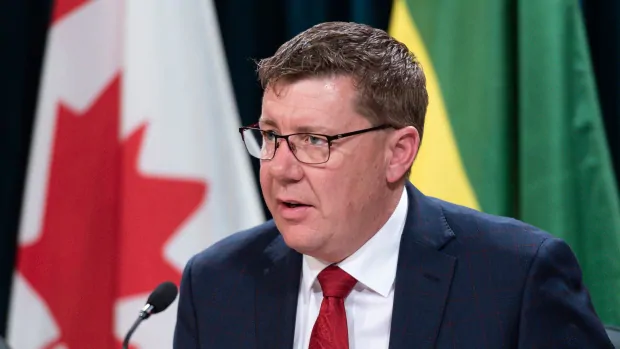
Northern crisis workers say Sask.'s response to COVID-19 outbreak too slow


Clarence Natomagan’s jubilation turned to disappointment and frustration when he saw what he called a “templated” response from the Saskatchewan government to the call for support in the north amid a COVID-19 outbreak. 

Natomagan said he initially felt relieved that the calls for help were noticed.

“Premier Moe can say we’re working with them, there’s no refuting that, but working and doing something are two entirely different processes,” said Natomagan, who is the crisis management team leader in Pinehouse. “It’s sad to be honest, because they sit at the table for a matter of minutes and say we’re committed to helping you but we haven’t seen any results.” 

The community of La Loche reported 14 cases of COVID-19 on Thursday, with five in Clearwater River Dene Nation. Four cases have also been confirmed at the English River First Nation. There are 25 positive cases confirmed in the “far north” area of the province. 

“There’s a lot of anxious people in there because now it’s in their backyard.” 

The premier and Minister of Government Relations Lori Carr “have been in consistent communication with municipal and First Nations leaders, including those in northern Saskatchewan,” a government spokesperson said Thursday after Rick Laliberte, the head of the Northwest Incident Command Centre (NWICC), spoke out about a lack of support. NWICC represents 24 communities.

Natomagan said requests for financial resources and proposals for support have been shut down without any real justification. He said NWICC members have asked for financial support to fund their check stops that could stop the more cases coming in and PPE resources. 

Yesterday, the province insisted it was providing support, but Natomagan said it was nothing more than the “usual” template response. 

“All we get is this: ‘Yes we’re trying to help. Yes I understand. It’s such a placating response from the province and there’s nothing that they’re doing. There’s absolutely nothing that they’re doing.”

On Friday, Premier Moe said the province has provided La Loche with rapid testing machines for the area, but Natomagan said that’s not extra help, rather it’s what would be required of the province to do for any region. 

Controlling the roads 

The NWICC is setting up information check stops along Highway 155. However, Natomagan said the organization has been trying to get the Ministry of Highways to shut down the roads. He said NWICC doesn’t have jurisdiction to actually turn people away. 

He’s concerned about anglers, outfitters and travellers from the south as the province “reopens.”

He said the Ministry of Highways needs to give NWICC jurisdiction and authority to stop and turn around non-permanent residents or non-essential travelers. 

“They’re so afraid of civil liberties, of us violating civil liberties of that person who is trying to visit or come fishing on our lakes,” he said. “There’s absolutely not one sentence on the table that would give us any flexibility to control traffic to our communities and thus mitigating the risk of a virus.”

La Loche community efforts underway 

Meanwhile, community leaders are working hard to do what they can. Martha Morin said everyone was hoping the virus wouldn’t hit them — but they knew the odds were high. 

Now, an outbreak grows.

“I know our community is scared. A lot of people are doing their best to try to follow the recommendations,” said Morin, who has just been designated the emergency operations centre director in La Loche.

She also said Loche and Clearwater River Dene Nation began planning for the “what-ifs” in March. 

“One of the major concerns we have is continuing to try to limit spread,”she said. “But also how do we take care of those who are in isolation who may have it or or are in isolation awaiting testing.” 

Some can’t practice physical distancing properly because they don’t have anywhere to go, she said, adding homelessness has been a challenge in the community for decades.

The community is now setting up comfortable and secure isolation units for people living in crowded homes and a temporary place for homeless people to go.

Morin said they are also working closely with SHA officials to try to control the spread. 

“They’re telling us they have a good plan in place to do contact tracing,” she said. “They said they had it under control, and we just need to support that.” 

A team of five SHA workers is in the community doing contact tracing. As of Thursday they had done more than 130 tests.

One challenge for people in the area, Morin said, is not knowing who has the virus due to the province’s privacy restrictions and protocols.

“There’s a lot of fear,” she said. “In our community people are very scared not knowing if they’ve come into contact with someone who’s been positive.”

Northern communities like a beehive 

Natomagan said how the provincial government has responded shows it doesn’t understand how northern communities are. She likened them to a beehive. 

“If there’s anything invasive the one bee brings into a beehive, the entire beehive gets destroyed. The entire colony dies.”

He said COVID-19 in the north could be the same, which is why the region needs more support.

“We’re so intrinsically intertwined,” he said. “The risk level is so much higher for us to deal with.” 

Yesterday the NDP and northern mayors called on the province for $10 million for the north, but Premier Scott Moe declined to commit to any financial assistance. 


Source link

Categories
Politics

With 22 COVID-19 cases confirmed in Indigenous communities, leaders urge officials to disclose locations


There are 22 cases of COVID-19 in Indigenous communities in B.C., according to Indigenous Services Canada, but provincial and First Nations health authorities won’t say where exactly those cases are.

Keeping the locations of COVID-19 cases undisclosed is a problem, Indigenous leaders say, because it limits what communities can do to trace the illness and protect themselves from further outbreaks.

As it stands, provincial health officials are only naming regions where cases or clusters are, and are keeping specific neighbourhoods and communities under wraps. 

Provincial health officer Dr. Bonnie Henry says that’s to ensure those infected are protected from stigma that could keep them from reporting infection.

But Indigenous leaders like Kim van der Woerd say that lack of communication and specific information makes it difficult for communities to prepare and put medical, security and monetary resources where they are needed.

“If we don’t have good data to tell us where the outbreaks are happening, then our communities aren’t able to do what they need to do to ensure their safety,” said van der Woerd, a researcher and instructor at Simon Fraser University.

Van der Woerd says in the past Indigenous people endured outbreaks of other viruses and did everything they could to curtail infection, but lost hundreds of thousands of people.

“Now we have the technology and the ability to get the data and to understand it, where historically we haven’t had that,” she said.

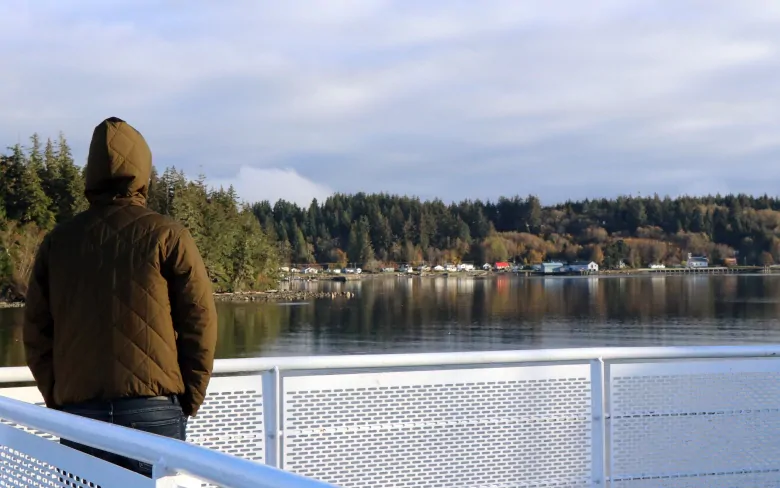
On the ferry to Cormorant Island and the community of Alert Bay, where a COVID-19 outbreak was confirmed earlier this week. (Chantelle Bellrichard/CBC)

‘Rumours fly’

The call for disaggregated data comes after an outbreak in Alert Bay, B.C., was made public by the mayor of the community on Cormorant Island, which is home to two First Nations. Mayor Dennis Buchanan went public after discovering he had the virus, even though he hasn’t left the island since the beginning of the COVID-19 crisis.

Buchanan told CBC News that two people who tested positive for COVID-19 were medevaced to hospitals outside the community.

On Monday, Henry confirmed there were six to eight cases in the community of just 1,500 people.

Alert Bay resident Ray McKinny, from the Tlowitsis Nation, is one of those infected, along with his 73-year-old mother, even though they also hadn’t left the island.

Ray McKinny, an Alert Bay resident and member of the Tlowitsis Nation, said there’s a lot of finger-pointing over how the coronavirus got into the community. (Supplied by Ray McKinny)

McKinny says there’s a lot of finger-pointing and, without official information, “rumours fly.” He says verified details about cases could protect the most vulnerable.

“I want to make sure no one gets this and I wish for everyone to stay in because [a large percentage] of this island are elders,” McKinny said. 

‘We need to know’

For other Indigenous communities on the Central Coast, fear is rising about the virus making its way in. 

The Heiltsuk community of Bella Bella enacted its own lockdown this week, including a travel ban to and from the community and strict stay-at-home and no-gathering orders.

“Knowing that this virus is continuing to spread and is making its way into the more isolated communities is what prompted us to take it to the next level,” Chief Councillor Marilyn Slett said.

She agrees more information and co-ordination is needed from the provincial and First Nations health authorities.

Chief Councillor Marilyn Slett says the community instituted emergency measures this week in order to further protect the Heiltsuk community of Bella Bella from COVID-19.  (Supplied by Marilyn Slett)

“I completely understand the stigma and people have a right to privacy and I respect that, but our community needs to know what the threats to us are and how we can protect ourselves,” she added.

But the First Nations Health Authority, which is responsible for disseminating health information to B.C. First Nations, said it is firm on keeping information about outbreaks in Indigenous communities private.

“I absolutely understand where communities are coming from,” said Dr Shannon McDonald, the authority’s deputy chief medical officer.

“However, there there is still an element of stigma and I know it’s attached to fear,” McDonald said.

‘Limited our ability to respond’

McDonald said she thinks it’s a good idea for Indigenous communities to enact their own emergency measures during the pandemic, but she emphasized that they do not have the ability to penalize people for ignoring a barrier, travel ban or curfew.

Mary Ellen Turpel-Lafond, director of the Indian Residential School History and Dialogue Centre at UBC, says such limits on enforcing orders speak to a lack of recognition of Indigenous rights. 

“We have this colonial system that’s been allowed to be there and it has limited our ability to respond in a pandemic,” said Turpel-Lafond, who recently wrote a paper looking at the implications of limited rights for Indigenous people during a pandemic.

Chief Slett says, regardless, her community will uphold Heiltsuk laws and leadership.

“We will stand behind our decisions and we will do everything we can to protect our community, under our own laws,” Slett said.

If you have a COVID-19-related story we should pursue that affects British Columbians, please email us at impact@cbc.ca.  


Source link

Categories
Politics

Ottawa working to secure PPE, more COVID-19 test kits, additional funds for First Nations, Hajdu says


For weeks, First Nation leaders throughout northwestern Ontario have been raising concerns about a lack of resources when it comes to handling the possibility of a COVID-19 outbreak in their communities.

The chief executive officer of Matawa First Nations told CBC Thunder Bay on April 17 that communities represented by his group didn’t have the resources to properly prepare for a COVID-19 outbreak.

“Our people were not at the stage where they were able to handle this pandemic,” said David Paul Achneepineskum. 

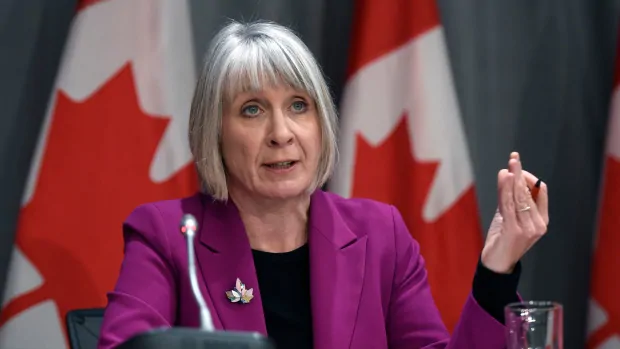
Patty Hajdu, federal minister of health and MP for Thunder Bay – Superior North, said her government is working to ensure First Nation communities have access to personal protective equipment (PPE), increased COVID-19 testing and additional financial resources.

“There are a number of different ways that communities are using the money but the idea is that the money would be flexible to help communities meet their own specific needs,” said Hajdu in an interview with CBC on Wednesday.

Assisting members on and off-reserve 

‘Each community is going to have its own unique challenges and its own approach. But that’s that’s the work that we’ve been doing at the federal level to support First Nations communities with responses that are appropriate to their own particular situation.”

Hajdu said she has seen communities use additional funds to put together different programs to assist members on and off reserves in the region.

“One of the First Nations in my riding used some of those additional funds to put together care packages for elders that are living in not necessarily on a First Nation but that are living in in Thunder Bay or in other smaller communities on the north shore to make sure that they have what they need,” she said.

Canada not ‘out of the woods’ getting PPE

But when it comes to securing PPE, Hajdu said Canada is not “out of the woods yet”.

“It’s a very tight market out there,” she said. ” Globally everybody is trying to procure, and as each country sort of enters its peak it creates another sort of shock wave… through the supply chain where the demand exceeds the capacity or supply, not just domestically but globally.”

Hajdu said there are a number of approaches in place that will help to secure equipment that is in high demand, and teams at the federal level are working on procuring PPE from several countries.

“We’ve also started boosting our own domestic capacity to create some of the products that we know are in short supply or that we’re going to need an ongoing demand of,” she said.

 Hajdu said chemical reagents used in COVID-19 testing are an example of a product that is now being produced in Canada.

“Reagent has been really hard to procure and we’ve may now managed to support a company in New Brunswick who is now able to domestically create that reagent…that means we can get it out to provinces and territories much more quickly,” she said.

Hadju added that approvals through Health Canada for testing kits have also been accelerated, and surgical gown manufacturing is now being source domestically, which will also help meet a growing need.  


Source link

Categories
Politics

COVID-19 risk to Indigenous communities will rise when provinces ease lockdowns, says federal official


Indigenous communities will face elevated risks of COVID-19 infections once provinces and urban centres begin easing lockdown restrictions, says a top official with the First Nations and Inuit Health Branch.

COVID-19 rates in Indigenous communities are currently running below the national percentage. The First Nations infection rate is at 0.01 per cent of the on-reserve population, while the rate is 0.09 per cent for the rest of the country, according to Valerie Gideon, senior assistant deputy minister for the First Nations and Inuit Health Branch (FNIHB).

Gideon said these gains against the virus could be undermined once provinces and cities begin to ease restrictions.   

“There will be an increased risk for Indigenous communities if larger urban centres start to reopen schools or reopen businesses,” said Gideon.

First Nations across the country have implemented various levels of community lockdowns across the country including blocking access by outsiders, limiting outgoing trips to essential travel and requiring returning community members to self-isolate for 14 days upon their return.  

Gideon said these measures have helped keep infection rates low — currently there are 76 COVID-19 cases on-reserve and 14 in the Inuit region of Nunavik, in northern Quebec.

Difficult choices

As lockdown measures begin to ease around them — which is starting to be discussed in some provinces like Quebec, Saskatchewan and British Columbia — communities will be faced with difficult choices.

“Do they follow suit or do they remain more stringent with respect to physical distancing measures because they have higher factors of vulnerability?” said Gideon.

“There are communities that are 20 minutes from an urban centre. Some communities are in the middle of an urban centre. It is impossible for those communities to be completely closed off if cities decide to open up their operations.”

Fly-in or more remote First Nations face different variables and pressures when it comes to deciding when they should open up their territories, said Gideon. 

“I think we will be involved in those discussions and I think those discussions will be dependent on each of the provinces,” said Gideon. 

“We will need to look at specific situations.”

Lloyd Phillips is the commissioner of public safety at the Mohawk Council of Kahnawake. (Jessica Deer/CBC)

In Kahnawake, just south of COVID-19 hotspot Montreal which has 9,856 COVID-19 cases, the council passed an official state of emergency on Tuesday.

The Mohawk community, which has recorded at least 13 COVID-19 cases, is closed to outsiders and running only essential services.

Lloyd Phillips, Kahnawake’s commissioner of public safety, said in a Facebook live broadcast Wednesday that the community’s COVID-19 task force would make its own decisions independent of what Quebec and Montreal do in terms of easing any restrictions.

“What they do on the outside, we analyze it, we see what they are doing, but it will be the Kahnawake COVID-19 task force that decides how that does or does not apply to our community,” said Phillips.

“When it comes to issues like schools, it will be up to the Kahnawake task force who will determine if and when those schools will open. We will also decide if and when other governmental organizations will open and things of that nature.”

Harvey Yesno is chief of Eabametoong First Nation in northern Ontario. (Dave McSporran/Bottled Media)

Eabametoong First Nation Chief Harvey Yesno, whose fly-in northern Ontario community about 300 kilometres north of Thunder Bay has recorded one COVID-19 case, said he favours keeping lockdown measures in place beyond provincial timelines.

“We are isolated and remote. We don’t have the same support structure. Some of us are on boil water advisories,” he said Yesno. 

Yesno said his concern about the risk COVID-19 poses to his community, which suffers from overcrowded housing, won’t wane until a vaccine is found. 

However, he expects pressure soon from community members to loosen restrictions as the issue triggers more discussion in the news. 

Some community members have seen a pause in their planned counselling sessions for issues like dealing with grief and residential schools and they want to restart them, even if it means flying to Thunder Bay. 

“I am going to be under pressure, too,” said Yesno. 

“If we open that up, we will have more traffic of people.” 


Source link

Categories
Politics

RCMP investigating incident at Tiny House Warriors village in Blue River, B.C.


RCMP in Clearwater, B.C., are investigating an incident that took place at the Tiny House Warriors village in Blue River over the weekend. 

Blue River is about 175 kilometres north of Kamloops.

Kanahus Manuel, a high profile Secwepemc land defender and spokesperson for the village, said she feared for her life when four strangers showed up unexpectedly on Sunday night.

She said they came into the encampment area driving off-road vehicles, smashing through barriers at the entrance and knocking down signs. 

At one point, she said one of the men stole her truck and rammed it into the tiny house she’d taken refuge inside. 

“By the time the impact hit, I was jumping onto the floor from my bed,” she said. “I was so shook and scared.” 

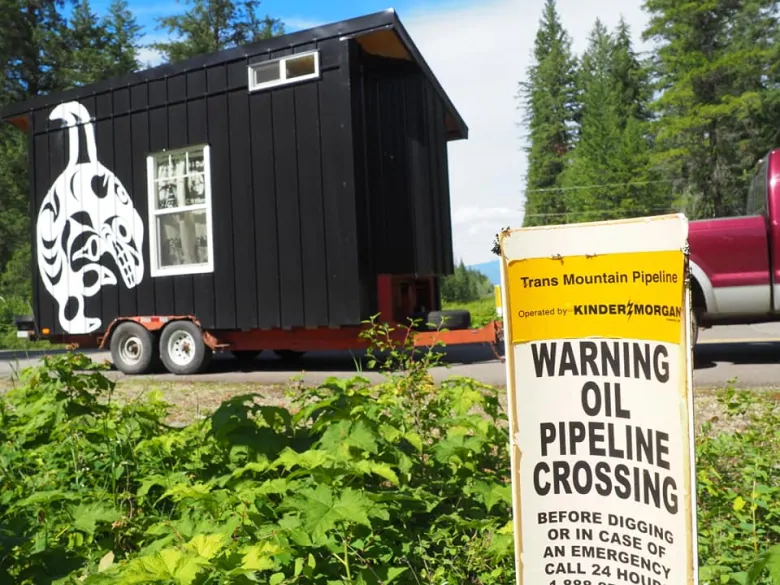
The Tiny House Warriors have taken up residence in tiny homes built and placed strategically along the route of the Trans Mountain pipeline expansion project in an effort to block access to pipeline construction in Secwepemc territory. 

One of the small structures built by the Tiny House Warriors for placement along the construction route of the North Thompson portion of the Trans Mountain pipeline. (Kanahaus Manuel/Facebook)

Manuel said at one point the men shouted at her “You think you can stop this? You can go live wherever you want?” 

Manuel said the whole incident lasted about half an hour and no one was physically injured, but she said three of the men physically attacked one of the men at the village at one point. 

She said she worries that as pipeline construction comes closer and as temporary workers move into the area, incidents like this will increase. 

Photos of two of the men who were involved in the alleged events have been circulating widely on social media. 

In an emailed statement, a spokesperson for Trans Mountain said the individuals in the photos that are circulating online “are not part of the Trans Mountain workforce” and there are currently no worker accommodation camps in the area. 

“The police need to pursue and track down the offenders,” wrote Judy Wilson, elected chief of the Neskonlith Indian Band near Kamloops, in a news release about the incident. 

“They need to be taken into custody to ensure safety of the human and Indigenous rights defenders and the public.” 

The RCMP said they’ve been in touch with the complainant to get more information about what happened but have released no other details about the status of the investigation. 


Source link

Categories
Politics

Prince George family looks for answers after man dies in police custody


A man who was hospitalized after being arrested by RCMP in Prince George, B.C., has died, leaving behind a large family in grief. 

Everett Patrick was taken off life support on Friday and died early Monday morning at the Prince George hospital, according to his sister Miranda Thomas. 

The Independent Investigations Office of B.C., which is responsible for investigating police-related incidents of death or serious harm, would not confirm Patrick’s identity but said its team is investigating to determine what role, if any, the RCMP’s actions or inaction may have played in his death.

Patrick was hospitalized on April 12 after being taken into police custody and went into “medical distress,” according details from the police watchdog organization. 

Thomas said the grief of the situation has been amplified by the COVID-19 pandemic, which meant most family members couldn’t be in hospital with him during his final days. 

She said many of her final hours at the hospital were spent video-calling family so they could see and talk to Patrick. 

“Letting him go was really hard,” she said. 

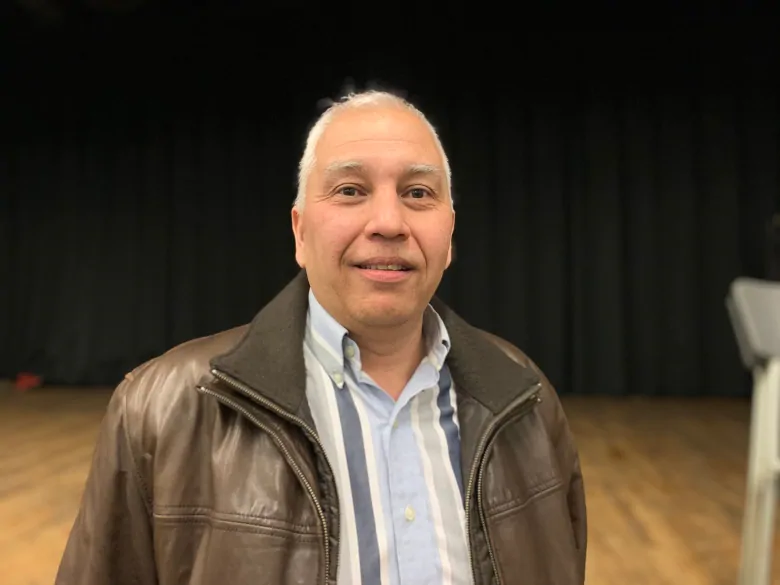
Everett Patrick, a member of the Lake Babine Nation, was 42. 

Brought to hospital twice on the day of his arrest

Patrick was arrested on the morning of Sunday, April 12, after police responded to a report of a commercial alarm that had gone off at a business in downtown Prince George. 

Police said that when officers arrived, the male suspect tried to run away. Police said the suspect ran back into the business and out of safety concerns they called in the Emergency Response Team. 

Police said they arrested the man hours later, with help from a police dog team. 

In a news release about the arrest, RCMP said the man was taken to hospital to be treated for minor wounds before being taken back to the detachment. 

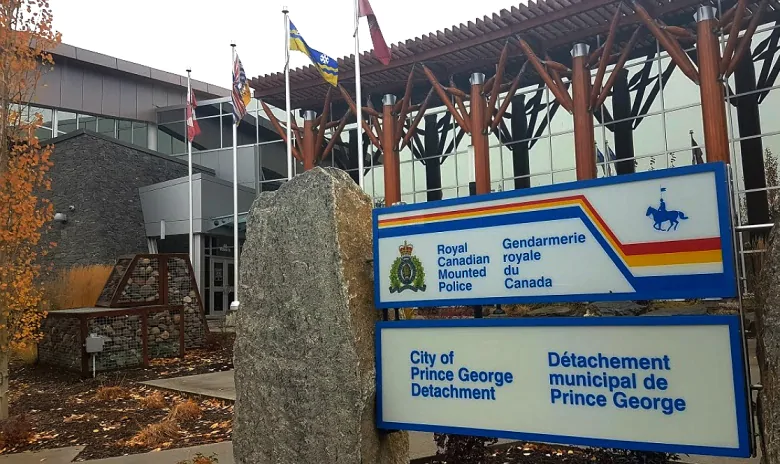
The Prince George RCMP detachment. (Andrew Kurjata/CBC)

Thomas said her understanding was that Patrick was treated for injuries from the police dogs involved in his arrest. 

According to the Independent Investigations Office, hours after he was taken back to the detachment “the male went into medical distress and was transported to hospital where he was found to be suffering from serious injury.” 

Thomas said when the family was first told about Patrick being taken to hospital “they said he was having a seizure in the jail cell.” 

She said the doctors told the family a CT scan revealed Patrick had bleeding in his brain requiring emergency surgery and that he wasn’t expected to survive. 

Thomas said the family is suspicious of what took place between Patrick and the RCMP and want answers about how he ended up in hospital for the second time that day.  

Investigator cautions against making assumptions

Ron McDonald, the Independent Investigations Office chief director, said “we will of course seek all evidence that we have.”

But he cautioned against making assumptions about what led to Patrick’s death, adding that investigators don’t yet have all the facts of the case. 

An autopsy is expected to take place on Thursday.

An undated photo of Everett Patrick, who was a member of the Lake Babine Nation. (Family handout)

McDonald said in addition to what they can learn through the autopsy, “in any custody situation we typically have access to video that will show us almost every minute once they’re brought into a detention facility.” 

Anyone with information that might be relevant to their investigation is encouraged to phone the office’s witness line. 

With Patrick’s death being publicized in connection with a police incident, the family said they want people to know that he was someone who lived a difficult life but that he was also a person who was quick to help others and loved spending time with his family. 

Thomas said when they were children, being raised by their grandmother, Patrick was a happy-go-lucky kid and that he grew up to be someone who played a protective role in her life, even as he struggled with addictions and became involved in the criminal justice system. 

“He was always there for family,” she said. 


Source link