Categories
Politics

Traditional crafters Indigenizing face masks during COVID-19 pandemic


Some Indigenous artists are channelling their anxieties about the COVID-19 pandemic into making unique face masks using traditional crafting techniques and materials. 

“During the pandemic, I’m trying to learn to relax and do stuff for me,” said Marlana Thompson from Akwesasne, a Mohawk community straddling the Ontario, Quebec and New York state borders. 

She created a mask adorned with beaded strawberries, cedar and spruce needles in the traditional Haudenosaunee raised beading style. 

The mask also says “C-19 2020” to commemorate the pandemic. 

“So that we don’t forget what happened,” Thompson said. 

Thompson said she believes that this is a time for reflection and that there are good things coming out of the situation like families coming together through physical distancing and people taking more control over their lives and the food they bring into their homes.

“I think it’s a wake-up call for everybody to be cleaner and more mindful of where they are and how they live their lives,” she said. 

The elements she included in the mask are all significant to her family, from cedar used in tea and strawberries that they harvest on their property.

The mask also has a special pocket sewn inside for sage and cedar. 

Plague doctor mask

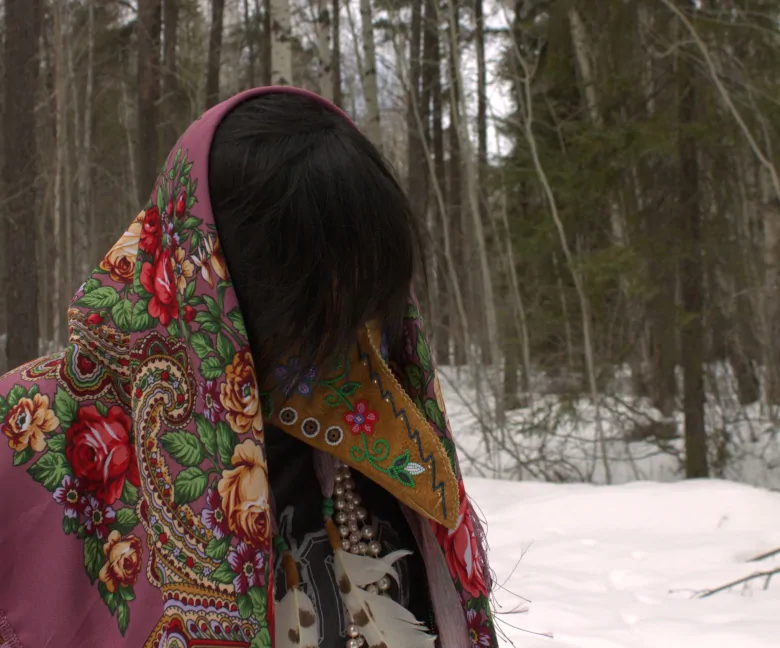
Another mask that has “gone viral” across social media is a plague doctor style one designed by Delores Gull.

“At first I didn’t know what ‘viral’ meant until my daughter was explaining it to me,” she said.

Gull, who is Cree and a member of Weenusk First Nation in northern Ontario, currently resides in Timmins, Ont., and has been beading for 30 years. 

Delores Gull wears a plague doctor-style mask that she designed. (Faith Gull)

The idea to create the mask came after her daughter showed Gull the Facebook group Breathe, which calls on traditional bead and craft artists to use the concept of the face mask but express themselves in their design. 

“I came across this plague doctor mask and it reminded me of the ceremonies that we attend,” Gull said. 

During the bubonic plague era in Europe, plague doctors wore masks with extended bird-like beaks stuffed with aromatic plants or spices.

In Gull’s version, the thunder bolt represents ceremony, the three circles on the bottom of the beak represent life and the beaded flowers represent the medicines on the land. 

Once the mask was complete she put together an outfit including a ribbon skirt designed by Delina White and took photos with her daughter. 

Delores Gull from Weenusk First Nation created this plague doctor mask after noticing a similarity to Cree ceremonial masks. (Faith Gull)

The mask itself is made out of caribou hide that was a gift from her mother and also has hanging snowy owl feathers that were a gift from her late grandfather. 

“It means the world to me,” she said. 

Woven basket mask

Mi’kmaw artist Jennifer Pictou, who is a member of the Aroostook Band of Micmac in Maine, said she is channeling anxieties around the pandemic into her craft. 

“We’ve never seen anything like this, so I’m just working out what’s inside through some traditional methods,” said Pictou. 

Jennifer Pictou made a Mi’kmaw basket-style mask. (Submitted by Jennifer Pictou)

A bead artist by trade, she said she has made black ash work baskets and thought a basket-style mask would be a way to connect with her family while being away from them. 

“This was tapping into something that I could really work with, one of our traditional resources that is directly tied to our land,” said Pictou. 

The mask is partly tongue-in-cheek, she said, but it also has a deeper meaning.

“I sat down, I said, ‘what means the most to my tribe, my people, my community?’ And that was a utilitarian basket,” she said.  

“This is my artistic statement on cultural adaptation to what is going on today while retaining some sense of cultural identity.”
Source link

Categories
Politics

Mohawk community of Akwesasne opens its own COVID-19 testing site


People in Akwesasne will now be able to get tested for the novel coronavirus without leaving the community.

The Mohawk Council of Akwesasne received permission from the Eastern Ontario Health Unit to operate a mobile testing clinic to address the unique geographic challenges of the Mohawk community, which straddles the Ontario, Quebec, and New York State borders.

Prior, community members would have had to travel to either nearby Cornwall, Ont., or around 60 kilometres away for testing in Huntingdon, Que., or Valleyfield, Que., depending on which provincial health care card they had.

The council says it’s one of the first mobile testing clinics operated by an Indigenous public health body in Canada.

“As a small community, we want to maintain patient privacy and to have control over our own medical information. Mobile testing for COVID-19 allows us to maintain both in our own setting,” Mohawk Council of Akwesasne Grand Chief Abram Benedict said in a statement.

“Having our residents seen by our own, local medical professionals and caregivers also adds a sense of calming to what is already a very stressful situation for those seeking testing.”

Benedict said the data will allow leadership to make proactive decisions for ordering medical and food supplies, schooling, and operating hours for local businesses.

“There are so many factors at play when considering the safety of our community at large, and having even basic data about our infection rates helps,” he said.

The unit was set up this week as a drive-through site and the Mohawk Council’s department of health is accepting appointments.

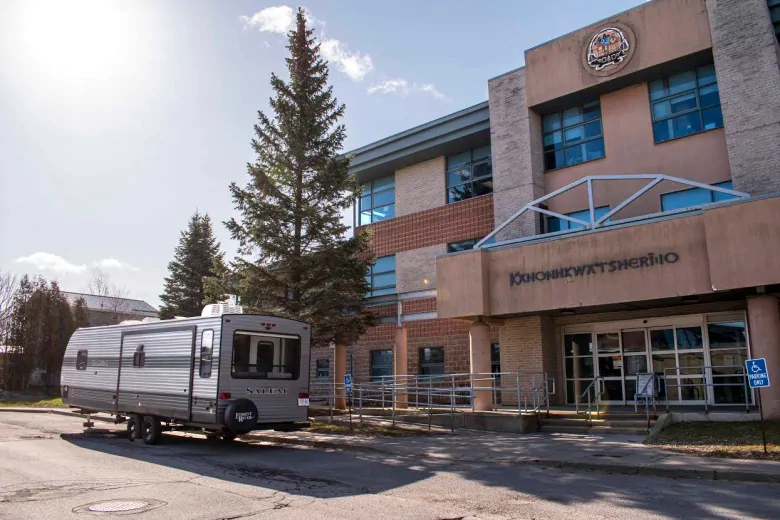
Community members with symptoms are asked to call the Community Health Program at 613-575-2341 ext 3220. If you meet the criteria for testing you will be given an appointment location, date and time. (Submitted by MCA Communications Unit)

The Mohawk Council’s department of health said it doesn’t have a health data sharing agreement with New York’s Franklin County Health Department, so the mobile testing site is limited to those members with Ontario and Quebec health care cards and an Akwesasne status card.

Community members with symptoms are asked to call the Community Health Program and speak to an MCA Community Health Nurse to determine if they meet the criteria for testing.

1 confirmed case recovered

To date, there’s only been one confirmed case of COVID-19 reported in Akwesasne, and it was investigated by the Franklin County Public Health Department. The individual, whose identity was protected, published a self-report on the St. Regis Mohawk Tribe’s Facebook page on March 30 stating that they fully recovered.

“I wanted to share with you the message of hope that this proves that people can overcome it. I know the severity of the virus and how it may affect people differently. That’s why I followed the protocol to self-quarantine,” the individual wrote in the post. 

“I know fear can consume a community, but please remember that I am a person, I’m someone’s child, I matter. To read some of the negative comments on social media were hurtful and unnecessary. I did not intentionally get infected and would never put anyone’s well-being at risk.”


Source link

Categories
Politics

Mi'kmaw communities in Nova Scotia pay tribute to victims of mass shooting, RCMP


Mi’kmaw communities across Nova Scotia, also known as the ancestral territory of Mi’kma’ki, are showing their support for the victims of a mass shooting that spanned 50 kilometres across the province. 

The 12-hour ordeal began late Saturday, and resulted in a gunman killing at least 20 people, including an RCMP officer. It’s considered to be one of the worst mass killings in Canadian history. 

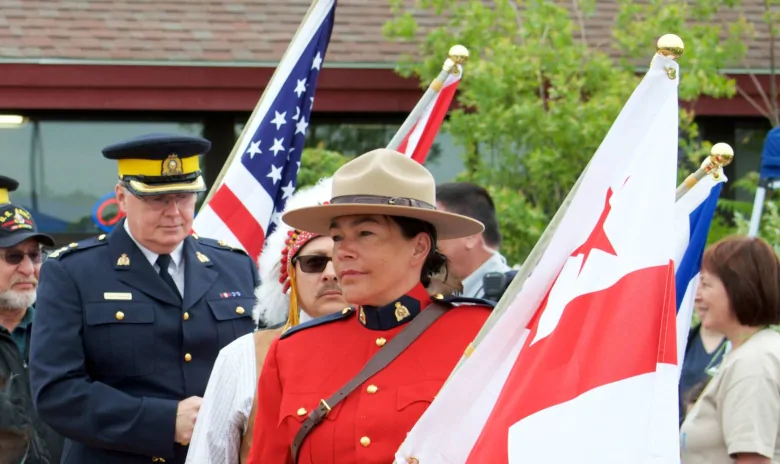
On Sunday evening in Sipekne’katik First Nation, just a short drive away from at least two locations where shooting occurred, RCMP Cpl. De-Anne Sack, members of the drum group Eastern Eagle, and other Sipekne’katik members honoured the victims and police with prayers and song outside the community’s RCMP detachment.

“We’re at a loss. We’re all empty, and we all hurt,” said Sack, who’s been an RCMP member for 23 years. 

“The only thing we could think to do was that Honour Song. To pay tribute to everybody in a kind and gentle way.” 

Sack said she and the other community members had no intention of posting the video online, but a passerby asked if they could share the song through a Facebook livestream. Sack began by reading a prayer specifically for police officers.

In her career, Sack said she’d occasionally crossed paths with 23-year RCMP veteran Const. Heidi Stevenson, who was killed in the attack. Sack said Stevenson was well-liked in the Mi’kmaw communities she frequented, attending events and ceremonies.

“In any situation, she was kind, compassionate, caring and thoughtful. When you’re in Mi’kmaw communities, that’s what people look [for]. Somebody that’s down to earth,” said Sack. 

“She’s somebody’s daughter. She was a mother. She was a sister, a comrade and I was so numb. I was shocked as the day progressed and the tragedies continue to unfold like a horrific nightmare.” 

Mi’kmaw RCMP Cpl. De-Anne Sack. (Submitted by De-Anne Sack)

The Assembly for Nova Scotia Mi’kmaw Chiefs — elected officials from the 13 communities — offered their condolences to those affected in a statement released Monday. 

“We all have been shaken by what has happened in our region and the Mi’kmaq of Nova Scotia mourn the losses of these individuals alongside our family, friends and neighbours,” said Chief Sidney Peters, co-chair of the assembly, in the statement. 

“Our police officers work tirelessly everyday to protect the lives of all of us. Yesterday’s incident was a clear indication of the sacrifice they, and their families make, to serve and protect.”

Sacred fire burning

Trevor Chenier, an Ojibway man from Michipicoten First Nation in Ontario who is living in N.S., is working with Mi’kmaw friends and colleagues to begin a sacred fire outside the RCMP detachment in Enfield, N.S. 

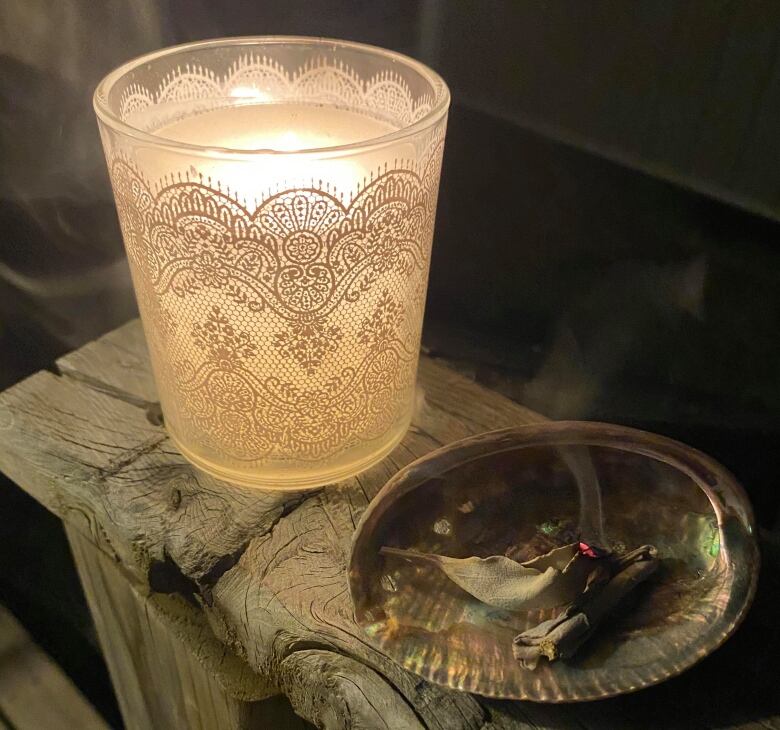
People across Nova Scotia burned a single candle Monday night, in honour of the victims in the mass shooting, and RCMP. Cheyenne Isaac-Gloade included sacred Mi’kmaw medicines. (Cheyenne Isaac-Gloade/Facebook)

Chenier said the idea came from a conversation with Enfield RCMP officials, after he’d visited a community memorial outside the detachment to perform a personal smudging ceremony. 

“I offered to gather the Mi’kmaw community here and arrange a sacred fire to honour the tragic passing of Heidi Stevenson and all others that we lost,” said Chenier. 

“[The sacred fire] is to help everyone cope.” 

Chenier said that as per cultural practice, the fire will burn for four days to honour the victims and to help others acknowledge the tragedy. He said he’ll be keeping a 24-hour vigil.


Source link

Categories
Politics

Cluster of COVID-19 cases confirmed on Cormorant Island off the B.C. Central Coast


A cluster of COVD-19 cases on Cormorant Island, B.C., has led to the declaration of a local state of emergency for the ‘Namgis First Nation, Whe-la-la-u Area Council and Village of Alert Bay. 

Speaking at her daily news briefing on Monday, Dr. Bonnie Henry said “my understanding is there’s somewhere around six or eight people who have tested positive so far in the community.”

The Vancouver Island Health Authority wouldn’t confirm to CBC the exact number of positive cases, citing privacy. 

‘Namgis elected Chief Don Svanvik said “it’s a scary thing” knowing there are several cases of the virus on the island. He said the local governments are pulling together to ensure they can stop it from spreading any further. 

The health authority said it continues to test close contacts of confirmed cases and others in the community “to identify potential cases as quickly as possible.” 

Cormorant Island, which is a short ferry ride from northern Vancouver Island,  is home to roughly 1,500 people.

There is a health centre on the island, but the health authority said anyone requiring hospitalization because of the virus will be transferred off-island for care. 

Svanvik said this is an important part of the integrated planning for the virus because of limited health resources.  

“We have one ventilator, so if that ventilator’s in use and someone else needs it, we’re in a predicament.”

Svanvik said at least one person with COVID-19 has already been transferred off-island for care. 

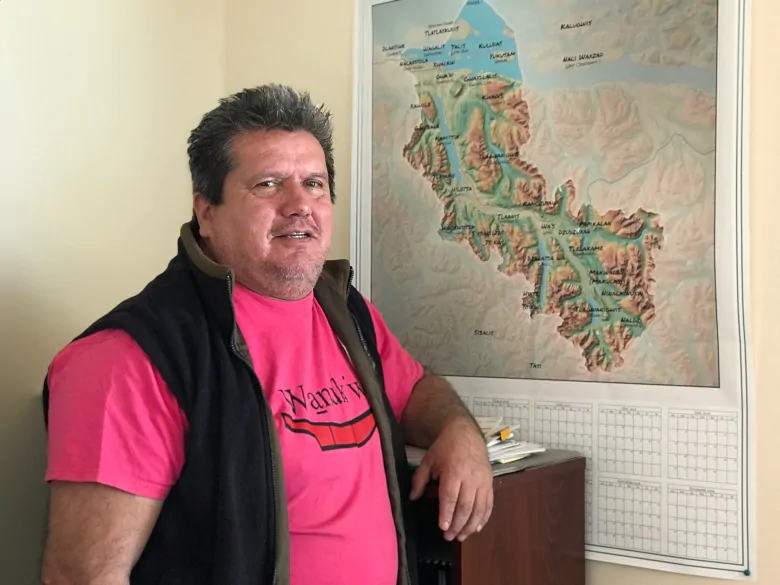
Don Svanvik is the elected chief of the ‘Namgis First Nation. (Megan Thomas/CBC)

Curfew and ferry travel restrictions to be implemented 

In declaring a local state of emergency, local authorities on Cormorant Island are actively working to implement stricter measures on residents — beyond those already in place under the provincial rules. 

The plan is to implement an island-wide curfew that will begin at 9:30 p.m. 

Ferry travel will also be restricted.

In order to allow people who need to take the ferry to Vancouver Island for work or medical appointments, the local governments are planning to issue passes to people for essential travel. 

“For those that wish to ignore that, you may leave Cormorant Island, but you will be restricted in your ability to come back until the local state of emergency has been lifted,” said Alert Bay Mayor Dennis Buchanan, who is still recovering from COVID-19. 

Buchanan tested positive more than a week ago and was the first person on Cormorant Island to speak openly about having the virus. 

“Just shortly after I tested positive, there were a few other confirmed cases,” he said. “We’re not sure exactly how it got here.” 

Svanvik says regardless of how COVID-19 arrived, “the reality is it’s here and we’ve gotta fix it.”


Source link

Categories
Politics

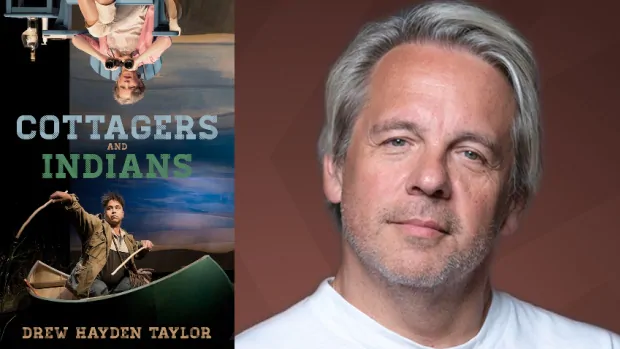
Drew Hayden Taylor among 11 writers longlisted for $15K Stephen Leacock Medal for Humour


Playwright and novelist Drew Hayden Taylor is among the 11 writers longlisted for the 73rd Stephen Leacock Memorial Medal for Humour. Taylor is nominated for the play Cottagers and Indians.

The prize, worth $15,000, is awarded to the best book of humour each year.

There were 84 books up for consideration this year.

The 2020 longlist includes eleven books instead of the usual 10. A press release said that two books tied for last place.

Taylor’s Cottagers and Indians explores the relationship between Indigenous residents and recreational cottagers living on the same lake in the Kawarthas region of Ontario and it’s based on a true story that took place in the Kawartha Lakes region of Ontario.

Broadcaster Bill Richardson is also on the longlist for I Saw Three Ships.

I Saw Three Ships features eight linked stories, all set around Christmastime in Vancouver’s West End neighbourhood, and explores a community vanishing under pressure from development and skyrocketing real-estate prices.

Richardson previously won the Stephen Leacock Medal for Humour in 1994 with his book Bachelor Brothers’ Bed and Breakfast.

The longlist for the 2020 Leacock Medal is:

  • All the Wrong Moves by Sasha Chapin
  • The New Canadian Curling Club by Mark Crawford
  • Are You Kidding Me?! by Lesley Crewe
  • Out for Stars by Colleen Curran
  • The Art of Being Lewis by Daniel Goodwin
  • Molly of the Mall by Heidi L. M. Jacobs
  • Christmas in Mariposa by Jamie Lamb
  • Cafe Conversations by Marion Reidel
  • I Saw Three Ships by Bill Richardson
  • Crow by Amy Spurway
  • Cottagers and Indians by Drew Hayden Taylor

Three finalists will be revealed on May 1, 2020 and the winner will be announced on June 5, 2020. 

The 2020 Stephen Leacock Memorial Award for Humour gala dinner was cancelled due to the ongoing COVID-19 pandemic. The winner will receive their medal and prize money as scheduled.

All of the 2020 shortlisted authors will be invited to attend next year’s gala in June 2021 for a belated celebration.

Last year’s winner was Cathal Kelly for his memoir Boy Wonder.

Other past winners include Patrick deWitt, Cassie Stocks and Terry Fallis.  


Source link

Categories
Politics

Curfews, lockdowns, and checkpoints: How First Nations are grappling with the COVID-19 pandemic


While the number of confirmed COVID-19 cases increases in First Nations across the country, some communities have issued lockdowns, erected checkpoints, and implemented curfews to curb the spread of the pandemic.

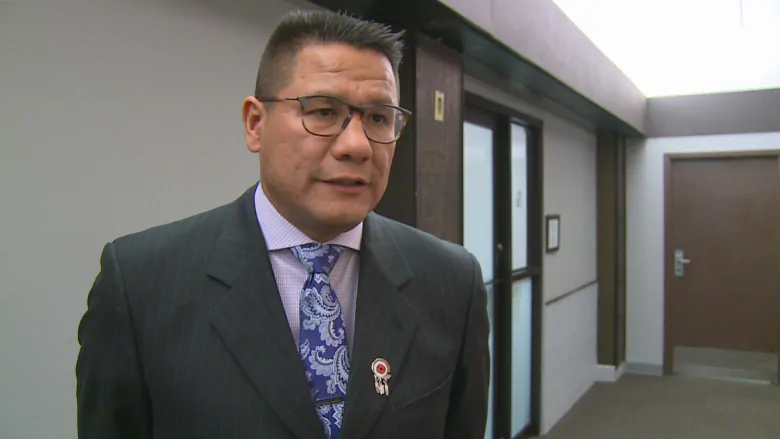
The Opaskwayak Cree Nation near The Pas, Man., passed a motion to evict tenants who continue to disobey physical distancing rules by having large gatherings, house parties, or selling illicit drugs.

Onekanew (Chief) Christian Sinclair said members caught having more than 10 people on their property — whether in a home, garage, or shed — will receive an eviction notice once the First Nation’s state of emergency is lifted.

“The idea is to be proactive, rather than reactive,” said Sinclair.

“We’ve had band members that are concerned about their health and wellbeing, recognizing the fact that we have a high rate of diabetes in the community. We wanted to ensure [we] heard the membership, and have taken action on it.”

Opaskwayak Cree Nation Chief Christian Sinclair says the First Nation will evict tenants who disobey physical distancing rules by having large gatherings and house parties. (CBC)

The community also implemented a 10 p.m. to 6 a.m. curfew and hired over a dozen members to act as security. Sinclair said depending on the situation, verbal warnings, written warnings or a $100 fine could be issued.

“If they’re caught having a party or exceeding the number of 10 people at social gatherings, they will be evicted once this COVID-19 crisis ends,” he said.

“There’s zero tolerance for that type of activity because we value the importance of life and the severity of this pandemic.”

Enforcement an issue

There are currently no positive cases of the coronavirus in Manitoba First Nations, but the number of cases on reserve in British Columbia, Saskatchewan, Ontario, and Quebec has risen to 52 as of April 19 according to Indigenous Services Canada. One death was also reported in Six Nations of the Grand River in southern Ontario last week.

British Columbia Saskatchewan Ontario Quebec
6 5 14 27

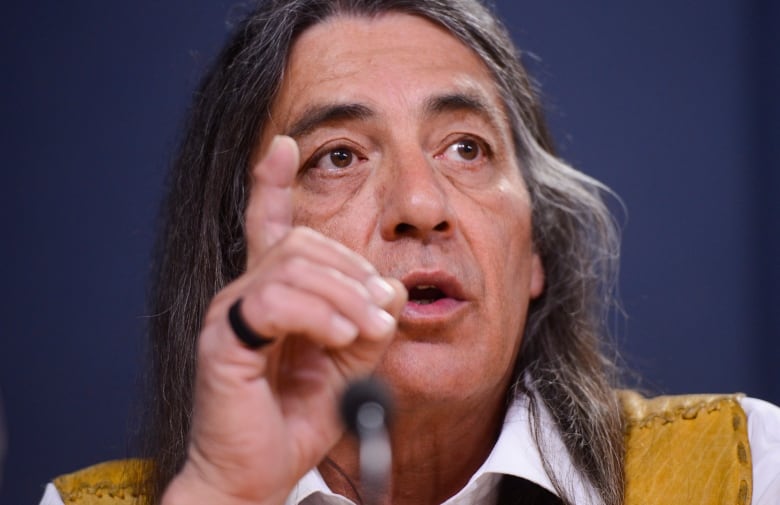
The majority of cases are in Quebec. It’s why Serge Simon, the grand chief of the Mohawk Council of Kanesatake, plans on hiring around 30 community members to staff checkpoints into the Mohawk community northwest of Montreal.

There are no positive cases in Kanesatake, but the community closed its cannabis dispensaries and tobacco shops last month to limit non-local traffic. Enforcement has been an issue, said Simon, as Kanesatake doesn’t have its own police force.

Mohawk Council of Kanesatake Grand Chief Serge Otsi Simon says his community’s lack of a local police force makes enforcing restrictions on access to the reserve difficult. (Sean Kilpatrick/The Canadian Press)

“We’re trying to keep outside agencies from imposing their jurisdiction on us, so if we don’t do it for ourselves, it leaves a vacuum and opportunity for the province to take over,” said Simon.

“We want to tell the customers that come here to stop, turn around, and go home. When this thing is over, we don’t want our businesses to suffer. We want to make sure when they’re turned around, they’re done so politely and under strict guidelines.”

Akwesasne, a Mohawk community that straddles the Quebec, Ontario, and New York State borders, also enacted an emergency curfew law this week, keeping members inside between 10 p.m. and 6 a.m. It comes with a $1,000 fine for those who contravene. 

Matt Rourke, chief of police of the Saint Regis Mohawk Tribal Police, said in a video message to the community this week that they’ve been seeing high amounts of traffic at night after stores in the region are closed.

“It’s unfortunate.There’s no reason for anybody to be out after 10 p.m. to 6 a.m.,” said Rourke.

“Our biggest thing is our traffic volume. We need to reduce that to the community for public safety.”

Cottagers a problem

Other communities in Ontario have faced challenges with enforcing pandemic measures. Whitefish River First Nation on Manitoulin Island restricted access to the community as a part of a four-phase pandemic plan that could lead to a total lockdown but is struggling with getting cottagers and snowbirds who aren’t from the community to co-operate.

Whitefish River First Nation in Ontario is struggling with getting cottagers and snowbirds who aren’t from the community to co-operate with its community restrictions. (Erik White/CBC )

Whitefish River is policed by the UCCM Anishnaabe Police Service, which services five other First Nations on and near Manitoulin Island.

“Because of distance, it’s difficult for our police force to adequately provide service especially during these times,” said Art Jacko, band manager.

He said they may have to invoke a newly-passed trespass bylaw on the cottagers who are still in the community.

“We really don’t want to do that. We want to maintain positive relations, but at the same time our priority is the health of our community,” he said.

“Seventy-five per cent of our residents have compromised immune conditions. One case of COVID-19 will have such an impact that will be very difficult to overcome.”


Source link