Categories
TV & Movies

Straight Outta Culture: Sexism in Black and White

Thumb_2443_d027_00280r_crop

It’s not surprising to me that “Straight Outta Compton” raked in over $60
million during its opening weekend and held the #1 spot for a second week. Nor is it surprising that the film has been criticized for glossing over
how the radicalization of black men often goes hand-in-hand
with the denigration of black women. But there’s another,
unintended side effect of this film’s success: it should make us consider forgiveness,
and who gets to access it.

“Straight Outta Compton” throbs with an undercurrent of violence and
anger that pushes sharply against the narrative of post-racial ignorance far
too many people took comfort in at the time. Director F. Gary Gray captures it
all brilliantly and vibrantly; I nodded my head when Eazy-E seethed after the
Rodney King verdict, remembering how confusing and infuriating it was that
every officer was acquitted, and I got chills when Ice Cube defiantly signaled the
rest of the crew to play “Fuck Tha Police” in Detroit after a police
warning resulting in their arrest.

But this emphasis also amounts to a revisionist history of the group’s timeline, leaving out the prominent, complicated issue of N.W.A.’s violent misogyny. Their lyrics made it clear that
women were nothing more than “bitches” and “hos,” and scenes in the film show
the women in the lives of these rappers as either overbearing mothers or
half-naked sexual props. Sure, Ice Cube brought his wife to a business meeting,
and she appears again later to momentarily commend him for working on the
screenplay for “Friday,” but those
moments are fleeting; they skip ahead to Dr. Dre meeting his wife Nicole in
1996, but leave out how he famously assaulted journalist Dee Barnes in 1991, or
that longtime girlfriend and artist Michel’le went on the record to accuse him of breaking her nose and ribs during the six years they were together. In
the parlance of Black Lives Matter, social justice initiatives like #SayHerName
remind us that black women suffer, too. We’re still doing the heavy lifting of
trying to convince people that within the wheel of racism all people of color
suffer, but with the added layer of misogyny, women still have it worst. The
troubling question is: Why can’t we focus on saving the lives of black men and
black women at the same time?

But there’s something different that connects blackness, violence and
misogyny. If you look at violence as a symbiotic relationship, it’s easy to see
the map of how some black men being brutalized by the police end up brutalizing
women. Assata Shakur and historian Robin Spencer each wrote
about the domestic violence women in the Black Panther party suffered; Eldrige
Cleaver once theorized that women’s bodies were a reward for
political success. People were breaking their own arms to write about the
genius of Chris Rock’s 2014 film Top Five
without a passing glance to the fact that most of the women in it are referred
to as hoes, reporter Chelsea Brown (Rosario Dawson) has to write under a pen
name when she addresses “fluffy women’s stuff,” and Rock’s bodyguard Silk (J.B.
Smoove) sexually harasses every woman that walks within a twenty foot radius. Rock
also makes an appearance on Kanye West’s song “Blame Game,” where he
compliments a woman for taking her “pussy game to a whole other level” on his
birthday. Black women’s bodies are often treated as a reward for black men’s existence.

When Dee Barnes wrote about “Straight Outta Compton” from her own perspective for Gawker,
she made a startling connection: F. Gary Gray was behind the camera and was
responsible for filming the Ice Cube interview that Dr. Dre cited as justification for assaulting her.
When Barnes auditioned for a role in the 1996 film Set It Off, she was told by the director—F. Gary Gray—that he
couldn’t cast her because Dr. Dre was going to play the role of Black Sam. It’s also recently come to light that there
was a scene about the Barnes attack in the film, but it was cut. Dre, who pleaded no contest to attacking Barnes and was given probation, issued an apology to Barnes yesterday, twenty-five years later; during that time, Gray built a solid career alongside Dr. Dre while Barnes
worked nine-to-five jobs to make ends meet. Ice Cube remains
unrepentant about how he talks about women, appearing to have learned
nothing at all. “If
you’re a bitch, you’re probably not going to like us,
” he says. “If
you’re a ho, you probably don’t like us. If you’re not a ho or a bitch, don’t
be jumping to the defense of these despicable females. Just like I shouldn’t be
jumping to the defense of no punks or no cowards or no slimy son of a bitches
that’s men. I never understood why an upstanding lady would even think we’re
talking about her.

That Kanye
West co-produced “Top Five” offers more confirmation of how men in the entertainment industry find ways to support each other at the expense of women. It also suggests that this “hard” attitude towards women is learned, not necessarily innate to men of a particular upbringing. Unlike the former members of N.W.A, West was raised by a middle-class academic woman. Rock’s father is a newspaper deliveryman, and his mother a teacher and social worker mother, and he has daughters of his own that he speaks of fondly. Neither had to
buy into the denigration of women as wholly as they seem to, but both still found ways
to flex their misogynist muscles to reaffirm their masculinity.

Black artists aren’t the only ones who do this, though. The justified criticisms of “Straight Outta Compton” shouldn’t blind us to that fact. Comments made in their recent interview with
Rolling Stone make it hard to believe that N.W.A. has changed their tune. But even if they did, would it matter, in the way that it has mattered for white artists?

Most people don’t know or have conveniently forgotten that John Lennon used to beat his first wife, even though
the lyrics for the upbeat “Getting Better” point
it out rather plainly: “I used to be cruel to my woman I beat her and kept her apart from the things
that she loved / Man I was mean but I’m changing my scene
” Did Lennon
get to be the Subdued Hippie Dream Prophet because he later admitted he was wrong?

The
Beastie Boys definitely changed their scene—all have become outspoken
proponents of feminist issues, including this speech by
Adam “Ad Rock” Horovitz at the 1999 MTV Awards about the way women were groped
and assaulted at the Woodstock festival that same year. The Beastie Boys grew
up, and we rewarded them for it by forgetting they once had a song imploring women
to do the dishes, clean up their rooms, do the laundry, and clean the bathroom.

There’s also a heavy double standard that cloaks these
issues of sexism, misogyny and racism entirely, and it’s rooted in the
historically inaccurate persecution of black men as sex-crazed maniacs. The macho posturing running rampant in the business galvanizes the idea that women are worthless, and this is not just a problem afflicting black artists. As writer Zeba Blay points
out, rappers aren’t the only musicians that have demeaning lyrics and
videos.

Did anyone consider Led Zeppelin’s “shark
episode” when they were inducting them into the Rock and Roll Hall of fame,
or the fact that guitarist Jimmy Page was dating a 14-year old girl? Motley Crue’s 2001 autobiography, The Dirt, reads like a rap sheet
of depravity, including a rape that was explained away by the presence
of drugs and alcohol. Motley Crue were at the height of their popularity in
1987 when they released the album “Girls, Girls, Girls”; the titular song
documents the band’s favorite strip clubs across America, and opens with the
idea that sex workers are necessary to make singer Vince Neil’s Friday night
complete.

There’s a panic about the casual sexism in “Straight Outta Compton” that translates to real life, but when we call it out, we shouldn’t forget that white
artists are afforded certain privileges that N.W.A. is not.

I’m not saying that
it was a
good idea to glamorize N.W.A. in “Straight
Outta Compton,” but it does seem that black artists get punished
disproportionately when
compared to other parts of pop culture. No one is saying
that N.W.A. shouldn’t be held accountable for their deplorable treatment of
women—it just pays to look at the systemic issues that made it possible in the
first place.

Source:: http://www.rogerebert.com/balder-and-dash/nwa-straight-outta-compton-sexism-misogny-dee-barnes


Categories
TV & Movies

You Must Remember This

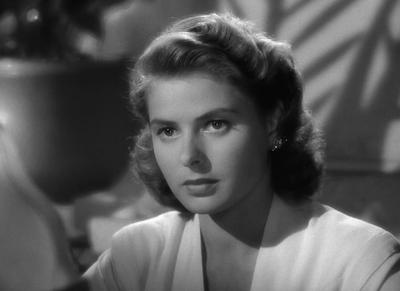
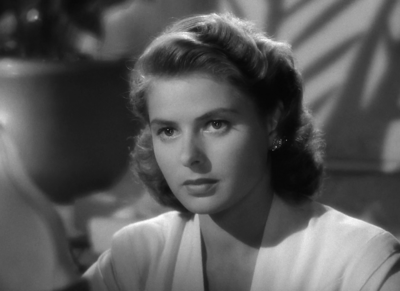
Thumb_ingrid_bergman_casablanca_2

Ingrid
Bergman was one of the major actresses of the twentieth century and she remains
an icon in film culture, her smile still radiant and bursting from the screen,
her beautiful face filling with doubts and pre-occupations in extreme close-ups
for Alfred Hitchcock, George Cukor, Roberto Rossellini, Ingmar Bergman and many
other top film directors. To celebrate the hundredth anniversary of her birth
in Sweden in 1915, the Museum of Modern Art and the Brooklyn Academy of Music
have programmed a dual retrospective that will be showing practically all of
Bergman’s important movies, starting on August 29 and running through most of
September.

Ingrid
Bergman was one of the major actresses of the twentieth century and she remains
an icon in film culture, her smile still radiant and bursting from the screen,
her beautiful face filling with doubts and pre-occupations in extreme close-ups
for Alfred Hitchcock, George Cukor, Roberto Rossellini, Ingmar Bergman and many
other top film directors. To celebrate the hundredth anniversary of her birth
in Sweden in 1915, the Museum
of Modern Art and the Brooklyn Academy of Music have programmed a dual
retrospective that will be showing practically all of Bergman’s important
movies, starting on August 29 and running through most of September.

Some
of these movies will be introduced at MoMA by Bergman’s three daughters—Pia Lindstrom,
Ingrid Rossellini, and Isabella Rossellini—and Isabella will also be doing a
stage tribute to her mother with Jeremy Irons at the BAM Howard Gilman Opera
House on September 12th. I recently spoke to all three of them about what Bergman
was like as a person, as a mother, and as an actress. Unlike the aggrieved offspring
of some other movie stars, these are sophisticated, warm, intelligent,
understanding women, and all three of them have musical voices and infectious
laughs that echo the sound and the spirit of Bergman.

Lindstrom
was only 10 years old when Bergman fell in love with Roberto Rossellini as they
were working on the film “Stromboli” (1950) in Italy. Both Bergman and
Rossellini were married to other people when she had a child with him out of wedlock,
their son Roberto (who today works as a businessman in Paris), and this created
a scandal so large that Bergman was denounced in florid terms on the floor of
the US senate. “She just…did what she
wanted to do!,” says Lindstrom, who has made her career as a show business
journalist. Contact with her mother for Lindstrom was broken off for several
years while Bergman worked with Rossellini and had two more children born as fraternal
twins, Ingrid, who has taught Italian literature at NYU, and Isabella, who went
into acting herself. Consequently, each of them had somewhat different
experiences with Bergman.

“For the tribute to Mama that we’re doing on
stage, I am using her autobiography, which is out of print, to celebrate her in
her own words,” says Isabella. “We
are using a selection of passages from that, with her letters and diary
entries. And we will be using the movies that she took herself, which go all
the way back to “Joan of Arc” (1948) and before. Because you know her father
was a photographer, he rented a camera and he was taking film of her as an
infant, which was very unusual for that time.”

“Her father was a painter and photographer,
and he wanted her to be an opera singer, and so he took her to the opera, but
she had no voice for it,” says Ingrid. “Going
to the opera is what made her fall in love with the theater. In the book she
wrote, she doesn’t say much about her work. I’m always going back to her book
and wondering what she has to say about playing Hedda Gabler or something like
that, but there’s very little.”

“Her father was always taking photos of her,
and so she looked at her father through a lens, and that was how she got
affection,” says Lindstrom. “And so she
didn’t have to put on a false face for the camera. She had a facility to
express emotion in front of a camera. It was in the planes of her face, and she
had an inner glow, the emotion would be there.”

“Her father had a strong influence on her,”
says Ingrid. “Her mother died early, and
so unfortunately we don’t know too much about her mother. Other people, maybe
they have only a photo or two of their mother, but if I miss her, I can spend
hours watching her on the screen! I like the films I picked for the
retrospective very much, but it’s hard to pick a favorite. I love that Mama
didn’t want to play the good girl in “Dr. Jekyll and Mr. Hyde” (1941) but she
wanted to play the bad girl instead—that shows her independent mind. I find it
easier to watch films with my mother when she was young, because I’m more
detached. When it’s something like “Autumn Sonata” (1978), that’s when I knew
her, and so it’s more upsetting to me to see that.”

“I chose “Autumn Sonata” for the
retrospective because it’s about her and it’s about Ingmar Bergman and his
wives and ladies, and it’s about a dilemma that we still talk about,” says Lindstrom.
“If you have a gift, are you not meant to
use it? Are you supposed to stay home with your children and raise the family
instead? In other generations, if you had resources, you hired a nanny, which I
had growing up, but we called her a governess. Mummy didn’t find staying at
home that fascinating. And I remember she would say that in Italy, they also
had someone else to take care of the children.” Isabella remembers that she
and her sister had a wet nurse. “Which
was very unusual, that’s like something from centuries back,” she says. “But in Italy there was no milk for the
babies then. And so Mama got us a wet nurse, and she was completely delighted
by that. She stayed in touch with our wet nurse and sent her Christmas cards
for years.”

“I like “Autumn Sonata,”” says Lindstrom.
“I think it’s a great performance, and at
that point you are past being just stunned by her physical beauty. You see much
more. In her earlier films, her beauty was what you saw first and you just
went, ‘Ah!’ Even when she played in the theater later on, I think somebody said
that she could have read the phone book and everybody would be hushed just
looking at her.”

“I didn’t see her films growing up,” says
Lindstrom. “I didn’t see the Swedish
films until much later. I think they let me see “The Bells of St. Mary’s” (1945)
because they felt that was appropriate. And I was in Joan of Arc as an extra.
She always wanted to be there on the set because she was quite infatuated with
the director of that, Victor Fleming, who was very handsome.”

“We had our bad moments,” says Lindstrom.
“But people make a decision about how
they accept other people’s behavior. We had our difficulties, but you just realized
that this is who she was. You have a choice…I don’t understand these people who
have this desire to destroy their parents. You have someone who everyone thinks
is so great and then you want to expose their Achilles’ heel? Nobody would be
interested in that if your parent wasn’t famous. Whatever discomfort or sorrow
we had, we kept it to ourselves.”

“Mama had a passion for acting, and the
theater is what she liked,” says Ingrid. “But, like my father, she never talked about her work when she got home,
which is in a way admirable. At home, she was Mom, and we’d talk about needing
new shoes or things like that! I was with her when she did the Eugene O’Neill
play More Stately Mansions on Broadway, and so I saw how she needed time to
herself before the performance. She would put her make-up on and get ready and
have a kind of Zen moment. And then she would go on stage and she was another
person.”

“Once, I remember I went on stage with her
when the theater was empty and I asked her how she could do what she did,”
says Ingrid. “I said I couldn’t do that, go
on stage and have all those eyes on you. I’m very shy, and she was very shy,
too, she was painfully shy. And she told me, ‘Because I am someone else when I
go on stage, I’m another person.’ She was so shy, and she was insecure about
things she didn’t know, or things that were not her job. She was completely
natural. She just intuitively did it. She was very good at understanding
people, and that’s another form of intelligence. She’d talk to someone and in
two seconds, she’d have it, she’d understand them. It’s like another form of
language and expression.”

One
of the things that really distinguished Bergman was her ability to fluently act
in different languages. “She played on
stage in London and in France,” says Lindstrom. “In school, I know she learned German. I think she spoke English so well
maybe because Swedish is so open in the throat. There are a lot of Swedish
opera singers because there is a very high and low cadence to Swedish. The
director George Seaton had a sister named Ruth Roberts, who taught her English
and was her dialect coach on her films.”

“With languages, she learned Swedish and
German, and then English and then Italian, and I think it was…it was about just
forgetting about the grammar,” says Ingrid. “When she was first in Italy, they talked and they neglected her, because
in Italy you just talk. And she sat there and sat there, and then finally,
boom! She understood what they were saying. When she spoke English, when she
says a word like, ‘Yes,’ you can hear that little Swedish lilt, or the way she
goes, ‘Ah!’ That’s very Swedish.”

“I’m sure when she was in Hollywood she
worked on every word to make it right, but when she was interviewed in English
later you can hear her accent more, when she’s more relaxed,” says Ingrid. “When she rehearsed her parts, she wanted it
all to be perfect. I can remember sitting and hearing her in the other room
memorizing her lines, going over them and over them. She was a perfectionist, and
yet it was absolutely instinctual when she came to do it. When she made movies
with my father, she said she was tremendously frustrated, and yet in his films
she doesn’t seem like she’s lost. It is the character she is playing that is
lost.”

“I chose “Under Capricorn” (1949) and “Elena
and Her Men” (1956) because I haven’t seen them myself, and they are films by
major directors, Hitchcock and Jean Renoir, and although they were unsuccessful
at the time, when you have a retrospective you should see things like this,
too,” says Isabella. “Everybody will
always be seeing or talking about “Casablanca” or “Gaslight” (1944), but these
are major filmmakers she was working with, and so there must be something there
for us in them.”

“Hitchcock himself invented certain ways of
editing, with his wife Alma, but they were frustrated with editing, with the
need to cut,” says Isabella. “In “Under
Capricorn” he wanted to see if he could make it more like a play, or to play
out at length. Editing is an artistry, but it can also be a limitation. I can
remember my father going on about not being able to do what he wanted to do,
and of course now you can do so much electronically. But about the quality of
Mama’s performance in long takes or short takes, that is maybe a question more
for a critic than for me.”

The
films that Bergman made with Rossellini—“Stromboli,” “Europe ‘51” (1952) and “Voyage
in Italy” (1954)—were not well received in their time, but they have won many
admirers in the years since, so much so that young cinephiles today are often
more familiar with those Rossellini films than with her Hollywood work. When I
say this to Isabella, she says, “I love
to hear that! That the young people know the Rossellini films, and maybe not so
much Casablanca? Well, you know, maybe in film classes they show some of father’s
movies, or De Sica’s “Bicycle Thieves” (1948), and maybe the classes think that
“Casablanca” is so famous it doesn’t need to be shown. But that’s fantastic.
You see, if you live long enough you see things start to change.”

“I chose to show “Casablanca” because that is
her signature film that even young people have at least heard of, it’s a cult
favorite,” says Lindstrom. “Now, as
you probably know, it was not a movie she was particularly fond of. She had no
relationship with Bogart on the set whatsoever. But this is the film that has
been remembered through the generations, and I have some info on “Casablanca”
that I can share with the audience, because I was there.”

All
three of her daughters have very definite ideas about Bergman’s legacy, and her
special qualities as a person and as an actress. “Mama was never judgmental,” says Ingrid. “She was orderly, practical, efficient. With her, it was a little like a
metamorphosis…if she was in a different country or playing a different part, it
was…what is the word in English? A chameleon. She says in her book that she was
lucky, but I think part of that was that she adapted so easily.”

“What’s extraordinary and unique about my mother
is that she means something in so many different countries,” says Isabella.
“Katharine Hepburn and Bette Davis, they
mean something in America, mainly, but they didn’t have the European films. Mother
means something in Sweden, in Italy, in France, in London, and in America. If
you think of her, you think of her in all those different countries. She was
once asked, ‘Where are your roots?’ And she said, ‘I don’t have any!’ Can you
imagine?”

“She was before her time, to be so
independent,” says Ingrid. “But she
was lucky that her father was always filming her and she was so comfortable in
front of the camera…that was very unusual for someone born in 1915! She was
determined to be herself and to be natural, and she was so committed to her
work. She would always say it is a job like any other, and she would put it in
practical terms. And part of being natural and not being artificial or false
was when she got older, she didn’t have any kind of plastic surgery. When she got
older, she looked older, and she had no vanity about it. She just said, ‘Now I
will play parts according to my age, I will play an old witch.’ We have such
trouble now accepting age. My sister Isabella and I don’t do anything to our
faces either, and I think it’s because we know our parents would scream at us
if we did.”

“She was so original and independent, but in
a gentle, natural way,” says Ingrid. “She
would always say, ‘People have to make sense.’ She would immediately detect if
a person she was talking to was in any way artificial, and she didn’t like
that. She was honest and authentic. And so people watch her on the screen and
they are touched by her, because she doesn’t seem aware of her beauty.”

“My mother was not theatrical in her home
life,” Lindstrom says. “She was
strong-willed, which is maybe partly theatrical. I found her fun, she was fun
to be around, and playful, and demanding. Maybe that was the Scandinavian in
her. There were rules that she followed, and you needed to follow them if you
were with her. For instance, I would always let her walk ahead of me through a
door. You know, you wouldn’t cry or yell, ‘I want some ice cream!’ with her, you
just wouldn’t do that. That was not her role in life, maternity. That was not
her forte.”

But
Isabella has a different perspective, perhaps because she saw her mother
through the eyes of her father Roberto. “Father
always said she was so loud that she didn’t need a telephone!” says
Isabella. “And yes, she was like that at
home. It wasn’t so much that she spoke loudly, but her voice had a certain
pitch, so that she could be heard in the back of the theater, and yes, she was
like that at home, too.”

All
three of her daughters say that Bergman was shy, but she had other capacities
within her. “You can be shy and yet have
something else there, and that can co-exist,” says Isabella. “For instance, I just finished shooting a
film for David O. Russell, and Robert De Niro is the star. Now, De Niro is a
very shy man. And yet he plays in the film with the big character and everything
and he says, ‘Fuck!’ and things like that. And that isn’t like him at all. And that
reminded me so much of my mom, that shyness and then also the capacity for
pretending something else.”

“When she was dying of cancer, her arm was
really swollen, this was when she was making “A Woman Called Golda” for TV
(1982),” says Ingrid. “When she was
not working and she was outside, she would cover that arm, and the
photographers wanted photos. You know, they want to take bad pictures of you
when you’re dying. And it breaks my heart, because she understood that, and she
just said, ‘Fine,’ and she uncovered the arm for them. ‘You want to see me
dying? Fine.’ And that’s what her life was all about, I think. She had a kind
of wisdom, and a kind of acceptance of things.”

Source:: http://www.rogerebert.com/interviews/you-must-remember-this


Categories
Alberta

Hospital Transfer for Premature Labor and Delivery Sticks Mom With $30,000 Bill

hospital transfer, premature labor

A hospital transfer for premature labor and delivery has left a mom stuck with a $30,000 bill. When Alberta mom to be Amy Savill went to Timmins to visit with family she believed that she still had two months to go in her pregnancy. When Savill went into early labor she was rushed to Timmins and District Hospital, but eventually had to be transported using an air ambulance to another facility because the local hospital was not equipped to handle the medical needs of her premature labor and delivery. Since Savill is not an Ontario resident the cost of the air ambulance is not covered by the province, leaving her stuck with the bill for $30,000. Ontario Council of Hospital Unions president Michael Hurley said “Timmins has greatly reduced hospital capacity as a result of recent bed and service cuts. Air ambulance services have been privatized. Northern Ontario is particularly hard hit by the hospital cutbacks because of its geography. Ms. Savill simply had the misfortune to be at the centre of all of these factors. Ontario owes her an apology and should cover these costs.”

After the story broke about the premature labor, hospital transfer, and the $30,000 bill the hospital released the following statement “Not every service, equipment, or trained staff is available at the Timmins and District Hospital and like many hospitals, TADH uses an established provincial referral process to connect patients to the required level of care.” The Toronto Star first ran the story, and it originally reported that the hospital was clear with Savill that they did not have the staff or equipment needed to handle a birth that was more than one month premature.

Categories
TV & Movies

Some Kind Of Beautiful

Thumb_somekindofbeautiful-2015-1

For Pierce Brosnan
completists only—go ahead, raise your hands if you’re one of them, this is a safe space—”Some
Kind of Beautiful” is a handsomely produced movie full of likable actors
that conjures nothing but tedium. A couple of hours of air conditioning, nothing more.

Brosnan plays
Richard Haig, a dashing fiftysomething professor of Romantic literature at Cambridge
whose practices one of those dippy Hollywood movie versions of literary
analysis where every word out of his mouth sums up his philosophy
of life and gives us insight into his mental state. His serial cherry-picking of
gorgeous young female students is interrupted when he finally gets one of them, a
visiting American named Kate (Jessica Alba), pregnant. Richard’s father (Malcolm McDowell), also a womanizer, shows up to be
allegedly-shockingly foulmouthed-adorable; upon his grandson’s birth, he
christens him “a little turd.”

Richard moves to Los Angeles
to live with Kate and settles into one of those big glassed-in Malibu houses
that only a mogul or drug lord could afford. This turns out to be a not-too-good idea: Richard can’t get a job, a visa, a passport, anything, and after a while Kate gets restless and starts cheating on him with a younger man (Ben MacKenzie of “Gotham” and
“Southland”) and leaves him. Enter Kate’s
half-sister, Olivia (Salma Hayek), who stops in at Kate’s request to check on
their son. Richard realizes he has much more in common with her
(including relative age-appropriateness) than he ever did with Kate. And blah, and blah, oh, look, there’s that pen I thought I’d lost, it was right there on the desk the whole time.

Matthew Newman’s script could be written off as merely sexist if it didn’t make the men seem like petty, stupid people, too. Tom Vaughn’s direction is serviceable at best, inept at worst, and there are a few scenes that don’t play right because the camera is objectively in the wrong place. Watch the scene where Richard and his now toddler-aged son eat in a restaurant and the boy looks out the window and sees mama with her new boyfriend from a point-of-view on the other side of the table: there’s no way the kid could see from that angle unless he has eyes on three-foot extendable stalks. It’s difficult to feel sorry for such good-looking, impeccably dressed lead actors, but this film makes it possible. There isn’t a line or moment where you don’t feel their strain from trying to make something out of nothing.

Complications ensue even if you’d rather they didn’t. Olivia’s gynecologist husband leaves her, a new romance brews, Richard can’t really get it started because he’s having such trouble with immigration, Pierce Brosnan realizes he’s been coasting on his looks in too many recent films and makes a vow to never do that sort of thing again and wins an Oscar before his 65th birthday for playing a supporting role of real substance, oh sorry, that was my fantasy, but now my fingers have seized up in rebellion against using any more precious glucose molecules to write this review when it’s such a nice day out. See you at the park, maybe.

Source:: http://www.rogerebert.com/reviews/some-kind-of-beautiful-2015


Categories
Economic Ft Mac Politics

CUPE Wants Clarification About Immigrant Workers and Working Conditions at Fort MacMurray International Airport

CUPE, immigrant workers, Fort MacMurray International Airport

CUPE, the union that represents Fort MacMurray International Airport workers, has made accusations that the airport administration is either recruiting temporary foreign workers or else they are underpaying migrant workers. The union organization has demanded to know exactly what the working conditions are for the workers who replaced the hired custodial staff. CUPE has said that airport staff have reported that many of the new workers who replaced the full time custodial staff are using foreign passports as identification, including Philippine passports. Airport staff have stated that some of these new workers are custodial workers. CUPE is concerned that the move from the previous custodial staff to outsourced workers has replaced Canadian citizens with foreign immigrant workers. CUPE’s Alberta Division secretary treasurer Glynnis Lieb said “I would be very surprised if that wasn’t the case. What the airport authority has said is they will save money by moving to these private companies for custodial and now security staff.”

Even if Fort MacMurray International Airport is using foreign immigrant workers this does not mean that any laws have been broken. When Bill’s Cleaning took over custodial duties at the facility CUPE protested, because the company has a history of using temporary foreign workers and paying very low wages. Lieb explained “Regardless of the nationality, are people being paid fairly? Are they getting the benefits they deserve to get in Canada? What is happening?. We want to protect our members and the thought of our members losing jobs because they cost too much is a concern to us, and we want to make sure no one is being exploited to save money.” Now that the security staff at the airport will also be outsourced this just heightens the concerns that workers and the union has.

Categories
TV & Movies

In the Game

Thumb_inthegame-2015-1

Stan Mietus is the kind of role model that we all hope our
children someday encounter in their lives. When we send our kids off to school
or to athletic programs, we place an incredible amount of trust in the people
paid to teach and coach them. Mietus understands, as clichéd as it sounds, that
he’s teaching young people that it’s really not whether you win or lose, but
how you play the game and how you respond to adversity that defines your
character. He’s teaching teamwork, confidence, and, yes, that life is unfair.
You will lose in life, but it’s how you respond that matters more than the
losing. Mietus is one of the central figures in Maria Finitzo’s “In the Game,”
premiering at the Siskel Film Center tomorrow, August 22nd, with
screenings throughout the next week (go here for more details).
It’s a project from Kartemquin Films, the brilliant people behind Steve James’ “Life
Itself,” and the best sports documentary of all time, “Hoop Dreams.” Much like
that film, Finitzo uses sports—girls’ soccer this time—to comment on other
issues, including income inequality and gender roles, but she does so with a
light tough, always keeping the focus on the players on the field more than the
entire game.

For four years, Finitzo and her crew went back to Kelly High
School on Chicago’s Southwest side, catching up with Mietus and the players on
his soccer team. The first of these young women we meet was up until 2am the
night before studying and woke at 4:30am for soccer practice, which takes place
in the hall sometimes because there’s not enough space in the gym and they don’t
have a working field. It’s a school that’s 83% Latino and 86% below the poverty
line. Over the course of “In the Game,” we will watch young women forced to
make life’s difficult decisions, often between school and work to help support
their families. These are decisions made every day in major cities around the
world, and “In the Game” is a stark reminder of how quickly life can force
teenagers to become adults, especially when they don’t have the luxury of
making any other choice.

What’s most fascinating about “In the Game,” and it’s
remarkable how much Finitzo allows this element to unfold naturally and without
underlining, is that the young ladies that the film captures all have a
striking resilience about them. Some will be faced with tragedy. Some will be
faced with closed doors. Some will be faced with heartbreak. And yet they hold
their heads up high and keep going in ways that I don’t believe everyone
would. I think a lot of that credit can go back to Mietus and the fortitude one
gains from team sports the way he teaches them. There are times in life when
your opponent will have more privilege, such as when Kelly plays Whitney Young,
one of the top soccer high schools in the country. They have no chance of
winning. And yet they play. They get out there. They work as a team. The idea
that we can persevere against a system that often stacks the deck against us is
as important as any we can learn.

“In the Game” doesn’t position itself as a “statement film.”
There are no statistics emblazoned on the screen. It is a study of one school athletic
program and its players. And yet it feels more important than that. It feels
empowering, even inspirational. You will lose some games. In life, you will play some
games that you never had a chance of winning. But the important thing is that
you keep playing.

Source:: http://www.rogerebert.com/reviews/in-the-game-2015