
Categories
TV & Movies

Helena Bonham Carter on “The Young and Prodigious T.S. Spivet”

Thumb_t.s._spivet_-_bonham_carter

To many
moviegoers, British actress Helena Bonham Carter is probably still most readily
identified with stately period dramas and literary adaptations like “A Room with a
View” (1985), “Lady
Jane” (1986), “Hamlet” (1990), “Howards End” (1992)
and “The Wings of the Dove” (1997). Although she still dabbles in
that type of filmmaking from time to time—”The King’s Speech”
(2010), “Great Expectations” (2012) and “Les Miserables”
(2012)—she has also been carving out a name for herself in recent years as an
increasingly familiar face in the world of fantasy filmmaking thanks to
appearances in such films as “Planet of the Apes” (2001), “Big
Fish” (2003), “Charlie and the Chocolate Factory” (2005),
“Sweeney Todd” (2007), “Terminator: Salvation” (2009),
“Alice in Wonderland” (2010), “Cinderella” (2015) and, of
course, the last four installments of the Harry Potter franchise, where she
gave untold numbers of children nightmares with her turns as the malevolent
(and wonderfully named) Bellatrix Lestrange. Factor in her wildly unexpected
and wickedly funny supporting turn in the cult favorite “Fight Club”
(1999) and her vocal contributions to the stop-motion animation favorites
“The Corpse Bride” and “Wallace & Gromit: The Curse of the
Were-Rabbit” (both 2005) and you have the kind of eclectic filmography
that suggests that if her name appears on the cast list, the results are almost
always going to be at least interesting and oftentimes more than that.

That is
certainly the case with her latest release, the charmingly oddball 3-D family
film “The Young and Prodigious T.S. Spivet.” Based on the book by
Reif Larsen and brought to the screen by acclaimed French director Jean-Pierre
Jeunet, the man behind such favorites as “Delicatessen” (1991),
“The City of Lost Children” (1995) and his worldwide success
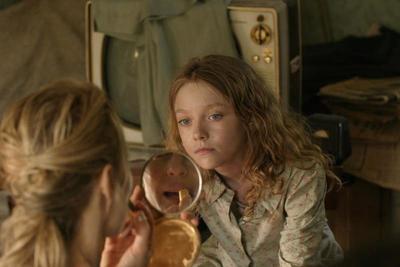
“Amelie” (2001), Carter plays an ordinary mother and aspiring
entomologist who is so wrapped up in her work and her grief from a recent
tragedy that she fails to notice that her ten-year-old son (newcomer Kyle
Catlett) has not only invented a perpetual motion machine but has snuck away
from his family’s Montana ranch to travel by himself to Washington D.C. to
accept a prize for his work from the Smithsonian Institute. Offbeat, charming
and visually stunning, this would seem to be the kind of film that thoughtful
audiences the world over could easily respond to but that has not proven to be
the case in America. Completed and released in Europe more than a year ago, the
film was caught up in a battle between Jeunet and its American distributor, the
Weinstein Company, who seemed unwilling to release it, allegedly until Jeunet
made changes to it.

Finally, the studio did release it uncut in
the U.S. earlier this month, though “release” may not be quite the
right word—they dumped it out in a handful of theaters with no advanced word
or publicity to speak of (people literally didn’t know it was opening until
maybe the day before), no press screenings and, astonishingly, no prints of it
in 3-D. Needless to say, this caused no small amount of uproar—even those who
didn’t particularly care for the film thought that Jeunet was getting a bum
deal—and it seems to have had at least a little bit of effect as the film’s
current engagement in the Seattle area appears to be the first time that it is
being shown in the U.S. in 3-D. To do her part to help raise awareness of it,
Bonham Carter—who will next be seen this fall in the anticipated drama
“Suffragette” and will appear again as the Red Queen next year in
“Alice Through the Looking Glass”—phoned in from Florence, Italy to
talk about the film, working with Jeunet and getting the opportunity to throw
horse manure at her great-grandfather.

What is it that
inspired you to become an actress in the first place?

There
were a couple of films. There was a particular film that I loved called
“My Brilliant Career” with Judy Davis, who I got to work with in
“T.S. Spivet.” I think it came down to that I loved the idea of
pretending not to be me. Maybe it was just a lack of self-love or boredom with
myself. Also, I was interested in other people and working out how they ticked.
The idea of being able to escape myself has always been very tempting–until I
watch the thing and realize that I haven’t escaped myself at all. At least
there is the mental illusion of being able to escape from your own skin that
has always been exciting and liberating for me. I think it is just fun.

Although you
first became well-known for starring in a number of period dramas, you have also appeared in a number of fantasy-oriented projects
over the years. Is the fantasy genre one that
you happen to have any particular interest in
?

No. I
think those are things that just come my way. I do like people with imagination
and I am drawn to directors with particular visions but it is not like I pursue
a particular genre. I am more interested in the characters or the writers and
if the project has a sort of credibility to it, then I am on for it. But no,
this is just the way that it has gone. I wouldn’t try to make any sense out of
my career at all—it is just a hodgepodge with no particular rhyme or reason to
it or any sort of design.

What was it
about “T.S. Spivet” that grabbed your interest?

Well, I
think Jean-Pierre Jeunet is a genius and I have loved his films. I loved
“Amelie”—it is one of my all-time favorites—and I have always loved
his aesthetic. I have always loved, oddly, his “Making Of” books—I
like doing scrapbooks and collages and things—and I love the way that he sees
the world. He had emailed me to say that he was writing a part and to tell him now if I wouldn’t be
interested because was imagining me in it. I couldn’t believe my luck—it was a
dream come true to be written for by him. I also loved that it was specifically
made for 3-D and the way that he used 3-D to get inside someone’s mind. It
really is magical and poetical and totally enchanting in 3-D.

Although the
film has a number of fantastical elements to it, the character that you
play—the mother of a young boy who invents a perpetual motion machine and
travels across the country alone to accept a prize from the Smithsonian—is a
tad eccentric but otherwise a normal contemporary woman. For you, is playing a
person like that a bigger challenge than the more overtly offbeat types that
you have done in recent years?

Well, it
was good to play somebody normal. I felt that it was about time that I should
play someone a bit more normal and low-key. It isn’t more difficult,
necessarily, but it is a different scale and pitch. I supposed that I like
getting away from myself—I like dressing up—but this character needed more of
an adjustment from inside. I liked her absent-mindedness—that I could easily
relate to because I am completely absent-minded myself. I didn’t have anything
to hide behind—I didn’t have any teeth to hide behind and my hair was
relatively straight. It was good for me to do something not quite so extreme or
loud or hairy.

When you do a
film like this that is based on a book, do you always make a point to read it
as part of your preparation?

Of
course, you scour the book. The book is a great bonus. It is like a bible of
information. I loved the book and Reif Larsen and how all of the diagrams and
illustrations in it showed that he and Jean-Pierre would see eye-to-eye because
there was such an overlap in their aesthetics. Having said that, the film is a
huge departure from the book but it was still a great source.

Throughout your
career, you have worked with a number of directors with very distinct and
pronounced visual styles—David Fincher, Tim Burton and now Jean-Pierre Jeunet
to name a few. Both generally and in regards to Jeunet, what is it about
working with a director with that kind of aesthetic that you respond to as an
actress?

It is a
great relief because you know that you are going to be in good hands. You can
listen to them and obey their every command because you know that they know
what they are talking about. With Jean-Pierre, it was the first time that a
director had given me an entire storyboard for the film. Not that he would
religiously adhere to it or carry it around on the set but you knew that he had
it all in his head. It was fun because there is always a sense of relief when
you know what kind of world they are trying to create. It is also a relief
because I happen to share that same taste and when it comes to things like
costumes and hair, we have an innate trust and I feel very comfortable.

Kyle Catlett,
who plays your son, has gone on to appear in other films, such as the recent
“Poltergeist” remake, but I believe that this was his first major
role in anything.

It is. I
think he had done some tellies. He is an amazingly small person for one and an
amazing little person because he is so interested and curious. He is a little
bit prodigious himself–he is brilliant at martial arts, he speaks about five
languages and is incredibly bright. He was great and fun and I love any kind of
enthusiasm and curiosity. Children can sometimes be quite tricky on film but he
was all eagerness.

Although a
couple of the Harry Potter movies and “Alice in Wonderland” were
released in 3-D, I think this is the first film that you have actually shot in
the process.

We had
these massive cameras and there were certain things that you couldn’t do.
Sometimes you couldn’t move too quickly if you were too close but there was no
way that you forget that the camera was there because it was so enormous. It
was quite inviting because everyone would disappear into the tent and you could
see what it was like in 3-D. There were certain colors that we couldn’t use and
certain gestures that were done deliberately for the 3-D effect that were great
fun with my implements and my insects. It is quite spectacular in 3-D and a
totally different experience–like going on a holiday without having to pack or
find your passport. It also allowed you to get inside of T.S.’s mind and, in a
way, into Jean-Pierre’s mind.

“The Young
and Prodigious T.S. Spivet” was released in Europe about a year or so ago
but the American release was delayed for a long time, reportedly due to
difficulties between Jeunet and the Weinstein Company, and when it finally did
come out earlier this month, it was without any publicity or press screenings
and only in 2-D. For you, how frustrating is it to have to sit and watch this
happen, especially with a film that could actually attract a decent audience if
given even a bit of a chance?

It is
very frustrating but at least it is coming out and that is all that I can say.
It could have just been dumped on video but at least it is being given a
chance. But no, it has been frustrating.

In your next
film, this fall’s “Suffragette,” you appear alongside Meryl Streep
and Carey Mulligan in the story of the fight for women to get the right to vote
in England
.

I’m
playing a character called Edith Ellyn and what is peculiar for me is that I am
playing a suffragette and the prime minister at the time was Asquith, who is,
or was, my great-grandfather and the last liberal prime minister. I always
thought that he was a good one but in playing a suffragette, I saw him from a
different light. I saw someone who wasn’t going for that vote. In the film, which
is hilarious, even though they had to cut the scene, I got to throw horse dung at my
great-grandfather along with a lot of suffragettes who were trying to attack
and terrorize him.

Source:: http://www.rogerebert.com/interviews/helena-bonham-carter-on-the-young-and-prodigious-ts-spivet


Categories
Ft Mac Politics

Should the McMurray Metis be Considered a Historic Community? Report Says Yes.

McMurray Metis, historic community

Whether or not Alberta recognizes the McMurray Metis as a historic community is important, especially to the 300 members of the group who would be eligible for certain rights that other Meti communities enjoy. These rights include fishing and hunting rights, and the right to force gas and oil companies to consult with the group on projects that could have an impact on the group or the lands that they inhabit. A recent report from 3 researchers who conducted comprehensive research that included hundreds of historical documents, hours of elder interviews, and family tree analysis states that the McMurray Metis should be considered a historic community and be eligible for all the rights that this designation involves. The report calls for the provincial government to recognize the group.

Timothy Clark and Dermot O’Connor authored the report on the McMurray Metis as a historic community. Willow Springs Solutions director Peter Fortna said “We looked at 200 oral history interviews and hundreds of pages of archival evidence, we came to the determination the Métis community does indeed meet the conditions. Some companies don’t feel they need to consult with the community because it’s not recognized. We’re hoping that by recognizing the community, it will trigger consultation with industry.” In 2003 the Supreme Court of Canada ruled in a unanimous decision that members of the Metis community have hunting rights that are constitutionally protected after two Metis hunters, Steve Powley and Rod Powley, were charged with illegal hunting after they took a bull moose and tagged the animal with a Metis card.

Categories
TV & Movies

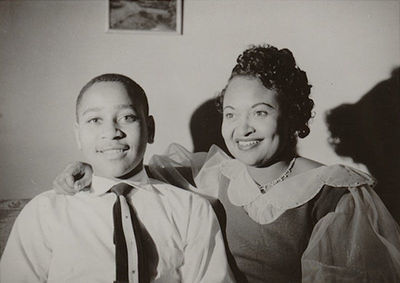
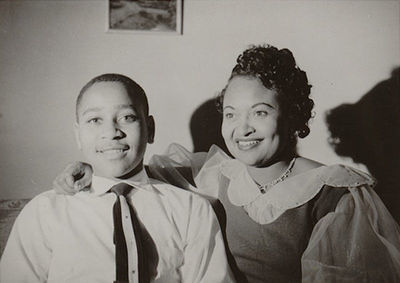
Emmett Till Honored With Events Commemorating 60th Anniversary of His Death

Thumb_emmett_mamie

Friday, August 28th, 2015 marks the 60th anniversary of a murder that galvanized the world. 14-year-old Chicagoan Emmett Till was brutally killed in Mississippi because he reportedly whistled at a white woman. Six decades later, remnants of the racial tensions and prejudice that fueled his death are still distressingly present in America. This week, various events will be held to commemorate Till’s death, including several scheduled to take place in the deceased young man’s home town.

Chaz Ebert, president of Ebert Digital, and author Christopher Benson will give a lecture entitled, “Black Lives Matter, Then and Now,” at the DuSable Museum of African American History, 740 E. 56th Place, on Thursday, August 27th. Ebert is also an executive producer of the upcoming film, “Till,” an adaptation of Benson’s 2011 book, “Death of Innocence: The Story of the Hate Crime That Changed America,” which he co-authored with Till’s mother, Mamie Till Mobley. At the lecture, Ebert and Benson will discuss the impact of Till’s murder on the country and the civil rights movement. Members of the Till and Mobley families will be in attendance.

This lecture will be among the anniversary events videotaped by Shatterglass Films, the production company that is producing “Till” along with Benson. Nate Kohn, Festival Director of the Roger Ebert Film Festival, will also be serving as an executive producer on the project. “Till” has the distinction of being the sole motion picture project sanctioned by the Estate of Mamie Till Mobley.

“Sixty years after Emmett’s murder, African Americans still disproportionately live in fear over the safety of our sons and daughters,” said Ebert. “We must shine a light on racially motivated violence so that solving this problem becomes a national priority. One of the reasons we wanted to make this movie is to tell Mrs. Mobley’s universal story of a mother’s love and how she turned a devastating heartbreak into action to save and inspire other children. Art has the power to infuse empathy and drive change to support movements like #blacklivesmatter.”

On August 28th, a motorcade processional will travel from Roberts Temple C.O.G.I.C., 4201 S. State St., where Till’s historic open casket funeral was held, to Burr Oaks Cemetery, 4400 W. 12th St., in Alsip, where both Emmett and his mother were laid to rest. Representatives of the Mobley Estate and local dignitaries will be among the participants, and Ebert has been asked by Till’s family to give remarks at the wreath-laying ceremony at Mother Mobley’s graveside. A dinner will conclude the official commemoration event, followed by youth empowerment activities on Saturday and a Sunday church service. These events will be hosted by the Mamie Till Mobley Foundation, and both the Roger and Chaz Ebert Foundation and Shatterglass Films are among the sponsors.

For more information on the lecture, visit the DuSable Museum website. Admission is $10. To find the full schedule of anniversary events, click here.

Source:: http://www.rogerebert.com/chazs-blog/emmett-till-honored-with-events-commemorating-60th-anniversary-of-his-death


Categories
TV & Movies

Thumbnails 8/24/15

Thumb_2008_hounddog_001

1.

“We Talked to Deborah Kampmeier About ‘Virgin,’ ‘Hounddog’ & ‘SPLiT'”: An amazing interview with the controversial filmmaker conducted by Luna Luna Mag‘s Emma Eden Ramos.

“The hypocrisy about the outrage around ‘Hounddog’ was shocking. I remember taking the most provocative cut I could make of the film down to the District Attorney in Wilmington, NC, where we shot the film and where a prosecution of me would occur if there was going to be one. After showing him the film, he wrote an official statement that no one connected with the film would be prosecuted. Then he thanked me for making the film. He said the real thing happens every day and no one says a word. But he was receiving 10-20 calls a day from people asking for my arrest…For telling the story. It’s astonishing to me the silencing of women that continues to this day. How women are not believed and shamed and blamed for speaking their truth. Look how many women it took to speak up about Bill Cosby before they were believed. It’s interesting you referenced your conversation about Polanski. The brilliant Kate Harding wrote what I thought was a very insightful article entitled ‘Polanski, Hounddog, and 13 year old voices’ for Salon in which she explores why there was more outrage over a fictional rape than a real one. You’ll also note a quote from me that ends the article, where I said, ‘When you rape a girl, the problem is not that you are taking away her purity–which is what gets the religious right up in arms–it’s that you are taking away her wholeness. And trying to keep her ‘pure,’ repressing her sexuality, silencing her voice, also takes away her wholeness. It’s two sides of the same coin. I don’t want my daughter to grow up pure, I want her to grow up whole.’ That little speech actually ended up in my film ‘SPLiT.’”

2.

“‘Inside Out’ and Today’s Reductive Emotional Landscape”: Indiewire‘s Arielle Bernstein brilliantly analyzes how Pixar’s latest masterwork portrays emotional worlds on the brink of extinction.

“In 1943, Walt Disney Studios released a cartoon called ‘Reason and Emotion’ which depicted man’s inner life as a battlefield between sensible Reason, portrayed as an elegant little man with a suit, tie, and glasses, and wild man Emotion, portrayed as a small caveman. In the cartoon, Reason and Emotion battled for control inside a man’s head, seen in silhouette, with Reason confidently driving in front and Emotion dejectedly confined to the backseat. When Reason spies a beautiful young woman on the street he suggests being respectful, while Emotion attempts to take Reason’s place at the wheel by encouraging cat calls and whistles. When the camera zooms inside the young woman’s head, we see a similar scenario, with Reason portrayed as a prim and proper woman with glasses, while Emotion, with her loose hair and short skirt, tries to take control of the wheel, so that she can get dessert, ruining poor sensible Reason’s diet. It’s clear that our cultural attitude about the role of emotion (as well as gender roles) has evolved significantly since 1943. Pixar’s latest film, ‘Inside Out,’ portrays a world where the emotions—Anger, Sadness, Fear, Disgust, and Joy—play equal and important roles in helping Riley, the film’s young heroine, navigate the world around her. The film starts with Joy taking the helm, but ends with the express argument that as 11-year old Riley grows up she will need to confront new situations, and that each emotion will play an important role in helping her to navigate this new landscape.”

3.

“Not a Reboot. Not a Remake. It’s a Repackaging.”: At Zombie Apocalypse, Harrison Smith explores “lazy filmmaking at its best and most expensive.”

“Cynema has evolved or been upgraded much like Arnie’s T800 at the end of the latest ‘Terminator’ franchise. My definition of Cynema says that a movie is made deliberately bad even if the filmmakers have the means to do it better. In the case of ‘Jurassic World,’ ‘Terminator Genysis’ and ‘Star Trek: Into Darkness’ they are beautifully produced films, but all the more deceptive. These films all lack a central thing: a well done script. All three of these films are not unfolding stories, but rather set pieces stitched together with basic dialogue and character development to push things toward the next set piece. The argument could be made, that in a few years, the need for directors and even screenwriters could be gone. They are made obsolete by ‘managers’ who push a film through a written ‘To Do’ list. Some have said ‘Jaws 2’ was a film made by committee. The director, Jeannot Szwarc was simply a gun for hire in the wake of the firing of original director, John Hancock. While the reasons for Hancock’s firing vary, one consistent line is that his vision for the film and the studio executives’ did not marry and 6 months into production, Hancock was relieved of his duties as director. While sequels were no new thing in Hollywood by 1975, Hollywood was bitch slapped by Spielberg’s original ‘Jaws’ into seeing how summer blockbusters could generate huge revenue. ‘Sequel’ was kind of a dirty word at that time, but Hollywood warmed to the idea of wringing out more dollars from the same, familiar story. And hey, it didn’t always have to be good. The process had begun…”

4.

“In ‘Hombre’ and ‘Kid Blue,’ the Antiheroes Wear Stetsons and Ride Tall on a Rebellion Frontier”: J. Hoberman of The New York Times reflects on the classic westerns.

“Adapted from a 1961 novel by Elmore Leonard, ‘Hombre’ is a twist on John Ford’s ‘Stagecoach.’ Deciding to sell the house and leave town in a “mud wagon” driven by Balsam, Russell is thrown together with an officious government agent (Fredric March) and his snooty bride (Barbara Rush); a younger couple nearly as unhappily married (Peter Lazer and Margaret Blye); a tough, menacing loner (Richard Boone); and a worldly widow (Diane Cilento), the movie’s most generous character. This de facto community is soon threatened, and thanks to his survival instincts, the pariah Russell becomes its unwilling leader — albeit a solitary figure nursing resentment toward the white world. Just as Gary Cooper’s pained performance in ‘High Noon’ has been attributed to the star’s health problems, it is tempting to see Newman’s contemptuous iciness as enhanced by the arduousness of the shoot. (As detailed in a 1966 New York Times Magazine article, Newman was hospitalized for five days with a flu virus and also punched out an obstreperous stallion.) A prime example of the so-called adult western, ‘Hombre’ is talky as well as pictorial. (The disc’s digitalization does justice to the cinematographer James Wong Howe’s inhospitable Arizona landscapes.) It is also rich in dramatic reversals and features a splendid final shootout. Most impressive, ‘Hombre’ is faithful to its protagonist’s absolute alienation — the movie’s white authority figures are all thieves of one sort or another — and as such underlines Newman and Ritt’s public support for civil rights and opposition to the Vietnam War.”

5.

“When A Brown Actor Plays A White Character, Who Really Wins?”: A provocative essay from BuzzFeed‘s Amir Talai.

“USA Network’s breakout hit ‘Mr. Robot’ (ending its first season Wednesday) gets so much right. It gets the big things right — story, writing, direction, cinematography, music, and of course acting; and it gets the details right — it features an unusually accurate portrait of hacking, and being set in New York, it features a realistically multi-ethnic, -lingual, and -national cast. The show regularly passes the Bechdel Test and Dylan Marron’s Every Single Word Test, which asks: Are there two non-white characters who speak to each other about something other than a white character? That is why it’s perplexing and disappointing to me that it gets one glaring thing wrong — the opportunity to give the lead character, played by Rami Malek, a name that reflects Rami’s ethnic background. Instead, the Egyptian-American Malek plays a character with the unmistakably white name ‘Elliot Alderson.’ And while it may seem like a victory for a brown actor to play a character with a stereotypically white name, it actually reinforces the idea that complex, multidimensional characters have to read as white, while characters with ‘brown’ names are relegated to roles where we play terrorists named Mohammed or cabbies named Apu. To be clear, I am certainly not referring to how Rami portrays Elliot — he plays the role wonderfully. Rami is a brilliant actor who has been kind to me the handful of times I’ve seen him at auditions over the last decade or so. I’ve been acting in Los Angeles for about 13 years, working on everything from commercials to TV (‘The Comeback,’ ‘How I Met Your Mother’) and movies (‘Harold and Kumar 2,’ ‘What To Expect When You’re Expecting’). When I heard Rami was playing a lead, I was thrilled for him, and for all of us brown actors. When one of us wins, we all win. Still, and perhaps unwittingly, ‘Mr. Robot’ missed an opportunity here.”

Image of the Day

Nick Heil of Outside Mag provides an extensive interview with the cast and crew of the upcoming adventure film, “Everest.”

Video of the Day

David and Henry Dutton of “8 Bit Cinema” have done it again. Check out their marvelous tribute to Michel Gondry’s “Eternal Sunshine of the Spotless Mind.”

Source:: http://www.rogerebert.com/thumbnails/thumbnails-82415


Categories
TV & Movies

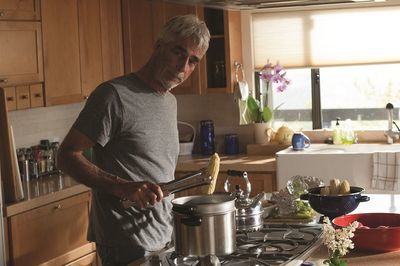
More Mountains to Climb: Sam Elliott on “Grandma”

Thumb_elliottgrandma

Sam Elliott is just as cool and suave as you would hope he
would be from watching him steal films and TV shows for almost five decades.
After making his debut as “Card Player #2” in “Butch Cassidy and the Sundance
Kid” (which, coincidentally, starred Katherine Ross, who Elliott would meet and
marry in the late ‘70s and stay with to this day), Elliott became a TV staple
for the next two decades, really transferring over to film history in the late ‘80s
and early ‘90s in a series of unforgettable roles in projects like “Road House,”
“Gettysburg,” “Tombstone” and “The Big Lebowski”. He’s one of those rare actors
who seems to have improved with age, as evidenced by his latest turn in Paul
Weitz’s “Grandma”. In many ways, he’s the center of the film in that the piece
turns emotionally after his one, riveting scene. He sat down with us recently
in Chicago at the end of a tiring press tour to talk about why he acts, his
latest run of indie cinema, his most legendary parts, and a brand-new project
like none he’s ever done before.

When you have one
crucial scene in a film, how does that change your process? Does it make it
more difficult because you don’t have as much screenwriting material to develop
the character?

No. I don’t think so. Maybe it makes it easier on some
level. You’re there such a short period of time that you can really hone in on
it before you even get there. I knew when I got there…it was just all on the page.
I knew when got the script that I wanted to do it. It came out of the blue. It
came via phone call from Paul’s brother Chris, who directed “The Golden
Compass,” a movie that I was in. He called one night and said his brother was
doing this movie with Lily Tomlin and there was a part in it he wanted you to
look at. They sent me the script the next day and it just jumped out at me.
Every line. Wow. Wow. I’ve never had a piece of material like this to work
with. I’ve had scripts to work with, but never a concentrated 11 pages. It just
went from A to Z.

It’s a mini-movie
right there, and yet there’s so much between the lines in the looks you give
Lily and the body language. I’m curious how much back story you do to develop
that. Did you know your life with Elle that’s so crucial to this scene?

I think, again, that it was so well-constructed that I didn’t
need to fabricate anything. It was there. I related to the fact that I had been
cuckolded. I think we’ve all been cuckolded by a woman at some point in time.
The interesting part was that I was cuckolded for another woman, which isn’t often
the case, although that didn’t change a lot. I had been cuckolded in my life
and knew what that felt like. This guy was obviously still in love with her.
With his money was a picture of Lily when she was 21. It was just there. It was all there. You start
digging around in the past and it’s so raw, and it just comes up.

There’s so much there
in the eyes between you two.

I’ve often thought that some of the best work with any actor
is the stuff between the lines. It’s like listening. Some actors are great
listeners, and some like to listen to themselves talk. (Laughs.)

You had three
Sundance films this year.

Pretty bizarre, huh?

How did that come
about?

I just had an exceptional year last year. I think it all
started with a thing called “Robot Chicken,” which I did. I actually got
nominated for this voiceover that I did for an Emmy Award. Lily and I were
nominated in the same category, and she won. I met Lily there, and we had the
briefest of encounters. I sat behind her, and I congratulated her after she
came down with the award. And we moved on. And I don’t know if that had
anything to do with anything but it was pretty serendipitous.

You’re in “I’ll See
You in My Dreams” and “Digging For Fire” and “Grandma”—when three films like
that come across your desk, how are you choosing what to do? Are you choosing
characters that interest you or people you want to work with?

It’s both. It’s character first. It’s what’s on the page. It’s
always been that way. Certainly there was a period early on in an actor’s
career where you just want to work to work, but I figured out pretty early on
in the game that it wasn’t about making money. I wanted to do this since I was
a little kid. I wanted to be specifically a film actor. I figured out early on
that the way to do that was…to have longevity was to be mindful of the kind of
work I did. That meant that I was going to turn a lot of work down. There’s a
lot of stuff I don’t want to do. Rarely do I get something…all the good stuff
goes to a handful of guys. The thing with Blythe Danner was an opportunity to
do that again. These character parts I just find unbelievable. It was the same
thing on “Justified.” That was such great fun because of the character.

How did that come
about?

I just got a call. I had seen the show over the years. I
wasn’t “religious”; I don’t watch anything religiously. I had watched a number
of them from the get-go. It just came my way.

Do you think TV is
more interesting now to you than it would have been 10-15 years ago?

I think the game has changed completely. Everybody’s doing
television now. There are so many venues in television. It’s unbelievable. It’s
gone from network television to cable television and now it’s this whole other
world and everybody’s getting into the TV business with the whole Netflix
thing. It’s all good. All of those outfits need content. Before they were gobbling
up content and now they’re making their own. I’m actually about to get involved
with one of those. I just committed myself to a series with Ashton Kutcher that’s
going to start shooting in September for Netflix. 20 shows, 3-camera comedy—totally
different than anything I’ve done before. Totally uncharted waters. I’m a
little scared about it and I’m psyched about it at the same time.

Is that something
that you’re drawn to—something that you haven’t done before? A new mountain to
climb? Are you one of those kind of people?

I don’t think I have been in the past, but maybe as I get
older I am because I’m thinking that I’m on the short-end now. If I want to
climb any more mountains, I better get going before I can’t climb at all.

TV has changed, but
how has the film industry changed in the last 40 years?

It’s one of the things about the TV industry that’s changed
too—this whole transition to digital, as obvious as that may sound. When I got
on the set for “Dreams” or “Grandma,” they’re like “just do it again.” Somebody call cut. No, just do it again. It’s a
very freeing kind of a deal in terms of the pace of it. Before, it was kind of
a distraction. You had to stop and gear it up and get rolling again. It’s a lot
easier to stay in the moment.

You said you knew you
wanted to be a film actor from a very young age. Do you remember that
inspiration, that moment?

I remember a period of time when I was growing up. There was
a movie theater in Sacramento where I used to go to a lot of Saturday matinees.
There was a theater in the neighborhood called the Sequoia. I watched all of
those serials, the “Flash Gordon”s. Those old great films in black and white. I
wanted to be a part of it. There was something about going into that theater
and seeing that light on the screen go through the celluloid.

Do you think some of
that magic is gone in an era when people are watching things on their phones?

No question. It’s the double-edged sword. I wonder if it’s
not going to be all of our demise at some point.

The magic is gone but
the accessibility factor—now people can watch things everywhere.

Yeah, yeah. I think that too is a double-edged sword. I’m
not sure it’s all great that all those fucking guys in ISIS are watching all
the shit they’re watching, brother.

What’s your airport
movie? What do you get the most citations of when people run into you?

“The Big Lebowski”. “Roadhouse”. “Mask”. “Tombstone”. Those
are the big ones.

Do you watch your old
work?

Sometimes I’ll watch. Late at night. I don’t sit around and
watch, but if something comes up. I don’t like dig ‘em out of the archives.

Why has “Big Lebowski”
thrived for so long?

The Coen brothers, man. And I think Bridges just nailed it.
People come up to me and say, “Just say
one thing, man. The Dude Abides. Just say The Dude Abides for me
.” Now you
got it.

Source:: http://www.rogerebert.com/interviews/more-mountains-to-climb-sam-elliott-on-grandma


Categories
Alberta Ft Mac

Conklin Homicide Victim Identified as Tyler David McDermid

Conklin Homicide, Tyler David McDermid

The victim of the Conklin homicide on August 11, 2015 has been identified by the police as Tyler David McDermid, a 20 year old man who is thought to be from northern Alberta. When police were called to the area due to an incident report the victim was dead in a residence, and police found the 20 year old at approximately 2 a.m. The RCMP has taken the unusual move of releasing the name and identity of the victim because they are hoping that someone will come forward with information. Police believe that McDermid has connections to Lac La Biche and the surrounding area, and that the victim has visited a number of northern Alberta communities in recent weeks and months as well.

The Conklin homicide of Tyler David McDermid is still unresolved. According to Sgt. Jose Valiquette, the spokesperson for the RCMP in Alberta, “We need people to contact us with tips, information, whatever they would have. We thought that, in releasing the name of the individual…we would get further information.””At some point, he was maybe residing for a short period in that area. And he happened to be in Conklin when this incident happened.” The police do not believe that the Conklin homicide was a random act of violence, and the Edmonton Office of the Medical Examiner confirmed that homicide was the cause of death after the autopsy. Police are still investigating the crime. Anyone who has any information about Tyler David McDermid or the recent Conklin homicide should contact either the RCMP or call 1-800-222-8477 and leave the information with Crime Stoppers of Northern Alberta.