Categories
TV & Movies

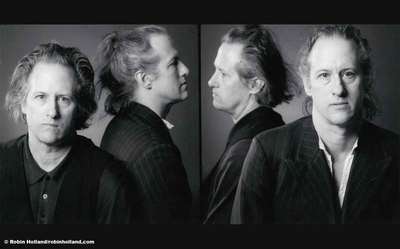
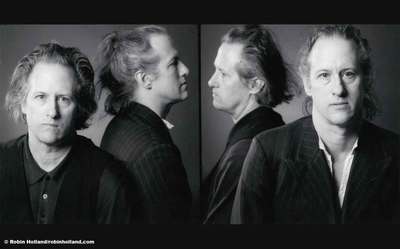
Everything is Twisted Up and Strange: Stephen and Timothy Quay

Thumb_large_quay-bros-headshot2050-copy_2

Let me tell you a fairy tale. Two brothers
are raised in a house with big windows, under the care of a man. They can look
at the world outside but never go outside and see it. The man says he’s keeping
them safe, and he tells the boys everything there is to know about the world
outside.:the color of plants, the sound
of the wind, the shapes and sizes of objects the way people behave, and the way
emotions feel and what they mean. The brothers are intrigued by the man’s explanations,
but they can’t help feeling there’s more to the world than what the man tells
them. One night, while the man is asleep, the brothers look closely at him and
discover that his skin is made of wool, like a sweater. They find a loose
thread and pull, revealing a whole universe in miniature inside the man’s
stomach. But it’s different than how the man described the world to them, and
looks different than the one outside their window. Shapes are different, sounds
are louder and quieter than the man described, and plants don’t look like they do out
the window. In here, inside the man, everything is twisted up and strange; everything is beautifully ugly; every color is more vivid. Instead of people there are puppets. The brothers look into
the eyes of the puppets and suddenly they knew everything about humans and
more. The puppets taught them everything there was to know about people, things
the man never bothered trying to explain.

This is the story I’ve always told myself
about filmmakers/animators/magicians Stephen & Timothy Quay. How else to
explain their inhuman intelligence, their avant garde rhythms, that they were
able to conjure a universe so alike and yet so completely different from our own.
So gorgeous, yet so horrific. So fantastic, yet so grounded in the tactile
realities of human, plant and animal. Since their debut in 1979, they’ve slowly
come to infect our reality with the influence of theirs. They reached into
fairy tales for inspiration and, pulled out a secret aesthetic history of the
world that only they could see. They’re lovingly, painstakingly crafted short
films have influenced everyone from Tim Burton to Terry Gilliam to Christopher
Nolan, who has bankrolled an awe-inspiring 35mm retrospective of some of their
major works currently playing New York’s Film Forum. He’s also completed a
short, sweet documentary on the brothers (simply called “Quay”), filming them
with a 35mm camera in their home studio, the first time the director has shot
one of his own movies since his 1998 debut “The Following”. That is the kind of
affection and dedication the Quays inspire. Right now in film schools across
the country there’s one kid in class whose favourite film is “Street of
Crocodiles”, and though she may never have the success of the Kubrick or Leone
fans, she’ll tug on the sweater that conceals reality until she really
understands the way art can unearth the secrets of humanity.

I interviewed them at Film Forum and they
tell me they’re always after “elusive forms” and that puppets offer a way into
a “contemplative realm,” adding a little weight to my fairy tale. Everything
about the Quays is distinct, from their surreal backdrops to their spindly,
whisper-soft voices, to the way their camera moves. The American-born,
England-educated identical twins speak in a splendid hybrid accent, and the way
say the word “puppet” is completely unique. Once you’ve heard them talk about
their “poppits,” you’ll never forget it. Apt, because those puppets are what
people will remember first when they hear the word “Quay.” “The eyes are the
soul of the puppet” one of them says, early in Nolan’s film. That’s why the
brothers coat their puppet’s eyes in olive oil, to keep them shining and
looking right back into the viewer’s soul. One of the many special touches that
only the brothers apply to their work. In conversation with Nolan on Wednesday
night (who has used Quays’ films as visual inspiration for his own work), at
the very start of their retrospective, the brothers outlined some of their mad
method: Keeping cameras aimed at mirrors pointed out their studio window for a
full day to capture light just right; having to move the dolly and shift focus
imperceptibly a hundred times over for a few seconds of camera movement;
cutting the top of a doll’s head off to fill it with straw in order to let
light come through the eyes with the right intensity. Happy accidents were
their masters, influencing and changing their films for the better at every
turn. Anyone who’s seen their films knows that every accident made their work
that much more special. “In Absentia”, a work commissioned to compliment a new
piece of music by Karlheinz Stockhausen didn’t appear to fit the music at all,
until they moved it 25 seconds to the right on their editing bay. Suddenly, it
made sense. The German composer had only one note for the brothers when he saw
the finished product. “You know guys, I’d like a little bit of blue…somewhere…”
They looked at each other for a long moment, trying to figure out how to
respond to the mad genius standing in their studio. When he left they happily
obliged, adding some to the end credits. Another happy accident.

What scares the Quays, they who seem to
write our nightmares for us? I was curious to know after having been watching
their work since I was a teenager. “Other than losing your teeth?” They both
laugh. They always laugh together in our short conversation. “Violence.
Unacceptable violence. You know that it can happen so quickly…” Which is why
they steer away from it in their films. “What we value in other people’s work
is that sense of genuine disquiet and unease. You accept violence in Hitchcock,
but what we prefer is a malaise. This feeling that’s underneath you, behind
your back, it’s the undertow.” Pressed for a modern example, they come up with
season 1 of True Detective. “It’s a very subtle language and we admire it
because we have no desire to be violent in our own work.” They also fear for
the future. Though they’ve worked beyond puppetry, designing theatre, ballet,
opera and most recently a video game. Unfortunately, it’s on “pause.” “The
money ran out.” They offer, clearly disappointed. It would have been a
marvelous opportunity to see what these old school storytellers could have
done. “We won’t do CGI.” Their latest project is a feature length movie based
on Bruno Schulz’s “The Sanatorium Under The Sign of the Hourglass” (which would
be 75% animation and 25% live action). They’ve built some of the puppets and
sets and they’ve shot 20 minutes of it, but need funding to finish it. ”You
have to pay for the studio or we’ll lose everything. The freedom to make this
kind of thing. It’s an urgent concern. You’re on the edge of eclipse.” Says
Timothy, but Stephen corrects him. “Extinction.” If every filmmaker was as
forthcoming as Nolan about the influence the brothers have had on their work,
they wouldn’t need to worry about money. Just one gesture in particular, of a
fluttering motion of body parts, so fast they appear to be caught between
dimensions, has been imitated more times than one could reasonable count.
Hopefully the retro and the beautiful documentary will rekindle interest in the
humble geniuses. I like to think we’ve earned the gift of a Quay feature, and
they’ve more than earned the money to make it. They only expanded the
definition of animation.

Their world is born of endless, ornate
invention. Every frame is packed with singularly creepy and gorgeous detail.
Schulz, who provided the inspiration for their watershed “Street of
Crocodiles”, talked about the essential poetry of the everyday (“Honor the
marginalia, is what we’ve always said.”), and that’s precisely what the Quays
manifest. The simplest colors, plants, shapes, textures and ideas are combined
in shocking ways. The inch of dust and gold-hued mildew that grows on a mirror
suddenly becomes part of the way their characters view themselves, and by
extension the world around them. Signs of age, of a past life for every puppet,
are a form of respect, they say, to the original, anonymous creators of the
objects they repurpose. The Brothers see the work of thousands of long-dead
unappreciated craftsman as essential to the human experience, and by thrusting
them together, giving objects like screws, combs, ladders, and pencil tips the
same life that Walt Disney gave his talking animals, they honor the efforts of
every architect, factory worker and machine shop hand who never got to sign his
name to the products he created to help the world move forward. The eyes are
the soul of the puppet, and the films of the Brothers Quay alert their audience
to the soul in every discarded, forgotten object. They see what few others can,
they see inside the heart of a man-made world, and to the rest of us they relate
the secret information to which they’ve become privy. Their perfectly crafted
fairy tale world mirrors ours and helps the rest of us see the beauty all
around us.

Source:: http://www.rogerebert.com/interviews/quays-nolan-ifc


Categories
TV & Movies

Thumbnails 8/21/15

Thumb_345745

1.

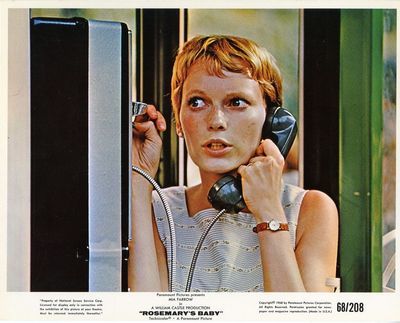
“Lessons We Can Learn From ‘Rosemary’s Baby'”: A “sartorial masterclass” from AnOther Mag‘s Olivia Singer.

“When, in 1967, Ira Levin published the novel Rosemary’s Baby, he could scarcely imagine the impact that it would subsequently have on the world of fashion. A deeply disturbing thriller simultaneously centered around the occult and gender tropes of the era, in 1968 Roman Polanski adapted it into a film – and the sartorial success that he achieved has since influenced designers from Miuccia Prada to Joseph Altuzarra. Rather than succumbing to the gothic, witchy aesthetic familiar to so many horror films, he employed costume designer Anthea Sylbert to, as she explained, put people at ease and thus make the impact of the storyline even more disturbing. ‘Roman said to me, ‘Let’s make ’em think we’re doing a Doris Day movie,’ Sylbert remembered in Designing Movies: Portrait of a Hollywood Artist. ‘He wanted everything to look ordinary. People are put at ease by ordinary, and in fact, are put at ease by garish. He didn’t want anything in the film to seem sinister.’ And so protagonist Mia Farrow was dressed in a saccharine sixties wardrobe, her evil neighbours in garish embellishments and the result was indisputably brilliant. Here, we look at the lessons we can learn from the harrowing tale – aside from, obviously, to avoid motherhood at all costs.”

2.

“Here’s What’s Missing From ‘Straight Outta Compton’: Me and the Other Women Dr. Dre Beat Up”: A powerful piece from Dee Barnes at Gawker.

“I never experienced police harassment until I moved to California in the ‘80s. The first time it happened, I had just left a house party that erupted in gunfire. A cop pulled me over and ordered me out of the car. I was 19, naive, and barefoot. When I made a move to get my shoes, the cop became aggressive. He manhandled me because he supposedly thought I was grabbing for a weapon. I’m lucky he didn’t shoot me. There I was, face down on the ground, knee in my back. In June, I was reminded of what happened to me when I watched video of a police officer named Eric Casebolt grabbing a 15-year-old girl outside the Craig Ranch North Community Pool in Texas, slamming her body to the ground, and putting his knee in her back. Three years later—in 1991—I would experience something similar, only this time I was on my back and the knee was in my chest. That knee did not belong to a police officer, but Andre Young, the producer/rapper who goes by Dr. Dre. When I saw the footage of California Highway Patrol officer Daniel Andrew straddling and viciously punching Marlene Pinnock in broad daylight on the side of a busy freeway last year, I cringed. That must have been how it looked as Dr. Dre straddled me and beat me mercilessly on the floor of the women’s restroom at the Po Na Na Souk nightclub in 1991. That event isn’t depicted in ‘Straight Outta Compton,’ but I don’t think it should have been, either. The truth is too ugly for a general audience. I didn’t want to see a depiction of me getting beat up, just like I didn’t want to see a depiction of Dre beating up Michel’le, his one-time girlfriend who recently summed up their relationship this way: ‘I was just a quiet girlfriend who got beat on and told to sit down and shut up.’”

3.

“‘I Was Getting Hate Mail Before I Even Started Shooting’: Keith Gordon on ‘The Singing Detective'”: In conversation with Jim Hemphill at Filmmaker Magazine.

“Filmmaker: ‘It’s hard to imagine it as a big-budget studio movie of the kind you were initially describing.’ Gordon: ‘If you made this movie for thirty or forty or fifty million dollars, you would have to make so many compromises to justify that budget that it would just be a total mess. I always wanted to do it, but I couldn’t get in the door when they were talking about doing it as a big-budget studio movie. I would say to my agent, ‘Barry Levinson dropped out, can I get a meeting?’ but they wouldn’t even talk to me. So to have it come back to me and essentially fall into my lap seven or eight years later was a kind of wonderful providence. There wasn’t much prep time though, which is always tough on a small film with a lot of ambition. When you don’t have a lot of money you want to make up for it with time, so that if you can’t afford something you can figure out how to be clever and overcome your limitations. In this case the budget was stretched even thinner because Robert was on probation at the time, meaning we could only shoot in L.A. – we couldn’t go elsewhere to save money like I had done on my previous films. Everything is pricier in L.A., from the crews to the locations, and that was made more challenging by the fact that I didn’t have as much prep time as I was used to. Usually on independent movies you have more than enough time to think about the movie beforehand, because it takes so long to get the money and then the money falls through and then you raise it again…during that time you’re always in a sort of pre-pre-production period, thinking things through. I didn’t have that luxury here.’”

4.

“Rose McGowan Is Starting a Revolution”: BuzzFeed‘s Kate Aurthur pens a fascinating profile of the actress-turned-feminist whistleblower.

“McGowan, 41, grew up in the Children of God cult. The hippie Christian organization, founded in Southern California by David Berg in the late 1960s, had international offshoots, and McGowan’s father migrated to lead its chapter in Italy, where she was born. ‘To understand my father, he was dishonorably discharged from going to Vietnam, which was very lucky for him because he would have died immediately,’ McGowan said. ‘He was an amazing artist and just really thought he was going to change the world with love.’ It didn’t turn out that way. McGowan’s upbringing was, she said, a ‘bit like growing up in the Medici court.’ There was the religious fanaticism to contend with: “They would come into my room every night and ask me if I believed in God: ‘Have you let God into your heart today?’ And I would say, ‘No.’ I was 3, and I was constantly in trouble.” Also, she felt physically unsafe. ‘It was a high-wire act to stay alive,’ she said. ‘From about 3, every room I go into, I immediately look for what I would kill somebody with if I had to defend myself.’ If the mention of Children of God brings anything specific to mind these days, it’s the cult’s legacy of sexual abuse. McGowan’s family eventually escaped and moved to the United States when she was 10. According to her account in People magazine in 2011, when her father found out that Berg was beginning to ritualize pedophilia, they fled. ‘I was not molested because my dad was strong enough to realize that this hippie love had gone south,’ McGowan wrote at the time. Her father, to whom she was close, died in 2008; her mother, McGowan said, ‘gets irritated if I say anything about’ being raised in a cult.”

5.

“An Appreciation For Musso & Frank, a Time Machine Back to Old Hollywood”: From the staff at Curbed LA.

“During the Back Room’s heyday, Dashiell Hammett, William Faulkner, F. Scott Fitzgerald, and Nathanael West (who made reference to the restaurant in his 1939 masterpiece Day of the Locust), amongst other luminaries, all tied one on back there—the urban legend that Raymond Chandler wrote The Big Sleep in the space is probably horseshit (he was a homebody, and didn’t much write out of doors), but ah, what delightful horses—t it is. You come to Musso & Frank to be surrounded by such lore; you come to it to forget about the real-life ‘Idiocracy’ unfurling outside its doors. Being in Musso & Frank makes you feel like the Twenty-First Century never began—never mind the fact that the speakers pumping in ’20s and ’30s music above you weren’t actually playing at the time, and were, rather, installed five years ago by the restaurant’s latest proprietor, a Millennial fourth-generation descendant of one of its original owners. Regardless of what is real and what is artifice, one thing is for certain—if you throw up in the ladies’ bathroom, you’re definitely throwing up in the same bathroom Dorothy Parker threw up in. It is borderline impossible these days to order a stiff drink from a man sporting an unironic mustache—Musso & Frank, however, has these men (and drinks) in spades. The waitstaff seems as old as the scenery that surrounds them because they nearly are; many have worked there for half a decade, some longer still. If you want an artisanal cocktail served by a tattooed former bike courier, you go to The Edison. If you want real nostalgia, not the Disneyland version, you go to Musso & Frank.”

Image of the Day

BBC‘s Rahul Verma explains why “Sholay,” the 40-year-old influential Indian blockbuster, may be the “Star Wars” of Bollywood.

Video of the Day

Meryl Streep’s first known appearance on film was in this crowd of Beatles fans circa 1965. She has no lines, but still manages to steal the show. Perhaps it has something to do with her Oscar-worthy hat.

Source:: http://www.rogerebert.com/thumbnails/thumbnails-82115


Categories
TV & Movies

Digging for Fire

Thumb_diggingforfire-2015-1

In the second scene in Joe Swanberg’s latest film, “Digging for Fire,” public school teacher and husband/father Tim (Jake Johnson, who also co-wrote the script with Swanberg) discovers a rusty gun and a bone in a hill outside the house where he and his wife Lee (Rosemarie DeWitt) are vacationing. Tim tells his wife excitedly, “Now my brain thinks there are twenty bodies here!” Lee is less than enthused. Besides, it’s not their hill out there. You can’t just dig up somebody else’s hill.

By the time Tim finds the gun and the bone, the ultimate story, what the film is really about, in other words, has been set up with dispatch. Swanberg and Johnson do not “bury the lede.” They foreground it. The gun and bone discovery is the excuse to tell a story about marriage vs. independence, impending mortality, and existential questions like, “What do I want in life? What does my life mean? Is this all there is?” Maybe the gun and the bone will be too obvious a device to some, but plot devices like that are often really useful. Besides, “Digging for Fire” is an often hilarious film, a kooky ensemble drama filled with specific and funny performances from a host of stars who stroll into the action from the side, do their thing, and then get out.

In many ways, “Digging for Fire” is reminiscent of Woody Allen’s “Manhattan Murder Mystery,” a similar story about a sedate couple (played by Allen and Diane Keaton) who become convinced that their next-door neighbor has murdered his wife. Keaton’s character re-directs her baseless anxiety about her marriage into trying to solve the mystery: she breaks into apartments, goes on “stakeouts,” says things to her husband like, “I’m going to bust this case wide open!“, all as he looks on thinking she has lost her mind. “Digging for Fire” has the same obvious structure and screwball mood. It’s strangely refreshing to watch a film that is not worried about nuance. There’s plenty of nuance in the issues the film explores (not to mention in all of the performances), but without the gun and the bone there might not be the same sense of urgency and absurdity.

What really matters is not the “whodunit” of the gun and the bone. What matters is the marriage of Tim and Lee. The marriage is not exactly on the rocks but they have stopped connecting. Lee has taken on a Mommy role with her husband. Her parents (Judith Light and Sam Elliott) want to foot the bill for an expensive preschool and Tim feels emasculated. Meanwhile, Lee reads a book called “The Passionate Marriage” in secret (the book becomes a running joke throughout the film), and has emotional conversations about life with various Uber drivers.

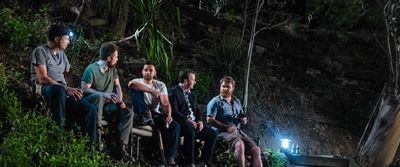
Lee goes off to get together with a friend (Melanie Lynskey) and Tim stays “home.” He’s supposed to do the taxes but instead he invites over all of his crazy buddies (Steve Berg, Mike Birbiglia, Chris Messina, Sam Rockwell) who promptly get wasted, do nude cannonballs in the pool, and bring along random girls. Tim is disconnected from the bacchanal and rallies everyone to help digging into the hill. Sam Rockwell plays a jaded self-absorbed lunatic who says to one of the more reticent guys, “If you’re not gonna dig, how ’bout getting us some hookers?” Digging for human bones makes Tim feel important and manly, and one pretty girl named Max (played by Brie Larson) gets sucked into the mystery with him.

If Max is Tim’s crush for the night then Ben (Orlando Bloom), a motorcycle-driving restaurant manager, is Lee’s. The film cuts back and forth from Tim’s night to Lee’s night, the action swift and funny but with plenty of time for poignancy and conversation, as well as the random magic events (like looking at Saturn through a telescope) that help make life worth living. The script uses the familiar devices of “dude-bros on the prowl” and “nagging unhappy wives” and twists them inside out, intertwining them, reveling in the ridiculous nature of the roles assigned to us. If one thinks that “Digging for Fire” is going to turn into “Hangover IV”, Swanberg and Johnson have other things in mind.

Swanberg’s films sometimes have a tendency to just sit there, the frame static, the action stalled. 2013’s “All the Light in the Sky” had beautiful performances and an interesting set-up, but the execution felt muted and fuzzy. “Digging for Fire” sparks with life in comparison, moving from humor to loneliness to screwball to those piercing moments when human beings, against the odds, are able to connect, to those seemingly tiny moments of revelation when a truth is revealed.

“Obvious” shouldn’t be a dirty word for writers or film-makers. A lot of scripts could use more “obvious.” Not simplistic or reliance on cliches, but an open statement of purpose, a clarity of theme. Tennessee Williams was not afraid of being obvious: he put his themes right out there in his titles and had no fear in stating said themes as strongly as possible in the script. “Digging for Fire” wants to talk about serious topics and it wants to do so in a humorous light-hearted way. It succeeds.

Source:: http://www.rogerebert.com/reviews/digging-for-fire-2015


Categories
TV & Movies

Grandma

Thumb_grandma-2015-1

“Grandma” is a modestly scaled character comedy-drama that
winds up exerting an almost shockingly strong emotional force by the end. I
walked into a screening of the film a mild skeptic, and I left nearly in tears,
and grateful for where writer-director Paul Weitz and a remarkable cast led by
Lily Tomlin took me.

Written and directed by Paul Weitz, whose well-intentioned
but spotty track record (prior films include “Admission,” “Being Flynn,” and
“About A Boy,” which for me ran a gamut from mildly enjoyable to actively
irritating) was part of what lowered my expectations, “Grandma” opens with
Tomlin’s character, Elle, an aged poet with a strong feminist cult rep,
apparently, being super unpleasant to Olivia (Judy Greer), the younger
girlfriend she’s dumping. Left alone in her house, she sits in a commencement
cap and gown looking over old photographs; the shutting out of Olivia, the
viewer can infer, isn’t the only loss Elle has recently suffered. Turning up at
the door is Elle’s curly-headed, gaminesque granddaughter Sage (Julia
Garner). Sage is in a non-gaminesque
predicament: pregnant, broke, and scheduled to have an abortion in about eight
hours.

Why Sage hasn’t gone to her own mom, from whom Elle is
somewhat estranged, why Elle herself only has about forty bucks available at
the moment, why Elle and Sage set out in a perhaps-not-impeccably maintained
vintage Dodge: all these are questions answered in ways that are best actually
seen, rather than described in a review. I really didn’t think Weitz had this
kind of screenplay in him. It’s incredibly literate—the movie actually has more
pertinent things to communicate about both the inner and outer life of a writer
than the unfortunately-much-bruited “The End of the Tour” does—and amusingly
literary, with one character dropping the word “solipsist” as an epithet in a
funny argument scene. He divides the scenes as chapters, with their titles
typed in lower case on a simulation of fine bond paper. Sage and Elle get to
know each other better, even as Elle can’t get over the fact that her
granddaughter’s never heard of “The Feminine Mystique.” But Elle’s politics and aesthetics
get shaken up at the same time as their quest for cash begins “rattling the
skeletons” of the characters’ respective pasts.

At the outset I was kind of concerned that the movie was
making a point of evoking Elle’s counterculture values the better to caricature
them for comedic purposes. But no. The movie examines those values, not
entirely uncritically, but it also
largely ends up affirming them, particularly with respect to women’s rights.
One of the film’s most striking scenes, titled “the ogre,” finds Elle, who’s
lived as a lesbian for longer than her granddaughter’s been alive, meeting up
with an old acquaintance, Karl, played by an initially genial Sam Elliott. The
scene’s almost a pocket history of the 1960s—its glories and its foibles. And
Elliott gives a performance that sets the movie on emotional fire. It’s
absolutely spectacular stuff. By the time this scene turns up, it’s clear that
this movie is not one that seeks to use the one-time edginess of Tomlin’s
comedic persona as a repository for sentimentality, but rather to set it afire
and let it burn. This is a much neater film than those in which Tomlin worked
with director Robert Altman, but its commitment to emotional truth is as strong
as any Altman movie you could name. And it holds true to that commitment with
the introduction of Sage’s mom, played beautifully by Marcia Gay Harden.

Is this a political movie? Well, in the United States, any
movie in which abortion is treated as a standard medical procedure performed by
trained and concerned medical professionals as opposed to Something Not Done, or a Traumatic Life
Ruining Moment, is by definition a political movie. For that reason alone the movie will attract controversy; it
approaches women’s self-determination without even the vaguest hint of apology.
I don’t want to set the comments section on fire but I’ve got to say I’m
entirely sympathetic to this perspective. But the politics—including the way
the movie doesn’t just “pass” the “Bechdel Test” but gets 100 on it—are only a
part of this really special movie. The other part is, yes, the humanity. The
way the movie shows the toll taken by bonds sundered, and the healing made
possible by bonds that are restored, however tentatively. And there’s also
humor, and plenty of it. While brief in running time, “Grandma” is a small
movie that doesn’t feel slight.

Source:: http://www.rogerebert.com/reviews/grandma-2015


Categories
Breaking News Ft Mac

Denis Victor Courchesne From Fort MacMurray Sentenced in Puerto Rico for Child Pornography

Denis Victor Courchesne, child pornography

Denis Victor Courchesne, a Fort MacMurray man who was arrested last year in Puerto Rico for possession and production of child pornography, has been sentenced to 40 years in prison. The sentence was handed down in Puerto Ric recently, and that is where 45 year old Denis will serve the sentence as well. It all started when Courchesne arrived at Luis Munoz Marin International Airport in San Juan late last year, coming from Panama City, Panama. During a routine customs search the officers discovered that the electronic devices Denis Victor Courchesne had with him contained child pornography. U.S. Immigration and Customs Enforcement issued a statement after Denis was arrested stating that he was a paid subscriber to websites and groups where he downloaded hundreds of child pornography images.

After Denis Victor Courchesne was arrested his electronic devices were further examined, and investigators also found numerous advertisements and videos that obtained child pornography. Courchesne admitted in an affidavit that he had a sexual attraction to prepubescent girls. Thanks to the hard efforts of customs officers and immigration officials this is one man who preys on children who will not have access for many years to come. Law enforcement are continuously monitoring the Internet because of the many groups and websites juts like the ones that Denis belonged to. Pedophiles are on the radar, and more countries are taking steps to stop these criminals before more innocent children can be hurt. What do you think a fair sentence for Denis Victor Courchesne would be?

Categories
TV & Movies

Home Entertainment Consumer Guide: August 20, 2015

Thumb_unfriended-2015-1

We’re in that weird end-of-summer period for Blu-ray and DVD in which most of the new releases are the garbage that hit theaters in April and early May while most of the big catalog releases are waiting to get a bit closer to the holiday shopping season. No one is releasing a major Blu-ray in time for Back to School shopping or Labor Day celebrations. And so this is the slightest HECG yet produced, which doesn’t mean it’s not going to be informative and fascinating. Or at least informative.

10 NEW TO NETFLIX

Even Netflix seems a little dry lately, launching a few recent indie releases, including one of our Ten Best Films of 2014, along with some interesting catalog choices including films starring Robert De Niro, Nicolas Cage, and Owen Wilson.

“Being Flynn”
“If I Stay”
“Kill Me Three Times”
“La Sapienza”
“The Look of Love”
“Lord of War”
“Pariah”
“Shanghai Noon”
“Two Days, One Night”
“Welcome to Me”

6 NEW TO BLU-RAY/DVD

“Day For Night” (Criterion)

Francois Truffaut’s “Day For Night” finally joins the Criterion Collection, over four decades after its controversial release in theaters. There’s really not much more that could be written about the actual film. I will say that this dissection of filmmaking and form has held up remarkably well. It’s a film that would resonate were it released today, even if a few of the filmmaking techniques in the film within a film would probably change. The most interesting special feature on the new Criterion release comes courtesy of video artist kogonada, who focuses energy on the three dream sequences in the film and what Truffaut is trying to say about film and his relationship to it through them. There’s also a fascinating interview with Dudley Andrew about the heated exchanges between Jean-Luc Godard and Truffaut after the former saw (and hated) “Day For Night”. Godard publicly accusing Truffaut of making “Day For Night” just so he could sleep with Jacqueline Bisset is a fascinating bit of film history. There’s also great archival material. This is the Criterion release of the month and the best Blu-ray you could buy this week.

Buy it here

Special Features
New visual essay by filmmaker :: kogonada
New interview with Glenn assistant editor Martine Barraque
New interview with film scholar Dudley Andrew
Documentary on the film from 2003, featuring film scholar Annette Insdorf
Archival interviews with director Francois Truffaut; editor Yann Dedet; and actors Jean-Pierre Aumont, Nathalie Baye, Jacqueline Bisset, Dani, and Bernard Menez
Archival television footage about the film, including footage of Truffaut on the set
Trailer
New English subtitle translation
Plus: An essay by critic David Cairns

“The French Lieutenant’s Woman” (Criterion)

Did someone at Criterion release this the same month as “Day For Night” on purpose? Both films are about movie production, and both films have movies-within-the-movie that comment on each other. While Truffaut’s is the vastly superior work, Karel Reisz and Harold Pinter’s adaptation of the John Fowles novel has its fans, especially those who love Meryl Streep. She was nominated for an Oscar her for her dual, multi-layered performance, although Jeremy Irons matches her in terms of quality. Their turns are the reason to see “French” again, a film that I don’t feel has held up quite as well as “Day For Night,” if it ever really worked. Pinter’s approach is too cold and studious when the book really needed opening up instead of emotional smothering. Still, Criterion does what they do with the release, which means a great transfer and interesting special features. And now it feels almost like a companion to “Day For Night.”

Buy it here

Special Features
New interviews with actors Jeremy Irons and Meryl Streep, editor John Bloom, and composer Carl Davis
New interview with film scholar Ian Christie
Episode of “The South Bank Show” from 1981 featuring director Karel Reisz, novelist John Fowles, and screenwriter Harold Pinter
Trailer
Plus: An essay by film scholar Lucy Bolton

“The Knick: Season One”

One of the most depressing Emmy snubs this year was the failure of the Academy to recognize the overall quality of Cinemax’s best show, this great medical drama now available on Blu-ray and DVD. I get that categories like Best Actor and Best Drama may have been too crowded (even if I would disagree that “The Knick” is the show that should have been snubbed), but not nominating a show like this for Best Cinematography proves to me that they don’t know what those words mean. “The Knick” has the strongest visual language on cable television (only “Hannibal” competes). Director Steven Soderbergh carefully considers every angle, every light source, every detail in his frame, to a such a degree that the result is mesmerizing. “The Knick” is a beautiful program, and one that I hope finds the audience it deserves on Blu-ray and in the second, upcoming season.

Buy it here

Special Features
Episode Post-Ops: Get educated on ground-breaking surgery techniques featured in “The Knick.”
Audio Commentaries: With Cast and Crew including Jack Amiel, Michael Begler, Jeremy Bobb, Eve Hewson, Michael Angarano, Chris Sullivan, Cara Seymour and Eric Johnson.

“Walt Disney Short Films Collection”

Twelve short films from the last 15 years of Disney animation are included on this excellent Blu-ray release that offers fans everything from 2000’s “John Henry” to 2015’s “Frozen Fever”. As with any anthology series, the set has its highs and lows, but it’s worth owning just to have “Paperman” and “Feast” on Blu-ray. They’re two of my favorite animated short films, EVER. And if your kids aren’t drawn to them, they still will find something to love by virtue of some of their favorite characters, including Goofy (“How to Hook Up Your Home Theater”), Mickey Mouse (“Get a Horse!”), the gang from “Tangled” (“Tangled Ever After”), and the beloved characters from “Frozen” (“Frozen Fever”). Pixar has been considered the leader in animated shorts for the last two decades, winning Oscars and fans, but this release proves that Walt Disney Animation has been keeping pace. If anything, it can help the younger members of your family learn how these things come into existence (each film is introduced by its creators) and how there are so many different ways to make a short film. “Frozen Fever” and “Paperman” have almost nothing in common structurally, and yet they’re both entertaining in their own ways. Get this for Disney fans this holiday season, but also consider it for anyone interesting in animated filmmaking. It’s a lesson in variety.

Buy it here

Special Features
An inside look at the process of developing and producing a short. Hosted by actor T.J. Miller (voice of “Fred” in “Big Hero 6”).

“I Am Chris Farley”

The team behind this funny, heartfelt love letter to Chris Farley have been wise to follow its brief theatrical run with a TV premiere and Blu-ray/DVD release in short succession. It’s kept the film in the public sphere in a way that it wouldn’t have if it just had a typical NY/LA theatrical release. In fact, it will likely be on Netflix soon, keeping it in people’s hearts and minds. This is the future. Theatrical/TV/Blu-ray/Streaming all in short order. Why waste time? The Blu-ray is slight but it doesn’t need a lot of bells and whistles. The film itself is something all Chris Farley fans will want to see, and probably own.

Buy it here

Special Features
The Farley Brothers… (and Sister)
Photo Gallery

“Unfriended”

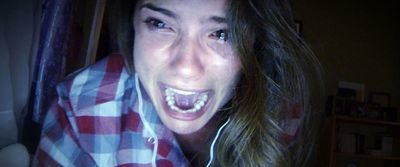
Oh, “Unfriended.” It starts so promisingly. The premise is clever. A group of friends communicating mostly via video chat on their laptops are haunted and massacred by the ghost of a girl they bullied. The first act of “Unfriended” works, but it falls apart, largely because it gets too weighed down with histrionics and the silly secrets of these stupid characters. Really, there are no characters. “Open Windows” got a lot more mileage out of a similar conceit. Still, I get why some horror fans fell for “Unfriended.” It’s not the worst movie you could rent this Halloween season. Although it’s certainly not the best either. And it’s interesting to me that Universal thinks so little of the movie to release it on Blu-ray without a single special feature, a rarity for new release theatrical titles in 2015.

Buy it here

Special Features
None

3 NEW TO VOD

“I Am Chris Farley”

“Ten Thousand Saints”

“Tom at the Farm”

Source:: http://rogerebert-prod-1056988946.us-east-1.elb.amazonaws.com/demanders/home-entertainment-consumer-guide-august-20-2015