Categories
Alberta Ft Mac Health

Auditor General Saher Cites Alberta Government Failure Concerning Addiction and Mental Health

Alberta government failure, addiction and mental health

Auditor General Saher recently cited the Alberta government failure when it comes to addressing and treating addiction and mental health problems, and a pledge to improve mental health support and services has been issued by Alberta Health Services. The report by Saher was released last week, and it shows that the provincial government did not execute a strategy for mental health and addiction outlined in 2011. The report states that Alberta Health Services “failed to properly execute the five-year mental health and addictions strategy announced in 2011 by the former Progressive Conservative government and Alberta Health Services (AHS) officials.” Saher also stated that “Severe and persistent mental illness is a chronic disease and should be treated like one.” The statement went on to explain that improvements have been made since 2011, but “For the most part, however, the delivery of front line addiction and mental health services remains unintegrated and allows ongoing gaps in service continuity.”

The Alberta government failure when it comes to addiction and mental health needs to be addressed and resolved, so that treatment is available to everyone who needs it. AHS CEO Vikie Kaminski told the media “I want all Albertans to know the issues raised in the report are significant and important and we are treating them very seriously.” The audit report shows that Alberta Health Services lacks the proper model for mental health patient care plan management, and rural hospitals experienced limitations in support. The lack of records that could easily be shared was also identified as a problem. Those who need mental health treatment should be able to access these services.

Categories
Economic Ft Mac

Fort MacMurray Airport Staff Have Low Morale According to CUPE

CUPE, Fort MacMurray Airport

CUPE is saying that the Fort MacMurray Airport staff have low morale as a result of recent privatization of services that have resulted in staff layoffs and job losses. In recent months the custodial staff at the airport was laid off and replaced with outsourced workers from a private cleaning company. The wage paid to the company for the workers was less than what the hired staff was being paid, and many of the benefits previously provided were also cut when the positions were outsourced. Next the airport authority announced that the security staff would also be outsourced and this upset many people in the local community as well as the CUPE leaders. CUPE Local 1505 president Les Collins said “The morale of the employees is noticeably down. The employees are walking on eggshells. Losing a job right now could mean leaving your home and leaving town.”

CUPE is asking that the Fort MacMurray Airport stop looking at third party firms to outsource services as a way of cutting costs and saving money. There is also concern that the union has not yet seen the nw contract that was entered into with TAWS Security. Collins stated “Usually they’re quite cooperative about providing that. Anything that’s sensitive or confidential in documentation is blocked out, and we’re fine with that. To withhold all the information we’re requesting so we can do an apples-to-apples comparison, that is not cooperative.” CUPE Alberta Division president Marle Roberts explained “The Fort McMurray Airport is replacing skilled, experienced working people with people that it will economically exploit. Privatizing services always costs more in the end, as profit margins grow and working people and our communities are left with less.”

Categories
TV & Movies

HFPA Annual Grants Banquet Set for August 13th

Thumb_hfpa_logo111103183925

The Hollywood Foreign Press Association will be hosting its annual Grants Banquet Dinner on Thursday, August 13th, at the Beverly Wilshire Hotel in Beverly Hills, California. Over $2 million in funds to nonprofit entertainment-related organizations and scholarship programs will be granted by the HFPA at the event, topping last year’s sum totaling over $1.9 million. Thus far, the HFPA has granted nearly $24 million in grants, presented over 1,000 scholarships and restored more than 90 films, including Alfred Hitchcock’s 1943 masterpiece, “Shadow of a Doubt,” and 1933’s landmark classic, “King Kong.”

The Roger Ebert Film Festival (Ebertfest) was a first time recipient of one of the grants at last year’s gala, which enabled the festival to screen several acclaimed foreign titles in 2015, including “Girlhood,” “Goodbye to Language,” “A Pigeon Sat on a Branch Reflecting on Existence,” “Wild Tales” and the Oscar-winning “Ida.” Ebertfest co-founder and producer Chaz Ebert said, “In these times of fractured relationships, it is more important than ever to use cinema as a way to bring people together and foster international understanding. We appreciate HFPA’s role in this effort.”

Past HFPA President Theo Kingma said he was thrilled that Ebertfest has joined the list of recipients. “The Hollywood Foreign Press is honored to stand along the legacy of one of the best film critics the world of entertainment has ever known. We are proud to support his legacy,” he said.

Chaz Ebert and Ebertfest director, Nate Kohn, will be among the guests scheduled to attend this year’s HFPA gala, which boasts an impressive line-up of presenters. They include Elizabeth Banks, Halle Berry, Ty Burrell, Sophia Bush, Bryan Cranston, Ice Cube, Jamie Lee Curtis, Benicio Del Toro, America Ferrera, Jane Fonda, Andrew Garfield, Topher Grace, Jon Hamm, Oscar Isaac, Jason Isaacs, O’Shea Jackson Jr., Allison Janney, Dakota Johnson, Brie Larson, Joe Manganiello, Ellen Page, Randall Park, Saoirse Ronan, Sarah Silverman and Sharon Stone.

Among its many additional charities, the HFPA provides scholarships, supports filmmaker training in Kenyan refugee camps and donates money to theater groups, musicians, storytellers’ foundations, film archives and youth projects, as well as many other worthy causes.

Be sure to stay tuned for my coverage of the event at RogerEbert.com. For more information on the Hollywood Foreign Press Association, visit its official site.

Source:: http://www.rogerebert.com/festivals-and-awards/hfpa-annual-grants-banquet-set-for-august-13th


Categories
TV & Movies

Home Entertainment Consumer Guide: August 7, 2015

Thumb_thewaterdiviner-2015-1

We’re back with a relatively slight version of the HECG. It’s been a little quiet in the world of Blu-ray and DVD as a number of March/April releases recently hit the home market and, well, there’s not much more to say about films like “Woman in Gold” or “The Second Best Exotic Marigold Hotel.” And the rest of the market has been a little quiet, although things will pick up soon with Criterion versions of “Dressed to Kill” and “Day For Night” in a couple weeks. Until then, we have an array of catalog films recently released on Netflix, a very diverse selection of Blu-rays and DVDs that might be of interest, and previews for three films added to VOD since we last spoke. Find something to watch this weekend.

10 NEW TO NETFLIX
“Benny and Joon”
“Dear Frankie”
“The Doors”
“Fletch”
“The Hurt Locker”
“Marvin’s Room”
“My Best Friend’s Wedding”
“Starship Troopers”
“Three Kings”
“Top Secret!”

7 NEW TO BLU-RAY/DVD

“The People Under the Stairs”

When I was young, I didn’t know what to make of Wes Craven’s blistering critique of the Reagan era and the growing income gap. I was used to Craven giving me films like “Nightmare on Elm Street,” and this simply wasn’t going to cut it in terms of horror. It just wasn’t scary enough. It’s still not, really. And the film critics who claim that it’s one of Craven’s best are delusional. I love Craven but his social agenda and his execution here don’t quite connect, largely due to an awful kid performance by Brandon Adams. At least he’s off-set by truly fun turns from Everett McGill and Wendy Robie (who would reunite on “Twin Peaks”) as the owners of the house on the corner all neighborhood kids knew to avoid. While I think the film is dated (watch “They Live” for a better critique of the failure of trickle-down economics in horror form), the Scream Factory Blu-ray restoation is typically fantastic. These are Criterion-level transfers, people. The movie looks great, and it’s accompanied by excellent, informative special features. My greatest hope is that any resurgence of interest in this movie gets Craven to make another one. (He hasn’t since “Scream 4.”) It’s been too long.

Buy it here

Special Features
Audio Commentary with Writer/Director Wes Craven
Audio Commentary with Stars Brandon Adams, A.J. Langer, Sean Whalen and Yan Birch
House Mother – An Interview with Star Wendy Robie
What Lies Beneath – Interviews with Special Make-Up Effects Artists Greg Nicotero, Howard Berger and Robert Kurtzman
House of Horrors – An Interview with Director of Photography Sandi Sissel
Setting the Score – An Interview with Composer Don Peake
Behind-the-Scenes Footage
Theatrical Trailer

“Night and the City” (Criterion)

The Criterion Blu-ray release of Jules Dassin’s excellent noir drama contains one of the most interesting special features a young film critic could watch in a 23-minute companion that examines the differences between the British cut of the film and Dassin’s preferred “American” version, which not only has a few different scenes but, most importantly, an ENTIRELY different score. If you’ve wondered what impact the score has on your experience, the side-by-side comparisons of key scenes in “Night and the City” with drastically different musical compositions will be eye-opening (and you really should someday see an early workcut or test screening with no score at all…it can be unsettling). The edits to “Night and the City” for the British version, which is also included in its entirety, changed the film slightly, but it’s really the scores, created entirely independently, that make them completely different films. They’re both good, and I even like some of the “lesser” score in the British version more. Blasphemy, I know.

Buy it here

Special Features
Complete 101-minute British version of the film
Audio commentary from 2005 with film scholar Glenn Erickson
Interview with director Jules Dassin from 2005
Excerpts from a 1972 television interview with Dassin
Comparison of the scores for the British and American versions of the film
Trailer
Plus: An essay by film critic Paul Arthur

“White God”

A surprising winner of the 2014 Prix Un Certain Regard at Cannes, “White God” is certainly a unique take on the dynamic between man and dog. Co-writer/director Kornel Mundruczo can get a little clunky with his reaches for Great Social Cinematic Vision but he has an undeniably confident eye, which sometimes results in striking, memorable imagery. Dogs racing over water in slow motion. The final shots. The dogs looking down from the balcony in the music house. These are great images. And yet it says something that I value the film more as a series of images than as a social commentary. The comparison between a young girl being pushed around by an angry father and obnoxious teacher with the way we treat stray animals in this world don’t quite work. Still, “White God” is one of the most buzzed about foreign films of 2015, and so you really should see it just to be up on the conversation. And to really anticipate what Mundruczo does next.

Buy it here

Special Features
Behind The Scenes of “White God”
Interview with Writer/Director Kornel Mundruezo
Interview with Animal Coordinator/Technical Advisor Teresa Ann Miller

“The Salvation”

Speaking of visually confident films, you can feel the heat and dust in Kristian Levring’s sometimes-great Western about a man trapped in a nightmare. The always phenomenal Mads Mikkelsen, who does more with his eyes than most actors do with a monologue, plays a man who has finally made enough of himself that his wife and son can come to the States from overseas after seven long years. After picking them up at the train station, they are brutally murdered after a stagecoach altercation. Mads gets revenge, and is then sold out by his fellow townspeople when one of the murderers’ brothers (Jeffrey Dean Morgan, doing some excellent squinting) comes looking for vengeance. Cycles of vengeance, fear of others, even corporate greed; “The Salvation” plays with some fascinating themes while also offering a fantastic array of great character actors, including Mads, Morgan, Eva Green, and Jonathan Pryce. The movie sags a bit in the middle but the set-up and the climactic shoot-out are pretty fantastic. Definitely worth a rental.

Buy it here

Special Features
Interviews
Behind The Scenes
Trailer

“Far From the Madding Crowd”

Being an English major, I studied Thomas Hardy’s “Far From the Madding Crowd” several times and have seen film versions of it since, including Julie Christie’s excellent take on the tale and the variation on it in “Tamara Drewe”. Perhaps my over-familiarity with (and lack of absolute adoration for) the source material here colors my response to this admittedly gorgeous adaptation, but Thomas Vinterberg’s 2015 film lacks the passion needed to justify adapting the story again. The main reason to see it is the cast. Carey Mulligan is one of the best actresses of her generation, and Michael Sheen and Matthias Schoenaerts are well-cast (although I didn’t quite buy Thomas Sturridge). In the end, this take on “Madding Crowd” is pretty and well-done and nice, without ever feeling like an essential version of a beloved novel.

Buy it here

Special Features
Deleted Scenes
Extended Ending
Adapting “Far from the Madding Crowd”
Bathsheba Everdene: Acclaimed actress Carey Mulligan talks about playing one of the most iconic female protagonists in literature.
The Suitors

“The Water Diviner”

Russell Crowe’s directorial debut is a well-meaning but flat film that definitely reminds us how much we’ll miss the recently-passed Andrew Lesnie (it looks great, especially in HD) but also how filmmakers better at this kind of historical drama (like Ridley Scott) bring relatable, modern passions and concerns to their tales. Crowe never quite finds the heart of his film about a man who goes to the decimated front after the end of WWI to find his missing three sons, presumed dead in the conflict. Like a lot of war films, “The Water Diviner” is about how people and countries heal from the deep wounds caused by combat. And, as I said, it looks fantastic, but Crowe’s complete dismissal of the entirety of the time period in which his film takes place (the Armenian genocide is ignored, which is like setting a film in Germany in 1942 and not mentioning the Holocaust) is a mistake. It speaks to his desire to create surface-level entertainment instead of honest filmmaking.

Buy it here

Special Features
“The Making of ‘The Water Diviner'”: Go behind the scenes and get an in-depth look at the making of this epic film.
“The Battle of Gallipoli”: Recalling this titanic clash on its 100th anniversary.

“Insurgent”

Speaking of dishonest filmmaking, has there been a Young Adult adaptation as listless and dull as this sequel to “Divergent”? Sure, “The Host” was an abomination, but most people correctly ignored that. This absolute mess somehow made a fortune and has a solid fan base. Watching “Insurgent,” I was struck by how many talented people wasted their time making it. Kate Winslet is one of our best actresses. Shailene Woodley and Miles Teller are two of the best of their generation, and both look SO bored here that you can practically see them endorsing their paychecks. There are a few interesting ideas about fate and governmental control, but everything that takes place in “Insurgent” has been done better elsewhere, most often in “The Hunger Games” movies, which look like masterpieces comparatively.

Buy it here

Special Features
“Insurgent” Unlocked: The Ultimate Behind-the-Scenes Access (a feature-length, in-depth look at all aspects of the movie-for the ultimate fan)
From “Divergent” to “Insurgent”
Diverging: Adapting “Insurgent” to the Screen
The Others: Cast and Characters
The Train Fight Unlocked
The Peter Hayes Story
Marketing Gallery
Audio Commentary with Producers

3 NEW TO VOD

“Dark Places”

“Five Star”

“A LEGO Brickumentary”

In Two Weeks: “Day For Night,” “The Knick,” “Unfriended,” and more!

Source:: http://www.rogerebert.com/demanders/home-entertainment-consumer-guide-august-7-2015


Categories
TV & Movies

Thumbnails 8/7/15

Thumb_13467080a5489f3b159f84f7506c88fb

1.

“Why we’re killing our comments section”: An explanation from Austin Powell and Nicholas White of The Daily Dot.

“This afternoon we put the Daily Dot’s commenting system on indefinite hiatus. Chances are you didn’t notice—and that’s part of the point. The Daily Dot was founded as a hometown newspaper for the Internet—a paper of record for the Web—chronicling the people, news, and events shaping life online. The concepts of community and authenticity are at the core of everything we do: We don’t just report on Reddit, and Tumblr; we’re active participants, putting in as much as we’re reporting out. That’s what’s distinguished us from every other new media site. But that sense of community has largely stayed in those communities. Focused as we are on communities across the Internet, we employed a best-in-class, third-party system for our on-site comments that’s used by many of the biggest and most prestigious publishers in the world. As we’ve said, however, we are not like other publishers. The system has been difficult to manage in concert with the distributed way we engage with our community and has created unintended barriers to entry that were simply too high for our hyper-social audience. In fact, we think our unique position in online communities has put us at the edge of a trend that many publishers are experiencing, and we suspect that many publishers will soon find that their existing commenting systems do not serve their readers as the conversation continues to move off websites to social media, where most of our content is discovered and consumed.”

2.

“Why Doesn’t Netflix Recommend ‘Notting Hill’ After You Watch ‘Beyond the Lights’?”: An infuriating piece by Vulture‘s Dee Lockett.

“‘Beyond the Lights’ capped off 2014 as one of the year’s most critically acclaimed films you probably didn’t hear about. It didn’t come up in many Oscar-race discussions outside of Best Original Song (for which it was nominated), and never made much noise offline. It sounds like a remarkable oversight given that its director, Gina Prince-Bythewood, is responsible for ‘Love & Basketball,’ which is regarded as one of the best love stories about black love of its time. That racial qualifier, though, is what Prince-Bythewood now says has allowed the movie industry to keep art made by black artists in a corner. In a series of tweets, the director has specifically called out Netflix for the long-criticized algorithm used for its ‘More Like This’ tab. Instead of recommending what to watch next based on what should be racially ambiguous devices like story and genre, Prince-Bythewood argues that if you watch something starring black people, then that’s all Netflix thinks you’ll ever want to watch.”

3.

“The Veil of Diversity in ‘Sleepy Hollow'”: An excellent guest post from Giselle Defares at Bitch Flicks.

“It’s mindboggling that the Juilliard-trained Beharie, who proudly advocated for her character in an interview with Essence – and didn’t expect to portray a tough, cop character with her 5′ 1″ stature and African American background – was pushed aside in favor of ‘The Crane family drama.’ Katrina Crane’s story arc was deplorable. She was touted as a powerful witch from the start. Instead she was only used as a plot device in the first season. They tried to flesh her character out in season 2 and failed. Ichabod Crane became a moping know-it-all (more than usual) who ignored Abbie’s advice to keep focused on their common goal. ‘Fringe’’s John Noble was wasted as Ichabod and Katrina’s son who turned out to be The Horseman of War and got his mother pregnant with an evil, demon baby – don’t ask. Not to mention that the Headless Horseman became a woobified character, ‘grew’ a head, and turned out to be Katrina’s ex instead of a menacing villain. The Powers That Be (TPTB) molded Katrina into a damsel in distress that ate up the screen time that should have further explored the relationship between Abbie and Jenny, Abbie and Ichabod, basically everything surrounding Abbie Mills.”

4.

“A Warning For Our Next Great Screenwriters”: An excerpt from Billy Ray’s 2012 keynote speech from the Academy Nicholl Fellowship awards, published at Medium.

“Suppose we were going to shoot a scene in a typical room. We can now, if we want to, add elements to that scene to make it more visually arresting. We could light the ceiling on fire by using CGI. We could enhance the experience by projecting it in 3-D. Does any of this have anything to do with story, or character? No. But, it would look great in the trailer. That kind of thinking, the idea that dazzling visuals are enough, has led to a certain kind of movie-making laziness that has not been good for anybody. Worse, it’s made it tougher and tougher to dazzle the audience because they know out there now that we’re making movies with software instead of cameras. We’re storytellers, which means we have to do better. Sometimes I think we have to rescue the business from the very people who own it. The good news is, we can. Inside every one of you is the flame that has always lit the way in this industry, which is originality—that one spark of an idea, that one archetypal character, story, truth, or world that no one’s ever captured before. Do you remember the movie WALL-E, the brilliant Pixar film? He’s in a dangerous world and he’s one of thousands who are supposed to clean it up. But, there’s something special about WALL-E. He finds this little tiny sprig which might one day become a plant. He guards it, and saves it, and preserves it on the chance that it might some day turn into something beautiful. Well, Hollywood is that dangerous world and you are WALL-E.”

5.

“Why Story Structure Formulas Don’t Work”: Advice from screenwriter and guest blogger Corey Mandell at Film Independent.

“I asked her why she felt she felt so compelled to have an inciting incident on page 17. She told me a story I hear a lot. When people read her scripts they always compliment her characters and dialogue. This is what she’s good at, what she’s always been good at. But the structure isn’t there. People tell her she needs to learn how to funnel all her good writing into a properly structured script. So she took the seminars. She read the books. She took classes. And they all said the same thing. In order to succeed, a writer needs to write screenplays in the classic three-act structure. Which is as follows: Start by introducing the characters, world and tone, followed by the inciting incident—also known as the catalyst or call to action the protagonist must answer. This is the event which turns the protagonist’s world upside-down and introduces the crisis they will spend the rest of the movie trying to solve. It is what launches the main story. In the ‘Wizard of Oz,’ it’s the tornado. This is what propels Dorothy to Oz, turning her life upside-down, thus launching the main story of her quest to find a way home. The seminars and books tell you that not only do you need a strong inciting incident, it needs to be properly located. When I was in film school, we were told it should come between page 15 and 20 (The ‘Wizard of Oz’ tornado blows in on page 19). Nowadays, probably due to shorter attention spans, writers are told it needs to come between pages 10 and 17. Lisa had been told page 17.”

Image of the Day

From the archives: A must-read essay published a year ago yesterday at Hollywood And All That, “Einstein’s Monsters: Martin Amis, The Bomb, and Thinking the Unthinkable.”

Video of the Day

Indiewire‘s Max Winter presents a great video essay by Stefano Westerling that illustrates “how Stanley Kubrick forces us to look at ourselves.”

Source:: http://www.rogerebert.com/thumbnails/thumbnails-8715


Categories
TV & Movies

The Gift

Thumb_thegift-2015-1

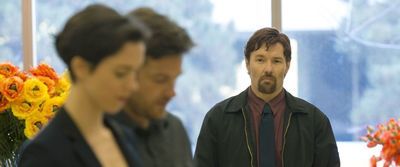
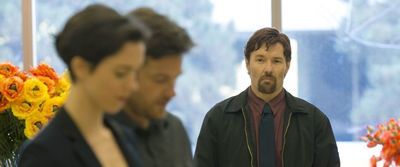
In “The Gift,” written and directed by actor Joel Edgerton, Simon (Jason Bateman) and his wife (Rebecca Hall) have an awkward reunion dinner with a guy Simon knew from high school, a guy named Gordon (nicknamed “Gordo”, played by Edgerton). After it’s over, Simon turns to his wife and says, “Did he seem odd to you?” Well, yes. He did. And he gets odder. The odd-ness is hard to define. Is it the flat look in his eyes? Is it the mystery around why he keeps showing up, why he leaves wrapped gifts at the door, why he even wants to strike up a friendship at all, when Simon seems to barely remember the guy? What’s Gordo up to? What does he want? One of the intense and disturbing pleasures of “The Gift,” why the film creates such a sense of unease, is that the answers to those questions are just the tip of the iceberg.

Edgerton’s script is extremely effective: he is interested in what happens between a supposedly happy couple when a third party introduces doubt, insecurity, second-thoughts, into the marriage. It’s like an invisible poison released into the atmosphere, working on everyone in unpredictable and terrifying ways. “The Gift” is similar to “Cape Fear,” or “Fatal Attraction,” or, in another way, “The Night of the Hunter” in that it shows a family unit threatened by an outside force (usually an individual with an ax to grind). “The Gift” is a thriller, with plenty of scare-moments, but the fear unleashed is mainly psychological. The marriage itself is at stake. But why? What is being revealed? What secret is there in the past? Is there even a secret at all?

Simon and Robyn have relocated to California from Chicago because Simon got a swanky corporate job in a security systems company. Robyn is a freelance designer, but dissatisfied with her life in a vague and unspoken way. They’re trying to start a family. Simon wants his wife to be happy with whatever she chooses to do. They buy a beautiful house with huge glass windows looking out into the surrounding greenery.

Gordo approaches the couple in the first scene as they shop for housewares, and re-introduces himself to Simon. There’s something intense about Gordo’s approach, but you can’t really put your finger on it. Maybe he’s just socially awkward. Robyn, whom her husband describes as a “door always half-open” kind of person, is delighted to meet someone from her husband’s past. Pretty quickly though, Gordo becomes a problem. He shows up unannounced while Simon is at work and Robyn is home alone. He leaves gifts at the door, complete with notes ending in a smiley face. He is pushy in a quiet clueless way. Simon wants to get rid of Gordo, once and for all. Robyn gets the feeling that something went on between these two people in the past. She’s not getting the whole story.

It is a testament to the film’s visual style that a series of nicely-wrapped gifts left on the front stoop seems increasingly ominous. The house is lingered over by cinematographer Eduard Grau, the camera moving slowly down empty hallways (the shots repeat), the rooms at the end unseen, shadowy. Robyn showers, her vulnerable back seen through the glass. Simon and Robyn talk in the kitchen, the night-darkness outside the windows creating a feeling of exposure. These are common tricks in the thriller playbook, and they’re “common” because they work. What these stylistic choices do is set up an expectation in the audience of what kind of thriller they are watching. There’s even a beloved animal who mysteriously goes missing, calling to mind the boiling bunny in “Fatal Attraction.” Did Gordo steal their dog? Why, why, would he do that?

Jason Bateman, known mainly for his comedic roles, gives a beautiful and focused performance as the ambitious Simon, worried about his wife, and furious at Gordo’s omnipresence. Bateman manages to be both kindly and condescending, sometimes in the same moment. Simon has a temper, Simon struggles to be patient, Simon is funny and considerate. But the dynamic with Gordo opens up other aspects of his personality, things Robyn has never seen before. Rebecca Hall’s performance is open and sympathetic, suggesting pain in her past, pain she has worked hard to overcome. Being nice to Gordo, and patient, is the right thing to do. Simon is right, though: Gordo does seem “odd,” and Robyn comes off as naive and too trusting. You want to tell her to read Gavin de Becker’s The Gift of Fear. And Edgerton, wearing three different hats in “The Gift,” as director, writer, and actor, dials down any impulse to act overtly threatening or villainous. He’s scary, but again, in a way you can’t quite classify.

We’ve probably all known awkward people who can’t “take a hint.” There are people who can’t sense when a conversation is over, who miss social cues, who are tone-deaf to the subtleties of human behavior. Gordo appears to be one of those people. Robyn feels sorry for him, thinks Simon should be nicer to him. And yet .. and yet … Robyn starts to become terrified in her own home. She thinks she hears the front door opening, but then there’s no one there. She can’t sleep. An abyss opens up between Robyn and Simon. Distrust and suspicion have entered their marriage, the snake in the garden.

“The Gift” uses the tricks of the thriller trade well, but why it really works is that it withholds the necessary information until almost the very end. Robyn’s journey of confusion and terror is our own. We want to know what is around that corner at the end of the hallway, what is out there in the dark, what is back there in the past. When she finally sees it, when she finally understands, the horror is worse than what we imagined.

Source:: http://www.rogerebert.com/reviews/the-gift-2015