Categories
TV & Movies

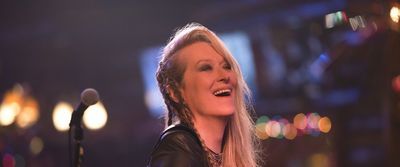
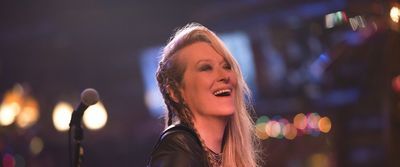
Ricki and the Flash

Thumb_rickiandtheflash-2015-1

“Ricki and the Flash” is a classic, and classically
lamentable, good-news/bad news proposition. In the good news department, it’s
largely a sturdy, enjoyable domestic comedy drama. It showcases the sort of
typically amazingly diverse and eclectic cast only its director Jonathan Demme
can and would put together. When’s the last time you saw a movie that featured
both “The Facts of Life” mother-figure Charlotte Rae AND Parliament/Funkadelic
keyboard legend Bernie Worrell? That’s right, never. Then there’s the
what-can’t-she-do Meryl Streep credibly handling a Fender Telecaster and
singing classic rock tunes. A script by Diablo Cody that’s typically acute on
the Problems Of Quirky Contemporary Women front and refreshingly low on the
ostentatious gratuitous pop culture references. And so on.

The bad news is tougher to detail in good conscience as a
spoiler-aware reviewer. The movie, not nearly as treacly a proposition as its
trailers suggest, opens with Streep’s Ricki leading her band through Tom
Petty’s “American Girl.” If these guys rock a little harder and tighter than
your above-average bar band, it’s because they damn well should. Lead
guitarist and some-time Ricki romantic
interest Greg is Rick Springfield, a chart-topping dude back in the day as well
as an actor; bassist is the late Rick Rosas, longtime compatriot of Neil Young
and others; the drummer is Joe Vitale, who came up with the Michael Stanley
Band. On organ is the aforementioned Mr. Worrell. These vets, even onetime teen
idol Springfield, are all relatively grizzled looking, but they’re making the
smallish clientele of a Tarzana bar pretty happy. The next day it’s back to
real life for frontwoman Ricki: a checkout lane at a Total Foods outlet, a
fictionalized version of a very organic chain with high Awful Bourgeois Appeal.
Then there’s the phone call from the past. There’s always a phone call from the
past. In this case, it’s from a past
standing on a manicured lawn in the back of a McMansion in a cul de sac and
calling Ricki “Linda” (her given name).

Kevin Kline’s Pete is the ex-husband Ricki left in the lurch
after bearing him three children and failing at domestic goddesshood. But it’s
quite a lurch he’s made for himself. Still ensconced in Indiana, he has a
challenging but very lucrative professional life, a beautiful and sane second
wife Maureen (Audra MacDonald) and is still an involved dad to this three adult
kids. The oldest of which, Julie (Mamie Gummer, Streep’s real-life daughter) is
having a profound crisis after the breakup of her marriage. Absentee mom
Ricki/Linda, who hasn’t boarded a jet since well before the creation of the
TSA, does her duty and is greeted with surly resentment and seething hatred by
Julie. Except Ricki also works some transformational magic on her daughter,
routing her rage into a pleasure principle that involves getting pricey
manicures on Julie’s soon-to-be-ex-husband’s dime. Ricki’s other kids are a
little less ambivalent about her sudden presence; it comes out that the
youngest hadn’t even intended to invite her to his wedding. And once Maureen
returns from visiting her own family, she’s not too excited that Ricki’s around
either.

So far, so okay. One of the nicer things about the movie is
how it avoids overt clichés while still partaking of convention. One night in
the giant kitchen Ricki asks buttoned-down Pete why he’s got some pot in the
freezer; he said it was bootleg-prescribed by a coworker for his migraines. The
way for a WACKY pot-smoking scene is clear, but Demme and Cody don’t give us
that. They don’t even show Ricki, Pete, and Julie lighting up. Rather, the
movie shows them in a semi-stoned family glow a little afterward, the heretofore
manic Julie finally getting some rest, Ricki singing one of her own tunes, and
Pete grappling with his own clearly very tortured feelings about his past and
the woman he’s now got staying in his house. It’s good stuff (and of course
it’s beautifully depicted by the uniformly great actors), reminiscent of the quirky moments of grace
peppered into a lot of Demme works, ranging as wide as “Melvin And Howard,”
“Something Wild,” and “Married To The Mob.”

Now for the bad news. There’s a bit in the movie’s final
scene in which Springfield’s character rises from a table and announces “We
better get out of here.” My advice to you—and it is very impractical advice
because who wants to pay to see a movie and do this?—is that you get up and
walk out of “Ricki And The Flash” right then and there. Because what happens
next pretty much sells all the good honest work everyone involved has done up
to this point down the river, in a conclusion that hard-sells a feel-good
cliché with such forced-grin inanity that it feels like a hallucination. “Music
is the healing power of the universe,” Albert Ayler said. I kind of believe
him. I reckon that Demme believes him too. But not the way it’s depicted here.
Here it’s more like “Music is the healing power of the I’m hiding under my
couch out of embarrassment for myself and everyone involved.”

Source:: http://www.rogerebert.com/reviews/ricki-and-the-flash-2015


Categories
Alberta Ft Mac

Oil Companies Cut Jobs and Spending Due to Economics

oil companies, economics

Oil companies that play an important role in the economy of Wood Buffalo and Fort MacMurray have recently announced spending and job cuts due to economics, and these cuts amount to hundreds of millions of dollars. The cuts were announced soon after the second quarter financial reports were prepared and released by the oil companies. Cenovus Energy, Royal Dutch Shell, and Suncor Energy all announced cutting hundreds of jobs and slashing hundreds of millions of dollars in spending. This is the second time in 2015 that Suncor Energy has cut spending plans. Since the beginning of the year the company has cut out more than 1,200 positions, and these were filled by employees or subcontractors. Another round of cuts is understandably causing stress for those who work in the industry and rely on these companies for a paycheck.

The economics of the current spending must be addressed by the oil companies. On the other hand cutting costs and scaling back expenses too far could cost the companies and te industry greatly if oil prices suddenly jump up again because rapid production and processing expansion may not be possible at that time due to previous cutbacks. In order to stay profitable the oil companies must constantly watch for any signs of market movement either way, and try to accurately predict what the future holds. The quarterly report for one company simply stated “These positions are no longer required because of a decrease in work due to the continued low oil price environment.”

Categories
TV & Movies

Fantastic Four

Thumb_fantasticfour-2015-1

Maybe “The Fantastic Four” is a cursed property, or maybe just one that
shouldn’t be turned into a film? In any case, this new version, directed by Josh Trank,
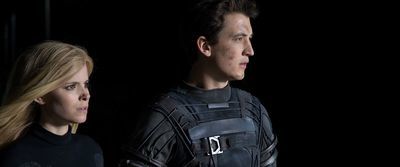
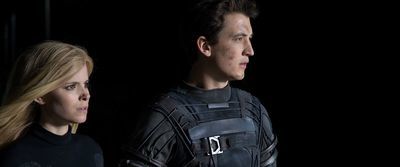
is the third big screen attempt to tell the story of Reed Richards, Sue and Johnny Storm, Ben Grimm aka The Thing and Dr. Doom, the core characters in one of Marvel Comics’ most durable properties. The good news is, it’s short. The bad news is, it feels longer than an afternoon spent at the DMV—and at least at the DMV, you can pass the time by people-watching. There are no people to watch in “The Fantastic Four,” only collections of character traits and attitudes brought fitfully to life by actors who might’ve mistakenly thought they were hitching a ride on the superhero movie gravy train by signing up for this misfire.

The movie starts off on an intriguing note, with 11-year old Reed Richards and his buddy Ben Grimm meeting for the first time when Reed sneaks into Grimm’s family’s junkyard to steal a transformer he need to built a tiny teleportation device. Then the movie flashes forward to the present day, with Reed, now played by Miles Teller, and Ben, played by Jamie Bell, wreaking havoc with their invention at a science fair. Although the machine browns-out the power and creates an unnerving rumble and shatters a backboard in the gymnasium, it’s an impressive enough display to cause Dr. Franklin Storm (Reg E. Cathey) to hire Teller to work at the Baxter Institute, which has been trying to solve the mystery of Planet Zero, the place where Reed’s teleported objects always end up.

The next hour of the film is another superhero origin story, introducing the doctor’s two kids, the super-intelligent, science-minded Sue Storm (Kate Mara) and her juvenile delinquent brother Johnny (Michael B. Jordan, who’s introduced in a street race that feels like an outtake from a “Fast and the Furious” movie). The comic’s arch-villain Dr. Victor von Doom (what a name; wonder if he changed it from “Vahndüm”?) is also part of the team, and if you know even a little bit about the source material, you wait for the other iron boot to drop and turn him into an all-powerful megalomaniac. Doom used to be Sue’s boyfriend and doesn’t take kindly to the way she and Reed banter over keyboards and monitors. He’s is played by Toby Kebbell, who, to borrow a line from Andrew Sarris, looks like half the waiters on Melrose Avenue, but is quite good. His world-weariness and punk-Byronic glowering contrasts appealingly against the blandness of the other characters—even Jordan’s Johnny, who’s supposed to be a hot-rodding bad-boy a la Han Solo but reads, rather like Chris Evans in the last “Four” films, like a muscular male ingenue who occasionally quips and sneers.

For a while, anyway, “The Fantastic Four” seems to be re-conceiving the superhero movie as a scientific mystery-adventure about how to solve the puzzle of the teleportation gate, send a manned mission to Planet Zero, and see what’s there. This is only a partially effective approach, though, because the characters are so flat that not even this gifted cast can fill them with life, and because we’re waiting for the characters to gain superpowers and figure out how to master them and then become a team. The latter is the whole point of an origin story, which has been rightly rapped as an overdone and mostly unimaginative movie template, but that still provides basic satisfactions when properly executed. You don’t put the “getting powers” part an hour into a movie, as this one chose to, for some cockamamie reason, postponing the inevitable disastrous manned mission to Planet Zero, which is filled with body-warping cosmic radiation, until long past the point when anyone particularly cares about it.

And after you’ve given your heroes and your bad guy their powers, you don’t then suddenly veer off in another direction and make, essentially, “The Fantastic Four, Part II,” pitting the foursome (which now includes the orange, rock-skinned super-tough-guy Ben) against Doom in a series of battles that are packed into the space of about fifteen minutes, look and sound and feel unoriginal and cheap, and don’t even explore the characters’ abilities, and their emotional response to those abilities, in comprlling ways. Ben in particular is ill-served. He doesn’t have any of the personality demonstrated in the comics and even in previous film versions. He’s just a quiet, nice guy, a stick figure, even when he’s transformed. And once he is transformed, the film doesn’t spent one minute asking what it’s like to suddenly be a giant, rock-encrusted monster with stony Muppet lips. Ben just seems to be all right with it. I’ve heard of easygoing, but this is ridiculous. He acts like somebody gave him a haircut he didn’t like. Oh, bummer, I wish this could grow out.

Assigning blame for a disaster is always a tricky thing in reviews. Unless critics have intimate inside knowledge of everything that happened during a production, they end up citing other people’s reported articles, which might or might not be accurate, depending on who’s supplying them with facts, or “facts,” and what their agendas are. We do know that Trank got fired off one of the “Star Wars” spinoff films, that he a producer on both that film and “Fantastic Four” don’t like each other and that his enemies have painted him with the dreaded adjective “difficult”, and that “The Fantastic Four” underwent extensive re-shoots in the months leading up to release and Trank was not present for them. All of this complicates typical sentences in film reviews that treat the director as the captain of the cinematic ship (rightly or wrongly). That’s why I’ve said “the film” does this or that rather than “Trank”. I have no idea why this movie is so terrible, only that it is terrible, and there is no joy in noting the terribleness of a film. A lot of people spent a lot of time and energy on “The Fantastic Four” and the result just sort of lies there.

The tone and structure of “The Fantastic Four” should be studied in film
schools as an example of what not to do. It’s as if somebody took two
pretty-decent feature length movies, broke them into pieces, and
re-edited them into one film, but without any discernible plan beyond
“get this down to 90 minutes.” I’m not convinced that the movie’s
problems could have been solved with more scenes. Better scenes,
definitely. And better characters. And better dialogue. Teller and Meara and Jordan and the rest are excellent actors; we know this from seeing them in other movies. If you encountered them here for the first time, you’d wonder what anyone saw in them.

There is a
whorishness to the big-budget superhero genre right now, a palpable sense of
opportunism and greed that gives even the most earnest entries a faintly
cynical veneer. Movies like this one, which show no outward
evidence of having been created for any reason except to make money, do nothing to dispel that. The Marvel factory is indeed a factory, stamping out pre-sold intellectual property widgets with movies stars and the best visual effects that money can buy, but even their least-ambitious products work. This one doesn’t. It’s defective, a discard, a huge ball of metal and plastic and spandex, all fused together. It’s impossible to tell what it was supposed to be.

Source:: http://www.rogerebert.com/reviews/fantastic-four-2015


Categories
TV & Movies

The five operas movies can’t live without

Thumb_lfkif

In the spy thriller “Mission: Impossible-Rogue Nation,” Tom Cruise’s Ethan Hunt interferes with an assassination attempt that goes down at a live performance of “Turandot,” Giacomo Puccini’s final opera. While four people either try to kill or not kill an important politician, performers sing “Nessun Dorma,” a beautiful aria that is also one of the most ubiquitously quoted pieces of music composed by Puccini. Afterward, I jokingly tweeted: “If you’re going to an opera in a spy thriller, it’s almost always Turandot.” I wrote that because “The Sum of All Fears,” another American spy-thriller, uses “Nessun Dorma” in a climactic scene.

Why that opera, though? Why that aria, and not another one that also connotes imminent seduction? Why has “Turandot” or any other opera with one or two instantly-recognizable arias become a signifier for bombastic or hyper-stylized emotions? What are the most popular pieces of opera music, and how are they used in films, a currently popular art form?

Here are the top five most-used arias, according to my own very subjective viewing experience, with some commentary about the different films it’s been used in, and what the filmmakers might have seen in it.

1.) “Nessun Dorma,” from “Turandot”

For many people, an “operatic” narrative is one that involves one of three types of women: a weak-kneed victim of consumption, a firebrand flirt, or an ice-queen villainess. In “Nessun Dorma,” brash Prince Calaf claims he will do what no other man has done by melting the heart of chilly Turandot, a cruel leader who refuses to marry anyone but the man who can answer her three Sphinx-like riddles. Sung by a tenor and made popular by Luciano Pavarotti, “Nessun Dorma” is used wherever film characters need a quick way of expressing ardent romantic feelings since the aria builds in intensity until it concludes with the orchestra taking the singer’s place, booming and swelling and swelling and booming. At the same time, the aria’s triumphal tone is also often used in films to signify a dramatic end to something. It just sounds big, and climactic: whoever is on screen will win, will succeed, will destroy, will love, etc. In this scene from “The Sum of All Fears,” a diplomat’s car blows up as “Nessun Dorma” winds down.

2.) “Ride of the Valkyries,” from “Die Walküre”

While many people associate this famous aria with “Apocalypse Now” and the smell of napalm in the morning, this exultant, soaring anthem can be found in everything from Federico Fellini’s “8 1/2” to John Waters’s “Mondo Trasho.”

In many films, the fact that “Ride of the Valkyries” is about a group of women warriors (the Valkyrie) who are boasting about their imminent martial victory is incidental to the music’s use. This piece is tellingly treated as an instrumental piece, partly because the women singers are constantly raising the pitch of their voices, and this song is a war-cry. Despite the female voices, “Ride of the Valkyries” is a song that is gender-coded as masculine, partly because many laypeople associate Wagner with the Nazis; there’s certainly a touch of this thinking in the way “Valkyries” is used in “Apocalypse Now,” as backing for a sequence in which American helicopters destroy a Vietnamese village. Whenever a fascistic villain is on the attack, there’s a chance you’ll hear it, even if the film is a comedy like “The Blues Brothers,” the climax of which finds Henry Gibson’s neo-Nazi pursuing Jake and Elwood Blues.

3.) “Vesti la Giubba,” from “Pagliacci”

“Pagliacci” is one of two primary examples of opera verismo, a style of short, psychologically-realistic opera that emphasizes then-contemporary settings and situations (the other popular example is “Cavalleria Rusticana,” another hour-long opera that is almost always performed with “Pagliacci”). Composed by Ruggero Leoncavallo, “Vesti la Giubba” is arguably one of the darkest, and most melancholic pieces of popular opera music. In the aria, the title clown has just discovered his wife is cheating on him, but must put on his make-up, and pretend to be care-free enough to make a circus full of people laugh.

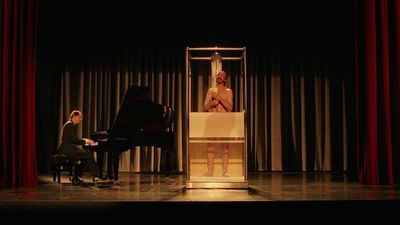
Liberace helped to make this aria popular by performing it on “The Liberace Show,” his 1954 showcase series. But “Vesti la Giubba” is not a period-specific artifact that simplistically connotes bitterness and betrayal. On one end of the emotional spectrum, “Vesti la Giubba” can be found in “The Untouchables,” where Robert De Niro’s Al Capone ironically pretends to be tremendously affected by the aria while one of his captains informs him of the murder of Sean Connery’s Jim Malone. “Vesti la Giubba” is also used in “To Rome with Love,” Woody Allen’s laid-back, surreal romantic-comedy, in the scene where a shy man with a beautiful tenor voice performs different arias on-stage while singing in a mobile shower stall. In this case, there’s no pathos to the aria, just a lighthearted suggestion that the show must go on.

4) “La Donna é Mobile,” from “Rigoletto”

Again, the dark undertones of this deceptively peppy tenor aria (yes, another tenor aria; apparently, we love a good, manly outburst of musical emotion) makes it easy to ignore how this piece of music is used out of context. In the song, the Duke of Mantua boasts that his wife is unfaithful; in reality, he is in fact having an affair. The aria is used as a motif throughout “Rigoletto,” climaxing with a far less flippant, and care-free scene: when the Duke is heard singing “La Donna é Mobile” later, his rival Rigoletto realizes that while he paid an assassin to kill the Duke, the Duke survived and Rigoletto’s own daughter was mistakenly killed. The blithe spirit of this aria is used in many movies, including the awful kid’s film “Bratz” and anti-romance “Ruby Sparks.” In this clip from “The Family Man,” Nicolas Cage fittingly (and enthusiastically) performs “La Donna é Mobile” right after cheating on his wife.

5.) “Habanera,” from “Carmen”

Bizet’s opera is, by most modern standards, rather dated. Its representation of a sexual, independent woman is unkind, and borderline misogynistic in places. Still, this mezzo-soprano aria, one that’s used in Bizet’s opera as a declaration of the title character’s fickle nature, is frequently used in films to suggest amorous head games. The loping, steady pace of the piece encapsulates its teasing nature (“Do I love you? Maybe yes, but maybe no…”) makes its concluding exclamation (“Take guard yourself!”) that much more satisfying.

This piece is however not gendered as a strictly feminine song, but rather one that suggests a predator lazily circling his or her prey. As such, filmmakers can slot into a scene or montage that involves hijinks or a routine of some kind. You can hear “Habanera” in a variety of films, like “Hostel: Part II,” “Girl 6,” “Magnolia,” and “Bad Santa.” In this clip from “Up,” “Habanera” is used to suggest the constant, less-than-stimulating nature of Carl’s life after the death of his wife Ellie.

What do you think are some of the most used, or overused, excerpts from opera?

Source:: http://www.rogerebert.com/balder-and-dash/five-popular-opera-arias-at-the-movies


Categories
TV & Movies

Thumbnails 8/6/15

Thumb_scott-harris-fox

1.

“How to behave with disabled people: A new guide tells you what to do and what not to do”: At The Independent, our FFC Scott Jordan Harris pens an essential essay.

“The majority of people who are not disabled feel awkward around those, like me, who are. Most don’t admit it publicly, but statistics show it to be true. Scope, Britain’s leading disability charity, conducted a survey into attitudes to disability and the results are astonishing. Sixty-seven per cent of British people feel so awkward around disabled people they either panic or avoid all contact with us. Forty-eight per cent have never started a conversation with a disabled person. Seventy-six per cent have never invited a disabled person to a social occasion and only 16 per cent have invited one of us into their homes. Saddest of all, only five per cent of people who are not disabled have ever asked out, or been on a date with, someone who is. To put all this in context, disabled people make up 18 per cent of the population. That’s just under one in five. The most important result to come from Scope’s survey is ‘End the Awkward,’ the campaign it inspired the charity to begin. ‘Not enough people know a disabled person or know enough about disability,’ says Mark Atkinson, Scope’s interim chief executive. ‘That’s why Scope launched End the Awkward – it aims to tackle the awkwardness that many people feel about disability.’ Part of the initiative involves teaming up with Channel 4 to release a series of short films called ‘What Not to Do.’”

2.

“You May Know Me from Such Roles as Terrorist #4”: GQ‘s Jon Ronson speaks with seven Muslim-American actors about Hollywood’s terrorist typecasting.

“We’ve barely sat down when Waleed Zuaiter, a Palestinian-American actor in his early forties, recounts for me his death scene on ‘Law & Order: Criminal Intent.’ This was about a year after September 11. ‘I play a guy from a sleeper cell,’ Waleed says. ‘I’m checking my e-mails. I hear the cops come in, and the first thing I go for is my box cutter. There’s literally a box cutter in the scene.’ ‘Was this in an office?’ I ask Waleed. ‘It was in my home!’ he replies. ‘I just happened to have a box cutter lying around.’ Waleed shakes his head, bemused. ‘The cops burst in, and next thing you know I’ve got the box cutter to some guy’s neck. And then one of the cops shoots me.’ ‘I die in ‘Iron Man,’” says Sayed Badreya, an Egyptian man with a salt-and-pepper beard. “I die in ‘Executive Decision.’ I get shot at by—what’s his name?—Kurt Russell. I get shot by everyone. George Clooney kills me in ‘Three Kings.’ Arnold blows me up in ‘True Lies’…’ As Sayed and Waleed and the others describe their various demises, it strikes me that the key to making a living in Hollywood if you’re Muslim is to be good at dying. If you’re a Middle Eastern actor and you can die with charisma, there is no shortage of work for you.”

3.

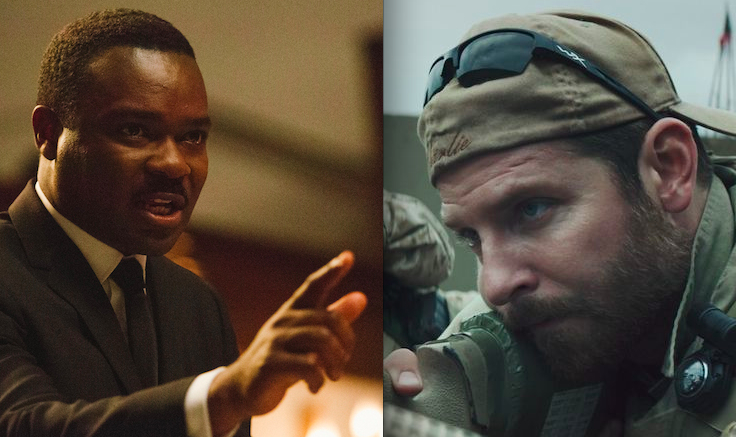
“Mirror Images: ‘American Sniper’ and ‘Selma'”: At Indie Outlook, critic John Marks makes his case for why two of last year’s most divisive fact-based dramas “lay bare the anatomy of Oscar-bait.”

“The procedural elements in ‘Selma’ are more overt, and in some ways less troubling. The film is to a large extent an educational film about the mechanics of civil disobedience (it’s no wonder that Richard Roeper advised middle school teachers to ‘take a field trip to see this movie.’) A procedural like ‘Sniper,’ the runtime is divided pretty evenly into thirds between: (1.) powwows, the SCLC leaders’ backroom strategizing of the protests. (2.) King’s personal lobbying of President Johnson to pass a civil rights bill. (3.) The protest itself. At times this literal approach can seem downright perverse, since it departs so conspicuously from the typical biopic template. Most Hollywood biopics rush over or even conceal the practical consequences of their character’s ‘growth arc,’ as though the actual achievements of the subject were a waste product of their spiritual self-actualization (I’m thinking specifically of ‘The Iron Lady’ here.) In ‘Selma,’ those practical consequences are all we get. The filmmakers seem to have made the choice to focus exclusively on the material process of the protests and not at all on the principles motivating its participants, whether that be King or the ordinary black citizenry under his leadership (we get almost no sense of the living conditions of an average black southerner.) To my taste, that made for a dry, unsatisfying film; it’s like touring a sausage factory and not getting to taste one afterwards.”

4.

“‘The Ultimate ’80s Guilty Pleasure Movie’: Randal Kleiser on ‘Summer Lovers'”: Another great interview conducted by Jim Hemphill at Filmmaker Magazine.

“Filmmaker: ‘Let’s talk about the casting. You had three very strong actors in the leads—’ Kleiser: ‘Yes, we had that wonderful actress Valérie Quennessen, who I knew from my friend John Milius’s film ‘Conan’…right after the movie came out she was killed in a car crash. She had a child who was around six years old at the time, and about four years ago he wrote to me and asked to see ‘Summer Lovers.’ I sent him a copy and he wrote back that he was in tears after getting to see his mother for the first time since he was a child, as she was when she was alive and beautiful. It was really touching. I noticed Daryl Hannah in the Warner Bros. commissary when she was shooting ‘Blade Runner.’ I saw her across the room and wrote her a note that said, ‘To the girl in the pink dress: if you are an actress please call this number for a screen test. This is not a joke.’ I had the waitress pass along the note and then left, and Daryl called and she got the part. I originally had Dennis Quaid set to play Peter’s part, but on the Friday before we were supposed to start shooting – we were going to begin that Monday in Greece – Dennis called and said, ‘My wife won’t let me do this movie.’ She didn’t want him running around the Greek islands naked with two women, so he dropped out. The next night I turned on the TV and was watching ‘The Idolmaker’; I called our casting lady and said, ‘Can we get Peter Gallagher?’ So she called him, and the next day we were all in Greece.’ Filmmaker: ‘Speaking of running around the islands naked…there is a lot of nudity in the film—’ Kleiser: ‘The terrible thing is that whenever it would show on TV they’d cut out all the nudity and you lost a lot of plot points. All of the dialogue when people are walking by naked was gone, so the movie made no sense at all.’”

5.

“Silent movie buffs search the screen for clues to origins of ‘mostly lost’ films”: A fascinating report from Noah Bierman at The Los Angeles Times.

“A locomotive flashed, and someone deduced that a scene had been filmed in France, given the placement of the boiler. When dialogue titles popped up on another clip, a viewer guessed that it was produced by Thomas Edison’s studio because of the distinctive font. And then there was the lucky glimpse of a calendar with a key nugget — the date April 1 falling on a Saturday. That movie was probably shot in 1922, a fan surmised, based on a quick online search of old calendars. This was the ‘Mostly Lost’ film festival, which has become a pilgrimage for a subset of movie fans who revere the era long before the advent of computer-enhanced animatronic dinosaurs. For four years, the event at the State Theatre on the Library of Congress’ Packard Campus has attracted historians with advanced degrees, old men with stacks of even older film tins in their basements and self-taught aficionados who can quickly determine a car’s model year or identify a never-famous actor by the shape of his posterior. This year, an 11-year-old boy, who has appeared on Turner Classic Movies to introduce Charlie Chaplin’s ‘Modern Times,’ missed two days of school to be here. What they all had in common was an obsession with a time when movies were made without color, sound or social media campaigns. The Packard Campus, about 90 minutes from Washington, D.C., near the foothills of the Blue Ridge Mountains, houses the largest and most comprehensive film collection in the world. The 125 films screened over three days in June were mere fragments — five- to 10-minute clips — mostly from movies so obscure that even top film archivists could not decipher the titles, name the actors, or determine the year they were made.”

Image of the Day

The A.V. Club‘s Katie Rife helpfully explains to the people who made the galvanizing curiosity “Roar” that “when you let actual lions direct your movie, expect to be mauled.”

Video of the Day

Amy Schumer appeared with her cousin, Sen. Chuck Schumer, at a press conference on Monday, August 3rd, and gave a moving speech advocating the importance of gun control.

Source:: http://www.rogerebert.com/thumbnails/thumbnails-8615


Categories
TV & Movies

Hear Their Voices: The 2015 Black Harvest Film Festival

Thumb_35minutes

Perhaps it’s the social and cultural crisis in which we find
ourselves besieged by stories of police violence against minorities or the lingering
sting of the Academy Award snubs for “Selma,” but this year’s Black Harvest Film Festival,
starting this Saturday, August 8th at the Siskel Film Center, and
continuing through the month, feels more essential than ever. Adding to this
resonance is the fact that the 2015 Black Harvest line-up is heavy with great,
socially conscious documentaries. It’s no accident. Sergio Mims, co-founder and
co-programmer tells me that “this year’s
line-up is more politically and socially conscious than in previous years. A
large part of that is because of today’s politically charged environment that
we are in, and filmmakers are responding to that, making their
voices heard
.”

The highlights start early as Marc Silver’s excellent “3 ½ Minutes, Ten Bullets” plays on
August 9th (3pm) and August 10th (8pm) with a guest
appearance by Lucia McBath, one of the film’s heartbreaking subjects. McBath is
the mother of Jordan Davis, a young man who became nationally known after a
confrontation at a Florida gas station ended in his murder. Michael Dunn
claimed that he not only felt threatened by the vehicle of young black men next
to him but that he thought one of them had a gun. His case would highlight
inherent flaws in the “Stand Your Ground” defense as well as the prejudicial
and deeply inaccurate way our media covers cases like this one. It was never
about loud music, as the press inexplicably portrayed it. Whether you believe
Dunn or Davis, it was about race and violence.

Silver could have taken any number of approaches to this
tragic story, but he deftly allows it to unfold primarily through
expertly-edited courtroom footage. He also spends a lot of time with Jordan’s
friends and families, painting a portrait of a victim that our journalistic
establishment seemed afraid to do. The brilliance of “Ten Bullets” is in how it avoids blanket statements about the sad state of our country, staying away from talking-head generalizations and focusing on this specific, heartbreaking story. It’s excellent.

Also surprisingly excellent but with nowhere near the
profile of “Ten Bullets,” which has already received a theatrical release in
NYC after its Sundance premiere earlier this year, is the fantastic “Takin’ Place,”
which plays on August 21st (8:30pm) and August 27th (8:15pm).
One of the most consistently excellent elements of Black Harvest has been how
much it supports local filmmakers, often finding phenomenal talent right here
in our wonderful city.

The talent here is director Cyrus Dowlatshahi, who captures Chicago’s
South Side in the ‘10s in ways that other filmmakers have failed to do. Using a
fly-on-the-wall, non-judgmental approach, Dowlatshahi merely spends time with
the people working, living, loving and fighting to survive every day on the
streets of Chicago. He intercuts time in a salon with some outspoken customers
with ride-alongs with the talkative Jerk Man (a chicken delivery man), who describes the landscape of a part of the country often called “Chi-raq.” The filmmaker gets the most emotional mileage out of a memorable grandmother has watched too many of her kids and grandkids go down the
wrong path, and will not put up with more nonsense. Delicately, “Takin’ Place” captures struggle and joy, often taking
place in the same conversation. What these people have in common most of all is
taking life one day at a time, one encounter, one crisis. As the Jerk Man says,
I cross bridges as I reach them.” Dowlatshahi’s
film has the power to create bridges for all of us to cross.

While increased internet availability and an abundance of
film festivals in Chicago might seem like a problematic bridge for Mims, he approaches it
differently, saying, “We have always been
in competition with other festivals, but I have noticed that as Black Harvest’s
reputation has grown over the past 20 years, I can say other festivals are now
competing with us, and it’s gotten easier to get films submitted, where before
we had to convince filmmakers to send us their films.

The line-up this year seems to confirm Mims’ assertion, as
the programmers scored a coup by landing a special advance screening of the
Sundance hit “The Black Panthers:
Vanguard of the Revolution
,” which plays on August 29th at
8:30pm before returning to the Siskel for an exclusive Chicago run at the end
of September.

Stanley Nelson’s documentary is a remarkably detailed look
at the history of the Black Panthers that wisely focuses tightly on its
subject. What I mean by that is that this not a bio-doc on Huey Newton. It
opens with the early days of the organization and stays committed to the social
importance of the entire group more than focusing on the people within it. It
really covers their whole story, from the attention given the Panthers when
they carried guns to the California legislature (can you IMAGINE that happening
today?) to their eventual downfall due to internal disagreements. Nelson is
masterful at keeping “Vanguard” from becoming too much of a talking-head doc
while he intercuts current interviews with key players with some incredible
archival footage. Getting “The Black Panthers” was a labor of love for Mims,
who considers the film Nelson’s “strongest
work by far
.”

Another film that Mims considers essential to this year’s
line-up is the final documentary I’d recommend of what I’ve seen, “Crescendo! The Power of Music”. Directed by Jamie Bernstein (Leonard Bernstein’s daughter), Mims worked to get
the movie for three years, while it was still in production. He considers it
the “best feel-good-inspirational film of
the year
.”

He might be right. It’s a little too slight to support its feature running time, but there’s something undeniably uplifting
about “Crescendo!,” a movie about the incredible power of music that plays on
August 16th (3pm) and August 18th (6:15pm). José Antonio
Abreau, creator of the El Sistema music program in Venezuela forty years ago,
said, “From the moment a child picks up an instrument, she is no longer poor.”
Bernstein’s film follows two Sistema-inspired programs in the United States—one
in Philadelphia and one in Harlem. She wisely focuses on a few children within
these programs, capturing both how learning an instrument can focus young people
in passionate ways and yet not sugarcoating the difficulties of the commitment.
Art has the power to change lives. As it is further pulled from our school
programs, we need more evidence in the world of how much we need it, especially
when we’re young. Not only is “Crescendo!” a great piece of that evidence but
so is the entire Black Harvest Film Festival, now more than ever.

Source:: http://www.rogerebert.com/festivals-and-awards/hear-their-voices-the-2015-black-harvest-film-festival