Categories
TV & Movies

The Young Person’s Guide To Max Von Sydow, Part Two

Thumb_exorcist_1_merrin

We begin our second installment of our recommended
filmography (read the first here) with the movie that DID make Swedish/French actor Max von Sydow a
star in the United States. The only problem was, it made him a star in a role
in which he played a man about the actual age he is today (which is 86). Read
on…

“The Exorcist” (1973)

I’ve never worked with an actor more dedicated,” director William
Friedkin wrote of von Sydow. In his mid-forties when called upon by Friedkin to
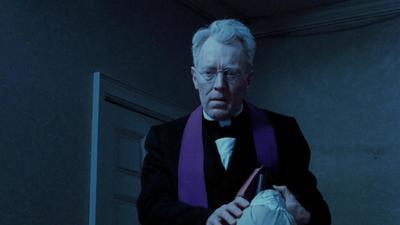
play Father Merrin, the title exorcist (Friedkin had nixed the idea of Marlon
Brando for the part), von Sydow underwent hours of makeup and changed his
upright physical posture to play the over-70-year-old priest. A performance of
amazing, quiet authority, von Sydow reprised the role in John Boorman’s
much-maligned 1977 “Exorcist II,” and, because his scenes flashed back to a
demon origin story, he played the character as much closer to his own real age!

“Three Days of the Condor” (1975)

Throughout the ‘50s and ‘60s, von Sydow played
often-internally tortured men of integrity. But his regal bearing, upright
posture, and air of erudition if not craftiness appealed to American directors
who wanted slippery Euro-villains. Sydney Pollack employed von Sydow to great
effect as one such fellow, a very slick assassin who actually commits the
murders that CIA research schnook Robert Redford is supposed to take the rap
for.

“The Desert of the Tartars” (1976)

One of the most unusual of the male-cast-dominated military
thrillers of the ‘60s and ‘70s, this is a great Euro-ensemble piece in which
von Sydow, as a haunted captain, really shines alongside the likes of Francisco
Rabal, Vittorio Gassman, Fernando Rey, Jean-Louis Trintignant, and others.
These men are all in a crumbling desert outpost (the picture was shot in an old
fort in Iran), awaiting the attack of the enemy. Many years ago, von Sydow’s
captain saw the light of their swords approaching, and since then…nothing. A
truly peculiar and engrossing waiting-for-the-end-of-the-world movie.

“March Or Die” (1977)

Another dude-centric military film, this one focusing
on French Foreign Legion in the 1920s,
only the filmmakers throw in Catherine Deneuve for some relief from the
testosterone. Von Sydow plays support to the odd leading pair of Gene Hackman
and spaghetti western stalwart Terrence Hill. While Hackman and Hill’s
characters, among others, do all the grunt work, von Sydow plays the rather
effete French archaeologist they’re assigned to protect in Morocco. Things start
to get real when the prior group of diggers is revealed to have had their eyes
and tongues cut out. A favorite of Quentin Tarantino’s. Of course.

“Flash Gordon” (1980)

The debut of Max “Paycheck” von Sydow? Some might say his
delectably hammy turn as space tyrant Ming The Merciless in this campy Dino De
Laurentiis production was a cash in, but maybe it’s just the first part of an
outrageous Super Villain trilogy. In any event, he looked a sight in his makeup
and costume, and brought a very stentorian relish to pronouncing each
particular syllable of his ridiculous dialogue.

“Never Say Never Again” (1983)

Yes, this rights-to-“Thunderball”-driven attempt at a Bond
film starring Sean Connery but not produced by the Eon team was a misfire on
any number of levels. But it did give our favorite new “Game of Thrones” cast
member an opportunity any actor would jump at: the chance to play arch-bad guy
Ernest Stavro Blofeld. Tall, lean von Sydow’s take on the part was a marked
contrast to short, plump, Donald Pleasance’s. One of the standout features of
an unfortunate novelty picture.

“Strange Brew” (1983)

It takes experience to run a brewery…and you have NONE!” von
Sydow concludes his Super Villain trilogy playing the arrogant, murderous
Brewmeister Smith in this absurdist comedy, starring Dave Thomas and Rick
Moranis as definitively dim Canadian “hosers” Doug and Bob MacKenzie. Their
greed for beer leads them into a “Hamlet”-derived plot of usurpery, which they
manage to squelch in spite of their idiocy. Von Sydow plays his part almost
utterly straight, which makes his incomprehension of his idiot foes that much
funnier. A movie that deserves more than its cult status.

“Hannah And Her Sisters” (1986)

Ingmar Bergman admirer (some might even say idolator!) Woody
Allen tapped onetime Bergman main man von Sydow for his warm, ensemble driven
comedy drama. He plays arrogant, didactic, practically loft-bound artist Frederick,
so confident that he’s got beautiful Lee (Barbara Hershey) under his spell that
he can’t notice her discontent. Setting the stage for Lee’s brother-in-law
Elliott (Michael Caine) to make his move. It’s complicated, and the heart wants
what it wants, and so on. Another excellent example on how von Sydow can make
his formidable presence subordinate to the larger cast when he has to.

“Pelle The Conqueror” (1987)

Hard to believe this amazing actor did not receive his first
Academy Award nomination until this film. Here he plays Lasse, the father of
the young title character, an aging drunk whose migration story from Sweden to
Denmark is a lot tougher than any American might expect such a commute would
be. von Sydow’s second nomination was for supporting actor in 2011’s “Extremely
Loud And Incredibly Close”—an exemplary, which is to say, for von Sydow,
typical—performance in a lamentable film.

“Shutter Island” (2010)

In the 90s and the ‘00s, von Sydow has played scads of dads,
granddads, and father-grandfather figures of other stripes as well. His first
and so far only teaming with director Martin Scorsese has him playing a mad
doctor of the most menacing sort, brandishing a looooong needle as he intones
at Leonardo Di Caprio. A cameo, yes, but a very memorable one.

Source:: http://www.rogerebert.com/balder-and-dash/the-young-persons-guide-to-max-von-sydow-part-two


Categories
TV & Movies

Video Interview: Directors Jimmy Chin and E. Chai Vasarhelyi on “Meru”

Thumb_meru_-_3

The reason mountain climbing films have always and will always excite audiences in unique ways is because there is no way to properly describe the feeling of being higher in altitude than mortals are meant to live. The true measure of a classic is whether the film can accurately represent the rush experienced by climbers as they approach the summit, the adrenaline of simply existing in conditions that reject human life. On the mountain, men are insects, intruders on a place untouched by civilization. Jimmy Chin has made it his life’s work to scale the unscalable and bring back evidence of the daring footsteps taken by those crazy enough to walk into thin air, to paraphrase John Krakauer. Chin and his wife/co-director E. Chai Vasarhelyi turned one of his most perilous expeditions into the thrilling documentary Meru, named for a mountain in India, the white whale for the film’s central group of climbers. Chin and Vasarhelyi spoke about the perils and intensity of making a movie in an inhospitable environment and finding out what motivates men to climb when every earthly sign tells them not to.

An Interview with E. Chai Vasarhelyi and Jimmy Chin from Scout Tafoya on Vimeo.

Source:: http://www.rogerebert.com/interviews/video-interview-directors-jimmy-chin-and-e-chai-vasarhelyi-on-meru


Categories
TV & Movies

HBO’s “Show Me a Hero” is the Mini-Series of the Year

Thumb_showme1

Show me a hero and I’ll
write you a tragedy.
” –F. Scott Fitzgerald

Based on the true story of the development of low-income housing in
Yonkers, New York in the late ‘80s and early ‘90s, HBO’s “Show Me a Hero” is
the TV event of the Summer, a mini-series that plays like a great American
novel or a lost Sidney Lumet movie. Over six hours, writer/creator David Simon
(“The Wire”) and director Paul Haggis (“Crash”) craft a piece dense with
political machinations that somehow never loses its focus on the people who get
caught up in the web of public policy decisions and the people who make them.
Oscar Isaac ably leads a stellar ensemble but this is Simon and co-writer
William F. Zorzi’s show and the product has that same attention to detail as “The
Wire” and “Treme” while adding a notable layer of cultural resonance given the
issues it addresses that remain troubling to this day.

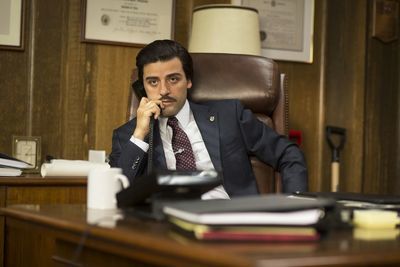
Oscar Isaac plays Nick Wasicsko, who was elected Mayor of
Yonkers in 1988 and was the youngest Mayor in the country at the time. When
elected, the city was going through major upheaval over a proposal for lower income
housing. City council meetings were almost impossible to hold over the loud,
screaming, borderline violent protests both in the room and outside. The people
of Yonkers wouldn’t take no for an answer. In stereotypical New Yorker fashion,
they dug in their heels and demanded to be heard. They voted out Wasicsko’s
predecessor (Jim Belushi) because he couldn’t stop the proposal. It’s now Nick’s job to
appeal it in the premiere episode.

Of course, that’s not going to be easy. A judge (Bob
Balaban) has ordered that the proposal will pass, planning will commence, and
construction will shortly follow, or he will hold the entire city of Yonkers
in contempt, fining its government at such a rate that it will be bankrupt in a
few weeks. Suddenly, the favorite young Mayor becomes the guy who couldn’t meet
his constituent’s needs. The hotshot on the block goes from favorite son to
pariah. And the political games behind the scenes don’t help, especially as
people like Councilman Henry J. Spallone (Alfred Molina) conspire against him
to get his seat. As Nick battles for his political status, he also seems to
grasp that the housing project is an important one, even if making it a reality
destroys his entire career.

Meanwhile, “Show Me a Hero” cuts to several subplots that
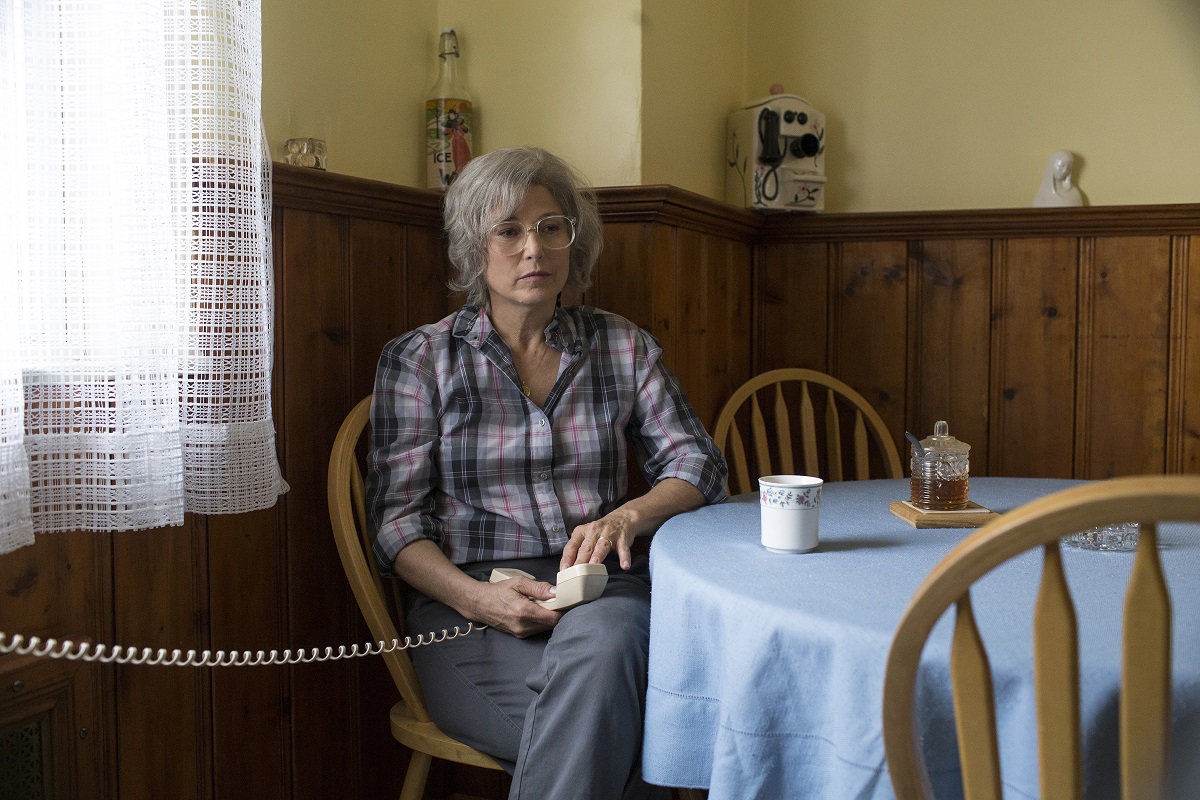
remain unrelated for multiple episodes. We meet several supporting characters, often in brief scenes as their lives progress unaware of the politics that will influence them, including a Dominican woman trying to support her family, a new couple who
seems to be headed to happiness, a woman in the projects going blind from
Diabetes, and a girl who finds herself unexpectedly pregnant. They don’t
intersect for several nights, and yet they always feel like patches in the same
quilt. It’s also interesting to me that the government cast is filled out with
recognizable faces (including Catherine Keener, Winona Ryder, Jon Bernthal,
Peter Riegert, and more) while the subplots are cast largely with unknowns. It
adds to the sense that political office is as much a popularity contest as
anything.

The subplots get more desperate as the narrative progresses.
Ends don’t meet. Tragedy strikes. Drugs infest the projects. Crime grows. It is
the saga of city life in the late ‘80s and early ‘90s as politicians bicker. As
he did in “The Wire,” David Simon is again examining how systems and civilians
are intertwined. We may not even know about the decisions being made today that
will impact our lives down the road—or the stands that could have been taken to
help us that politicians were too cowardly or too concerned about reelection to
make. “Show Me a Hero” never feels like its grandstanding or preaching from a
soapbox, and yet it captures so much about our system that other political
pieces have failed to do. How do people with integrity subvert that for their
careers? How do people lead when they are in a 2-year term system that doesn’t
support the kind of daring decisions leaders need to make to matter?

Simon and Haggis are brilliant but careful in the way they
portray the fear and racism that led to the anger over the lower-income
housing. There’s an incredible speech later in the series in which Wasicsko
notes how easily politicians spur fear through language and the way they bury
their true meaning in more acceptable phrases. When politicians riled up the
people of Yonkers with phrases like “property values,” “Life and Liberty,” and “people
living where they can afford,” they were merely saying things said by White
America during the Civil Rights Movement in different ways. As Nick says, “They learned how not to say the bad words.
Underneath it all is fear—same as it
ever was
.” How could anyone watch this story and not think of the way
politicians and media influence the conversations about race and equality in
2015? It’s clearly part of the purpose of the piece.

With “Show Me a Hero,” Oscar Isaac further proves his status as one of the best of his
generation. Add this turn to his subtle work in “Inside Llewyn Davis,” “A Most Violent
Year” and “Ex Machina,” and it’s impossible to deny. He’s mesmerizing in the way he captures Wasicsko’s desperate
need to be liked—a trait shared by most politicians—but also senses that this
man really wanted to make a difference. There’s a gutwrenching scene at the end
of episode five in which we watch two characters, including Wasicsko, suffer in
silence. Watch Isaac in this scene. Watch him convey more inner monologue with
no dialogue than most actors do with an entire speech. He’s matched by Keener,
who does great work as a woman caught up in the protests who learns that the
loudest people aren’t often the right ones. Newcomer Ilfenesh Hadera really
shines as well as a young woman doing everything she can to keep her family
together.

Visually, Haggis is careful not to overplay his social message here as
so many would argue he did in “Crash.” His style isn’t flashy, clearly inspired
by Lumet’s New York tableaus. Music choices are a bit obvious—lots of Bruce
Springsteen and Public Enemy—but somehow feel appropriate. The Boss often
captured tragic undercurrents beneath working class life, so it fits. There’s
only one scene that feels a bit too on-the-noise for my taste, but I think it
stands out largely because the rest of the piece is so subtle. In fact, some
will find “Show Me a Hero” too dry. There are a lot of political meetings,
especially in the first half. Please be patient. The emotions come and they
will hit you. Hard.

At the end of episode four of “Show Me a Hero,” someone
yells over a protesting crowd, “What are
we trying to accomplish?!?!?
” It was the first time in the mini-series (but
not the last) that I got a little emotional. Lost in the noise and the racism
and the hatred of this world, it’s a question that doesn’t get asked often
enough by our leaders or even of ourselves. And when we do ask it, will there
be any heroes left to hear it?

Source:: http://www.rogerebert.com/demanders/hbos-show-me-a-hero-is-the-mini-series-of-the-year


Categories
Alberta Ft Mac Health

Emergency Overdose Kits Provided to Addicts to Prevent Fentanyl Deaths

Fentanyl deaths, emergency overdose kits

Fentanyl deaths in Alberta are on the rise, and province officials are distributing emergency overdose kits in order to help fight the increase. Just 4 short years ago the number of Fentanyl deaths in Alberta was 6, today that number stands at more than 50. Fentanyl is a synthetic opioid, and it can be 100 times more powerful than morphine. When addicts and their loved ones have access to injectable antidotes this can mean the difference between life and death when an overdose occurs. Alberta Health is providing a one year grant of $300,000 in order to provide emergency overdose kits to addicts in the province. Each kit will have two vials of the anti opioid naloxene, and training will be provided for addicts and their family members on how the kits should be used if needed.

The emergency overdose kits being distributed to prevent Fentanyl deaths also include 2 syringes, gloves, alcohol swabs, and even a one way CPR mask. Instructions are also provided in each kit as well. To date there have been 100 kits ordered for the communities of Fort MacMurray and Grande Prairie. Addicts in the Fort MacMurray area can receive a kit from the HIV North Society which is distributing them. Executive Director Susan Belcourt-Rothe stated “We are not expecting a huge flood right away, but we’re expecting it will take place. What we have seen is there is significant drug usage in Fort McMurray and Grande Prairie. We see quite a high income and a transient population. Given this combination, we felt it was better to address the situation in the communities.”

Categories
TV & Movies

The Gloriously Odd Wonder of “Adventure Time”

Thumb_titlecards2

It could be a product of the widely-reported Golden Age of
Television, but we are in a remarkable period of creative explosion when it
comes to short-form animation. With the cancellation of NBC’s “Parks and
Recreation” and “Hannibal,” a solid case can be made that the best show
currently on network TV is animated—FOX’s consistently clever and even sweet
family comedy “Bob’s Burgers” (seriously, if you’re not watching because you’re
tired of the past-their-prime “Family Guy” and “The Simpsons,” correct that
oversight). In terms of cable animation, FX’s “Archer” and Comedy Central’s “South
Park” still produce solid laughs-per-minute numbers, but the most creative
animation is coming to viewers through that content delivery system known as
Cartoon Network. Whether it’s the daytime programming that skews more towards
younger viewers but still maintains a surprising degree of creativity in shows
like “Clarence,” “Regular Show” and “The Amazing World of Gumball,” or the
primetime, more adult offerings of Adult Swim, which broadcasts the great “Rick
& Morty” and will hopefully someday bring us more “The Venture Bros.,”
there’s more inspired programming on The Cartoon Network than you might think.
The most impressive of all (with the possible exception of “Rick”) is the
gloriously odd “Adventure Time,” which recently had its fifth season released
on Blu-ray and saw a second volume of coffee table books that examine the
artistic approach to the program through their elaborate, inspired title cards.
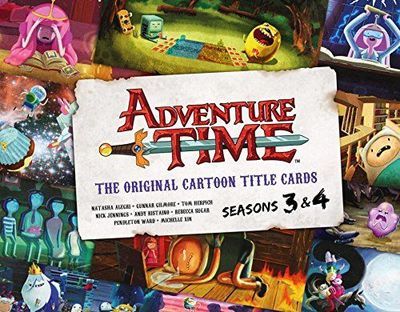
“Adventure Time: Season Five” is available now, as is “Adventure Time: The Original Cartoon Title Cards, Seasons 3 & 4” (and the first volume, “Adventure Time: The Original Cartoon Title Cards.”)

Those who know the saga of Finn the Human and Jake the Dog
are nodding in approval, but perhaps you are not one of them. So what is “Adventure
Time”? Running around 11 minutes in length, each episode of “Adventure Time”
sprouts from the nostalgic part of your brain that used to play Dungeons &
Dragons and thought “Legend” and “Willow” were pretty spectacular. At its core,
it is a fantasy story about a boy named Finn and his talking dog named Jake,
and their adventures in the mythical Land of Ooo. Along the way, Finn and Jake encounter
dozens of friends and enemies, including Princess Bubblegum, Marceline the
Vampire Queen and The Ice King. The narrative often feel like adult memories of
childhood tales, adventures like those found in “The Neverending Story”
filtered through modern, quirky sensibilities. The writing is sharp, and the
animation is often remarkable. One short episode of “Adventure Time” takes
eight to nine months to produce, and the hand-drawn approach reminds us of the art
of animation that’s so often absent from 3D CGI feature family films.

There’s so much attention to detail in “Adventure Time” that
it’s produced coffee table books from Titan, the second of which is now
available. Every episode of “Adventure Time” has a title card into which more
attention to detail is given than even fans of the show may grasp. In the
books, each card is shown on one page with a brief description or detail about
its creation on the opposite page, often with storyboards or alternate versions.
For example, for episode 66, “Beautopia,” it’s revealed that the title card was
an homage to mid-twentieth-century advertisements for vacation resorts, drawn
in an Art Deco style from the 1930s. It also purposefully was designed to
mislead the viewer as to what would happen in the episode to come. A fake-out.
In a 2-second image. That probably took a month to draw. That’s the attention
to detail in “Adventure Time” that has won the show two Annies and two Emmys.
These book are designed primarily for fans of the program, but could also be
used to convince those skeptical about the artistic value of a Cartoon Network
show that this is one worth checking out.

One way you could do so is through the just-released fifth season, which contains 52 episodes in glorious HD, along with a featurette
about the show and animatic clips of its production. You also get all the
episodes in digital form so you can take Finn, Jake and the gang with you and
stream to portable devices. Next time someone talks about cartoons being just
for kids or derides the state of TV animation as if it was better in our
childhood (an odd bit of nostalgia that always blows my mind), show them an episode
of “Adventure Time,” the most gloriously, addictively odd animation on TV.

Source:: http://www.rogerebert.com/demanders/the-gloriously-odd-wonder-of-adventure-time


Categories
TV & Movies

Straight Outta Compton

Thumb_straightouttacompton_2015_1

“Straight Outta Compton” is a biopic with unexpected, seemingly conflicting goals. It aims not only to raise your ire, but to also break your heart. It is as engaged with its well-executed action scenes as it is with its moments of tenderness and quiet. It is unrepentant in its anger and its amorality, leaving the audience to pass its own judgement and calibrate its own outrage. The filmmakers have made a fiercely political movie that’s an equally fierce “talk back to the screen”-style crowd-pleaser for folks eager to hear the tale of an influential rap group. “Straight Outta Compton” is a reminder that the biopic genre held the patent on the cinematic origin story long before the Marvel Universe; it plays like a Marvel superhero movie had Marvel been run by Suge Knight.

This film’s Guardians of the West Coast Rap Galaxy are the original members of N.W.A., MC Ren (Aldis Hodge), Dr. Dre (Corey Hawkins), Easy-E (Jason Mitchell), DJ Yella (Neil Brown, Jr.) and Ice Cube (O’Shea Jackson, Jr, doing a great job playing his Dad). We follow them from their humble beginnings to the height of their fame, stopping along the way to hit the expected milestones and musical cues. While “Straight Outta Compton” samples the familiar biopic beats, it surprises by spitting some new lyrics atop them. There’s a lot more complexity here, both in the storytelling and the occasional shifts in tone. Sometimes the film looks like a rap video, filling the screen with scantily clad women and bling. At other times, it evokes an almost meta recreation of ’90s dramas like “Boyz N The Hood,” which was shot in the same city with one of this film’s characters.

The release of “Straight Outta Compton” coincides with the 27th anniversary of the eponymous debut album. Ushering in the era of gangsta rap, the album earned millions of fans and hearty record sales, opening the floodgates for West Coast rappers. The record also quickly courted controversy with its profane, violent lyrics, earning one of Tipper Gore’s “parental advisory” labels and a threatening letter from the F.B.I. The fed’s involvement had to do with “Straight Outta Compton”’s controversial second track, a rather stinging commentary on law enforcement interaction with the minority community entitled “Fuck Da Police”.

Screenwriters Jonathan Herman and Andrea Berloff invoke the old adage that rap music is “CNN for brown people” by fearlessly presenting the environment that fostered that song. There will be many thinkpieces written about the depiction of the LAPD in “Straight Outta Compton,” and the film makes no apologies for drawing a correlation between events that transpired almost 30 years ago and the events we hear about today on an almost daily basis. The most subversive scene in “Straight Outta Compton”’s first half depicts the angry response of the group’s manager Jerry Heller (Paul Giamatti) to his talent’s treatment by the cops. Heller lashes the officers with a fury his charges would not dare to emulate, and the film makes the audience consider that Heller might unintentionally get N.W.A. imprisoned or shot.

If musical biopics teach us anything in 2015, it’s to not hire Paul Giamatti as your manager. As in “Love and Mercy”, Giamatti doesn’t have his client’s best interests at heart. In both films, he overdoes his angry scenes, but in “Straight Outta Compton,” they’re tempered by scenes of warmth between Heller and Eazy-E. Eazy’s story is the heart of “Straight Outta Compton,” the emotional arc that runs parallel to its scenes of music, raunchiness and danger. It’s Eazy-E who comes up with the idea (and the start-up cash) to try out Dre’s dream of making music, and it’s Eazy-E who seeks out a business mentor to help him keep an eye on his friends’ interests. And it’s Eazy-E who tragically falls ill just before the band tries to make a comeback.

As Eazy-E, newcomer Mitchell is asked to do some heavy lifting here, and he gives an excellent performance—the film’s best. The way he reacts to the one-two punches of betrayal by Heller and his health is gut-wrenching. He and the other N.W.A. actors have tremendous chemistry together; even when they’re at each other’s throats, one never loses sight of how much these characters care for one another. Their scenes of camaraderie never seem sappy or forced. The film’s best scene is the group’s reaction to the dis record Ice Cube made when he left the group. Their anger gives way to their contented notion that they’ve just heard a great rap record. “I kinda liked it,” says DJ Yella.

This is a very well-acted movie, right down to its smallest roles. Keith Stanfield from “Short Term 12” makes a great Snoop Dogg. Carra Patterson makes the most of an underwritten part as Eazy-E’s wife Tomica. And R. Marcos Taylor is also worth mentioning; he’s scary in a role I’d be too terrified to play, Suge Knight. Other well-known West Coast rappers show up, as do well-known events in the story, and the film treats these elements with the reverence it knows the audience craves. The way it shoehorns fan-pleasing elements into the film is at times shameless, as in the completely ridiculous way it manages to get Ice Cube to say his famous kiss-off line from “Friday”.

Director F. Gary Gray treats “Straight Outta Compton” as an epic-sized take on approaching the American Dream from an askew angle that draws straight outta Compton and straight into capitalism. As with his classic caper film, “Set It Off”, Gray briskly handles the film’s 147-minute running time. Veteran cinematographer Matthew Libatique assists by keeping things visually interesting. While there are a few minor missteps (we could do without some of the rather suspect scenes of groupie gratification, for example) overall this is a masterful piece of work. It’s funny, angry, sad and inspirational. I admired its willingness to be as unrelenting as N.W.A.’s album, and I had a great time mouthing the words to every song on the soundtrack.

If you’re not a fan of N.W.A, you’ll still find much to enjoy here. If you are a fan, you’ll love this movie as much as I did.

Source:: http://www.rogerebert.com/reviews/straight-outta-compton-2015