Categories
TV & Movies

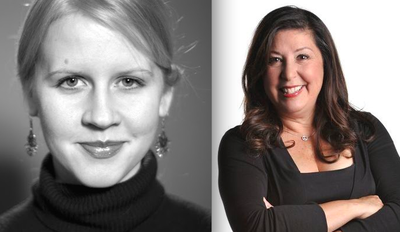
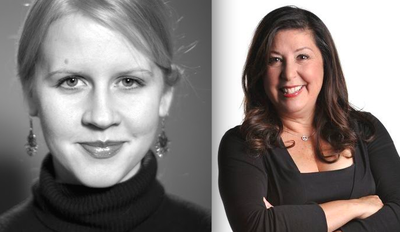
Justine Nagan Named Executive Director of AmDoc, Claudia Puig Named Festival Program Director of NVFF

Thumb_screen_shot_2015-08-12_at_7.33.04_am

Two key women in the film community are acquiring new job titles in the coming months. After serving for nearly seven years as the Executive Director at Kartemquin Films, Chicago’s award-winning production collective, Justine Nagan has been named the Executive Director of American Documentary, Inc. (AmDoc) and Executive Producer of POV (Point of View), AmDoc’s award-winning documentary series on PBS. Nagan will split her time between AmDoc / POV and Kartemquin Films before relocating to New York with her family in December.

Nagan’s impressive body of work at Kartemquin includes numerous acclaimed features. As a director, Nagan made the award-winning documentary “Typeface,” as well as the short “Sacred Transformations.” She executive produced many great films, two of which were directed by Steve James: “The Interrupters” and “Life Itself.”

In her new position, Nagan will oversee all aspects of AmDoc | POV’s programs and operations, including production and programming, community engagement and education, POV Digital, development, business affairs, communications and overall management of the POV series. She will serve as Executive Producer of both POV and America ReFramed, a year-round showcase of independent documentaries featuring contemporary American stories that airs on the WORLD Channel.

“It’s a pivotal time for independent media and documentary in our culture,” said Nagan. “People are increasingly seeking authentic voices and quality storytelling to engage and inform them about the issues of our time. AmDoc | POV represents a trusted bridge between those hungry audiences and the stories they need. I am thrilled to be joining the great team at AmDoc | POV to help lead one of America’s premier media organizations into its next chapter. My time at Kartemquin Films has continuously fed my passion for documentary and well-prepared me for the responsibilities that lie ahead. I am sad to leave them on the eve of their 50th anniversary celebrations in 2016, but I am confident the organization is in an incredibly strong position to continue its role as a leader in documentary production.”

Former USA Today Chief Film Critic Claudia Puig will be joining the team of the Napa Valley Film Festival. This year, she will serve as a consulting programming director and industry liaison for the fifth annual festival, scheduled to kick of Wednesday, November 11th, and running through Sunday, November 15th. Puig will take on the full responsibilities of the festival’s Program Director in 2016.

“After 15 years as a film critic, I became increasingly intrigued by the film festival world and what makes compelling film programming,” said Puig. “Some of the best and most original movies I’ve seen have made their debut at film festivals. Joining the Napa staff is especially exciting – only in its fifth year, the Napa Valley Film Festival is growing by leaps and bounds with its ambitious, forward-thinking and innovative programming, panels and events. The combination of film, wine and a gorgeous location made this an easy choice for my new career path, and I look forward to working with [Executive & Artistic Director] Marc [Lhormer], [Co-Founder and Co-Director] Brenda [Lhormer] and the entire NVFF team.”

The festival has also announced its Narrative and Documentary feature film line-ups for juried competition. The directors of each film selected in competition will participate in NVFF’s Artists-in-Residence Program presented in partnership with Meadowood Napa Valley. Directors will stay at the luxury resort for six nights during the festival and will take part in special events and workshops with their competition group and industry mentors. An approximate 125 films are scheduled to screen, including special presentations, sneak previews of award season contenders, narrative and documentary shorts, and short features. For more information, visit the official festival site.

Source:: http://www.rogerebert.com/chazs-blog/justine-nagan-named-executive-director-of-amdoc-claudia-puig-named-festival-program-director-of-nvff


Categories
TV & Movies

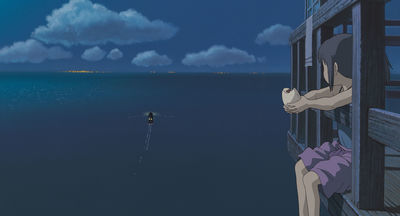
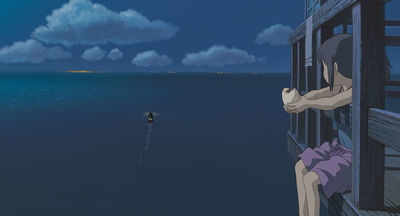
Chihiro’s Journey: Analyzing “Spirited Away”

Thumb_spiritedaway

In July 2012, Roger wrote about viewing “Spirited Away” for a third time and how he was then “struck by a quality between generosity and love.” It was during that viewing he “began to focus on the elements in the picture that didn’t need to be there.” Recently, I was re-reading that essay as I was watching the Blu-ray of “Spirited Away” three times (Japanese, English dub and back to Japanese) back-to-back-to-back.

Suddenly, I was struck by the visual cues Hayao Miyazaki presents in the beginning of the film that set up the character of Chihiro before she becomes Sen. I called it my A-ha moment.

Chihiro has been characterized as whiny, but I think if you understand her situation and contrast her intuitiveness with her parents’ obliviousness, she seems less so. In the real world before she becomes Sen, there is no doubt she is a bit sullen. Not unlike Riley in Pixar’s “Inside Out,” she’s unhappy with being forced to move away from her friends. Her friends have given her a nice bouquet. If there are five stages of loss and grief (denial/isolation, anger, bargaining, depression and acceptance), then Chihiro is at the end of denial, and her comment about how unfortunate it is to get her first bouquet as a farewell gift indicates she is entering anger.

When her father, Akio, takes the rural street that leads them to what looks like an old unused amusement park, Chihiro picks up cues that her parents do not. She’s troubled and a bit frightened by the moss-covered stone statues. Something about them makes her anxious. In this respect, she is not unlike Lucy Pevensie from “The Chronicles of Narnia.” Narnia is closed off from children when they reach a certain age in the real world (until death returns Lucy, Edmund, Peter, Digory and Polly). Lucy is the most intuitive of the four Pevensies although she too has a moment of envy that signals she won’t be able to return. Chihiro at ten is still more child than adult and thus more intuitive than her parents.

If we consider that Chihiro senses something is wrong, then her pleading with her parents not to enter the tunnel seem less whiny. She becomes Cassandra, a prophet whose warnings go unheeded. Out on the other side, there is a grass meadow and more stone statues. Chihiro’s anxiety over the statues isn’t the last bit of foreshadowing that Miyazaki provides visually.

In the following scenes, Miyazaki exploits the visual nature of the Japanese language. Japanese is not like English. Instead of an alphabet, it uses two syllabary systems and Chinese characters. The syllabary systems, hiragana and katakana, originated from Chinese characters, but are used to represent syllables. Hiragana is used for post-positionals and parts of words not fully expressed by Chinese characters (such as inflections for verbs and adjectives). Katakana is used for foreign words and onomatopoeia. Chinese characters often symbolize concrete things. Japanese poetry is filled with wordplay and the following scenes are filled with visual cues and words that can have double meanings.

On the first building we see an incomplete phrase. Alone the character 正 would be read “sho” or “sei” and means right, righteous, justice and genuine, but 正 also suggests 正しい, meaning correct, right, honest and truthful. There’s more signs on the shops in the main road. At first casual glance as we go by, it does seem like they are all part of advertising for restaurants, but on closer examination, that proves not to be true.

When we get to the main street we see the characters 市場 for market (ichiba) and the word 自由 (jiyuu) for freedom. Then there are some disquieting Chinese characters. The mother says that all the places are restaurants. When you see 天 float by you might think 天ぷら (for tempura), but actually the characters are: 天祖 (tensoo) for the ancestral goddess of the sun, Amaterasu. In one frame we see only 天狗 (tengu), with “ten” above and “gu” below. The character 狗 means dog, but can be used for dog meat (狗肉)which is not commonly eaten in Japan (and could suggest the homophone 苦肉 or “kuniku,” which literally means bitter meat meaning a countermeasure that requires personal sacrifice. The character usually used for dog is 犬. Tengu, however, or heavenly dog, a legendary creature or supernatural being (yookai) that can be either harbingers of war or protective spirits of the mountains and forests.

Floating at the corner of one building is 骨 which means bone and it could be a restaurant term as in the creamy broth: 豚骨 (tonkotsu) which is literally pig bone. Yet bone or “hone” is used in idiomatic phrases such as hone-nashi meaning to lack moral backbone.
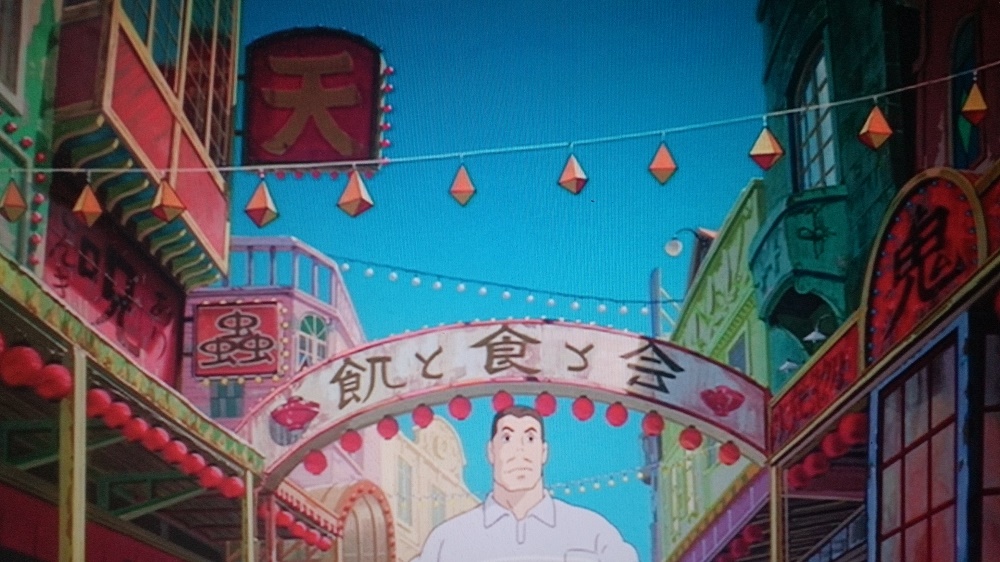
Some of the Chinese characters are just a little off, enough to make you think. Most obviously is the one syllabary and one Chinese character that are written backwards when we look above at the arch. The characters are 飢と食と会 which seem to substitute for 飢える (ueru, to starve), 食べる(taberu, to eat) and 会う(au, to meet). The と signifies “and.” It should read eat ( 食べる), drink (飲む) and meet (会う) or something like that, but the last two symbols are backwards on either side. Looking at these, perhaps Chihiro senses something is wrong.

Further, right before the father Akio turns down a small alleyway, he is framed by the characters for heaven on the left side of the screen and on the right side for devil. Soon after, what he sees is, especially in Japan, a supernaturally large buffet. While he assures Chihiro that he can pay for the feast and we remember he did have that foreign car, a Japanese person might be quickly calculating in their minds the exorbitant cost.
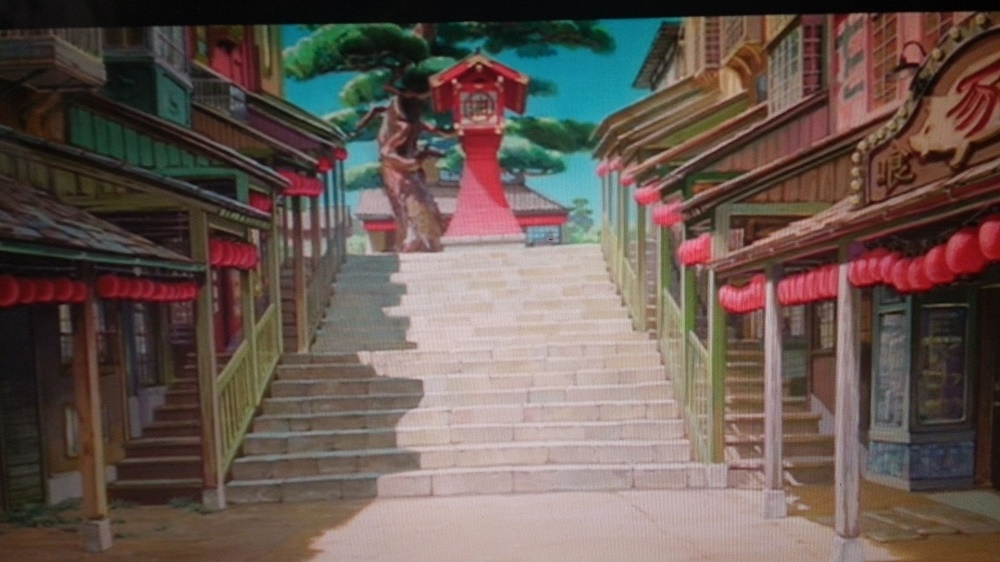
Chihiro briefly leaves her parents and above her head flashes a sign that reminds us both of family, pigs and death. The character 冢 (tsuka) means hill or mound. Yet this is not the preferred character which would be 塚 (also read tsuka). The small cross represents ground or earth. Without that radical, 冢 is only one stroke different than the word for house 家 (uchi) which is the same one used for the Chinese character combination that means family 家族 (kazoku). The significance here is that pig (豚 or buta) under a roof represents house/home 家. That quick flash of this character gives the suggestion of pig and family. Yet it is also like bone (骨 or hone) associated with death as in grave (冢穴).

This character 冢 (tsuka) seems to foreshadow the transformation of her parents into pigs and her journey to figure out how to save her parents from death. The more she sees of this amusement park, the more frightened she becomes. There’s an expensive public bathhouse at the end of the pathway and all the lamps seems to be associated with it, but where are the people? Where are the vacationers, the retired old people and the middle-aged women on retreat? Where are the vendors, pushing you to buy anything and everything because everyone must return home with presents (omiyage) for their neighbors, co-workers and relatives. Anyone who has been on the trail to great temples or been on a hot springs tour will know that for such a grand feast and for such a splendid public bathhouse, these scenes are much too quiet.

Chihiro runs back, perhaps to warn her parents only to find her parents have been transformed into hogs.

The movie is called “Sen to Chihiro no Kamikakushi” (千と千尋の神隠し). Sen means a thousand, but the pronunciation of the character can change to “chi” as it does in the name Chihiro. The “hiro” in Chihiro means to ask questions. Kamikakushi means spirited away with kami meaning spirit or god and kakushi meaning hidden. So perhaps we can translate the title as “Sen and the Mysterious Disappearance of Chihiro.”

“Spirited Away” was released in in July 2001. Most Studio Ghibli movies were released in July, and in Japan, I feel this is especially significant in the case of “Spirited Away” and “When Marnie Was There” because it is the Obon season, a time when Japanese believe the spirits of their ancestors walk the earth and return to their furusato (hometown). That time period (mid-July to August) is, much like New Year’s week, a hard time to get things done in Japan due to the various celebrations and the people who leave on vacation. We do learn later in the movie that the character on the first building, 正, is part of a combination 正月 which we translate to mean New Year.

Although Roger didn’t read or speak Japanese, he saw the rich detail. This is one of those movies worthy of a frame-by-frame analysis. For the people who read Japanese, some of what I have written above may have been intuitively realized. There are other things I still wonder about such as the prominence of the Japanese syllables of “me” and “yu” throughout. I’ve read one theory that put together into “yume” it means “dream.” I’d enjoy hearing other people’s thoughts, theories and feelings about “Spirited Away.”

Source:: http://www.rogerebert.com/far-flung-correspondents/chihiros-journey-analyzing-spirited-away


Categories
TV & Movies

The Young Person’s Guide To Max Von Sydow, Part One

Thumb_mvs

Last week the announcement came down the Internet
Entertainment Pipeline that the controversial, sexual-assault-centric HBO
series “Game Of Thrones” would be getting a new cast member, an 86-year-old
screen veteran named Max von Sydow. One of the more reputable of the Internet
Entertainment Pipeline’s outlets, Entertainment Weekly, cited von Sydow as “‘Exorcist’ star,” which he certainly was. A more fancentric source, which may
or may not have been trolling, named von Sydow as a star of the
as-yet-unreleased “Star Wars” episode “The Force Awakens.” Which indeed he also
is.

These citations touched off great waves of disapprobation
from Old People and Cinephiles and the overlap of these two groups on social
media the world over. Because Max von Sydow is more than just a star of “The
Exorcist” and “The Force Awakens.” He’s also Brewmeister Smith in the underrated
SCTV-derived comedy “Strange Brew.”

And he’s also a genuine legend, a giant among actors of BOTH
stage and screen, and the lean, severe face of several unforgettable characters
in more than a handful of capital-G-Great movies, and a bunch of very good ones.
In this and a subsequent post, please find an illuminating and, I promise,
enjoyable primer to the work of this amazing actor.

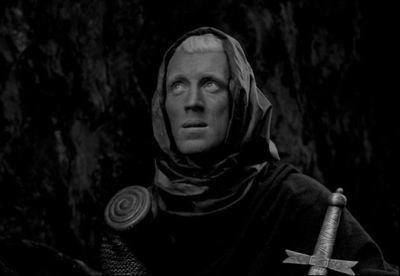
“The Seventh Seal” (1957)

Max von Sydow and his lifelong friend and collaborator
Ingmar Bergman grew acquainted in the Swedish theater, where, von Sydow once
recalled, he and the maestro did a fair amount of comedy. But their movie
collaborations are known for their intensity, profundity, and darkness.
Although as we’ll see shortly, that’s not the whole picture. In any event, both
the actor and director made a huge impact on international art cinema with this
movie, a tragicomic allegory set in medieval Europe after the Crusades. Von
Sydow plays Antonius Block, a lean knight returning to a desolate,
plague-ridden homeland. Death himself approaches Antonius and challenges him to
a game of chess, the stakes being of course the knight’s life. This
much-parodied movie became a touchstone of art film and a target for the
ridicule of such. The charge against Bergman’s movies is that they’re
“pretentious” and of course they’re no such thing. There’s also “slow” and
“difficult” and so on. The thing is, “Seventh Seal” is actually a very brisk
(97 minutes!), engaging, beautifully
shot, and sometimes funny movie.

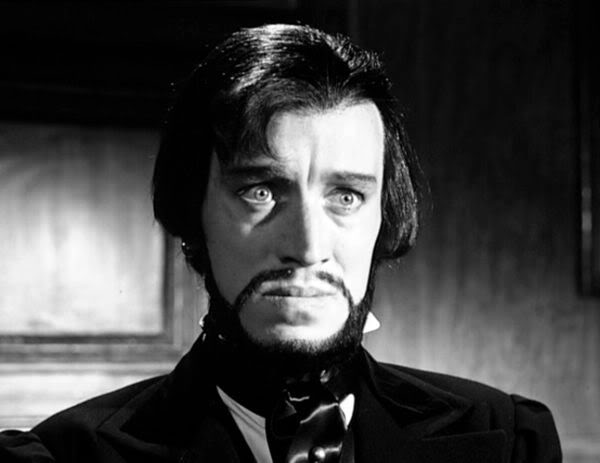
“The Magician” (1958)

This 19th century story of magic and illusion—two
different things—gets a lot of mileage out of its metaphors, with Von Sydow as
the titular showman/conjurer. A man of several faces, he swindles his way into
wealthy drawing rooms until he’s challenged by a vengeful rationalist. This
1958 beauty is the closest von Sydow and writer/director Ingmar Bergman came to
making a comedy together; one could call this a dark movie with a light streak.

“The Virgin Spring” (1960)

As von Sydow and Bergman’s collaboration dug deeper, the
material became ever darker. Here, the director and actor return to the
medieval, in a story of rape, revenge, and faith. This is, indeed, heavy stuff,
depicting existentially challenged characters poised on a knife-edge separating
paganism and Christianity. Where the film itself fails with respect to this may
surprise you—and recall the work of another Nordic master of cinema, the Danish
director Carl Dreyer. Von Sydow’s work as the father of a murdered girl is one
of his most eloquently tortured performances. Believe it or not, the movie’s
plot line directly inspired the harrowing grindhouse classic “The Last House On
The Left.”

Although he was only 31 when “The Virgin Spring” was
released, von Sydow had a longstanding knack for playing older characters. His
patriarch in this movie has a bearing we’d associate with someone at least a
decade past von Sydow’s actual age. His ability in this area proves useful
indeed as his career progressed.

“Through A Glass Darkly” (1961)

Von Sydow is a supporting player in this sledgehammer of a
contemporary drama from Bergman, an economical (almost ruthless) account of a
woman’s descent into complete madness
after discovering her own father has been exploiting her mental illness for his
own creative work. Von Sydow plays the woman’s sympathetic but somewhat
clueless husband, one of the actor’s rare forays into playing something like an
ordinary man.

“The Greatest Story Ever Told” (1965)

Speaking of non-ordinary men, great American filmmaker
George Stevens wanted a New Face to play Jesus Christ in his epic, cameo-filled
adaptation of the Gospels. Von Sydow, who’d never acted in an English-language
movie before (but whose English is not just impeccable but better than that of
most native speakers, if we’re gonna be brutally honest about it), got the role
based on the intense soulfulness he’d displayed in Bergman pictures. “Greatest
Story” is almost a combination White Elephant/Termite film—it’s a big studio
undertaking that has undercurrents of deeply personal moviemaking—and it
doesn’t altogether succeed.

“The Quiller Memorandum” (1966)

“Greatest Story” did not catapult von Sydow to international
superstardom, and his next big Hollywood production, “Hawaii,” in which he
costarred with Julie Andrews (no, really) was plagued by production troubles
and subsequently flopped. His profile in English-speaking films would largely,
from that point on, be narrowed to character roles, often in star-studded
thrillers. This one, from a Harold Pinter script, is a pretty good one, and von
Sydow gets to flex his villain chops, which are considerable, playing the
leader of a neo-Nazi group menacing George Segal.

“The Hour Of the Wolf” (1968)

As he diversified, von Sydow continued to work with Bergman,
although their collaboration would end soon after this bonafide horror film
(von Sydow’s character is physically, not just psychically, attacked by
demons). A frightening, sometimes hard-to-watch character study, it was an
exhausting ordeal for both director an actor. Von Sydow had wanted to return to
Bergman for his 1988 first farewell to cinema, the very great “Fanny And
Alexander,” but business negotiations squelched the deal, a course of
events which the actor says he deeply regrets.

“The Emigrants”/”The New Land” (1971/1972)

Swedish director Jan Troell is in some respects a more
conventional artist than Bergman, but he’s a narrative filmmaker of the first
rank with a tremendous feel for period and character. These two films pair von
Sydow with the beautiful and prodigiously talented Liv Ullmann (with whom he
costarred in several Bergman pictures) in a sweeping but simple story of a
couple who make their way from Sweden to the U.S. in the late 19th century.

Source:: http://www.rogerebert.com/balder-and-dash/the-young-persons-guide-to-max-von-sydow-part-one


Categories
Alberta Ft Mac

Large Number of Driving Charges Issued Last Weekend by Wood Buffalo Integrated Traffic Unit

driving charges, Wood Buffalo Integrated Traffic Unit

The Wood Buffalo Integrated Traffic Unit issued a large number of driving charges over the weekend starting the month of August, adding a significant amount of fees and funds to the local coffers. A total of 479 charges were issued during the weekend, and there were a variety of driving charges issued to the motorists who were stopped. Highways 881, 63, and 69 were targeted by police, and there were additional checkpoints in Fort MaxMurray as well. Local law enforcement were on the lookout for any safety issues and driving offenses during the enforcement actions. One of those charged with driving offenses was a 25 year old individual who was caught near Fort MacMurray for speeding. The driver was doing 205 km/h in a posted 60 km/h zone.

Other driving charges cited or identified by the Wood Buffalo Integrated Traffic Unit over the weekend included two males who were racing their motorcycles. Officers caught the motorcyclists doing 195 km/h in an area where the speed limit is 110 km/h. Two drivers were arrested on charges of impaired driving, and 19 drivers saw their licenses suspended immediately because of charges that involved drugs and alcohol. 10 drivers were cited for using cell phones and distracted driving, and officers served 6 arrest warrants during the operation as well. The roads in Wood Buffalo are safer because of the operation by the Wood Buffalo Integrated Traffic Unit . 479 driving charges mean that the municipality will have more income than expected from fees and fines, and that is a good thing for law abiding residents of the community.

Categories
TV & Movies

The Man from U.N.C.L.E.

Thumb_themanfromuncle_2015_1

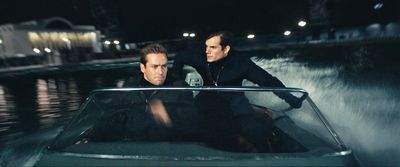
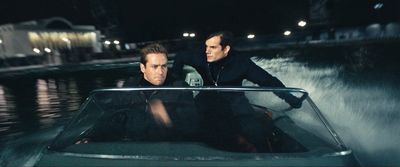
The period spy thriller “The Man From U.N.C.L.E.” is only
intermittently engaging and amusing, and those portions of the movie that
succeed are also frustrating. Because they’re cushioned by enervated,
conceptually befuddled, and sometimes outright indifferent stuff.

Adapted from the genuine-article 1960s television series,
which paired steely, no-nonsense, mid-Atlantic-accented veteran spy Napoleon
Solo with younger slightly petulant Russian moptop Ilya Kuryakin,
co-writer/director Guy Ritchie’s film situates itself in an early Cold War
wherein J.F.K. is still giving inspiring speeches. This movie’s Solo (Henry
Cavill) struts his bespoke-suited self right into East Berlin to spirit out
feisty femme auto mechanic Gaby (Alicia Vikander), whose dad is an A-bomb
expert now working, apparently against his will with some neo-fascist Italian
shipping magnates out to spread nuke terror. Solo’s here working for the
C.I.A.; hot on his trail is strong-jawed, Terminator-strong Kuryakin (Armie
Hammer). A chase ensues with all three parties ducking each other and Kuryakin
actually ripping the trunk door off of one of the cars involved. Solo and Gaby
cross the Berlin Wall by means of a sort of zipline; imagine Solo’s surprise
when he soon learns that for his next mission he has to collaborate with the
KGB agent who almost had him for dinner.

A gruff Agency honcho Jared Harris, approximating a Texan
accent, delivers the news and he and his KGB counterpart debrief the unhappy
new partners at a crowded outdoor café. Why these guys are spilling
international secrets in a setting where they can be effortlessly overheard is
the source for one of the movie’s better visual gags. Alas, the movie doesn’t
have too many more “gotcha!”s in its bag. The two spies soon touch down in
Italy, where they flirt—Ilya with Gaby, and Solo with one of the neo-fascists,
a blah femme fatale played by Elizabeth Debicki—and do spy stuff. In this
movie’s reimagining of the characters, Solo has a backstory as a master thief,
while Ilya is a chess-obsessed strong man with rage and daddy issues. This
gives Cavill and Hammer amusing bits to enact, but, and here’s a big rub,
whatever it is that Cavill and Hammer are supposed to bring to this movie, they
don’t. They fill out their clothes very nicely, it’s true, but other than that
they are to charisma what black holes are to matter. “Flat” really doesn’t begin
to cover it.

Then there’s the direction. Ritchie clearly wants to revel
in a pre-swinging-‘60s vibe, but he either can’t or won’t commit to it in a way
that yields any actual fun. Possibly he’s wary of bumping up against “Austin
Powers”-style pastiche, but whatever the cause, when he’s not being incoherent,
he’s being fussy. Even the soundtrack has a kind of stick up its fundament;
it’s chock full of the Right Names in early ‘60s international (and largely
Italian) pop, but it’s largely lacking in infectiousness. Seriously, they could
have thrown in a “Take It East My Brother Charlie” or something and only a jerk
like me would have pointed out the anachronism.

There are times when the movie uses its leads’ lack of
affect in service of a cheeky sense of humor, as in Solo’s sojourn in the cab
of a truck, after a frantic chase scene, sitting out (or so it seems) a
near-fatal brush with danger for partner Ilya. But much of the time Richie
seems uninterested in the action, although a final chase featuring a jeep, a
skeletal ATV, and a motorcycle unspools like a choose-your-own-adventure video
game, and I mean that in a good way. But the misfires are just as memorable, as
when Richie and company use realistic evocations of Nazi atrocities to fill out
the character of one minor villain. And if you were luck enough to have seen
Vikander in “Ex Machina” (and it you haven’t been you ought to change that),
you’ll be profoundly appreciative of just how much she’s wasted here. She’s
adorable anyway, however.

While it can’t be said that Hugh Grant saves the movie, his
return to prominence in the last half hour, after a plot-seeding-walk-on
earlier in the movie, peps things up considerably. Grant’s character is the one
that pulls the whole “U.N.C.L.E.” concept together, birthing an agency in which
KGB, C.I.A., and MI6 or 5 or whatever it is can cooperate to prevent mutual
assured destruction or something like that. Kind of like that agency in that
other summer spy thriller that this summer spy thriller is not going to present
any serious competition to. In and event, an entire movie in which the
weathered but still debonair Grant played the bluff, amiable puppetmaster to
the two hunky ciphers might have been great fun. I gather that Richie and
company still want to make that movie. I have mixed feelings about whether they
ought to, or will.

Source:: http://www.rogerebert.com/reviews/the-man-from-uncle-2015


Categories
TV & Movies

Roger’s “Return” to Twitter: An Explanation from Chaz Ebert

Thumb_screen_shot_2015-08-11_at_1.13.30_pm

On Monday, August 10th, fans of late film critic Roger Ebert were perplexed by some cryptic messages written on his Twitter feed, @ebertchicago. At first interpreted as a mere mistake, the messages eventually caused writers such as The Next Web‘s Natt Garun and Observer‘s Joe Bonazzo to speculate on whether the iconic writer had indeed come back from the dead.

The confusion began with the following tweet:

Followed an hour later by:

When Twitter followers engaged with the voice, it would respond. Here are a few choice exchanges:

It turns out the voice belonged not to Roger’s spirit nor a rogue hacker. Garun hit the nail on the head when she suggested that the initial tweet posted at 8:51am was the result of Roger’s wife, Chaz Ebert, getting “a little annoyed by how much data the Twitter app gobbles up, especially if she’s left the option for GIF and video autoplays on.” Chaz had meant to send the tweet as a direct message, but ended up posting it directly on Roger’s account. Once the accidental tweet went viral, Chaz found herself faced with many questions from Roger’s followers (currently numbering at an estimated 794,000), and she decided to answer some of them, thus resulting in the amusing banter posted above. Below, Chaz responds to three of her most-asked questions.

1. What was your initial reaction once you realized what had happened?

My phone started pinging incessantly shortly after I sent what I thought was a private message complaining that the Twitter app was using too much of the available data on my iPhone. When I checked, I realized that the reply button I clicked actually posted directly to the @ebertchicago Twitter account! The message was so cryptic people thought it could have been Roger from “The Beyond,” so it was being retweeted over and over immediately. Of course I was initially horrified, especially after people started sending me messages saying they thought the account had been hacked. I have to commend Natt Garun from NextWeb for guessing correctly what had happened.

2. What inspired you to respond to the Twitter followers and was it your intention to respond in Roger’s voice?

Roger was a pretty cool cucumber about things like this, and actually loved mixing it up in the tech and social media worlds, so he saw incidents like this as learning opportunities. I am trying to adopt that attitude about most f—ups in life. Roger would have reached out to his followers to let them know what was happening. He loved communicating with people. I am not as skilled as he was in a situation like this, but I decided to give it a go and start answering all of the comments individually. And by the way, I was not answering in Roger’s voice. I was answering as me and so I included @ChazEbert before each response.

3. How would Roger have reacted to all this?

Roger would have had so much fun with it! He loved his Twitter account and one of the last things he did before he passed away was give me his passwords and strict instructions not to cancel it. I marveled at his ability to bounce back from adversity. What most of us would have seen as awkward, Roger would see as just being human. He didn’t go through life timidly and he wasn’t afraid to make mistakes. He was also forgiving of other people’s mistakes as well and encouraged them to acknowledge them and move on. In fact, as I was responding to the messages I could just picture him smiling and giving me the Thumbs Up!

Source:: http://www.rogerebert.com/chazs-blog/rogers-return-to-twitter-an-explanation-from-chaz-ebert