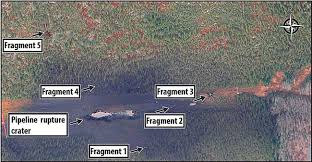
A report on the 2013 pipeline rupture was recently released by the Transportation Safety Board, and this report explains that the accident was caused at least in part by poor testing and by miscommunication. When the natural gas pipeline ruptured early in the morning on October 17, 2013 left a crater that was 50 metres wide. The rupture occurred to the south of Fort McMurray. Around 16,500 litres of natural gas was released from the rupture in the pipeline and five fragments of the pipeline were launched distances of up to 130 metres from where the blast happened. The TSB report indicates that one of the 5 fragments was a burst pipe elbow that had failed hydrostatic testing before construction occurred. The pipe failed because the wall thickness did not meet the requirements.
The Transportation Safety Board report also concluded that the 2013 pipeline rupture involved other factors as well. The investigation showed that in the 50 days immediately before the rupture the temperature in the pipeline fluctuated between 42 degrees Celsius and 48 degrees Celsius, The pipeline was not designed to handle these heats, although it was supposed to be capable f up to 58 degrees Celsius. The contractor responsible for the work only tested the pipes to 45 degrees Celsius maximum. According to the TSB report “The maximum possible discharge temperature had not been effectively communicated among the project team members and contractors at the design stage, resulting in the use of a lower temperature during the design process.”