Categories
Health

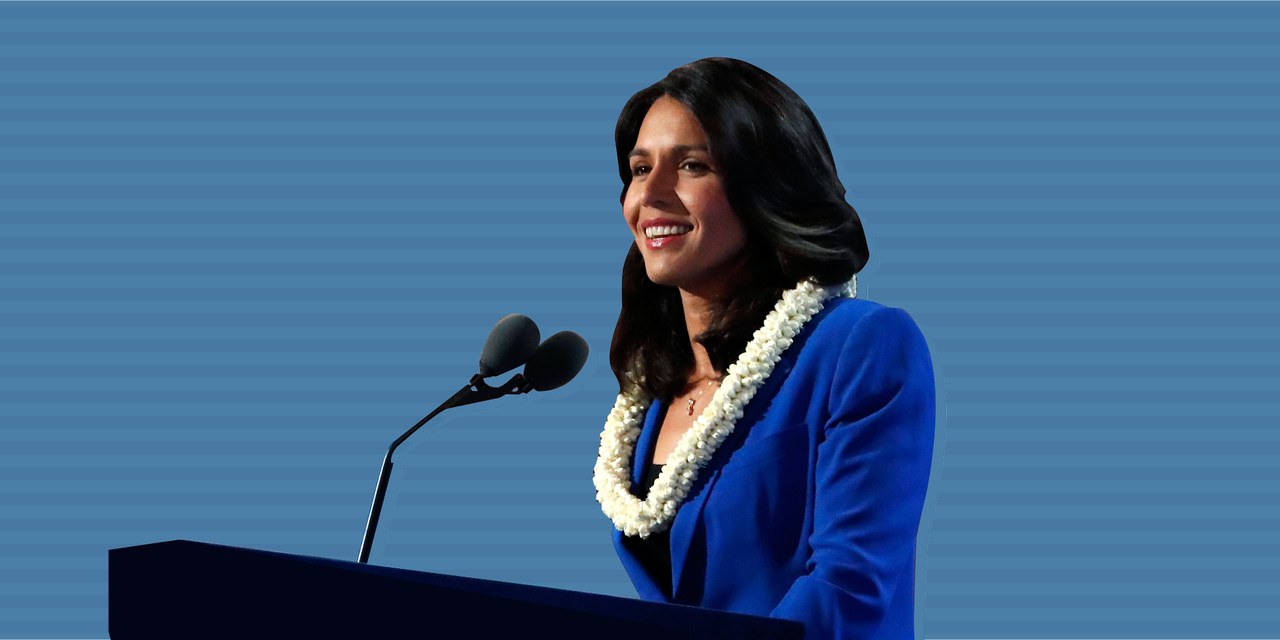
Tulsi Gabbard Wants to Put a Little ‘Aloha’ in the 2020 Presidential Race


Maybe it felt a little familiar—a young, telegenic progressive who grew up in Hawaii taking the stage at the Democratic National Convention.

For Tulsi Gabbard, who’d started a political career in state government, being invited to speak at the 2012 convention was unusual—she was only a candidate for Congress, not a member. Still, she’d caught the eye of party brass, and there she was in Charlotte, North Carolina, talking about her time in a war zone with the National Guard, and honoring the troops, and moving America forward.

Gabbard and the Democrats were there, of course, to celebrate and renominate Hawaii-raised President Barack Obama, who in 2004, as a young candidate for U.S. Senate, had given the rousing DNC speech that put him on the path to the White House.

In 2016, Gabbard was back at the DNC podium. This time, she wasn’t there to lend her voice to the party’s choice, Hillary Clinton; instead, she was there to formally nominate Clinton’s primary rival, Bernie Sanders.

And now, she’s kicked off her own bid to stand at that podium in 2020 as the Democrats’ pick to face off against President Donald Trump. At 37, she’ll be on one of the youngest Democrats in the mix (Julian Castro, who’s also making a run, is 44), which might increase her appeal to young, motivated voters.

Gabbard sat down with Glamour in New York prior to her formal announcement, which is scheduled for Saturday, January 19, and talked about what’s important to her, what’s not, and why she was considering getting into the race.

So, who is Tulsi Gabbard?

Why do this, and why now? “Ultimately, what this comes down to is having leaders in this country who are focused first and foremost on serving and fighting for the people in this country and fighting for our planet and fighting for peace,” she says. “This is what I’m focused on and I’m seeing how can I best be of service to the people of this country.”

Does she think America is finally ready to elect a woman president? “I do. But I think more people are looking for a president who will be a servant leader, who will be a champion for them, regardless of gender or race or anything else. I supported Bernie Sanders in 2016, and the challenge that I heard from people, some in the media and just others, [was], ‘How dare you not support someone who could become the first woman president!’ And my response to them was, ‘I’m offended that you are assuming that I can only think as far as my gender.’ Substance matters. Leadership matters. Judgment matters,” Gabbard says. “Having a leader and a commander-in-chief who’s able to have foresight and think through what the consequences are of the policies and the decisions that they’re making—I think this is what is more at the forefront on people’s minds as they consider who our next president should be than is it going to be a man or a woman?”

Her tough talk—especially on foreign policy (she once memorably tweeted at the president that “being Saudi Arabia’s bitch is not ‘America First’”)—might seem jarring when laid out side by side with her frequent talk of living in the Aloha State. But she has no plans to dial down the intensity.

“You know, ‘aloha’ is most often used as a way to say hello or goodbye. But what a lot of folks don’t realize is that the word aloha has a much more powerful deep meaning,” she says. “The fact is we use it to greet people because [when] I aloha you [it means] I’m coming to you with an open heart and with love and with respect, and a recognition that we are all interconnected.”

Gabbard has lived in Hawaii since she was a young child (she was born in American Samoa), and her father, Mike, was elected to the state legislature there. In 2002, when she was 21, Gabbard became the youngest person ever elected to the legislature. She stepped down in 2004 to deploy to the Middle East with the Hawaii Army National Guard, serving two tours. Between deployments, she worked for the late veteran Sen. Daniel Akaka (D-Hawaii), and later served on the Honolulu City Council before her 2012 election to Congress. She was one of the first female combat vets in to serve and took the Congressional oath of office on the Bhagavad Gita as the first Hindu member of the House.

Gabbard was 33 when she married cinematographer Abraham Williams (he was 26), after they bonded over surfing and their love of nature and the sea. “I’m so grateful to have the love and support from my best friend and my partner in my life. Every time I get back to Hawaii—he’s based in Hawaii—we make it a priority to [get] in the ocean, usually as quickly as possible after I get off the plane,” she says. “We get out for a six o’clock in the morning surf and have that time without technology and the noise of life… Re-centering, replenishing. It makes everything better. Starting off the day that way and it’s just spending that time in nature… it’s a really powerful thing.”

Gabbard was previously married to Eduardo Tamayo (his surname appears on her uniform in some photos); she’s said her time away in the military strained their union to the breaking point. She described it the experience as difficult, “but unfortunately, not an uncommon story for people who go through being separated for nearly two years,” she told Vogue.

A Bumpy Start

Gabbard’s path to the Oval Office could also be difficult. She’s up against candidates—including Senators Elizabeth Warren of Massachusetts and Kirsten Gillibrand of New York—with better name recognition. Americans tend to choose their presidents from the ranks of governors and senators, not House members; and aside from President Obama, they have all hailed from the lower 48. Some in the party doubt she can go the distance. Howard Dean, the former Vermont governor who ran for president and once lead the DNC, recently said he sees most of the Democrats whose names are being floated as potential nominees as qualified for the job — with one exception: Gabbard. “I don’t think she knows what she’s doing,” he told CNN, in part because of her 2017 meeting with Syrian President Bashar al-Assad, and controversial positions she once held on LGBTQ issues.

Gabbard disclosed that she had met with Assad, who is considered a war criminal by the United States, after the fact in an interview with CNN. Asked about the meeting by Glamour, she said, in part, “As a veteran, I know the cost of war, and the need to secure our country. If we are serious about peace and our national security, we must be willing to meet with not just our friends, but adversaries and potential adversaries as well. Otherwise, the only alternative is more war, more suffering, more lives lost.”

In the early 2000s, she opposed same-sex marriage, and when she ran for state office, as CNN reported, she emphasized her work with an anti-marriage equality political action committee run by her dad. Her entry into the 2020 arena quickly led to the resurrection of her anti-gay comments, and she’s moved to apologize and explain how she’s evolved on these issues.

“In my past, I said and believed things that were wrong, and worse, hurtful to the LGBTQ community and their loved ones,” she told Glamour. “Many years ago, I apologized for my words and, more importantly, the negative impact that they had. I remain deeply sorry for having said them. My views have changed significantly since then, and my record over the last six years in Congress reflects what is in my heart: A strong and ongoing commitment to fight for LGBTQ rights.” While in Congress, Gabbard has supported legislation prohibiting discrimination based on sexual orientation in housing, employment, and education, and has publicly opposed banning transgender people from the military.

Gabbard says her time in the military was critical to her change of heart. “I served shoulder to shoulder with people who became some of my best friends—gay, straight, and trans—people I was willing to give my life for, and them for me,” she says. “Through both of my Middle East deployments, I saw and experienced firsthand how dangerous it is when government attempts to act as a moral arbiter for their people—telling them who they can and cannot love, what they must do with their bodies, what kind of clothes to wear, or how to worship—or face punishment for not complying.  I realized just how dangerous it can be to allow our government to dictate or get involved in the most personal parts of our lives—telling us who we can and cannot marry, or dictating to a woman what she must do with her body.”

Gabbard is far from the first presidential hopeful to defend a shift in her views on such social wedge issues over time—neither Democrats Obama nor Clinton initially supported gay marriage; on the GOP side, Mitt Romney went from pro-choice to opposing abortion after what he called a personal epiphany. How it will affect her nascent campaign remains to be seen.

Her Plan for the Win

Gabbard knows she can’t rely on being the most experienced lawmaker in the game, the most well-known, the best financed, or the least controversial. So why does she think she can win over voters? “I’ve talked to people who voted for Donald Trump, and I’ve listened to them,” she says. “And there’s not enough of that listening going on. And look, there are people who are racist and who are bigots and that’s not who I’m talking about. … There are people who have lost their jobs because of destructive trade deals of the past and whose fear and insecurity not just comes from the loss of that job, but the loss of the pride and the security that comes from maybe working in a trade or an industry that their father and their grandfather had worked in before, and [who] don’t feel represented.”

The feeling of being forgotten or unchampioned, isn’t a partisan thing, Gabbard says: “That’s where I see is there’s great opportunity… There’s a great hunger from people who want somebody to fight for them and someone to care for them, and not feel like they’ve been left behind.”

Her military experience is also playing a key role in shaping her platform. On international affairs, Gabbard has spoken extensively about getting the U.S. out of the role of global cop, including pulling military support in the Middle East: “We should end our all U.S. military support for Saudi Arabia in this genocidal war that’s being waged in Yemen,” she says—a stance that gives her a chance to lay into the president.

“We see Donald Trump talking about how he doesn’t want to risk a $110 billion arms deal with Saudi Arabia and therefore, he’s willing to, whatever it is, turn a blind eye. He doesn’t want to break this ‘alliance’ with Saudi Arabia,” she says. “He’s an example of someone who’s a businessman without a conscience and who is essentially willing to ‘make the deal’ no matter the cost of the consequence.”

At home, she mentions a wide range of issues she’d put at the forefront of domestic policy—first and foremost using the money the U.S. spends on military action overseas and to deal with problems here: “whether they be infrastructure or health care, education, housing—the things that people are focused on in their everyday lives.”

Gabbard speaks of criminal justice reform, protecting the environment, improving health care for veterans, and making headway on combating the opioid crisis. She also supports the legalization of marijuana: “In many states where they have legalized either medicinal marijuana or full legalization… [we’ve] seen a direct correlation in reduction of opioid-related deaths and opioid addiction,” she says.

Big picture, Gabbard sees the fabric of the nation as frayed or tattered, if not torn, by the exploitation of “bigotry and divisiveness for political gain” by those in power.

“This is the threat in our country today,” she says. “This is what is so dangerous for us as United States of America and for our future. And this is what must be addressed, and the only way that we can address this is to combat this hatred and this darkness with the most powerful force of love and what we in Hawaii call ‘aloha’.”

“You know, unfortunately, too often people mistake love with weakness or being passive, but the fact is there is no force more powerful than love,” she says. “And we look to examples like Martin Luther King and Nelson Mandela, who were facing such dark and divisive times and challenges and who chose to fight back and defeat those forces of darkness with their own message [and] leading with love and aloha.”

How much love, how much aloha, will voters show Tulsi Gabbard in the battle of Election 2020? She’ll soon find out.

Celeste Katz covers politics and elections. She’s @CelesteKatzNYC on Twitter and reachable at CelesteKatz@protonmail.com.



Source link

Categories
Health

Who’s In and Who’s Out of the 2020 Presidential Race—So Far


In the 2016 presidential election, Senator Ted Cruz (R–Tex.) didn’t declare until March 2015. Hillary Clinton released a YouTube video announcing her candidacy in April. Donald Trump didn’t take that famous ride down the escalator until June. But America now lives squarely in the era of The Endless Campaign: The 2020 race is already here.

Before 2018 was even over, Senator Elizabeth Warren announced she had formed an official exploratory committee and was headed to Iowa to campaign. A long list of Democratic contenders will likely follow. (In one CNN poll of the potential field, only one woman, Senator Kamala Harris, broke into the top five contenders. And despite lots of talk about a new wave of young, ethnically diverse leaders shaking up politics, the two top slots were held by older white men: former vice president Joe Biden and Vermont Senator Bernie Sanders.)

Early polling doesn’t always indicate which candidates will jump into the ring—and if they do, every day of a presidential race, from the first to the last, can be a political minefield. (Not to mention the potential pitfalls of at least a dozen presidential debates that are already on the calendar.) Here’s Glamour’s cheat sheet to the White House contenders. Watch for updates as this race unfolds.

THE JUSTICE LEAGUE

Members of the Senate Judiciary Committee played a high-profile role in 2018’s divisive confirmation hearings for now Supreme Court Justice Brett Kavanaugh, showcasing their skills for going big on the national stage. No surprise many of them are high on the list of potential Democratic presidential contenders.

Senator KAMALA HARRIS (D–Calif.) is a daughter of immigrants—her mom is from India and her dad from Jamaica. Her parents met as student activists, and Harris, 54, has credited them with shaping the woman she is today. The prosecutor turned California attorney general has shown her tough questioning skills while taking on Kavanaugh (as well as Jeff Sessions during his confirmation hearings for U.S. attorney general). Harris is the first Indian American woman in the Senate and currently the only black woman in the upper chamber. Nearly every candidate is coy about running for president until they are officially running for president, but Harris’ new book, The Truths We Hold: An American Journey—part autobiography and part mission statement—is a sign to many observers that she’s seriously sizing up a White House bid. Running wouldn’t be a walk in the park: Harris is relatively new to the Senate, and critics worry about how progressive she truly is at heart at a time when some see a full-on ideological war as the only way to take on Trump.

Senator AMY KLOBUCHAR (D–Minn.) has been pegged by some observers as more moderate—and maybe even more relatable—than other Democrats in contention. It’s the kind of political triangulation you’d find in decades of political playbooks: Be liberal enough to win a Democrat primary, but not so far off the grid that you can’t get independents and moderate Republicans on your side to win in November. Klobuchar, 58, who’s made a test-the-waters visit to early voting Iowa and has said she’s “close” to deciding about a run, could fit the bill: She’s got a blend of Midwestern politesse and diplomacy. She’s not a household name, but she was able to turn deep red counties blue in her reelection.

Senator CORY BOOKER (D–N.J.), served as mayor of Newark before joining the Senate. Like many of the possible contenders, Booker, 49, said he’d use the holiday break to consider a run for president, although he’s widely expected to be in the mix—and on December 20, he got what might be seen as an early Christmas gift from a political standpoint: the passage of a bipartisan criminal justice reform bill he’s championed. But his ties to Wall Street may be a little too close for comfort for some Democrats.

THE VETERANS

This year’s midterms included a raft of women emphasizing their time in the armed forces. Not all won (cases in point: MJ Hegar of Texas and Amy McGrath of Kentucky), but service can draw respect that crosses party lines.

Senator TAMMY DUCKWORTH (D–Ill.): In 2004 Duckworth lost both legs while serving in Army National Guard as a Blackhawk helicopter pilot in Iraq. Five years later, she became assistant federal secretary of Veterans Affairs under then President Barack Obama. She went on to serve two terms in the House, and was elected to the Senate in 2016. This spring, Duckworth, 50, became the first woman to give birth while serving in the Senate. Illinois is a state that produces presidents, from Lincoln to Obama; Duckworth has visibly sacrificed for her country. That could make her an interesting foil to Trump, who talks continually about military spending and caring for vets while not having served in uniform himself, but it hardly means she’ll see a path to victory in 2020. (And be prepared for more “birther” smears: Duckworth was born in Thailand to a U.S.-citizen father and Thai mom. Foes have already stirred up suspicions about her heritage and whether she’s legally qualified to be president.)

Representative TULSI GABBARD (D–Hawaii’s 2nd district) At 37, Gabbard is one of the younger lawmakers being discussed for the presidency (the age requirement is 35). In 2002 she became the youngest person ever elected to the Hawaii legislature; she later stepped down ahead of two tours with the Army National Guard. Gabbard now serves on the House Armed Services and Foreign Affairs Committees. Gabbard is in many ways the antithesis of the current POTUS: young, female, progressive, experienced in war, and happens to be the first Hindu to serve in Congress. Her break with the Democratic Party during the 2016 campaign over the Clinton-Sanders battle (she supported Sanders) could speak to a simmering dissatisfaction with the establishment among liberal primary voters—something they expressed with their ballots in 2018.

THE POPULISTS

Donald Trump campaigned as a plain-spoken candidate who would make the average American’s life better. A big question that will get answered by the 2020 election: whether those regular folks think Trump’s policies have actually gotten that done. The Democrats in this category would answer that question with a resounding no, and pose very different ideas for solving the problems of the struggling middle class and those dealing with inequalities in U.S. society.

Representative BETO O’ROURKE (D–Texas’s 16th district) failed to knock out Sen. Cruz in the midterms, but the 46-year-old succeeded in getting himself squarely on the national radar, coming in third in the CNN 2020 survey. His fund-raising strategy got many people to sit up and take notice: He pulled eye-popping, record-breaking financial support from around the country against an entrenched, well-known (if not universally beloved) Republican incumbent—and he did it without help from corporate PACs. Family money could help in a national campaign, and the Senate campaign may (or may not) have helped clear the decks on a 1998 drunk-driving arrest. Still, history suggests a presidential race will be an uphill climb for him and his fellow members of the House: Modern-day Americans generally tend to elect governors and senators as commander-in-chief.

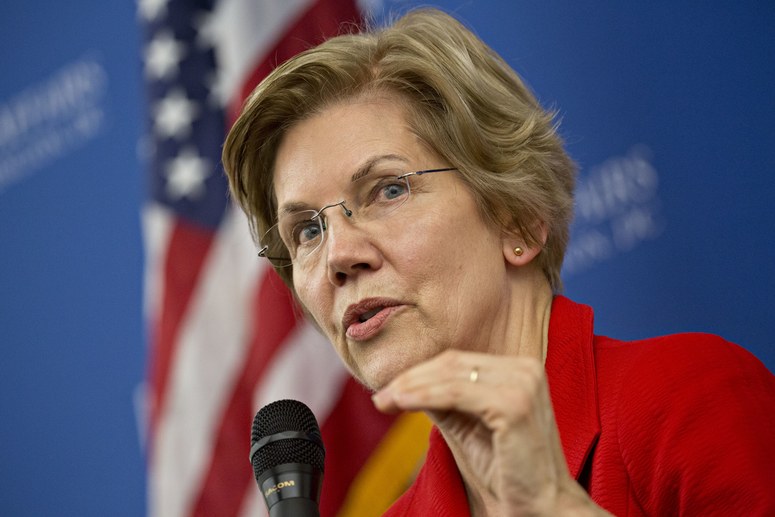
Senator Elizabeth Warren (D–Mass.) is among the first Democrats to move toward challenging President Donald Trump.

Andrew Harrer/Bloomberg via Getty Images

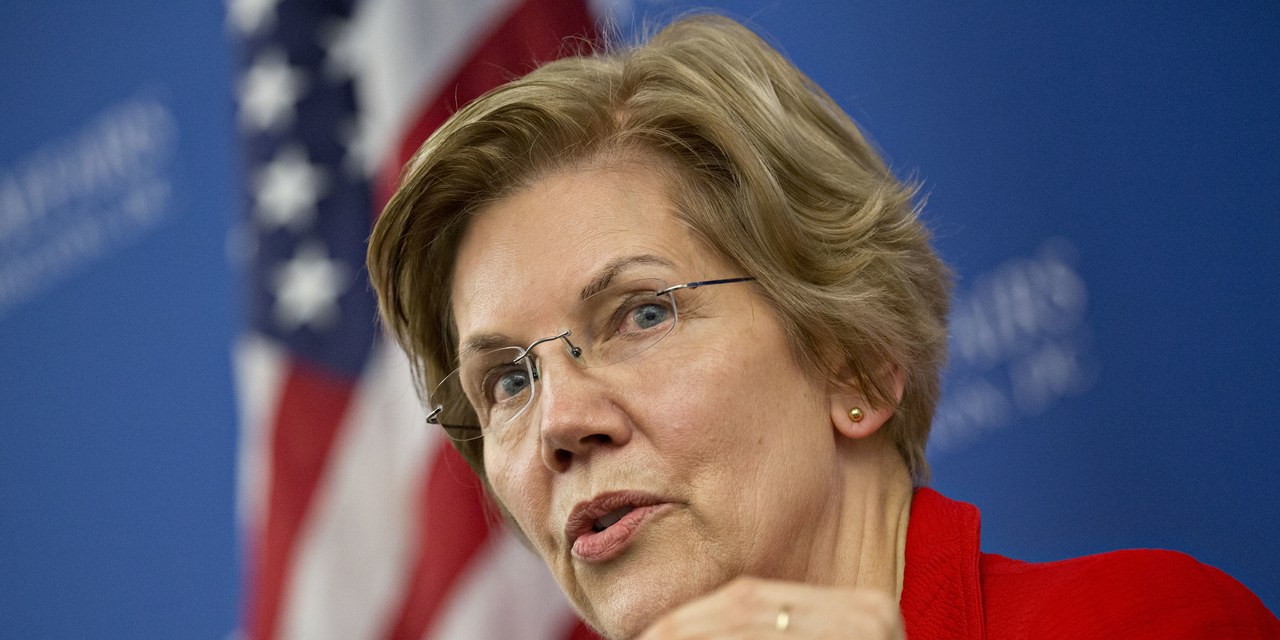
Senator ELIZABETH WARREN (D–Mass.) is one of the most liberal and aggressive critics of the Trump White House. Known for taking on the big banks, Warren, 69, became President Obama’s appointee to oversee the Consumer Financial Protection Bureau (which Trump has dismantled), and has an avowedly power-to-the-people tone to her work. (She’s also gone after sexism in political campaigns right off the blocks, with a January 2 fund-raising email scoffing at “likeability” issues for female candidates and “tired, beard-stroking opinion pieces.” But Trump delights in taunting Warren and likely won’t be quick to stop throwing around his “Pocahontas” nickname for her that his arena-rally fans have grown to love. She might be the right populist for the moment, but some question whether Warren can be the kind of national leader who can broker meaningful Washington compromises.

Senator KIRSTEN GILLIBRAND (D–N.Y.) has tried to position herself as a populist, but her pedigree is more Washington insider: Her grandmother founded the Albany Democratic Women’s Club, and her father was a lobbyist. Gillibrand, 52, was fairly new to the House when appointed to fill Hillary Clinton’s Senate seat in 2009, and has handily won reelection ever since. She has served on the Armed Services Committee and has been been notably out front on addressing sexual assault in the military. Gillibrand has made a point of promoting women’s empowerment in public life and is out with a new children’s book celebrating leaders of the suffrage movement. But if she continues to frame herself as a passionate progressive, she can be sure there are those who’ll be only too glad to reminisce about her days as a more moderate congresswoman—one, in fact, who once said she kept a couple of rifles under her bed for home defense.

THE REPEAT RUNNERS

Donald Trump was the oldest elected president in U.S. history when he won in 2016 at age 70 (Ronald Reagan was 69 when he took the oath; George H.W. Bush was a kid of only 64). Voters may look ahead to the time when a woman sits behind the Resolute Desk—but is that time now, or would a Trump contemporary have a better chance of actually defeating him?

Former Vice President JOE BIDEN has had his eye on the Oval Office before. In 2008, when he couldn’t beat Obama, he joined him. Son Beau Biden, before his death from brain cancer in 2015, even encouraged his dad to run. The elder Biden is known for plain—and sometimes tough—talk, as well as a good measure of personal charisma. He’s a popular guy. Still, he’s reportedly quite aware that his age, 76, at least factors into the wisdom of waging another White House campaign. Could he balance a ticket with a younger running mate? Quite possibly: The late Senator John McCain, Bush 41, and plenty of others have looked to that strategy. Unknown is whether it can and will work in the next election.

pJoe Biden and Barack Obama put their continuing popularity to work for Democrats during the 2018 midterms.p

Joe Biden and Barack Obama put their continuing popularity to work for Democrats during the 2018 midterms.

Samir Hussein

Senator BERNIE SANDERS (I–Vt.) has remained hypercritical of the current administration since his attempt to mobilize a wave of young, super-energized progressive voters to catapult him to the 2016 Democratic nomination. He wasn’t able to overcome Hillary Clinton in that race, which stayed ugly to the end, but he didn’t go down without a fight, and the people who shared his beliefs didn’t vanish, either. Sanders is now 77, and he’s not the only game in town when it comes to unabashed liberals. It’s reasonable that he’ll place high on the list in early surveys like the CNN poll, but maybe the Vermonter is really at a fork in the road: If he’s set on ousting Trump, should he try to do that by remaining the standard bearer, or pass the progressive torch to the next generation? Critical new looks at his heavily male-dominated 2016 campaign may not play in his favor, either.

Former Secretary of State JOHN KERRY ran a failed bid for president in 2004 while representing Massachusetts in the Senate, and has said he’ll consider jumping into the 2020 arena. Kerry, 75, clearly has experience in diplomacy that could be relevant in an uncertain world where China and Russia are angling to overtake America economically, militarily, or both. What isn’t clear is who he could excite voters as a second-time presidential hopeful.

Former Secretary of State HILLARY CLINTON, 71, should never be counted out until she says she’s out (and the winner of the 2016 popular vote hasn’t definitively said she’s not running), but most insiders say it’s time for new talent.

THE BILLIONAIRES

Aside from Trump’s talk about his personal wealth, there are men in the mix who could possibly self-fund a presidential campaign. But do Americans want 2020 to become a Battle of the Billionaires?

MIKE BLOOMBERG, 76, made his money in finance, technology, and media and served three terms as mayor of New York. He’s a well-known philanthropist—and a political chameleon who switched from Democrat to Republican to run for mayor, later declared himself independent, and is considering a try for the Democratic nomination for president. He has a no-nonsense style and is known as a supporter of global public health, antismoking, and gun control initiatives. (He also has a reported history of frat-boy-style cracks about women, and has excused behavior by men like Charlie Rose.) Bloomberg memorably dissed Trump’s self-styled business titan image at the 2016 Democratic National Convention—“I’m a New Yorker, and I know a con when I see one” was probably one of his softer remarks. But if Trump could take on his fellow New Yorker and win, it might be his most prized title yet.

TOM STEYER, 61, a Californian investor and activist, is funneling his considerable wealth into Democratic causes and has been loudly calling to impeach Trump. He also poured more than $30 million, per Forbes, into registering more than a quarter million young voters ahead of the 2018 midterms, with a special focus on swing congressional districts. His efforts there (along with Bloomberg’s spending) could well have helped make a difference in tight races. Could that translate into some astounding 2020 dark-horse Steyer presidency? That’s a much heavier lift.

THE LONGSHOTS

(A.K.A. CALL ME VP, MAYBE)

If there’s a time-honored tradition in American politics, it’s running for president (or talking about it) to get on the ticket as vice president. Some are likely doing just that. Among them:

Maryland Congressman JOHN DELANEY, 55, who’s already declared his 2020 candidacy. Former Secretary of Housing and Urban Development JULIAN CASTRO, 44, hasn’t declared but is forming an exploratory committee. Senator SHERROD BROWN, 66, hails from the pivotal state of Ohio. Governors often spark interest in presidential cycles, and JOHN HICKENLOOPER, 66, of Colorado, and JAY INSLEE, 67, of Washington State, as well as past governors DEVAL PATRICK, 62, of Massachusetts, and TERRY McAULIFFE, 61, of Virginia, also a former top DNC official, are all in the mix. Mayors of high-profile cities also can’t yet be counted out, including ERIC GARCETTI, 47, of Los Angeles, and MITCH LANDRIEU, 58, of New Orleans.

FAILURE TO LAUNCH

Some wanna-be candidates were knocked out before things even really got going. Lest we forget (much as some might want to):

MICHAEL AVENATTI, lawyer to Trump accuser Stormy Daniels, took several jaunts to Iowa, and threw plenty of elbows at Trump on TV and Twitter. After he notably told Time that the 2020 Democratic nominee “better be a white male” if the party wants a real chance of knocking Trump out, allegations—which Avenatti, 47, categorically deniesof domestic violence led him to set aside any White House ambitions for, he said, the sake of his family.

The list of who’s out will, of course, get longer. Stay tuned…

Celeste Katz is senior politics reporter for Glamour. Send tips and questions to Celeste_Katz@condenast.com.


Source link

Categories
Health

Senator Elizabeth Warren Announces Her 2020 Presidential Run


Democrat Elizabeth Warren just made a big first step toward formally announcing her candidacy for President of the United States in 2020. The U.S. senator from Massachusetts filed papers on Monday (December 31) to form an exploratory presidential committee, the first of the rumored Democratic candidates to do so.

This move allows her to legally ramp up fundraising efforts and begin staffing up in key states (Iowa, New Hampshire)—it’s essentially one step short of her literally saying “I’m running,” but the groundwork is in place. Along with the legal filing, Warren also released a new video that is one part biography and one part a focus on one of Warren’s tentpole messages of leveling the economic playing field for Americans.

The video begins with a bit of information about Warren’s working class upbringing in Oklahoma and how she rose from that to become a teacher, a Harvard law professor, and now a senator. From there, she begins discussing the policy issues that will likely make it into her campaign platform—starting with the nation’s shrinking middle class.

“America’s middle class is under attack,” she says. “How did we get here? Billionaires and big corporations decided they wanted more of the pie. And they enlisted politicians to cut them a bigger slice.” Warren’s video highlights her work in Washington to fight for the middle class, including the formation of the Consumer Financial Protection Bureau.

Warren also changed the handle on her campaign Twitter account—different than her official account as Senator, which remains intact—to read simply @ewarren, rather than @elizabethforma, as it read during the 2018 midterms. The updated bio on the account labels it the “official account: 2020 Exploratory Committee.”

It’s no great surprise that Warren is one step closer to entering what could become a crowded field of Democrats vying to win the nomination and defeat Donald Trump. “After November 6 [the midterm elections], I will take a hard look at running for President,” she said back in September.

Warren has long been an outspoken critic of Donald Trump and his administration, who have never shied away from attacking her. She has also been a target of Senate Majority Leader Mitch McConnell, who famously said of the Senator after a heated debate on the floor: “She was warned. She was given an explanation. Nevertheless, she persisted.”

Related Stories:

The Official White House Twitter Account Just Went After Two Women Senators

Here Are the Senate Women at the Center of the Brett Kavanaugh Debate

Elizabeth Warren Shares Her Own #MeToo Story: ‘What Had I Done to Bring This On?’


Source link