Categories
TV & Movies

Sankofa


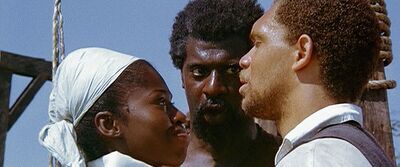
Directed by Haile Gerima in 1993, the Ethiopian production “Sankofa” mystically and viscerally centered Black diaspora in a slave narrative. The idiosyncratic film opens with a Black man with white body paint banging on a set of drums while dissolves of sun-smeared fields complement underneath, leading to an intoxicating invocation to those Black souls lost during the Atlantic slave trade to rise up and tell their stories. At the outset, “Sankofa” is what co-directors Gerard Bush and Christopher Renz wanted 2020’s “Antebellum” to be. Similar to that film, a modern-day Black woman is transported back to slavery. But Gerima’s film thrums with a reverence for the ancestors who lived through that historical trauma that’s not at all present in Bush and Renz’s exploitative work. 

“Sankofa” didn’t receive distribution upon its initial release. Instead, Gerima self-distributed the film to independent cinemas across the country, and it’s not been widely seen since then. Ava DuVernay’s Array via Netflix is now re-releasing a 4k restoration of the film, and the result is a visually striking unearthing of an important chapter in world cinema. 

Mona (Oyafunmike Ogunlano), the film’s protagonist, is a present-day African-American model sporting a leopard print bathing suit and orange Tina Turner inspired hair, working a photoshoot on a Ghana beach in the shadows of Cape Coast Castle. During the trans-Atlantic slave trade the castle was the lost stop before Africans confronted the further horror of traveling to America. It was “the point of no return.” In the opening scenes, Gerima’s lens peers over the now-antique cannons that line the white-sand walls, looking toward the tangerine sun-soaked beaches below, wherein Ghanians laugh, play, and prepare to fish.   

An older Black man, the self-appointed guardian of this castle, adorned in a white robe and holding a bird-crowned staff, takes great displeasure in Mona who isn’t just using the sacred ground for a photoshoot. She’s doing it for a white photographer. The guardian also takes umbrage with the hordes of mostly white tourists crawling through the dungeons that once held slaves. The guardian seems to cast a spell on Mona. She descends into a dungeon, finding African men and women silently chained together. She tries to escape but is caught by the slave traders who are manning the castle. Somehow she’s been transported back in time, and, in a distressing scene, is stripped and whipped (thankfully, the violence in “Sankofa” isn’t gratuitously marked by close-ups and happens mostly off-screen). 

The film takes a jagged, almost illogical turn. The next time we see Mona, she’s named Shola and operates as the movie’s narrator. But Shola has zero memory of who Mona is or was. “I was raised in the big house with Joe and Lucy, and trained to serve the Lafayettes,” Shola recalls. From her perspective we learn the various slaves who populate the plantation: there’s Shola’s lover, the rebellious West Indian Shango (Mutabaruka); the older, obedient head slave Noble (Afemo Omilami); Nunu (Alexandra Duah), who legend says killed a white man just by staring; and Nunu’s son Joe (Nick Medley), a head slave who becomes poisoned by Christianity.

At its core, “Sankofa” concerns the ways Africans tried to keep their culture during slavery, and the varied methods of assimilation they fought against. It’s telling how every slave speaks with a different accent, here, owing to their varied origins, and speaking toward the African diaspora. Rumors also persist of a group of slaves who gather in a cave to plot an overthrow. Shola becomes part of this unit, often signified by their wearing of red scarves on their heads, but is hesitant to become fully initiated, a failing she connects with her Christian upbringing. The same method of assimilation that stops Shola symbolically short infects Joe too. Much of the plantation already despised him for being a head slave, but once he begins to regularly attend church, often seeking approval from Father Raphael (Reggie Carter), his mien shifts toward cruelty, eventually believing both Lucy (Mzuri), a slave with a crush on him, and his mother are heathens. 

“Sankofa” is a visually enrapturing movie. Gerima loves using dissolves to layer meaning atop of meaning. Cinematographer Augustin Cubano gravitates toward golden hour shots. The sun here isn’t blinding, or on the flip side, inviting. It’s all-consuming, wrapping around the landscape and viewer with the warmth of the overwhelming sweat. The soundscape, an eclectic mix of lashing whips, dizzying jazz horns, and woozy spiritual moans, likewise to Mona, is seemingly trapped between whispers of modernity and the booming echoes of the past.  

Each character bears their own weight: the plantation’s master routinely sexually assaults Shola; Nunu is nearly sold away; Noble awakens from his supplicant slumber to grapple with the abuse he’s wrought. There are rebellions; the once warm sunny skies alters to a red-drenched sign of defiance. It culminates with Shola taking revenge against her abuser.         

Gerima’s “Sankofa” is an invocation not just to African ancestors, but also the present-day viewer. It calls to attention how history exists in the present, how the spirits of the long-gone can still affect today. Consider its final scene: the camera panning over an assemblage of Africans, all colorfully dressed, including Mona, sitting on the steps of the castle, staring out toward the sea. It is a calling to those souls. Likewise, the legacy, beauty, and humanist sensibilities contained within “Sankofa” still call to us today.  

Now playing on Netflix.


Source link

Categories
TV & Movies

The Most Beautiful Boy in the World


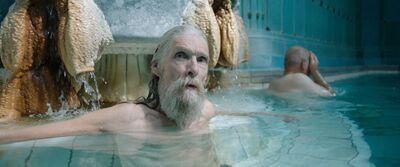
The documentary “The Most Beautiful Boy in the World” opens on a disturbing note: An aged Björn Andrésen, now 66 years old, walks slowly down a dilapidated, empty, blue-lit hallway. Paint is peeling from the walls. The ceiling is tattered and ruined. His silhouette, marked by his black overcoat, is nothing more than a lonely outline unearthing painful memories. A soundtrack of audio tapes from his childhood plays. Using cross cuts, editors Dino Jonsäter and Hanna Lejonqvist then transport us to February 1970, a cold day in Stockholm, the day that would change Andrésen’s life forever. 

In “The Most Beautiful Boy in the World,” a heart-wrenching documentary, co-directors Kristina Lindström and Kristian Petri puncture the uneasy vein of child star building, explaining how often the practice ensnares the vulnerable. They do so by telling the story of once Swedish teen idol Andrésen, who at the age of fifteen was cast as Tadzio in Italian director Luchino Visconti’s adaptation of Thomas Mann’s novel Death in Venice. The part would bring the Swedish actor fame, adulation, and adoring fans only for the ensuing noise of stardom to rupture his life, permanently.    

The documentary first thrives as art imitating life. The Mann novel had enraptured Visconti for some years, formerly crystallizing his plans to adapt it while filming “The Damned.” The basic plot takes place in 1911 at the Grand Hôtel des Bains on the Lido, and concerns an older composer who becomes infatuated with an adolescent Polish boy named Tadzio, an attraction the openly gay Visconti did not consider homosexual in nature. The story lives and dies with Tadzio, an ethereal beauty described as an angel of death with honey-colored hair. 

Similar to the composer, Visconti becomes obsessed with finding this boy. For the casting he searched Hungary, Poland, Finland, and Russia before landing in Stockholm. Lindström and Petri have a wealth of footage from the audition to draw from. In the opening clip, the blonde-haired Andrésen walks in, and there’s a sense of melancholy to him, a forlornness not unlike a Romantic poet. You get the sense that he’s never auditioned before. His nervous energy is palpable, an energy that heightens when Visconti asks him to take off his shirt. Seeing his anxious smile, as though he’s afraid of disappointing, the natural frustration of there being no parents in the room, no grown-up willing to stop the leering audition, sets the emotional tone for the rest of the film.

Now the once teen idol, a kind of Timothée Chalamet of his era, is vastly different from the naive young man in the 1970 Super 8 footage. If you’ve ever seen Caspar David Friedrich’s painting “Wanderer above the Sea of Fog,” you’ll know it’s emblematic of the romantic hero: the young man looking over the vista of cloudy mountains toward his vast unknown future. There’s a sense of reflection and quiet abandonment to the work, an amber protected portrait of youth. The present-day Andrésen, bordering on frail, with his long, grey wispy hair providing half his weight, is Friedrich’s romantic hero, but now at the other side of the mountain. And he’s looking over a view that isn’t nearly as hopeful.  

“The Most Beautiful Boy in the World” has a slightly fractured arrangement. Driven by Filip Leyman and Anna Von Hausswolff’s hard-charging score, Lindström and Petri’s film cycles through the tragedies in Andrésen’s life, which are often more experientially connected than narratively. Rather his recollections often play as siloed investigations, a timbre the unraveling edit tries to piece together. 

While fighting an eviction notice (his apartment is described as an “environmental hazard”) and working to maintain his relationship with his girlfriend Jessica Vennberg, he thinks back on the aftermath of working on “Death in Venice,” especially during the Cannes Film Festival. It’s here the moniker “the most beautiful boy in the world,” bestowed upon him by Visconti while in London, takes shape. In the clips, there’s a targeting on the director’s part: at one point, he explains how Andrésen’s lost some of his beauty now that he’s slightly older. Andrésen often veers very closely to equating homosexuality with pedophilia, which should offer some pause, even if the documentary doesn’t endorse the sentiment. 

Andrésen also recounts the many times adults took advantage of him: his granny who first took him to the audition; the people at a Cannes afterparty at a gay bar; the amphetamines given to him in Japan; the disquieting patron in Paris who paraded him as a trophy. The actor is often opaque about what he dealt with, to the point of his experiences being indecipherable rather than easily explained. Such as the aforementioned Parisian trip, which reads as though he went into sex work but didn’t. His muddiness, which impedes the brisk pace of the documentary’s opening third, is emblematic of the aftereffects of traumatic events, but doesn’t make for an easily digestible watch during the film’s middle third either. 

It’s not until “The Most Beautiful Boy in the World” re-contextualizes again the generational trauma that led Andrésen to who he is now—the death by suicide of his mother—that the narrative solidifies around an emotional focal point. The bleakest instances occur when the Swedish actor reads his mom’s police report, which describes how her body was found, and when he remembers the child he lost to Sudden Infant Death Syndrome. By the film’s end, there are two overarching thoughts: “this was a man who was fated to be hurt” and we want to reach back into time and pull him away from that audition.

“The Most Beautiful Boy in the World” isn’t a perfect watch, and is often confusing and confounding. But it gets at the heart of this forlorn figure, a once idol turned tragic Greek hero. It’s unflinching, and one of the most honest portraits of the pitfalls that can happen in child stardom.   

Now playing in theaters.


Source link

Categories
TV & Movies

Venice Without Her


I was with Kate on an early summer day in Times Square when I got the call. It was Mick LaSalle, the movie critic for the San Francisco Chronicle. He was excited. Was I interested in going to the Venice Film Festival? There was this panel for something called the Biennale College, a group of microbudget films funded by the festival. They brought in critics to discuss the films with the filmmakers and other festival-goers. Mick couldn’t make it that year, and he was recommending me as his sub. Was I interested?

Uh, yes? I got off the phone and turned to Kate, who was picking out pens at the Muji store. “Do you want to go to Venice with me?” It seemed like a ridiculous question. Who doesn’t want to go to Venice? Soon I was in touch with the panel organizer, Peter Cowie, British film historian and voice that launched a thousand Criterion commentary tracks. A couple months later and we’re taking a water taxi from the airport to the Lido, under an endless sky, and checking into a shimmering hotel that looked like something out of a Wes Anderson movie, with a touch of wedding cake. “Is this real?,” we thought, as we tried not to collapse from jet lag.

That’s how Venice became our magical place.

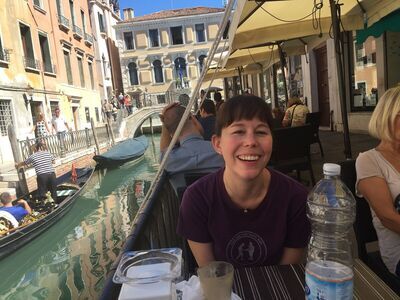
Every September for four years, from 2015 to 2018, we vanished into the wonderment. Kate, a film lover in her own right, was given a badge as my guest; together we watched the Biennale college films, an eclectic bunch that matched Kate’s adventurous tastes. We saw countless other films: “The Shape of Water,” “Thee Billboards Outside Ebbing, Missouri,” “First Man,” “Mother!,” “Dawson City: Frozen Time,” “Beasts of No Nation.” I filed my columns to my editor at the Dallas Morning News. We enjoyed the companionship of the other regular panelists, including Stephanie Zacharek, Glenn Kenny, David Bordwell, Michael Phillips, and LaSalle. And we always made sure to get off the Lido, the island where the festival was headquartered, and explore the other islands, especially San Marco, with its ancient architecture and enchanting corridors.

Glenn Kenny, Kate Park and Chris Vognar at the 2018 Venice Film Festival (photo credit: David Bordwell)

My sense of fulfillment was twofold. I was knee-deep in the world’s oldest film festival, the annual start of the prestige film season. And I was sharing an intoxicating part of Europe with the woman I loved, falling deeper into that love with this shared experience. We tore into uncut pizzas with our bare hands. There was the time she banged her elbow getting on the waterbus, and I marched into a fancy hotel and demanded some ice. She looked at me like I had saved her life. It made me feel whole.

Kate had given me a life over the previous eight years, a feeling of trust and safety and love I had never experienced. She filled me with the best kind of wanderlust; her desire to travel was contagious. By taking her to Venice every year, I felt like I was sharing something special with the most generous woman I had ever met.       

We walked the island, making friends with the many cats and dogs we met along the way. We embarked on a quest to find the perfect gelato. I had never spent significant time in Europe before, much less a place where the water is the road and the buildings can tell stories that go back thousands of years. I tried to savor it every year, not sure when it might end. It never occurred to me that I might return without her.

These were the thoughts and memories I carried with me last month as August turned to September, and I boarded a plane from Houston to Venice.

So much had changed.

Kate died last July after an 18-month battle with a progressive brain disease. I was laid off by the Dallas Morning News when the paper basically got rid of its arts department. I descended into an emotional hell from which I didn’t think I could return. Life no longer seemed worth living. But now I was showing signs of life. Grief counseling gave me some hope. My freelance career was picking up. And Cowie, by now a dear friend, wanted to know if I was interested in coming back to Venice.

Kate Park at the 2017 Venice Film Festival (photo credit: Chris Vognar)

The question gave me pause. Between grief and COVID, I hadn’t gone anywhere since Kate got sick, and I didn’t know if I could. She was my co-pilot in everything, especially travel. She taught me the fine art of packing and made sure I procured TSA precheck status to get us through security faster. She booked all of our Airbnb stays. Plus, this was Venice, our magical place. Was I allowed to go by myself? My stomach tightened every time I thought about it. It would be much easier to stay grounded and follow the action on Twitter, holding my memories with Kate close to my heart.

But every time I asked someone, I’d get the same response: She would want you to go. She wants you to live a fulfilled life. As Peter wrote in an email, “I feel that Kate would encourage you to return to the site of some of your happiest times together.” Other times, friends would say, “She’ll be right there with you, so of course she wants you to go.” Would she ever miss a trip to Venice? Anyway, it will be a growth experience. You’ll come back stronger. To which I thought: Yes, but at what emotional cost?  

I made the decision before I could change my mind. The festival booked my plane ticket, and reserved my hotel room. I actually began to think about some of the films that would premiere there. The new Almodovar film, “Parallel Mothers.” “Dune.“ The new Leonard Cohen doc. All six of the Biennale College films, always an adventurous treat. Am I really doing this? Yes, it would appear so.

The former Texas Monthly editor Gregory Curtis recently wrote a memoir called Paris Without Her. Curtis and his wife, Tracy, made Paris their magical place over many visits and many years. When Tracy died of cancer, Curtis wasn’t sure he could ever go back. But go back he did, embracing the experience to the extent that he ended up studying French at the Sorbonne. If he could do that, then certainly I could do this.

I had my first sobbing attack on the flight over, something about the long solo flight reminding me of her absence’s finality. This would be tough. landed in Venice in the early afternoon and allowed myself to relax during the familiar water taxi ride to the island, the spray kissing my face. I talked to Kate in my mind. “We’re here.”

I soon realized I’d be in a different hotel from the one at which Kate and I stayed. This was good. We loved that hotel. Kate was especially fond of the abundant breakfast buffet, laid out every morning with great panache. It wouldn’t feel right staying there, and eating there, without her. I quickly ran into my fellow American panelists, a smaller contingent than usual, just me, Glenn and Stephanie. The others, for various reasons, couldn’t make it.                  

The thing about Kate is that everyone loves her. Glenn, Stephanie and Peter all adored her, her authenticity and optimism. They knew my situation, and grieved for both of us. Glenn in particular has been a rock for me over the past year or so, offering no-nonsense encouragement and support. I knew I would be among friends. But film festivals can be lonely under even the best of circumstances. You spend much of your time in dark theaters and hotel rooms. You have a lot of time to think and feel.

Michael Phillips, Chris Vognar and Kate Park at the 2016 Venice Film Festival (photo credit: Michael Phillips)

I did OK the first day. I made it to my morning screenings. I loved the Almodovar film. I hadn’t even cried since the flight over. Then I went to see the Leonard Cohen documentary. I hit a wall. Every time someone in the film started performing “Hallelujah” I turned into a quivering mess. This was an issue, as the name of the film is “Hallelujah: Leonard Cohen, a Journey, a Song.” Some songs are just inherently emotional. This is one of them. Part of me must have known what I was getting into with Cohen, but I chose to see the film anyway. Somehow I made it through the screening. I stumbled out of the theater and walked back to the hotel, up a lovely narrow street that Kate and I had traversed dozens of times. More tears. I said a word of thanks that no one was around.

At the height of my grief I was barely able to process film or music. We consume art largely for the emotional stimulus, and emotional stimulus was something I strenuously avoided for about a year. Thankfully I moved beyond this period. But given the right (or wrong) circumstances, I was still capable of shutting down. I didn’t see anywhere near the number of films I usually see at a festival. Actually, I spent a lot of time in bed. I was emotionally exhausted and overwhelmed by the whole experience.  

The week went by in a teary blur. I saw the Biennale College films I’d be discussing on the panel. The panel itself went off without a hitch; I was able to perform in the moment. I enjoyed a meal with several of my colleagues. And then, wrung out, I was ready to go home, uncertain whether or not I had made the right decision in attending.

International flights are always surreal; time disappears, and you get a chance to hit a hard reset. I made it home and collapsed for ten hours, and tried to make sense of where I’d been.

Then, something unexpected. As I settled back into my life and my work, I did begin to feel strong. Maybe even confident, at least for a while. I had gone somewhere, and done something, that required courage. I had seen my peers and taken a leap back into my professional identity. I had accepted the fear, and the sadness, and kept going. This is what I constantly hear Kate telling me: “Keep going.” I had heard her. I knew she was proud of me for returning to the scene of our joy. And, yes, she was probably happy to be there with me.     

Would I do it again? Yes, I would. Getting through grief requires tangible acts of progress. And returning to Venice was a tangible act of love, and of remembrance. My friends were right. Kate did want me to go back, and hopefully more than once. Who am I to say no?

Besides, it’s Venice. Who doesn’t want to go to Venice? 


Source link

Categories
TV & Movies

Chicago LIVE Again! Festival To Take Place September 24th & 25th at Navy Pier


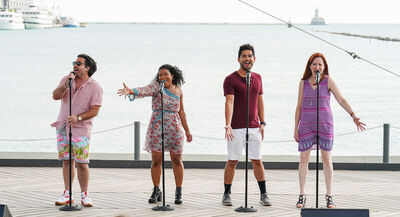
Navy Pier, Chicago’s iconic cultural destination,will host Chicago LIVE Again!—a free, two-day outdoor festival to celebrate Chicago’s arts and entertainment industry as it makes its triumphant return to live stages across the city since the onset of the COVID-19 pandemic. The first-of-its-kind event, held on Friday, September 24th, and Saturday, September 25th, will include live performances from Broadway in Chicago, Chicago Children’s Choir, Chicago Shakespeare Theater, Puerto Rican Arts Alliance, Chicago Symphony Orchestra, The Joffrey Ballet, Black Ensemble Theatre, Lyric Opera’s Ryan Opera Center and other esteemed cultural institutions and artists. 

Performances will run continuously on two main stages, the Lake Stage in Polk Bros Park and the East End Stage, from 5 p.m. to 9 p.m. on Friday and from noon to 9:30 p.m. on Saturday. The festival is standing room only, but guests are welcome to bring their own lawn chairs or blankets and grab food on the go from a variety of sit-down and/or carry-out restaurants at the Pier. To top off the momentous weekend, Navy Pier will also host a special fireworks display on September 25th at 9:45 p.m., courtesy of an anonymous donor, as a tribute to the return of theater in Chicago.

As part of the celebration, ABC7 Chicago will air a 30-minute television special, hosted by Val Warner and Ryan Chiaverini, featuring performance highlights from Chicago LIVE Again!. The special will also showcase stories on the participating artists and industry tradespeople to offer insights into how Chicago’s entertainment industry navigated the unprecedented challenges related to the ongoing pandemic.

“Navy Pier is incredibly proud to become the stage for the return of live performances to Chicago. There could be no better place than the People’s Pier to reunite audiences and artists as an industry that was hit so hard by the pandemic finally returns to work,” said Navy Pier President and CEO Marilynn Gardner. “Many nonprofit cultural organizations, Navy Pier among them, faced existential crises over the past 16 months. Though we have not completely vanquished the virus, it has not vanquished us. Our community is resilient, and our will is strong—as evidenced by the level of work and spirit of cooperation it takes to make an event of this scale happen. Never before have so many of Chicago’s greatest institutions shared the stage.”

Chicago LIVE Again! was made possible through a generous grant from the Pritzker Foundation. “Navy Pier is a vital leader in the arts and cultural landscape of Chicago and beyond,” said Penny Pritzker, trustee of the Pritzker Foundation. “We are proud to serve as a partner to the Pier, as it is a platform for so many unique and beloved cultural programs and institutions. This event will allow our arts and culture organizations to deliver a message of resiliency and inspiration together. This is not only a celebration of the city’s reopening, but a meaningful tribute to the immense diversity and vibrancy of our region. We know this event will have a deep impact in uniting and uplifting our community and we are proud to support it.”

Chicago LIVE Again! is the recipient of a $562,500 grant from the Illinois Office of Tourism, a part of the Department of Commerce and Economic Opportunity (DCEO). This funding was made possible through Governor Pritzker’s Tourism Attractions & Festivals Grant Program, which leverages federal American Rescue Plan Act (ARPA) funds to support new attractions and festivals that will lend to the return of tourism and foot traffic across Illinois communities. This program is one of several underway by the State of Illinois to put Illinois communities and key industries on a path to economic recovery from COVID-19. 

“The State of Illinois is proud to support the Chicago LIVE Again! festival at Navy Pier, leveraging one of Illinois’ iconic cultural attractions to host new exciting performances from our premier cultural institutions,” said DCEO Acting Director Sylvia Garcia. “Under Governor Pritzker’s leadership and in partnership with local leaders we are continuing to bring tourism back safely. We encourage communities across the state to apply for funds from our Tourism Attractions and Festivals Grant program.  This program is designed to help bring back community festivals and cultural experiences that generate economic activity and improve quality of life while investing in the hard-hit tourism industry.”

“Our arts and entertainment industry is a vital part of our thriving cultural scene, which has long attracted visitors from across the country and served as a major economic engine for Chicago and Illinois as a whole,” said Chicago Mayor Lori E. Lightfoot. “Chicago LIVE Again! at Navy Pier will thus serve as another reminder to the world that our city is safely open for work and play and brings thousands of jobs for our residents to take advantage of.”

Courtesy of Chernise Taylor | Foxhole Creative.

Chicago LIVE Again! is the manifestation of what can happen when we all come together. Cultural investment is part of the heartbeat of this city and despite all that we have been through in the last 16 months, our heartbeat is still very strong,” said State Rep. Kam Buckner (D-Chicago). “This collaboration between the pillars of Chicago’s cultural and arts community, organized labor, government, and others will highlight our resilience and the continuation of the vibrancy of our people as we work to find ways to bring us all together in the face of adversity.”

“Like so many Chicagoans, I’ve visited Navy Pier since childhood to watch the fireworks and watch extraordinary musical and theatrical productions time and time again,” said Illinois State Sen. Robert Peters (D-Chicago). “From the 13th District’s Oak Street Beach to the Indiana Border, arts organizations have struggled to survive the pandemic, yet continued to do amazing work. By providing the inspiration that only live performances can offer, Chicago LIVE Again! generates new hope, creates jobs and positively impacts the arts community in my district and beyond.”

“On behalf of thousands of Chicago area stagehands, carpenters, electricians, tradespeople and other union workers, who help create everything from the simplest acoustic concerts to the grandest theatrical spectacles, we are grateful to be honored by this two-day festival dedicated to our return to work after our venues were shuttered and dark for 16 months,” said Craig Carlson, IATSE Local 2 Business Manager and International Vice President. “It’s work we love, and the standard of excellence in our trade is when the audience enjoys a spectacular event and does not even know we are there, making the event happen. But today, we’re glad to be seen, and we thank Navy Pier and the many companies and artists who are bringing live performance back in such a big way this fall. We’re proud to stand with you.”

<span class="s1" <the="" full="" list="" of="" The full list of Chicago LIVE Again! performers is available on the Navy Pier website and will be updated as more performances are finalized leading up to the event. Guests will be required to show COVID vaccination card or proof of a negative test within the past 48 hours to access the designated performance areas. Alternatively, free rapid testing will be available on site for all guests age 2 and over. To help guests prepare for the fall arts season, vaccinations also will be available during the two-day event. Click here to view Navy Pier’s COVID-19 operations and updates.

Navy Pier is operating in accordance with the Chicago Department of Public Health (CDPH) and Centers for Disease Control and Prevention (CDC) on matters related to the ongoing COVID-19 pandemic. The City of Chicago requires that all individuals must wear a face mask indoors in public, regardless of vaccination status. Masks may be removed while dining. Click here to view Navy Pier’s COVID-19 operations and updates.

For more information, visit www.navypier.org. 


Source link

Categories
TV & Movies

Ahead of His Time: Melvin Van Peebles (1932-2021)


Melvin Van Peebles was a bridge between the French New Wave and Blaxploitation. His independent classic, the highest grossing self-produced film to that point, “Sweet Sweetback’s Baadasssss Song,” without hyperbole, altered the course of cinematic history, proving Black movies made for Black audiences could be profitable. He gave Earth, Wind & Fire their big break. Influenced Spike Lee. And watched his own son Mario Van Peebles become a well-respected director in his own right. He was fluent in French, a celebrated author, a gifted songwriter, an enigmatic actor, and a rule-breaking filmmaker— the consummate renaissance man. He died yesterday at the age of 89; leaving a tremendous legacy that seemed to touch every corner of American life. 

Van Peebles was one of those figures in cinematic history who serves as a demarcation: Movies were one way before him and totally different after him. He was raw and uncompromising, an icon. Some might describe him as radical, but Van Peebles never saw Blackness or Black art as radical. Liberation, empowerment, and artistic freedom were the deserved ethos of an artist who never wasted a single frame, a single word, or a single second. 

Born in 1932 in Chicago, Illinois, Van Peebles initially did not envision himself as a filmmaker. After earning his B.A. in literature—grounding that would later add contours to his authorial career—from Ohio Wesleyan University, he enlisted in the Air Force for three and a half years. Following his time in the service he moved to San Francisco and became a cable car gripman, writing about his job in his first book The Big Heart. Though a passenger recommended he become a filmmaker, Van Peebles explains in the documentary, “How to Eat Your Watermelon in White Company (And Enjoy It),” the director of the cable cars fired him for knowing how to read.

Undaunted, he wrote, directed, and produced his first short film, “Three Pickup Men for Herrick,” following a group of low-income Black men looking for work, in 1957, and “Sunlight,” concerning a Black man who must steal to afford to marry the woman he loves, shortly thereafter. In both brief works, experimental searches to discover his own cinematic language, Van Peebles’ vision moves with the verve of John Cassavetes and Oscar Micheaux, demonstrating, even in this nascent form, an original voice. When Hollywood rejected his films, he moved to France, and shot his third short, the French-language “Cinq cent balles,” about a young Parisian boy who discovers 500 francs in a gutter.

Van Peebles possessed a myriad of talents. But his greatest was the ability to create new doors when others were closed. When he learned that the French government funded the films of French writers, he learned French, became an investigative reporter for Le Nouvel Observateur, wrote four books and an anthology of short stories. He used the subsequent funding to adapt his book La Permission into a feature length directorial debut: “The Story of a Three-Day Pass.”

Watching the film now, it’s astounding the immediate grasp Van Peebles had for visual storytelling. The narrative concerns a recently promoted African-American U.S. Army G.I. (Harry Baird) stationed in France, who while on leave, falls for a white woman (Nicole Berger). In one breathtaking scene, the soldier enters a bar donning sunglasses with a trench coat draped over his shoulder. It’s his conception of what a cool, suave Black man should look like. A double dolly, what would become Spike Lee’s signature shot two decades later, carries the soldier across the room, and you can see the artistic spirit of Lee being born right there on the screen. It’s also a scene that challenges the monolithic image of Blackness. The soldier ultimately fails to pick up a date until he clumsily falls in front of the aforementioned white woman, reverting to his natural awkwardness, he leaves the stereotype for the real. 

”The Story of the Three-Day Pass” features jump cuts, freeze frames, splits screens, and fourth-wall breaks, and has a dancing scene reminiscent of Jean-Luc Godard’s “Bande à Part” and several visual odes to “Breathless.”  With revolutionary originality, Van Peebles used these techniques to explore racial identity and definitions of Blackness. 

He carried those same techniques with him throughout his career, especially his next film “The Watermelon Man.” When Van Peebles received the script, the logline initially called for a white actor to turn Black. But the provocative director flipped the scenario, asking to make a Kafkaesque story wherein a white man, Jeff Gerber (played by the hilarious Godfrey Cambridge) wakes up Black. Within the courageous concept, Van Peebles subverted television and film conventions. Unlike most TV dads, Gerber isn’t well-liked by his family, or anyone else for that matter. He’s a boorish, sexist, racist white man the audience is meant to despise too. His turn to Blackness reveals the falsities of white liberal allyship, the many faces Black folks must don to survive in a white world, and the systematic economic racism affecting African Americans. 

“The Watermelon Man” was produced by Columbia Pictures when it was rare for a Black filmmaker to have major studio backing. And Van Peebles wielded unheard of creative control, choosing to change the intended ending, Gerber waking up white again, to a freeze frame of Black men practicing martial arts. Thereby ensuring the film be a statement of Black empowerment. 

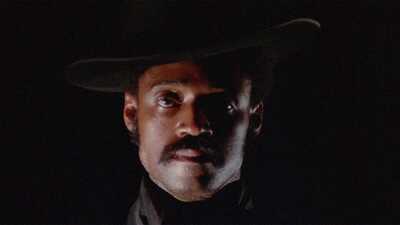
Van Peebles could’ve parlayed the success into a massive multi-picture deal. In today’s world he would’ve been offered a tentpole franchise. But he said “no” to Columbia’s three-film pact. Instead he decided to make a movie he knew could never be rendered truthfully within the studio system. In “Sweet Sweetback’s Baadasssss Song” Van Peeebles wrote, directed, produced, and starred as the titular character Sweetback, a sex worker forced on the run after murdering two white cops. “Sweetback” is a story of Black liberation and masculinity, and a commentary on police violence. He was the archetypal sexually powerful Black man, closely aligning with the director’s real-life reputation as a player. Van Peebles portrays him with a blanket of cool that would define generations of Black heroes to come. 

The film sparked a wave: the then-unknown Earth, Wind & Fire performed the soundtrack, Huey P Newton endorsed the movie, and it proved the profitability of Black-made stories. Van Peebles refused to submit the movie to the MPAA, believing the all-white decision makers should not have the right to enact their standards onto a Black film made for Black audiences. While not the first Blaxploitation film, that title belongs to “Cotton Comes to Harlem,” which was released nine months earlier, “Sweetback” did inject the calling cards of sex and violence and the visual language that would become synonymous with the genre. In this sense, Van Peebles is the tangible link between the French New Wave and Blaxploitation, and created the blueprint by which every Black movie would follow. Even with his widespread success, Van Peebles wasn’t offered a chance by a major studio to direct again. 

Instead he moved to theater, writing Tony-nominated musicals such as Ain’t Supposed to Die a Natural Death and Don’t Play Us Cheap. He released seven albums, influencing Gil Scott Heron and modern hip-hop. He became an options trader on the American Stock Exchange and a marathon runner. He continued to direct and write new films, collaborating with his son Mario Van Peebles, best known for helming “New Jack City.” 

The father and son became a dynamic duo, especially as Mario shifted toward edifying his father’s legacy. Next week, Criterion’s retrospective Van Peebles box set will be released. And without revealing too much, the compilation serves as an unintentional eulogy. There are no contemporary interviews from Van Peebles. Rather it’s Mario providing context to his father’s independent-minded vision. When I first learned of Van Peebles’ passing, I was watching Mario explaining the support his father provided to both him and the many other Black creatives who broke into the industry, words I’m sure Van Peebles heard himself, words that will strike a distinct emotional chord when heard in the future.

Van Peebles once told Mario about the four cycles in a person’s life: “Who’s Melvin?” “We Need Melvin” “We Need a Young Melvin” and “Who’s Melvin?” The irony being that Melvin Van Peebles never experienced the fourth stage. Everyone knew his impact on cinema. No one would or could forget him. He witnessed the generations who would follow and pay homage to him, and saw his movies return to prominence. That was the great gift of his life and career, the flowers rarely proffered to men who are ahead of their time. And in 2021, Melvin Van Peebles was still a man ahead of his time.  


Source link

Categories
TV & Movies

Reeling Film Festival 2021 Preview: Boulevard! A Hollywood Story, North by Current and Three More Highlights


“It was all very queer, but queerer things were yet to come.”—Joe Gillis (William Holden) in Billy Wilder’s “Sunset Blvd.”

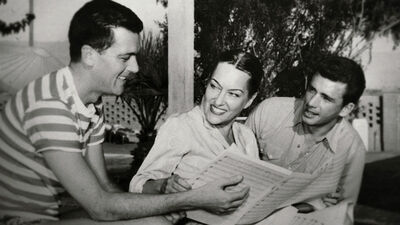
Windy City cinephiles are sure to rejoice over numerous selections set to screen during the 39th installment of Reeling: The Chicago LGBTQ+ International Film Festival. Thirty-three features and nine short film programs will both screen in-person and stream virtually, with only a few exceptions, at different times during the festival’s two-week run from Thursday, September 23rd, through Thursday, October 7th (you can find the full lineup here). I was able to screen five of Reeling’s chosen titles for this preview piece, and none were as purely enjoyable as Jeffrey Schwarz’s “Boulevard! A Hollywood Story,” a documentary comprised of so many plot twists and jaw-dropping instances of life imitating art that it practically warrants the Ryan Murphy treatment on a second season of “Feud.” With the perceptive eye of a detective, director/editor Schwarz uncovers a treasure trove of archives at the University of Texas that detail the long-forgotten original musical adaptation of Wilder’s 1950 classic, “Sunset Boulevard,” which preceded Andrew Lloyd Webber’s own version by several decades and was dreamed up by none other than the film’s star, Gloria Swanson. If you, like me, consider Wilder’s movie to be one of the greatest and most deliciously meta achievements in cinema history, you simply cannot afford to miss this picture, which chronicles how two closeted songwriters, Dickson Hughes and Richard Stapley, came to aid Swanson in making her dream project a near-reality. 

The fact they initially met the actress at her mansion on Mulholland Drive feels entirely fitting, since David Lynch famously took that street name as the title of his own 2001 masterpiece, a surrealistic spin on Wilder’s nightmare perched in the city of dreams (echoing Swanson’s own belief that the silver screen should be a “dream world”). The deeper that Hughes and Stapley get into their collaboration with Swanson, the more she appears to drift into her character of Norma Desmond, the silent film icon whose career—like Swanson’s—was cut short by the emergence of talkies. She insists on burying a chicken she accidentally crushed with her stiletto (a vignette Schwartz links via amusing illustrations with Desmond’s funeral for her pet monkey), while developing an infatuation with Stapley, which he felt was not unlike Desmond’s obsession with Joe Gillis. All that ended up reaching a wide audience was Swanson’s performance of the song “Wonderful People” during her 1957 appearance on “The Steve Allen Show.” Though it lacks the sophistication of the film’s subsequent stage adaptation, and Swanson lacks the pipes of the opera star she aspired to be, it is a poignant spiritual precursor to “As If We Never Said Goodbye,” the number that routinely brings down the house when belted out by Glenn Close in Webber’s musical. My sister was fortunate enough to catch the musical’s 2017 Broadway revival, directed by Lonny Price, whose own excellent documentary examining the parallels between art and life—Netflix’s “Best Worst Thing That Ever Could Have Happened”—would make a fitting double bill with “Boulevard!”

Boulevard! A Hollywood Story” screens at 2:30pm on Sunday, September 26th, at the Landmark Century Centre Cinema, 2828 N. Clark St., and is available to stream from Wednesday, September 29th, through Tuesday, October 5th.

As soon as young private Sergey (Tom Prior) reveals to his forbidden lover, Roman (Oleg Zagorodnii), that he loves music but has never seen a ballet in Peeter Rebane’s ravishing Cold War romance, “Firebird,” we are certain that at some point—likely in the final reel—Sergey will be watching the titular Stravinsky ballet Roman had introduced to him in a tearful close-up. If this heart-tugging payoff sounds awfully familiar, that’s because it appears to have been borrowed from Céline Sciamma’s vastly superior “Portrait of a Lady on Fire.” In fact, there are shades of multiple well-known pictures centering on suppressed sexuality throughout Rebane’s film, most notably “Call Me By Your Name” and “Brokeback Mountain,” yet what makes it distinctive is the heightened theatricality of its mise-en-scène. When Roman has an illicit meeting with Sergey, red light pierces through the slats of windows resembling a jail cell. There’s also a pronounced crack in the wall that materializes between the couple when their bond appears to have been irrevocably ruptured. Even Sergey’s first steamy orgasm administered by Roman is accompanied by phallic planes roaring overhead. The sheer number of ominous fists knocking on doors signaling imminent doom verges on self-parody, but the film is ultimately grounded in an emotional reality by its performances, particularly that of Prior, who co-wrote the script with Rebane. When he reads Hamlet’s immortal line, “To be or not to be,” while ruminating over its meaning, it stands as a testament to how great art can forever be redefined by one’s own life experiences.

Firebird” screens at 7pm on Thursday, September 23rd, at the Music Box Theatre, 3733 N. Southport Ave., and is available to stream from Monday, September 27th, through Sunday, October 3rd.

Like her equally beloved “Mary Tyler Moore” show co-star Ed Asner, Cloris Leachman kept on working until her very last days, never shying away from projects that were unflinching in both their subject matter and vital representation. The fact Phil Connell’s “Jump, Darling” features one of Leachman’s last screen roles is enough to make this film an essential watch, yet it is also worth a look for its unsentimental portrayal of the devotion between Russell (Thomas Duplessie) and his grandmother, Margaret (Leachman), both of whom refuse to be placed in a traditional box. Margaret wants to remain in her house rather than be sent to a nursing home, while Russell seeks work as a drag queen, much to the disapproval of his longtime partner. Though Leachman is visibly frail, she is more than up to the task of delivering raw emotion as well as the occasional biting one-liner. I savored the scene she shares with fellow screen veteran Jayne Eastwood in a supermarket, which Leachman punctuates with a well-timed expletive. Though the premise of Russell and Margaret making unlikely housemates suggests a comedy on the order of “Mother,” the film is a much more somber affair, most enlivened by the drag acts where Russell gets to express his inner exuberance, especially when he gives a lap dance to his new closeted lover, right in front of the man’s oblivious girlfriend. Margaret’s love of skating parallels Leachman’s passion for acting, leading to a beautiful final moment where we see the woman lying in bed on the verge of death—and with her skates on.

Jump, Darling” screens at 4:30pm on Sunday, September 26th, at the Landmark Century Centre Cinema, 2828 N. Clark St., and is available to stream from Wednesday, September 29th, through Tuesday, October 5th.

The endearing British indie “Sweetheart” announces the emergence of a major talent both in front of and behind the camera. For her debut feature, writer/director Marley Morrison has crafted a splendid showcase for her leading lady, Nell Barlow, who is a revelation in her first major screen role. She plays a brooding 17-year-old who insists on being called “A.J.”, an abbreviated version of the cutesy name bestowed upon her by her mother Tina (Jo Hartley), and is revolted by her family’s preferred destination for summer vacation: the beachside trailer park she once loved in her youth. Tasked with looking after her little sister, who is essentially the “Little Miss Sunshine”-era Abigail Breslin to Barlow’s Paul Dano, A.J. shields herself with oversized sunglasses and caustic yet legitimate pessimism…that is, until a gorgeous lifeguard, Isla (a sublime Ella-Rae Smith), catches her gaze. A.J. is a rich symphony of a role—blossoming from cold and detached to lovelorn, excited, heartbroken, enraged, euphoric and finally at peace in her newfound wisdom—and Barlow hits every note impeccably. The first kiss she shares with Smith is disarmingly authentic in its awkward thrusts and misinterpreted signals, causing A.J. to flee in embarrassment, as are the bruising quarrels between mother and daughter, both of whom learn to embrace the freedom in escaping from their routine sense of self while away from home. When Barlow and Smith have their last embrace, you can palpably sense through the actresses’ eyes and the delicate nuance of their body language how their characters will be leaving this summer forever changed. 

Sweetheart” screens at 7pm on Saturday, September 25th, at the Landmark Century Centre Cinema, 2828 N. Clark St., and is available to stream from Tuesday, September 28th, through Monday, October 4th. 

Early on in “North by Current,” this year’s Documentary Centerpiece at Reeling, filmmaker Angelo Madsen Minax gathers his family at a restaurant, one of their old haunts, where they sit in uneasy silence as J. Frank Wilson and the Cavaliers’ familiar cover of “Last Kiss” plays in the background. The moment is at once a humorous deconstruction of the documentary process—showing just how difficult it is for subjects to appear unguarded on camera—as well as a reflection of their inner grief, chillingly articulated by the song’s lyrics and triggered by the sudden passing of Minax’s niece. What seems to be, at the outset, a true crime thriller investigating whether abusive or negligent parenting resulted in the child’s death gradually unfolds into a much deeper meditation on the unspoken wounds that fester in a family to the point where they could prove fatal if kept indefinitely in the darkness. Some of the words shared between family members are scaldingly frank, such as when Minax’s mother likens his coming out as a trans man with the death of their grandchild, since in both cases, she and her husband found themselves grieving the loss of a girl. Minax’s use of narration is a masterstroke in how it allows him to have an inner dialogue with his younger self, voiced by Sigrid Harmon, whose words poetically set the tone for a film in which “time has no meaning.”

Even when streamed at home, Minax’s film is an utterly mesmerizing sensory experience, fusing foreboding photography with evocative home movie footage, original atonal flourishes with a sterling soundtrack and fragmented montages with shots that linger until they penetrate into your soul. The director repeatedly draws attention to the artifice of the film itself, such as with a staged image of his sister who is meant to look like she is holding her deceased daughter, and whose own mind is prone to cloaking wounds with illusions fed by denial. There is an amazing spontaneous monologue delivered by one of his young nieces, who observes with bracing clarity that her parents dislike one another, illustrating how very little escapes a child’s gaze. Minax makes no attempt to come across as faultless himself—his sister chides him for being abusive to her during their childhood—and he confesses that he has an empathy problem, though his film suggests otherwise. To him, sex and death are similar in how they are cosmic links to other worlds, and the same could be said of cinema. The images we see projected on a screen are moments from the past, gleaming like the light that emanates from stars long gone, yet the miracle of motion pictures brings them newfound life, providing us with a portal into the humanity of others. Few films in 2021 have affirmed this truth as extraordinarily as “North by Current.” It is one of the year’s best.

North by Current” screens at 5pm on Saturday, September 25th, at the Landmark Century Centre Cinema, 2828 N. Clark St. (where Minax will be joining me for an audience Q&A), and is available to stream from Tuesday, September 28th, through Monday, October 4th.

To purchase tickets and for the full festival schedule, visit the official site of the Reeling Film Festival.


Source link