Categories
TV & Movies

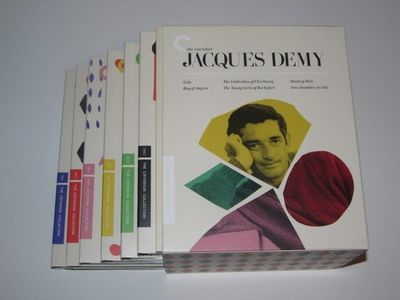
Criterion’s “The Essential Jacques Demy”

Thumb_demy6

For many years, when people would think about the French New Wave film movement that revolutionized the world of cinema in the late 1950s, their thoughts would drift to the most famous names—Godard, Truffaut, Rivette, Chabrol, Resnais and others. One name that rarely came up in the conversation, however, was that of Jacques Demy. Even though he was making films during that time and achieved some degree of international success, many observers considered his contributions to be either too tangential or too dependent on Hollywood traditions and his own self-created cinematic universe to fully embrace the formal radicalism of the movement. In fact, when he was discussed as part of the New Wave, it was often because of his marriage to Agnes Varda, a filmmaker whose work was more firmly entrenched as part of the approach, and that semi-snubbing continued until he passed away in 1990 at the age of 59.

In the years since his passing, however, there has been a gradual reappraisal of Demy’s cinematic legacy, spurred on in no small part by the efforts of Varda, who has helped to keep the flame alive by supervising restorations and reissues of his films as well as directing both “Jacquot de Nantes,” a 1991 biopic focused on his early years, and the 1995 documentary “The World of Jacques Demy.” Now The Criterion Collection has gotten into the act with “The Essential Jacques Demy,” a mammoth box set that includes restored versions of six of his best-known features—”Lola” (1961), “Bay of Angels” (1963), “The Umbrellas of Cherbourg” (1964), “The Young Girls of Rochefort,” “Donkey Skin” (1970) and “Une Chambre En Ville” (1982)—a slew of extras spanning the length of his career, including shorts, documentaries and archival interviews with Demy and many of his key collaborators, and a booklet featuring essays from such renowned critics as Terrence Rafferty and Jonathan Rosenbaum. The end result is one of the major home video releases of the year and a project that should finally restore Demy’s place as one of the leading lights of the New Wave.

One of the reasons why his films were often dismissed back in the day, despite (or perhaps because of) their commercial success, was because his work seemed to some observers to be insular and out of step with that of his colleagues. While they were out challenging the ways in which films could be made and the stories they could tell, Demy was content to create a largely self-contained universe in which everything was just a little more heightened than in real life, and where the stories referenced such equally stylized genres as musicals and fairy tales. For those who were on his unique wavelength, the results were gorgeous and deeply felt fantasias of music, color and emotion. For those who didn’t respond to his particular brand of filmmaking, the results could come across as the irredeemably twee ramblings of a director either unwilling or unable to deal with the real world around him. In other words, he was sort of the Wes Anderson of his day.

“Lola”

“Lola” was Demy’s first feature and is probably the film that most closely fits in with what one thinks of when one thinks about the New Wave. Set in Demy’s hometown of Nantes, the film stars Anouk Aimee as Lola, a cabaret singer who yearns for the return of Michel, her long-lost love and the father of her seven-year-old child, though she is not above entertaining Frankie (Alan Scott), a sailor from Chicago on leave who reminds her of Michel. One day, she happens to run into another old flame, the still-smitten Roland (Marc Michel), who has returned to town and who gets involved with a shady diamond enterprise in order to earn money to take Lola away from all of this. Hovering on the periphery is Cecile (Annie Duperoux), a 14-year-old girl who winds up befriending both Roland—who is struck by her similarity to the young Lola (whose real name, we learn, is Cecile)—and Frankie, with whom she spends a day at a local amusement park before he departs, and a white-clad stranger (Jacques Harden) who may or may not be Michel.

Watching “Lola” today, it is hard to understand why it never became a New Wave classic on the level of “Jules & Jim” and “Breathless.” It shares many common traits with those films—nice, naturalistic performances from the cast, lively cinematography on the streets of Nantes that is evocative enough to virtually make the city into another character (a possible result of Demy having gotten his start working in documentaries) and numerous allusions to other films woven into the narrative—and handles them with the kind of skill that belied the fact that this was his debut feature. That said, there are key differences that set it apart from the others. For one thing, while a film like “Breathless” took a good chunk of its power from the way that it felt as if everything was unfolding with the happenstance of real life, the intricate interplay between the characters here is as highly choreographed as a production number in a big musical.

More significantly, while Demy’s film has as much romance as those of his contemporaries, his romance is much more pessimistic—in the end, most of the characters end up alone and even the one who seems to get exactly what they wanted has their happiness undercut in its final moments. Some may find the film to be a downer in the end because of it but I find that by adding a certain darkness to the material, Demy transforms what could have been frothy nonsense into something more substantial and ultimately more rewarding—a move that he would continue to make throughout his career.

“Bay of Angels”

That blend of blissfulness and pessimism continued in Demy’s next film, “Bay of Angels,” in which we follow a character as he moves from his mundane reality into a more fantastic world that inspires him to remark at one point “I didn’t think such a lifestyle existed anymore…Except in the movies or certain American novels.” This is Jean (Claude Mann), a straitlaced Parisian bank clerk, who, as the story opens, is dragged halfheartedly by a friend to a Belgian casino for an afternoon of gambling. The experience confuses and unsettles him at first, but after winning a bunch of money at roulette, he decides to head to the Riviera to try his luck at the casinos there, albeit in the most careful and cautious manner possible. There he meets Jackie (Jeanne Moreau), an inveterate gambler whom he first sees as she is being barred from a casino for life. The two get together and tour the other gaming spots without a care in the world and barely noticing whether they are winning or losing. As time passes, however, the initial luster fades away and Jean realizes that Jacki’s only true love in life is gambling—it brought about the end of her first marriage when she picked it over her husband—and he has to decide whether to return to his former cautious life or follow her into an existence where virtually everything is dependent on the roll of a roulette ball.

The notion of a couple falling in love amidst the glamorous casinos of the Riviera sounds like the ultimate in romantic fantasy but, as he did in “Lola,” Demy doesn’t hesitate to subvert audience expectations at virtually every turn. There is very little in the way of plot (no plans to rob the casino or a big tournament), not much in the way of suspense (the gambling is depicted as such a blur of noise and movement that it is impossible to fully grasp what is happening) and no characters of note outside of Jean and Jacki. And yet, it is this lack of import throughout—the arbitrary nature of their lives and their relationship—that ultimately drives the film. As Terrence Rafferty points out in his essay, without it, the powerful final scene simply wouldn’t work. The other key to the success of “Bay of Angels” is the impressive central performance by Jeanne Moreau who, with her Jackie-O wardrobe and Marilyn Monroe wig covering, but not obscuring, her decidedly down-to-earth features, she embodies the tug-of-war between fantasy and reality to such a degree that she is arguably the key character of Demy’s entire filmography.

“The Umbrellas of Cherbourg”

Demy’s third feature, 1964’s “The Umbrellas of Cherbourg,” would be his big international breakthrough—it would win the top prize at that year’s Cannes Film Festival, become a hit in America and become one of the first big hits for leading lady Catherine Deneuve—and continues to be regularly reissued to the delight of old fans and new converts to the cause. The film tells the story of the romance that develops between Genevieve (Deneuve), the beautiful daughter of Madame Emery (Anne Vernon), the owner of the local umbrella shop, and Guy (Nino Castelnuovo), a poor-but-handsome garage mechanic. Guy and Genevieve are in the full throes of first love—at one point, we literally see them floating down the street together in rapturous bliss—but Genevieve’s practical-minded mother, worried about her daughter’s future with someone with so few prospects (and not without reason), tries to point her in the direction of a visiting jeweler named Roland (Marc Michel and, yes, this is the same character that previously appeared in “Lola” a couple of years earlier).

Everything changes when Guy is called up to fight in the war in Algeria and he and Genevieve spend one final night together doing what most people in such a situation generally do. Perhaps inevitably, Guy’s letters to his beloved become less and less frequent as, perhaps even more inevitably (though unbeknownst to him), Genevieve becomes more and more pregnant and in need of someone to provide for her. At this point, Roland comes back into the fold and he winds up marrying Genevieve. Time passes and Guy, physically and emotionally scarred by his service, returns to a town that once seemed so bright and full of promise but which now seems duller without the one-time love of his life but even he is allowed a second chance at happiness. It all leads to one of the great tear-jerking finales of all time in which a few years have passed and the paths of the two young lovers unexpectedly cross at an Esso station at Christmastime. Oh wait—did I mention that the film is a musical in which every line of dialogue is sung to an ever-swelling score by Michel Legrand?

For those who have never encountered the film before, the above description must have made the film sound like the most ridiculous load of treacle even before learning that it was a musical—a French musical, no less. And yet, to describe “The Umbrellas of Cherbourg” to someone who has never seen it is a lot like trying to describe a Monty Python routine to someone who is unfamiliar with the group—you can recount what happens but not so much how it happens, and that makes all the difference. Shooting in color for the first time and taking his first full-on stab at the musical genre that he had hinted at with his previous features, the film appears at first to be a case of Demy fully embracing the love of screen artifice and boldly stepping away from the more realistic earlier efforts. In that respect, he has indeed made the kind of film that audiences in the right frame of mind might literally swoon to—the colors (at least in the first two-thirds or so) are heightened to an eye-popping level and Legrand’s score is as romantic and rapturous as can be. At first blush, this isn’t just a romantic movie musical—this is a romantic movie musical’s most perfectly idealized dream of itself.

The film is glorious—all the more so because this relatively low-key production hit theaters at the point when the movie musical began turning exclusively to lumbering adaptations of Broadway hits that were generally too long, too expensive and too weighty for their own good—but the cynics who continue to dismiss it as too sweet and too twee for its own good may be surprised to discover just much it subverts the conventions of the movie musical, normally the most heedless of cinematic genres, especially back in those days. Yes, the early scenes are as stylized as can be—everything is bright and colorful as can be and the young lovers are as delightful as can be (with the then-twenty-year-old Deneuve looking so impossibly gorgeous that you practically have to smack yourself in the head out of sheer disbelief that such a person could have possibly existed)—but as the fortunes and circumstances of Guy and Genevieve begin to shift and change, everything from the mood to the music to the color scheme gets darker and more muted as the excitement of their romance inevitably fades in the face of real life. And yet, this is no mere act of cynicism on Demy’s part—the darkness and the light are blended together so effortlessly that it is ultimately impossible to separate the two.

“The Young Girls of Rochefort”

Thanks to the international success of “The Umbrellas of Cherbourg,” Demy was able to go bigger, brighter and bolder than ever before with his follow-up project, the eye-popping, jaw-dropping, heart-swooning 1967 masterpiece that is “The Young Girls of Rochefort.” A semi-sequel, at least thematically, to “Cherbourg,” this film found Demy working on a larger scale than he had ever attempted before with such elements as another musical score from Michel Legrand, the streets of the gorgeous seashore town of Rochefort, a pastel-heavy color scheme, an expanded running time (at 126 minutes, it runs almost a half-hour longer than virtually all of his other films) and a cast including some of the most famous faces in French cinema at the time and an American virtually synonymous with the Hollywood-style musicals he was trying to emulate here. Some directors used to working on smaller-scale projects might have gotten swamped by all of these ingredients but Demy handles them beautifully and the result is not just the best film of his career but one of the true landmarks of French cinema.

Set over the course of a single weekend, the film is another musical confection centered on the chance encounters and missed connections that occur (or don’t) between the featured characters. At the center of it all are twin sisters Delphine (Catherine Deneuve) and Solange (Francoise Dorleac, Denueve’s real-life sister, though not her twin, who would tragically perish in an auto accident shortly after the film’s premiere), two young women with artistic ambitions—Delphine teaches ballet and Solange wants to be a composer—who yearn to leave their small town for the glamor and excitement of Paris. Their mother, Yvonne (Danielle Darrieux), runs the local cafe where many of the locals congregate as well as Etienne (George Chakiris) and Bill (Grover Dale,) two carnies working with the fair setting up shop in the town square, and Maxence (Jacques Perrin), a sailor and would-be artist whose painting of his ideal woman now hangs in the gallery belonging to Guillaume (Jacques Riberolles)—ironic since a.) the woman in the painting is a dead ringer for Delphine and b.) Guillaume just happens to be Delphine’s on/off boyfriend.

Yvonne is also the mother to a young son but backed out of marrying his father, Simon Dame (Michel Piccoli), because she was horrified at the idea of being known as Madame Dame. What she doesn’t realize is that not only has Simon returned to town after a long absence to open a music store but has befriended Solange (whom he has never met) and promises to put her in contact with Andy (Gene Kelly) an American composer friend who is visiting for a few days. As the film progresses, the characters keep walking in and out of each other’s lives, often without realizing it—Andy and Solange bump into each other on the street but do not introduce themselves (though Andy retrieves a page of music that she has dropped and is smitten by her work) while Delphine just misses meeting Maxence by mere seconds. Eventually, the sisters’ dream of leaving appears to come true when two of the dancers from the fair skip town with a couple of sailors and Etienne and Bill lure them into replacing them for the big show on Sunday with the promise of free passage to Paris. Oh yeah, lurking on the outskirts of all of this is an ax murderer whose crimes inspire no fewer than two musical moments, one of them staged at the murder scene, no less (and wait until you discover the identity of the victim).

“The Young Girls of Rochefort” finds Demy playing with the juxtaposition of dreamy fantasy and down-to-earth reality but comes up with a number of dazzlingly inventive variations on that theme. Instead of bursting out into full-scale production numbers for the musical moments, for example, he stages them in a more complex manner. Although the film is clearly besotted with the idea of American musicals—besides the presence of Kelly and Chakiris, there are visual homages and allusions to such classics as “An American in Paris,” “On the Town” and “Gentlemen Prefer Blondes”—it is, as a whole, still quintessentially French in terms of its storytelling and characters. Take the ending. While Demy’s films have often had endings that were bittersweet or pessimistic, most Hollywood musicals to this point insisted upon happy endings as a convention of the genre. Demy somehow manages to find a balance between the two extremes that allows him to satisfy both impulses in a graceful and oddly satisfying manner.

Even if you have never seen a Jacques Demy film before, “The Young Girls of Rochefort” is still a dazzling achievement. Ghislain Cloquet’s cinematography is absolutely stunning in the way that he perfectly captures the pastel-hued paradise in all of its glory—if nothing else, this is certainly one of the most beautiful-looking movies of its era. Although the story is essentially more than two hours of people just missing each other, it never grows tedious and some of the close calls (especially the one where Maxence and Delphine miss each other by maybe a second or two) are so deftly handled that viewers will be both thrilled by the cinematic craft and frustrated that the two characters have once again failed to get together. Legrand’s score is even more infectious than his music for “The Umbrellas of Cherbourg” (and would go on to win an Oscar nomination for Original Score). The performances are similarly delightful—Deneuve is gorgeous and charming, Kelly is full of energy and high spirits in what would prove to be his last great musical (To anyone planning on writing in to chastise me for overlooking “Xanadu”…don’t) and Dorleac is so much fun to watch that it is impossible to believe that she would be dead before too long. For those interested in more details about the film and its history, the extras on this disc include “The Young Girls Turn 25,” a 1993 documentary on the film and its legacy by Agnes Varda that is pretty much required viewing.

“Donkey Skin”

After traveling to America to make his first and only Hollywood film, 1969’s “Model Shop,” (not included here), Demy returned to France to make what may well be the weirdest film of his entire career, “Donkey Skin.” While his previous films could be loosely described as live-action musical fairy tales, that is exactly what this unabashed fairy tale is. Inspired by the children’s tale by Charles Perrault, the film opens as the King (Jean Marais) makes a vow to his dying queen that if he remarries, it will be to someone just as beautiful and pure as she. Alas, the only woman who seems to fit all of his criteria is his own daughter, the Princess (Catherine Deneuve), and while he sees no problems with that, she has a few qualms. On the advice of the Lilac Fairy (Delphine Seyrig), her fairy godmother, she agrees to marry her father only if he performs a series of impossible tasks, including providing her with the skin of the magical jewel-excreting donkey that is the source of the kingdom’s fortune. When he performs all the tasks, she disguises herself in the donkey skin and flees for a nearby kingdom where, still disguised in the skin, she gets a job as a scullery maid for the Prince (Jacques Perrin), who finds himself falling for this mysterious girl without realizing who she is.

With its intriguing use of special effects, the use of live actors to portray seemingly living statues and the presence of the great Jean Marais in the cast, “Donkey Skin” clearly owes an enormous debt to Jean Cocteau’s classic 1946 version of “Beauty and the Beast.” However, while Cocteau generally embraced the traditions of the fairy tale, Demy subverts them here throughout in weird, wild and potentially disturbing ways. Although the incest theme is handled in a more metaphorical manner than anything else (though he would deal with the subject in a more direct manner in his final feature, 1988’s “Three Seats for the 26th”), he does take the sometimes disturbing underpinnings of the classic fairy tales (at least the non-bowdlerized versions) and deals with them directly. It is interesting to note, for example, that the Princess opposes her father’s proposal on the advice of her fairy godmother, who wants the king for himself, and when she gets to marry the handsome prince at the end, it is fairly well apparent that things may not end happily ever after, especially when she learns that her father and her fairy godmother are also to be wed. (“I’m marrying your father, dear. Try to look pleased).

It is all interesting in theory, I suppose, but watching Demy telling a story in an overtly artificial atmosphere and subverting the conventions of fairy tales just seems kind of silly today. The film looks beautiful and Demy creates a convincing fantasy atmosphere but with nothing to counterbalance it other than the exceptionally strange premise, it just feels odd and not always in a good way.

“Une Chambre en Ville”

The last film in the set, “Une Chambre en Ville,” is the only one that I had not previously seen prior to the release of this set—it was a box-office flop when it was released in 1982 and was difficult to see thereafter. The film is another sung-through musical, though one of a decidedly darker tone than his other efforts in the form. Set in his hometown of Nantes in the Fifties during the time of a violent workers’ strike, the film follows Edith (Dominique Sanda), a woman unhappily married to a violent and jealous shop owner (Michel Piccoli) who yearns to run off with her steelworker lover Francois (Richard Berry), even though he is still involved with Violette (Fabienne Guyon), who, it turns out, is pregnant. To add to the confusion, Francois is boarding at Edith’s house with her mother (Danielle Darrieux), who is convinced that her roomer is actually a communist. Once again, the characters bounce in and out of each other’s lives in surprising ways but this time around, events tend to take a grimmer turn than has been the case in the past.

Having only seen the film for the first time a few days ago, my feelings towards it are still unsettled. It is such a crazy film that it hardly seems to be the work of a veteran director at the twilight of his career—with the extremes that it goes to in regards to nudity (Sanda spends much of the film wearing a full-length fur coat and nothing else), violence (including a couple of violent clashes between the workers and the police and a confrontation between Edith and her husband that is the most shockingly brutal moment of his entire filmography) and narrative approach (even if it wasn’t a musical, it would almost certainly still be described as “operatic”), it feels more like a work from the likes of Leos Carax, Jean-Jacques Beineix or one of the other young French filmmakers just starting out at the time that it was released. Combine that with a story that no sane person would dare to musicalize and you have a film that is far more difficult to get into than most of Demy’s previous works.

And yet, there are things about it that are undeniably intriguing. Sanda makes for an interesting presence (though one wonders what it might have been like if Deneuve, who was Demy’s initial choice, had played the part), the music (composed by Michel Colombier, one of the few time in which Demy did not work with Legrand) is appropriately dark and moody and I was impressed by the way that he presented the bleak material in a largely non-judgmental manner (with even the nasty husband ultimately being presented in a empathetic light) without sugar-coating things. It may not be Demy’s finest work but, as is the case with virtually everything else in this magnificent collection, I am certain that I will be going back to revisit it again and again.

Source: http://www.rogerebert.com/demanders/criterions-the-essential-jacques-demy


Categories
TV & Movies

Thumbnails 8/4/14

Thumb_screen_shot_2014-08-04_at_10.00.11_am

1.

“Podcast: A Smackdown Companion with Dana Delaney”: A very entertaining follow-up to the Supporting Actress Smackdown of 1973 podcast episode on The Film Experience.

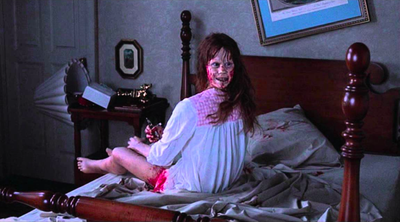
“On this special episode of the podcast — meant to enhance and extend the current Supporting Actress Smackdown conversation to include the films themselves — Nathaniel welcomes two time Emmy winner Dana Delaney (‘China Beach,’ ‘Desperate Housewives,’ ‘Body of Proof’), as well as EW editor at large and “Five Came Back” author Mark Harris, ‘You Must Remember This’ podcast goddess Karina Longworth, Bill Chambers from Film Freak Central, and Kyle Turner from The Movie Scene. You’ll want to listen to this one. Trust me on this: your week will not be complete until you hear Dana’s Sylvia Sidney impression and Mark’s childhood ‘Exorcist’ story.”

2.

“The Essential Shorts”: Fandor‘s Mike Plante compiles a must-read list of 25 great short films “from over a century of cinema,” including 1974’s “The Great Ecstasy of Woodcarver Steiner.”

“Known for his ecstatic truth in both narrative and non-fiction features, Werner Herzog has never stopped making shorts. One of his earliest is about a ski jumper—the ones that literally fly—and the skier’s off-the-slopes pursuit of woodcarving. Every moment that you think you know what this film is it morphs effortlessly, from thrilling sports doc to artist profile to a work of art itself. The shots of Steiner in the air are some of the most poetic things you will ever see, at least if you are a human being who has dreamt of flying. It’s terrifying in that he must land, but the slowest slo-mo combined with a soundtrack by Popol Vuh (a collaborator more important to Herzog than Klaus Kinski) makes the film so beautiful. You also have Herzog giving a super intense commentary to Steiner’s talent and the danger involved while Herzog is wearing a Dallas Cowboys jacket. Perfection. In what seems improbable but just a matter of time, Herzog did not want to be onscreen. The West German TV producers of the doc forced him to speak on camera, thus giving us one of the most enjoyable film personalities of our time.”

3.

“Martin Scorsese Breaks Down the Difference Between Story & Plot”: Justin Morrow of No Film School explores the iconic director’s interpretation of the oft-misused terms.

“Scorsese’s definition is very much cinematic, but this is hardly surprising, given that he is a director and also one of the preeminent visual stylists in modern American cinema. Therefore, he is more impressed by the mood, style, camera moves, and general ‘feelings of threat,’ as he puts it, in Hitchcock’s film. And, though these might be difficult elements to capture on the page, it’s not an impossible task. Hitchcock, it should be noted, was a man who remarked to Francois Truffaut, in their famous series of conversations, that: ‘I don’t care about the subject matter; I don’t care about the acting; but I do care about the pieces of film and the photography and the soundtrack and all of the technical ingredients that made the audience scream. I feel it’s tremendously satisfying for us to be able to use the cinematic art to achieve something of a mass emotion.’”

4.

“‘Guardians of the Galaxy’ Needs More Faith in Itself”: Sam Fragoso of RogerEbert.com pens a negative, eloquent review of Marvel’s latest smash hit for Bullet Media.

“Although the film inhabits the same universe seen in other Marvel properties, Gunn navigates the landscape differently. Dripping with irony and sarcasm, there’s not a scene that goes by that isn’t self-aware, constantly cluing the audience in that this is all supposed to be played for laughs. Except when it’s not. Much like ‘The Avengers’ before it, ‘Guardians of the Galaxy’ is at its best when its varied batch of characters run around cracking wise and goofing off. That sort of wink-wink approach is refreshing in contrast to its stuffy, overly serious contemporaries.But then Gunn falls down the same rabbit hole, reducing his movie to yet another superhero joint replete with laughably solemn monologues that always seem to begin with ‘behold!’ Once the tiring exposition comes — all of which seems to exist to service the comic book fans that come into these movies with a checklist of who and what needs to be included — it doesn’t stop. Unfortunately, this onslaught of explanation about world domination and interplanetary politics arrives at the cost of comedy and wit.”

5.

“Warren, Jerry & Carlos Danger”: James Warren of New York Daily News interviews Nell Minow of RogerEbert.com about the “pre-TMZ” world of Warren G. Harding.

“Shock turns to entertainment as the likes of Anthony Weiner, Mark Sanford and Eliot Spitzer disgrace the scene. Sanford is back in Congress but, of course, Weiner and Spitzer lost elections last year. It’s why not all may be lost, says Nell Minow, a corporate governance expert and and author of the superb ‘Movie Mom’ website, which gives parents advice on the suitability of movies for their kids. ‘While it is fun to think that communications like this might spice up the reputation of a bland candidate, I’m pretty certain that what people want in their politicians is a sense of trustworthiness and self-control that would be undermined by making public embarrassingly intimate communications. That’s why we have the Kardashians,’ Minow said.”

Image of the Day

Examiner‘s W. Mark Dendy reports the astonishing news that a “‘second’ Mona Lisa” painting “appears to be authentic.”

Video of the Day

Stephen Colbert steps out of character to share his advice for young women in the latest installment of Rookie Magazine‘s “Ask a Grown Man” series.

Source: http://www.rogerebert.com/thumbnails/thumbnails-8414


Categories
TV & Movies

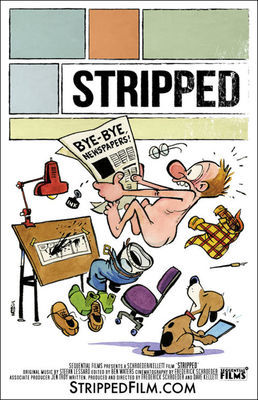
Comic-Con 2014: “Stripped: The Comics Documentary”

Thumb_stripped-movie-poster-dvd-bill-watterson

The San Diego Comic-Con Film Festival winner for Best Documentary is a
film that harks back to the original purpose of SDCC—a love for
cartoonists and comics. “Stripped: The Comics Documentary” is about this history of cartoonists
and their comic strips, and how they face an uncertain future. Not to be
confused with the R-rated 2013 horror flick “Stripped,” this
documentary comes in several versions, including a clean all-ages
version, and is available on DVD and VOD on several different platforms.

Other versions available include the “Stripped” Super Awesome Deluxe
Edition which comes with 26 hours of additional content—mostly full
interviews with the participating cartoonists—and can be ordered on the
official website.

Directed and written by Dave Kellett and Frederick Schroeder (director
for “Static” and cinematographer for the TV series “Prom Queen” and
“Heroes: Nowhere Man” and “Chow Ciao! With Fabio Viviani”), “Stripped”
features the first ever authorized recording of Bill Watterson’s voice
(you won’t see his face though) and brings sharply into focus the
problems facing comic artists today.

The documentary begins with a nostalgic, loving look at the Sunday
papers. Remember when Sunday was all about the funny papers? The funnies
were something you could appreciate before you could even read, and, for
some, appreciating the comic strips meant quality time with your father or
mother during a relaxed Sunday brunch.

The voices of several comic strip artists create a mural of memories as
they call out their funny paper favorites. So many of the cartoonists
interviewed recall their fondness of “Peanuts” and others mention
“Garfield.” Younger comic artists recall Watterson’s “Calvin
& Hobbes.”

Yet none of those three strips were from the Golden Age of Comics.
Kellett and Schroeder take us back, using black and white archival film
footage as well as commentary by R.C. Harvey, a comics historian. There
was a time when the writer of “Steve Canyon” (1947-1988), Milton Caniff,
was famous. People knew Rube Goldberg, who drew several cartoon series in
syndication from 1922 to 1934.

We see grainy black and white footage of Chester Gould, the creator of
“Dick Tracy” on the American game show “What’s My Line?” More recently,
Mell Lazarus (“Miss Peach” and “Momma”) appeared as himself on Angela
Lansbury’s “Murder, She Wrote” which ran from 1984-1996.

These artists and others like Al Capp (“Li’l Abner,” 1934-1977) were
celebrities. It didn’t seem so far fetched for the 1965 Jack Lemmon comedy
“How to Murder Your Wife” to have a successful and rich playboy
cartoonist as the central character.

Charles “Sparky” Schulz, the creator of “Peanuts” (1950-2000), is seen
in archival footage and his widow, Jean Schulz, and Jessica Ruskin of
the Santa Rosa, CA-based Schulz Museum. Board member Patrick McDonnell (“Mutts”) is also one
of the prominent voices of this documentary, particularly in respect to
syndicates.


Coming from different social backgrounds, the cartoonists often were
driven to draw by a variety of reasons. Jim Davis (“Garfield) was often
confined because of childhood asthma. Stephan Patis (“Pearls Before
Swine”) had bronchitis as a young boy. They drew to ease the boredom and
loneliness of their days in confinement. Others just had the compulsion
to draw, using whatever they could—even old Christmas cards when
resources were scarce.

Cartoonists were still doing well in the 1970s to the 1990s but cartoon
strips were also changing. Cathy Guisewite began drawing “Cathy”
(1976-2010), bringing to light a new concerns—the everyday life and
angst of the single career woman. Her contract went out to her the same
day her submission came in. Guisewite recalls how embarrassing it was to
show her vulnerable side. Her alter ego wasn’t glamorous and didn’t
have exotic adventures like “Brenda Starr” (1940-2011).

Darrin Bell (“Candorville”), who is black and Jewish, had a less
positive experience, recalling that he was often turned down and advised
he’d do better if his characters were white, animals or children. Bell
is among the new multicultural face of comic strips, and the
documentary includes interviews with Lalo Alcaraz (“La Cucaracha”) and
Kazu Kibuishi (“Amulet” and “Flight”).

Bill Watterson’s “Calvin & Hobbes”(1985-1995) used both children
and an imaginary animal. Watterson broke the more standardized pattern
of regular modular blocks, drawing in a manner more like graphic
novels, but that style has a lot in common with the illustrations for
cartoon strips from the Golden Age.

Once your comic strip was accepted at a newspaper, you wanted to get
syndicated. With a daily strip, particularly one that is syndicated,
you need to produce material every day, reliably. Watterson recalls
that he had “virtually no life beyond the drawing board.” Other
cartoonists talk about how they get inspired to deal with the dreaded
white piece of paper.

Syndication is explained in a 1950s hokey educational segment and we
also hear from the syndicates themselves such as John Glynn and Lee
Salem (both of Universal Press Syndicate) and Brendan Burford (King
Features Syndicate), yet we’re no longer in the heyday of newspapers.
Even then, syndication had its problems too—there seemed to be no room
for new talent. In today’s Internet-using world, there are other
problems. Syndication depends upon selling your strip to many
newspapers; what happens when newspapers begin to fail and fold? About
166 newspapers have closed since 2008. Major U.S. cities used to support
more than one major English-language broadsheet and often a morning and
an evening broadsheet.

If the syndication model is the jewel, then the web publication of
cartoon strips requires either a money manager (e.g. “Penny Arcade”) or
massive efforts in merchandising. One web cartoonist comments that 80
percent of the income was generated through merchandising. The Internet
allows anyone to be an artist and to be involved with one’s audience and
use as much space as one wishes. Yet then we have to strike a contrast
between someone like Charles Schulz or Cathy Guisewite and their
merchandising against hold-out Bill Watterson.

More subtly, the documentary also shows different working styles, the
different media and tools used, including software which is sometimes
combined with actual drawing with pen or pencil to paper.

There is, at this point in time, no way of knowing what the future holds
for newspapers, books or comic strips. Yet the documentary ends on a
positive note, allowing the last panel of Watterson’s “Calvin &
Hobbes” to end the documentary: “It’s a magical world. Let’s go
exploring.”

Source: http://www.rogerebert.com/balder-and-dash/comic-con-2014-stripped-the-comics-documentary


Categories
TV & Movies

Calm in the Storm: John Michael McDonagh, Brendan Gleeson on “Calvary”

Thumb_image-a20d45fb-b9d6-4cf3-9305-de17b0b1e914

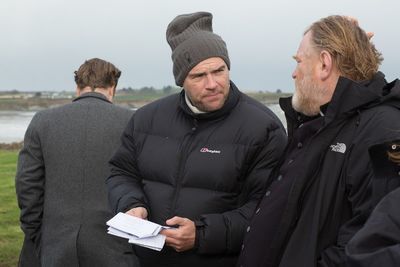
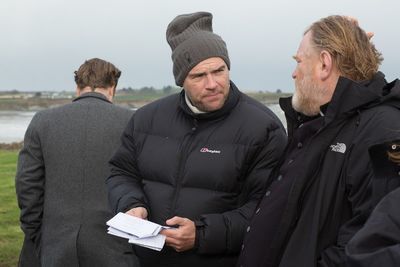
I walked out of writer/director John Michael McDonagh’s “Calvary” in Park City this year and felt renewed deep into an exhausting festival. Featuring the best performance of Brendan Gleeson’s remarkable career, “Calvary” is a fascinating dissection of the place for faith in a world where institutions like religion have let us down. Gleeson plays Father James, a man told in confessional that he will be murdered in a week for the sins of the church. He has seven days to get his house in order. McDonagh allows the mystery of who will kill Father James to fade into the background of a fascinating character piece as the good man deals with the troubled souls in his small Irish village. Sin, redemption, abuse, repentance—McDonagh is playing with big themes here but Gleeson grounds them all with a remarkably centered, riveting performance. Both gentlemen sat down with me last week. As you might imagine, Gleeson’s laugh is even more infectious and deafening in person. At the end of the interview, I shook his hand and congratulated him on what I think is the part of his career. He seems to really be enjoying discussing this role and recognizes its place in his filmography as well.

I haven’t been in a church for something other than a wedding or a funeral in twenty years so my religious background is kind of light. I saw the film for a second time last night with a friend who has more of a background and he was doing things like noting that there are 12 supporting characters like the 12 disciples. Was it important to you to make a film that worked on both levels—for the heathens like me and those who can quote the scripture?

JOHN MICHAEL MCDONAGH: Yeah, the story is about a Priest and so that may not appeal to people who are not religious. But there is also that crime/mystery element that I hope is a hook that might appeal to people who may not otherwise be interested. Yeah, it deals with a lot of different subjects but it’s done by meeting one sort of idiosyncratic, strange character after another like in a Sturges screwball comedy. That was my approach. I start with character first and whatever the subtext will come out, it will always be there if you create a great work of art. People will see things that you may not have intended. If it’s dense and it’s rich, those things will come up all the time. But it’s to be entertaining first. The film should appeal to both atheists and true believers.

You write characters first. Did you write this one for Brendan?

Yeah. We had had such a great working relationship on “The Guard.” Toward the end of shooting “The Guard,” we started talking about what to do next.

So, do you craft this character together?

BRENDAN GLEESON: He writes it but he lets me see the first draft, which was great. John’s very collaborative. There’s no doubt who the writer is, but it meant that I got to grow…the character became more and more familiar over the course of a year. There’s no real research I had to do. First of all, I grew up in Ireland. That was a no-brainer. A lot of the character was a part of my life. And so I grew to know this man from very early on in the proceeding. Which was great because we had a very tight shooting schedule and so it meant we were completely on the same page. The preparation was great.

JMM: As for the exploration of the script, it’s all there but Brendan wanted emotional beats to be expanded upon. There was a lot more with Kelly Reilly’s character—the scene on the rocks on the end was there but it became a much more operatic sort of scene. The phone call was added. Making it more emotional. Also, in the early draft, M. Emmet Walsh’s character was confrontational as well and Brendan said, “Can there just be one person in the town that gets along with me?”

My friend last night noted that he’s the only nice guy and I joked, “He’s the American. He’s the outsider.”

BG: (Laughs.) Exactly! And Marie-Josee Croze! The French too!

It’s a rare opportunity to get a character to work on for a year.

BG: Oh, yes. It’s fantastic. In a way, I kind of felt I was shattered both in the making of it and in the aftermath in a way that I had never been before so it obviously got [under my skin]. It was a huge gift. I know that John’s writing. We both feel “The Guard” was deeper than people give it credit for. There was a lot of stuff going on there. He was a lonely soul. This one—talk about attacking the big questions. For me, it’s not Catholicism; it’s the basic questions about life and the viability of the human comedy. All that stuff became very personal. It was a fantastic gift.

How do you find the calm at the center of a character like this? If I get a cigarette thrown on me, I’m going to respond in a way that this character doesn’t. Is it difficult to find that center?

BG: Two things. One, was childhood and that delineation between good and bad that was clear. The second was my parents’ generation. I thought of them and their humility. My mother was a forceful woman, for example, but her religion was a religion of love. She would absorb an awful lot. There’s something about the commitment to it. Part of his brief is to absorb the pain and, I think, offset this sense of abandonment that people feel. Treason has been visited on them by every figure of authority from the politician to the priest. The calm is there but I think it becomes increasingly more difficult, and I think the fact is that in a 7-day window before you die, you’re trying to give the best version of yourself to the world before you go.

JMM: There are times where it looks like he’s going to throw a punch, which you assume he probably did in the past. There’s the bit with Isaach de Bankole, which you mentioned. And it almost looks like he’s going to charge back and deck Dylan Moran. When he does actually really go for someone, it’s when he’s drunk and his inhibitions have been lowered.

BG: And he’s at that low point after he can’t even talk to a girl in the road. He’s been besmirched by this sense that something unseemly is happening. And that one for me is a big one because that’s true for even just a man at this point. You can’t take a child by the hand in a supermarket who’s lost and bring it to his mother. You can’t be a parent figure as a man anymore. There’s something disastrously wrong that we’ve lost. There’s a calm there but there’s a horrible feeling of how do you deal with all of that stuff.

I’m fascinated by the idea of “giving the best version of yourself to the world in your last seven days” because even that seems like a rare character trait to me. I would think most people would panic and lash out. He does get there to some extent but I think religion and your parents’ generation tend to make people want to present better versions of themselves.

BG: It’s interesting. I think people are different from what they imagine themselves to be. I think of that Millennium thing. Back home, they were charging 100 quid to get into a bar on the night of the Millennium. Everyone thought this would be the biggest party we’d ever have. Almost everyone went home and spent it with their family. It was just a very bizarre thing. It’s like what people do on a plane when it’s coming down. They say the most clichéd lines in the history of the world. I think when people are faced with death—and John based this on the five stages of grief—there are various forms of bargaining and depression and anger, but the acceptance is an extraordinary thing.

You used the word cliché and I want to talk about how this script both embraces and defuses them. It’s remarkably self-referential from Brendan’s first quip about the power of the opening line to mentioning the third-act revelation in a play at the Abbey to characters like the doctor who provides commentary on his own misanthropy. But it works partially because of what you’re saying—end times bring about cliché—but were you worried about a script that could have been weighed down and off-balance between that realism and cliché?

BG: One of my contributions to the thing was saying that I would, as a father, ask my daughter [who has attempted suicide] “What about the people left behind?” And so the script came back prefaced with “It’s a tired old argument…” (Both men laugh.) “If I must…”

JMM: That led to. What does she say? You added that it should also be “False.” “True. False.” And so you added that moment that people weren’t expecting.

These people have an odd self-awareness at times that allows for the exaggerated dialogue because, as you said, they approach Sturges characters more than real people.

JMM: Yeah. Yeah. I think that’s a valid criticism of the writing sometimes—going into that post-modernist style does bring you out slightly. I enjoy doing it. I’m not sure if I’d do it as much because people are bothered by it. We don’t make the films for an empty audience. We want the audience to be filled. When I’m examining looking back and seeing what I did wrong there, I enjoy writing in that kind of style but I can see how it would throw people or irritate people if they’re engaged in the story.

I think it works so well here because of the grounded center of Brendan’s character to offset the exaggerated ensemble.

JMM: Yes. Yes.

If everyone was as quiet and realistic and centered as Brendan, it wouldn’t have the same impact.

JMM: Exactly. You know, if you’re making a Ken Loach movie, it’s going to be naturalistic. You’re not going to get characters commenting on themselves. I feel like you can get away with it a bit more in this kind of tale.

How’s the location essential to this tale?

JMM: On both “The Guard” and “Calvary,” I knew the location and where it would all be set. It helps the location people to know the specific places. What happened in the shooting if I realized that mountain was in the background of every shot, which wasn’t in my mind when I was writing, but then it becomes this looming presence, this sinister aspect that you weren’t even intending. To get that across through the use of landscape.

BG: It was a happy thing with the discovery of that particular piece of topography but I think you have an instinct for Monument Valley anyway. There was always the question of the mythic. It allows the characters to be both massive and tiny at the same time. There’s such a mythological feel to the place that all the broad questions can be embraced.

JMM: It leads to moments like the final phone call—she’s having a coffee with a Dublin skyline behind her and he’s next to a crumbling castle. If you know the places, it informs the visual style.

Were there are any filmmakers or artists that informed that visual style as well?

JMM: Literary influences were so strong. A lot of the post-modernist writers. Filmically, obviously Bresson. Virtually the whole of Bresson. “Winter Light,” the Bergman movie. There’s an underrated De Niro performance in “True Confessions.” I watched that one again. And I re-watched a lot of Bunuel. “Viridiana,” “Tristana.” He likes taking potshots at the Catholic Church. Those were the main influences that informed it.

Was there any difficulty in getting this film made? I speak to a lot of filmmakers nowadays who lament the loss of the mid-budget movie like this one.

BG: It’s ghastly. I was in the middle of a film last year and I was six weeks in and the thing collapsed. It was a major achievement to get this made.

JMM: I’ve been quite lucky on both films but even after the success of “The Guard,” this was still less money. You don’t just get more money. It depends on the material. What they think…they look at cast, script, and give you “this much.” But I feel like there are so many filmmakers struggling to get anything done, they’re willing to give me six million dollars instead of seven. It’s still six million dollars. We had that but it was a 29-day shooting schedule.

What’s next?

JMM: It looks like I’m doing an American film at the end of this year called “War on Everyone” about two corrupt cops. And then we’re hoping to finish off this trilogy with Brendan. I’m writing that next. It’s about a spectacularly abusive paraplegic. He’ll be in a wheelchair in South London. This is how he’s preparing for the role. He’ll be sitting watching television and his kids will be like, “What are you doing?” “I’m getting into character.” (Both gentlemen laugh. Loudly.)

Source: http://www.rogerebert.com/interviews/interview-brendan-gleeson-john-michael-mcdonagh-calvary


Categories
TV & Movies

A quintessence of dust: “Only Lovers Left Alive”

Thumb_only_lovers

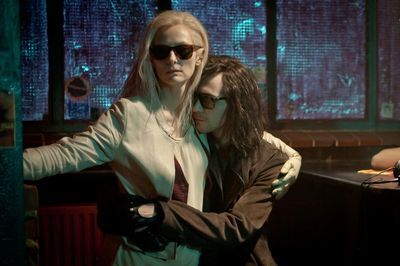
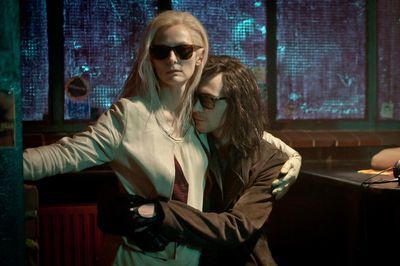
“Only Lovers Left Alive” is Top 5 Jim Jarmusch for sure; a long, warm bath in sensuality, with flashes of Wong-Kar Wai amid the ennui. In its deliberate slowness, it also ends up feeling like requiem for 20th century film storytelling, and for the pre-digital world.

Vampires Adam (Tom Hiddleston) and Eve (Tilda Swinton) are immortal, but seem to treat this as (for the most part) more a blessing than a curse: a license to savor the little things, such as the texture of moonlight and brownish-yellow streetlamp light on the buildings of Detroit and Tangier (the movie’s primary locations). Jarmusch likes reaction shots (often silent) and long pauses and beautiful-for-their-own-sake closeups (the sorts of images that were called “pillow shots” when Yasujiro Ozu, one of Jarmusch’s heroes, first perfected them). Even by the established standards of Jarmusch—a director who devoted a good chunk of his Memphis anthology “Mystery Train” to molasses-slow, lateral tracking shots of people strolling empty streets, and who broke up the already meandering story of “Broken Flowers” with sequences of its hero driving while listening to Ethiopian jazz—this movie takes its sweet, sweet time getting to where it needs to go. And because it’s confident that it’ll get there eventually, it has no compunction about lingering on, say, a shot of Adam’s sporty little car zipping down a desolate stretch of Detroit road, or a behind-the-back following shot of Swinton walking down a winding alleyway, her hips swinging like Maggie Cheung with the teapot in “In the Mood for Love.” With just a few minutes to go till its finale, Jamusch basically pauses the story for two minutes so that its leads can watch a beautiful dark-haired singer perform a number in Tangier cafe.

Madness! And so very welcome. The ethos of modern commercial cinema is hurry, hurry, hurry, faster faster faster. It’s as if contemporary movies are made to please some hypothetical cigar-chewing old-movie boss type whose favorite phrase is, “Don’t waste my time, kid.” Because time is so very important to the viewer, you see. Because American moviegoers are so very busy. Busier than any generation in the history of human civilization, apparently. Doing what? Things that are much more important than contemplating a silent pause or admiring an intelligently framed shot, apparently. Like taking pictures of their food, or arguing with strangers on Twitter. I digress. Perhaps it’s better not to speculate.

But we do have a pretty good idea of what people, by and large, are not really doing much of anymore, relative to a generation or two ago: taking long strolls during which they spend a great deal of time admiring the play of light on buildings and the sound of wind rustling through trees; reading novels and poetry; discussing science and philosophy and considering those conversations a kind of entertainment. The vampires in “Only Lovers” are ambassadors from the past, the analog past, the tactile past, the meditative past: holdovers from a time of patience and concentration. They are basically your grandmother and grandfather, but they look like Tom Hiddleston and Tilda Swinton, and sometimes they drink blood and lustily bare their fangs.

Is Jim Jarmusch himself a vampire? It would explain a lot, including the easygoing empathy he has for these night dwelling, centuries-old bohemians. Were it not for their tendency to sip blood from dainty little chalices and flasks, Adam and Eve would more clearly seem stand-ins for a particular type of creative person: not a rich and famous and popular one, but a fringe dweller with addictive tendencies; perhaps a brilliant but under-appreciated innovator (like Adam, a multi-talented composer and musician who’s been toiling away on a new kind of droning, doom-y, hypnotic nightclub music) or a connoisseur like Eve, who can match Adam Shakespeare quote for Shakespeare quote, takes suitcases of books with her on trips, and seems able to speed-read in different languages. (I should note here that, in this film’s world, Shakespeare is a fraud, or a front; Christopher Marlowe, played by John Hurt in a rather amazing wig, is the true author of the Bard’s poetry and plays, and Jarmusch’s script generously quotes from passages of his work, especially ones pertaining to love and death.)

There are a couple of points where both Adam and Eve (and maybe Marlowe as well) seem like fantasy versions of the filmmaker, who’s been making distinctive motion pictures for three-plus decades without hitting what you might call The Big Time. But for the most part the vampires seem more like affectionate caricatures of the sorts of people who eagerly anticipate Jarmusch films, or films that remind them of European art cinema classics, or pre-2000 films that seemed to assume that if you’d bought a ticket and were sitting in the theater, you were willing to surrender to somebody else’s vision for a while, and go with their flow, whatever it was, and not demand continual, obnoxiously aggressive stimulation as recompense for their half-paying attention. If you would describe yourself as impatient—and especially if you start to feel vaguely antsy after five minutes away from the Internet—there is really no chance of your liking this movie.

Trust me: that’s not a dare, it’s just a fact. Like all of Jarmusch’s movies, this one is truly and deeply cinematic—articulating its characters’ feelings, and its feelings toward its characters, in almost entirely visual and musical and rhythmic terms—and yet at the same time it deserves an adjective recently used by fellow RogerEbert.com contributor Godfrey Cheshire in a talk about where cinema has been, and where it’s going: “literary.”

I don’t mean that the movie appreciates literature and literacy, though that’s definitely the case. “Only Lovers” is shot through with references to a shared Western culture that no longer as widely shared, in America anyway, as it used to be, for a variety of reasons (mainly a widespread qualitative decline in the entire educational system, although a mostly laudable multicultural strain is also part of it). You sometimes get the sense that the characters use literary pseudonyms (such as Dr. Faust and Daisy Buchanan) as sort of an exhaustedly contemptuous joke on mortals, whom they’ve labeled “zombies” because they have so little appreciation for the quivering essence of life that they might as well be dead. They put the names of canonical novel characters on their fake passports and ID badges because they know nobody reads anymore.

No, “Only Lovers Left Alive” is literary in a deeper sense, the sense that I think Godfrey meant: you have to “read” its images to appreciate them. The movie requires active emotional and intellectual engagement. It doesn’t tell you why it’s showing you things. Sometimes there is no obvious plot-related reason why it’s showing you things, other than because the filmmaker thought they were beautiful or haunting or strange, or because he liked the way the shot was playing out and felt like sticking with it for a while instead of cutting away. And it ultimately seems more inclined to rib Adam (see what I did there?) for his morose distaste for the “zombies” than endorse it. When we first meet him, he’s borderline suicidal, asking a young minion to bring him a specially-constructed bullet with a wooden tip that he slip into the chamber of a revolver and “stake” himself. Eve dispels those tendencies just by traveling from Tangier to Detroit and embracing him on the sidewalk before crossing the threshold of his house. She knows that life can be hard and tedious sometimes, and that people and sometimes whole cultures can be stupid, but all things considered it’s still better to be alive than dead, because only live people can do things like listen to country music on scratchy old vinyl records and slow dance with Tilda Swinton.

More so than most movies (and like all of Jarmusch’s) this one seems to want to drink in experience the way the vampires drink the red stuff. Marlowe, Eve and Adam especially like things to be tactile; things you can touch are by definition midway somewhere between birth and death: ephemeral, but in no danger of simply blowing away. They’re solid. They’re real. That probably explains why all the vampires live like artsy hoarders, surrounded by artifacts of defunct technology (including vinyl records and reel-to-reel tape recorders), and why they spend so much of their time discussing and admiring proof of craftsmanship, such as the interior of a antique acoustic guitar.

Strange as it might sound, the movie reminded me of Terrence Malick’s films, which will sometime cut to a closeup of an insect or bird or forest mammal during a scene of great discord between human characters, or pivot away from the main drama and let us admire the way the sunlight streams through a canopy of leaves. Jarmusch’s vampire movie has a version of that sensibility, but all the imagery is nocturnal; because the characters are vampires, they admire the moon and the moonlight the way we might admire the sun and sunlight (when we remember to notice sunlight). At one point Jarmusch gives us an establishing shot of Adam’s Detroit house at dusk, and on the soundtrack we hear dogs baying; it’s this movie’s version of a rooster crowing at daybreak.

The characters are clinging to the ephemeral pleasures while taking solace in that which is eternal: namely, their love for each other, which nourishes them both. The movie’s unabashed, un-ironic, and often deeply erotic belief in love-as-nourishment makes it an ecstatic viewing experience instead of a depressing one. When I left the theater after my first viewing of “Only Lovers,” I called the movie a lament for literacy, for shared culture, for historical memory, at times a deeply sad one.

But now I’m not so sure. Remembering the movie makes me smile, maybe because it revels in pleasures of all sorts: visual, sexual, tactile, intoxicating. Adam and Eve’s naked, intertwined bodies on a bed; a beautiful young couple kissing in the same frame with a buzzing neon moon; a long lateral tracking shot of Adam walking from his house down to the end of the block and then turning the corner, his 18th century waistcoat drawn snugly around him: these and other fleeting tableaus are all of a piece. In an extraordinary moment, Eve tells Adam about a planet-sized diamond on the other side of the galaxy, a compact dwarf star that emits a noise like a gong. Adam repeats the details with a faraway look, as if calculating how long it would take to travel there.

Source: http://www.rogerebert.com/mzs/a-quintessence-of-dust-only-lovers-left-alive


Categories
TV & Movies

Finding Fela

Thumb_findingfela-2014-1

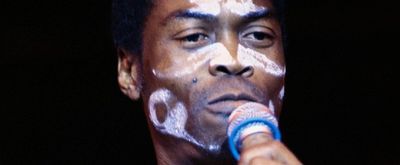
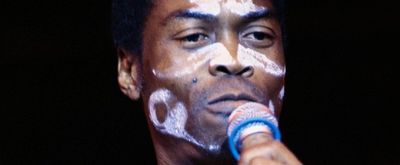
Documentarian Alex Gibney’s “Finding Fela,” about the legendary African pop star and political activist, feels like a rough draft for a very good movie.

Parts of it are stirring because the subject matter is inherently noble. Fela Ransome Kuti, who died in 1997 at age 58, was multi-disciplinary songwriter, singer, bandleader and activist who invented Afrobeat music, hooked up with the Black Panther Party during a U.S. tour, then went home and mocked the dictatorial Nigerian government throughout the 1970s. He also formed a commune, Kalakuta Republic, that he declared a sovereign nation; started a nightclub called the Afro-Spot in the Empire Hotel in Lagos, and embraced the Yoruba faith, becoming a spiritual leader and even officiating at weddings.

Most of all, he was a great pop protester, working in a country where being that kind of performer required real sacrifice. Kuti was arrested or detained by police over 200 times during his career, and often the police actions were purely retaliatory harassment. Kuti’s music was compositionally bold but also danceable; commentator Questlove as being in the spirit of Bob Marley’s but requiring a “more sophisticated ear.”

But more than that, it was a vehicle for messages of pride and defiance against Nigeria’s repressive government, particularly its brutal police. Kuti teased them in songs such as “Zombie,” “The Mosquito Song” and “Go Slow” (about the horrendous traffic jams in the Nigerian capital of Lagos, which cops tried to speed up by beating any drivers who didn’t move quickly enough). The movie never attempts even a speculative answer to the question of why a notoriously thin-skinned and violent government allowed Kuti to mock them openly over so many years. And yet if you don’t know every detail of the story, this vagueness works in the movie’s favor; you worry that just around the next bend lurks the moment when the government finally gets fed up.

A life this packed with so much incident can’t help but be fascinating, especially when some of the incidents are personally harrowing. Kuti’s mother, the pioneering feminist and anti-colonialist activist Funmilayo Ransome Kuti, was thrown out of a window when police raided her son’s compound, then lapsed into a coma and died. Kuti also faced internal resentment and rebellion after his cousin emptied his bank account and his once-loyal bandmembers became increasingly disgruntled at having to play without being paid.

Was there enough existing film footage and still photography to fill out a feature-length documentary about Kuti without bringing in extensive backstage footage of “Fela!”, the Broadway music about him? Given the film’s two-hour running time, which wouldn’t be so onerous if the pacing weren’t so lumpy, I have to wonder. Gibney and his crew jump between a relatively straightforward documentary with talking heads and archival imagery and a backstage, “making-of” type documentary, about artists (including the show’s director-choreographer Bill T. Jones) analyzing Kuti’s motivations and mindset, the better to guide a show’s musicians and dancers.

The film barely settles into one groove before it’s unceremoniously torn out of it. Both documentaries are good (though the straightforward one, about the man himself, is rawer and more urgent than the backstage one, which too often feels like an extended ad for the still-touring musical); but you do often feel as though you’re watching different takes on the same subject glommed together. As a portrait of a great artist and activist, “Finding Fela” is worth a look, but it’s Gibney’s weakest work as a filmmaker.

Source: http://www.rogerebert.com/reviews/finding-fela-2014