Categories
TV & Movies

Mike Sacks, Author of “Poking a Dead Frog,” Explores the Comedic Process

Thumb_51vxzp1ik0l

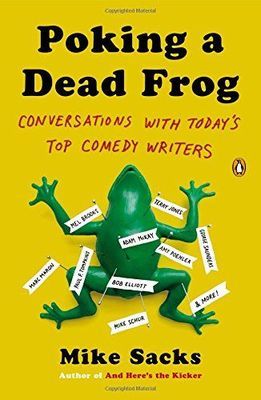
I am no humor expert,” Mike Sacks states in
the introduction to his new book, “Poking a Dead Frog: Conversations with
Today’s Top Comedy Writers.” But with this sequel to his 2009 book, “And Here’s
the Kicker” (recently re-released in what he calls an expanded “director’s cut”
edition with 200 extra pages), Sacks, a Vanity Fair staff writer, has
established himself as an insightful observer of the elusive comedic process.

“Dead Frog” (not to be confused
with Monty Python’s “Dead Parrot”) features interviews, “ultraspecific comedic
knowledge” and “pure hardcore advice” from a stellar array of legendary,
veteran and emerging comedic artists, including standups and performers (Patton
Oswalt and Amy Poehler), cartoonists (Daniel Clowes
and Roz Chast), and writers for radio (Bob Elliott of Bob and Ray legend), sitcoms
(Glen Charles, “Cheers”), late night talk shows (Todd Levin, “Conan”) print and
online (Henry Beard, “The National Lampoon” and Carol Kolb, “The Onion”) and
movies (Diablo Cody, “Juno”). And Mel Brooks!

The book (which you can buy here) takes its
title from
E.B. White’s oft-quoted
observation in The New Yorker: “Humor can be dissected, as a frog can, but the
thing dies in the process and the innards are discouraging to any but the pure
scientific mind.” But Sacks’ deft poking unearths for comedy fans, nerds and
obsessives some precious treasures, such as Bill Hader’s list of 200 movies
essential for every comedy writer to see and Paul Feig’s intimately observed
show “bible” for the late, lamented, “Freaks and Geeks.”

Acknowledging
this site’s founder, Sacks
began our conversation with an
appreciation of Roger.

MIKE
SACKS: He meant a lot to me. I thought he was an amazing writer and an amazing
person.

What was your exposure to him?

I grew
up in the D.C. area pre-Internet and pre-cable. There were a few great
reviewers for The Washington Post, but as far as movies I would have never
heard about otherwise, it was Roger Ebert. I just found him to be a great
writer, especially about the passage of time. His humanity, too, always came
through. He was my first link to a world (of movies) that I didn’t really know
about, movies that wouldn’t play on the big screens where I lived.

Going into “Poking a Dead Frog,”
how did you want to expand the conversation about writing comedy from the first
book?

With
‘And Here’s the Kicker,’ I wanted the interviews to be longer, but they were
cut back by the publisher With this new one I wanted to get into longer, Playboy-length interviews that would
have a nice arc—inspirations, experiences, advice. But the main purpose,
really, was to have another excuse to talk to my favorite comedy writers. I
wanted to focus on those who wouldn’t be here much longer, like Peg Lynch, 97,
as well as those who are emerging like Dan Guterman (‘The Colbert Report’).

“Kicker” was published in 2009.
How has the comedy landscape changed since then and how did that impact how you
approached this book?

That’s a
good point. When I pitched the first one, there were no books like this and
very few comedy sites. Marc Maron’s podcast (WTF) didn’t exist. The Onion’s A.V.
Club and a few other sites dealt with comedy. That was one of the problems with
the first book. It took a long time for
it to get published. It was rejected 25 times or so. Since then, things have exploded. There are
podcasts and websites. People seem to be making a career out of writing about
comedy. The New York Times has a comedy critic, Jason Zinoman.

Did the first book help you open
doors for the second?

I wish.
(laughs). No, in fact, it was more difficult. There is a lot more competition now. These top writers are being asked
much more frequently to be interviewed. With the first book, I would email
people like Larry Gelbart and others—the older ones who had AOL.com email
addresses—and they would get right back to me. With this one, it seemed like
there were more layers. I think it’s great, actually, that these people are
being asked to be on podcasts and to be interviewed for Splitsider, which is an
amazing website, or A.V. Club. But it wasn’t as easy as I thought it would be.

Analysis of why something is
funny can be deadly, but to your credit, the interviews are fascinating inside
looks at the process of creating comedy, which is much more illuminating.

Thanks,
but that goes for any occupation. Whether it’s a brain surgeon or an
electrician, every occupation has a process to it, a language and a lingo. “How
can one learn to be funny?” is an impossible question. What fascinates me is
(the writer’s) experience. How does one go from being a kid in Illinois, or
wherever, to becoming a professional writer of jokes? How does that happen? To
me, it’s a very mysterious process, but one that has always interested me.

I was fortunate to grow up in the
heyday of comedy albums, and watching comedians on “The Ed Sullivan Show” and
Johnny Carson’s “The Tonight Show.” What was your gateway into comedy?

It was Letterman and “Late Night,” and
especially Chris Elliott.

Mike Schur (“Parks and
Recreation”) remarks in your interview with him that reading Woody Allen was
like seeing in color for the first time. Was Letterman like that for you?

It was a
sensibility that was very approachable for a kid. The writing on that show was
so sharp and anti-everything we had not really enjoyed on TV variety shows.
Letterman cut through the BS. A lot of
the credit for that goes to (his former writer) Merrill Markoe. Her voice was
so strong. She really influenced an entire generation of comedy writers and
lovers.

Jerry Seinfeld has gotten flack
that his guests on “Comedians in Cars Getting Coffee” are not more diverse.
What was your process in seeking out your interview subjects?

It
wasn’t anything more than getting people whom I liked and, quite frankly, who
said yes. Beyond that, it was those who said yes and where the interview worked
out. A lot of interviews don’t. I interviewed 70 people and 45 made the final
cut. I think it helps, too, to be open
to everything, to have your feelers out to see what’s out there, whether it be
TV, movies, Twitter or graphic novels.

One of the biggest “gets” of this
book is Peg Lynch (creator of a Seinfeldian 1940s radio series, “Ethel and
Albert”). How did you find her?

That was
total luck. I would love to say that I knew about ‘Ethel and Albert’ where no
one else did, but what happened was I contacted an expert in radio humor and asked
if there were any radio comedy writers out there. He gave me a list of 15 who
were alive the last he checked five or 10 years ago. I went down the list, and
all of them were gone except for Peg Lynch who I tracked to a town in
Massachusetts. I called the town hall and they gave me her number. We proceeded
to talk for two hours at the first interview. It’s not like she was waiting for
someone to call necessarily, but I think she was perplexed as to why no one
hadn’t. She had not been interviewed in at least 50 to 60 years. She was one of
the few female comedy writers in the 1950s and ‘50s. She told me that over the
years, she has written more than 2,500 scripts. Her memory is incredible. And
the stories she told. It was like discovering gold. What was frustrating was
she kept saying, ‘This is nothing, you should hear the real story.’ I’d say,
‘Please tell me the real story.’

Your last book featured interviews
with Irving Brecher (who wrote for the Marx Brothers), George Carlin and Harold
Ramis, all of whom have since passed. While reading the new book, I couldn’t
help wish that you had been able to interview, say, Michael O’Donoghue
(co-founder of The National Lampoon”) before he died. What deceased comedy
writers do you wish you had gotten a chance to interview?

[O’Donoghue]
is one of them right there, and Doug Kenney (“Caddyshack”). Michael was real
slash and burn and Doug, it seemed to me, was a gentler spirit. And those two
working off each other [on “The National Lampoon”] was an amazing combination. I
would love to have talked with them.

What was your process like for
preparing for these interviews?

It was a
lot of work, up to 35 hours of research per interview. The problem was I didn’t
know how good (an interview) they would be, so I could do all that work and
then get on the phone and know instantly it was not going to work out. So that
was 25-35 hours down the drain.

One of the things I like most
about both books is learning about the writers’ influences and being introduced
to works that inspired them.

Usually
it starts with one figure and you go back and see what influenced them. I’m a huge Woody Allen fan and through him
you discover the Marx Brothers and S.J. Perelman. With Letterman it was Steve
Allen and Bob and Ray and all of those amazing people who influenced him. It
goes back and back and back. There is always someone to influence the next
generation.

A lot of
people turned me on to things I didn’t t know about. I hadn’t seen a good 80 or
so of the movies on Bill Hader’s list of the 200 movies every comedy writer
should see. It was just a good opportunity
to see what influenced someone who is that brilliant as a comedian and
performer. (The 1945 film noir) “Scarlet Street” is another good example. I had
never heard of it until Dan Clowes mentioned it. I learned a tremendous amount
form these people.

What is perhaps your biggest
takeaway from your interviews?

(Even at
their age) Mel Brooks and Peg Lynch are people who are never content with
resting on their laurels. They always want to achieve. That’s a tremendous
lesson for anyone. Mel Brooks gets up every morning and he goes to work. And as
writers that’s what you have to do. In the end, you just have to write. I would think someone like him would be satisfied
with what he’s accomplished but there’s an eagerness and hunger. He’s about to
go on Broadway to perform a one man show at 88 years old. What kind of
personality does that? It’s the same kind of personality that at 24 (drove him)
to get out of Brooklyn and achieve.

A recurring theme of these
interviews is that comedy is hard work

That’s
another valuable lesson. It doesn’t get easier. Someone who has written jokes
for 80 years still has questions whether a joke will work. Nothing (in comedy)
is guaranteed. If it’s hard for Mel Brooks, why shouldn’t it be hard for the
person who’s just starting out? There is no one answer in comedy. It’s not a
math equation. There’s always a sense of mystery.

You write very optimistically that
this is a golden age for comedy writing, but I wonder if this is more of a
golden age of opportunity?

I think
both, certainly compared to when I was in college and there were very few
outlets. With social media, someone writing jokes in their room in Maryland can
theoretically compete with, or have as many readers as New Yorker.com, That
didn’t exist before. The gates were being controlled by a certain type of executive
or whomever. One can circumvent that, which is pretty astonishing.

This is your second book of
interviews with comedy writers. Trilogy?

I don’t
know, I don’t think so.

Wait; In your interview with
(“Cabin Boy” director) Adam Resnick, he said he would wait for the third one to
talk to you about “The High Life” (his short-lived HBO series).

I think
it’s two and done, but I would like to write about ‘The High Life.’ (Adam) said
he was going to give me some bootleg VHS tapes. I’ve seen a few episodes, but I
would love to see them all.

One other thing: In your
interview with Henry Beard, he reflects on Ernie Kovacs and one of his
signature creations, the Nairobi Trio (gorilla masked musicians making like
wind-up toys to the tune of “Solfeggio”). He calls the bit “beyond bizarre” and
wonders, “Where did that idea come from?” In that spirit, I have to ask: You
include among your acknowledgements a reference to the 1979 teen rebellion
drama, “Over the Edge” (“To the upstanding citizens of the planned community of
New Granada—Tomorrow’s City… Today). Where did that idea come from?

God
bless you. That was in the first book and no one pointed it out. That’s one of
my favorite movies. It’s very underrated. That’s a case of a movie that’s not a
comedy, but it really influenced me. It just resonated. It was very ahead of its time in portraying
the reality of pre-fabricated communities and kids doing the best they could in
that environment. I loved the sign that opened that movie (referenced in the
acknowledgements). It was so yearning and so positive and what the reality became
was so awful.

And the photo that accompanies
the “About the Author” page. Isn’t that Jon Hamm?

He is
such a nice guy. He liked the first book. He posed for three or four hours on a
Saturday last year. For free. He just did it because he’s a fan of comedy.”

Source: http://www.rogerebert.com/interviews/mike-sacks-author-of-poking-a-dead-frog-explores-the-comedic-process


Categories
TV & Movies

Thumbnails 8/6/14

Thumb_guardians-of-the-galaxy-02_612x380

1.

The original Ghostbusters: Harold Ramis, Dan Aykroyd, Bill Murray. Paul Feig wants to direct a remake with an all-female team.

Video of the Day

Trailer for My Neighbor Tortoro, by Hayao Miyazaki. Studio Ghibli announced this week that it might stop producing original films.

Source: http://www.rogerebert.com/thumbnails/thumbnails-862014


Categories
TV & Movies

“Life Itself” Wins Founders Prize at Traverse City

Thumb_20140802_230558

“Life Itself,” Steve James’ acclaimed documentary on the life and legacy of Roger Ebert, was honored Saturday, August 2nd, with a Founders Prize Special Award at the tenth annual Traverse City Film Festival hosted by Michael Moore. On Sunday morning, Chaz Ebert made an unannounced appearance as part of the festival’s annual event, “Mike’s Surprise.” Each year Moore offers a special event during the festival and this year his surprise was Chaz Ebert, with whom he conducted a general Q&A about life and the movies, prior to discussing “Life Itself.”

Roger Ebert championed Moore’s groundbreaking 1989 debut feature, “Roger & Me,” giving it four stars while referring to its writer/director/star as “an irrepressible new humorist in the tradition of Mark Twain and Artemus Ward.” Gene Siskel shared his fellow critic’s enthusiasm for the film when the pair reviewed it on “Siskel & Ebert.”

Moore started the Traverse City Film Festival ten years ago with the mission to show great movies that enrich the human spirit and the art of filmmaking. He and Chaz took part in a spirited conversation in which they discussed the value of the moviegoing experience and the vital role that an engaged audience plays in a film’s impact and influence. In one of the event’s highlights, Chaz asked the women in attendance if they agreed with her that it’s okay to have men express their emotions. The women in the audience overwhelmingly agreed. (See video below.) She reflected on how Roger was never hesitant in displaying his love for family and friends and valued filmmakers who had the bravery to express their own feelings with sincerity. Roger’s philosophy was never more apparent than it was on the big screen when “Life Itself” played in Traverse City, where Roger’s honesty shined brighter than ever.

Ebert and Moore also discussed the value in seeing movies in theaters where you experienced them as a community. Moore said that the audience is an integral part of the movie-going experience, and without an audience, it isn’t really a movie. A quick survey of the audience demonstrated that the vast majority of attendees would prefer the communal moviegoing experience offered by theaters.

For a list of the Traverse City Film Festival’s other winners, visit the official site. For a complete list of the theatrical venues and VOD/online platforms currently screening “Life Itself,” click here. For more information on the film itself, visit MagPictures.com/LifeItself.

Source: http://www.rogerebert.com/life-itself/life-itself-wins-founders-prize-at-traverse-city


Categories
TV & Movies

Wrapped in Plastic: The Impact of “Twin Peaks: The Entire Mystery”

Thumb_twinpeaks_beautyshot_10discs

As TV progresses through what is arguably its golden era, it
has become somewhat clichéd to reference the “shows that laid the foundation”
for that era. “Dude, “The Sopranos” changed everything.”
Or perhaps you go back to “Hill Street Blues,” “NYPD Blue,” or even “Oz.” All
major game-changers. And yet I speak personally when I tell you that, for me,
one of the most influential creative properties of any form—TV, film, theatre, literature—was
David Lynch’s “Twin Peaks,” recently released in a gorgeously remastered
Blu-ray box set from Paramount, complete with every episode that aired on ABC
and, gloriously, “Twin Peaks: Fire Walk with Me,” the film that defied the
expectations of the show’s remaining fans by refusing to answer so many of
their questions. Deleted scenes from the feature film add new layers to the
mystery without really resolving anything; merely bringing us deeper into the
forest of Lynch’s vision. “Twin Peaks” hit me at a time when I was young enough
to just be straying off the popular path of the mainstream. And unlike a lot of
the nostalgic properties of our youth, it has held up perfectly. It’s still so
wildly inventive, smart, and unapologetically bizarre. And while it may have taken longer than any of us expected for it to get the appropriate Blu-ray treatment, the wait appears to have been worth it.

It’s tempting to argue that “Twin Peaks” didn’t really
change TV as much as some other programs, including the ones mentioned in the
previous paragraph, because it was so defiantly unique as to avoid copycats. It’s
relatively easy to try and make another “LOST,” another “Sopranos,” another “Dexter”—making
another “Twin Peaks”? Yeah, good luck with that. I always kind of considered “Twin Peaks” more of an outlier than an influencer. And yet, watching the series
premiere again in glorious, perfectly-balanced HD, I’m struck by how much it looks like a program that could
air in 2014, with only a few fashion and décor updates. Lynch’s style, which
often tracked its actors in a way that felt so much more like film than
traditional ‘90s television, reminds one of recent programs like “The Killing,” “Fargo”
and “The Americans” in both its economy of visual language and strong focus on
setting as a character, and the application of the auteur theory to the small screen arguably started here.

Visually, “Twin Peaks” is striking from the very first episode. Lynch is constantly cutting to iconic images of the stage he’s
trying to set. When Sarah Palmer (Grace Zabriskie) looks for her dead daughter Laura (Sheryl Lee) in the
morning, we get a few shots of the ceiling fan. Why? Lynch liked the visual (and he would return to that damn fan throughout the series and even in the film).
For Ben Horne’s (Richard Beymer) first scene, the stage is set with a close-up
of a fireplace. Why? Again, it struck Lynch as a way to represent the Great
Northern Hotel. The way the next scene is composed, as Sarah calls Leland (Ray
Wise) to see if he knows their daughter’s whereabouts, and we see Sheriff
Truman (Michael Ontkean) through the windows behind him is not only perfect, it’s
unlike anything that anyone was even trying in the early ‘90s, when the highest
rated dramas on TV were “Murder, She Wrote,” “Matlock,” and “L.A. Law.” This is the kind of visual composition to which we are accustomed in 2014 but was breakthrough in 1990. Underneath it all, Lynch layers that perfect Angelo
Badalamenti score, one of the best in TV history, which plays with
melodramatic, soap operatic themes but adds its own layer of malevolence.

“Twin Peaks” was also a bridge to unite film and TV lovers
in a way that hasn’t been fully appreciated. Not only was a major voice in film
deigning to lower himself to the still-considered inferior form of TV but he
wasn’t compromising his artistic interests in the slightest when he did so. The
trend of film directors moving to TV seems so remarkably common today with
filmmakers like Martin Scorsese and Steven Soderbergh working on small-screen
projects but it was remarkably rare in 1990. And there was no doubt, especially
for fans of “Blue Velvet,” that David Lynch was working in his thematic
wheelhouse. He was again playing with Americana, the pitch-black heart behind
the white picket fence. So many of the characters and themes of “Twin Peaks”
play off cinematic and pop culture archetypes from the anachronistic James Dean wannabes
(trust me, I was around that age in 1991 and no one wore as much leather or put
as much grease in their hair as Bobby Briggs and James Hurley) to the apple pie
& coffee that became iconic to the fact that the Sherriff is named Harry
Truman. Even the very form—the soap opera—is an American one through and
through. This was the same world in which Jeffrey Beaumont (who also lived in a
logging town) of “Blue Velvet” lived and it was remarkable to see a filmmaker
who wasn’t adjusting his vision for the small screen but expanding on it.

Of course, then it all went to Hell. As is well known by
now, “Twin Peaks” faded out as quickly as it rose to fame, as more and more
people grew frustrated by the fact that David Lynch was always more interested
in questions than answers. Even then I hoped he would never solve the murder of Laura
Palmer, and I think the legend of the show would actually be stronger if he had
stuck to that idea. Like a program that falters when the two sexually-tense
leads finally get together, the end of the Laura Palmer arc on “Twin Peaks” was
the end of the show for so many people. And it didn’t help that Lynch and
company clearly didn’t know what to do next. The show spun in still-fascinating
circles for a few episodes before arguably the most bizarre series ending of
all time. “Twin Peaks” was over and it was still unclear as to if it would really
have an impact on the medium. It obviously has but it took time for it to be
felt, almost as if it was the creative voices raised on the show who had it
influence their own output more than the other works of the ‘90s and even most
of the ‘00s. It took a generation.

And now that generation has “The Entire Mystery.” Paramount
has lovingly restored the episodes, which look great in HD. I actually forgot
that the show wasn’t widescreen—it was always so cinematic in my memory. And
the supplemental material is strong, including Log Lady intros (yes, there was
a time when the Log Lady was actually something of a celebrity), the
international version of the pilot that (sorta) stood as a standalone TV movie,
and, of course, the draw for a lot of Lynch fans, “Fire Walk with Me” in HD
with deleted scenes.

How has “Twin Peaks: Fire Walk with Me” held up? Being a fan
of “Twin Peaks” up to the bitter end, I somewhat joined in the chorus of
disappointment that greeted the film in 1992 (which was greeted with boos at its Cannes premiere). You canceled my favorite show and
THIS is what I get? Agent Cooper is a supporting character, Lara Flynn Boyle
& Sherilyn Fenn aren’t even in the thing, and it raises more questions than
it answers! Great. Thanks for nothing. Seeing it now, I have a completely
different response. Like so much of Lynch’s best works, it plays like a dream,
complete with missing characters, rough edges, and incomplete thoughts.

Lynch has said that he made “Fire Walk with Me” because he
couldn’t leave the world of Twin Peaks and it’s that aspect of the film that
still fascinates. First, is this a prequel or a sequel? It was advertised as
something that would answer the questions of Laura Palmer’s life before her
murder but it also tries to work with the loose ends after season two (and the
deleted scenes do even more of that). Lynch’s film is defiantly uninterested in
meeting audience expectations. It opens with new characters, including Lynch
himself and an Agent played by Chris Isaak, who was pretty well known to
viewers as a pop star at this time. Imagine going to see a “LOST” movie and spending the first act with Justin Timberlake to get some idea how annoyed fans of the show were in 1992.

Ultimately, this is Lynch revisiting a world, an aesthetic, and not a
plotline or a narrative or even characters. It’s him working thematically (again in the pitch-black darkness of small town normalcy) and not in black and
white, and it is further proof of his belief that it is the murder that
matters and not the murderer. I still have some basic composition and structure
issues with “Fire Walk with Me” (it can sometimes be Lynch at his most
meandering) but revisiting it so much further from the shadow of the program
that inspired it allows it to be seen in an entirely different light. It is
part-sequel, part-prequel, part-fan-fiction, part-response, and part-dream.
Some of those parts don’t work but they’re never less than fascinating. And it makes
me want a “Mulholland Drive” movie. Or at least a damn Blu-ray release.

Before you head out to get your own copy, it should be noted
that all of the special features from the definitive “Gold Box” DVD release of
2007 have been given the import treatment, joined by new conversations with
Lynch and the Palmer family and those aforementioned deleted scenes, which are
enough for real fans of “Twin Peaks” to pick this up. I’ve heard some already
complain that they don’t provide the conclusions or enough of the supporting
characters that they thought were missing from “Fire Walk with Me.” I can say
with some confidence that David Lynch doesn’t care. And you shouldn’t either.

Source: http://www.rogerebert.com/demanders/wrapped-in-plastic-the-impact-of-twin-peaks-the-entire-mystery


Categories
TV & Movies

Comic-Con 2014: Cartoon Saloon

Thumb_dtsok_cover_treated

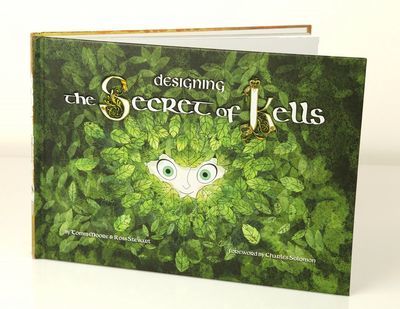
One of the longer lines at the San Diego Comic-Con’s Artists Alley was for the book signing by the Paul Young and Tomm Moore, the founders of the Kilkenny-based Irish Animation Studio Cartoon Saloon for the new book, “Designing The Secret of Kells.” I wasn’t able to catch any of the three book signings or the Friday sneak peek panel for the studio’s new animated feature, “Song of the Sea,” but I did attend a similar event at the International Animated Film Society, ASIFA-Hollywood on Tuesday, July 29, 2014.

The Academy Award nominated “The Secret of Kells” was a 2D animation that celebrated its two-dimensions. The lines and abstract decorations gave these two-dimensional characters more depth than some live action roles played by humans. The designs ignore Renaissance rules of perspective and instead looked at the legacy of the illuminated illustrations for the Christian Gospels dating back to 800 A.D. in the “Book of Kells.” The real “Book of Kells” is housed at Trinity College in Dublin.

“Song of the Sea” has no relation to the Shirat HaYam poem that appears in the Book of Exodus or to the 1952 Brazilian film “O Canto do Mar.” Cartoon Saloon’s “Song of the Sea” draws on an experience director Tomm Moore had long ago. Moore described walking on the seashore where he noticed the carcasses of many seals. When he inquired about the seals he learned local fishermen were killing them out of frustration, blaming the seals for the low numbers of fish. One local commented that this would have never happened long ago when the fishermen believed in Selkies.

Selkies are water spirits in Irish, Scottish and Faroese folklore. They were the souls of those lost at sea or humans who have returned to the sea, Moore said during the panel discussion. According to folklore, they can turn into very handsome men and beautiful women on land. If a man wishes to keep a Selkie for his wife, he keeps her coat and then she can never return to the sea.

In “Song of the Sea,” the mother has taken care to teach her son, Ben, the songs of her youth, but she dies before she can teach them to her daughter, Saoirse. Sent to the city to be cared for by their grandparents, Ben and Saoirse escape and wander back through the Irish countryside toward their home. On the way, they meet mythical creatures including three who will turn to stone unless Saoirse is able to sing the Selkie song of the sea while wearing her Selkie coat.

The sibling rivalry between Ben and the mostly silent Saoirse also comes into play as they both look for ways to remember and honor their family and their heritage. Like “The Secret of Kells,” “Song of the Sea” also has a distinctive style despite being the product of seven years of development between four different studio partners in four different countries (Ireland, France, Belgium and Denmark).

Moore and Young explained that they learned from “Kells” the necessity of developing their story fully and testing it on school children before beginning the animation process. With “Song of the Sea,” they wanted to contrast life in the city with the countryside and yet the world of the children’s family is, much like in the 1939 movie “The Wizard of Oz,” echoed in the fairy world. They found inspiration in the TV miniseries “Into the West,” Hayao Miyazaki’s “My Neighbor Totoro,” and the Disney classic “The Jungle Book.”

An American release date for “Song of the Sea” hasn’t been established yet, but you can keep updated on the progress of “Song of the Sea” by following the director’s blog or by following Cartoon Saloon (@CartoonSaloon), Tomm Moore (@TommMoore) or Paul Young (@PaulYoung99) on Twitter.

Source: http://www.rogerebert.com/balder-and-dash/comic-con-2014-cartoon-saloon


Categories
TV & Movies

Nicholson on Nicholson

Thumb__mg_0018_1800

Over the past decade Tom Cruise has been a constant source of controversy. In turn, that controversy has provided plenty of nauseating fodder for outlets to publish. Whether the focus is on his devout allegiance to Scientology, a failed marriage with Katie Holmes, or his proclivity for suing sleazy publications on public defamation charges, writers—and readers—have callously approached Cruise’s public pratfalls with more schadenfreude than sympathy.

In fact, the only facet of Cruise that hasn’t been extensively analyzed is, well, the acting. Thankfully that void is now filled by Amy Nicholson’s tremendously insightful book entitled “Tom Cruise: Anatomy of An Actor.” Published by Cahiers du Cinema earlier this week, Nicholson’s first foray into the literary world is the latest entry in this “Anatomy of an Actor” series—which includes in-depth profiles of Meryl Streep, Jack Nicholson, and Marlon Brando.

Over the course of dissecting Cruise’s performances in ten different films (from “Risky Business” to “Eyes Wide Shut” to “Tropic Thunder”), Nicholson effectively examines not only his hands-on acting technique, but what and who has shaped his career. It’s clear that Cruise’s ascent to stardom wasn’t fortuitous—it was as meticulously calculated as each of his precise performances.

Following the interview you can check out a passage from the book. Also, be sure to check out Nicholson at LA Weekly, where she serves as their Chief Film Critic.

You do a pretty great job of assembling all of this information—anecdotes, quotes from reviews, excerpts from interviews—into a neat, cohesive package. What was your research process like?

AMY NICHOLSON: Yeah, it was pretty intense in the actual physical research part. There’s a really fantastic place run by the Academy of Motion Pictures and they have clippings of so much original material.

Yes, I learned about this place when talking to Karina (Longworth) about her show “You Must Remember This.”

It’s awesome. She was actually my introduction. It’s the greatest library ever.

So explain this place to people who have never heard of it.

There are these people for decades go through every major newspaper and whenever there’s any article related to a film they underline the film, cut it out and make photo copies of it and put it in a little file folder. And it’s all cross-referenced so you can look up things by director, actor, etc. It’s all physical paper so you have to go there and actually touch the things. Which is kind of nice. And then they have microfiche on Tom Cruise going back to the very beginning of his career.

It was really amazing for somebody who has been a critic for awhile and have been in LA for 12 years and know a bunch of the critics and the critics that came before me to read through old clippings and read their names in them. And to see like the guy who hired me as an intern at LA Weekly to read his “Top Gun” review from when it came out in the Weekly … it was fantastic. I saw him at a screening the other night and told him about quoting his piece in the book.

He probably hasn’t thought about that review in decades.

He said actually it has always been secretly one of his favorites. Instead of actually writing a review he just did a list of “5 Reasons Why I Like Top Gun and 5 Reasons Why I Didn’t.” Which in 1986 is kind of a weird way to do a print review.

Yes, I do remember quoting this now. There weren’t many positive critical responses when that movie came out.

No there weren’t. Not from the critics. I think especially in the era of Reagan it rang differently to people at the time—it rang as a film about jingoism. This is still an era that wasn’t super far away from Vietnam. So the idea of a pro-military picture was surprising. These are critics who grew up on the cynicism of Vietnam.

Have you always been a fan of Cruise’s work?

Not at all.

Was there a sort of tipping point or film that changed your outlook on him?

I’ll take a jump back and say that Cahiers du Cinema actually reached out to me and offered this chance to do a book on Tom Cruise based on a negative thing I wrote about Cruise based on my review of “Jack Reacher.” In the piece I was little upset because I take “Jack Reacher” very seriously and I love the series and I always wanted Michael Shannon to be Reacher.

I think you may be the only one who takes that series seriously.

OH NO! James Rocchi loves it too! The books are fantastic. In my review I wrote about how Tom Cruise does not need to act he just needs to show up and be Tom Cruise. I assumed when I started my research that I would be doing a book not on a great actor, but on how a man of modest talent but brilliant industry savvy turned himself into a global superstar. And then I realized in my research how wrong I was, and there was a point where I called the publishers and told them, “This may be a different book than you think you’re getting.”

Have you ever met Cruise?

I haven’t, and I sort of don’t want to. I think it would be harder to write about him if I have.

Yeah, I was wondering if you had interviewed him.

There was a point at the very beginning when I was wondering if I should do a primary interview myself or just base this all on research. And I realized the problem would be that not all the films would be particularly easy to do interviews for. Some people are not alive anymore; some don’t do press. And it would be strange if some chapters had primary interviews and others didn’t. It was fun trying to come up with the initial conception of the book, because when you do a book on Tom Cruise you have to sit down at the very beginning and figure out what Cruise this going to be—what Cruise is this going to be about. I felt like the Tom Cruise husband of three wives, member of church that people don’t really like … I felt that Cruise had been written about. And the Cruise that hadn’t been written about is Tom Cruise the actor who deserves to be taken seriously as an actor.

It does seem like there has been a lot written about Cruise’s personal life and very little published about his craft. What film completely changed your original thesis on Cruise?

It was when I really started to watch “Risky Business” … and you know, Roger Ebert was really the first person to take Tom Cruise seriously. His review of “Risky Business” was incredibly smart. He says that, and I’m paraphrasing, “This young boy Tom Cruise expressed a whole world of what he won’t say.” He was giving a real performance. You watch “Risky Business” and it’s not at all the movie we remember in our pop culture. We only think of it as a dude with sunglasses and a suit jacket who then takes everything off and slides across the floor in his underwear. But it’s a completely different, darker movie than that.

It is strangely dark. Looking back at it now, I wonder how we’ve created this sort of rose-colored perception of the film. It’s like the Oprah/Cruise interview that didn’t happen exactly as we remember it—we’ve taken “Risky Business” out of context and turned into something completely different.

It’s true. It’s almost like everything in Cruise’s career. What was so interesting to me as I was researching him is that I would constantly be revising my own opinions of him. All the movies I had these distinct memories of…”Cocktail”, even “Top Gun”. I watched them again with the point of trying to take them seriously on a level I hadn’t ever tried before and they are so different. Like “Cocktail” is not this movie about a happy bachelor bar wizard who tosses bottles around. The first whole part is how broke he is and how the world won’t take him seriously, and the second part is how he knocked up a girl. And it’s dark. It’s a movie about capitalism in the same way “Risky Business” is. I’m not saying it’s a great movie, but it’s not the movie we think of. It’s the same thing with “Top Gun”. We think of “Top Gun” as this flag waiving jingoistic thing and you watch it again and you find that it’s really about a guy and his dad. It’s really about insecurity and machismo. It’s not at all the film it seems from the posters. When it comes to Cruise, it seems we rewrite everything in our head to make it simpler, and we always undervalue the work that he’s doing in the individual films. It’s strange that we’ve all seen them but nobody has really seen them.

I wonder if a lot of that has to do with the abundance of controversy that has surfaced over the years. Were you ever tempted to fall down that rabbit hole?

I actually considered the inverse. I had a couple of soul-searching conversations with people I really respect. Based on the premise, what if I did a book about Tom Cruise and never mentioned Scientology at all? Just to see if it could be done. I think I mentioned Katie Holmes once and I think I limit Scientology to a sidebar and a little bit in the “War of the Worlds” chapter because I realized that if you don’t mention Scientology, that’s the number one thing people can use to criticize the book. I really do believe that we don’t care this much about anyone else’s religion, and the fact that we’ve singled out this guy and his faith feels like bullying to me.

The only reasoning behind this sort of selective disdain is that we had a certain image of Cruise, and then the Scientology thing came along and distorted that image. I also think the vilifying comes from how much Cruise spoke about his faith so publicly, especially in that Matt Lauer interview.

You watch that interview and it’s weird because the whole first section he and Matt Lauer are getting along great. And nobody ever thinks about that part either.

Well, I think people are often more interested in talking about Cruise’s pratfalls than his success. It’s as if the moment he messes up, everything else he’s done his career is rendered irrelevant.

I think you’re right, and to add to that, if you twist it a certain way what’s surprising isn’t that he became a national joke in 2005, it’s that he managed to last—until 2005—without becoming a national joke. And that’s really surprising. You don’t see that anymore. It seems like the shelf-life on our actors is measured now in two years, not decades.

How did you go about picking these ten movies? Because there are couple of films that aren’t in here that I think should be.

Let me guess, “Collateral”?

Yes “Collateral!” You broke my heart.

I was largely thinking about it in terms of directors, and I couldn’t double dip on directors. So I had to choose between “Minority Report” and “War of the Worlds.” And then honestly, I really prefer “War of the Worlds.” I think what he’s doing there ..

I think I have to go …

Oh …

I’m entirely kidding—I’m just shocked you prefer that film over the masterpiece that is “Minority Report.”

(Laughs) I do! I think what’s interesting in “War of the Worlds” is that Cruise is playing a hero that’s actually not helping anyone. It’s his most selfish character. As for “Collateral” … I know that it keeps getting built up as the first time Cruise played a villain but oh my god he’s been playing a villain since the very beginning of his career, all the way back to “Taps”. And also, I really apologize because I know I’m about to get in trouble, but I think “Collateral” is really boring.

(Silence) You remember how I mentioned that we can maybe hang out during TIFF? I think I have to take back that offer now. That’s shocking. What’s boring about it?

(Laughs) I’m shocked too! I fully popped it in the VCR. Wait no ..

The VCR? Oh the VCR. Did you write his book a decade ago?

(Laughs) I fully put it on, expecting that it would probably go in the book, and then being so restless and then realizing it wasn’t his first villain role. We have “Interview with a Vampire.” I don’t understand why people like that movie so much. I’m genuinely trying to understand because every time I talk about the book people get mad that it’s not in there.

What film was the most interesting to investigate and write about?

“Eyes Wide Shut”. I find that film incredibly frustrating and I knew I had to write about it. It’s a film I remember almost walking out of the first time I saw it in a theater. Knowing that I had to watch it intensely I watched it three times in two days just to really get into that headspace. I was terrified of having to go in there, and trying to figure out how to reconcile with the fact that I do think Cruise is a great actor with the fact that I think that character is so strange and that it doesn’t work. I think I thought about that one because it scared me so much. Actually to write it, I flew to the Stanley film festival in Colorado (it’s a horror film festival). And it’s set at one of the two hotels that inspired “The Shining.” That’s where I wrote that chapter.

Was there something you feel you left out of this book, something you wish you had written about but didn’t get to the chance to?

I don’t. I think I would sort of just love to come back to this book in fifteen years, when I hope that Cruise has made a couple better choices. Because I genuinely believe there will be a point where we turn around and we look at Tom Cruise again for the first time. I think almost without a shadow of a doubt that he has another Oscar performance in him. I think it’s just whether or not he takes that risk again.

It seems he really has changed his ways over the last decade. He’s not challenging himself.

I think he really does need that Oscar. When you go through his career you realize all these interesting pivotal moments where the way we see him could’ve changed. Like if he had won that Oscar for “Born on the 4th of July,” that would’ve been a key moment. Even if he would’ve been nominated for “The Color of Money” or “Rain Man” … you think of those films and you only think of Dustin Hoffman and Paul Newman—both of whom received Best Actor awards for the work on those movies. Nobody thinks about the work Cruise did.

Why do you think he hasn’t done something serious in forever?

I don’ know … this is all conjecture, but something in my gut says when he lost that third Oscar for “Magnolia,” that’s when you start seeing him make even bigger popcorn movies. After the 2005 couch incident, I think because everyone was talking about him no longer in creative terms but in financial terms, he felt this need to prove he still had box office clout. And I think he’s been spending these last 9 years trying to prove that he still has box office clout.

Source: http://www.rogerebert.com/interviews/nicholson-on-nicholson