EDITOR’S NOTE: RogerEbert.com contributor Godfrey Cheshire’s landmark two-part New York Press series “Death of Film/Decay of Cinema”—originally published in July, 1999—foretold many of the changes that would later shake the medium to its core.
At that time, I told Godfrey, who shared the paper’s film pages with me and Armond White, and served as the section’s editor, that I thought this was an important series, one that would seem more prescient as time wore on. It diagnosed what was happening, technically and aesthetically, that year—the year of “The Phantom Menace” and “An Ideal Husband,” the first features to be digitally projected in certain multiplexes. But it also extrapolated what lay ahead: the end of celluloid as a medium for capturing and projecting moving pictures; a wholesale re-imagining of the theatrical experience to make it more of an event, or pseudo-event; and the aesthetic evolution (Godfrey saw it as more of a decline, I believe) of certain filmmaking conventions that we had come to associate with cinema, the art form. Godfrey did not use the terms “movies,” “film” and “cinema” interchangeably in his series, as he’ll explain momentarily.)
The pieces inspired at least three events to discuss their ideas: A “Millennial Symposium” at MOMA in January, 2000, and special panel discussions at the Sundance Film Festival (Roger Ebert participated) and the Seattle Film Festival in 2000.
Reading over the series again recently, I was shocked to realize that nearly everything Godfrey predicted had, in one form or another, come to pass.—Matt Zoller Seitz

1. THE ELIMINATION OF THE BREAD
MZS: Ok, so what are we looking at here?
GC: This is an article from The New York Times, talking about the first projection of digital
films in movie theatres in New York.
It’s from July, 1999. Is this what prompted you to
start thinking about the issues that would later become the crux of “The Death
of Film,” and “Decay of Cinema?”
There were two things that got me started thinking about
these issues that led to the article.
One was, in May of 1999 at the Cannes Film Festival, I saw Roger Ebert
speak on a panel in which he talked about his concerns over this technology
being sort of rushed into theatres without some questions being asked about the
technological aesthetic and psychological effects of digital projection, and I
thought his points were very interesting. He also brought up this book from the
‘70s called Four Arguments For the
Elimination of Television, by Jerry Mander, which I’d read and found very
provocative and interesting. So
after the panel I talked to Roger, and we discussed the Jerry Mander book
somewhat. That was the first thing that got me thinking about all this.
The second thing, a month later, was the first projections
of digital movies in commercial theatres in New York, and a couple of other
cities. Because I’d started
thinking about this, I was sort of interested already in this technological
conversion that seemed to be on the horizon. I went and saw them, and it was that experience which
catalyzed me towards sitting down and trying to think through it all.
The films that were being projected digitally that
summer were Phantom Menace and An Ideal Husband? Is that right?
That’s right.
The Disney version of Tarzan
came a little bit after that.
Attack of the
Clones, which came three years later, was the first Star Wars moviethat was
shot digitally, but The Phantom Menace
was shot on 35mm but projected digitally in certain theaters. In retrospect the
Phantom Menace thing feels almost a
test-run, maybe, to see how wide audiences would respond to the new technology.
Right. Both
The Phantom Menace and An Ideal Husband were shot on film. Tarzan
– I don’t know whether that was shot on film or not. Eventually, soon after this, all animation was sort of
converted to digital.
It was shot on film—though once the original Toy Story
came out in 1995, a digitally created cartoon that was printed to film and also exhibited on film, definitions were already starting to get a little blurry
there.
In fact, our conversation reminds of something I saw while watching
a DVD supplement of a special effects driven movie made sometime in the late
90s. I can’t remember what it was
– might’ve been Twister or something
like that – but there was a special effects technician who talked about cinema
at that time as being what he called a “film sandwich,” which is, they shot on
film and they projected on film, but all the intermediate steps, everything
else of any significance in the filmmaking process, were increasingly done on
computers. And now we’ve eliminated the bread.
Right. Well
in my article, I started out by saying “I want to use three terms that we often
use interchangeably in separate ways.”
Film is the celluloid technology, I’m just going to use it for that
term,” and I used “movies” for film as entertainment. The third term was “cinema,” which was the idea of film as art—of filmed
entertainment as art.
What I said
was that one of these things is soon going to go away, and that is film, and
it’s going to go away pretty much entirely, and it’s going to happen very
quickly.
We’d had this technology
for over a century, and it had essentially remained unchanged. It has been the same from the year 1900
up until the year 1999. And I
wondered, in 1999, what’s going to happen? What is the effect going to be on movies and on cinema, once
this thing that both of them have been built on vanishes? That was the question that sort of got
me going to begin with.
That year was not too far into the period of the Dogme 95 movement, where they were trying to get people away from the glossy
Hollywood look, and those filmmakers said, among other things, “Film must be shot on 16mm or video.” And at the time, video for most people
meant regular resolution. I mean the kind of resolution that would be considered substandard or unprofessional by today’s standards. It’s something that would never be used
now—it was low-fi, you might say—but that’s how some people were shooting, and once they’d shot it that way, they’d go ahead and print
it onto film.
What a relic that kind of
thinking now seems! You don’t
factor film into the equation anymore. There is, increasingly, no film.
That’s true. There is increasingly no film. Yeah.
I think that film, in some way, will be around for a long
time. Some people are going to
want to shoot on film to get that film look. But increasingly, I think the
[film] technology is just not going to be workable in a lot of cases. It’s expensive, relative to digital
technology. And also—and this is something
that I didn’t think ahead about a lot when I was writing the articles—was that
the digital technology would become increasingly sophisticated in its ability
to imitate the look of film, to the point where today, really, if you’re really
a good manipulator of digital images, you can create an image that looks so
much like celluloid that only a real specialist could tell the difference.
It used to be that it was impossible to put one over on
me when it came to telling digital from film. That’s not the case anymore.
I can’t tell a lot of cases.

MZS: There’s still some “tells” that give it away, like when
a camera will swing suddenly, like an extremely kinetic camera move,
particularly a lateral or vertical one.
But it’s increasingly hard for anyone but a cinematographer to tell
anymore.
I was just watching the new television show The Knick on Cinemax, which is a circa-1900
period piece and is directed by Steven Soderbergh. Soderbergh was one of the highest
profile American filmmakers, along with Michael Mann and George Lucas,
probably, to really get behind the idea of originating and showing things
digitally in the early aughts. That series is shot digitally. It looks like
super 16 or pretty grainy 35. It looks good. I used to be impossible to fool with this kind of
thing, and I just can’t tell anymore. I think in terms of film partisans being able to claim that film has an inherently superior image, we’re pretty much done.
GC: [Laughs] We’re
cooked.
One of the things I projected in my article was that there
would be a period where, once the conversion to digital shooting was made,
people would use digital in just the way that we’ve talked about, in trying to
really very minutely imitate the look of film, because the film look in
retrospect would come to seem like sort of a high-art look. But I said that I thought that after a
time, that kind of thinking would sort of go by the boards, except in certain
areas.
It’s like black-and-white. I mean, black-and-white fell out of being the main medium,
but it didn’t ever entirely go away.
Thirty years after color became predominant, Woody Allen made Manhattan in black-and-white. People are still making movies in
black-and-white. I think that
that’s similar to what’s happening with what you might call “the film look. “
People will go on using the film look forever, for specific purposes.
But I think, the thing I projected that has only begun to
come true is that there would be a kind of aesthetic around the video look that
would come to have its own place, maybe a predominant place. It started right around the time we’re
talking about. The first two films
that were striking in this way to me were both Dogme films, The Celebration by Thomas Vinterberg,
and Breaking the Wave by Lars Von
Trier. And both of these films
were brilliant visually, I mean, I really want to give credit to those
filmmakers. But they were films
where they were stepping into the next era.

MZS: Well they were, and in fact, Breaking the Waves straddles those two eras. That’s shot on Super 35mm film,
and then for their own aesthetic reasons they put it through a TeleCine and messed with it and degraded the image so that it kind of looked like video, and then they went and printed it back onto
film. But The Celebration originated on video, and then it was exhibited on film. Both those movies are transitional works, I guess you could say.
GC: I think so, and it’s interesting that they came along right
at this period when the technology was changing.
They very much did. And curiously, what I am seeing in some movies now is a
mimicking of older video forms, like the look of them, and in some cases the
wholesale use of them. Like No, by Pablo Larrain, which was shot entirely using actual vintage video equipment
from the era from the ‘80s. Harmony Korine’s Trash Humpers was shot on VHS.
Yeah. I
think that we’ll see more of that.
I think that people will tend to fetishize these sort of archaic forms
of video.
But I also think that
there will be an emerging kind of “new video” look that people will come to
champion like people championed the look of these lightweight cameras with
higher ASAs in the French New Wave. Those kinds of films came along and kind of
replaced what had become the dominant, very, very saturated high-resolution
images that had been in the studio era.
2. “FRIDAY NIGHT DETERMINES EVERYTHING”
MZS: I wanted to get into the incredible changes that have
taken place in the industry since you wrote this article. Everything has
changed. It’s not just the way films are shot and shown. It’s the kinds of
films that are being made, the kinds of films that are funded or not being
funded, and the aesthetics of these movies—at the Hollywood level
particularly.
To what degree can you attribute any of these exchanges to
the disappearance of celluloid? Or
can you even do such a thing? Or is it all bound up in a way you can’t even
parse it?
GC: I don’t think that anything is directly caused by the
disappearance of celluloid. I
think, as you say, it’s bound up with the changes in exhibition that digital
technology has allowed. I think it’s only incidental to those changes. The changes you mention happened at the
same time. I think that to an
extent that the disappearance of celluloid and its replacement by digital
technology has had an impact on the kinds of movies that are made, but that has
more to do with how they get the movies out there through the theatres, because
now they can open movies much more quickly and much more widely, and I think
they’re looking for bigger and bigger audiences. This is what’s going on.
It’s really kind of shocking that where there used to be
huge, would-be blockbusters on one level, and much smaller movies on the other
level, and a fair amount of mid-sized movies in the middle, now, for the most
part, the major studios have cut out anything that’s not a would-be
blockbuster. And those blockbuster
movies are aiming for the biggest mass audience. That means, demographically,
young people, and international audiences. We’ve also heard a lot about how comedies have sort of
disappeared from major studio moviemaking. Comedies are very culturally specific. They don’t travel
well.
But yeah, to the extent that the digital technology has
enabled studios to think in terms of bigger, broader audiences, that has had an impact on the kinds of movies
that are made. But I think all of that
would’ve happened anyway, because these movie companies are almost all owned by
big corporations now that are seeking to maximize profit, and technology is a
part of that. A lot of it’s about
movies theaters that will razzle and dazzle people with sound technology and
all the other things they need to draw people into theatres at a time when home
entertainment systems are so great that a lot of people will go, “Why should we
even go out?”
I increasingly feel that way. I have a large TV at home in a small room, the sound is
perfectly fine for that small room, and for a movie like a…well, I wouldn’t go
see something like The Godfather Part II
or 2001 at home if I had the option
of seeing it in a theatre. In
fact, my daughter and I have gone to see those movies on a big screen, the way
God intended. But for almost
anything else, it’s a fine size, and I don’t have to put up with the guy eating moo goo gai pan next to me.
Or talking on a cell phone, or texting.
Not to be a curmudgeon—too late, right?—but I think
that’s a big part of it.

MZS: And I do think you’re on to something when you say the
replacement of film by digital has affected distribution and exhibition in ways
that make it easier for the studios to shape the message, as it were. And I do
think they’re responding to what the theatrical experience has become today, in
2014. Movie attendance has been
slipping, in terms of number of admissions, since World War II, for a lot of different reasons, though
of course there are still big hits that draw big audiences. It’s not a habitual
thing anymore for anybody but film buffs and maybe young people—guys mostly it
seems, with disposable incomes.
The vast majority of people don’t go to the
movies anymore, by and large, unless it’s for one of two reasons: one is to see
something so big, so overwhelming, that they cannot possibly replicate it at
home, like Captain America 2, or The Avengers, or Godzilla or something like that.
The other thing is a movie that, for whatever reason,
touches a nerve and people say, “Oh my god, you’ve got to see this!” and people
go, “Well, I guess I have to see it now!”
And that’s a category that includes everything from something like Boyhood, or Grand Budapest Hotel, or…well, I was going to see Under the Skin, but that didn’t do as
well as I might have wished. And The Immigrant, in my opinion, didn’t do
as well as it should’ve.
GC: No, I totally agree with that. I like The Immigrant a lot.
At the major studio level, the kinds of films you’re talking
about have totally disappeared, so increasingly, we have just very, very big
movies aimed at a real mass audience, and smaller movies aimed at a kind of
boutique audience, but a boutique audience that’s really willing to go out and
see films in smaller theatres. But
it seems increasingly that those people see the films we’re talking about on
their own screens rather than in theatres.
I want to read you a part of your piece that, with
fifteen years remove, really jumped out at me.
“The reduced-to-minority status of movies will be part of
the digital theatre experience, and they will increasingly be tailored to the
tastes of the theatre’s prime audience.
An older audience, that thanks to the pervasive influence of TV and its
increasing preoccupation with puerile smuttiness…now has a lot in common with
potty-minded infants. In recent
decades, people who go to the movies mainly to go out have been those itching
to escape their parents’ home but haven’t yet settled into their own: 15-25
year olds. As serious movies are
increasingly consumed at home, this group’s worldview will have more influence
on theatrical production and programming than it already has. For one glimpse of the movie-going
future, imagine a world that regards Adam Sandler as a combination of Cary
Grant and Orson Welles and Bertrand Russell.”
And then you go on to talk about how digital distribution
can effect the release of this hypothetical comedy: “Let’s say Studio X opens
their latest idiotic post-Sandler comedy on a Friday, and people don’t go
batshit over it that night. There can be a newly edited version ready for
Saturday’s matinees, and if that doesn’t work, another version for Sunday.”
I was going to bring up that thing that you just quoted
as something that I predicted that has not
come to pass.
What, re-editing movies that open on a Friday for
Saturday?
Right. That
hasn’t happened. It’s not impossible that it could happen, but I
think it won’t happen now, for a different reason: because Friday night
determines everything.
They don’t care about Saturday anymore. If it doesn’t work on Friday night,
Saturday’s audiences is not going to go to it thinking “it’s going to be great”
when all their friends have already texted them going, “it’s not any
good.”
Yes. Who could’ve conceived something like Twitter or
Facebook in 1999?
Or texting?
The phones come out immediately when a movie is over.
People tweet about what they thought, or they post on Facebook, or they just
text their friends. In fact I’ve
seen people on many an occasion text their friends and say, “I know you’re
thinking about going to the 10 o’clock on this, but don’t, it sucks.”
Right, exactly.
All these things have an effect, and this is another
example of technology shaping the way not only that we consume movies, but also
the decisions that might prompt a studio to fund or not to fund a particular
kind of movie, maybe.
It really is kind of astonishing how much the velocity
of pop culture consumption and understanding or reception has increased since I
wrote this article. It used to be a film could get word-of-mouth over a period
of time, and I’m not talking about art films or that kind of thing, where you’d
have sleepers. I’m talking about
films at the studio level, that would stay in theatres for a while, and they
could get an audience over a period over a couple of weeks at least, whereas
now it’s almost like, by Friday evening it’s all been decided. And that has to do with the fact that
people can communicate with each other much more rapidly than they ever could.
There was a movie that came out about over 20 years
ago, called 8 Seconds, about a rodeo
rider. This movie didn’t do any business on the coasts, but it played in the
Confederate states and the Plains states slowly but steadily for a period of
months. I gather that you think it would be harder for something like that to
happen now?
I do think it would be harder, and yet there are some
examples of it happening still. Mud
last year was not a major studio movie, but it was a film that surprised a lot
of people because it came out and it kept growing. It kept going especially in the South and Midwest.
So there you have a kind of regional
response to film, which to me is encouraging to find. There’s still sort of regional sensibilities and cultures
that can engage in films in different ways. It’s not all completely homogenized from coast to coast,
yet.
3. THE LONELINESS OF THE LONG-DISTANCE SHOWRUNNER

MZS: Let’s talk about television in relationship to this
article, because…when you define your terms up top, you talk about cinema as a
word referring to the art of cinema.
GC: “Film used as art,” or “film practiced as art.”
Well, television, in our private conversations and in
your writing, was often presented as the antithesis of that. TV, or I should say a certain kind of scripted television, has grown immeasurably in its reach, and in its dominance of the cultural conversation. And I wonder if you have any theories as to why that is, and
if it has anything to do with the issues you wrote about in this series of
articles.
Well this was something that I wanted to talk about,
because it is something that has happened in a big way since those articles
were written. I will say, going
back though, that when I was a kid, I was really into TV before I was into
cinema. I liked a lot of things on
TV that seemed to me to have real artistic value and quality, all the way from The Twilight Zone to The Prisoner to really good episodes of Gunsmoke or 77 Sunset Strip…there
were some really great shows. The Invaders, Route 66…that kind of
thing. There were some really
quality television when I was a kid, and I was very much aware of it, and it
was something that in a way, gave me a foretaste of what I would be valuing in
cinema later, when I started in college or whatever.
So I think that there has always been an element of quality
to dramatic television. I think
that mainly, it has come out of imitating film. Most of those things that I thought were really good,
although I didn’t know it at the time, were imitating film drama and trying to
bring the quality of good film drama to television, whereas we know, 98% of TV
was something completely different: golf matches, home shopping network, etc.
We are talking about an extremely narrow slice when we talk about “quality TV.”
Exactly.
And I have to remind my TV critic colleagues about
this: when people say “TV is the new movies,” or “TV is better than movies,”
what they really mean is that TV is the place to go when you want to see reasonably
mature, scripted depictions of people who might actually be human. I think that’s what they mean. I don’t think they actually mean that,
you know, The Americans or Boardwalk Empire is artistically
superior to 2001 or Persona. I don’t think anybody really would say that, even
unintentionally. But I think they
mean that it fills the role movies used to fill when you would go to the
multiplex.
Even when I was in
college, like 1989, 25 years ago, my choices at the multiplex included Do the Right Thing, Drugstore Cowboy,
Heathers, The Cook, The Thief, His Wife and Her Lover, Sweetie, Batman, Lethal Weapon 2, The Abyss,
Glory, Driving Miss Daisy, Born on the Fourth of July…it’s a pretty
impressive, diverse list of movies! I don’t see a mix like that now. The things that are more along the line of Born, Heathers or Do the Right Thing are on TV. Or they play a week in theaters to get reviewed but mostly they exist through iTunes or Amazon or wherever.
GC: Yeah.
That’s interesting, and I agree, and it’s also interesting that a lot of
this shift has happened since the millennium, where I was projecting about the
interaction of these technologies after the millennium, that just as cinema has
decayed, as I put it, and film has gone away, a lot of more serious endeavor in
terms of dramatic art on screen has gone over to television.
I think there are a number of factors
there. I think that the audience
not wanting to go out to these big, awful multiplexes full of kids texting each
other is one factor. I mean, there’s a long list of reasons to stay at home now besides the fact that you just don’t want to
pay the money to go to the movie theatre. But that same list is mainly positives to people who are 15
years old. The loudness, the gaudiness, all this sort of hyped-up sensory
experience is something that’s there to attract younger audiences.

MZS: This is an area in which I have to concede a point that
you made fifteen years ago, not only in this piece but elsewhere in your writing at the time:
that while it is possible to make television that can be considered art and
demands one’s full attention, and there are many, many examples, by and large
television is something you do while you’re doing other things, or that you can
half-follow while you’re doing other things.
And I think your pejorative use of the word television over
the years is not unfounded when I look at these audiences in these multiplexes
where they’re texting, posting on Facebook, tweeting…in some case they’re
texting each other in that very theatre, oblivious to the fact that their cell
phones are flashlights and are distracting to see out of the corner of your
eye…and also just the constant coming and going and all that. They’re behaving as if they’re at home on their couches watching television.
But in a way, you know, this is maybe a return to
the way things used to be? I mean, isn that how people used to watch movies, before television?
Well, I make that point in my pieces, as you know: that
before TV came along, people would go into movies whenever they wanted to, in
the middle of the show. Alfred
Hitchcock had to insist that theatres not let people come into Psycho after the show had started,
because that was just the common practice then. They’d come in, talk to their friends, go whenever they
wanted to…it was much more like watching TV, when TV became popular. Movies became “movies” in terms of,
“You went a certain time, and you had a certain experience.”
More like going to see live theatre or a concert.
That’s right, exactly. And once you had cinema, of course, it became very much that
way, where it was like going to the temple or something. It was very ritualized in a way,
whereas I said that in my article in saying what I was predicting was that it
would reverse again, and people would often stay at home to watch the serious
things that demanded concentration, that they used to go to the movie theatre
for, and people in theatres would be acting more like they used to watch TV,
talking and joking and paying attention to other things, being distracted.
That’s exactly what’s happened. And it really is interesting,
the extent to which it has.
Movies, when you and I were younger and really got into them—and
especially the movies that were visually so impressive: The Godfathers and 2001s
were really immersive experiences—those were things where you went into the theater and were totally absorbed by that experience. You weren’t thinking about anything
else, or the person next to you.
You were completely unaware of anything else except being completely absorbed in that
image.
The movie owned your imagination and you were happy to
surrender to it.
Exactly.
That was the entire point.

MZS: It’s become very hard to do that, certainly in the big
multiplex situations now. I mean,
I think people still do it to an extent, but the movies themselves don’t ask
that of you anymore, the bigger ones.
Whereas, if you have a movie that does ask that of you, you’re either
going to have that experience in an art house or at home, which is increasingly
common.
This video on demand distribution model, where they’re
showing movies like Snowpiercer or Life Itself…
GC: Or Melancholia.
In certain theatres you could construe as “friendly
environments,” at the same time they’re available for streaming on iTunes or
Amazon…I guess this is maybe splitting the difference between the two modes of
viewership you wrote about?
Video-on-Demand as splitting the difference?
Yeah. It’s
kind of, in a way, almost like that old Burger King slogan, “Have it your way.” It might be preferable, for viewers who
want to actually watch a movie and not be irritated by poor viewing conditions,
to order the film at home and watch it on their big TV or their small computer
screen.
Although I’ll say, I went to see Snowpiercer at the Village East Cinemas a few weeks ago, and it was
a very respectful, attentive crowd—raucous in a good way, appropriate for the
kind of movie it was, which is, the kind of movie where axes get buried in
people’s heads!
Another thing that may be important, in terms of the way
technology has changed that wasn’t a part of the landscape when I was writing
those articles is Netflix, and how that’s come long and influenced the way
people consume these things. About
two years ago Netflix’s offerings began rapidly shifting from movies to
TV. If you started Netflix a few
years ago, it was mainly for movies, whereas now you go on and the menu is much
more TV-based.
They’ve also greatly reduced the number of films that
they offer.
Yes, and I don’t really understand that. They must have an economic reason for
doing it. Netflix’s appeal—which was for me, never that great to begin with—has
rapidly diminished due to their offering such a smaller selection of films, and
such a less interesting selection of films.
I was shocked when my daughter, who is a film student,
said that she wanted to see a Cary Grant comedy, and we discovered that there
were, at that point in time, exactly four available on Netflix.
Wow. You
know, younger friends of mine say, “oh Netflix, that’s so old-hat, you can find
anything on the internet if you know what you want to find.”
It’s true, I guess. But then you run into a different
problem, which is: I don’t like to encourage that sort of thinking. It’s
complicated and it’s unsettling, you know? I was obsessing over it just today –
this idea that people think that music and movies and increasingly TV shows are
things that should be available to them for free, like hot and cold running
water. And I don’t make that
comparison lightly. Younger generations particularly treat mass-produced
entertainment as a utility. It is integral to their lives and their identities,
and therefore they think they are entitled to have whatever they want whenever
they want to have it. The
configuration of online media over the last twenty years has encouraged them to
think that way. And we’re beyond value judgments on this. It’s the way things
are. This is how people think and act. The genie’s out of the bottle, as they
say.
And…I guess that in the abstract, I can see why people would
think that art/entertainment are as vital as the air we breathe, but on the
other hand, where does that leave the artist? And I think that these new technologies are encouraging that
kind of thinking.
They are, but the practical question is, how do you stop
it if the technologies are allowing it so openly? I don’t know
what the answer to that is.
I don’t know either, and I certainly know that I myself
feel sometimes ashamed at how impatient I get when I can’t find a particular
movie I want to see, right that instant. My brain has been rewired too.
I think so—and don’t you think five years from now,
pretty much anything is going to be available pretty readily?
I don’t think so.
I think a low-quality version of it might be available, but…
I’m talking about for free, via the Internet. I’m talking about once things are out
there in the public realm, very quickly they’re going to be available for free
on the internet. And it’s mostly
already that way.
Yeah, I think it probably is that way, although there
are some holes. There are a lot of
holes, actually. I’m consistently surprised by how many things I think would be
readily available, aren’t. Piracy is almost as much of a slave to the
superficial as retail is. And also, you never know how long that illegally uploaded stuff that’s online
is going to be around.
But it all speaks to this…way in which cinema—and I use that
word deliberately—has been toppled from its perch at the center of popular
culture. And I think that was
probably on its way towards happening in the late 90s when you wrote this
piece.
It pains me to say it, but
I think we’re maybe done with cinema as the dominant popular art. Don’t you?
Yeah, I think so, really, because of two things. I was talking in the pieces mainly
about technological change as it applied to these cultural and aesthetic things
that were going on at the
time. But the
cultural/aesthetic things would be going on at the same time to an extent, even
without the technological changes, which really mainly had the effect of
accelerating, rather than directly causing them so much.
I really do think that in any kind of art form, there’s a
natural kind of life cycle: there are things that are discovered and brand-new,
and the people who get there first and invent all that stuff are the ones who
have the chance to really create the masterworks. Sometimes it goes through several phases, like with movies,
and this is particularly because it was a technological art form. You had
people like Chaplin and Keaton come along very early in the history and figure
out things formally that could be done that weren’t a part of any other medium.
They were inventing the vocabulary, the language.
Exactly, and it was a very broad-based, popular
language, a very visual language that didn’t require any reading or anything
like that. So you had a certain
kind of…exemplification of the art form that was very powerful and very
important that came along very early.
And then after that, you had the studio system and then after that you
had sound. Sound gave you a whole other set of formal
possibilities.
Who knows what cinema it might have become if sound had never been added.
Exactly—or on the other side of the coin, if sound had
been there from the first, what would cinema have been like? I mean, we wouldn’t have had Chaplin or
Keaton or other giants in the way that we did, but we could’ve had other things
that would’ve been equally amazing.
But in any case…there are certain formal possibilities that,
at a certain point, are bound to be mostly explored or exhausted because there
are a finite number of them, you know?

MZS: And these formal possibilities are driven by
technology, or as a painter might put it, by the materials, to a degree that
defenders of cinema-as-expressive-art may not be comfortable with. Once the
shock of the new wears off, people are not as interested in it anymore. The
artists are not as excited by it. The audiences are not as excited. They want
what’s new. Not just new product, but new modes of expression. It takes a
while, but eventually almost everybody moves on.
GC: That’s right.
It’s hard to imagine, at this point, breakthrough masterpieces like
anything from Battleship Potemkin to 2001, just because so many things have
been done that could be new and amazing and unprecedented.
Most of the new, most of the things that are
mainstream, that feel new in some way, formally new, are happening on TV, and
particularly the way in which the unit of storytelling is being messed
with. It used to be you had
series, miniseries and movies. And
now you have these things that are somewhere in-between, and you have these anthology
series like True Detective and AHS that are anthologies where the
measure of unit is the season rather than the episode.
Exactly.
One other thing I wanted to bring up about this shift from
movies to television is the roles…the respective roles of director, producer
and writer. In classic Hollywood,
in the movies of the early days, you had big stars who were important like
Chaplin and Keaton, but mainly it was run by producers, especially in golden
age, classic studio Hollywood, who had control over writers. Directors were basically people that
would just follow the producer’s orders.
And these producers were often directly employed by the
studios and in some cases, were among the heads of those studios.
Right. Like Irving Thalberg, the perfect example.
But then, I think we owe the whole idea
of film as art cinema, as a worldwide kind of cultural understanding, to the
French New Wave. They were the
ones that really formulated this in a way that really became a global
phenomenon from the 50s into the 70s.
Are you referring specifically to the idea of the
director as the primary author of the film?
Yeah, the auteur
idea. That was crucial to
everything they did in trying to bring a new language into film, and it really
downplayed the role of producer and writer. You had the director made into kind of a god, and that idea
became so identified with film as art that people couldn’t really pull those
things apart. Whereas in TV, it
had never been natural to have a director be the top man on the totem pole, so
we have this situation where the art of television now, even though it’s very
comparable to the art that was being pursued in cinema, is an art that is
mainly…the powers of people who control it are the producer and the
writer.
Who are often one and the same.
Yes, the showrunners. To me, that’s…a fascinating phenomenon, because it’s sort of
like disproves that if the auteur
theory was ever a theory (which it wasn’t, it was a kind of approach) but if it
was a theory, it disproves it, because it proves that it doesn’t have to be the
director to get the result that is really artistic.
Well, I don’t think that’s necessarily true. I think of the showrunners as being
essentially directors of a much bigger, longer movie, and the people who are
credited as directors on these individual episodes seem to me like the
equivalent of second-unit directors, but they happen to be directing the actors
as well as the chases and things, and they’re executing the orders of the
showrunner, but they’re also in some cases bringing their own sensibility to
it, saying, “Hey, why don’t we start on a close-up of the bowl of fruit and
pull back to a wide shot of the wedding?” and if a showrunner goes, “I like
that, do it,” in a way it’s a blurring of the lines, but it’s also a usurpation
of the idea of the director.
It’s complicated. We don’t yet have the right
language to describe how TV is made and what all the different people involved
in the process do.
In some ways it’s a reversion to the old sort of studio
model, the golden age Hollywood model.
Yeah, that’s good, you’re right. In the way David O.
Selznick was the author of everything he produced, which is why there were like
three or four directors on Gone With the
Wind, but really when I think of Gone
With the Wind, I think of it as a Selznick picture. And it is a Selznick
picture. Selznick was the man, Victor Fleming was just visiting.
Oh, absolutely.
He did a lot of writing, and he was involved in every single
detail. That film was his vision more than it was anyone else’s
vision. He was much more the auteur of that film than any of the accredited
directors, in the same way that these TV showrunners who create these shows are
the primary creators there.
And yet we’ve seen some limited movement in the other
direction, with True Detective being directed entirely by one person, and now this Steven
Soderbergh show The Knick.
But you know, [the showrunners] set the styles in these shows—and
there is, whether it is the showrunner or a director, Scorsese directs the
first episode of Boardwalk, and
the style is set from there, so that’s where the creativity comes in: very
early, as far as that’s concerned.
And that’s an interesting example, for me at least, of
a case where a director with a very strong, readily identifiable personality
can be less effective directing a pilot, because the pilot for Boardwalk, when I watched it again
recently, didn’t feel like Boardwalk
Empire. What felt like Boardwalk were the episodes that came in
the second half of season one when things were slowed down, and the camera was calmer
and there were more wide shots, more pauses, and silent spaces and the like.
There is a particular type of directing of these dramas that
reminds me of some older films. One of the things I really, really miss in this
modern era of filmmaking is silence and reflection. And that’s
increasingly something you only see on TV now. Movies are absolutely terrified of showing you that for the
most part, except for occasionally people like Woody Allen.
That’s right.
It is funny that TV has taken advantage of the opportunity that film has
let go in the paroxysms it’s going through, being buffeted by all these
changes…whether it be at a huge studio level, or the level of trying to make
something that will get somebody into an art house. I mean, even people at that level, unless you’re a Woody
Allen or Jim Jarmusch or somebody like that, that will take the time in scenes
like this, there’s an increase acceleration in cutting and just staging things
I think across the board.
Increasingly, that backloading of exposition into
action sequences, where somebody says, “How are we going to break into the vault,
Boss?” and he says, “I’ll tell you!” and then you see them breaking into the
vault as he’s telling you how they’re going to do it, because they want to save
time, because people have places to be.
4. È il cinema in lingua straniera in declino?
MZS: When you were the film editor at
New York Press during this period,
you wrote quite a bit about particular international cinemas. Two of your
specialties were China and Iran. I wonder, where do you think we are with international
cinema, right now, in 2014? What do you think has changed?
GC: That’s a very important question
in the context of this discussion.
You know, to me, the idea of
film-as-art has always rested on four pillars.
Name them.
Well, the first pillar is the
notion of the director as the primary creator, or auteur. We’ve talked about
that.
What’s the second?
The second is an understanding of
film in relation to the other arts. In the early decades this mainly had to do
with comparisons to theater and authors like Dickens; from the time of the
French New Wave on, it included all canonical art forms and, very importantly,
modernist art, and creators such as Joyce, Picasso, Stravinsky.
The third pillar is the importance of
understanding film history as essential to grasping the idea film as art.
So, where did we get this idea
that film was an art form, and not just a way to kill time—that it had a history, and that we could study it, like we could study the history of any art?
Well, that concept started to be
institutionalized back in the 1930s. That’s when you had the creation of MOMA’s film
department. By the ’60s any aspiring critic or serious cinephile understood
that they needed to know as much as possible about the development of cinema
from Griffith to Godard, by which I mean, film history, as viewed in a historical and aesthetic way.
And when I say that cinema – by which I
mean, film perceived as art — has been in a long process of decay, what I mean
is, since the late ’70s, roughly, all of the things just mentioned have been
losing the cultural centrality they enjoyed up to then.
But the decay has been more obvious
when we look at so-called “foreign films.”
What does the phrase “foreign
films” mean to you, Godfrey, in this context? Just so we’re clear.
The phrase refers to two things,
really. One is the existence of strong and distinctive national cinemas in
contrast to the American model. The other is American audiences’ appreciation
of these different models, and also, how willing they are to read subtitles to
access them.
The value of other national cinemas
was recognized from the very early days of movies. D.W. Griffith studied the
Italian super-spectacles of the early 1910s in creating “The Birth of a
Nation.” The cinemas of Germany, France and Russia in the 1920s and ’30s gave
counter-examples to Hollywood’s model. They hugely influenced cinephiles,
critics and American moviemakers. The idea was not that these visions were
important because they reflected foreign cultures. It was, they expressed very different understandings of film’s
formal properties, and its potential to be art.
To me, the whole history of cinema to
a certain point was a massive conversation between American moviemaking and
these other vital national cinemas (the tides of influence went both ways, of
course). That’s something you can see peaking in the 1960s, with the profound
impact that directors like Godard, Fellini and Bertolucci had on Americans like
Scorsese, Coppola, Malick and others.
That conversation has long been in
decline because the cultural, economic and technological walls separating these
nations have been rapidly dissolving.
What does that long dissolve do
to cinema in general? As art, as entertainment, as expression?
What it means is, rather than
having essential bases in distinct national cultures, cinema been internationalized.
And at the same time, it’s been homogenized.
You know, I think I was the only U.S.
critic in the 90s who spent a fair amount of time in both China—and I mean the mainland,
Hong Kong and Taiwan—and also in Iran. And I understood at the time that I was
probably witnessing two of the last national cinemas that produced visions that
were very different from the rest of the world’s. And of course, the fact that
China and Iran had been so culturally isolated in the decades leading up to
that great period is the reason their cinemas were so distinctive. When I was
in Iran, a rumor went around that Godard had said, “Cinema is Griffith to
Kiarostami.” To me, that sort of captures the sense that this fourth
pillar of cinema is passing over the horizon.
But at the same time, we’re dealing
with this other reality, a concurrent reality, which is: Americans’ interest in
foreign-language films has been declining. This has been widely documented. Ask
art-house owners outside of a few big cities, they’ll tell you that the majority
of their patrons for foreign-language films are over 60. I’m sure that’s why,
supposedly, an important specialty distributor said not too long ago that he
didn’t think art houses would last more than another decade.

MZS: Why is foreign language cinema
in decline in the United States, as a cultural force, as an economic force?
GC: Well, one reason is the decline
of national cinemas with their important directors, which we talked about. But
I also think there’s a technological component to it. When TV mushroomed from
just a few channels to hundreds some years back, and was hungry for content, I
figured there’d be at least a handful of channels where we could watch
everything from *Battleship Potemkin* to *Close-Up*. Those channels never
appeared.
Why didn’t they appear?
I think that has to do with the
reality that cinema is a very literary construct. It’s literary in a way that’s
inherently antithetical to television. The kind of attention cinema requires
and the cultural models it draws on, those are tied to literacy, and to literature.
The all-encompassing immediacy of television weighs against that.
Plus, you know, to understand foreign
films, you have to read. My impression is that a lot of young people today
would rather have a root canal than watch a film with subtitles. And that’s not
likely to change.
5. CAN DOCUMENTARIES SAVE CINEMA?
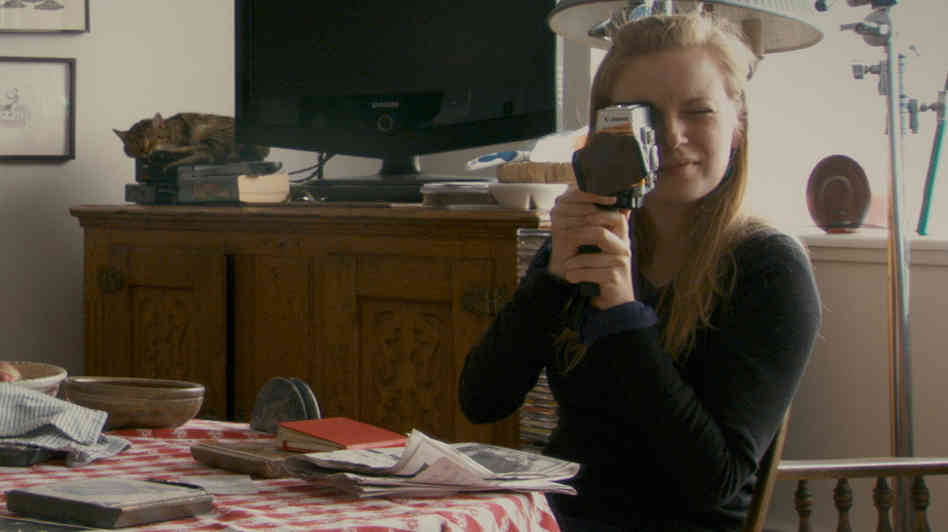
MZS: So, to return to an earlier thread: I wonder if maybe
we’re at the point where cinema as you define it is not dead, but…diminished.
Like in the way American musical theatre became diminished after a while, or
the way classical music became diminished.
GC: Or even jazz.
Jazz was central to the culture not that many decades ago, and rock and
roll was central to the culture.
And it hasn’t been, for quite a while.
No. And it will never return to the centrality it had,
because that’s not the way that culture works. Culture is always moving on to something else, always
evolving into something else.
Hip-hop, too, will have its rock and roll moment where
nobody cares anymore.
I think it’s already progressing towards that. We just don’t see what’s coming after
hip-hop really, except this bland multi-national pop.
So is someone who’s deciding to work in features, that
in theory will show in a theatre somewhere, and run anywhere from 90 minutes to
2 hours 20, practicing a dying art form?
Or is that too extreme a statement?
I think when people start out by doing anything like
that, they need to start with the idea of making a living, you know? I mean, you can start with the idea of
making high art, but I think you’re better off if you start with a love of the
medium that draws you into figuring out how you can practice it, and then
practice it as best you can.
But I think that filmmaking, or image creation is something
that still has a lot of possibilities for young people who want to start out
and do that in some form or another.
Maybe it’s not going to be features, but then I think anybody that’s
young that’s starting out needs to look at the whole spectrum of possibilities,
from documentaries to bigger films to smaller films and find out where their
talents or abilities fit in and go from there. I do think people can aspire towards doing anything they
want to do.
But I just don’t think it’s realistic now to think that the
kind of film culture that really gave us Scorsese, Coppola, Malick or any of
the great foreign directors…Wertmuller, Bergman…is going to be there in years
to come, because it’s already gone.
It’s already in the rear-view mirror.
But I think there are good things about where we are now
too, and one thing I’ve ben focused on lately is documentaries. I’ve been watching a lot of
documentaries and I think there are a lot of amazing documentaries out
there.
There are, and there’s a subculture of people who only
watch documentaries, and I’m sure you’ve met some of them.
Yeah, exactly.
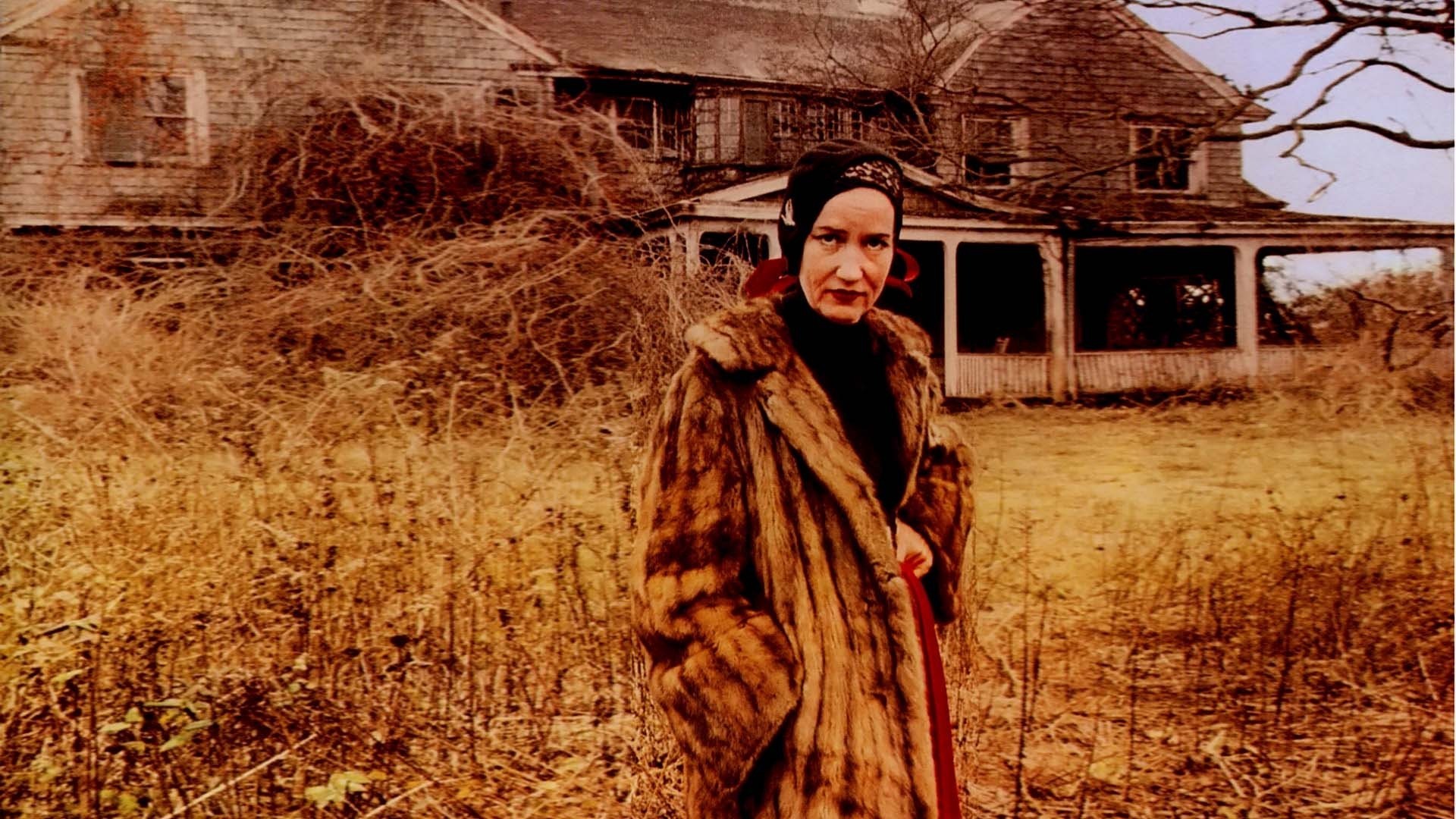
GC: I had the pleasure of going to the Twin Falls festival this year, the
Full Frame documentary festival, and to go to one of those well-curated
documentary festivals is to be astonished at the level of quality that’s out
there, and a lot of those films don’t make it into theatres. The best way to see them, if at all, is
on TV, so it’s not the same kind of culture but it is, I think, one of the
healthiest aspects of film culture out there now.
MZS: People love documentaries, and I hear an excitement in
the voices of people who are discussing documentaries amongst themselves that
rivals anything we would’ve heard 15, 20, 30 years ago talking about art house
cinema in general.
Well I think there are a couple of aspects to that. One is that documentaries can be a lot
more personal than bigger, dramatic films can be these days.
Because there’s less money at stake?
Yeah, but also because documentaries lend themselves to
a personal POV. You know you’re getting
someone’s POV in this, and the POV, to be interesting, needs to be strong and
distinct, where I think in a lot of movies and TV, people don’t care about that
POV in the way that they used to.
It used to be, that was a big part about why you went to a Bergman,
Fellini or Scorsese movie. That
directorial POV was a very big deal.
Now it’s still a big deal for Wes Anderson or somebody like
him. There are younger directors now that have that kind of following, but not
nearly as many as there used to be.
So I think it’s interesting, the opportunities for documentary
filmmaking to allow people to establish POVs.
But the other thing is that the documentary is dealing with
real things out there in the world. It makes me think about what happened back when
the Italian neorealists came along. Those filmmakers set the tone after WWII of
people who were interested in film as a serious mode of expression. The mode of expression was serious
because it dealt with things out there that you weren’t getting through the
normal media, and people who felt like they wanted to engage with the world
through film were drawn to that kind of movie. It was completely the opposite of the idea of film as
escapism, which up until that point had dominated films. I’m talking about movies-as-entertainment.

MZS: Right. And then in the 50s and 60s and beyond, you got directors
as diverse as Elia Kazan and Otto Preminger, and Richard Brooks and Robert Rossen,
who all came out of a kind of Neorealist philosophy as well, if only in the
sense that they were drawing on life, confronting it rather than trying to help
people escape it. They were making movies that were not documentary-real,
whatever ‘real’ meant. But they were certainly trying to represent the problems
of people who had actually lived in this world. They were trying to show the
world, not an idea of the world. They weren’t perfect in how they went about
it, but that’s what they were doing.
GC: Exactly, and in addition to dealing with the real world,
there’s also an aspect of humanism, a kind of humanistic view of people, trying
to be concerned with their problems and trying to relate the viewer to those
problems out there in the world.
These are all things that have attracted serious-minded people to
artistic films all along, and now documentaries are giving the opportunities
for those things to be expressed a lot more than some other kinds of dramatic
or fictional movies.
So you think that while cinema as a whole may be
coughing out its death rattle, there’s hope with documentaries?
I think that the areas of filmmaking where there are
newer artistic possibilities coming along, and refreshing people’s ideas of
what film can be are still out there and are still going to be out there. I think right now’s a particularly
important time for non-fiction filmmaking, and the other reason is not just the
three things I pointed to, but the fact that digital technology enables people
to go out and shoot 2,000 hours of something like that on a low budget. Nobody could make some of these films
like we’ve seen in the last ten or fifteen years if they’d been trying to make
them on 16mm film even, much less 35mm.
So to me, it is kind of a golden age for documentary filmmaking that is
a good thing for cinema overall.
Enabled, ironically, by some of the very same
technology you were so concerned about in 1999!
That’s right. Even though these are things I think are
keeping alive some of the things we valued about cinema when we were first
getting into it when we were young, I don’t know if anything is greatly
expanding or anything that is really new is being added to the vocabulary. It’s just good to see some of the
things that are valuable furthered.
Looking back, I’m very proud of these pieces. Although I did
a lot of speculative forward thinking in them, I wasn’t really trying to
predict the future. I was trying to start a conversation about these impending
technological changes, and their aesthetic and cultural ramifications. People sometimes
seemed startled by my ideas. But the positive reactions they got told me that readers were ready to have this conversation.
Source: http://www.rogerebert.com/mzs/death-of-filmdecay-of-cinema-at-15-a-conversation-with-godfrey-cheshire