Categories
TV & Movies

Menahem Golan: 1929-2014

Thumb_menahem_golan_034_edited

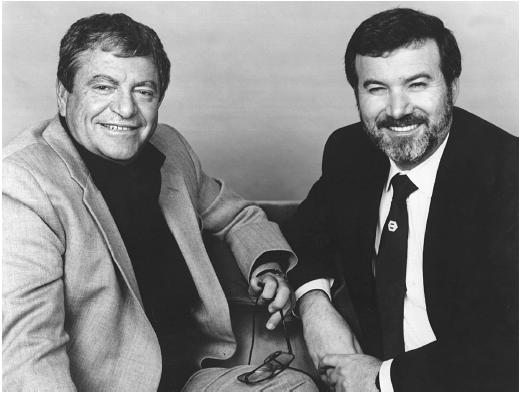
Since its inception, the film industry has attracted all sorts of colorful types—hucksters willing to churn out the sleaziest junk imaginable in order to make a quick buck, idealists with a desire to make great art regardless of the cost, glory grabbers who crave the spotlight and all the adulation that comes with it and gamblers possessing the will to risk it all and the nerve to do it all over again if that big bet fails to pay off. However, few have embodied all of those traits as boldly as Menachem (sometimes Menahem) Golan, who died earlier today at the age of 85. Throughout a long career that saw him working as a producer, director and eventually the head of his own studio, he brought together art, commerce and sheer chutzpah in such a way that if one even dared to make up such a character in a fictional work, such a creation would be dunned as being simply too good to be true.

Born in Tiberias, Palestine (now Israel) on May 31, 1929, Golan served in the Israeli Air Force, and, after leaving the service, attended the Old Vic Theatre School in England before returning home to Israel to work as a theatrical producer. His first brush with the world of film came in 1963 when he was hired to work as an assistant to B-movie legend Roger Corman on “The Young Racers.” Duly inspired, he shifted towards the cinema and teamed up with his cousin, Yoram Globus, to make his first feature film “El Dorado” (1963), which he also directed. The partnership with Globus—Golan handled the creative aspects while Globus stuck to the financial areas—was fruitful and the next year, another one of their productions, “Sailah,” was nominated for an Oscar for Best Foreign Language Film and won the Golden Globe in the same category. While their films were successful at home over the next decade or so, they yearned to break into the international market.
That moment finally came in 1979 when, fueled by such hits as the Oscar-nominated “Operation Thunderbolt” (1977), a recreation of the raid on Entebbe that occurred the previous year, and the teen comedy “Lemon Popsicle” (1978), Golan & Globus purchased the ailing British distribution company The Cannon Group and began to aggressively court the international markets. Their early efforts, such as “The Happy Hooker Goes Hollywood” (1980) and the now-infamous futuristic musical “The Apple” (1980), did not go over well but they soon began to hit a hot streak with such low-budget exploitation films as “Death Wish 2” (1982), “The Last American Virgin” (1982), “Hercules” (1983), “Breakin” (1984), the now-legendary “Breakin 2: Electric Boogaloo” (1984) and the Chuck Norris epic “Missing in Action.” Fueled by the home video boom of the early 1980’s—a time when the insatiable need for product helped institute a boom in production amongst smaller distributors who could sell their wares for quick and easy profits—they were able to amp up their slate of releases to the point where they produced no less than 35 films in 1987 alone.

If Golan had done nothing but produce exploitation films, he would have earned his place in the cinematic pantheon in the eyes of many film fans, but what made him truly unique was the way that he was equally determined to produce and distribute films that would play in arthouses as well as grindhouses. At the same time that he was grinding out one film after another with Charles Bronson or Chuck Norris, he was producing films for John Cassavetes (“Love Streams”), Andrei Konchalovsky (“Maria’s Lovers” and “Runaway Train”), Robert Altman (“Fool For Love”) and Franco Zeffirelli (“Otello”). In 1987 alone, he released Kochalovsky’s family drama “Shy People,” Barbet Schroeder’s exuberant Charles Bukowski saga “Barfly,” Norman Mailer’s outrageous adaptation of his own pulp fiction pastiche “Tough Guys Don’t Dance” and, most bizarrely of all, a film version of Shakespeare’s “King Lear,” which was to have been written by Mailer (therin lies a long story) but which was directed by Jean-Luc Godard and which featured a cast including the likes of Burgess Meredith, Molly Ringwald, Julie Delpy and, in the role of the Fool, none other than Woody Allen. To make even one of these films would require an extraordinary amount of bravery, ambition and cojones but to do them all was something to behold. Granted, the worlds of art and exploitation had crossed in the past—schlockmeister Kroger Babb released a couple of sexy early Ingmar Bergman films on the drive-in circuit and Roger Corman distributed films like “Cries and Whispers” and “Day and Night”—but the difference here was that Cannon sold a film like “Otello” with the same kind of zeal and hype that they would also bring to the likes of “Death Wish 3”.

It is at this point that the story turns, though in true Golan fashion, it turns in spectacular fashion. While Cannon had a number of successful films, they never had the kind of massive blockbuster that would have made up for any number of lesser-performing films. In the mid-1980s, he and Globus decided to step up into the big leagues by making more expensive films, purchasing their own theatre chain in England and, most infamously, paying Sylvester Stallone a then-astronomical $12 million to star in “Over the Top,” an arm-wrestling melodrama that Golan personally directed. The trouble is that these more expensive films—including Tobe Hooper’s delirious naked space vampire extravaganza “Lifeforce” (1985), a fairly unnecessary remake of “Invaders from Mars” (1986) and the aforementioned “Over the Top”—were stiffs at the box office. And when Cannon tried to save money by cutting corners elsewhere, such as by slashing the effects budgets on films like “Superman IV: The Quest for Peace” and “Masters of the Universe” (both 1987), the results were hooted off the screen. At the same time, the lower-budget films weren’t making much of an impact either and the home video market was beginning to dry up as well due to over-saturation. By 1989, the jig was up, Cannon went into bankruptcy, Golan & Globus had a very acrimonious split and Golan left to form 21st Century Pictures.

Over the next couple of decades, Golan would continue to produce and occasionally direct films (the most intriguing-sounding of the bunch being an adaptation of “Crime and Punishment” with Vanessa Redgrave and Crispin Glover that was never released), some in conjunction with Globus, with whom he would occasionally reunite, and would find himself a part of one of the weirdest stories in exploitation film history. Soon after forming 21st Century Pictures, the lambada craze hit (ask your parents) and Golan figured that a quickie movie inspired by the dance might be as much of a success as the “Breakin” films. Alas, Globus had the same thought and was quick enough on the draw to secure the use of the title “Lambada” for his project. Not to be outdone, Golan snagged the rights to the actual “Lambada” song and, as insane as it sounds, two competing Lambada-related films were rushed into production in a desperate race to be first. The punchline is that the race proved to be a tie as both Golan’s “The Forbidden Dance” and Globus’ “Lambada” opened on the exact same day (March 16, 1990) and essentially cancelled each other out.

That is a great Golan story but it is hardly the only one. There is the tale that at the premiere of “The Apple,” copies of the soundtrack album were distributed to the audience, who later began flinging them like frisbees at the screen. There is the story of how Barbet Schroeder threatened to cut off his finger right in front of Golan if he did not fund “Barfly.” There is the madness that surrounded the production of “King Lear,” a film that continues to baffle even Godard’s most ardent fans. However, the best Golan story is the one captured by Roger Ebert in “Two Weeks in the Midday Sun: A Cannes Notebook,” his wonderfully observed portrait of the clash of culture and commercialism that was the Cannes Film Festival circa 1987. This was the year when Golan, who craved the respectability that comes with international recognition, had several films in competition that year and his unashamed desire to win, as recounted by Ebert, made him one of the most colorful characters in a narrative full of them.

Although Menachem Golan may have never quite achieved the respectability that he desired during his years as a filmmaker, the passing years have been kinder to the man and his cinematic legacy. As a producer of serious-minded films for adult audiences at a time when such things were becoming increasingly scarce, he was practically without peer and while they may not have been hits at the time, films like “Love Streams,” “Barfly” and yes, even “Tough Guys Don’t Dance” have become cult favorites. As for his junkier efforts, they may not be masterpieces by any stretch of the imagination but some of them—especially the surprisingly effective “The Delta Force” (1986)—are fairly effective, and even the worst have glimmers of personality, which is more than can be said about most of today’s big-budget trash. Hell, he even once made a live-action version of “Puss n Boots” (1988) with none other than Christopher Walken in the title role (and yes, you want to see it right now). To confirm the shadow that he continues to throw over the world of film, consider that this year the release of not one, but two documentaries chronicling his career and the history of Cannon, “Electric Boogaloo: The Wild, Untold Story of Cannon Films” and “The Go-Go Boys: The Inside Story of Cannon Films.” In most cases, two films on the subject might seem like overkill, as the dueling Lambada films proved. With a life and career as fascinating as Golan’s, two films hardly feels adequate.

Source: http://www.rogerebert.com/balder-and-dash/menahem-golan-1929-2014


Categories
TV & Movies

Step Up All In

Thumb_stepupallin-2014-1

Certainly you don’t go to a “Step Up” movie for the
glittering repartee. You go for the dazzling dance moves. But even by the
standards of this franchise—and this genre in general—“Step Up All In” is
pretty laughable.

If only there were a way you could fast-forward through all
the junk while sitting in the movie theater—the wooden delivery and
barely-there characterizations, the tedious exposition and contrived conflicts—and just get to the performances. But alas, one must endure banal dialogue
and a flimsy plot in order to enjoy the gravity-defying, acrobatic
extravaganzas. It’s enough to make you with they’d called the movie “Step Up
and Shut Up.”

Instead, the title of this fifth film in the series is as
bland as the members of the competing dance crews that populate it. Perhaps
there’s some allure here for true devotees in that characters from previous installments
return and collaborate, “Fast-and-Furious”-style. (Sadly, Channing Tatum—who
began his rise to superstardom in the original “Step Up” back in 2006—is
nowhere to be found. Then again, he has far better things to do these days.) If
you’re a newbie, you won’t be lost—this isn’t exactly a Christopher Nolan
film in terms of narrative complexity—but you’ll probably be checking your
watch as you wait for the next dance number to start.

Director Trish Sie’s feature debut, with a script from John
Swetnam, begins in lively fashion, though. Sean (the blankly handsome and hunky
Ryan Guzman) and his pals in the dance crew The Mob work their butts off at
commercial auditions while wearing ridiculous costumes and incorporating
various products. It’s the dance-film version of a rom-com bad date montage.
These are the performers who moved from Miami to Los Angeles after winning a spot
in a high-profile Nike ad in the previous movie, 2012’s “Step Up Revolution,” but now they’re finding that surviving as working dancers in L.A. is nearly
impossible and decide to go back home—all except Sean.

He discovers a VH1 competition called “The Vortex,” which will
give one winning dance crew a three-year gig at Caesars Palace in Las Vegas.
The host is the outlandish Alexxa Brava (the perky, Polish actress-dancer
Izabella Miko), who clearly shops at the same boutique as Effie from “The
Hunger Games.” She’s super dramatic in her delivery as she announces the teams
and the rules, but it’s hard to tell whether she’s going for over-the-top
parody or run-of-the-mill Vegas cheese.

Sean quickly assembles a new crew, including the
good-hearted Moose (series veteran Adam Sevani), who brings the group together;
the stubborn Andie (the Demi Moore-esque Briana Evigan from “Step Up 2: The
Streets”); and the daffy Jenny Kido (Mari Koda, another series regular), who
provides broad comic relief. There are so many characters crammed in here,
though, that it’s easy to forget that some of them even exist. Which is the guy
from Baltimore and which is the one from the Bronx? Doesn’t matter, really, as
long as they hit their marks sharply.

And they do—they all do—in increasingly elaborate dance
numbers. An early dance-off at a bar opposite the rival crew the Grim Knights
is fun in an aggressive sort of way. The mad-scientist inspired performance
they concoct for their audition tape is a highlight (but please don’t trouble
your mind wondering how they got a hold of all those costumes and props and
shot it all with multiple camera angles).

But the big finale where the top four crews in the
competition battle it out for world domination is a lengthy and thoroughly
enjoyable spectacle that makes all the preceding dreck worthwhile. It’s an
awe-inspiring display of choreography, energy and athleticism. Naturally, the
finalists include Sean’s new crew, his old crew and the crew they both can’t
stand, led by a sleazy Stephen “Stev-O” Jones. (This is not a spoiler. This is
the cosmically contrived way these things work out in movies like this,
regardless of the kind of competition.)

Will Andie get over her fear of injuring her knee again and
pull off that big, climactic stunt? Will Sean ever be able to pay his rent
again? Will Sean and Andie kiss as knew they would from the first second they met,
despite a complete lack of chemistry? And where did they get the flaming
torches for their climactic last dance? Shutting off your brain and putting on
your dancing shoes seems to be the only appropriate answer.

Source: http://www.rogerebert.com/reviews/step-up-all-in-2014


Categories
TV & Movies

Thumbnails 8/8/14

Thumb_07jpguardians-articlelarge

1.

“Armed Animals Don’t Invent Themselves”: Dave Itzkoff of The New York Times reports on how the creators of “Guardians of the Galaxy” hero Rocket Raccoon are fighting “for cash and credit.”

“With the biggest comics publishers supplying content to two major studios — Marvel is owned by Walt Disney, and DC is a unit of Warner Bros. — writers and artists accept that credit and compensation for their contributions to films come only with the expenditure of their blood, sweat and tears, if at all. ‘My attorney is very good,’ Michael [Mantlo] said. ‘I’m not going to say Marvel came to me and opened up their hearts and their purse strings.’ And as studios dig deeper into the publishers’ rosters of heroes and villains, past Superman and Spider-Man to Rocket Raccoon and beyond, overlooked characters, often decades old, now possess new worth that is almost certain to be battled over. ‘As they see characters that were C- and D-level in the comics but can open a movie, everything becomes new again,’ said Marc Tyler Nobleman, an author who has written about the origins of comics publishing. ‘You can take almost anybody,’ he said, ‘and make a big movie out of it.’”

2.

“Why Some Movies Shouldn’t Be Explained”: IndieWire‘s Max O’Connell tackles moviegoers’ obsession with explaining ambiguous art.

“This speaks to a larger issue in moviegoers and TV fans trying to solve everything whether or not it’s a puzzle – every ambiguity has to be a clue to something much larger. But that robs so many films of their power. Would ‘Picnic at Hanging Rock’ or ‘L’Avventura’ benefit from solutions to the mysteries that Peter Weir and Michelangelo Antonioni weren’t interested in solving? ‘Room 237’ is a fascinating look at movie obsession, but the film doesn’t reveal what ‘The Shining’ is about so much as it reveals that the film is practically designed to be a cinematic Rorschach test. This could extend to horror films as well, where rational explanations for what’s going on often make the films less interesting. ‘Halloween’ was frightening because there was no explanation for Michael Myers’s actions or his unstoppable nature. When it was explained in ‘Halloween II’ as ‘it’s because Jamie Lee Curtis is his sister,’ it became banal. ‘Psycho’ is more frightening if you ignore psychiatrist Simon Oakland’s explanation of Norman Bates’s psychosis and instead accept that it’s far beyond rational explanation, as I’d argue the final scene suggests.”

3.

“Fear of a Minority Superhero: Marvel’s Obsession with White Guys Saving the World”: An impassioned analysis from The Daily Beast‘s Marlow Stern.

“So why, in 2014, is the superhero standard-bearer so minority-averse? There are, it seems, a variety of factors at play here—from the financially motivated (international box office) to the cultural (inequality) to the practical (source material). The media’s counterpoint to this argument is the recent Marvel superhero flick ‘Guardians of the Galaxy,’ which opened to a stellar $160.4 million worldwide, and boasts a multi-ethnic cast, including Zoe Saldana (Hispanic), Dave Bautista (Filipino), Djimon Hounsou (West African), and Benicio Del Toro (Mexican). ‘It was very important to me to have a diverse cast of different people,’ said the film’s director, James Gunn, adding, ‘Let’s face it: there’s still a certain amount of racism in human beings, so that shows up in Hollywood.’ But ‘Guardians’ isn’t that diverse, really. Saldana and Bautista play space aliens who are colored different shades of green, while Del Toro and Hounsou serve very minor roles. The film’s hero, Star-Lord, is played by Chris Pratt, a corn-fed blond, white guy from Minnesota—and the third major Marvel superhero played by a white guy named Chris, joining the broad-shouldered ranks of Chris Hemsworth (Thor) and Chris Evans (Captain America).”

4.

“Wandering in the Wilderness: Christian Indies of 2014”: At Indie-Outlook.com, I provide a candid analysis of recent Christian films including “Son of God,” “God’s Not Dead,” “Heaven Is For Real” and “Persecuted.”

“Though the Christianity of Wallace, Burpo and their overarching message are undeniable (as evidenced in the final scene, a payoff set up by the mystifying prologue in Lithuania), there are several pointed moments designed to lessen the alienation of moviegoers who have different beliefs. In his climactic sermon, Burpo refers to Colton’s stories as his son’s vision of heaven, suggesting that one’s perception of the afterlife may be subjective. After observing the mixture of elation and unease provoked by the name Jesus, Burpo adds, ‘Did God insist on my vision being the same as yours? Or yours?’ This pastor’s savior is not a God of judgment (but of love), nor is His existence dependent on an ignorance of science (note Burpo’s subtle linkage of biblical teachings and the theories of Einstein). What a refreshing change of pace from both the sanctimonious schlock of ‘God’s Not Dead’ and the pervasive cynicism of endless hipper-than-thou blockbusters that render faith a four-letter word. Wallace’s film falls short of greatness, but that isn’t really its goal. It merely wants to tell a good story that will inspire viewers to look beyond the boundaries of their own earthbound rationality.”

5.

“The American people gave exactly 4,377 f***s for net neutrality”: T.C. Sottek of The Verge compiles the profane online stats regarding public reaction to net neutrality.

“Americans are mad about losing net neutrality rules. Really mad. So mad that among the 1.1 million comments submitted to the Federal Communications Commission, they offered f-bombs, death threats and just overall super-pissed language. But so far the FCC hasn’t provided the full deck of comments to the public — until now. Thankfully the data wizards at Vox Media have been crunching through the numbers, and we now have a top-down view of just how mad citizens are about the crony capitalism that’s led to regional broadband monopolies, embarrassing internet speeds, and perpetually late cable guys.”

Image of the Day

In his excellent, sprawling essay, “Bombast: It’s War,” Film Comment‘s Nick Pinkerton dissects everything from Samuel Fuller, Chris Marker, Alain Resnais and Cy Endfield’s “Zulu” to “Dawn of the Planet of the Apes.”

Video of the Day

Doug Walker, a.k.a. The Nostalgia Critic of ThatGuyWithTheGlasses.com, presents his marvelously entertaining list of the Top 11 Movie Trailers, proving that big screen advertisements can indeed be raised to the level of an art form (see “Little Children”).

Source: http://www.rogerebert.com/thumbnails/thumbnails-8814


Categories
TV & Movies

“Life Itself” Screens at Indiana University Cinema and Vickers Theatre

Thumb_vickers_theatre_03

Movie buffs and fans of Roger Ebert in Indiana and Michigan have reason to rejoice. Steve James’ acclaimed documentary, “Life Itself,” based on Ebert’s bestselling 2011 memoir, opened Thursday, August 7th, at the Indiana University Cinema and the Vickers Theatre. RogerEbert.com chatted with Jon Vickers, director of IU Cinema and former owner of the Vickers Theatre, about the upcoming screenings, special guests and memories of Roger.

What are your thoughts regarding “Life Itself” and its opening at the theater?

We are very excited to be opening the film at the Indiana University Cinema, and coincidently at the Vickers Theatre in Three Oaks, Michigan, at the same time. Roger and his criticism have played an important role in my life, both casually as an enthusiastic cinephile and more formally as an exhibitor. When we opened the Vickers in the mid-90s, it was pre-internet. Roger was one of the critics that we relied heavily on in our programming decisions. Our theatre was in a small (mostly) farming community of 1800 people. Of course, we drew from surrounding communities, but Roger’s reviews helped us ‘sell’ sometimes inaccessible international films to a broader audience. I specifically remember this when screening a reissue of Hiroshi Teshigahara’s “Woman in the Dunes.”

We’ve been waiting for this weekend since seeing “Life Itself” streamed from its premiere at Sundance in January. Part of this excitement comes from having the good fortune of knowing Roger over the years, as well as most of the filmmakers who were interviewed in the film. I guess that you can say that there is a personal connection to the film. A number of Roger’s friends also have some tangential connections to the Vickers Theatre. I have not spoken to Bill (Lindblom, one of the new owners of the Vickers Theatre), but I am certain that it was filled last night with enthusiastic fans of Roger and Chaz.

What connection does Ave DuVernay have to IU?

The IU Cinema hosts many filmmakers each year. When hosting Ava DuVernay for a retrospective of her work, we connected with Steve James (or vice versa) and took advantage of the proximity to Chicago for taping her interview [which was featured in “Life Itself”]. We also, of course, wanted to be part of the project, even in this minor way.

How many screenings are scheduled?

Here at IU Cinema, we only have three-day runs in our summer months without students. We are bringing the film back in October, when we will screen a partial retrospective of Steve James’ work, with Steve in attendance. We’re looking forward to sharing the film again with our community and students. At the Vickers Theatre, the film runs for at least a week, perhaps longer. Producer Zak Piper and crew member Jim Morrissete will be at [the 2pm screening on Sunday, August 17th] the Vickers Theatre.

I did not know Roger well, but had the opportunity to speak with him either at the Vickers Theatre or film festivals many times. He was always so giving of his time and seemed genuinely interested in what we were doing. He made you feel like the most important person in the room. This generosity carried over in print for the Vickers Theatre as well when he included us in a handful of his reviews and later in his blogging. For all of this, we remain grateful.

From Roger’s Great Movies essay for “Battleship Potemkin”…

“Having said that, let me say that ‘Potemkin,’ which I have seen many times and taught using a shot-by-shot approach, did come alive for me the other night, in an unexpected time and place. The movie was projected on a big screen hanging from the outside wall of the Vickers Theater in Three Oaks, Mich., and some 300 citizens settled into their folding chairs in the parking lot to have a look at it. The simultaneous musical accompaniment was by Concrete, a southwestern Michigan band. Under the stars on a balmy summer night, far from film festivals and cinematheques, Sergei Eisenstein’s 1925 revolutionary call generated some of its legendary rabble-rousing power.”

From Roger’s review of “Reel Paradise”…

“I know a couple named Jon and Jennifer Vickers, who moved to Three Oaks, Mich., (population 1,829) and bought the local movie theater. It’s 30 miles from the closest multiplex. They show first-run art films, and after eight years are a solid success. ‘The audience isn’t just the Chicago weekend people,’ my friend Mary Jo Broderick tells me. She goes every week. ‘I see the same people I see in the supermarket in February.’ The Vickers’ theater doesn’t show only ‘March of the Penguins’ but Herzog, Wong Kar Wai, Bergman, Jarmusch. Every summer, they have a silent film festival.”

Visit the official sites of Indiana University Cinema and the Vickers Theatre to find showtimes for “Life Itself.” To find where the film is also playing, click here.

Source: http://www.rogerebert.com/life-itself/life-itself-screens-at-indiana-university-cinema-and-vickers-theatre


Categories
TV & Movies

Teenage Mutant Ninja Turtles

Thumb_teenagemutantninjaturtles-2014-1

If nothing else, “Teenage Mutant Ninja Turtles” reminds us that
nostalgia is often used as a mandate for spectacularly lazy filmmaking.
Yes, I
too loved the action figures, video games, cartoons, and previous
live-action commercials, I mean movies. But a “Teenage Mutant Ninja
Turtles” film that’s trying this hard to pander to my childhood love of
pizza, karate, and talking animals shouldn’t be this imaginatively
challenged. We’re talking about a film where exposition is dumped over
viewers’ heads in every other scene, action scenes are loud and
uncoordinated, and every joke feels like it was scripted hastily in the
vain hope that punch-up writers would later rewrite them. Instead of a fun and unchallenging limp down memory lane,
“Teenage Mutant Ninja Turtles” is an energy-sapping exercise in futility
that will leave you begging for less.

In “Teenage Mutant Ninja
Turtles,” an inquisitive reporter discovers that you can make an
inherently absurd premise even more hard-to-swallow with a convoluted
backstory. Channel Six news anchor April O’Neil (Megan Fox) wants to be
taken seriously as a journalist, so she investigates a city-wide crime
wave involving gun-toting bad guys called the Foot Clan. She becomes
even more determined to follow this story after witnessing a mysterious
vigilante stop a Foot robbery by chucking an industrial-sized shipping
container at the bad guys. She then discovers that this crime-stopping
hulk isn’t working alone, and that both she and her own late father have
ties to this shadowy superhero that go as far back as 1999. So
April spends the first half of “Teenage Mutant Ninja Turtles”
establishing how she’s related to the Ninja Turtles—disciplined
Leonardo (voiced by Johnny Knoxville), hot-head Raphael (Alan Ritchson),
goof-off Michelangelo (Noel Fisher), and geek Donatello (Jeremy
Howard)—and soft-spoken (but totally unsuspicious!) philanthropist Eric
Sacks (William Fichtner). Fifty minutes later, conflict ensues.

The
fact that April’s search for answers comprises half of the film’s plot
suggests that the film’s creative committee got so wrapped up in using
her to relate their origin story’s plot that they forgot what viewers
came to see. This is where the film’s shock-and-awe maximalism (ie:
everything bigger for no good reason) starts to make a soul-crushing
kind of sense. You don’t need to do much to impress viewers if you can
immediately overwhelm them. So these Turtles are bullet-proof, six-foot
tall mountains of biceps and quads. Likewise, Foot leader Shredder
(Tohoru Masamune) looks like a samurai-themed death metal band-leader
with an Edward Scissorhands fetish. And Turtles leader Splinter (voiced
by Tony Shalhoub) looks like a cross between old man Groucho Marx and a
freakshow pinhead…with a three-pronged Fu Manchu mustache. Thanks to
the film’s ill-advised use of post-converted 3D projection, you can get
an up-close look at their freakish appearances.

Likewise, the
film’s action scenes are all so frenzied so that director Jonathan
Liebesman (“Battle LA,” “Wrath of the Titans”) didn’t waste time on
choreography, humor, or anything more than frantic motion. This is OK
for an introductory fight scene, when April can’t clearly make out the
Turtles beating up the Foot clan on a dark subway platform, but it
doesn’t fly during a down-hill car chase that involves a Humvee, rocket skateboard and electric grappling hook things. Characters are
routinely shot out of focus and barely even covered competently,
unceremoniously drifting in and out of the camera’s frame.

The
same is true of the film’s winking jokes, joyless attempts to
acknowledge and muscle past the film’s inherent ludicrousness. This
isn’t a new tactic, but in previous cartoons, Michelangelo, the group’s
comic relief, was at least funny. Here, Mikey’s best scene is the one
where he leads the group in beatboxing before a climactic (ie:
overstuffed, and noisy) battle. But Fisher’s just not naturally
charismatic, and the material he’s given to work with is a joke without a
punchline: look, hip-hop turtles, so much more wacky than martial artist
turtles! This is a gag for people who don’t have the attention span for
gags just as “Teenage Mutant Ninja Turtles” is nostalgia-bait for people
that only need an excuse to regress. You already know whether or not
you’re going to like this film, and that’s kind of the problem.

Source: http://www.rogerebert.com/reviews/teenage-mutant-ninja-turtles-2014


Categories
TV & Movies

The Dog

Thumb_the-dog-2014-1

Most great documentaries are triumphs of people-watching. “The Dog,” a nonfiction account of the true story behind “Dog Day Afternoon” is a triumph. It’s filled with individuals so so complicated and fascinating that my first thought after watching it via screener was, “I really wish I’d seen this with an audience.” A hypothetical theater showing “The Dog” would, I’d imagine, be periodically seized by the best kind of laughter: the laughter of affirmation; laughter that says, “Yes, that’s it, that’s how people are.”

From start to finish, co-directors Allison Berg and Frank Keraudren seem to be operating from a place of nonjudgmental curiosity, one so pure and sustained that after a while it becomes indistinguishable from love. They can’t get enough of John Wojtowicz, the real-life Brooklyn wisenheimer who called himself Little John due to his admitted lack of endowment and yet still had the cojones to join up with a pre-Stonewall political activist group, rob a bank at Avenue P and East Third Street in August, 1972 to pay for his lover’s sex change, and talk smack to a cop who dared call him a homophobic slur while reporters looked on. The filmmakers love Little John’s mother Terry, too, and his ex-wife Carmen, and his prison lover George Heath, and his great love Liz Eden, akak Ernest Aron—and as journalists, why wouldn’t they? They’re all marvelous, real-life characters.

Little John, who was a fiftysomething snaggle-toothed showboater whose every utterance sounds like dialogue from an unproduced one-man show, is a magnificent protagonist, though—more old Joe Pesci than young Al Pacino when the filmmakers first started interviewing him in 2002, but still riveting thanks to his mix of shamelessness and honestly. He seems to know himself rather well, and when he puffs himself up in an anecdote there’s a twinkle in his eye, as if he assumes the people on the other side of the lens are friends who will see through him no matter how much he self-aggrandizes and exaggerates.

He tells us he was a closeted Catholic who had his first homosexual experience in the Army; that he was a decorated Vietnam veteran loved his wife and kids but was bisexual and couldn’t keep half of his sexual identity under wraps; that he joined the Gay Activists Alliance in the Village mainly to get laid; that he adores his mother and his entire extended family; that he’s been capable of sexually predatory behavior throughout his life, and that even in his fifties he wasn’t above cruising for sex in public parks with homeless or drug-addicted men who’d do almost anything for a few bucks; that he had violent altercations with Eve, including one that involved a knife, which he didn’t pull on her, swear to God, officer; that every one of his long-term lovers, male or female, meant something to him. Somehow none of this seems contradictory. Little John may be little, but he contains multitudes.

Without making a big deal of it, “The Dog” also positions Little John as minor but genuine (though accidental) folk hero during one of the most tumultuous periods in gay and lesbian history. With the benefit of smug modern hindsight, it seems hard to imagine how astounding it must have been to watch this skinny and short but darkly handsome man hold court (and hostages) in a working-class ethnic section of Brooklyn in 1972, just three years after Stonewall, and kiss a man on the lips on live TV (an ex-lover whom the cops accidentally sent to the bank in Eve’s place) as if it were, in fact, a perfectly ordinary display of affection, and then respond to the crowd’s catcalls and insults with curses and obscene hand gestures. Little John strutted and bantered and tossed money in the air a la Robin Hood and ordered pizzas delivered to the bank. He was a live-wire New York character who just happened to be gay. If you didn’t like it, you knew what you could do with it.

On top of all that, Little John was—in this particular instance, anyway—truly romantic. Good a movie as it was, especially in portraying gay characters as eccentric but emotionally credible individuals during the machismo-obsessed ’70s, “Dog Day Afternoon” didn’t really get across the magnitude of Little John’s gesture in robbing the bank to pay for Eve’s operation. Here was a man in love with someone who was biologically male but presented as female. He rather pointedly told Eve that he loved the male parts of her, and couldn’t he just leave those alone and get a boob job or something? But then he relented and moved heaven and earth because he didn’t want to lose his dear Eve. Little John’s grim and sometimes appalling slapstick odyssey from bank to bank to bank on that fateful day seems less laughable than poignant when you realize that its theme song could have been “What I Did for Love.” Little John got 20 years for bank robbery and served five. He paid for Eve’s sex change by selling his story to Hollywood. Love is strange. Love won.

One of the more sneakily amazing aspects of “The Dog” is the way it puts a sociological frame around all of this personal and criminal melodrama. It’s one of the better documentaries of pre- and post-Stonewall gay life I’ve seen, thanks equally to its intimate newsreel and video footage of meetings and protests and TV news segments, and the deft way that it roots the political implications of everybody’s decisions in the cold facts of lived experience. At first you may smile when you hear this sleazy, smirking hustler repeatedly refer to his own role in “the gay revolution,” as if he got into it to write manifestos and walk in the footsteps of Gandhi and King. By his own admission he was more a hanger-on, in some ways a parasite, than a committed participant.

But the smile recedes as the film makes a case for every American being subtly affected by the changes occurring in gay and lesbian life, whether they were smack dab in the middle of that world or adjacent to it. Little John wasn’t in the middle, but he was. He wasn’t a hero, but he was, or he came across that way to some; or something; it’s wild; it’s chaos; it all just sort of happened. It had to happen. This sort of thing happened all the time in the ’70s. The world kept flipping over and over and over like an airborne pancake.

Faces and voices are the star of “The Dog.” Its true subject is not Little John’s crime or even the personal and historical circumstances that led to it, but the mysteries of the human personality. Every few minutes there’s a revelation or admission that lesser documentaries would save for their finales, such as Little John confessing that he encouraged his partner-in-crime to force himself on a third wannabe-robber who eventually bailed out, or Terry admitting that she used to follow her son around the Village as he cruised (he had no idea). And just when you think the story can’t possibly take you anywhere new, it does. There’s a revelation in the final third of this film that took my breath away because it’s so unexpected, and retroactively shines new light on everything Little John and his mother told us.

In an era of increasingly big, loud, glitzy productions that pulverize virtual cities with a quip and a shrug, it’s easy to forget how thrilling it can be to watch a person sit in chair and talk about about his or her life: proclaiming and preening; denying and avoiding; shaping a life story as if it were the narrative of a Hollywood blockbuster, only to have the tale’s construction undone, or deepened, by a cut to another witness who says no, sorry, that’s not how it happened. “The Dog” is a humbly extraordinary film.

Source: http://www.rogerebert.com/reviews/the-dog-2014