Categories
TV & Movies

A constant quality: Robin Williams, 1951-2014

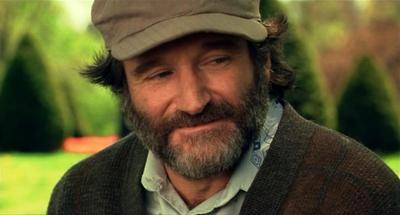
Thumb_good_will_hunting_robin_williams_speech_life_1

It’s hard to choose a single moment that represents the career of Robin Williams, who was found dead this morning of an apparent suicide at 63. Somehow they all seem representative. The Chicago-born, Michigan-raised actor’s performances shaded antic clowning with deep melancholy, and vice-versa. There were flashes of anarchic joy in his grimmest roles, and moments even in his most outwardly featherweight performances when it seemed as though a cloud had passed across his face. Last seen on TV in “The Crazy Ones,” a CBS series set at a Chicago ad agency, Williams battled drug problems and depression throughout his life. Although he had crests and troughs, the light never traveled far from the darkness or the darkness from the light. Like Jack Lemmon, you could believe Williams as a man standing on a ledge or walking on air.

That was the most surprising and often haunting thing about Williams: that sense that when he unleashed the full force of his talent—chasing a spark of inspiration as it hopped from neural pathway to neural pathway like a speed-demon driver changing lanes; rattling off free-associative thoughts that were sometimes connected by shared words or images or vowel sounds; pacing or racing while yammering and gesturing as if his whole being were taking dictation from his subconscious—he was reaching out to the audience and running away from something. “He could make everybody happy but himself,” said Garry Marshall, who made Williams a star by casting his in his breakthrough role as Mork from Ork on “Happy Days” and “Mork & Mindy.” Whether playing comedic or dramatic roles or doing standup routines or goofing around on talk shows, he never stayed in one mode for long. And it wasn’t just gradations of fun. You always sensed the darkness lurking. He could be purely silly for a while, or light and sweet, and then suddenly you’d get a flash of anger or bitterness that did not seem fake, and then he’d slip back into light or sweet or silly and make everyone laugh again.

“When he appeared on the Jonathan Ross show earlier this summer, he’d been vintage Williams, hyperactive to the point of deranged, ricocheting between voices, riffing off his internal dialogues,” wrote The Guardian’s Decca Aitkenhead in a 2010 profile pegged to “World’s Greatest Dad,” a pitch-black comedy with unbearably painful dramatic passages, many of which revolve around a suicide note. “Off-camera, however, he is a different kettle of fish. His bearing is intensely Zen and almost mournful, and when he’s not putting on voices he speaks in a low, tremulous baritone – as if on the verge of tears – that would work very well if he were delivering a funeral eulogy.” Anyone who knew Williams or spoke to him for any length of time or simply studied the man sensed this and understood it. Somehow none of it seemed incongruous or inappropriate because he was Robin Williams, and Robin Williams was everywhere and everyone at once, look out.
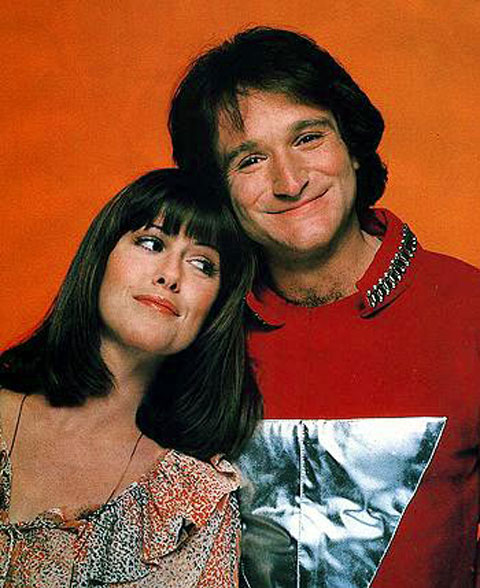
His first indelible character, Mork from Ork, was a one-off supporting character on Happy Days, an extraterrestrial who battled the show’s king of cool, the leather jacketed Fonzie (Henry Winkler). Producer Marshall was so impressed with Williams’ hair-trigger imagination that he built a spinoff around him, Mork and Mind. Mindy, the human roommate, foil, and future love interest played by Pam Dawber, set the template for a lot of his leading ladies and sidekicks, looking askance at his wild clowning; what else could a non-genius do but gape at a human spectacle? The show was even more of a situation comedy than most sitcoms, mainly because of who its star was. A man with Williams’s freewheeling brain might’ve had trouble staying on script anyhow, but at the time he was also feeding a prodigious cocaine habit, one he’d joke about and sometimes ruminate on as he got older (“Cocaine is god’s way of telling you you are making too much money,” he said in “Robin Williams Live at the Met”). He also drank too much. If he’d kept going like that, he might have completely lost it and started looking and sounding like the incomprehensibly babbling title character of the live-action cartoon “Popeye,” his first really memorable film role. He said he got sober in 1983 and stayed sober for 20 years, until he cracked while filming “Insomnia” (great performance as a possible psychotic killer) on location in Alaska, but there were relapses and treatments and apologies; anybody who’s dealt with these often-intertwined problems, substance addiction and depression, knows you don’t so much beat them as beat them back.

Or harness them. Like many other great stand ups who were also fine dramatic actors, Williams dove into darkness in many of his best roles. He never seemed to be having to imagine his way into the mindset of people who’d had numbed themselves with chaos (like his character in “The Fisher King,” who lost his wife in a random shooting and became convinced he was a knight on a holy quest) or routine (like the meek doctor in “Awakenings,” or the title character in “The World According to Garp,” whose opening credits song, “When I’m 64,” will pierce more deeply now).

Despite “Garp,” a lovely adaptation of a book some thought unadaptable, it took a while for him to be taken seriously as a dramatic actor, and an equally long time for one of his films of his films to hit big. He crossed both achievements off his list after 1987’s “Good Morning Vietnam,” in which he played a character loosely based on Vietnam-era Armed Forces Radio DJ Adrian Cronauer—so loosely that it was as if Robin Williams had been time-warped into 1967 Saigon with his “Tonight Show” couch routines intact. (In one bit, he connects “The Wizard of Oz” to the American occupation of Indochina, chanting, “Ho-ooooh-OH…Ho Chi Minh!”)

“Vietnam” was so successful that Williams strove to recapture it throughout the next decade, in a series of comedies (some amusing, others awful) that cast him as a grinning id figure sent to liberate the world from its psychic shackles. The best of these were “Dead Poets Society,” which transplanted his standup-style riffing to the English classroom in a 1950s prep school filled with repressed young men who had to be instructed to seize the day; the aforementioned “The Fisher King,” playing a Manhattan-based, basement-dwelling Sancho Panza to Jeff Bridges’ reluctant and sour Don Quixote; and Disney’s cartoon feature “Aladdin,” which arguably put Williams, at long last, in the role he was born to play: a purple genie that re-formed itself to incarnate any person, creature or concept Williams’ motor-mouth could invoke. (“Can your friends do this?” he sang. “Do your friends do that? Do your friends pull this/Out their little hat?”)

For a long stretch, Williams alternated Holy Fool roles with comic liberator parts (combining the two in his ’90s nadir, “Patch Adams,” about a doctor who believed laughter was not just the best medicine, but a substitute for actual medicine. Occasionally he’d toss in a heavy-makeup tour-de-force for variety (“Mrs. Doubfire” had its moments; “Bicentennial Man” really didn’t). But for a while there was a growing sense that Williams’ instincts had become too calculated and the material too transparent.

His secret career salvation came, perhaps, in a throwaway role as Cozy Carlisle, the disgraced psychiatrist in Kenneth Branagh’s time period-hopping murder mystery “Dead Again.” The performance was un-billed, but Williams brought such corrosive anger to his few minutes as Carlisle—puffing on cigarettes while sitting in a meat freezer, and warning Branagh’s private eye hero that people are either smokers or nonsmokers, and people who claim to be “trying to quit” are “basically pussies who cannot commit.” Williams had been a comic leading man with a dramatic streak for over a decade at that point, but in that moment one could glimpse a possible second or third act in his career, as a character actor.

He became a very good one soon afterward, proving himself in roles that seemed ill-suited to the alien in the bright shiny jumpsuit on “Mork & Mindy” who, upon learning that eggs were just unhatched baby birds, tossed one high in the air, exclaiming, “Fly! Be free!” Williams was chilling as actual or possible murderers in “Insomnia” and “One Hour Photo” and as the hateful showbiz burnout in “Death to Smoochy” (basically “All About Eve” but with raunchy kids’ show hosts) and as President Dwight D. Eisenhower in last year’s “The Butler.” He was note-perfect in 1991’s “Awakenings,” in which he played a soft-spoken, emotionally recessive psychologist opposite a much showier Robert DeNiro as a comatose patient made lucid by medicine. And he won his only Oscar as a supporting player in 1998’s “Good Will Hunting,” playing a community college professor moonlighting as a therapist at the request of an old college roommate.

A lot of people mock “Hunting” as a Hollywood bastardization of therapy, in which a troubled character (Matt Damon’s janitor/math genius/orphan) finally starts to overcome the crippling self-doubt and class resentment. There’s some truth to the criticism, and yet the film still works—not just because of Damon and Ben Affleck’s ambitiously multilayered script and Gus van Sant’s unerringly precise direction (it’s a romance, a drama, a buddy picture and an inspirational fable all at once). but because the central relationship between Will and his shrink Sean Maguire, who understands Will’s pain because he lost his wife to cancer. “You don’t know about real loss, ’cause that only occurs when you’ve loved something more than you love yourself,” he tells Will—one of the film’s many devastating moments. Another is the climax, the movie’s breakthrough moment, when Sean tells Will that, like Will, he was a victim of childhood abuse, and that he need to realize it wasn’t his fault. “It’s not your fault,” he keeps repeating to Will, calmly, over the boy’s increasingly desperate and belligerent objections. “It’s not your fault. It’s not your fault.”

“The tears of the world are a constant quantity,” wrote Samuel Beckett in “Waiting for Godot,” which Williams starred in during a 1987 Lincoln Center production. “For each one who begins to weep somewhere else another stops. The same is true of the laugh.”

Source: http://www.rogerebert.com/mzs/robin-williams-died-2014-63-possible-suicide


Categories
TV & Movies

Thumbnails 8/11/14

Thumb_sonny-rollins

1.

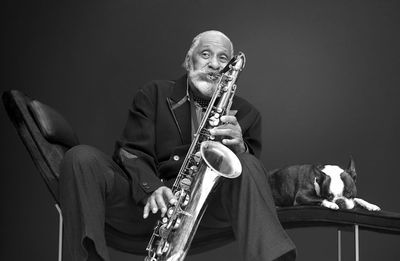
“Why Jazz Sucks, And Is Stupid, With Video Illustrations”: RogerEbert.com‘s Glenn Kenny clarifies the meaning of jazz on his site, Some Came Running. Related: Django Gold’s satirical fake interview piece, “Sonny Rollins: In His Own Words,” for The New Yorker. See also: Justin Moyer’s reaction to Gold’s article (referenced in Kenny’s essay), “All that jazz isn’t that great” on The Washington Post.

“So anyways, while The Boswell Sisters’ disc I’d had on, ‘Airshots And Rarities 1930-1935’ features twenty nifty ditties, from ‘Here Comes The Sun’ (not the Beatles’ tune, but they’re lame too, but that’s for a different post) to ‘Lullaby Of Broadway’ (is that gay, you think?), ‘On Air’ by The Apophonics features three ‘pieces,’ and while the Boswell Sisters sing peppily, the Apophonics’s ‘pieces’ are made up of them rubbing and scraping their traditional instruments, such as they are, and whatever the hell the energized (screw you, limey, I’m using the American spelling) surfaces are. AND YET. In the liner notes to ‘On Air’ is is revealed that these pieces were originally heard on ‘the BBC programme [Christ this British spelling again] ‘Jazz on 3’.’ JAZZ on 3. How is this scraping and bowing and blatting and silence any relation to the ‘jazz’ that is practiced by the peppy Boswell Sisters?”

2.

“As Film Stocks Dwindle, Moviemakers Weigh What May Soon Be Lost”: The transcript and full audio of a brief but potent report from Neda Ulaby of Texas Public Radio.

“You cannot preserve film on digital technology. In degrades quickly and the formats become obsolete even faster. When you store something digitally it has to migrate once every three years, minimum. How much easier and cheaper, [UCLA film and television archive director Yawn Christopher Horac says, to stick a celluloid reel in a vault for a couple hundred years. That said, he and other archivists are preparing for the worst. ‘At some point we may have to buy the patents collectively through, you know, one of our national or international organizations and get a specialty operator to produce film stock,’ [Horac says].”

3.

“Planet of Human, Animal & Political Rights”: RogerEbert.com‘s FFC Wael Khairy “presents an analytical look at the ‘Planet of the Apes’ films and the role they’ve played in assessing, through allegories, the state of the world—most recently the Arab world” at Cairo Scene.

“’Dawn of the Planet of the Apes’ is a political commentary with very clear parallels to what is happening in the Middle East, not just during the recent Arab Spring, but what has been happening in the Middle East throughout the years. My theory is based on the actions of the film’s characters and how the story progresses. First, we learn that the human race has not gone extinct and that those immune to the virus settled in a small city nearby. The human race here represents the United States. The human city has a strong military base, and much like the United States interest in the Middle East, the humans need to step on the ape village to acquire natural resources. The water pumped out of a dam located on ape domain can generate electricity for the human city. Since gas is running low within their city, the humans are willing to take any military action necessary to reach that dam. Indeed, the story is all too familiar, but Matt Reeves’ political commentary runs much deeper. Caesar makes a very strong statement on behalf of the Arab world. First he shows his primitive ‘manpower,’ and then he addresses the humans in a short but fairly simple peace treaty proposal, clearly stating the consequences that befall foreign interference. ‘Apes do not want war. Do not come back.’ Malcolm, the leader of the human world, peacefully reaches out to Caesar, in an attempt to find common ground, or rather a peace treaty that shall benefit both camps.”

4.

“The Weird Minutes Before Nixon’s Resignation”: The New Yorker‘s Andrea DenHoed discusses an excerpt (which accompanied her text) from the series, “Nixon’s the One,” where Harry Shearer, star of “The Simpsons” and “This Is Spinal Tap,” portrays Richard Nixon in the moments prior to his resignation.

“When you watch the actual footage from that evening, recorded by one of the TV cameras in the room, Nixon’s swaggering tone-deafness will make you squirm. Shearer’s reënactment magnifies that effect, both because the use of multiple cameras provides detail and depth, and because presenting the episode as a dramatic scene underlines the strangeness of the President’s behavior. The clip is part of ‘Nixon’s the One,’ a television series created by Shearer and the Nixon scholar Stanley Kutler. It was first broadcast in Britain earlier this year—a savvy choice for a show whose humor depends upon a taut sense of discomfort—and is slated to début in the United States this fall. The script is taken entirely from the Nixon tapes—the audio captured by the voice-activated recorders that Nixon had installed in the White House—and from notes from Nixon’s associates. The selected scenes are reproduced as faithfully as possible—‘every word, every pause, to the best of our ability, every inflection,’ Shearer told me. It’s hard to think of a more apt way to revisit the tenure of a President whose rise and fall was bound, at every juncture, to recordings of one kind or another.”

5.

“I Liked Everything I Saw on Facebook for Two Days. Here’s What It Did to Me.”: A troubling report from Mat Honan of Wired.

“I like everything. Or at least I did, for 48 hours. Literally everything Facebook sent my way, I liked—even if I hated it. I decided to embark on a campaign of conscious liking, to see how it would affect what Facebook showed me. I know this sounds like a stunt (and it was) but it was also genuinely just an open-ended experiment. I wasn’t sure how long I’d keep it up (48 hours was all I could stand) or what I’d learn (possibly nothing.) See, Facebook uses algorithms to decide what shows up in your feed. It isn’t just a parade of sequential updates from your friends and the things you’ve expressed an interest in. In 2014 the News Feed is a highly-curated presentation, delivered to you by a complicated formula based on the actions you take on the site, and across the web. I wanted to see how my Facebook experience would change if I constantly rewarded the robots making these decisions for me, if I continually said, ‘good job, robot, I like this.’ I also decided I’d only do this on Facebook itself—trying to hit every Like button I came across on the open web would just be too daunting. But even when I kept the experiment to the site itself, the results were dramatic.”

Image of the Day

Charles Taylor writes a great piece on the 1964 classic, “A Hard Day’s Night,” entitled, “Eight Arms to Hold You,” for the Los Angeles Review of Books.

Video of the Day

Nelson Carvajal “just can’t stop,” and we’re all the luckier for it. His latest video essay, “Our Scary Summer: 1979,” includes some unforgettable footage from that year’s landmark horror films, and is accompanied by an equally terrific verbal essay by Jed Mayer on IndieWire.

Source: http://www.rogerebert.com/thumbnails/thumbnails-81114


Categories
TV & Movies

The Coen Brothers: American Independents, Part 1

Thumb_coen-brothers

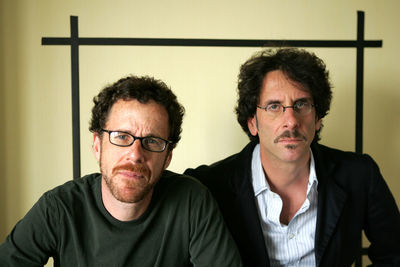
The Coen brothers wear their influences on their sleeves—a cup of Hawks, a dash of Polanski, a pinch of Welles. Formal masters, the lot of them, and in this case the apple does not fall far from the tree.

Joel & Ethan Coen’s filmmaking is characterized by sometimes invisible, sometimes ostentatious commitment to visual storytelling. As loose as they can be in terms of narrative structure and genre conventions, their visual style is consistent and precise. They are not filmmakers with a perfect batting average, and in fact, sometimes their adherence to rigid style can be a hindrance, as in their 2004 comedy “The Ladykillers.” But in a cinematic landscape where visual order has become increasingly rare, overtaken by prosaic amateurism that purports to call itself realistic, the Coens stand as one of our great defenders of cinematic beauty. At their best, they are virtuosos, and, at their worst, they are at least interesting.

The Coens’ debut film, “Blood Simple,” was called a neo-noir at the time of its release, a label that placed the film in the context of the noir fad that was passing through Hollywood in the early 1980s, but “Blood Simple” was unusual among its contemporaries, even the good ones like “Body Heat.” Much as “Blood Simple” is a riff on the noir genre, it doesn’t settle for imitating its predecessors. It’s as suspenseful as a Hitchcock, as emotionally engaging as a Wilder. It’s deconstruction from the inside, a film that comments on genre by embodying the genre completely.

“Blood Simple” is the story of a man who wants his wife and her new flame dead. It’s a good script—tense, with the Coens’ unusual ear for regional specificity, and full of the reversals and moral quandaries that typify the noir genre. Lesser filmmakers might have treated the script as the end product, but, for the Coens, the story and the style in “Blood Simple” are inseparable. The Coens rarely allow the characters to dictate the image—instead their compositions describe, develop, and determine our understanding of the characters. The image feeds the story, queuing us who to trust, who to sympathize with, what our expectations should be. When the vindictive Marty and his decrepit associate Visser discuss the murder, DP Barry Sonnenfeld distorts their faces with hard light, the complete opposite of the softness we’ve seen the Coens afford to Marty’s honest targets, Abby and Ray.

The camera is purposeful, and the Coens’ compositions encompass character movement, rather than being defined by it. The turning points of the story are accompanied by intensified style—Visser and Marty meet for the payments at the bar in a flood of neon greens and pinks and reds. Ray buries Marty in a cornfield lit by big red signs and blinding floodlights. The lights in the film often come from unmotivated sources, acting as a purely emotional trigger to draw you into the moment just as the moment is at its peak. For the Coens, the script is just a blueprint—it’s the style that’s provoking feeling.

If “Blood Simple” proved that the Coens could play by the rules, then “Raising Arizona” showed a team more than happy to be making the rules themselves.

It’s worth noting that even this early in the Coens’ filmography, they were returning to the same company of actors—with Frances McDormand and M. Emmet Walsh both returning from “Blood Simple,” and John Goodman appearing in the first of his six collaborations with the brothers. As pleasant as it must be to work among friends, there is a practical reason for the Coens to build their own troupe of actors. Their dialogue is like their films: stylized, but with real feeling hidden in the form. Actors who can play the Coens’ distinct rhythm make the lines seem effortless, but when the Coens stumble upon an actor who can’t, the film loses air faster than you can spell Hudsucker. Their troupe is as much a necessity as it is an indulgence.

The premise of “Raising Arizona” is so ludicrous, it almost reads like a dare. A poor young couple finds out that they’re barren, so they plot to steal a baby from a rich family that just had quintuplets. The film is so successful and so utterly un-self-conscious that you almost don’t even realize until its over just how many ways it could have gone wrong—just how fine the line the Coens are walking between comedy and despicability.

They’ve got funny angles, funny sets, funny camera lenses, funny tracking shots and funny colors. They’ve got silly things in the frame, they’ve hidden jokes in windows and they’ve got laughs waiting just off camera. Their actors give funny line readings, funny faces, funny tears and funny punches. It’s so hilarious, so relentlessly and with so much ingenuity, that the Coens make it basically impossible not to like the people you’re watching just by virtue of them being so damn goofy.

Even better, while the Coens whip up a hysterical frenzy, they’re busy hiding the real story in the details. When H.I. reconnects with his prison mates at the expense of his marriage, watch how quickly he falls in sync with their clothes and their frames, and out of sync with his wife. And when H.I. realizes their duplicity and apologizes to Ed, look how the Coens have outfitted them back in the same colors but with different prints.

“Raising Arizona” is nimble filmmaking, as light a film as the Coens have ever made, so maybe it makes sense that the films that followed didn’t even attempt that kind of wit. What would be the point?

“Miller’s Crossing,” “Barton Fink,” and “The Hudsucker Proxy” by contrast are the Coens’ problem pictures—heavy, even in their moments of levity. They have all the ambitions and none of the pleasing weightlessness that characterize “Blood Simple” and “Raising Arizona.” They are films concerned with evil—whether that evil is criminal or fascist or corporate, or all three. The hell imagery that made for a hoot in “Raising Arizona” returns, but this time the Coens aren’t laughing. Their themes are big and their filmmaking got big to match it. These films abound with huge set-pieces, self-conscious leaps out of convention and into irony, metaphor, and surrealism.

They make for an interesting trio of films, even if they are a trio that’s maybe more pleasing for the eyes than they are for the soul. More than anything they seem like homages as an excuse for cinematic exercises—deep space staging here, expressionistic set design there, a circle where an idea was meant to be. Later, their films “The Man Who Wasn’t There” and “A Serious Man” would take up this tradition, looking into the past with the techniques of the present. In many ways, these films seem like the directors’ most personal—though maybe there’s an inclination to say that any time something that’s been made with care doesn’t quite come off. For better or for worse, they are films that are actively seeking to stretch the form, and if that’s sometimes awkward, they’re at least the kind of awkward that has something to contribute.

Tomorrow: Irony, Detachment and Anton Chigurh

(Image Credit: Paramount Pictures.)

Source: http://www.rogerebert.com/balder-and-dash/the-coen-brothers-american-independents-part-1


Categories
TV & Movies

The Coen Brothers: American Independents, Part 1

Thumb_coen-brothers

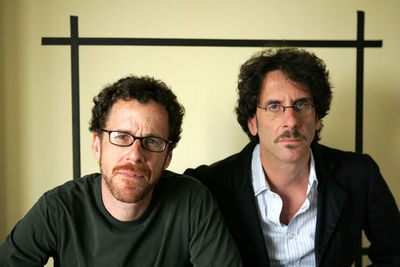
The Coen brothers wear their influences on their sleeves—a cup of Hawks, a dash of Polanski, a pinch of Welles. Formal masters, the lot of them, and in this case the apple does not fall far from the tree.

Joel & Ethan Coen’s filmmaking is characterized by sometimes invisible, sometimes ostentatious commitment to visual storytelling. As loose as they can be in terms of narrative structure and genre conventions, their visual style is consistent and precise. They are not filmmakers with a perfect batting average, and in fact, sometimes their adherence to rigid style can be a hindrance, as in their 2004 comedy “The Ladykillers.” But in a cinematic landscape where visual order has become increasingly rare, overtaken by prosaic amateurism that purports to call itself realistic, the Coens stand as one of our great defenders of cinematic beauty. At their best, they are virtuosos, and, at their worst, they are at least interesting.

The Coens’ debut film, “Blood Simple,” was called a neo-noir at the time of its release, a label that placed the film in the context of the noir fad that was passing through Hollywood in the early 1980s, but “Blood Simple” was unusual among its contemporaries, even the good ones like “Body Heat.” Much as “Blood Simple” is a riff on the noir genre, it doesn’t settle for imitating its predecessors. It’s as suspenseful as a Hitchcock, as emotionally engaging as a Wilder. It’s deconstruction from the inside, a film that comments on genre by embodying the genre completely.

“Blood Simple” is the story of a man who wants his wife and her new flame dead. It’s a good script—tense, with the Coens’ unusual ear for regional specificity, and full of the reversals and moral quandaries that typify the noir genre. Lesser filmmakers might have treated the script as the end product, but, for the Coens, the story and the style in “Blood Simple” are inseparable. The Coens rarely allow the characters to dictate the image—instead their compositions describe, develop, and determine our understanding of the characters. The image feeds the story, queuing us who to trust, who to sympathize with, what our expectations should be. When the vindictive Marty and his decrepit associate Visser discuss the murder, DP Barry Sonnenfeld distorts their faces with hard light, the complete opposite of the softness we’ve seen the Coens afford to Marty’s honest targets, Abby and Ray.

The camera is purposeful, and the Coens’ compositions encompass character movement, rather than being defined by it. The turning points of the story are accompanied by intensified style—Visser and Marty meet for the payments at the bar in a flood of neon greens and pinks and reds. Ray buries Marty in a cornfield lit by big red signs and blinding floodlights. The lights in the film often come from unmotivated sources, acting as a purely emotional trigger to draw you into the moment just as the moment is at its peak. For the Coens, the script is just a blueprint—it’s the style that’s provoking feeling.

If “Blood Simple” proved that the Coens could play by the rules, then “Raising Arizona” showed a team more than happy to be making the rules themselves.

It’s worth noting that even this early in the Coens’ filmography, they were returning to the same company of actors—with Frances McDormand and M. Emmet Walsh both returning from “Blood Simple,” and John Goodman appearing in the first of his six collaborations with the brothers. As pleasant as it must be to work among friends, there is a practical reason for the Coens to build their own troupe of actors. Their dialogue is like their films: stylized, but with real feeling hidden in the form. Actors who can play the Coens’ distinct rhythm make the lines seem effortless, but when the Coens stumble upon an actor who can’t, the film loses air faster than you can spell Hudsucker. Their troupe is as much a necessity as it is an indulgence.

The premise of “Raising Arizona” is so ludicrous, it almost reads like a dare. A poor young couple finds out that they’re barren, so they plot to steal a baby from a rich family that just had quintuplets. The film is so successful and so utterly un-self-conscious that you almost don’t even realize until its over just how many ways it could have gone wrong—just how fine the line the Coens are walking between comedy and despicability.

They’ve got funny angles, funny sets, funny camera lenses, funny tracking shots and funny colors. They’ve got silly things in the frame, they’ve hidden jokes in windows and they’ve got laughs waiting just off camera. Their actors give funny line readings, funny faces, funny tears and funny punches. It’s so hilarious, so relentlessly and with so much ingenuity, that the Coens make it basically impossible not to like the people you’re watching just by virtue of them being so damn goofy.

Even better, while the Coens whip up a hysterical frenzy, they’re busy hiding the real story in the details. When H.I. reconnects with his prison mates at the expense of his marriage, watch how quickly he falls in sync with their clothes and their frames, and out of sync with his wife. And when H.I. realizes their duplicity and apologizes to Ed, look how the Coens have outfitted them back in the same colors but with different prints.

“Raising Arizona” is nimble filmmaking, as light a film as the Coens have ever made, so maybe it makes sense that the films that followed didn’t even attempt that kind of wit. What would be the point?

“Miller’s Crossing,” “Barton Fink,” and “The Hudsucker Proxy” by contrast are the Coens’ problem pictures—heavy, even in their moments of levity. They have all the ambitions and none of the pleasing weightlessness that characterize “Blood Simple” and “Raising Arizona.” They are films concerned with evil—whether that evil is criminal or fascist or corporate, or all three. The hell imagery that made for a hoot in “Raising Arizona” returns, but this time the Coens aren’t laughing. Their themes are big and their filmmaking got big to match it. These films abound with huge set-pieces, self-conscious leaps out of convention and into irony, metaphor, and surrealism.

They make for an interesting trio of films, even if they are a trio that’s maybe more pleasing for the eyes than they are for the soul. More than anything they seem like homages as an excuse for cinematic exercises—deep space staging here, expressionistic set design there, a circle where an idea was meant to be. Later, their films “The Man Who Wasn’t There” and “A Serious Man” would take up this tradition, looking into the past with the techniques of the present. In many ways, these films seem like the directors’ most personal—though maybe there’s an inclination to say that any time something that’s been made with care doesn’t quite come off. For better or for worse, they are films that are actively seeking to stretch the form, and if that’s sometimes awkward, they’re at least the kind of awkward that has something to contribute.

Tomorrow: Irony, Detachment and Anton Chigurh

(Image Credit: Paramount Pictures.)

Source: http://www.rogerebert.com/balder-and-dash/the-coen-brothers-american-independents-part-1


Categories
TV & Movies

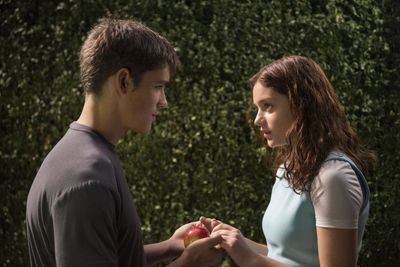
Interview: Brenton Thwaites and Odeya Rush on “The Giver”

Thumb_df-01056_pop

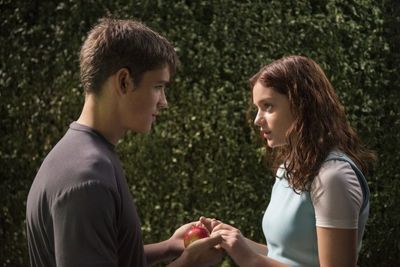
Brenton Thwaites and Odeya Rush are relatively fresh
faces in Hollywood. He’s from Australia, she’s from Israel. Mainstream moviegoers
will recall seeing Thwaites as Prince Philip in “Maleficent,” while family
audiences may remember how Rush lit up the screen in “The Odd Life of Timothy
Green.” In Phillip Noyce’s adaptation of Lois Lowry’s beloved 1993 novel,
Thwaites plays 16-year-old Jonas, a boy whose unusual mixture of abilities
cause him to be selected as the receiver of memories granted to him by a wise
old man known as The Giver (Jeff Bridges). These visions detail the past of his
deceptively utopian community before it conformed to a sterile “sameness,” which
is portrayed in black-and-white a la “Pleasantville.” Once Jonas’s eyes are
awakened to the hypocrisy of the only world he’s ever known, he decides to lead
a revolt with the help of his crush, Fiona (played by Rush), while enraging the
formidable Chief Elder (played by newcomer Meryl Streep).

RogerEbert.com chatted with the two young stars about
production challenges, the relevance of Lowry’s message and their candid
thoughts regarding a potential sequel.

What is it like to be navigating the Hollywood
industry at your age, having come from different parts of the world?

BRENTON THWAITES: There are less films being made
and there’s less work in Australia. When actors get a job there, they really
try and commit to it. That’s not to say they don’t commit to it in America or
that it’s not hard to get work. I’m sure it is. I guess my break in America
came a little too early. It would’ve been nice to have a few more years to find
out what I’m like as an actor without a camera on my face.

ODEYA RUSH: I didn’t act [on film] in Israel, but I
wrote plays at home and acted in plays at school. I tried to get an agent when
I was 12, but they told me that I had too much of an accent. I’ve been said
“no” to so many times that every time I get a chance to work in a movie,
especially one like this, I’m grateful. This happened six months after I came
to LA. I had been auditioning for so many pilots and so many of them weren’t
good. [laughs] I didn’t even get callbacks for some of them. It was hard, but
now my career is beginning to pick up speed and I’m getting to work with these
amazing people. I’m really thankful for it. Ever since I was younger, I would
make table reads at home where I would give fake interviews. [laughs] I’m just
thankful that it all happened so fast. So many people from Israel are telling
me, “You’re living my dream! You’re so lucky that you get to do this.” I am
very lucky that I came to America for my dad’s work, and I am lucky that I
started when I was 13. I’m really fortunate to be in this movie too.

Many people don’t realize that some of the best shows
on American TV, such as “Homeland” and “In Treatment,” are based on Israeli
programs.


OR: There’s so much good writing coming from Israel. If
only we had bigger budgets. There was just a movie that screened at Tribeca
[called “Zero Motivation”] about two girl soldiers in the army. I want to see
that. I’ve heard that it’s funny. A lot of movies that come from Israel are
about war, but there is such good, funny, rounded writing that comes from the
country that I wish more people would discover.

Were there certain performances that you watched when
you were younger that made you want to take on this profession?


OR: Natalie Portman in “The Professional.” I saw that
movie when I was 11, and it was kind of the first time where I saw a kid acting
in a serious movie, not in some Disney Channel show. It inspired me to write
more serious things like that. She was someone who could carry a whole movie at
age 11 and it really pushed me to believe that I could do this and that it is a
possibility. Growing up in Israel or Alabama, that possibility seems so far
away. So seeing someone so young in such a heavy, serious movie inspired me.

BT: I thought Leonardo DiCaprio was amazing in Baz
Luhrmann’s “Romeo and Juliet.” Hugo Weaving in “The Interview” was also great.
Hugh Jackman really inspired me as a kid. He’s a cool Aussie guy who works very
hard and he’s a fantastic actor. Obviously, he keeps really fit. He seems like
he’s happy acting. Who knows if he really is, but he gives you that impression.
[laughs]

How did you interpret your characters’ evolution
throughout the film?


OR: With Phil, we would do so many versions of a scene. In
the end, it was decided that at the beginning of the movie, we’re very naive
and happy and content and don’t really know any better. As the movie moves
along, my character is in a state of confusion because she doesn’t know what
feelings are. I’m not like The Giver and Jonas because I’m not receiving
memories. When I start feeling things, I don’t understand what they mean at
first. Then my feelings turn into anger once I learn about the cruelty of this
community. There was never a moment where we were completely deadpan or
robotic.

BT: We’re not emotionally numb, we’re very accessible.
We’re just misinformed. The film does give a sense of happiness and comfort and
pleasure, great things to have in community, however… [pause] It’s nice to
see that it’s not a community of blankness that causes the audience to think,
“Oh, you wouldn’t want to be there.” The idea is to want to be there and to be
happy with a family that you love.

I was reminded of “Eternal Sunshine of the Spotless
Mind” in how it shows that once people erase traumatic memories, they end up erasing
the good ones too as well as any personal growth that occurred because of them.
How do you relate to the overarching message of the film?


OR: Wars are happening all over the world right now and
have been happening for so long. That idea of taking war away would give peace
to some people. Maybe they prefer nothing at all as opposed to having these
terrible experiences. It also makes me think of communism and that whole idea
of people who are poor, want jobs and don’t want to be ruled by the king
anymore. They wanted what they thought would be happiness. At some point they
were brainwashed into thinking they were happy. It is still going on in the
world. I’m referring more to Lenin because my grandmother lived in Ukraine
during that time and my mom came to Israel to get away from that.

According to your Comic-Con panel, it sounded like
production on “The Giver” was fast-paced. Was it a challenging shoot?


OR: There’s no stopping with Phil. He lives, eats and
breathes “The Giver.” That’s all his mind is occupied with. He can go nonstop
and I think it’s so good because he picks up on so many things and you want
your director to be that involved and that loving and that passionate about the
project. It was really good for us to stay in the zone of thinking about each
scene and where it’s meant to go, even when we’re getting our hair and makeup
done in the morning. After doing so many takes, Phil takes you to a completely
different place that you never thought the scene would go, but that’s part of
his brilliance.

BT: It’s hard working with Phil. It’s so tiring,
emotionally and physically, because everything is so intense. I was on every
single day, all day. It was the gnarliest thing I’ve ever done in my life.
Halfway through, I told Phil, “I have nothing left.” He pushes you and pushes
you and pushes you and at the time, you want to kill him. But now when I look
back, I realize that the performances that he got out of me at the time were
worth it. I understand better what he was doing. He’s so passionate and he’s
the guy that we all try and match. We try and let him inspire us every day. But
it was a wicked one.

You’ve mentioned in interviews that the first scenes
you shot were the one-on-one encounters with Jeff Bridges.

BT: It was a great place to start. I think we started
with the scene where I come and meet him. I was nervous and there were real
emotions coming up for me. I was just kind of playing the moment because, in
reality, I was as nervous to work with Jeff as Jonas was to meet The Giver. It
was a good way to rehearse with Phil. We jammed with one another and got the
feel of it.

Lois Lowry has teased that the story might lead to a
franchise, with subsequent books and films. What would motivate you to become
involved in a sequel?


OR: Our contracts. [laughs]

Could you see the story continuing?

BT: Only if [this film] makes a lot of money and the
producers get greedy. I think the story is great on its own.

OR: I’m scared of continuing the story. I don’t want to
hurt it.

BT: There are so many things that could happen and Lois
has ideas, but I think it’s such a great, rounded story. The finding of the
world is interesting. I wouldn’t rule out that there could be a great second
and third, but…

OR: Maybe if Jeff and Lois and Phil were involved
again…

BT: I couldn’t survive a second one, bro. [laughs] I’ll
still be tired from this shoot when I’m 50.

Source: http://www.rogerebert.com/interviews/interview-brenton-thwaites-and-odeya-rush-on-the-giver


Categories
TV & Movies

Video Interview: Daniel Radcliffe on “What If”

Thumb_what_if_trailer_a_l

Daniel Radcliffe shines in a career changing role as Wallace in the
romantic comedy “What If”, co starring Zoe Kazan and Adam Driver. In
this interview he tells film journalist Katherine Tulich why this role
is most like him and how much he enjoyed eating those Elvis Presley
sandwiches, “Fool’s Gold”.

Source: http://www.rogerebert.com/interviews/video-interview-daniel-radcliffe-on-what-if