Categories
TV & Movies

Ordinary F**king People: Modes Of Verisimilitude in “Boyhood” and Richard Linklater’s “Before” Movies

Thumb_boyhood5

Once the shock and awe of the production story of Richard
Linklater’s lovely film “Boyhood” started to wane, grumblings in the multimedia
critical universe began to rise to a particular surface; why go so ga-ga over a
movie that chronicled twelve years of a set of characters’ lives over the
course of an actual twelve-year production since, after all, documentary
filmmakers including Michael Apted told the life stories of a group of growing
kids over intervals of seven years in the “Seven Up” films, Truffaut had made a
series of films, chronologically, telling the tale of young Antoine Doinel as
he morphs from a pre-adolescent rebel to a relatively contented but neurotic
Parisian bourgeois, and so on. Of course, the substantial differences between
these films seems pretty obvious on not even inordinately close examination…and,
more importantly, I don’t intend to file a complaint about things other people
are saying about “Boyhood.” I’m just starting off with the analogies coming
from ostensible skeptics because I think there’s something unique in
writer/director Linklater’s approach to verisimilitude, and it’s particularly
interesting in contrast with other films with which “Boyhood” shares a kinship.

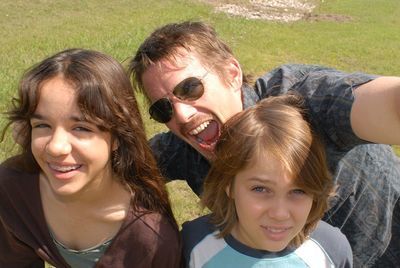
The movie is such a strong, intimate account of multiple
aspects of the life and times of its protagonist, Mason, who’s played by Ellar
Coltrane with an exemplary mix of commitment and unaffectedness, that it’s easy
not only to see the movie as exclusively his story but to believe that
“Boyhood” partakes entirely of his point of view. Despite the fact that he
worked in the phantasmagoric modes of rotoscoped animation in his films “Waking
Life” and “A Scanner Darkly,” Richard Linklater isn’t often cited for his
acute visuals. But there’s a fluidity to perspective in “Boyhood” that finds
the filmmaker astutely using rhyming shots. For instance, there’s the very
first shot of the movie, that of a blue sky, over which the minimal opening
titles are seen, after which the audience gets more than a few seconds to drink
in the sight of the clouds and the visible atmosphere of our world. After which
the movie cuts to a shot of six-year-old Mason, lying on the grass and looking
up at said sky. Near the very end of the movie, Linklater’s camera actually
descends from the sky, to follow now eighteen-year-old Mason’s dingy Toyota
pickup truck (from which he’s removed all but two of the letters of the
manufacturer’s name from the hatchback, leaving only the greeting “YO”) as he
drives to his last destination in the movie, the unnamed, far-from-home college
he’s starting. The movie’s characters articulate philosophical ideas in often
clumsy ways, which is an entirely deliberate aspect of Linklater’s
simulated verisimilitude. But Linklater’s camera is largely eloquent in its
almost pantheistic generosity throughout.

Linklater’s not bound by “rules,” even as he goes about
creating a seamlessness in his freedom. Early on, in the sequence where the
viewer meets Mason’s father, Mason Sr., a somewhat feckless and callow young
away-from-home dad (Ethan Hawke), Patricia Arquette’s mom takes Mason Sr.
outside after the kids (Mason’s lively older sister is played by Lorelei
Linklater, the filmmaker’s daughter) have spent a day of fun with him. She’s
going to dress him down for a number of things. The viewers see their
confrontation through the same window the kids do; they don’t hear the
dialogue, although at the end of the exchange when Hawke’s character pulls out
an envelope and presents it to Arquette we have one idea of what the fracas has
been about. Oh, so we’re going to see everything through the eyes of the kids?
Not entirely. Just moments before this sequence there’s a much quicker shot,
easy to miss, of Lorelei Linklater’s ebullient Samantha running up to
just-walked-in-the-door Mom and showing off the bracelets Dad got her on their day
out. And the shot is from the dead-on point of view of the mother character.
Instances such as this are, in fact, threaded throughout the film, and they are
emblems of Linklater’s humanist generosity.

That quality is also on display in a scene later in the
film, after Mason’s dad, first seen as a wannabe musician and a minor ne’er do
well, has straightened out, remarried, and become a father again. Mason spends
his fifteenth birthday in the company of Mason Sr.’s new in-laws, older,
church-going country folk who gift Mason with an engraved Bible and a
12-gauge-shotgun. The initial awkwardness of the scene sure does get big laughs
in a New York theater, but that’s not the fault of Linklater’s presentation of
the characters or what they do, which is plain and straightforward. And in fact
Linklater raises here, without protesting too much, by subsequently showing the
kindly father in law, and Mason Sr., teaching Mason and Samantha how to shoot.
Which one can’t help noticing they actually kind of enjoy. A little later on
Hawke’s character offers to keep the gun at his place, as Arquette’s character
isn’t likely to want it in her house. This seems a character detail, just as
Mason Sr. using his kids as Obama canvassers in 2008 seems a function of that
character. Linklater’s politics are left-liberal, as anyone who’s seen “Fast
Food Nation” can tell you; but just because he makes motion pictures about
beings akin to him doesn’t mean that “Boyhood” is ideologically determined as a
“liberal” movie. It’s philosophical fulcrum, articulated by a new character at
the movie’s end who observes that it’s time that has its way with us, rather
than the other way around, works in a different way in Linklater’s much-bruited
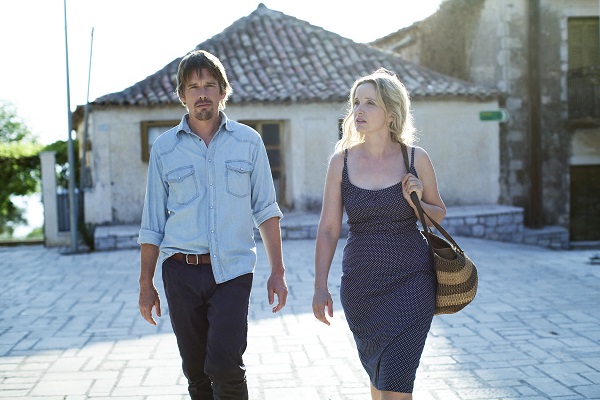
“Before” films. These are pictures that take place at heightened points in the
characters’ lives, points at which they believe particular things about
themselves and are forced, within a very short period, to pick their
assumptions apart. Despite the fact that Jesse in the “Before” films grows up
to be a published novelist, these movies don’t deign to depict him as a great
artiste. Similarly, Mason Jr.’s enthusiasm for photography, and his own
aspirations with respect to that form, aren’t used to turn him into a
post-modern Stephen Dedalus. “Ordinary f**king people! I hate ‘em!” Harry Dean
Stanton barks in one of the most memorable moments in “Repo Man.” What
Linklater’s films suggest is that, actually, there’s nothing inherently wrong
in becoming an ordinary person, especially if you can find your way to being a
decent one.

Source: http://www.rogerebert.com/balder-and-dash/ordinary-fking-people-modes-of-verisimilitude-in-boyhood-and-richard-linklaters-before-movies


Categories
TV & Movies

Let’s Be Cops

Thumb_letsbecops-2014-1

With great power comes great comedy. Well, sometimes. Writers have spent the
history of film mining the concept of people without any discernible skill
sets turned into figures of authority. And the last few years
have seen a lot of comedy mileage in the subgenre of man-children broken out of
their doldrums by living lives distinctly not their own (that was the draw of “The
Hangover” and “Jump Street” movies—normal guys in abnormal situations). Into
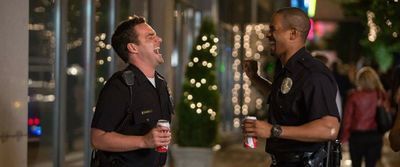
both of these comedy pools, we can now throw “Let’s Be Cops,” with TV stars
Jake Johnson and Damon Wayans Jr. (both of FOX’s “New Girl”) as a pair of
average guys thrust into a life-changing dynamic when they pretend to be police
officers.

The best of these movies contain enough edge to be
cautionary tales. Don’t be the party animals of “The Hangover” every weekend or
risk great bodily harm. The grass on the other side of the fence isn’t just a
duller shade of green than we first expect but it’s laced with poison. There’s no poison here. Despite
a premise rife with potential dark humor, there’s too little edge in “Let’s Be
Cops.” Director/co-writer Luke Greenfield chose wacky over witty and the result
is a film with no sense of danger, no reason to care and not enough laughs to
make the sitcomish handling of a strong premise forgivable.

Ryan (Johnson) is a mostly out-of-work actor whose most
infamous credit is a commercial for STD medication. He’s not in a very good
place. Neither is Justin (Wayans), a video game developer who doesn’t quite
have the spine to stand up to his annoying boss (Jon Lajoie), who takes his
hard work on a game about a police officer and turns it into Firefighters vs.
Zombies. To research that game, Justin came into possession of a pair of legitimate
police officer uniforms, and Ryan convinces his more uptight buddy that they
should use them to attend a costume party reunion (that turns out to be more of
a masquerade ball, further embarrassing our heroes). Dejected after the reunion
reminds them of their recent failures, Ryan and Justin are walking the streets
of L.A. when they realize that the uniform commands a certain kind of respect
and admiration from the ladies. Why not be cops a little longer?

Well, because it’s highly illegal and incredibly dangerous,
of course. Justin realizes this and tries to put a stop to it but Ryan becomes relatively
unhinged, buying a cop car on eBay and pulling people over. And the pair even
gets involved in a real case involving the gorgeous daughter of a restaurant
owner (Nina Dobrev), who becomes a love interest for Justin, and a maniacal
gang leader played with physical fury by James D’ Arcy. Rob Riggle pops up as a real
cop who crosses paths with the two while Keegan Michael Key steals a few scenes
as an over-the-top dealer.

Those early montages of Johnson and Wayans breaking out of
their shells by donning the outfits that give them the confidence to do so have
a great comedic energy. These are two talented actors, and it looks like “Let’s
Be Cops” is going to give them a chance to really find an audience they
deserve with a breakout film. And then the film goes absolutely nowhere. To say that “Let’s Be Cops” spins
its wheels tonally would be kind. “Paul Blart: Mall Cop” had more edge. The cops of “Superbad” had more edge. Whereas
Johnson seems ready to do something truly dark—his character’s increasing willingness
to push his false authority could have and should have sent this piece into “Observe
and Report” levels of black humor—his writer/director doesn’t seem to want to
go with him. Like so many sitcoms or Adam Sandler movies, “Let’s Be Cops” doesn’t
take place in the real world. It’s a comedy universe without danger or repercussions.
Worst of all, it simply doesn’t have the laughs to make the zany approach feel like the right one. Don’t be edgy, fine. But at
least be funny.

Source: http://www.rogerebert.com/reviews/lets-be-cops-2014


Categories
TV & Movies

Lauren Bacall: 1924-2014

Thumb_161217

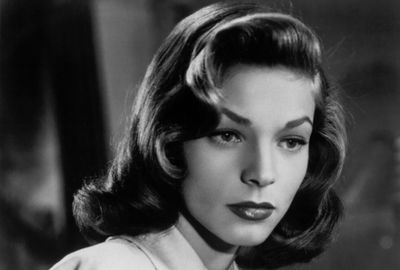
At 15, Betty Perske used to skip school to cry her way through Bette Davis movies. She wanted to be an actress like Davis was, or at least command that kind of attention, and so she started modeling and auditioning for jobs in the New York theater. One day, Slim Hawks, the ultra-stylish wife of director Howard Hawks, spotted a photo in “Harper’s Bazaar” of the young Betty standing outside of a Red Cross blood donor room, looking wary and famished and many other things. You can see why Slim was stopped in her tracks by this girl, by this look. It’s still a very modern look. Fed-up, bitchy, sexy. A smoker, a drinker, a card player. One of the boys. In charge.

But Betty Perske was actually a very shy and insecure young girl. Throughout her life as a movie star named Lauren Bacall (a name chosen by her mentor Hawks), she liked her friends to call her Betty. And she never quite forgot being Betty, though Hawks made her try. He signed her to a movie contract and kept her under wraps for a while. He got her, supposedly, to go out where no one could hear her and scream herself hoarse so that her high voice would lower and become more authoritative, more insinuating. That low voice of hers! Whatever the true story was, the newly christened Bacall emerged with a voice that did sound like the voice of authority.

Only 19 years old, she managed to impress not just Hawks but her co-star Humphrey Bogart in her first movie, “To Have and Have Not” (1944). Together in that film and in their follow-up, “The Big Sleep” (1946), Bogie and Bacall seemed to be having one long hot private joke with each other, and audiences ate it up. They married in between the movies, and this was no small matter. Bogart was in his forties, and he was famously and unhappily married to Mayo Methot, a tough broad who wanted to hold on to her husband. Even more importantly, Hawks did not want his new discovery to marry Bogart; he wanted to mold her career, and he also, tacitly, wanted her for himself. But Bacall chose Bogart, and they had ten or so extremely happy years together until he died of cancer in 1957.

Bacall’s frank and very detailed autobiography “By Myself” (1978) takes you through practically every day of her childhood, apprenticeship, and then her first years in Hollywood, where everything seemed to be given to her at once, as in a dream: movie stardom and marriage to a movie star who loved her above all others. She was so nervous while shooting “To Have and Have Not” that she developed a habit of pressing her chin down to her chest and looking up at Bogart in order to stop her head from shaking, and from this maneuver came her nickname of that time, “The Look,” which meant sex with a lot of insolence on the side.

Bacall walks with feline grace in “To Have and Have Not,” and part of what makes her so distinctive and touching in that movie is the just noticeable strain she is under to perform and act more than her age. She manages all of that with style, with aplomb, and the picture was a triumph for her, as was “The Big Sleep.” And then some! Her Slim in “To Have and Have Not” and particularly her Vivian Rutledge in “The Big Sleep” are flawless fantasy creations, all lush hair and pouting lip and smart, poking attitude. Bacall and Bogart in those movies make the lead-up to sex, the jabs and put-ons and badinage, seem just as much fun as the no-doubt satisfying sex itself.

But the Hawks version of Bacall was like a magic act. This was proved by “Confidential Agent” (1945), an espionage film with Charles Boyer where she received no help from her director, Herman Shumlin. She knew that she was stiff and amateurish in that movie, but there was nothing she could do about it. She has the same problem even with Bogart in John Huston’s “Key Largo” (1948) though it is less noticeable because she is playing with such florid hams (Claire Trevor won an Oscar for her portrayal of a blowzy dame past her prime) that her own relative lack of mobility comes as a relief.

She turned down a lot of scripts while she enjoyed herself as Bogart’s wife and bore him two children. She was still a bit stiff but intriguing as a covert lesbian married to trumpeter Kirk Douglas in “Young Man with a Horn” (1950), and she emerged again to seem fully in charge of the comedy in “How to Marry a Millionaire” (1953). But in Vincente Minnelli’s “The Cobweb” (1955) and Douglas Sirk’s “Written on the Wind” (1956), she seems like she doesn’t want to be noticed. In “Northwest Frontier” (1959), she gives her whole tentative performance with her smoky voice, as if she’s listening to herself speak the lines. She had lost Bogart by then and had gone back to New York, where she started to work on stage, as she had briefly in her youth.

The most touching thing about Bacall’s autobiography is her bewilderment about having been given so much at such a young age and then having it all taken away from her. It should be remembered that she was only in her early thirties when Bogart died. After that, she was his official widow, and other men she was involved with, like Frank Sinatra and Jason Robards, who was her second husband in the 1960s, felt that they couldn’t measure up to the legend of Bogart, which only increased with time. In her book, Bacall tells about the impassioned way that Bogart loved her in such detail that everything else after his death seems like a bad dream for her where nothing seems to fit. She did not always react gracefully to that uncomfortable position. But she did keep going, and going, for more than half a century after losing him. Her interviews were always salty, brassy, forbidding. She claimed often that she was more vulnerable than she appeared, and maybe that was true.

If you really think about Bacall and her long march across seventy years of movie history, it seems clear that she felt like an imposter sometimes, like Betty Perske just pretending to be Bette Davis, and so she became all deep voice and thick hair and narrowed grey cat eyes to hide her fear of that. She won Tonys for her work on stage in musical star vehicles where she croaked out songs off-key. Sheer chutzpah! She was nominated for an Oscar for her decent work in “The Mirror Has Two Faces” (1996) and then had to suffer the indignity of losing when everyone had assured her she would win (it’s no wonder she behaved the way she sometimes did, all porcupine quills up and ready). And then, toward the end of her career, she started to get herself into a few interesting movies again, like Lars Von Trier’s “Dogville” (2003), Jonathan Glazer’s “Birth” (2004), and Paul Schrader’s “The Walker” (2007). Bacall was still there and still with us, fulfilling a dream of her childhood that must long since have ceased to amuse her.

She met everybody she wanted to meet and she had a good time, in general, thank you very much. They even gave her a special Oscar in 2009, even though they didn’t let her accept it on the telecast. At age 87, Bacall posed for a startlingly weathered and un-airbrushed photo by photographer Andy Gotts, every wrinkle accounted for, her hair pulled back severely from her face. This was a woman who knew what made a striking still photo (remember her draped over the piano while Harry Truman played?) And yes, there is some pride left in this elderly woman at 87, the pride that shows in that “Harper’s Bazaar” photo that got her noticed by Slim Hawks. But there is still some of Betty Perske’s vulnerability, too, the vulnerability that her famous voice hid so thoroughly.

Who knows if we actually see our loved ones again after death? But if we do (and why not?), surely no one waited more patiently than Bacall to be reunited with Bogart. I’m sure there will be sentimental send-offs to her that quote the lines she said to him about whistling in “To Have and Have Not,” and that’s because Bacall, with a lot of luck and a little help, made herself a movie immortal her first time out of the gate, and maybe that made her more than a little impatient to move on to somewhere else.

Source: http://www.rogerebert.com/balder-and-dash/lauren-bacall-1924-2014


Categories
TV & Movies

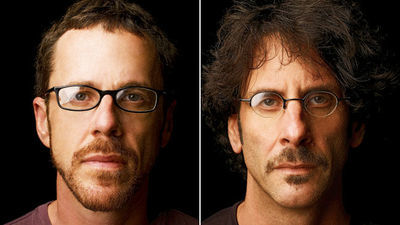
The Coen Brothers: American Independents, Part 2

Thumb_the-coen-brothers-7

This is the second part of a 2-part feature about Joel & Ethan Coen. Read the first part here.

The irony that sometimes finds its way into the Coens’ filmmaking has often been the sticking point of their harshest critics. They’re cold, they’re cruel, they’re misanthropic. But to dismiss the Coens, even at their most ironic, as icy formalists is to ignore the many ways they telegraph their sympathies through their filmmaking. They’ve got genial mediums for the Dude, and moody expressionism for tortured Ed Crane. There’s Llewyn Davis, nearly disappearing into chilly blues and browns of New York—as icy as the world around him, but somehow still anonymous. “A Serious Man”’s Larry Gopnick, crushed in the frame, either by his own uncertainty principle or by the camera itself. The many players in “Burn After Reading,” all comically distorted by the Coens’ odd angles, all helpless to the arbitrary wheels of fate and government. Rooster Cogburn, a light at the end of the tunnel, hero after all.

Even at their most detached, they are never content to let their scenarios pass by without judgment. If their heroes are often rendered with subtle sympathy, their villains are announced without ambiguity. We know “Hudsucker Proxy”’s Mussburger is evil from the moment their camera catches him peering through the craggy break in the glass left by a man’s jump to suicide. Bennie is introduced in “Miller’s Crossing” as a black hole in the center of the frame, his face turned up at an unnatural angle, pale as death itself. The Coens deliver Grand Guignol horror for the loveless offices of the senior partners in “Intolerable Cruelty,” and darkness increasingly enshrouds Dorr in “The Ladykillers.”

In other words, the Coens are moral filmmakers, artists fundamentally concerned with the nature of good and evil. It’s no mistake that the most iconic characters in their filmography, “Fargo”’s Marge Gunderson and “No Country For Old Men”’s Anton Chigurh, are the two perfect ends to each polarity. She is complete good, and he’s complete evil, and the two films play almost as foils to each other—”Fargo” with its blinding white snow, “No Country For Old Men” with its inky black shadows.

Film connoisseurs to the end, the Coens have to go back practically a century to the age of D.W. Griffith one reels to find a camera setup that conveys the purity of Marge’s life with her husband Norm. It’s not common for the Coens to use tableaux—their frames tend toward the dynamism of diagonals—but for Margie nothing else will do. The camera is flat to the door; Marge and Norm’s morning routine, their kitchen, and their lives are all contained in this one frame. It’s a simple, unassuming setup for a pair of simple, unassuming people. There’s an order in their routine—they eat, she leaves, she comes back—and order in the composition, but then Marge brings order wherever she goes. Look how quickly her presence contains the murder scene: what was once disorienting and horrific is reorganized into lead lines and golden ratios. Marge makes sense of the senseless—not just through her cool and efficient police work, but in the quiet way she brings the frame to balance.

What’s terrifying about Anton Chigurh is that his compositions are no less orderly than the ones the Coens offer Marge. Just as Marge’s decency was enough to overcome the darkness around her, Chigurh’s malevolence slowly and surely overwhelms all trace of light in his film. In our first glimpse of him, he’s being led to a police car. But where the officer is fully visible, Anton Chigurh is a silhouette, blacker than the empty space between stars. He is the absence of light, the absence of humanity—but his place in the frame is just as tidy. Evil wouldn’t be threatening if it were chaotic. It’s the relentlessness, the inevitability of evil that makes it scary. Chigurh often enters the frame in the background, out of focus, a creeping blackness that hangs over the shoulder of his next victim—unknown to them, but inescapable nonetheless. Chigurh is the manifestation of fate, just like his coin tosses. It makes sense then that his weapon of choice would be a captive bolt pistol—his slaughterhouse is a bit more open then most but he’s killing cattle all the same.

The Coens are rarely the first to an idea or a camera setup or a story. But firsts are overrated. Morality is not novel, and neither is beauty—they’re just the fabric of our oldest traditions, the constants in a universe that keeps on expanding. The Coens don’t have to worry about setting trends or pushing us forward; they’re too busy reminding us of what cinema does best. They are the keeper of the keys, the guardians of cinematic institutions. They don’t break ground. They hold it.

Source: http://www.rogerebert.com/balder-and-dash/the-coen-brothers-american-independents-part-2


Categories
TV & Movies

Bright Wall/Dark Room August 2014: “We’ll Jump and We’ll See” by Chad Perman

Thumb_joe

Welcome to our second excerpt from the internet magazine “Bright Wall/Dark Room.” (Read the first one here.) The image above is credited to Brianna Ashby and this month’s issue concludes a two-part series on Americana through coverage of “Rocky,” “Jaws,” “The Godfather,” “North by Northwest,” “American Movie,” “O Brother Where Art Thou?,” “An American Tail,” “Gun Crazy,” “Fried Green Tomatoes,” and this month’s sample article on “Joe Vs. the Volcano.” You can buy the magazine on your iPhone and iPad here or sign up for the web-based online version here.

The way to read a fairy tale is to throw yourself in.
—W.H. Auden

“Joe Versus the Volcano” is all kinds of things at once—a fact which no doubt contributed to the poor reception it received upon its initial release in 1990—but at its heart, first and foremost, it’s a fairy tale. It’s filled with travels and travails, obstacles and the overcoming of them, adventure and romance, symbols and archetypes. It’s a deeply searching and existential film that doubles as both a satire and a romantic comedy. It absolutely tries to bite off more than it can chew, trying to do far too much in its 102 minutes—and as a result can be a bit of a silly mess at times (especially in certain moments of its final act)—but it’s also, to those of us who love and embrace it, a deeply moving, almost transcendent film.

I have been trying, and failing, to write about “Joe Versus the Volcano” for over five years now. Trying to find a way to talk about it that does it any kind of real justice, that even partially conveys the enormity of my affection for it. I’m simply worried that I won’t get it right, that I won’t be able to capture the sheer magic of the thing—a movie that is passionately embraced by a championing few (whom I happily count myself among), and derided—or worse, entirely overlooked—by a majority of people today, even film lovers. I don’t doubt my opinion of it, but I do sense all too well the mountain (of either distaste or indifference) that I’m attempting to push up against.

I can understand if you don’t like the film—you’re certainly not alone—but I do feel a bit sorry for you. Because, if you allow yourself to be swept up in its gorgeous sets, highly-stylized prose, and winning performances, it’s a film that can absolutely move you on a bone-deep level. First, though, you’ll have to abandon most notions of what you think a big studio movie should be—especially one starring Tom Hanks and Meg Ryan—as “Joe” rarely abides by the conventional rules of commercial filmmaking. Playwright John Patrick Shanley, allowed into the director’s chair for the very first time following an Oscar win for his “Moonstruck” screenplay (and subsequently banished for the next fifteen years following its disastrous reception), crafted a heartfelt fable of a film in “Joe,” a movie that is in no way interested in realism of any kind, aiming instead for an entirely different target. It’s a film that lives almost entirely in its own world, asking Big Questions about Big Things.

But its heart is large, and its magic deep.

Once upon a time, there was a guy named Joe…

There comes a time in most anyone’s life when they simply feel stuck in it. When a routine has taken over—intentionally or not—and has chased away dreams and ambitions, burying hopes under a pile of paperwork, bills, responsibilities, and obligations. There is the time it takes for this to happen, and then the time it takes to notice that it’s happened. Thankfully, you can be woken up in any number of ways: an old picture that reminds you of a past life, another you, all the things you once wanted or dreamed of or ached for; a passage underlined by a familiar hand in a book you once held dear; a song that suddenly blindsides you; an old smell that hijacks your limbic system by way of the olfactory bulb and instantly transports you back twenty years. The point is, it happens to all of us at one time or another—this recognition of the space between what you wanted out of life and what you ended up with, the realization of this ever-widening gap—and it either forces you out of your well-carved rut or crushes you even further down. And I’ve come to believe, fully, that what you choose to do at these crossroads, these lightning-bolt moments of awareness, is largely what winds up defining you.

For Joe Banks—titular hero of “Joe vs. the Volcano”—this realization comes in the form of a peculiar diagnosis from an off-kilter doctor. Joe (Tom Hanks) has been aching for years. Many moons ago, he was a firefighter, a man who saved lives. But the dangers he faced and traumas he endured finally caught up with him and hollowed him out, causing him to drift into a life defined by fear. By the time we first meet him, he’s a shell of his former self, working under the awful and flickering fluorescent lights in the basement of the American Panascope Corporation (“Home of the Rectal Probe!”). He’s been seeking out various doctors in the hopes of, if not a cure, then at least a cause—an explanation for his loneliness, all the constant creaks and pains, the feeling that something just isn’t right.

Turns out, Joe has a brain cloud, and about six months to live.

That he’s never heard of such a thing gives him little pause (and to be fair, when your doctor is Robert Stack, most anything said sounds both plausible and definitive). Putting a name to the maladies he’s long sensed finally answers all those endless, gnawing questions: the hypochondriacal pursuit at last dissolved in odd relief. In one fell swoop, Joe’s suffering is given both an explanation and a definite endpoint; a diagnosis packaged with a newfound sense of freedom.

Joe goes back to the office that day a changed man. Where once there was a resigned lethargy in him, an Eeyore-shaped cloud perpetually hovering, there is now instead a vitality. He quits his job and tells off his boss, packing up his bag with just three books—Robinson Crusoe, Romeo & Juliet, and The Odyssey—and a ukulele. He asks out the secretary he’s had a crush on for years. (She says yes.) The next morning, he agrees to jump into a volcano to save a village. Carpe diem, indeed.

You think I feel good? Nobody feels good! After childhood, it’s a fact of life. I feel rotten. So what!

The first part of “Joe Versus the Volcano” paints a vivid portrait of Joe’s well-worn life of quiet desperation, but its second act—easily the film’s most endearing—concerns itself largely with his journey out of this boxed-in world: a quest to strip away the trappings of self, past trauma, and cultural programming; to engage with the present; and to find a larger sense of purpose and meaning in his remaining days.

If this journey is kick-started by his terminal diagnosis, it’s further fueled by a rather unorthodox proposal from an eccentric billionaire. Mr. Graynamore (played with typical late-career craziness by the wonderful Lloyd Bridges) is searching for somebody to voluntarily jump into a large volcano on the distant island of Waponi Woo, to offer up their life in order to satiate the volcano and save the tiny island from its wrath. In exchange for this terminal volcano-jumping, he offers Joe a life of luxury in the time left to him: limitless amounts of money, followed by a guided trip out to the island. Joe, armed with the knowledge that death is coming for him shortly either way, and with no family or friends to speak of, agrees to the Faustian bargain offered up by Mr. Graynamore. He will “live like a king, and then die like a man.”

As he sets out on his long journey—from New York to Los Angeles to Waponi Woo—Joe finally begins to engage in earnest again with the world. To meet it on its terms, with arms raised. To face down fears and take those steps he’d put off taking for so long. The journey is both literal and symbolic—as any decent fairy tale or myth aims to be: a voyage to an unknown land, but also a search for meaning, for wisdom, for the things in life that truly matter.

He’s helped along on this journey by a colorful cast of characters, serving purposes both real and allegorical: the limo driver (Ossie Davis) who dispenses life and clothing advice, the luggage salesman who steers him toward the “water-tight” trunks that will eventually save his life, the Graynamore half-sisters, Angelica and Patricia (both played by Meg Ryan), the former of which, a self-described flibbertigibbet, accompanies him from the airport to the boat, the latter of which takes the fateful sea voyage with him.

And on that long trip out to Waponi Woo, aboard the Tweedle-Dee, Joe and Patricia begin to fall in love.

My father says that almost the whole world is asleep. Everybody you know. Everybody you see. Everybody you talk to. He says that only a few people are awake, and they live in a state of constant, total amazement.

Modern American life has gotten so very good at helping us lose sight of the Big Things. It’s safe to say there’s not a whole lot of room left for the sacred in our lives these days—or, rather, there is space for it, but we struggle to make the time necessary to cultivate or sustain it, so buried are we by the daily grind, so worn out from chasing empty things. We lose the forest for the trees. We give our lives away to a hundred different things, for a hundred different reasons, keeping ourselves perpetually busy and overextended, focused on inconsequential things while the sheer magic and sacredness of this life—the overwhelming wonder of each new day given to us, the miracle that we are even here at all—passes us right by.

Joe is trying to tell us this. It wants us to see how we get trapped, but more importantly, how there’s also a way out.

“Joe Versus the Volcano” doesn’t speak to the rational part of us—the grown-up part that has dedicated itself to pursuing some facet of the American Dream—nor does it ever really try to. It speaks instead to our childlike sense of wonder, that pure and innocent core in all of us, the part still capable of being swept away by fables and fairytales. It offers a reconnection to the Big Things, a reminder of what is truly important, of those things we once knew on a very basic level but have spent so much of our frazzled lives forgetting. It reminds us that there’s a whole lot of world-weary out there these days, and nowhere near enough whimsy. That there’s a magic in all of us that’s so rarely considered.

And Joe considers it, fully.

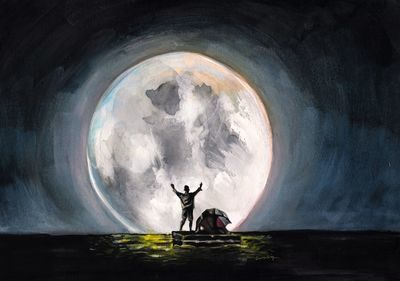
About two-thirds of the way through the movie, in a scene as gorgeous and transcendent as any I’ve ever seen, Joe, adrift in the middle of an endless ocean, wasted away by dehydration and exhaustion, lips chapped and limbs shaking, watches the full moon rise above him in the middle of the night and realizes (or perhaps, at last, remembers) the vast enormity of the world around him and the true miracle of his existence within it. He struggles to stand up on his fastened-together life raft—the few square feet he has left to him after a lightning bolt destroyed the ship carrying he and Patricia to the island—and reaches up towards the giant white orb in the dark night sky, with a gratitude and sense of humbled awe that can only come from having every single thing stripped away from one’s self, every fear encountered, and yet continuing to breathe, to dance, to beat on. “Dear God, whose name I do not know,” he says with arms outstretched, “Thank you for my life. I forgot how big… thank you. Thank you for my life.”

I’ve been miserable so long, years of my life wasted, afraid. Been a long time coming here to meet you – a long time, on a crooked road.

There are lightning bolts running throughout “Joe Versus the Volcano,” a recurring visual motif that underscores many of the film’s main themes. It’s part of the logo for the American Panascope Corporation, and the path of the road Joe and his fellow workers walk to get there each day. There’s a lightning-shaped crack on the wall of Joe’s apartment when Mr. Graynamore first visits him. A literal lightning bolt strikes the ship carrying him to Waponi Woo, causing it to sink and leading to his marooned-at-sea struggle for survival and eventual moonrise epiphany. And, when it finally comes time to jump into the volcano, a crooked path leads up to its peak.

While its more obvious interpretations might include danger, confusion, or actual fire, there’s a more subtle—and ultimately more important—meaning to be made of the zig-zag symbol. It represents the crooked road we all must travel in order to find our way to our best selves—to face down the demons of our past and confront all the fears that have locked us in and shut us down. The journey from worried to well is never linear, Joe suggests, but rather a jagged road filled with false starts, poor choices, and bad turns. Eventually, though, if we persevere—if we manage to carry on and struggle forward and right our ships—we can find our way out of fear and into life. To gratitude and awe, to connection and love.

To a well-earned Happily Ever After.

Source: http://www.rogerebert.com/balder-and-dash/bright-walldark-room-august-2014-well-jump-and-well-see-by-chad-perman


Categories
TV & Movies

TV Review: Sean Bean Stars in Formulaic But Flashy “Legends”

Thumb_24658_001_0666_r_6509_

He’s the most
naturally gifted deep operative that we’ve got. Maybe the best that we’ve ever
had.

Of course he is. If that kind of spy show hyperbole forced an
eye roll from you, “Legends,” TNT’s new offering for those not getting enough
macho summer escapism from “The Last Ship,” may not be the show for you.
However, if you can get past the clichéd writing and appreciate “Legends” as a
force of sheer cast magnetism and hyperactive camera tricks, it’s a solid
distraction from the problems of the real world. It’s a show steeped in modern
spy tricks of the trade—a world of undercover operations, double identities and
international espionage. And while the nods to Jack Bauer and Jason Bourne are
almost too blatant to be forgiven, the show should click for anyone who misses
Matt Damon’s most iconic character this summer movie season or wishes “24: Live
Another Day” had been more than 12 episodes long.

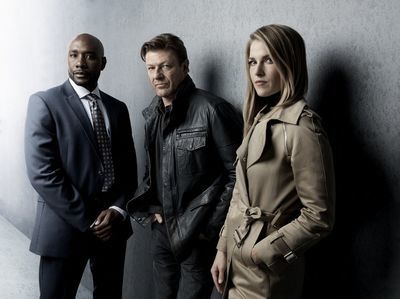
Stepping into the super-spy shoes with suave dexterity is
Sean Bean, a perfect casting choice for an aging undercover operative on the
edge of sanity. Bean brings the same gravity that turned Liam Neeson into an
unexpected action star late in life; you believe he’s seen a thing or two and
killed a few men along the way. Bean plays Martin Odum, superstar of the FBI’s
Deep Cover Operations. In the premiere, he’s been living a life for six months
that is not his own as Lincoln Dittman, infiltrating a group of American
terrorists set to bring us down from within. When the ATF blows his op, he’s
called back in but not before he convinces his superiors to give him one last
shot at the big bad.

Odum’s colleagues include DCO Team Leader Crystal Maguire
(Ali Larter), a reluctant partner with her unpredictable agent who tries to
manage him afar but often has to jump into the fray. (In the first two
episodes, Larter gets to show off her remarkable physical assets in both
cases-of-the-week in twists of the plot that could be called misogynistic—Bean uses
his strength, Larter uses her body—but the target audience for an old-fashioned
spy show is unlikely to care.) The great Tina Majorino (“Veronica Mars”) steals
scenes as Maggie Harris, field support for Odum, while Steve Harris fits in
nicely as Odum’s old friend and boss, DCO Task Force Director Nelson Gates. FBI
Agent Tony Rice (Morris Chestnut) joins the action in week two in ways I won’t
spoil but it seems he’ll play a major role in the unearthing of Odum’s history.

And there’s quite a bit of history to unearth. While “Legends”
will offer explosive cases of the week for Odum and his team, we also get hints
at the Bourne-esque life that makes a man like this one. He’s been through so
many undercover incarnations (known as “Legends”) that he’s not even sure which
of his memories are his own, and he holds on tightly to a relationship with his
son and estranged wife (Amber Valletta) for an ounce of normalcy. In the
premiere, a shadowy figure tells him that even that existence, what he thinks
he knows as normal, isn’t true. This is very deeply in the Bourne model—the spy
who was used and abused to the point that his background was co-opted. What if
your “real identity” was really just a cover in which you were so deeply
embedded that you lost your grip on reality?

As a spy show, “Legends” relies a bit too much on close-ups
and quick cuts to produce tension instead of actually writing it. Both of the
threats to civilization in the first two episodes come straight out of “Spy
Show 101.” They even pull out the agent willing to play Russian Roulette to get
an answer gag this early. I wish “Legends” was smarter and it’s there that it
falters in comparison to “24” and Bourne.

Where “Legends” works is as a flashy bauble—Bean’s
screen presence, Larter’s beauty, spy show code words and quick cuts. It’s a
remarkably easy watch, almost comfortable in its familiarity at times. You know
what this is. It’s not a challenge. It’s an escape. We’ve seen Jack Bauer save
the world a few dozen times. Let’s give Martin Odum a few shots at it.

Source: http://www.rogerebert.com/demanders/tv-review-sean-bean-stars-in-formulaic-but-flashy-legends