Categories
TV & Movies

Thumbnails 8/15/14

Thumb_75

1.

“There’s Nothing Selfish About Suicide”: Psychotherapist Katie Hurley writes a provocative blog for The Huffington Post, sharing her experiences as a survivor of suicide. Related: Press Play editor Max Winter writes a magnificent obit for Robin Williams entitled, “Humor Is Life.” See also: The tributes to Williams made by RogerEbert.com Editor-In-Chief Matt Zoller Seitz and various other contributors.

“Until you’ve stared down that level of depression, until you’ve lost your soul to a sea of emptiness and darkness… you don’t get to make those judgments. You might not understand it, and you are certainly entitled to your own feelings, but making those judgments and spreading that kind of negativity won’t help the next person. In fact, it will only hurt others. As the world mourns the loss of Robin Williams, people everywhere are left feeling helpless and confused. How could someone who appeared so happy in actuality be so very depressed? The truth is that many, many people face the very same struggle each and every day. Some will commit suicide. Some will attempt. And some will hang on for dear life. Most won’t be able to ask for the help that they need to overcome their mental illness. You can help.”

2.

“I Re-Watched ‘Garden State’ and Will Never Feel Again”: A very funny, epic commentary from Jezebel‘s Lindy West.

“Then his dad, Bilbo Baggins, is like, ‘Son. Come over here I need to withhold some emotions from you.’ And ZB is like, ‘Hey, dad, I’m having these headaches, am I dying?’ and Bilbo is like, ‘Who do I look like—Radagast the Brown!??!?!?!’ and ZB is like, ‘Kind of, tbh.’ He hops in his twee-mobile and heads to a party with Sarsgaard and this horrible Velcro magnate, and everyone is like, ‘You’re some big movie star now!’ They do not know it, but really he is small. Just a small movie star in a white apartment full of medicine cabinets. Truly the greatest American tragedy. The Velcro magnate talks about how he got too rich selling his patent for ‘silent Velcro’ (HOW IS THAT A DESIRABLE PRODUCT, BTW), and now he’s terribly, terribly, terribly bored and alone with only his mansion, his friends, his hot babes, and his anything-he-wants-in-the-universe, and I’m pretty sure we’re supposed to knit our brows and nod and feel like we learned something profound about the world because IT’S SO HARD BEING A RICH WHITE MAN SWIMMING IN VELCRO MONEY. Except it’s not.”

3.

“Summer of ’89: ‘The Abyss'” Tim Peters of Slant Magazine takes a look back at James Cameron’s sci-fi opus.

“In a plot twist befitting of the Reagan era’s obsession with deregulation and government downsizing, the military subcontracts the rescue of the submarine to a group of rowdy, blue-collar, deep-sea oil drillers. The captain of the rig is ‘Bud’ Brigman, played by Ed Harris in a preview of his later roles in ‘Apollo 13’ and ‘The Truman Show’ as guy-who’s-running-the-show. And the designer and engineer of this experimental oilrig is Dr. Lindsey Brigman (Mary Elizabeth Mastrantonio), or ‘queen bitch of the universe,’ as she’s referred to by Chris Elliott’s Bendix. She and Bud are married, but separated, and despite hating each other, just can’t quite pull the trigger on the divorce. In the process of diffusing a nuclear warhead, staving off hypothermia, struggling with co-workers who are going crazy from ‘high-pressure nervous syndrome,’ as well as having a variety of encounters with benevolent underwater space aliens, the skin of which resembles a light-up Frisbee (translucent, with glowing nodules inside), Lindsey and Bud learn to love those wedding rings and fall for each all over again. Which makes you wonder if ‘The Abyss’ is best interpreted as the re-marriage comedy fever dream of an egomaniacal, tech-obsessed filmmaker who’s working out the pain of a recent or incipient divorce. Kind of like an incoherent, naïve, sci-fi mash-up of ‘Fitzcarraldo’ and ‘Husbands and Wives.’”

4.

“America Is Not For Black People”: Greg Howard of The Concourse writes a scathing investigative piece in light of the recent violence erupting in Ferguson.

“The United States of America is not for black people. We know this, and then we put it out of our minds, and then something happens to remind us. Saturday, in the St. Louis suburb of Ferguson, Mo., something like that happened: An unarmed 18-year-old black man was executed by police in broad daylight. By now, what’s happening in Ferguson is about so many second-order issues—systemic racism, the militarization of police work, and how citizens can redress grievances, among other things—that it’s worth remembering what actually happened here. Michael Brown was walking down the middle of the street in Ferguson’s Canfield Green apartment complex around noon on Saturday with his friend Dorin Johnson when the two were approached by a police officer in a police truck. The officer exchanged words with the boys. The officer attempted to get out of his car. At this point, two narratives split. According to the still-unnamed officer, one of the two boys shoved him back into the vehicle and then wrestled for his sidearm, discharging one shot into the cabin. The two ran, and the police officer once again stepped from his vehicle and shot at the fleeing teenagers multiple times, killing Brown.”

5.

“Film Review: ‘Persecuted'”: Last month, Variety‘s Justin Chang wrote an excellent review of Daniel Lusko’s Christian-targeted thriller, while writing from the perspective of a man who identifies himself as a believer in Jesus.

“There is, to be sure, an intelligent and provocative film to be made about how the language of tolerance can itself propagate a form of intolerance, and also about the very real tension that so many followers of Jesus (this critic included) often feel between their personal beliefs and the values of the postmodern world — a tension that the Bible itself understands and allows for. But that film would have to be framed as something other than a paranoid thriller, and it would have to translate its discourse into something more sophisticated than the crude, well-worn grammar of the American action movie, with its routine shootouts and fisticuffs. It would also have to accord those characters at odds with its message — atheists and agnostics, prostitutes and politicians — at least a modicum of motivational complexity, if not something approaching the level of compassion that Christ implored His disciples to show their enemies.”

Image of the Day

Bored Panda has compiled a haunting gallery of photos dubbed, “The Mysterious Lives of Cats Captured In Black and White Photography.”

Video of the Day

At Entertainment Weekly, Marc Snetiker posted an enormously moving video where the cast of Broadway’s “Aladdin” pay tribute to Robin Williams by leading a post-show sing-along of the Genie’s infectious song, “Friend Like Me.”

Source: http://www.rogerebert.com/thumbnails/thumbnails-81514


Categories
TV & Movies

The Expendables 3

Thumb_expendables3-2014-1

Had director
Steve James replaced the brief shot of topless women with hundreds of men being
machine-gunned to death, “Life Itself” might have gotten the PG-13 rating “The
Expendables III” hilariously brandishes. To quote The Waco Kid, Sly Stallone
and his band of merry old action stars “kill more men than Cecil B. DeMille,”
yet somehow this is more kid-friendly than bare breasts. In fact, no one in “The
Expendables III” takes his shirt off, presumably because Terry Crews’ obscenely
massive pecs alone would almost guarantee an R.

It is genuine
farce to follow the gore-soaked prior installments of this franchise with one
where people manage to get shot 72 million times yet never lose an ounce of
blood. Throats are slit and villains are impaled on impressive-looking cutlery
with suitably gruesome-sounding effects, yet the bodies may as well be filled
with air or Lucky Charms marshmallows. When one considers that “The Expendables
III” plays as a torch-passing from my generation of action fans to the current
generation, that PG-13 is an old man’s sly jab at the toughness of young
whippersnappers. The audience for the first “Expendables” grew up on the hard-R
brutality its stars dished out in the ’80s and early ’90s. Once the younger actors
of today get tossed in the mix, the series suddenly takes a kinder, gentler
approach to its extreme violence.

This has to
be an intentional wink from Stallone and his contemporaries. They know their
days are not only numbered as action stars, but probably should have ended long
ago. It’s no longer just about old-school smashmouth displays of force in today’s
actioners. Tech-savviness is the new black. As crazy as this sounds, this isn’t
a hypothesis crafted from thin air; it’s actually the plot of “The Expendables
III.”

Barney
(Stallone) hires a new, younger crew after his usual cronies botch a mission.
Barney feels his old band of brothers have given enough to the Expendables, so
he retires them. Part of the change of heart stems from Barney’s realization
that Stonebanks (Mel Gibson), a man he once thought he killed, is the target of
the botched mission. Stonebanks shoots Caesar (Crews), sending Barney on the
guilt trip that leads to his disbanding of the team.

After
demanding that his crew enjoy the rest of their lives, Barney embarks on a
suicide mission with his younger charges, all of whom are skilled not only in
combat but also in those computer thingees Barney just doesn’t understand. Of
course, the new kids on the block manage to get kidnapped by Stonebanks,
forcing Barney to call his old team back into action. This is a glorious pander
to my middle-aged brethren.

We’ve come
to the part of the review where I’m supposed to justify my favorable rating by
telling you to “turn your brain off” in order to enjoy “The Expendables III.” I’m
not going to do that, because that’s an insult to you, me and the movie.
Instead, I want you to pay close attention to “The Expendables III“, because if
you’re on its wavelength, you’ll discover an incredibly self-aware streak of obsessive
compulsion running through it. When it comes to nostalgic detail, this is a
Russian nesting doll of a movie. Allusions beget deeper allusions, tying the
levels together in an almost endless game of “Six Degrees of Action Movie Separation.”
There’s a Marvel Universe-sized dollop of slavish devotion for fans of
Stallone, Schwarzenegger, Statham and Gibson.

For example,
Antonio Banderas co-stars as Galgo, a candidate for Barney’s new crew. Banderas
and Stallone last appeared as antagonists in the Wachowskis’ “Assassins”.
Rather than recreate that character, Banderas instead plays a cross between
Puss ‘n Boots and Joe Pesci’s Leo Getz character from the “Lethal Weapon”
series. Gibson repays the favor by repeating a line from Banderas’ “Desperado.”
In the climactic action sequence, Gibson also gives viewers the chance to see Riggs
from “Lethal Weapon” battle Rambo for the belated title of “Craziest Tough Guy:
‘80s Edition”.

Schwarzenegger
repeats catchphrases from “Commando” (“I lied”) and other movies, while Wesley
Snipes makes his entrance on a literal money train (minus Woody Harrelson)
before reuniting with his nemesis from “Demolition Man.” Even that PG-13 evokes
memories of the rating on the third installment of the R-rated Mad Max series
(starring Stonebanks himself). Practically every line and every combination of
the older Expendables characters evokes this type of connection, and the movie
knows it’s doing so. That contributed greatly to my good time.

If you choose
not to get trapped in the movie’s spider web of nostalgia, there are still
pleasures to be had. Gibson sinks his teeth into his big villainous monologue,
and seeing him with his mouth taped is sure to inspire applause. Snipes gets a
good joke about tax evasion and several action scenes to remind us that we
should “always bet on black.” There’s charming chemistry between Statham and
Stallone, and a helicopter-flying Harrison Ford shows up to use the type of
language Spielberg and Lucas wouldn’t let him use as Han Solo nor Indiana Jones.

The younger
Expendables are given the Muppet Babies treatment; they’re portrayed as
mini-versions of their original counterparts. Standing out from this bunch is
MMA fighter Ronda Rousey who displays a leadership quality that aligns her with
Barney despite her stereotypical entrance fighting several men while dressed
for maximum hotness. I hope I live to see the day when a woman open a six-pack
of Whup-Ass while decked out in curlers and furry Mommy slippers rather than a
miniskirt and heels.

As dopey and
bloodless as the action sequences are, they keep the film moving at a brisker
pace than its 2-hour-plus running time indicates. The film culminates with a
scene so preposterous that, if it is indeed Stallone’s swan-song in the action movie
genre, it’s a worthy exit. We’ve seen hundreds of instances of heroes
outrunning Joel Silveresque fireballs. Stallone outruns an entire building as
it collapses from strategically placed bombs. It’s no spoiler that he survives,
but after this, there’s nothing left to prove and no place to go but down.

Unlike most
film series, “The Expendables III” sows the seeds for its own youthful reboot.
Let’s hope “The Expendables 4” is filled with “Rocky III”-style montages of
Stallone and company imparting expertise before riding off into a calm,
explosion-free sunset. This series has run out of nostalgia to coast on, but
what a final burnout it had.

Source: http://www.rogerebert.com/reviews/the-expendables-3-2014


Categories
TV & Movies

Peter Larson and Todd Douglas Miller on “Dinosaur 13”

Thumb_sue09

Todd Douglas Miller’s documentary, “Dinosaur 13,” spins a classic tale of American greed and the ways in which it halts progress in its footsteps. The bones belonging to “Sue,” the most complete Tyrannosaurus Rex ever unearthed, were found in 1990 but remained in boxes for a decade as the paleontologists who discovered her, including Peter Larson of the Black Hills Institute, faced opposition from the U.S. government, competing scientists and others. Their biggest adversary was Maurice Williams, who owned the land where Sue was found and was paid $5,000 by the fossil dealers before he claimed that the bones were still his property. Miller’s film unfolds like a thriller and is sure to reawaken controversies regarding the ownership of arguably the world’s single most priceless and vital skeleton, which has been on display at Chicago’s Field Museum since 2000.

Miller and Larson spoke with RogerEbert.com about their thoughts regarding Sue’s fate, new threats facing scientists and how Pete’s discovery served as the inspiration for an iconic screen dinosaur.

How did you first begin your collaboration?

TODD DOUGLAS MILLER: I had read Pete’s book, “Rex Appeal,” and I was just fascinated by it. I thought it was amazing. It’s a lot more wide-ranging than just what you see in “Dinosaur 13.” It talks about the science behind the Tyrannosaurus Rex and his memories of the last twenty-some years. I really thought that it needed to be told in a cinematic way. I read it as a visual representation and I wanted to see it up on the screen. Pete had some offers before we approached him, and we pitched to tell the story in a different way.

PETER LARSON: [My ex-wife] Kristin [Donnan] and I were both very impressed with Todd. She was the co-author of “Rex Appeal,” and it actually started off as two books. There was a book on the science and a book on the politics and we combined the two together which makes for more interesting reading because it’s all interlinked. We’re learning about dinosaurs while we are learning about politics at the same time. It was pretty clear when we met Todd that he is the genuine article. We fell in love with him and became part of the crew. That’s the way it began.

TDM: Kristin and I had done so much research. That was her job, to tell Pete’s story. We initially worked very closely to get everyone involved. She had contacts for all of the characters, and then they gave me the freedom to go off and treat it as an objective case study of these events. Because I was coming at the story from an objective angle, more people started coming out of the woodwork as time passed. It’s led us to learn new things for the latest edition of the book. The whole experience has been a real pleasure. You don’t meet people like Pete Larson every day. He is exactly what you see in the film. He’s an absolutely honest, unique and optimistic person and has one of the biggest hearts I’ve ever seen in a human being. Probably the biggest. It’s just nice that people are going to see his story here in Chicago and worldwide. It needs to be appreciated.

How were you able to maintain your optimism and sanity during your prison sentence?

PL: During bad times, there are some wonderful things that happen as well. Even before I went to the slammer, that’s what I wanted to concentrate on. There was always another raid to contend with and another subpoena that we had to answer. But we had our work to keep us going, and we also had all the wonderful people who protested in support of us. While I was in the slammer, I answered 1,997 letters from people, most of whom I had never met. They would send money for me to have phone calls, which cost 25 cents a minute, where I would connect with my family and my business back home. My story was such a weird one that it soon spread throughout the prison. I ended up gaining many [acquaintances] that I guess you could call pen pals [laughs] and in fact, I’m still in contact with some of them. I also got to learn about all sorts of things. I learned about prison and the prison system and a business called Unicor which is another story—[laughs]—it basically uses prisoners as slave labor. I learned about many things that I was never curious about but now I may be able to have a positive effect on.

Spielberg’s 1993 phenomenon, “Jurassic Park,” was released in the midst of the battles for Sue. Do you believe this film had a positive impact in regards to championing your work?

PL: “Jurassic Park” movies have been awesome for the science of paleontology. Not only did they raise awareness about dinosaurs but they actually educated people about them. They enabled us to see dinosaurs behaving in interesting ways and the first movie was pretty spot-on on a lot of things. There were some mistakes, of course. A Camarasaurus does not chew its food, it just rips off leaves and swallows them. That aside, the movie showed these dinosaurs for the first time in a way that made us believe they were alive. Ray Harryhausen did some fantastic stuff with animation, but this is really the first time where audiences could look at something that actually resembled a real, living, breathing entity. Interestingly enough, the CGI people used Sue’s measurements to create the proportions for the Tyrannosaurus Rex. And that came from us through [paleontologist] Bob Bakker, which is pretty cool.

What inspired you to shoot the film in a lush widescreen format?

TDM: We really thought it needed a big canvas. The film was shot in CinemaScope and we spent a lot of time getting the sound mix done. When you go out west, you’re looking at these vistas in the Badlands and the location lends itself to a big widescreen format. Being from New York, I’m not used to seeing a good nighttime sky. There’s too much light pollution. But out west, it’s just transformative to gaze at the sky. We made sure to do many nighttime time lapses.

I liked the inclusion of diagrams showing precisely how the Sue bones looked when they were found. They looked like pieces of the world’s most elaborate puzzle.

PL: There were thousands and thousands of little fragments that were broken off and we were trying to fit them back together. A lot of them do go back together. When you’re looking at the texture of these things, it’s easy to get immersed in them.

TDM: Not to make Pete blush, but you only find T-Rexes in one locale and it’s Pete’s backyard. That’s why he has scientists from all over the world that come to his Black Hills Institute, which serves as a gateway to the past. Everyone makes their little pilgrimage to meet Peter Larson, Mr. T-Rex, and visit the Black Hills Institute because of its collection of T-Rexes before they go out on their summer digs. Most researchers will only get to spend a couple weeks or a month, if they’re lucky, on the field because of travel expenses, whereas Pete gets to do it all the time.

PL: When a rancher calls and says, “I think I found a T-Rex!” I can be out there within hours. [laughs] I’ll jump in the truck and go and see.

What are your thoughts regarding the presentation of Sue at The Field Museum?

PL: We all do things in a different way but they’ve done a fantastic job here. Every time I come to the museum, I watch how all the people look at Sue and I think, “This is awesome. She’s in a truly wonderful place.” Having her here is almost as good as having her in South Dakota, and they’ve allowed me free access to come and go as I please. They are always supporting my research. [Collection Manager] Bill Simpson has been especially great about providing access over the years. I was here about a week and a half ago and they rolled out the skull for me. I took some photographs and took a few more measurements. They’ve been very kind to me here.

We actually got to show them how we prepared the fossils. Terry Wentz, the chief preparator of Sue, spent quite a bit of time here as well. Every fossil is unique and each preparation of every fossil is unique. Sue had some special problems that had to be fixed in order to get her bones clean and stabilized. Since this is the most important find of our careers, we wanted to share what we had learned about Sue and to do whatever we could to ensure she was featured in the best possible exhibit. We are having a meeting soon where we are proposing to increase that collaboration and even hoping to bring something of Sue—not actual bones—back home that we could have at a Sue exhibit in South Dakota.

Why is Sue’s actual skull displayed separately from the skeleton? Is it simply due to its enormous weight?

PL: There are a number of other reasons too. As a researcher, I want to be able to have really close access to the skull, which is the most important part. It was crushed in places and if it had been put on the mount, it wouldn’t have been as attractive as a corrected skull. It’s a big risk to put it up there. What if someone were to throw something at it, either accidentally or intentionally, as an act of vandalism? You want to protect it. Some of the other bones are also fragile but not as scientifically vital as the skull. People can still get really close to it even though it’s displayed in a glass box. It’s a little more difficult to take pictures with it, but if you’re a researcher, they’ll slide it out for you.

Anyone who sees the film is bound to dislike Morris Williams, the man who made $7.6 million for a dinosaur skeleton he didn’t even know was on his property, while the people who dug it up got thrown in jail. Were there attempts made to reach out to his family for interviews?

TDM: He passed away in 2011, but his wife and children are still around. We tried contacting them. I was surprised that the FBI didn’t show up at our front door because we tried contacting them so many times. The same goes for some of the other elements within the government that were party to the initial seizure. We did our best to talk to everyone else who knew them and then tried to present them in the light that we had fact-checked. We were already aware of Morris’ character. When Peter was on probation, he went out to South Dakota with the Japanese camera crew. Morris came up in a pickup truck and sucker-punched him in the back of the head. Pete couldn’t do anything about it considering that he was on probation at the time. If you’re going to sucker-punch the man who gave you 7.6 million dollars tax free, you’re probably not a good guy.

What would your advice be to paleontologists hoping to avoid the obstacles you’ve faced? Will money always stagnate progress?

PL: Money is always going to play a part, no matter where you come from. It costs a lot of money to do these things. But it’s part of life. We’re a capitalistic society and it has to play a role. It’s very difficult for museums to have their own staff on a regular basis, and The Field Museum is lucky to have one, though they still have very limited field time, whereas private individuals and private companies like ours are out there all the time. There’s a bill that was floated around in many different forms for years and years until it was finally tacked onto the Omnibus Appropriations Act for the Department of the Interior in 2009. The bill deemed the collection of fossils a felony, no matter who you are. I’m very worried about this because it’s really not helpful in terms of scientific progress. There are areas that should be protected and there should be restrictions on who collects what, and so on, but this shouldn’t result in the arrests of scientists. We really haven’t learned our lessons. We have to protect scientists because they are the purveyors of information. They are the ones that make these discoveries. I know there are many people in the government that are trying to do this in the right way and I applaud those people, but I worry still because the letter of the law is so strict that even publishing a locality now can be looked at as a felony. That is the antithesis of science.

Source: http://www.rogerebert.com/interviews/peter-larson-and-todd-douglas-miller-on-dinosaur-13


Categories
TV & Movies

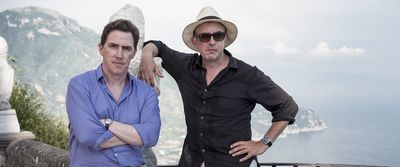
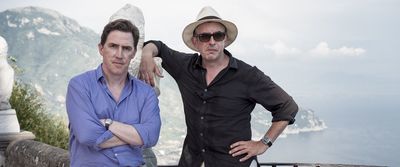
The Trip to Italy

Thumb_triptoitaly-2014-1

The founder of this site once said a very wise thing. Well,
he actually said quite a few very wise things, but here’s one I go over and
over pretty frequently: “There are two things you can’t argue in film:
comedy and eroticism. If something doesn’t make you laugh, no one can tell you
why it’s funny, and it’s difficult to reason someone out of an erection.”
That’s pretty funny in and of itself. Anyway, I’ve always respected Roger
Ebert’s rule of comedy, which he articulated differently in various pieces over
the course of his life, and which I distilled in my own mind as an instruction:
If something’s funny, and you laugh at it a lot, you’ve gotta own it. (If you know me at all, you also know that
I’ve got a laugh that’s kind of hard not to own—when I lose it, it’s pretty
loud. I think Fox Searchlight bought “Napoleon Dynamite” at Sundance partially
in the strength of my reaction to the steak-throwing joke.)

So here’s the breakdown: I laughed like a maniac at the
Michael-Caine-impersonation reprise performed by comic actors Steve Coogan and
Rob Brydon at the front end of “The Trip To Italy,” the followup (to call this
a sequel is kind of special pleading, really) to “The Trip.” The difference, by
the way, being that in the prior film—both are distilled from somewhat longer
television mini-series-es broadcast in Great Britain—the fellows gallivanted
around the British countryside and in this picture they are in, you guessed it,
Italy. To get back to the record, I also laughed like a maniac at the pictures
end, in which Brydon and Coogan discuss various James Bonds in front of an
appreciative audience of actors playing the publicist and teenage son of the
characters played by Brydon and Coogan, who are lightly fictionalized versions
of themselves. And I laughed consistently and appreciatively at many of the
scenes in between, some of which depict the actors singing along to an Alanis
Morrissette CD.

So if you go in for allusive British humor that builds
slowly from dry to uproarious, as executed by two absolute masters of the form,
“The Trip To Italy” will work for you, I believe. I also think the film,
directed, like the prior one, by the astute Michael Winterbottom, is a somewhat
smoother trip than the first. In that one, Coogan, who’s better known
internationally than Brydon, was the focus, and the movie’s plot, such as it
was, was hooked into his work and personal anxieties as he took a break from
his Hollywood career just as it entered a pivotal moment. Here the focus is on
Brydon, who gets a call from Hollywood, and also succumbs to a vacation
flirtation that results in a pretty serious domestic misstep. Because the viewer
is arguably less familiar with Brydon, the fiction is more convincing; we’re
spared the potential distraction of trying to separate and/or combine the
“real” person from the character he’s playing. Which leaves us more focus for
the incredible-looking Italian meals the pair sample (these trips are foodie
fodder for newspaper articles Brydon writes), and the impeccably delivered
banter they exchange. It all looks scrumptious, which makes this movie a
terribly refreshing one with which to close out the summer.

Source: http://www.rogerebert.com/reviews/the-trip-to-italy-2014


Categories
TV & Movies

Thumbnails 8/14/14

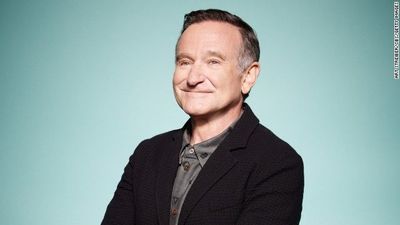
Thumb_140811201137-11-robin-williams-restricted-horizontal-gallery

1.

“Gilbert Gottfried: Robin Williams’ Generous Heart”: At CNN, the late comic’s “Aladdin” co-star pens a heartfelt remembrance following Williams’ suicide on Monday, August 11th. Related: Dante Basco (a.k.a. Rufio in “Hook”) writes his own farewell to the actor on his blog, while Norm MacDonald shares his memories of Williams via Twitter. See also: Marc Maron’s tribute to Williams on his WTF Podcast, including his profoundly revealing interview with the man taped on April 26, 2010.

“To see Robin perform was an experience. He was more than a comedian. He was a comedy force of nature. I remember hearing that Robin was once doing a press junket in Germany. One of the reporters asked him, ‘Why is it that Germany is not known for comedy?’ Robin answered, ‘Well, you killed all your funny people.’ I laughed out loud when I heard that. I thought, how sick and how wonderfully truthful. When I heard the news of Robin’s passing, it was a double shock. It was stunning that he was now gone and that, according to police, it was apparently suicide. I’ve known people who have committed suicide, and my shock always reveals how little I knew about them. Robin had spoken in the press about his substance abuse issues over the years, and he was dealing with it in rehab. I had heard at one point he was prescribed pills and that he didn’t want to take them because he was afraid it would interfere with his comic creativity. I thought, when I heard that, of his idol, Jonathan Winters. Robin worshipped the comedian, who died last year. Winters had his own problems and also was afraid medicating would interfere with his comic creativity.”

2.

Lauren Bacall Dies at 89; in a Bygone Hollywood, She Purred Every Word”: Enid Nemy of The New York Times writes a fine obit for the iconic actress, who died Tuesday, August 12th.

“Though often called a legend, she did not care for the word. ‘It’s a title and category I am less than fond of,’ she wrote in 1994 in ‘Now,’ her second autobiography. ‘Aren’t legends dead?’ She also expressed impatience, especially in her later years, with the public’s continuing fascination with her romance with Bogart, even though she frequently said that their 12-year marriage was the happiest period of her life. ‘I think I’ve damn well earned the right to be judged on my own,’ she said in a 1970 interview with The New York Times. ‘It’s time I was allowed a life of my own, to be judged and thought of as a person, as me.’ Years later, however, she seemed resigned to being forever tied to Bogart and expressed annoyance that her later marriage to another leading actor, Jason Robards Jr., was often overlooked. ‘My obit is going to be full of Bogart, I’m sure,’ she told Vanity Fair magazine in a profile of her in March 2011, adding: ‘I’ll never know if that’s true. If that’s the way, that’s the way it is.’”

3.

“Paying Attention”: Jonathan Beller of Cabinet Magazine writes an immensely provocative piece on the modern battle for our attention.

“With the increasing banality of globalization, a new attention to attention is emergent. Networks and film production companies dream up new ways to sell eyeballs to advertisers (as industry parlance has it), internetworks reconceive themselves as the media companies that they are (Yahoo!, Google), and ‘angel’ investors pour hundreds of millions into social networking platforms (MySpace, Friendster). This is the attention economy, built upon the premise becoming conviction, becoming fact, that human attention is productive of value. How has it happened that whether conceived of as informal workers, content providers, gamers, consumers, prosumers, or audiences, we, the people of Earth, still have something that corporations want? Like clean air, attention is something that once could be had for free but is now being encroached upon as the next and perhaps final frontier. Attention is now a commodity, and a special kind of commodity at that.”

4.

The Best Part of ‘The Killing: Season 4’ Is This 25-Year-Old Actor”: BuzzFeed’s Jarett Wieselman interviews actor Tyler Ross about his breakout TV role. See also: Roger Ebert’s three-star review for Nathan Adloff’s splendid indie, “Nate & Margaret,” in which the critic calls Ross “a precise and quiet actor who’s very effective at portraying a young man having an experience for the first time.”

“’The reason I was so drawn to ‘The Killing’ in the first place was because the writing portrays the characters in such human ways without being gratuitous. Nothing is gratuitous. It’s intelligent storytelling about people,’ he said. ‘I have mixed feelings about the military in general,’ Ross added, momentarily pausing to choose his words carefully. ‘I have military in my family, and I’ve seen what it’s done to them, for better or for worse. I can’t take a stance one way or another, but I think it’s a really interesting thing worth exploring. I want to tell stories that get people to ask questions about everything. But that goes along with my definition of art because if you’re preaching at people, if you’re telling them what to think, you might as well be doing a sermon. I would rather present someone with an idea that makes them think things they normally wouldn’t ask themselves. That’s what I want to do because that can make people better.’”

5.

History of Film: Lawrence of Arabia”: Omer M. Mozaffar of RogerEbert.com writes an excellent piece on David Lean’s 1962 masterpiece for Movie Mezzanine.

“Speaking of the White Saviors of Hollywood cinema, many will recognize its obvious influences on such films as Avatar and Dances with Wolves. To be fair, as frequently as the film praises his endeavors leading the Arabs, it also critiques it, commenting that a British foreigner came in and created a mess of the Arabs. But, that recurring thread of the Caucasian elite helping the vulnerable persons of color streams through such modern films as ‘Elysium,’ ‘The Blind Side,’ and ‘Django Unchained.’ Even ‘12 Years a Slave’ finds its White Savior in Brad Pitt. But even then, these were all, to varying degrees, emotionally successful films. Moving beyond the cinematic wonder and through the fourth wall, this film is a mixed message. Speaking of race in this film, the initial problem, is that this formula is so common, that we do not notice it. The British accent gives us a sense of authenticity and dignity. The British savior, however, seems like something normal. The deeper problem, however, is that persons of color internalize these sentiments in various forms of inferiority and self-hate. The whole of Bollywood — the world’s largest film industry — is a frequent exercise in White supremacy by people of color.”

Image of the Day

Fandor‘s Brandon Harris lists 25 films that he considers “The Essential Black Independents.”

Video of the Day

A scene from Gus Van Sant’s acclaimed 1997 drama, “Good Will Hunting,” featuring Robin Williams in the role that won him a well-deserved Oscar. The park bench where Williams and Matt Damon are seated has been turned into a memorial.

Source: http://www.rogerebert.com/thumbnails/thumbnails-81414


Categories
TV & Movies

#231 August 13, 2014

Robin Williams

Sheila writes: What a sad week this has been already. We lost both Robin Williams and Lauren Bacall, and the tributes have been flooding the Internet. We have included some link round-ups below with tribute pieces and obituaries, including the ones running on Rogerebert.com. The response has been overwhelming. In case you missed it, here is David Simon’s remembrance of a day on the set of “Homicide” with Robin Williams. Please share your favorite roles, favorite moments, favorite memories of these two beloved performers.

I walked by Caroline’s Comedy Club in Manhattan Tuesday morning and saw that they had taped up pictures from Robin Williams’ career along the outside wall, and someone had left a couple of sunflowers on the sidewalk. I am sure more were left throughout the day.

Trailers

Camp X-Ray (2014). Written and directed by Peter Sattler. Starring Kristen Stewart,
John Carroll Lynch,
Tara Holt . Synopsis: A soldier assigned to Guantanamo Bay befriends a man who has been imprisoned there for eight years. In US theaters October 17, 2014.

The Theory of Everything (2014). Directed by James Marsh. Written by Anthony McCarten. Starring Felicity Jones,
Eddie Redmayne,
Emily Watson . Synopsis: A look at the relationship between the famous physicist Stephen Hawking and his wife. In US theaters on November 7, 2014.

Penguins of Madacascar (2014). Directed by Eric Darnell,
Simon J. Smith. Written by John Aboud,
Michael Colton. Starring Benedict Cumberbatch,
Peter Stormare,
John Malkovich. Synopsis: Super spy teams aren’t born…they’re hatched. Discover the secrets of the greatest and most hilarious covert birds in the global espionage biz: Skipper, Kowalski, Rico and Private. These elitists of the elite are joining forces with a chic undercover organization, The North Wind. Led by handsome and husky Agent Classified (we could tell you his name, but then…you know). Together, they must stop the villainous Dr. Octavius Brine, from destroying the world as we know it. In US theaters November 26, 2014.

The Best of Me (2014). Directed by Michael Hoffman. Written by J. Mills Goodloe,
Will Fetters (based on the novel by Nicholas Sparks). Starring Michelle Monaghan,
James Marsden,
Liana Liberato . Synopsis: A pair of former high school sweethearts reunite after many years when they return to visit their small hometown. In US theaters October 17, 2014.

Two Night Stand (2014). Directed by Max Nichols. Written by Mark Hammer. Starring Miles Teller,
Analeigh Tipton,
Jessica Szohr . Synopsis: A snowstorm forces two people who made an online connection to unwillingly extend their one-night stand. In US theaters September 26, 2014.

The Guest (2014). Directed by Adam Wingard. Written by Simon Barrett. Starring Dan Stevens,
Ethan Embry,
Joel David Moore . Synopsis: A soldier introduces himself to the Peterson family, claiming to be a friend of their son who died in action. After the young man is welcomed into their home, a series of accidental deaths seem to be connected to his presence. In UK theaters on September 5, 2014. In US theaters on September 17, 2014.

Book of Life * New trailer * Written and directed by Jorge R. Gutierrez. Starring Zoe Saldana,
Channing Tatum,
Ron Perlman . Synopsis: Manolo, a young man who is torn between fulfilling the expectations of his family and following his heart, embarks on an adventure that spans three fantastic worlds where he must face his greatest fears. In US theaters on October 17, 2014.

Atlas Shrugged: Who Is John Galt? (2014). Written and directed by James Manera (based on the novel by Ayn Rand). Starring Stephen Tobolowsky,
Rob Morrow,
Eric Allan Kramer. Synopsis: Approaching collapse, the nation’s economy is quickly eroding. As crime and fear take over the countryside, the government continues to exert its brutal force against the nation’s most productive who are mysteriously vanishing – leaving behind a wake of despair. One man has the answer. One woman stands in his way. Some will stop at nothing to control him. Others will stop at nothing to save him. He swore by his life. They swore to find him. Who is John Galt? In US theaters September 12, 2014.

Birdman (2014). Directed by Alejandro González Iñárritu. Written by Alejandro González Iñárritu, Nicolás Giacobone
, Alexander Dinelaris
and Armando Bo
. Starring Michael Keaton,
Zach Galifianakis,
Edward Norton. Synopsis: A washed-up actor who once played an iconic superhero must overcome his ego and family trouble as he mounts a Broadway play in a bid to reclaim his past glory. In US theaters October 17, 2014.

Miss Julie (2014). International trailer Written and directed by Liv Ullmann (based on the play by August Strindberg). Starring Jessica Chastain,
Colin Farrell,
Samantha Morton. Synopsis: Over the course of a midsummer night in Fermanagh in 1890, an unsettled daughter of the Anglo-Irish aristocracy encourages her father’s valet to seduce her. Opens September 12, 2014 in Norway. Other release dates TBD.

Lauren Bacall 1921 – 2014

Sheila writes: Bacall never liked being called a “legend” herself because that seemed to connote the past. Now that she has died at the age of 89, how does one sum up such a career, such a life? Keyframe over at Fandor has superb links round-up of tributes and Dan Callahan’s essay on Bacall on Rogerebert.com is not to be missed. Dan Callahan is one of the best writers on the craft of acting today. Callahan writes, “Bacall walks with feline grace in ‘To Have and Have Not,’ and part of what makes her so distinctive and touching in that movie is the just noticeable strain she is under to perform and act more than her age. She manages all of that with style, with aplomb, and the picture was a triumph for her, as was ‘The Big Sleep.’ And then some! Her Slim in ‘To Have and Have Not’ and particularly her Vivian Rutledge in ‘The Big Sleep’ are flawless fantasy creations, all lush hair and pouting lip and smart, poking attitude. Bacall and Bogart in those movies make the lead-up to sex, the jabs and put-ons and badinage, seem just as much fun as the no-doubt satisfying sex itself.

Please read the whole thing. “To Have and Have Not” is one of my favorite movies. What are your favorite Lauren Bacall performances?

Robin Williams 1951-2014

Sheila writes: Rogerebert.com editor-in-chief Matt Zoller Seitz sums up Robin Williams’ uncontainable personality beautifully in his tribute to Roger Williams on Rogerebert.com when he writes, “That was the most surprising and often haunting thing about Williams: that sense that when he unleashed the full force of his talent—chasing a spark of inspiration as it hopped from neural pathway to neural pathway like a speed-demon driver changing lanes; rattling off free-associative thoughts that were sometimes connected by shared words or images or vowel sounds; pacing or racing while yammering and gesturing as if his whole being were taking dictation from his subconscious—he was reaching out to the audience and running away from something.” Read the whole thing.

You can also check out Keyframe’s roundup of Williams tributes.

They will both be sorely missed.

Free Movies

Inner Sanctum (1948). Directed by Lew Landers. Starring Charles Russell,
Mary Beth Hughes,
Dale Belding. Synopsis: A man fleeing the police after having committed a murder hides out in a boarding house in a small town.

Watch “Inner Sanctum.”

Another Man’s Poison (1951). Directed by Irving Rapper. Starring Bette Davis,
Gary Merrill,
Emlyn Williams . Synopsis: In an isolated house, mystery writer Janet Frobisher is involved in potentially murderous relationships.

Watch “Another Man’s Poison.”

False Pretenses (1935). Directed by Charles Lamont. Starring Irene Ware,
Sidney Blackmer,
Betty Compson. Synopsis: A girl who’s just lost her job meets a drunk millionaire on a bridge who’s just lost his money. They go back to his house, and eventually come up with a plan to benefit them both: he’ll scrounge enough money together to teach her how to be a lady, and then introduce her to his rich friends so she can snag a husband, after which she’ll pay him a finder’s fee. Complications ensue.

Watch “False Pretenses.”

Source: http://www.rogerebert.com/ebert-club/231-august-13-2014