Categories
TV & Movies

An FFC Review of “Cold Eyes”

Thumb_43692299

The South Korean film “Cold Eyes” is a pure exercise in the thriller genre and professionalism. This is a taut, efficient work which does not waste a single minute of its two-hour running time, and we are entertained by how well its characters do their work. Everything we need to know about them is mostly presented through their professions, and most of them are smart and resourceful enough to be competent players in their intense game of wits and wills. A trivial thing noticed in one small moment can be a crucial chance for reversal in a later situation, and that makes us constantly wonder about what will be the next move to be made.

The movie grabs our attention right from the opening sequence, which introduces its main characters while subtly signaling to us that something serious is happening under the surface. We initially see a young woman in a subway car filled with ordinary passengers, and then we also notice an ordinary-looking middle-aged man in the same subway car. For some reason, both are very watchful about their surroundings, and they are also very careful about being not noticed by others – and each other, perhaps.

Keeping the distance between themselves, they reveal little during this long sequence, but the movie lets us grasp step by step what is really going on between them while a bank robbery plan is expertly executed second by second at a spot not very far from their location. There is a cool, calculating criminal mastermind behind this robbery, and we observe him overseeing his henchmen from above while meticulously monitoring the situation outside the bank building. His henchmen do exactly as planned under his careful direction, and everything goes well for them except one small but problematic delay – but all of them successfully escape from the scene in the end thanks to his well-prepared plan.

It is the latest task of Chief Hwang (Seol Kyeong-gu) and his unit members in the special division of the Seoul police to track down and arrest these professional criminals. Their headquarters are hidden somewhere within the downtown area of Seoul, and they always make sure that their unofficial operations are not noticed by citizens no matter what happens (one of them jokingly says at one point that they can wear their police uniform only when attending their colleague’s funeral).

Aided by the high-tech surveillance system available to them, Chief Hwang and others at the division patiently scan over the crime scene to find their culprits. Although it is no surprise to us nowadays, I must say it is still rather frightening to see in the movie how our daily life in public can be easily monitored and processed through advanced modern technology. Even with only one minor credit card payment, they can immediately get the approximate daily activity zone of yours through your credit card record, and they will soon locate you within a few hours if you aren’t good at evading their surveillance network.

Hwang’s unit members, including a rookie officer named Ha Yoon-joo (Han Hyo-joo), are deft at hiding their presence during their covert missions, and many suspenseful moments in the film involve how they keep their heads down while searching for their targets. They fortunately get one good lead at the start, but they are well aware that a brief glance or a casual word can ruin the whole operation at any moment, so they are always cautious in every step of their maneuvers.

Intensely focusing on their work process, the movie throws some interesting ethical perspectives into the plot. While fully understanding what should be done for their assigned work, Chief Hwang clearly sees the gray morality regarding what he and his people are capable of as shadowy public servants monitoring the city in the name of law and order. He admits that they may infringe upon the civil rights of the people they should protect and serve, but he and his people choose to stick to their missions while never looking back, for that is probably the only way they can deal with morally difficult situations such as when they happen to detect two people in dire danger during their stakeout.

The man they are chasing after never looks back in his work either. As soon as his latest work is done, he receives the payment along with another job to do from a seemingly old, humble shoemaker whose cold eyes betray a ruthless criminal boss inside his shabby appearance. They seldom discuss their nameless powerful clients, but they know well the purposes behind the jobs they are requested to do (in one case, a bunch of account books are stolen away from some big accounting firm before the police come with a seizure and search warrant), and they do not care as long as they get paid well.

As Chief Hwang and his unit get closer to their targets, the directors Kim Beyong-seo and Jo Eui-Seok keep building tension along their plot. They skillfully manipulate the level of suspense along with a little dose of humor, and they always make the movements on the screen clear to us even when their movie becomes quite busy with many characters simultaneously moving around one area. They also make a good use of the streets and alleys and buildings of Seoul, and that gives a nice realistic touch to the film while also providing the canvas for its slick visual approach to the story.

The actors are well-cast, and they do more than fill their archetypal roles. They are unassuming on the screen as required, but their good performances reveal the interesting sides of their characters even when they are fully occupied with their work. Seol Kyeong-gu is excellent as a tenacious chief dedicated to his work and his people, and Jeong Woo-seong is coolly effective as his formidable match who may win their precarious game if his opponent happens to make a false move at the wrong time.

Between her two co-stars, Han Hyo-joo gives the best performance in the film as a feisty rookie with prodigious visual memory. Although we do not see a lot about her private life except one brief scene at her residence, Yoon-joo is a good female character as smart and strong-willed as the heroine of “Zero Dark Thirty” (2012), and one of the terrific moments in the film is the smooth visual presentation of how she recalls and looks around every detail spotted during her mission. Even at her most frustrating moment, Yoon-joo can quickly recover her strength as soon as she spots a decent chance, and the climactic sequence in the third act reminded me again that good thrillers are mainly fueled by the wills and motives of characters, not just by mere actions. The movie has a number of well-made action sequences which are both exciting and involving, and one of them is a rare moment in which the police in the movie have a clever, thoughtful strategy for chasing down bad guys instead of mindlessly driving after them along the streets (and they actually consider public safety, by the way).

The supporting characters in the movie are mostly defined by their appearances, but the screenplay by Jo Eui-seok gives considerable space to some of them. Lee Jun-ho is likable as one of Chief Hwang’s unit members, and you will be amused by how appropriate his code name is considering his sleek agility and quick improvisation. As the strict head of department, Jin Kyeong is both commanding and caring. While her character rarely loses her cool façade in front of others, one small detail implies how many times she has been frustrated with her superiors while trying to do her job like the guys. Her brief private scene with Chief Hwang shows us two seasoned comrades who have gone through lots of difficult things together for many years.

I forgot to tell you that “Cold Eyes,” which was released as “Watchers” in South Korea, is a remake of the Hong Kong thriller, “Eye in the Sky” (2007), which was produced by Johnnie To. I belatedly watched “Eye in the Sky” not long after watching “Cold Eyes” at a local theater in the last year, and, after having a fairly good time with the former, I admired more how the filmmakers behind the latter took the story of the former and then reassembled its elements for their own style and background. For example, a passable voyeuristic moment in the original version is transformed into a more crucial part in the remake, and then there is one particular scene in its second act which is packed with a stronger dramatic effect in comparison to its counterpart in the original. I wouldn’t dare describe this scene to you, but let’s say it took me back to when the audiences around me gasped with horror as one minor character made a tiny but lethal mistake in another South Korean thriller, “The Chaser” (2008).

While not forgetting to give a small, respectful nod to the original, “Cold Eyes” sometimes surpasses its predecessor in several parts including its crackling high-octane finale, and the result is a very good remake which is as exemplary as “The Departed” (2006) or “The Girl with the Dragon Tattoo” (2011). This is a splendid genre piece indeed, and you may appreciate its achievement more if you watch it along with the original version.

Source: http://www.rogerebert.com/far-flung-correspondents/an-ffc-review-of-cold-eyes


Categories
TV & Movies

Life Imitating Art: Ira Sachs on “Love Is Strange”

Thumb_loveistrangesachs2

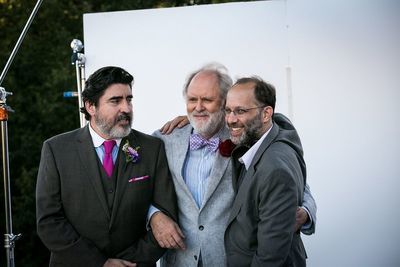
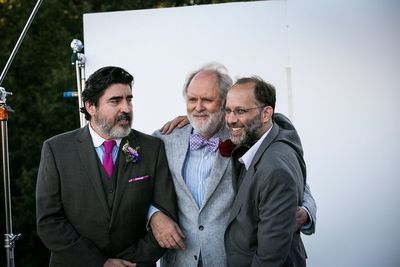
In a year where popular pictures marketed as “religious” have cloaked their intolerance in self-righteous anger, Ira Sachs’ gentle, sublimely nuanced character study “Love Is Strange” registers as rather radical. The film centers on Ben (John Lithgow) and George (Alfred Molina), a NYC couple who get married in the 39th year of their relationship. This causes George to get fired from his job as a choir director at a Catholic church, and results in the couple losing their apartment, forcing them to find a place to live. George moves in with neighbors while Ben stays with his nephew (Darren Burrows), his wife (Marisa Tomei) and their son (Charlie Tahan). A day before Sachs’ visit to Chicago for the film’s press interviews, hundreds of parishioners at Holy Family Church in Inverness, IL, voiced their outrage over the firing of their music director, Colin Collette, after he publicly announced his engagement to his male partner. Talk about life imitating art.

Sachs spoke with RogerEbert.com about a variety of topics including the influence of Maurice Pialat on his work, how changes in his personal life have altered his approach to filmmaking, and the statement he wished he hadn’t made to Variety.

George is a Christian whose orientation does not conflict with his faith. His character could be seen as a rebuke to the recent slate of fundamentalist films portraying how Christians are shunned because of their refusal to support gay rights.

Yes, I think you’ve said it very, very well. People have their own beliefs and they come from places that are very deep. Alfred Molina is a very deep person and I think he met George in that spot. There is a kind of trust in his own emotions. I think that one of the reasons Ben and George are such quietly radical and powerful figures is because they know who they are and that’s unwavering. To me, that is where they become really inspiring as gay men and as artists. I think that is really what Marisa Tomei’s character is observing about these two men. It’s this sense of character formed by people who know and love themselves.

The line “love rejoices in truth” is a pointed one in this context, considering that there is a natural tendency for people to feel ashamed if they don’t fit into socially approved identities. Is that a journey that reflects your own life?

It is very much so. I think that all of my previous films were about the nature of love and its destructive toll on an individual, but even more, they were films of self-discovery, about people who were trying to understand who they are and what they felt about that. This is a film that begins with two men who know who they are and they face a conflict together. How they face that conflict is the story of the film and also describes their love. I’ve always thought of it as an epic story told in a New York apartment because it’s multi-generational. It’s really about all these generations, and how at each stage of our life, we know such different things. You have the older couple played by John and Alfred, and then you have Marisa Tomei and Darren Burrows who are very much in the middle of their life, trying to figure out what they are allowed [to do], what they should expect, what they have to give up. Then you have this kid, Charlie Tahan, who is discovering love for the very first time. Each of those perspectives is, to me, what makes love unique and, in some ways, strange.

I was struck by how everyone in George’s church is accepting of his orientation until the news is made public and the Bishop objects.

The church is in a state of flux and state of crisis. It’s clearly a crisis when you look at the history of the Catholic church in the last few years. All history is defined by shifting modes of reality and time and how things change. That’s what I love about cinema. It changes in the moment. One of the things this film speaks to is how relationships are not defined by names or titles but by experience. As a family member, that doesn’t mean anything until you actually look at how it plays out over time and in moments like this, in moments of challenge.

How has your new identity as a husband and parent impacted your outlook on the world and your approach to storytelling?

One of the biggest things that happens to many people when they have kids is that you suddenly realize that you’re not going to last forever. You know there is another generation who are the heroes of their own stories, and that is humbling. I think that this film was in many ways inspired by my mother and my stepfather who have been together for 44 years. I’ve watched that relationship over time and I think something about it has really worked. They are still very much each others’ best friends and there’s a trust between them. I aspire to that within my own relationships. I feel more attentive towards other people at this point in my life, whereas my other films were more about my own internal struggles. Even if the lead character in a film like “Forty Shades of Blue” was a Russian woman living in Memphis, I identified with her conflict.

Like your previous film, “Keep the Lights On,” this film has been praised for not allowing its characters to be defined by their orientation.

I actually hope that just means I’m a good filmmaker. None of us are defined solely by any one adjective and if I was going to write a story that was simplistic or non-nuanced, I would be a different type of artist. I always think of Henry James. It’s not like we are living in the time of James’ “Washington Square” and that [novel] is just about the time in which it was set. If the characters are real, then they go way beyond their moment.

You’ve mentioned that French realism and the films of Ozu have served as influences. I was reminded of “Vertigo” in the way a prolonged fade-out suggests the passage of time.

Let me show you a photograph. [takes out his phone] I happened to be in San Francisco the other day. Look what was outside my window. [On his phone is the hotel where Scottie searches for Madeleine in “Vertigo” and finds a bouquet of her flowers on a car dashboard.] I was in the Fairmont and this is a private apartment across the street. [laughs] I felt like I was on a crane or something.

That is amazing. The building looks just like it did in 1958.

I like a film that makes the audience feel like they are in the middle of life as it is moving, and in a way, they are catching up. They are thrown into things. I have been very influenced by the director Maurice Pialat, who I continue to be in conversation and conflict with and get inspiration from. One of the things I learned from him was this idea that you could make a film out of a series of middles. They’re not necessarily beginnings and ends but always that you’re thrust somewhere and the audience then becomes a part of the world as they try to enter into that space. There is an instinctual sense of what is necessary for a film. I think clarity is one of the most important things in art. I try to give the information that is important without getting in the way of an audience’s more personal response.

Though you go about it in a completely different way, your film and Richard Linklater’s “Boyhood” employ a novelistic style that captures the flow of life, focusing not on obvious moments but on the moments in between. How are you able to achieve this through your various collaborations?

I have a wonderful co-writer, Mauricio Zacharias, and I think we share a lot of similar feelings about both life and cinema. He’s the godfather of my son which means that we come from a place where we look at the world quite similarly, and I think that’s really important. The same is true of my editors Alfonso Gonçalves and Michael Taylor—I’ve been working with Alfonso since my first film—and one of the things that is important to me is that I continue to work with people who are passionate about movies and who share an education in cinema. This picture is a pretty classic neorealist film. It’s a film that, if it works, it makes the ordinary extraordinary, which is the goal of neorealism. It’s based in the real world. That history is one that I feel very much a part of, and it’s still important to me. That’s why I’m really happy to stay in film and not make television, not that anyone is asking me to. It’s a different medium.

Would you consider working for a network like HBO?

Particularly in the case of my last two films, I am a truly independent filmmaker and I am my own boss. As soon as you work in television, you are working for a corporation, so it’s a different experience. I believe in independent film as an economic possibility and also as something that gives you a kind of freedom that is undeniable.

That’s refreshing to hear, considering that there are still many filmmakers sounding the death knell on indie film.

I just said that in Variety and feet really bad about it. I said that independent cinema is dead. I work a lot with the Sundance Institute and I’m thinking they’ll not like that. It’s not a really good thing to say. The modes of production are very, very challenging.

Would you say that the independent film industry is in flux and that a new, sustainable model is on the horizon?

It’s interesting because, yes, we are struggling to figure out what the new model is, but so was Orson Welles and so was John Cassavetes, and that’s sort of what I go back to. When you think about it, the idea that independent film was going to be an explosive possibility for sustained careers is perhaps no longer the case, but there are individuals [who enabled me] to make this movie and helped it find a place in the culture.

One of the most stunning performances in the film is by Charlie Tahan. Many pivotal scenes rest on his shoulders, and he is more than up to the challenge.

I think that kid is a genius, I really do. I couldn’t help thinking of DiCaprio in “Gilbert Grape,” in the sense that you see this raw emotion and talent and craft without any kind of mediation. When he auditioned for the film, he wasn’t an inexperienced actor. He had been in “Charlie St. Cloud” and “Frankenweenie.” There was something that he did in this brief scene that he performed during the audition that made me realize that we had to make the film within the next month. He is right on the verge of becoming a man and it’s so present, and that’s the story of the film. It’s a coming-of-age film and I knew that we needed to capture that. There’s one scene where he has this fight with his family at the dinner table, and we ended up shooting it so that his close-up was the last of the things we shot. I don’t rehearse my films before I start shooting, so I had never seen the scene. I was actually watching the monitor in another room so until it was his close-up, I had never seen him perform the scene, but I had heard him do it 35 times because by then we had done coverage on [the other actors]. When I saw him, I was like, “He’s so authentic in this moment.” I went in and I asked John and Marisa, “Is he like that every time?” And they both turned and went, “Uh huh.” [laughs]

The scene where the camera lingers on Tahan as he’s suddenly overcome with emotion took my breath away.

The film is very musical and it’s influenced by the music of Chopin and the kind of orchestration of effect that can come in a certain piece. I knew that the film would have a certain moment of reflection towards the end that would be different from what we had seen previously. We shot a few different sizes of that scene, but once we cut it, it actually brought the audience out. It disrupted the natural attachment. I love in film where you feel like for a very brief moment, you are in a place that is so intimate, you almost feel like you shouldn’t be there. I always think of this film called “Open Hearts.” It’s a Danish film by Susanne Bier with Paprika Steen, who’s in a couple of my films. There were moments in that film where I felt, “I shouldn’t be watching this. You should not be letting me in there.” I don’t think you can make a whole movie like that. Bergman tried, in lots of ways, to do that, and that’s actually why I don’t go back to Bergman. It’s just too much for me. But in this film, there’s so much humor and a kind of lightness before it comes to land.

There’s a lot of humor but also a great deal tension generated by the strain of loved ones living in all-too-close of quarters. How were you able to depict that dynamic so authentically?

When I started writing this film with Mauricio, it was in the same month that I went from living alone to living with my husband, our two kids, the kids’ mother and occasional visiting family members who would come to stay and help us out. It was perfect, it was like, “Love is strange!” [laughs]

Tell me about your mentorship program for “young queer filmmakers.”

I think in all my films, I have been very interested in how community defines individual experience. None of my films exist with characters that are in isolation from a particular culture or subculture. I’ve also been aware that as an artist, I’ve had very few models for how to live a life. I’m looking at this image of John Lithgow and Alfred Molina [on the film’s poster], and thinking about what I’ve learned from them as individuals and as creative people, and how important that is to me and my sense of how to proceed. Five years ago, I started a series called Queer Art Film, which is once a month at the IFC Center in New York. It’s a community building series in which we invite artists to pick a film that has been important to them as a queer person but also as a creator. From that, we’ve started this mentorship program which supports ten emerging queer artists in five disciplines: literary, visual, performing arts, film and curatorial, and we pair them with an established artist in their field. It’s all just a way to create “company,” which is a Beckett term. I think “company” is this wonderful term of what we all strive for and hope for and need. In many ways, this film is about mentorship. I think Marisa Tomei and Charlie Tahan are mentored by Ben and George, and that is, as a parent, so important to me. The question that Alfred Molina’s character asks in the letter to the parents of the children [at his church] is, “What do we teach our children?” That sort of question is extremely meaningful to me, and hopefully, to an audience.

Source: http://www.rogerebert.com/interviews/life-imitating-art-ira-sachs-on-love-is-strange


Categories
TV & Movies

Thumbnails 8/18/14

Thumb_lets-be-cops-still

1.

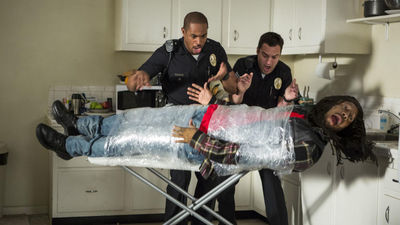
“Let’s Be Real”: At Grantland, Wesley Morris discusses the poorly reviewed comedy, “Let’s Be Cops,” in light of the escalating tragedy in Ferguson following the shooting of Michael Brown. Related: The Washington Post trio of DeNeen L. Brown, Wesley Lowery and Jerry Markon reports, “State of Emergency declared in Missouri amid renewed tensions over Brown’s death.” See also: Al Jazeera‘s David M. Perry explores “Ferguson and the Cult of Compliance” while our contributor, Omer M. Mozaffar, writes an excellent essay, “Ferguson, Missouri: Third World America Vs. Atlas Shrugged.”

“This would just be more flushable summer waste (and, please, don’t let me stop you from jiggling the handle), except ‘Let’s Be Cops’ somehow doubles as a fantasy that knows its social limits, limits that connect it to the turmoil in Ferguson, and those limits ease on down the road of race. The movie doesn’t want to make a big deal about this, but Justin is black and Ryan white, which is newsworthy in that, despite one guy’s annoyance with the other, they appear to have been friends long enough for racial osmosis to set it. Justin speaks the way black comedians — like Wayans’s father, Damon Sr. — do when they’re impersonating an uptight white guy. Ryan occasionally twists and spikes the cadences of his speech so it sounds comedically black. Justin says ‘dude’ a lot. Ryan likes ‘bro.’ Permeable racial identity becomes a kind of running gag, especially once Key and his impersonation of a loopy Mexican gangsta shows up.”

2.

“Dear Internet: Forgive Damon Lindelof, and Forgive Yourself”: Ryan McGee of Boob Tube Dude responds to those whose angry tweets caused the “Lost” show runner to leave social media.

“The ‘text’ of ‘Lost’ was something that evolved overtime, and rightly so. That made trying to figure out what the show was saying so incredibly rewarding. By the early episodes of season six, ‘Lost’ was a show that didn’t depend on its mythology, but rather deconstructed its mythology. It actively pushed back on trying to draw any singular answer out of its central mysteries, but rather explored what happened to people who couldn’t let those mysteries go. The show’s final reveal of what the ‘flash sideways’ were was consistent with this analysis, with all the show’s characters realizing that the only connections they needed to make was with each other. For crying out loud, this was a show that suggested a phone call could cure a fatal brain hemorrhage! You could roll with this or roll your eyes at this. That’s totally your right. But you can’t say the show wasn’t showing its hand all along. HOWEVER, Lindelof’s media tour was a complete sleight of hand, one that teased out the mysteries of the Island rather than the strength of its characters.”

3.

“Stop Writing Dystopian Sci-Fi—It’s Making Us All Fear Technology”: A tremendously provocative piece from Michael Solana of Wired.

“The news is bleak. With Ebola on U.S. soil, we are one infected monkey away from the plot of Outbreak. Russia is threatening to invade the Ukraine. We are blowing things up in Iraq again, where starving children are being massacred. There is overpopulation, and climate change; there is peak oil; there is a truly alarming spike in the diagnosis of autism. We are a society faced with many problems. Things, to put it mildly, could be better. Technology, for its natural inclination toward radical change, is perhaps the only thing that can make them better in a major, scalable way. But in the 21st Century, the average American is overwhelmingly afraid of artificial intelligence, NASA has abandoned its shuttle program, and the tech industry is the new darling villain of journalists across the nation. While innovation has improved our lives in almost every way imaginable, people are more frightened of the future than they have ever been. And after ‘Battlestar Galactica,’ can you really blame them?”

4.

“Criterion Confessions: REDUX: The Darjeeling Limited”: Jamie S. Rich of Criterion Confessions shares some new notes and insights on Wes Anderson’s 2004 effort.

“I’m glad they are including the prologue of ‘Hotel Chevalier’ because ‘Darjeeling’ is really incomplete without it. Particularly in regards to Jack. He is essentially Max Fischer looking to be grow up and be taken seriously, stuck in a fugue at a time where the fictions he has created have become too real and have overtaken him. Look around his hotel room, you’ll see he has essentially built himself a replica of his childhood bedroom, a la Edward Appleby, the dead romantic figure in ‘Rushmore.’ There are toy cars, art pieces, and objects that are important to him. He’s locked away, indulging in books and movies.”

5.

“Future Panic: Temporal Anxieties in 2014 Films”: Charles Bramesco writes a magnificent essay for Movie Mezzanine on troubling themes in some of this year’s most fascinating pictures.

“In her 2006 text ‘Death 24x a Second: Stillness and the Moving Image,’ film theorist Laura Mulvey carefully maps out the medium’s obsession with death. Celluloid degrades, film preservation provides a finite but eternal life to dead people, and home-viewing offers the deeply discomfiting ability to bend the film to your will through pause, rewind and fast-forward — all of this is to say the medium’s relationship to time is a complex one. On a cursory glance, it would seem that the top-shelf cinema of 2014 shares Mulvey’s preoccupation with the passage of time. Many of this year’s critically-acclaimed arthouse pictures, as well as a handful of big-budget studio endeavors, have cast an anxious eye towards the future while lamenting an increasingly remote past.”

Image of the Day

At Vice’s Noisey Blog, Luke O’Neil illustrates “How Boston Police Spied on Thousands of Music Festival Attendees.”

Video of the Day

A Brief Look at Texting and the Internet in Film from Tony Zhou on Vimeo.

The superb editor Tony Zhou’s latest video essay offers “A Brief Look at Texting and the Internet in Film.”

Source: http://www.rogerebert.com/thumbnails/thumbnails-81814


Categories
TV & Movies

Hands Up: Los Angeles Protest Against Police Violence

Thumb_img_3498

Editor’s note: Los Angeles-based screenwriter and filmmaker
Eric Haywood attended the Los Angeles protest over the situation in
Ferguson yesterday. The following is an email he sent to me about what
he heard and saw there.
—Matt Zoller Seitz

I did
not know Michael Brown. Or Ezell Ford. Or Omar Abrego. But when I heard that
there would be a rally outside LAPD headquarters in downtown Los Angeles today,
protesting each of their deaths at the hands of law enforcement officers, I
felt compelled to attend.

Arriving
at about 3:00 p.m., I discovered a small crowd of roughly 75-100 people
gathered in front of the building, many holding signs (ranging from “Stop
Killer Cops” to “Justice for Ezell Ford” to “Fuck the Police”) and giving
interviews to camera crews. Police presence, to my eye at least, was fairly
minimal. About a half-hour later, someone made a short speech and the crowd (to
my surprise) began moving away from the building, pouring into the streets and
marching down Main Street.

This is
where I decided to pull out my phone and begin live-tweeting. Over the past
week, the vast majority of information I’d gotten regarding the events in
Ferguson, MO as they unfolded came from social media. So for the people who
couldn’t be there, I started documenting the rally as it moved through the
streets.

Emotions
were definitely running high among the crowd. While many protesters were
single-minded in their focus on demanding justice for Brown, Ford, and Abrego,
others seemed to be reveling in any opportunity to chant “fuck the police” in
the presence of actual armed police officers. Some of the more aggressive
anti-police protesters loudly vented their anger directly in the faces of the
cops who’d been assigned to keep an eye on the proceedings. But by and large,
the gathering remained overwhelmingly positive despite the emotionally-charged
nature of the Ferguson killing (of Brown) that’s captured the world’s attention
and the recent Los Angeles-based killings (of Ford and Abrezo) that haven’t
quite garnered nearly as much notice outside of Southern California.

Several
different chants rose from the crowd as we marched. “Hands up! Don’t shoot!”
became a common refrain, and “Justice for Ezell Ford!” could be heard over and
over. A handful of officers walked alongside the marchers, with a few on
motorcycles or bikes, but none of the heavy-duty vehicles that we’ve seen
deployed in Ferguson were in evidence during the Los Angeles rally. Probably
the most notable piece of equipment the LAPD brought out was a police
helicopter that constantly circled overhead, and shortly after the crowd began
its march, several people pointed up in the air at a small four-propeller drone
hovering above us. I had no idea if the drone was a piece of police equipment
or just a remote-controlled toy that someone brought with them from home, but
it was a bit strange seeing it keeping pace with the march as we moved forward.
And while the tension never reached the levels I’ve seen coming out of Ferguson
(nor did the police engagement), there were moments when it began to feel like
things were definitely approaching a boiling point.

The LAPD
was clearly prepared for the rally, as they’d blocked off traffic at several
intersections, allowing the crowd (which had swelled to twice its original size
within an hour) to move with relative ease along its path towards Union Station.
Many drivers, stuck in their cars, honked their horns or waved at the crowd as
we passed by, apparently in support of the march, but some clearly didn’t enjoy
the unexpected disruption.

At one
point, the marchers passed through an intersection that was blocked off by a
group of LAPD officers on bikes. And suddenly, I got a first-hand look and what
happens when a large group of people gets swept up in a tidal wave of emotion.

I’m not
sure exactly how it started, but a few of the marchers decided to stop in front
of the bike cops and further vent their frustration…directly in the cops’
faces. One man put his hands up and stood still, staring the cops down without
saying a word while others shouted “Hands up! Don’t shoot!” beside him. Others
began berating the cops (one Latino marcher called a Latino cop an “Uncle Tom”)
and repeating their demands that the officers who killed Ford and Abrego be
brought to justice. Three or four guys, carrying a “Fuck the Police!” banner,
stopped and positioned themselves with it right in front of the cops so they
couldn’t help but look straight at it.

It got
ugly. A couple of the cops put their hands on their guns (none were drawn, but
the crowd really didn’t like the
sight of the cops touching their weapons, and voiced their objections in no
uncertain terms). It was the only moment during the rally when I thought things
might get out of hand. But the police officers stood there, not moving a
muscle, and faced the angry crowd silently. One cop made what looked like a
grand gesture of taking a long, slow drink from her bottled water, as if to
show the protesters who were only a few feet in front of her that they’d never
be able to faze her, no matter how deep their anger and hurt. This was just
another day at the office. But there was a clear sense that if only one
protester had gotten too close or shouted the wrong thing, the whole scene
would’ve erupted into something pretty dangerous for all involved.

Thankfully,
the crowd began to police itself, with several protesters (including a lady
pastor who positioned herself between the two opposing sides) calling for those
who’d stopped in front of the cops to move on and rejoin the rest of the rally.
They seemed to realize that the situation had the potential to turn explosive if
things hadn’t been defused.

And so
the stopped protestors finally broke away from the police officers and
continued moving through Koreatown with the majority of the group. The bike
cops began to disperse as well, and despite the sudden de-escalation of an
incredibly tense moment, one bike cop rode past me and glanced at his watch. He
looked kind of bored as he did so, and I couldn’t help but imagine him already
forgetting about the crowd’s anger and wondering how much more time he had left
before the end of his shift.

The
march circled back to LAPD headquarters, and by this time, I noticed that the
crowd was probably well over 300 participants. Earlier, when things began,
there was an effort to keep the protest on the sidewalk, but now the crowd was
far too large to be contained. Everyone filled the street directly in front of
the LAPD building, once again chanting “Hands up! Don’t shoot!” over and over.
Lisa Bloom addressed the crowd with a microphone, insisting that she’s tired of
seeing black and brown citizens treated the way they have been for far too
long, and then the microphone was handed over to members of Omar Abrego’s
family, who spoke passionately about how much they missed their loved one.

All in all, it was a
peaceful–but emotional–event. As I
left downtown, and began my journey home, a part of me wondered how long it would be
before the next rally.

Source: http://www.rogerebert.com/mzs/hands-up-los-angeles-protest-against-police-violence


Categories
TV & Movies

Ferguson, Missouri: Third World America vs. Atlas Shrugged

Thumb_ferg.jpg

Something is different. I’ve been staring at the footage of
Michael Brown’s body, lying there in the middle of the Ferguson, Missouri
street. I’ve spent hours talking to local residents, activists, and law
enforcement. I’ve watched the clips, studied the reports, read the analyses
about race and power. I wonder what has changed. We’ve been through this before: a killing, an audio-video clip, a media
flurry, protests, riots, accusations/counter-accusations, obsequious
politicians, waning interest, repeat cycle. But something is different. Every person I spoke to said the same
thing: this is the beginning of
something big.

Another young black man leaves us as a fleeting memory. We would never have known Michael Brown’s
name, known any of his dreams, now deferred, but for what transpired in the
final ten minutes of his teenage life. And for those ten minutes, he joins a dark lista Blacklistfirst
made for Emmett Till, but filled with many young men. Trayvon. Oscar. Troy.
Amadou. Eric Garner. Sean Bell. There
are so many names that I had to ask friends to remind me. We’ve been through this cycle so many times.

We’ve seen both sentiments in response to the murders. Two
very distinct opinions: the Third World America vs. Atlas Shrugged. Most fascinating about the two sides is their
opposition to government.

Take almost any Dystopian film about a future America or
almost any American film about any so-called Third World country, and the
images are almost identical. Crowded housing. Economic disparity. Garbage.
Scarce nourishments. Few luxuries and many vices. Thugs in uniforms (wearing
either badges or bandanas) imposing vengeance and brutality under the illusion
of justice. For many, that Third World
stereotype, that Dystopian future, is the American urban present day. That is,
frankly, how Hollywood often depicts the inner city anyways. The Third World country, by the way, is never
White.

As a mentor to some Chicago Public School mothers, I am
privy to a unique fear. So many of these
women of color nurture their young boys with a type of loving, despondent
sternness: raising them to be men, steering them to walk the footsteps of the
great predecessors, while fearing that they will be gunned down before getting
the chance to do so. A father once came
to me for help with his 18-year-old; what turned out is that nobody in the
family knew how to grieve over the murder of his other son, when mistaken for a
rival gang member, a year earliershot twenty timesin front of their
house, in front of them. He didn’t even
think to mention it. It is a style of
parenting I’ve seen among survivors of war and genocide: everything is the same
as it is for every other parent, except that these parents are always conscious
about the disease that hovers around their children. I am speaking of mothers trying to protect
their children from a deadly plague, of which the germs are bullets. Bullets do not grow on trees; they are
manufactured. These are not parasites
seeking a quick dollar for tobacco and Angel Dust. Rather, they are a
dignified families getting crushed by a government machine that perpetuates an
impossible domestic life, yet funds X numbers of wars overseas.

On the flipside, there is the contrary view, seeing this
event as a phony controversy over an unfortunate killing, especially when
expressed through another camera: the surveillance video of the convenience
store. A man with the same khaki shorts,
t-shirt and physique as Michael Brown pushes the store owner as he
leaves. In between the surveillance
footage and the clip of his body, there is the void that will take weeks or
months to completely fill. The police
report mentions Brown allegedly stealing Swisher Sweets Cigars. A St. Louis law enforcement agent told me
that these cigars are used with PCP. Though it was not yet available in any of the reports I read, Brown and
the officer were in some sort of physical altercation. Moments later, following procedure, the
officer unloads his bullets into Brown. Death is not a punishment for stealing a pack of stogies, but will
definitely be the result if someonesober or stonedwrestles with a
cop. Well, definitely if you’re a poor black kid in St. Louis.

Those of this second view do not have kind words to say
about the government. Politicians, bound
by community demands, impose themselves on Police administrators, resulting in
officers who have to work with minimal physical or legal protection against
criminals. Simply put, there are parts
of St. Louis city, and St. Louis County that cops now refuse to patrol, because
they do not want to get censured or killed for even minimal work in the line of
duty. Like Atlas holding the earth on
his shoulders, he is stuck, while the financial elite have skipped town to
escape excessive regulations.

But, the two opposing views do not end here, because the
first begets protests, and the second sees riots. And, here we see the differences compared to
the cycles of the past.

Numerous coalitions are already in place in Brown’s
neighborhood, to improve quality of life. With his murder, however, they launched nonviolent, organized
protests. I asked what is different
about Brown’s murder, compared to every other murder for the past few
decades. The answer: now people are ready
to die if they have to. When we see
similar consciousness overseas, death is not a hope, not as a plan of any
sorts, but a final resort. People are
still pushing forward in disciplined peaceful protest and will do so for the
foreseeable future to reach the quality of life they deserve, but they are
ready to pay the final price if they have to, for they have nothing left to
lose.

And again, there is the other image: riots of gangs and looters. The very first thing a law enforcement agent
told me was that we are witnessing the start
of the problem, that this crowd is not afraid of them in the neighborhoods they
actually do patrol. The crowd fights
them physically as well as with lethal weapons (he rattles off a series of gun
names, and the only ones I recognized were AK-47s and Uzis) on a regular
basis. Their vests cannot protect them
against these firearms, so the officers have to give way to other
troopers. To complicate matters, among
the gang members are Veterans: among our
soldiers overseas are gang members (including White Supremacist gangs, not just
Bloods and Crips) who return from Iraq and Afghanistan and teach their comrades
military techniques, which they use. So,
law enforcement responded to the military grade assault with military grade
response, which we saw in many pictures.

It almost feels as though many people are waiting for that
final straw to present itself. Some told
me that the bullet that killed Michael Brown was that straw. In any case, I think about the quarter
century that has passed from “Do the Right Thing” to “The Interrupters” and
“Fruitvale Station.” Young Black men continue to die. The Civil Rights movement launched a series
of events that eventually put an African American family in the White
House. Yet, statistically speaking, the
future of the African American male in terms of education and that pipeline to
incarceration, seems to yield nothing but an annihilation. Speaking plainly as a Muslim who is himself
so often hit with existential threat that it’s been my “norm,” speaking about
African American men: that is not supposed to happen here.

And what of the religious thinkers in the Civil Rights
movement. I reflect that mine is the religion of Malcolm X; he is one of the
first filters through whom I understood my Islam. Through Martin Luther King and his own
brilliance, I also developed appreciation for Reinhold Neibuhr and Abraham
Joshua Heschel: perhaps two of the most
important American religious thinkers, Christian and Jewish, of the 20th
Century, who were critical of American tyranny. Meaning, everyone was and is
concerned.

Still, a colleague once reminded me that regardless of who
may have sent them, Malcolm taught “Love your self” and was killed by his own
kind. King taught “Love your enemy” and was killed by an enemy. So, looking at
that body lying there in the middle of the street, I wonder about those
perpetually deferred dreams of those theologians, those civil rights
leaders and those dignified mothers. When Langston Hughes spoke of Harlem, he asked:

What happens to a
dream deferred?

Does it dry up
like a raisin in the sun?
Or fester like a sore—
And then run?
Does it stink like rotten meat?
Or crust and sugar over—
like a syrupy sweet?
Maybe it just sags
like a heavy load.
Or does it explode?

Source: http://www.rogerebert.com/far-flung-correspondents/ferguson-missouri-third-world-america-vs-atlas-shrugged


Categories
TV & Movies

Retrieving the Grail: Robin Williams and “The Fisher King”

Thumb_fisherking-highercalling

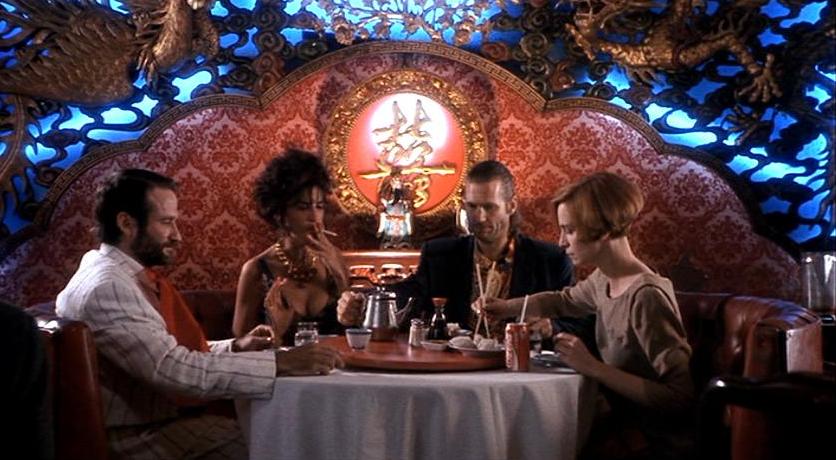
Robin Williams’ recent death opens eyes to the imprisoning weight of mental illness and how it hurts those so capable of bringing us joy. The actor’s passing can’t help but provoke a deep and somber reflection on his work, with several regards for “Oh Captain, My Captain” from “Dead Poets Society,” the man-child motif from “Hook” to “Jack,” and the tough-but-tender award-winning turn from “Good Will Hunting.” But no Williams film can hit harder—or be so fully consoling in such heartbreaking circumstances—as “The Fisher King.”

Released in 1991, this film from director Terry Gilliam and screenwriter Richard LaGravanese was a modern day Grail Quest that fused New York romantic comedy with timeless fantasy. Gilliam, who came to the project after the trouble-plagued “Brazil” and “The Adventures of Baron Munchhausen,” somewhat jokingly referred to it as his “sell-out” picture, but all sell-outs should be so uncompromising. “The Fisher King is a film about trauma, but it’s clothed in a theatrical buoyancy, so as to obscure—and flee from—reality’s petrifying disorder. Rarely in large Hollywood films is a chiasmus of tragedy and comedy so successfully drawn; “The Fisher King” has hilarity and romance clinging for survival through the scoriae of aching hopelessness.

The film starts by dancing on the shoulders of urban apathy and cynicism. Shock-jock Jack Lucas (Jeff Bridges) rules the airwaves by mocking listeners and exploiting the dirty laundry of celebrities. His world is cold, controlled and beautifully sterile. His studio voice is a far-reaching, disembodied entity—appropriate, considering Jack’s disengagement from other human beings glimpsed in taxis surrounding his limo or struggling in their hapless lives down on the street far below his luxurious apartment. He dances to “I Got the Power” while running the tagline for a sitcom that will finally give him a face to match the voice: “Forgive me!” But while Jack strives for disengagement and cultivates an apathetic tone, he’s about to find out that his words and thoughts still affect people, and not for the better. Unbeknownst to Jack, a lonely listener took his mockery of yuppies as inbred subhumans to heart (“It’s us or them”) and shot up a trendy bar, killing several bystanders before committing suicide. Jack crumbles while hearing the news.

Three years later, Jack’s withdrawn from the world. He squats at the apartment of his unsatisfied girlfriend Anne (Mercedes Ruehl), a video store owner, drowning in alcohol while not-quite-tolerating the questions of Anne’s customers. “I hate desperate people,” he says. Anne corrects him, “You hate people.” At night, he irritably watches the middle-brow sitcom he was supposed to star in, its mediocrity supposedly comforting him while in fact throwing wood on a self-loathing furnace.

It’s here where we get an acute sense of the numbing, brain-lacerating condition of a depressive. “I don’t know why you torture yourself. You’re too self-absorbed, Jack,” Anne tells him. “Divert yourself. Read a book.” Of course, as anyone with symptoms of depression knows, it’s not that easy. Jack responds by saying injurious things to Anne (“Suicidal paranoiacs will say anything to get laid”) and drunkenly wanders outside, intending to kill himself. As in grail mythology, he wanders through a wasteland of unexamined lives and squalor, a brief glimmer of spontaneous compassion—a child sneaking away from his millionaire dad and gifting Jack with a Pinocchio doll—canceled out by Jack’s Nietzschean contemplations with his new inanimate friend. He’s one of the bungled and botched, close to greatness but never able to get there. Jack holds the doll close and whispers, “Do you ever get the feeling you’re being punished for your sins?” Far beyond any religious sentiment, it’s a line that—in my experience—closely articulates the cage of depression’s nadir, where one is stretched out to a breaking point, unable to seek grace because there’s nothing (God, human, material) to grant it. It’s insinuated that Jack’s decline was self-inflicted, and that he voluntarily walked away from success because of the shooting. He has a conscience and sensitivity to suffering, and he hates himself. The only way is down, and as Jack gets ready to jump into the Hudson his face is one of pleasurable self-obliterating release.

Jack’s suicidal intimacy is interrupted by two privileged, baseball bat-wielding thugs who mistake him for one of the vagrants they believe taints their neighborhood. They beat him and douse him in gasoline, but before they can light a match, an anachronistic and mad knight errant (Williams) comes to the rescue with his similarly filthy posse of hobos. Jack spends the night with the self-professed knight, “Parry” (a variation on Parzival/Parsifal/Perceval, the world-redeeming fool from grail lore), who explains he’s in the employment of God and trying to retrieve the Holy Grail—which, so the cuddly fat people hallucinated by Parry tell him, is located on the bookshelf of an Upper East Side billionaire’s house. Parry admits that he can’t get the Grail on his own, insisting that the little people sent Jack to help. Overwhelmed and sobered up, Jack thanks Parry and gets the hell out.

But Jack discovers how his fate is tied to his rescuer. It turns out that “Parry” was originally Henry Sagan, a professor specializing in grail literature whose life was disrupted when his beloved wife was killed in front of him—the killer being the Jack Lucas Show caller. Henry lost his mind and remained silent until, Quixote-like, he reinvented himself as a vestige of his literary obsessions. The crisis of interaction has made Jack only more self-absorbed. He examines newspaper clippings of his past and listens to his old shows, on the precipice of weeping in self-disgust. “I really feel cursed…I feel like I’m a magnet, but I attract shit.” Reassurances from Anne are blind to his depressive predicament. “I just wish there was a way I could pay the fine and go home.”

He tries “paying the fine,” literally, giving Parry all the cash he has on him, which Parry accepts graciously before offering to take Jack out to lunch (and then handing the money off to another homeless man, whom Parry believes needs the money more). It’s not that easy. Jack needs to work out his mental wounds with Parry, participating in medieval make-believe by plotting to retrieve the Grail, and then assisting Parry in winning the affections of a shy romance book editor, Lydia (Amanda Plummer)—a tricky venture, given that she doesn’t know Parry (you could say he’s stalking her) and she’s very uptight and guarded.

“The Fisher King” smoothly rides through the foibles of romantic fortuity, as Anne and Jack, along with some of Parry’s hobo chums (most memorably Michael Jeter as a cabaret singer channeling Ethel Merman), bring the two lonely misfits together, while Anne pines for commitment from Jack. Some scenes veer in the direction of worn rom-com familiarity, such as Anne and Lydia talking about the perils of dating, or Jack cleaning up Parry to make him presentable for courtship. All looks bright: true love conquers all, Jack has the feeling of redemption and accomplishment, carrying Anne up the stairs, and Parry walks Lydia home, sweetly exposing the irrational ardor of his heart—which she accepts, touched by an unspoken but transparent kinship.

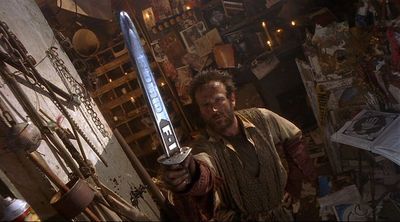
But Richard LaGravenese’s excellent screenplay complicates matters, and it hinges on Robin Williams’ performance. Parry could have simply been a clown—”Williams doing Williams,” as he did in “Mrs. Doubtfire,” “Good Morning, Vietnam,” even “Dead Poets Society”—but the character gradually simmers to a boil of bristling insecurities, terror and agonizing internalized pain. The mirthful wise-cracking energy of Parry keeps him afloat above the jagged edges of wasteland lostness and the psychological toll of coping with what he’s lost (it’s an exercise of delusion and self-reinvention to hide torment that Martin Scorsese and Leonardo DiCaprio more recently pulled off—and are finally being more appreciated for—in “Shutter Island”). Early on, we see his hospitable mania interrupted as he pulls Jack out from a private and ornately decorated medieval “chapel” strewn with trinkets associated with his grail quest and amorous passion. “You can’t be in there,” he says gravely before explaining his calling as a knight, as if he were denying an outsider access to the deeper hollow of his humorous persona as the “Janitor of God.” When Jack takes leave of him, Parry’s loneliness is palpable, as he’s left to shoulder the despair without help.

The horrifying reality of his wife’s death has been resculpted into the figure of the Red Knight, a fearsome presence imposing on Parry through cinematographer Roger Pratt’s lushly rendered beams of light, seamlessly marrying hallucination to reality and the archaic medieval to messy modern day New York. The fire blowing from the Red Knight’s helmet evokes Henry Sagan’s last memory of his wife, her head exploding before his eyes. Any trace of the past, unguarded by the projection of fantasy and madness, stokes Parry’s wound. In a flash, we see Williams’ robust good nature as a silly hobo transform to a pallor of despairing fear, and then to writhing torment, having a seizure on Fifth Avenue after Jack tries to remind Parry of who he really is.

Parry’s sweet declaration of love to Lydia would seem to be a leap forward, but as with a depression or mental trauma, outward progressive actions don’t guarantee quelling inner demons, and in fact may exacerbate them. Receiving his first kiss from Lydia, Parry peers upward at her door, his visage doubled by the window. His longing finally fulfilled, he’s drawn back in time to what happened at the restaurant three years ago. The diegetic sound goes silent, George Fenton’s score thuds deeply, and the camera ascends away from Parry, leaving him alone, a guilty survivor in a dense city, before predatorily pushing back in. He wails in anguish, pleading to the Red Knight, as if to the obstructions within his mind, “Please let me have this!”

Parry’s hurt is an insoluble wound, the unrestrained imagination of Gilliam boldly projecting his psychological firestorm and making manifest his loss. It’s not only Williams’ darkest performance (surpassing his more on-the-nose creepy roles in “One Hour Photo” and “Insomnia,” in addition to the morose antisocial cameos in “Dead Again” and “The Secret Agent”), but also Gilliam’s most affecting and deepest turn as a filmmaker. Director and actor weave together perfect discord in madness, audaciously shifting from a moment of soul enlivening sweetness to one of crushing psychological mutilation, Parry deteriorating from the pose of confident wooer to one of hunched-over self-hatred. He screams in unintelligible and drooling fury at the memories that pursue him to the Hudson’s littered shore.

The mesh here between reality and fantasy is Gilliam at his most brazen and plaintive, the radical stylist visually plugging into the crippling condition of basic human suffering. Parry is kneeling in front of the same two thugs he saved Jack from earlier. Behind them, silhouetted, is the Red Knight. The image is a trinity of sorrows in one startling and wrenching gesture: psychological torment, modern social malignancy and the ageless, archetypal adversary. When the thugs slice open Parry’s chest, he has the same heightening of bliss Jack conveyed the moment before his suicide attempt; it’s the enrapt longing for non-being. To be finished with this unholy trinity that surrounds him—personal, social, perennial—would be a relief. This is the power of “The Fisher King,” as a film that canvases the entire wavelength of being alive, from the irrational and affirmative joy to all-too-sensible despair. “Thank you,” Parry tells his accosters and they pummel him out of consciousness.

Histrionic anguish in a performance often feels calculated to garner awards, and Williams’ “Fisher King” work may have been met with such dismissal, especially considering how he was granted an Oscar nomination when Bridges, equally worthy (and with a lot more screen time), was ignored for his more subtle efforts as the film’s straight man. Yet the throbbing concentration of extroverted mental dysfunction, caged up, safely sublimated and compartmentalized, and then having its vengeance when blown up by unseen triggers, kicks so deeply to the gut in Williams’ Parry that, long before Robin Williams committed suicide, I couldn’t help but see a real person clawing away at himself, struggling to run away from what was inside. The comfort of performative mimesis is canceled out by the visceral wallop of a strangled sufferer reaching out beyond the stage. It’s thrilling, frightening—and immeasurably sad.

The would-be rom-com happy ending has Jack as our surrogate, as he flees the grail drama to revert to his self-satisfied, apathetic successful old self, leaving Anne in the process (as we would leave the theater). But he’s compelled back to action by his survivor’s guilt, giving an angry monologue to comatose Parry that’s at nearly “Last Tango in Paris”-levels of love and anger. He re-enters the madness of fiction to recover the “Grail,” returning it to the foolish knight’s bedside. His compassion might seem for naught, but Parry rises from his sleep and remembers, “I had this dream, Jack. I was married to this beautiful woman. And you were there too.” He breathes in deeply, Jack tearfully listening. “I really miss her, Jack. Is that okay? Can I miss her now?” He thanks Jack and goes back to sleep.

The conclusion of “The Fisher King”—Jack, compassionate and with purpose, finally expresses his love to Anne, while Parry, spritely and healed, is betrothed to Lydia—embraces the kind of comedic happy ending only myths (or movies), and severe delusion, can offer. It’s a recurring Gilliam motif, as “Brazil” ended with beleaguered bureaucrat Sam Lowry reaching happiness by going insane, and “Baron Munchausen” had theatrical performers of a battered German town opening the gates to see that the Baron’s fictions somehow defeated the Turks. But while the Baron evaporated into the landscape, as if he was never there, the movie-sham of “The Fisher King” has the characters fulfilled in madness but reconciled to their real-world demons; naked Parry and Jack understanding that it’s the wind breaking the clouds apart, not their minds. Manhattan erupts in fireworks and song, and a spectacular escape through the movie house, in much the same way as a 1,000-year-old story about human decency in a wasteland offers respite from the pain of being alive.

Even if Gilliam never gets around to making his dream revision of Don Quixote, we could argue that “The Fisher King” is close enough in anyone setting out to tackle Cervantes and succeeding, with Williams’ Parry as the mad knight overwhelmed by literature and striving for reinvention. Both characters are introduced as clowns, but as Sancho dubbed Quixote “the Knight of the Sorrowful Face,” we grasp the profound sadness behind the goofy veneer. Himself no stranger to war and poverty, Cervantes comprehended the distempered mind, and his Sierra Moreno episode in the Quixote, when the mad knight empathizes with the suicidal and traumatized Cardenio, is one of the most moving in literature, a stirring acknowledgment of mental illness’ devastating power that points to the importance of listening to those afflicted. “If your misfortune were one that had all doors closed to any sort of consolation, I intended to help you weep and lament to the best of my ability, for it is still a consolation in affliction to find someone who mourns for you,” Quixote gently says to the madman in front of aghast onlookers.

Such compassion is there between Jack and Parry in “The Fisher King,” a film at once ageless and immediate, tragic and comic. My memory of Robin Williams is that of our own generation’s Knight of the Sorrowful Countenance, whose work here reached out through my own quandaries and brought me back to myself and those around me several times. We learn from Cervantes, “The Fisher King” and Robin Williams that storytelling is itself compassion, a means of suffering with others while working through the morass of our own experiences.

And isn’t that what the Grail really is?

Source: http://www.rogerebert.com/balder-and-dash/retrieving-the-grail-robin-williams-and-the-fisher-king