Categories
TV & Movies

TV Review: BBC America’s “Intruders” Takes Itself Too Seriously

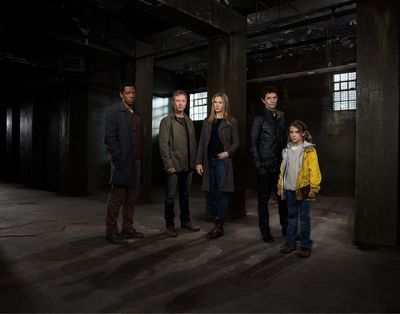
Thumb_intruders-group-v1

Glen Morgan is a wildly talented TV creator, partially
responsible for the current TV landscape in how much it’s been influenced by at
least some of Morgan’s work on “The X-Files.” Without that FOX hit, many of the
big sci-fi shows in your DVR wouldn’t exist. You like “Orphan Black” and “The
Strain”? They owe a debt to Morgan. And so seeing his name attached to BBC
America’s “Intruders,” along with talented genre voices like Eduardo Sanchez
and Daniel Stamm, got me excited for a later summer alternative to the
intensity of “The Knick” and “Ray Donovan.” Throw in the talented John Simm in
a lead role? Where do I sign up?

Sadly, after two episodes of “Intruders,” you
won’t yet find my signature on the dotted line. “Intruders” has an intriguing
premise and some solid visual strength due to Sanchez’s seat in the director’s
chair, but it’s one of those shows that takes itself more seriously than you
will. It’s bizarrely humorless (other than a cool “The X-Files” reference late
in the first episode) and keeps its mysterious plot vague enough that it doesn’t
give viewers enough to hold on to. We don’t have a lead like Tatiana Maslany in
“Orphan.” We don’t have a premise like “Lost” or “The Strain.” We just have
mystery shrouded in self-serious dialogue. I’m going to give the show a bit
more time to unravel its plot threads but this is for only the most committed
to the genre.

Jack Whelan (John Simm of the awesome “Life on Mars”) is a
former LAPD cop with a dark side and a wife named Amy (Mira Sorvino) who seems
to be growing more distant by the day. Amy heads off on a business trip after
some truly bizarre behavior the night before and disappears. Jack tries to
call. He tries to track her down. And he learns that he may not have known as
much about his wife as he first thought, especially after a high school friend
named Gary (Tory Kittles) shows up asking for help with a case that may be
connected.

Meanwhile, an assassin named Richard Shepherd (the
appropriately daunting James Frain) is ticking bodies off an assignment list.
He’s clearly closing some loopholes, including killing the wife and son of a
man named Bill Anderson, whom Richard is seeking. Shepherd crosses paths with a
nine-year-old girl named Madison (Millie Brown), who is nowhere near as
innocent as her exterior conveys, and the two begin a cross-country game of
cat-and-mouse.

How will Madison, Amy, and Jack intersect? There are fringe
characters like the radio host who speaks of an underground sect known as Qui
Reverti played by the great David Dastmalchian (“Prisoners,” “Animals”), who
clue us into the greater conspiracies at play, something to be expected from
the man who helped turn the phrase “Cigarette Smoking Man” into a synonym for
evil. Morgan is working in familiar territory here—men in black trying to keep
secrets that would shatter the very fabric of society and the innocent folk
caught up in the violence that ensues.

“Intruders” is undeniably well-made—Morgan and Sanchez are
too talented to make something that’s visually flat or inconsistently paced.
The problems with “Intruders” come from the narrative, one that is constantly
replacing each answer with a new question as it tries to keep us on our
toes but fails to offer something relatable in the process. There’s nothing to
hold on to; no Mulder or Scully to guide us through the process. Even Simm
seems a bit lost here as he hasn’t been given enough character, forced to play
the mystery instead of the human being caught up in it.

Source: http://www.rogerebert.com/demanders/tv-review-bbc-americas-intruders-takes-itself-too-seriously


Categories
TV & Movies

Bruce Campbell’s Horror Film Festival Features a Few Possible Breakouts

Thumb_ww_bcampbellshorrorfest_666x316_awesome_04

Horror film festivals pop up all over the country throughout
the year but there’s something that feels more notable about the first Bruce
Campbell’s Horror Film Festival, launching this weekend, August 21-24, 2014,
alongside Wizard World Chicago Comic-Con in Rosemont, IL. Not only does the
event feature several premieres but appearances by John Carpenter, Campbell himself,
young filmmakers, and critics Steve Prokopy, Erik Childress, and Scott Weinberg. We
got a chance to see some of the films at this year’s inaugural fest, including
works already screened at Sundance (“Killers,” “Dead Snow 2: Red vs. Dead”), and picked out a few highlights if you’re considering
attending. Tickets are free with admission to Wizard World Chicago Comic-Con
and there are festival badges and single tickets available here as well.

What should you see? The fest starts on a comic-horror note
with the U.S. Premieres of “Suburban Gothic” and “Wolfcop.” Both come from the
tongue-in-bloody-cheek side of the genre divide a la Edgar Wright or Sam Raimi
and I admire the decision to start with a lighter tone (as some of the films
later in the fest get much grittier and much gorier). “Suburban Gothic” also
boasts one of the more recognizable casts in that Kat Dennings and Ray Wise
co-star in the suburban ghost story about a guy who comes home to find a
vengeful ghost roaming his neighborhood. It’s one of those horror movies that
shoots for laughs more than scares and doesn’t quite get enough of either for a
hearty recommendation but, again, I like the idea of starting the fest with
something light and entertaining instead of disemboweling. It plays at 7:30pm
on the 21st.

“Wolfcop” is similarly ridiculous in its narrative. It’s
about, well, you can probably guess. An alcoholic cop becomes the center of
attention when he turns into a badge-carrying werewolf. Again, pulling off the
balance between B-movie horror and humor is much harder than most filmmakers
think and “Wolfcop” doesn’t quite work, even if it makes a fun fit with “Gothic.”
The wolf action starts at 9:30pm.

The fest really gets going on Friday with four horror films
back to back. I only had a chance to see one but heard good things about “Cybernatural,”
“Starry Eyes,” and, yes, even “Zombeavers,” a film with the perfect title to
play near midnight on a Friday night. The one I did see, “Inner Demons,” starts
at 7:15pm and will be released by IFC Midnight in October. It’s a strong piece
overall even if it does have a few weak supporting performances and totally
fails the “They Wouldn’t Still Be Filming That Test” of the Found Footage
genre. Directed by Seth Grossman, “Inner Demons” has a clever concept that
carries it a long way. Grossman was a producer on A&E’s “Intervention,” and
he takes that experience to the indie horror genre with a film about a teenager
who is addicted to heroin. She is encouraged by her parents, TV producers, and
doctors to fight her inner demons and battle her addiction. Well, one of those
inner demons may be real. A fun play on the possession drama, “Inner Demons”
features a strong central performance and engaging premise. It’s a solid get
for a first-year fest to program in primetime on Friday night.

The highlight of Saturday is a marathon of “The Evil Dead,” “Evil
Dead 2: Dead by Dawn,” and “Army of Darkness” with Bruce Campbell in
attendance. The fun starts at 8pm on a 30-foot screen in the Rosemont Ballpark.
You may have to jump out early to make it but “Dead Snow 2: Red vs. Dead”
starts at 11:30 back at the Muvico Rosemont with Director Tommy Wirkola in
attendance. I saw “Dead Snow 2” at Sundance at a raucous midnight show and
again here in Chicago at the Chicago Critics Film Festival. It’s a film that
really should be seen with an audience. It’s a bloody blast.

The fest ends on Sunday night with the premiere of a new
work from a Chicago native, Michael S. Ojeda, “Savaged.” Reading the plot
description, I was prepared for another rape-revenge fantasy a la “Last House
on the Left” and “I Spit on Your Grave,” and, to be blunt, I’m exhausted by
this genre. It’s usually tonally disastrous and torturous to sit through. So I’m
surprised to report that “Savaged” is a promising piece of work from a young director.
It’s imperfect but reminds me more of Rob Zombie’s gritty approach to the genre than anything else
(although it’s better). Ojeda’s tale of a deaf-mute girl kidnapped, raped, and
killed, who comes back to life to get revenge, is inherently a bit silly (and
some of the Native American material—that’s how she’s brought back from the
land of the dead—is misguided in its execution), but there are some strong
performances here (especially the central one) and effective cinematography
that straddles the line between B-movie and serious drama. Ojeda has a real eye
for composition and directs his leading lady well. He’s one to watch. And that’s
the perfect way to end a horror festival—excitement about the future
of your favorite genre.

Source: http://www.rogerebert.com/festivals-and-awards/bruce-campbells-horror-film-festival-features-a-few-possible-breakouts


Categories
TV & Movies

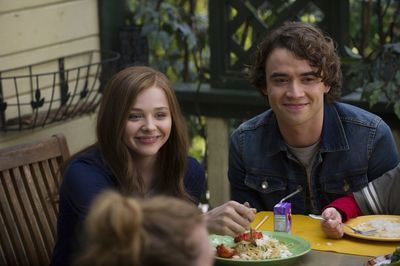
Chloë Grace Moretz, Gayle Forman and Jamie Blackley on “If I Stay”

Thumb_iis-00993

When Chloë Grace Moretz
exploded onto the screen in “Kick-Ass,” spouting four-letter words and slicing
foes while sporting killer comic timing, audiences were galvanized. It would’ve
been so easy for Moretz to spend the remainder of her career merely inhabiting
clones of her breakout role as Hit Girl. Instead, Moretz has tackled one
daunting character after another, playing everything from an ancient vampire in
“Let Me In” and a Parisian lass in “Hugo” to a tormented telekinetic teen in “Carrie”
and a guilt-ridden survivor of a school shooting in Steven Soderbergh’s
just-wrapped play, “The Library.” Her latest role is Mia, the heroine of “If I
Stay,” director R.J. Cutler’s adaptation of Gayle Forman’s bestselling young
adult novel. With her body in a coma and the fate of her family uncertain in
the aftermath of a horrific car accident, Mia is faced with a decision: either face
life or embrace death. Much of the film unfolds in flashback, charting Mia’s evolution
as a violin prodigy and illustrating how her interest in Juilliard conflicts
with her troubled romance with Adam (Jamie Blackley), a rocker smitten by her
passion.

RogerEbert.com spoke with
Moretz, Forman and Blackley about emotional fight scenes, the pitfalls of YA
adaptations and the general awesomeness of Stacy Keach.

After embodying pint-sized adults in films like “Kick-Ass” and “Let
Me In,” you’ve recently been playing characters that are closer to your age,
which is a trickier challenge than it seems. The vulnerability of Mia is a
sharp contrast to the self-assurance of Hit Girl.

Chloë Grace Moretz (CM): Yeah,
exactly. Conveying that vulnerability as an actor is almost harder than portraying
sadness. The hardest thing you can do is show happiness and love and elation.
Those are qualities that are hard to manufacture. My role as Abby in “Let Me
In” was incredibly hard, but I find it more challenging as an actress, weirdly
enough, to be a normal kind of kid who’s falling in love. You can feel loss
from the time you’re five years old and your pet hamster dies. People feel loss
all the time, but it’s harder to feel true elation, especially when you’re a
teenager.

At last night’s Q&A, Gayle was reminiscing about getting
emotional onset while watching the actors portray scenes from her book. What
was your collaboration like with the filmmakers?

Gayle Forman (GF): I was
lucky, first of all, that the project landed with Alison Greenspan. This was a
producer who really found something that touched her in the pages and that was
a guiding principle all along. It just seems to be a special project where
everybody who has come in contact with it has felt very protective over the
story. That’s not to say we’re insisting that the book must be pasted onto the
screen, because that doesn’t work. That doesn’t make a good film. The idea is
to translate these characters and the emotional experience of the book onto the
screen. Chloë really connected with Mia, and has always wanted to do the film.
R.J. felt the same way, so I knew that the film was going to be its own piece
of art. It started with the script [by Shauna Cross], which just got better and
better. Then we started casting. We had Chloë attached
from the get-go, but when they started to bring in Mireille [Enos] or Liana
[Liberato], I kept finding myself saying, “Oh wow, she’s perfect!” And when [Jamie]
came in, I thought, “How the hell did they find him?” [laughs] When I saw
scenes being shot onset, my ongoing thought was, “They’re really getting this.”
Oftentimes when you see adaptations of books you like, you’re let down. As an
author, you assume that they are going to suck. A little bit of hope is dangerous.
But I’ve seen the final film a couple times now and I really do think that it
works in all the right ways.

I particularly
liked how the male love interest isn’t as idealized as those often found in YA
adaptations. How did you approach the character?

Jamie Blackley (JB): We’ve all
experienced young love, but I thought that would probably be the hardest thing
to make feel real onscreen. Yet once we started shooting, it all came pretty
easily. As for the music side of it, I got a chance before we started shooting
to work all of that out. I just did music rehearsals for the first two or three
weeks. I’d go back to the hotel and learn songs for the next day. It felt like
I was in a band, and I would get excited to go play with the other musicians.
It all felt pretty real.

The
strain on Mia and Adam’s relationship rang especially true as they find
themselves pulled in different directions. You [Chloë] have recently been quoted saying that you don’t
want relationships to be your primary focus in life. Is this one way in which
you could connect with Mia?

CM: Definitely. I could connect to Mia in
a ton of ways, and the main way was the fact that we both have this passion. It
isn’t a boy, it’s the cello for Mia and for me, it’s acting. We both found our
first love at five years old, and it’s always been our number one thing. No
matter what, you wouldn’t give that up for anything. That’s what happens in the
fight scene between Mia and Adam. They’re both having this big clash and the
minute she starts to pursue her dreams, meaning that she might have to leave
Portland, he can’t really handle that, which is what happens at that age. You
haven’t gone to college, you haven’t felt your life out, you haven’t become a
full person. You’re a kid. You get in over your head and you feel these
emotions that are real and raw but your psyche can’t handle it because you’re
not formed enough to handle it. I think it was realistically portrayed through
Gayle’s writing and the script and how we performed it. They very much love one
another but they both have such a passion and drive for what they want to
succeed in that it kind of derails their relationship a little bit.

GF: It brings them together and it pulls
them apart. I love that fight scene so much. A good fight scene is really a
good love scene. It’s not one of those books where the characters go, “Yes, we
will go to college together and stay together no matter what.” Somebody is
sacrificing something. I love how the film shows both of their musical stars
rising as they’re falling in love. Even if this accident never happens, you
know trouble is coming.

Your
books have often taken the form of dual narratives, where the same relationship
is explored from each lover’s perspective. Could you see this working
cinematically, as in “The Disappearance of Eleanor Rigby”?

GF: Not for “If I Stay” and “Where She
Went.” I have another pair of books [“Just One Day” and “Just One Year”] that
are structured as transparencies where each book gives you a completely
different picture of the same relationship. We want those to be done as one
film when that happens. In the case of “Where She Went,” I never intended to
write a sequel. I thought I was done and that “If I Stay” would be a standalone
book. I was actually writing an entirely different book that I had under
contract. I would write that book during the day and then at four o’clock in
the morning, these characters would be banging on the door in my head asking,
“Where the hell have you left us?” Even though the book ends on a hopeful note,
the characters have a hellish period ahead of them. I didn’t even want to think
about that so I chickened out and skipped ahead three years and that’s where
the story started to materialize and it became Adam’s story. It’s not really a
retelling of “If I Stay.” It’s kind of a chronological story of what happens
afterward. It’s about the consequences of the promise Adam makes to Mia and the
consequences of Mia’s decision to “stay” and what it does to their relationship.

Another
strength of this film is its excellent ensemble. The monologue delivered to Mia
by Stacy Keach as her grandfather is simply shattering.

JB: Oh my god, he was amazing!

GF: When his voice starts cracking, it
just kills me.

What
was it like performing that scene with him?

CM: I was not prepared for it at all. I
was not prepared for how sad it would be to see Stacy cry. He’s one of the
nicest guys ever and I connected with him when we were filming the Juilliard
stuff. I thought, “He’s such a sweet guy, he’s so kind.” When we did this
scene, we shot both of our coverage at the same time, which was great, because
we didn’t do that a lot, but those days got really tight on time. There were so
many scenes where people had to say goodbye and that was when we had to really
hone in on our work. Since we shot the double coverage, what you see in the
film is literally my reaction to Stacy Keach’s performance. It was so sad. He
did such an amazing job.

Another
person worth mentioning is Liana Liberato, who gives a wonderful performance as
your friend Kim, and absolutely destroyed me in David Schwimmer’s 2011 film, “Trust.”

CM: I love that film. Liana and I became
really good friends. We would all hang out offset and had a good time. We were
lucky because we are all pretty normal people.

JB: There wasn’t anyone there that would
make you would go, “Ugh, I don’t want to hang out with them.” [laughs]

CM: No one asked us to perform the “Cups”
song [from “Pitch Perfect”] in one of our scenes together. We just got it off
of YouTube and learned it that day. We were all just normal kids.

One
film I am very excited to see is Olivier Assayas’ “Clouds of Sils Maria,” where
you act opposite Juliette Binoche. What was it like attending the film’s
premiere at Cannes?

CM: It was shocking.
You’re walking up those steps with a thousand other people and there are two
hundred photographers taking pictures of you. I was holding Juliette Binoche’s
hand and I was so confused and I was jet lagged and I felt like I might be on
some other planet. [laughs] It was the most confusing experience of my life.
But it was amazing. We got an eight-minute standing ovation after the movie. I
could never do Cannes again and be happy with the experience I had. It was
really special.

Source: http://www.rogerebert.com/interviews/chlo%C3%AB-grace-moretz-gayle-forman-and-jamie-blackley-on-if-i-stay


Categories
TV & Movies

#232 August 20, 2014

Free Movies

Sheila writes: In lieu of the recent release of “Get On Up,” the James Brown biopic (check out Odie Henderson’s review on Rogerebert.com, and you can also check out the video interview with star Chadwick Boseman and director Tate Taylor), I went scrolling through Youtube the other day, enjoying various James Brown clips. I came across this delight: James Brown giving a dance lesson.

TRAILERS

Mortdecai (2015). Directed by David Koepp. Written by Eric Aronson (based on the novel by Kyril Bonfiglioli). Starring Johnny Depp,
Aubrey Plaza,
Olivia Munn. Synopsis: Art dealer Charles Mortdecai searches for a stolen painting that’s reportedly linked to a lost bank account filled with Nazi gold. Opens in US theaters February 5, 2015.

Take Me To the River (2014). Directed by Martin Shore. Written by Rick Clark
, Jerry Harrison
, Julie Janata
, Martin Shore
, Zac Stanford
. Synopsis: A documentary about the soul of American music. The film follows the recording of a new album featuring legends from Stax records and Memphis mentoring and passing on their musical magic to stars and artists of today. Release dates TBD.

The Tale of Princess Kaguya (2013). Written and directed by Isao Takahata. Starring Aki Asakura,
Yukiji Asaoka,
Beau Bridges. Synopsis: An old man makes a living by selling bamboo. One day, he finds a princess in a bamboo. The princess is only the size of a finger. Her name is Kaguya. When Kaguya grows up, 5 men from prestigious families propose to her. Kaguya asks the men to find memorable marriage gifts for her, but the 5 men are unable to find what Kaguya wants. Then, the Emperor of Japan proposes to her. Opens in the US in limited release on October 17, 2014.

Open Windows (2014). Written and directed by Nacho Vigalondo. Starring Sasha Grey,
Elijah Wood,
Neil Maskell. Synopsis: An actress named Jill refuses to have dinner with Nick, a fan who won a date with her in an Internet contest. In return, a guy named Chord, posing as Jill’s campaign manager, helps Nick to follow in the footsteps of the actress from his own computer. Nick starts a game in which he realizes that he is only a puppet in the manic plans, devised by Chord, to hunt down the star. Opens in the UK on September 29, 2014. Opens in the UK on October 17, 2014.

Phoenix (2014). Written and directed by Christian Petzold (based on the novel by Hubert Monteilhet). Starring Nina Hoss,
Ronald Zehrfeld,
Nina Kunzendorf . Synopsis: A disfigured concentration-camp survivor (Nina Hoss), unrecognizable after facial reconstruction surgery, searches ravaged postwar Berlin for the husband (Ronald Zehrfeld) who might have betrayed her to the Nazis. Playing at the Toronto International Film Festival, September, 2014. Opens in Germany on September 25, 2014.

Kelly & Cal (2014). Directed by Jen McGowan. Written by Amy Lowe Starbin. Starring Juliette Lewis,
Alysia Reiner,
Cybill Shepherd . Synopsis: When Kelly, a ‘riot girl’ turned suburban mom learns her teenage neighbor has been spying on her they strike up an unlikely friendship that sparks them both back to life. Opens in the US on September 5, 2014.

Rudderless (2014). Directed by William H. Macy. Written by Casey Twenter
, Jeff Robison
, William H. Macy
. Starring Selena Gomez, Billy Crudup, Laurence Fishburne, William H. Macy. Synopsis: A grieving father in a downward spiral stumbles across a box of his recently deceased son’s demo tapes and lyrics. Shocked by the discovery of this unknown talent, he forms a band in the hope of finding some catharsis. Opens in the US on October 17, 2014.

Revenge of the Green Dragons (2014). Directed by Wai-keung Lau,
Andrew Loo. Written by Michael Di Jiacomo,
Andrew Loo. Starring Justin Chon,
Kevin Wu,
Harry Shum Jr.. Synopsis: “Revenge of the Green Dragons” follows two immigrant brothers, Sonny (Justin Chon) and Steven (Kevin Wu), who survive the impoverished despair of New York in the 1980s by joining Chinatown gang “The Green Dragons”. The brothers quickly rise up the ranks, drawing the unwanted attention of hard-boiled city cops. After an ill-fated love affair pits Sonny against his own brother, he sets out for revenge on the very gang who made him who he is. Opens in the US in October, 2014.

Wetlands (2013). Directed by David Wnendt. Written by Claus Falkenberg
, David Wnendt
(based on the book by Charlotte Roche). Starring Carla Juri,
Christoph Letkowski,
Marlen Kruse . Synopsis: The adventures of an eccentric girl who has strange attitudes towards hygiene and sexuality longs for the reunion of her divorced parents. Release dates TBD.

National Gallery (2014). Directed by Frederick Wiseman. Synopsis: The National Gallery in London is one of the great museums of the world with 2400 paintings from the 13th to the end of the 19th century. Almost every human experience is represented in one or the other of the paintings. The sequences of the film show the public in various galleries; the education programs, and the scholars, scientists and curators, studying, restoring and planning the exhibitions. The relation between painting and storytelling is explored. Opens in the US on November 5, 2014.

The Babadook (2014). Written and directed by Jennifer Kent. Starring Essie Davis,
Daniel Henshall,
Tiffany Lyndall-Knight . Synopsis: A single mother, plagued by the violent death of her husband, battles with her son’s fear of a monster lurking in the house, but soon discovers a sinister presence all around her. Opens in the UK on October 24, 2014. Other release dates TBD.

A Talk With Nicolas Cage

Sheila writes: Nicolas Cage is the latest “talk” featured on the great site The Talks. Well worth a read. Cage says, at one point, “I remember when I was doing Moonstruck and I wanted to talk like Jean Marais in Beauty and the Beast – (in a deep, gravelly voice) he had that accent and his voice was very gravelly – and I thought of my character in Moonstruck like a wolf who spoke with a growl. And so I was talking like that in the movie and I got a call from the director Norman Jewison and he said, “Nicolas, the dailies aren’t working.” And then I started hearing names of other actors and I thought I was going to get fired. I had to quickly drop the Jean Marais.” Read the whole thing here.

Inside the “Rear Window” Apartment

Sheila writes: New York Post film critic Lou Lumenick recently got access to 125 Christopher Street in Greenwich Village, supposedly the inspiration for Jimmy Stewart’s apartment in “Rear Window.” Lou Lumenick walks us through it, giving great background on the film, the set, and the inspiration.

Sanctuary (1961). Directed by Tony Richardson. Starring Lee Remick,
Yves Montand,
Bradford Dillman . Synopsis: William Faulkner’s steamy tale set in the South in the 1920s. Governer’s daughter is seduces and raped by a Cagin who returns after she’s married to cause her further trouble.

Watch “Sanctuary.”

The Awful Truth (1937). Directed by Leo McCarey. Starring Irene Dunne,
Cary Grant,
Ralph Bellamy . Synopsis: Unfounded suspicions lead a married couple to begin divorce proceedings, whereupon they start undermining each other’s attempts to find new romance.

Watch “The Awful Truth.”

The System (aka The Girl-Getters) (1964). Directed by Michael Winner. Starring Oliver Reed,
Jane Merrow,
Barbara Ferris. Synopsis: In a seaside village, a group of local young men mingle among the seasonal tourists in search of sexual conquests. Near the end of one summer, the leader of the group, Tinker, a strolling photographer, aims to conquer a fashion model from a well-to-do family, but he finds himself unexpectedly falling in love. The tables thus turned, Tinker begins to see that maybe it’s not the tourists who are being used in these sexual games.

Watch “The System.”

Source: http://www.rogerebert.com/ebert-club/232-august-20-2014


Categories
TV & Movies

Different rules apply

Thumb_new-generic-police-lights-1

I want to tell you a story about the difference between knowing and understanding.

Over the weekend, my ten-year-old son and I had just finished eating supper at a diner near our house. The multiple TVs in the diner were all showing cable news coverage of the Ferguson situation. On the way out, we passed an African American mother talking to her son, a child around my boy’s age, seated in a booth near the front door.

The boy asked his mother, “So I should just put my hands in the air?”

“Yes,” his mother said. “Just put your hands in the air.”

“If I put my hands in the air, will the police not shoot?” he asked.

“Probably not, but you can’t be sure. Some people say you should just kneel or lie down, don’t ask questions, just get down on the ground.”

“If I lie down on the ground, they won’t shoot?”

“Probably,” she said.

I recognized the exhaustion in that “probably”—a parent trying to explain a fundamentally unfair fact of life in the most neutral terms possible, so as not to make a child prematurely paranoid or cynical or bitter, and realizing that there are no words with which to do such a thing. After my son and I left the restaurant, though, I was disturbed by a mental image of this small boy dropping face-down on the ground at the sound of a cop’s voice—thinking just maybe he wouldn’t get shot. I thought of Oscar Grant, who was detained by police on a BART platform on New Years Day, 2009, and got shot in the back anyway. To death.

“Is that what you’re supposed to do? Get down on the ground?” my son asked.

He’d heard about Ferguson. It was everywhere.

I said, “Not necessarily. Some police want you to put your hands up. Some don’t ask you to do that. It depends. I guess the main thing is to just do what the police officer tells you to do. Don’t make any sudden moves.”

“Can the police just shoot people?” he asked. He seemed genuinely worried.

“They’re not supposed to just shoot people,” I said. “There are supposed to be rules about when you can and can’t shoot a person. Sometimes mistakes happen and people who shouldn’t get shot do get shot. And there are other times when…”

And I trailed off because I realized I was evading the real issue.

“It happens, and it’s horrible,” I told my son,” and in a lot of cases the reasons why some people get shot and others don’t get shot are unfair, or they don’t make sense, but you….” I trailed off again.

“What do you mean?” he asked.

“White people just aren’t as likely to get shot by police,” I told him.

“Why is that?”

“There are a lot of reasons why that’s true, and we’ll talk about them later, but that’s the bottom line,” I said. “It’s not right, but it’s the truth. That’s what that woman was telling her son about.”

My mind added: …in a conversation that most white dads would not be having with their white elementary school-age sons.

Why didn’t I say this out loud to my son? I don’t know. Something was holding me back.

Maybe it was the fact that my son has friends of different races and ethnicities, and I didn’t want to burst what I thought was an idyllic bubble, if indeed he lived in one, which he probably doesn’t.

No, that wasn’t it.

I wasn’t protecting my son from anything. I was protecting my son’s image of his father, or what I imagined that image to be.

And I was protecting myself from myself. I was lying to myself about myself.

I was reminded of something my best friend, a skinny Irish guy from Bay Ridge, told me. He was hanging out with his dad one afternoon. Out of the blue his dad told he should always be grateful for the greatest gift his dad and mom ever gave him.

“What gift is that?” my friend asked.

“Your white skin,” he said. “If you’re white in this country, you’re ahead of the game. You get more chances. You get more second chances. That’s the gift your mother and I gave you—and we didn’t have a damn thing to do with it!”

My friend’s dad was being bitterly sarcastic. But he was also being honest about white privilege.

I believe that there’s a difference between knowing something and understanding it. You know how you’ll try to communicate something very important to you to another person and sometimes they’ll wave you off with an impatient, “I know, I know”? That’s knowing: I got the gist, filed it away, I don’t need to think about it again. Knowing is comprehension; understanding is deeper because it comes from empathy or identification.

All of which is a wind-up to say: having grown up in a mostly black neighborhood near Love Field airport in Dallas, and having been a diligent liberal for most of my adult life, I already knew there was such a thing as white privilege, and was properly horrified by it, but I didn’t truly understand what it meant, on a deep level, until one summer night in 2006, when I was spared arrest or worse thanks to the color of my skin.

The incident happened about eight weeks after my wife’s death from cardiac arrest caused by a previously undiagnosed flaw in her heart. I was at the lowest point of my life. I was angry, and I was drinking too much. I’d been a tremendously angry person when I was younger, my wife made me not angry anymore, and then when she was gone all at once the anger returned, and alcohol made it active. I channeled my anger away from my kids and my coworkers and my friends. But I needed an outlet for all that rage. So one or two nights a week, instead of drinking at home, I’d go out and get drunk at bars and then wander the streets looking for trouble.

One night I was cooking dinner for my kids. I drank a few glasses of red wine while I cooked and at some point realized I was short a couple of ingredients. I turned off the stove, told the kids I’d be back in five minutes, asked my brother, who lived upstairs, to watch them, then went to a deli a couple of blocks away.

It was drizzling. I was carrying a cheap umbrella that leaked. Outside the deli leaning against a pay phone was a Hispanic man in his late twenties or early thirties insulting people as they passed by. His words were slightly slurred.

When I came out of the deli, this man said something about my shoes and my hat, and because I was looking for a reason to hit somebody, I put my grocery bags down and confronted him. We cursed at each other for a while, puffing up our chests and barking threats, and then he poked me in the chest with his index finger. I knew the second he did it that he didn’t actually mean to touch me, that he was probably just jabbing at me for emphasis and misjudged the distance between us, because it wasn’t a hard impact and the contact seemed to surprise him, too. But I hit him in the face anyway. He stumbled backward, turned around in an attempt to regain his balance, tripped and fell face down on the sidewalk. I jumped on his back and put my forearm around his neck and locked it, to keep him from getting up again. It was a chokehold.

I don’t know how long I was down there, but it was long enough for the owner of the deli to call the cops. A squad car pulled up sometime later. Two patrolmen got out and pulled me off the guy and tossed me on the sidewalk. Then one of them ran over and put his knee on my back, but did not cuff me—a detail that didn’t register until the cop got off me and allowed me to stand again, and I looked over and saw that the other guy was face down on the pavement, cuffed.

Both cops were white.

The cop on me asked for my driver’s license, looked at it, looked at me, and said, “Tell me what happened.” I told the cop what happened, exactly as I described it above, including the personal details about why I’d been agitated and drunk, which under the circumstances probably weren’t germane.

When I finished he said, “Would you like to press charges?”

“What for?” I asked.

“Assault,” he said.

“Why would I press assault charges against him?”

“Because he hit you first.”

I said, “Oh, no, he didn’t hit me first. He poked me in the chest.”

“That’s assault,” my cop said. “He hit you first.”

“I don’t think he actually meant to touch me, though,” I said, while a voice deep inside me said, Stupid white boy, he’s making it plain and you’re not getting it.

“It doesn’t matter if he meant to touch you, he hit you first,” he said. He was talking to me warmly and patiently, as you might explain things to a child. Wisdom was being imparted.

“You were in fear of your life,” he added.

By now the adrenaline fog seemed to be lifting. I was seeing things in a more clinical way. The violence I had inflicted on this man was disproportionate to the “assault,” and the tone of this exchange with the cop felt conspiratorial.

And then it dawned on me, Mr. Slow-on-the-Uptake, what was really happening: this officer was helping me Get My Story Straight.

Understanding, at long last.

I also need to mention that while this conversation was taking place, not ten feet away the other guy was face down on the pavement, handcuffed—even though when the squad car arrived, anybody who’d looked at our situation purely in terms of physical action, without the explanations I proffered afterward, would have concluded that I was the menace.

“Do you live around here?” he said.

“Yeah—a couple blocks that way.”

He gave me back my driver’s license. “Go ahead,” he said, gesturing across the street.

“Go ahead what?”

“Go home.”

I didn’t think to get his badge number—and why would I have? I got in a fight with a stranger, the cop asked me a few questions, and now it was done and I was going home to my kids.

I have no idea what ultimately happened to the other man. Maybe they let him go as well. Maybe they took him in for questioning. Maybe he spent a night in jail. Maybe they took him to a scrapyard and beat him. Maybe they ran his name through the computer, maybe they didn’t. Maybe he had a criminal record, or maybe he was just a guy like me, a law-abiding citizen with issues.

In the years since, I’ve thought about what would have happened if the positions had been reversed. We know what would’ve happened.

There’s a much slimmer chance that either of those cops would have patiently listened to the sob story of a drunk brown-skinned man about how he’d ended up on the pavement with his forearm around a white man’s neck, and an equally slim chance that they’d have talked to him for a few minutes and sent him on his way and put the white man in the squad car.

Maybe the other guy was in a bad place, too. Maybe he had kids, too. Maybe he had a sad story, too.

I went home. The other guy didn’t.

That’s white privilege.

White privilege sent me home to my kids.

White privilege is the reason I’ve never told this story publicly.

Extenuating personal circumstances, aside, I did something that I should not have done, and I escaped the consequences of my actions by accepting a benefit that never should have been bestowed.

Sometimes police brutality happens without anyone outside the community knowing about it; it’s on the back page of a newspaper, if it makes the newspaper (if the town has a newspaper; increasingly few do). Sometimes, as in the case of Ferguson, it snowballs into something bigger. And when that happens, somehow the nation riles itself up in a paroxysm of outrage for a week or maybe a month, deepening already fathomless left wing/right wing divide, until finally everybody just collectively shrugs and shakes their heads and says, “Terrible thing, terrible thing, nothing can be done, way of the world” and gets on with the mundane daily business of life.

And then it happens again, and the process repeats. The liberal outrage. The lock-’em-up-or-run-’em-over backlash. The macho racist blustering. The transparent bureaucratic face-saving tricks. The commissions and panels and trials. The forgetting.

We have to stop break the cycle long enough to realize that what we are really shrugging off is racial inequality. This is not: “Well, if ya factor out race, it’s a class thing.” We all know in our hearts that that is, at best, only partly true. The full truth must include the acknowledgement that if you’re white, different rules apply.

So much of the crosstalk, the shouting, the debate over Ferguson stems, I believe, from an inability to admit this fact of life, which was illustrated so plainly to me that night in front of the deli. I’ve never been profiled. I’ve never been stopped and frisked. I’ve never experienced anything of the sort because of the gift that my parents gave me, and that my son’s parents gave him: white skin. I’ve had encounters with police, mostly during my youth, in which I’d done something wrong and thought I was about to get a ticket or go to jail but somehow didn’t, because I managed to take back or apologize for whatever I’d said to a cop in petulance or frustration; these encounters, too, would have likely gone differently, perhaps ended differently, if I hadn’t been white.

Again, I already knew this stuff. But after that night in front of the deli, I understood it.

More details will emerge about the shooting of Michael Brown, and there will be investigations, maybe trials, related to the aftermath. Cops will get suspended, a few may lose their jobs. And throughout, there’ll be a steady chorus among law-and-order types that if only Brown had done this, or that, or not done this, or not done that, he’d be alive.

It’s all denial.

My son already knows about the deli incident. It’s a part of family lore now. But as far as he was concerned, the takeaway was, “Dad was not thinking clearly, he had a chance to walk away from a confrontation but didn’t, and he’s ashamed of that now, and you should try not to let your temper get the better of you.” That’s all true, and useful for a child to hear.

But there’s another lesson to draw from the incident, and it’s a more disturbing, because it illuminates the flaws in a larger society, as well as the fact that complicity in racism is mostly passive: if you’re not fighting inequality every day, in ways both large and small, and if you accept the benefits of white privilege without questioning their rightness, you’re part of the problem, too.

Even if you think you’re enlightened. Even if you think you know.

I’ve been thinking about what, exactly, to tell my son when we finish our conversation. I might as well just tell him the truth: that different rules apply, that the different rules are part of the legacy of slavery and Jim Crow that are among this country’s great sins, and that it’s part of his job as a human being to fight against it.

Hopefully understanding will arrive faster for for him than it did for his dad.

Source: http://www.rogerebert.com/mzs/what-white-privilege-really-means-an-anecdote


Categories
TV & Movies

Impossible to Explain: A Few Words with John Carpenter

Thumb_john_carpenter

If


Source: http://www.rogerebert.com/interviews/impossible-to-explain-a-few-words-with-john-carpenter