Categories
TV & Movies

Interview: Harvard Business School professor Anita Elberse on what Hollywood’s love of blockbusters means for the rest of us

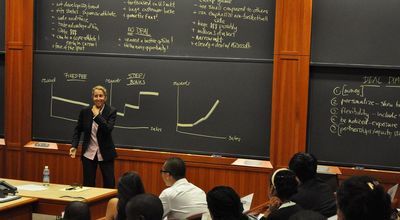
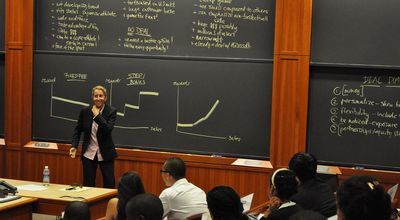
Thumb_anitaelberse_teaching

Harvard Business School professor Anita Elberse just may have the coolest job on the planet. She’s made a career out of studying and figuring out why the biggest names in film, content publishing, music and sports have been so successful. Names like Warner Bros., Marvel, Jay-Z, Lady Gaga, Tom Cruise, the NFL, Real Madrid, LeBron James—the list goes on.

She details her fascinating research and case-study findings in her book “Blockbusters: Hit-making, Risk-taking, and the Big Business of Entertainment.” Her statistics-driven approach shows that no matter what facet of the entertainment industry you’re talking about—and no matter how contrary to common sense it may seem—those who make the biggest financial investments in a select few products are actually taking the least risky path to success.

Perhaps that’s why 40 (!!!) big-budget superhero movies will be hitting theaters between now and 2020. Or why 1998 was the last year that stand-alone (versus sequel/trilogy/universe) films made up the majority of an annual “top-ten highest-grossing movies” list. In 2011, the entire top twelve were franchise titles.

Now, as Scott Tobias of The Dissolve recently pointed out, it’s not like “blockbuster” always equates to “awful.” But for anyone who still enjoys—or wants to make—an indie or otherwise original film, Elberse’s findings are important to understand.

As the latest summer movie season draws to a close, we checked in with Elberse to discuss some of the most interesting (and, some might say, scary) concepts in “Blockbusters.”

“You can buy an opening weekend.” That’s a film industry saying referenced in your book that could make a critic’s blood run cold. It’s another way of saying, “If you advertise it enough, they will come.” So let’s talk about the whole “self-fulfilling prophecy” idea that huge marketing and advertising blitzes for big-budget movies will almost always guarantee success. Are moviegoers really that easily influenced?

Luckily, it’s all a bit more nuanced! First, the effect is not just about money put toward marketing—it’s about the sum of production and marketing spending. In my research, I’ve found that the film studios and other leading content producers that dedicate a disproportionate amount of their production and advertising budgets to a select group of titles in their portfolio—what I call a “blockbuster strategy”—tend to increase their chances of financial success. That has a number of reasons.

For one, it allows studios to buy the strongest properties and brands and achieve high production values, all of which matter to moviegoers. It also gives studios distinct marketing advantages—it is relatively cost efficient to advertise those bigger properties. But, to speak to your question, there often is a self-fulfilling prophecy at work, too: the sheer act of spending more on a film can sometimes lead to higher revenues.

But how exactly does that self-fulfilling prophecy work?

Production and marketing budgets are important signals to the marketplace. Audiences aren’t the only ones falling for this; everyone in the “value chain” for films takes it as a cue. Theaters, for instance, will often commit to dedicating more screens to big-budget films, and will also give them more favorable weekends. Their decisions can have a huge influence on potential revenues; we know from research that the number of screens given to a film is the single best predictor of its box office success.

Then the media will give these big-budget—or “tent-pole”—films more attention, which drives awareness and the intention to see a film among audiences, and thus also increases likely ticket sales.

Even critics help fuel the self-fulfilling prophecy: no critic has a chance to review all films, but they’ll make sure to cover all the big-budget ones that everyone is talking about, thereby giving the ones that were already drawing attention even more of a push.

I have to make it clear that spending big is no guarantee for success, though. All studios can do by adopting a blockbuster strategy is significantly increase the odds of success. They’ll still have big flops. And great small films can still find a way to large audiences.

Let’s focus on that point for a second. Is there anything else from your research that can give film fans who are already sick of franchise movies some hope?

Thank you for asking this question. A blockbuster strategy is not just about making big bets. Rather, it is about smartly investing in a full portfolio of films. It turns out—this is good news for everyone who wants to see more than just tent-poles—that there is a distinct business need for smaller investments, too.

Smaller films often serve as test cases. Placing less expensive bets can help a studio discover the next big-hit franchise, or the next big bankable actor. Smart studio executives continue to experiment with smaller films to make sure the well of ideas and talent does not dry up.

Right, in your book you mentioned how “The Hangover” (made for $35 million) turned into a franchise that was given the full blockbuster treatment after it surprised everyone and grossed nearly $470 million worldwide.

But even if a smaller bet doesn’t yield the next big hit, those films can help a studio “fill the pipeline,” thereby keeping theaters and other partners who help sell their titles satisfied. Having a larger number of films gives studios the upper hand in negotiations with theaters, resulting in more screens when the studios need them most, and a more favorable revenue-sharing rate.

Having a mix of bigger and smaller titles also helps in forming relationships with agents and financiers, who serve as “gatekeepers” to new opportunities. It also gives studios much-needed flexibility, like being able to move release dates and optimize advertising time already bought from the television networks. It allows them to spread the large fixed costs that come with moviemaking (just think of the expansive lots and offices around the world) over a larger number of titles.

We realize that studios are businesses and need to keep growing profits in order to satisfy shareholders. But does anybody even care if the films are, you know, good?

Having a strong critical reputation still matters greatly to every studio, and smaller projects are more likely to give them a shot at winning industry acclaim and awards. That helps studios attract and retain sought-after A-list talent and their passion projects. And it probably makes everyone at the studio remember why they chose to work in Hollywood in the first place.

What does the implementation of a “blockbuster strategy” by major studios mean for those who make independent or otherwise lower-budget, totally creative films?

I think it’s hard to deny that it creates significant challenges for independent studios and others who seek to produce and market films that are truly original. In an industry in which studios seek to make big bets on the most likely winners, and those titles are picked for having some resemblance to past winners (be it that they are based on a book that was once successful, or star an actor who is seen as bankable, or feature a character that comic-book readers are familiar with), original projects run the risk of being crowded out.

The hard truth is that the average consumer goes to the movies at most once every two months—six times per year—and so studios try to give audiences true spectacles to lure them to the theater and make sure they pick their film over the competition.

Do you have any advice for filmmakers outside of the big studio system?

If you’re an indie producer, I think you need to thoroughly understand the game that the larger studios are playing. Only then can you avoid competing head-to-head. That’s a battle you will surely lose. Instead, you can do one of two things: either seek to differentiate by pursuing the kinds of projects that the larger studios increasingly don’t, or by seeking to partner with those larger studios.

In my book, I describe an indie producer in the music industry, Octone Records, who did just that. They realized that their strength was developing and nurturing artists who didn’t fit the mold of the current music industry, but they also knew that if one of their acts was on the verge of breaking through, there was nothing as crucial as the distribution and marketing power of the larger record labels. So they formed a joint venture with a major label, first SonyBMG and later Universal, and made sure to structure it so it played to each other’s strengths. Those kinds of collaborations are a good model for Hollywood, too.

What about actors and actresses—what does Hollywood’s ever-increasing reliance on blockbuster franchises mean for the cast of those films?

That’s a big, complicated question. I needed two whole chapters to explain that in my book! So I am not sure I can fully do justice to the issue here, but let me outline a few patterns I see happening.

On the one hand, bigger bets tend to go along with higher fees for the talent involved in those bets. We see this across the world of entertainment—markets become ever more concentrated, leading to “winner-take-all” tendencies in which a select few A-listers can earn enormously high fees and a vast group of other, not necessarily less talented performers, can barely make a living.

On the other hand, many of the tent-pole concepts that Hollywood studios are pursuing don’t rely heavily on A-list talent. Their love for franchises involving comic-book characters and other mega-selling properties helps rein in star power, and with it star salaries. “With Harry Potter, the book is the movie star,” Disney Pictures Chairman Alan Horn told me when he was still at Warner Bros. “When you have a film based on a property that everyone knows, you don’t need a big star to sell tickets. You need good actors, but they don’t have to be stars.” The studios have also worked hard to curtail lucrative compensation models for actors, cutting back on back-end deals with actors.

But even in this new world, someone like Robert Downey Jr. can still make $50 million for his role as Tony Stark in the Iron Man and Avengers films. I think we’re in the middle of a big power struggle between content producers and the creative talent they rely on. It’s the same struggle that takes place in a wide range of sectors of the entertainment industry, from publishing to music and television. It’s going to be fascinating to see how this tug-of-war will play out, and what it means for the salaries and the creative freedoms that the biggest superstars enjoy.

We also have to ask you about the subject nearest and dearest to our hearts: film criticism. What roles do and can film critics play when so much money is being thrown into promoting and advertising big-budget films?

There’s an ongoing debate among academics studying the film industry on whether critics are true influencers or merely leading indicators of what audiences end up seeing. I don’t presume to have the answer to that question, but there is certainly an abundance of evidence for the significant role that critics play. There’s a reason why Roger Ebert became a superstar himself! Movies are what marketers call “experience goods,” meaning consumers cannot judge the quality of the product without having consumed it. That makes critics and others who express opinions about movies so instrumental to moviegoers’ decision-making.

I’m biased, of course, but I think it’s actually quite helpful for critics to understand the business side of entertainment. There are big and small things they can do to champion smaller films. Take the self-fulfilling prophecy that we discussed earlier: if you know this phenomenon is real, you also know that as a critic, thinking deeply about how you select the movies you review can help in breaking down that pattern. Merely spending more time or column space on the smaller films may just help elevate their chances of success.

I know Roger Ebert always tried to champion the underdog, and that may be more important now than ever. Critics are probably especially instrumental to movies that are released on a limited number of screens in the hopes that positive word of mouth will propel sales. Here, reaching the right target audiences at the right time is crucial for filmmakers, and critics are often in a very good position to do just that.

You’re an expert on digital media, so we’re curious if you see any change in the distribution strategies of blockbuster films going forward? Some critical darlings like Snowpiercer and Life Itself were released via video on demand (VOD) either while they were still currently in theaters or shortly thereafter. Could this ever happen with big-budget titles?

I don’t think it is on the horizon soon, but I think with the right conditions, it could certainly happen, yes. It all depends on how the VOD window is developing. Also because audiences are already used to shelling out big bucks for, say, boxing matches on pay-per-view channels, I can envision a future in which audiences can see first-run films in their own home before or while they also play in theaters.

If you take all costs for moviegoers into account—the price of a ticket, parking, a babysitter, vast amounts of popcorn—going to the theater can be quite expensive. VOD can be a more convenient and less expensive medium, even if the price per view is higher. Theaters will not welcome such a world, of course, and they will not go down without a fight. But if at some point it makes financial sense for film studios to make the switch to VOD being the first window even for big-budget films, I can imagine they will.

In addition to how films are distributed, where they’re distributed is also changing. We movie fans in the United States are sometimes guilty of assuming everything revolves around our likes and dislikes. How does the global market for movies factor into everything we’ve been discussing?

The international market is hugely important here. The kind of blockbuster bets that the major studios are making play especially well in foreign markets. Tent-pole movies tend to “travel well,” as studio executives say. And the international market is growing rapidly.

Current projections put the foreign box office at $27 billion by 2016, more than twice the domestic box office’s projected $11 billion for that year. Theaters and other exhibitors in international markets will be more selective, if only because they have fewer screens to serve moviegoers.

That’s why they will seek to offer the so-called “four-quadrant movies” that appeal to both young and old and to both male and female. They also want films that feature stars or characters that audiences will know. And that’s exactly what the larger studios increasingly give them. With globalizations come bigger bets on the kinds of franchises that play well overseas.

Thank you so much for sharing your thoughts with us. Before we let you go, are you working on any new research you can give us a hint about?

I’m working on a number of new projects. I continue to be fascinated by people and companies that manage to find sustained success in the entertainment business where hits can be so few and far between. So I’m keen to keep developing case studies in that area, to better understand their secrets.

I’m also very interested in the changing television landscape. It’s amazing to see television increasingly become a haven for serious filmmakers. I think it has everything to do with the intense competition, not just between premium cable channels but also between them and new entrants like Netflix and Amazon. That has led to an influx of money that is invested in great stories and great storytellers.

It must be a thrill for filmmakers and actors to experiment with these new opportunities, get used to the faster pace of television making, and be able to tell a story in twenty or so episodes as opposed to two hours. For me as a researcher, I look forward to examining exactly how television is going to develop, and how that affects the film sector.

Source: http://www.rogerebert.com/interviews/interview-harvard-business-school-professor-anita-elberse-on-what-hollywoods-love-of-blockbusters-means-for-the-rest-of-us


Categories
TV & Movies

Chaz Ebert and Steve James to Appear at Chicago Humanities Festival

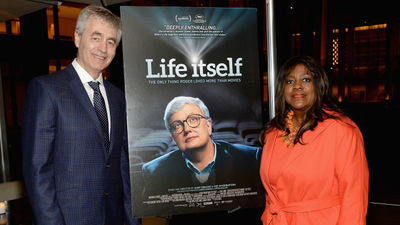
Thumb_chaz-ebert-life-itself-steve-james

“Life Itself,” Steve James’ acclaimed documentary based on Roger Ebert’s 2011 memoir of the same name, will be a much-anticipated topic of discussion at the 2014 Chicago Humanities Festival. Chaz Ebert will join James and moderator Alison Cuddy, festival program director and former WBEZ host, to share stories about the widely beloved film at 3pm on Saturday, October 25th. The event will take place at Cahn Auditorium, 600 Emerson Street, Evanston, and will feature clips and never-before-seen outtakes from the film.

Other special guests included on this year’s lineup are David Brooks, Lena Dunham, Renee Fleming, Vijay Iyer, Jamaica Kincaid, Darlene Love, Guy Maddin, Philippe Petit, Paula Poundstone, Ann Rice, Marjane Satrapi, Wallace Shawn, Patti Smith and Andrew Ross Sorkin, to name a few. One of the most intriguing highlights is a presentation about the upcoming documentary, “Radical Grace,” directed by Rebecca Parrish. The film focuses on American Catholic nuns who vocally challenge the church to remain true to its faith. Parrish and one of her subjects, Sister Christine Schenk, co-founder of FutureChurch, will be on hand for audience discussion and will share clips of the film, currently in rough cut form, at 4:30pm on October 25th. The conversation will unfold at Harris Hall, 1881 Sheridan Road, Evanston, and it will begin a half-hour after the “Life Itself” event ends.

The Chicago Humanities Festival is devoted to championing the humanities, providing opportunities for the public to meet and engage with some of the most influential figures in modern culture. As indicated on its site, the festival promotes a belief that “access to cultural, artistic and educational opportunities is a necessary element for a healthy and robust civic environment.” For the full festival lineup and to purchase tickets, visit the official CHF site. To see where “Life Itself” is screening in theaters and at home, click here.

Source: http://www.rogerebert.com/life-itself/chaz-ebert-and-steve-james-to-appear-at-humanities-festival


Categories
TV & Movies

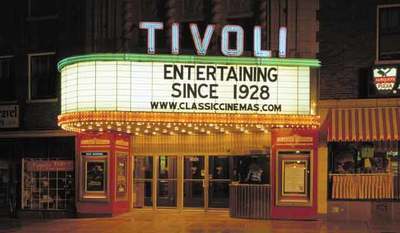
“Life Itself” to Screen at the Tivoli Theatre

Thumb_webpic_tivolioutside_f10

“LIFE ITSELF,” Steve James’ acclaimed documentary about Roger Ebert, will screen at 7:30pm Monday, August 25th, at the Tivoli Theatre in Downers Grove. The screening is presented by the After Hours Film Society. On Monday, September 17th, “Life Itself” screens at 1pm and 7pm at the Lake Theatre in Oak Park. Director Steve James will introduce the film and take part in a Q&A following both screenings. For more information or to purchase tickets, click here.

Below is an updated list of the various venues where “Life Itself” can be found. You can see the film either in theaters, which are all listed below, or on Video on Demand and other online platforms like iTunes. If you have any questions, go to Magpictures.com/LifeItself. Or go to #EbertMovie and #LifeItself at Kartemquin Films.

VOD Platforms:

Amazon
Cablevision
Charter
Comcast
HD On Demand
DirectTV
Dish
FlixFling
Google Play
iTunes
Playstation 3
SuddenLink
Time Warner Cable
Verizon FIOS
VUD
Xbox360
Zune
YouTube

THEATERS NOW PLAYING:

Ann Arbor, MI: Michigan Theater
Atlanta, GA: Sandy Springs 8
Boulder, CO: Boedecker Theater
Brunswick, ME: Frontier Cafe
Calgary, AB: Plaza Theatre
Chautauqua, NY: Cinema at Chautauqua
Chicago, IL: Beverly Arts Center of Chicago
Downers Grove, IL: Tivoli Theatre
Evansville, IN: Showplace South 7
Hamilton, NY: Hamilton Movie Theatre
Honolulu, HI: Honolulu Museum of Art
Jefferson City, MO: Capitol City Cinema
Kenosha, WI: University of Wisconsin-Parkside
Lake Worth, FL: Lake Worth Playhouse
Manistee, MI: Vogue Theater
Mesilla, NM: Fountain Theatre
Metuchen, NJ: Forum Theatre
New Haven, CT: Criterion Cinemas 7
New London, CT: Garde Arts Center
New Orleans, LA: Indywood Theatre
New York, NY: Symphony Space Inc
Portland, ME: Portland Museum of Art
Portland, OR: Laurelhurst Theatre
Rosendale, NY: Rosendale Theatre
Royal Oak, MI: Main Art Theatre
Spokane, WA: Magic Lantern Theatre
St Johnsbury, VT: Catamount Film & Arts Ctr
Taos, NM: Harwood Museum of Art
Utica, NY: Munson Cinema

OPENING SOON

8/28/2014

Indian Lake, NY: Indian Lake Theater
Torrance, CA: Rolling Hills 20

8/29/2014

Blacksburg, VA: Lyric Theatre
Mount Vernon, WA: Lincoln Theatre
Nevada City, CA: Nevada Theatre
Portsmouth, NH: Music Hall

9/2/2014

Lowell, MA: Luna Theater at Mill No. 5
Tacoma, WA: Grand Cinema 4

9/3/2014

Toronto, ON: Bloor Hot Docs Cinema

9/4/2014

Okemos, MI: Studio C!

9/5/2014

Chicago, IL: Gene Siskel Film Center
Grand Rapids, MI: Celebration Cinema Woodland
Jackson Hole, WY: Jackson Hole Twin Cinema
Notre Dame, IN: DeBartolo Performing Arts Center
Center/Browning Cin

9/7/2014

Baton Rouge, LA: Manship Theatre
Shepherdstown, WV: Opera House Theatre

9/8/2014

Seattle, WA: SIFF Film Center
Williamsburg, VA: Kimball Theatre 2

9/10/2014

Wolfville, NS: TIFF Film Circuit

9/12/2014

Ketchum, ID: Magic Lantern Cinemas
Lincoln, NE: Mary R. Ross Film Theater
Winnipeg, MB: Winnipeg Cinematheque

9/13/2014

Bradenton, FL: Lakewood Ranch 6
Edmonton, AB: Metro Cinema
Prescott, AZ: Yavapai College Performing Arts Center

9/16/2014

Tuscaloosa, AL: Bama Theatre

9/17/2014

Oak Park, IL: Lake 7

9/18/2014

Thunder Bay, ON: Thunder Bay SilverCity (TIFF Film Circuit)

9/19/2014

Goshen, IN: Goshen Art House
Lambertville, NJ: ACME Screening Room

9/20/2014

Houston, TX: 14 Pews Theatre

9/21/2014

Gloucester, MA: Cape Ann Community Cinema

9/23/2014

Boulder, CO: International Film Series

9/24/2014

Tunkhannock, PA: Dietrich Theatre

9/25/2014

Cambridge, ON – TIFF Film Circuit
Rehoboth Beach, DE: Rehoboth Beach Film Society

10/3/2014

Ashland, OR: Varsity Theatre 5

10/4/2014

Winchester, VA: Alamo Drafthouse Cinema 8-Winchester

10/9/2014

Bismarck, ND: Grand 15

10/11/2014

Lake Placid, NY: Lake Placid Center for the Arts

10/14/2014

Anapolis Royal, NS: TIFF Film Circuit

10/21/2014

Bloomington, IN: Indiana University Cinema
Macon, GA: Douglass Theatre

10/22/2014

Nyack, NY: Rivertown Film Society

10/29/2014

Salmon Arm, BC: TIFF Film Circuit

11/17/2014

Potsdam, NY: Roxy 4

11/19/2014

Erie, PA: Erie Art Museum

11/24/2014

Duncan, BC: TIFF Film Circuit

2/8/2015

Suttons Bay, MI: The Bay Theatre

Source: http://www.rogerebert.com/life-itself/life-itself-to-screen-at-the-tivoli-theatre


Categories
TV & Movies

Truly Intelligent Romance: A Few Words with Mark Duplass

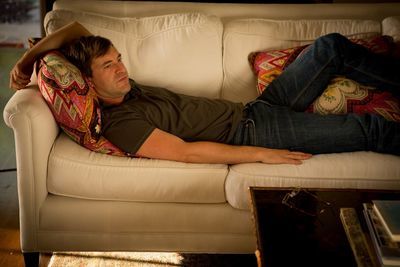
Thumb_mark_duplass

Since the turn of the decade few
people have been as prolific as Mark Duplass. Over the past four years the New
Orleans born and raised indie mogul has starred in 11 films, served as a
screenwriter on five features (three of which he co-directed with his brother Jay),
produced 13 projects (with seven more to be released by the end of 2015), been
hired as a recurring cast member on FX’s “The League” and “The Mindy Project,” and most
recently created an original series for HBO entitled “Togetherness.” It’s safe
to say that Duplass could never be accused of being an unambitious laggard. But
even amid his hectic life, Mark took time to talk to RogerEbert.com about his
role in “The One I Love” (out in theaters/VOD now), sex scenes, film reviewing
in high school, and why becoming a movie star is not something he’s
particularly interested in.

Dating back to “This Is John” and “The Puffy Chair,”
you’ve always had a penchant for drawing from your reality. How much of “The
One I Love” is lifting from your relational experience? You’ve been
married now for nearly a decade, right?

MARK DUPLASS: Yeah, I would say this couple is very different from my
wife and me. One thing that has been fascinating to me about all the
relationships I’ve had, even the failed ones, is when you get in that rut and
you get in that place where you feel like you’re not sure whether you should
just lower your expectations a little bit, keep going to therapy, keep working,
and just make it work. Or if you should say, “You know what, we shouldn’t
have to work this hard. It’s just time we break up.” And that’s a
fascinating conundrum that I feel like I find a lot of my friends are in and
I’ve found myself in during relationships over the years. So we kind of wanted
to start Ethan and Sophie off there. It was a real connection point for all of
us involved in the film. Although we’re all at wildly disparate places in our
relationships, we have all sort of had that experience before.

Has couples therapy ever worked before?

I haven’t done couples therapy, but I think that it
definitely works. I know a lot of people who have done it and it can work for
sure. It can also be terrible because it can make you just focus on the
problems and you start going down a wormhole. It’s certainly can be amazing but
it’s also fraught with peril.

To shift gears, looking at your career I found that you’ve
played similar characters in many excellent films. In a way, this seems like a
departure for you. Are you actively looking for roles in which you’re
doing some different?

I don’t think too much about whether I’m playing a similar
or different character necessarily. You know the stories that I play in tend to
be more important to me in terms of the decisions I’m making and what I want to
do. Also, the people that I’m working with are very important to me. I feel
like if I have anything really unique to offer as an actor it’s less about what
I’m specifically doing in the movie and more about what I draw out of people.
I’m good at reading people. I’m good at throwing surprises at people in scenes.
Because I’m also a director and a writer and producer, I kind of know how to
get great performances out of people that I’m in scenes with. I love the actor
John Cazale and I remembering seeing a doc on him and how it said, “Actors
love working with him because he will make them better.” That’s something
I kind of aspire to.

That shows in a lot of your films. It seems people are
generally better around you, feeding off your energy. On an unrelated note, you
have a theory on sex scenes in movies, yes?

Yeah, I think that most actors are full of shit when they
say that, “Oh, it’s just like a fight scene. There’s nothing sexual at all
about it.” They say that because it would be inappropriate to say anything
else. But I do think the truth is that we are animals, and certain times it
does happen that people are—for better or for worse—attracted to someone
when you’re kissing them. It just happens because there are three parts to our
brain and not all of them are extremely intellectual. So I find that funny and
I think it’s something people don’t really like talking about because it seems
unprofessional or inappropriate. When the camera is not on most people will tell
you that there’s at least been one time where they were like, “Oh shit,
that one kind of got to me.”

I don’t see why it’s inappropriate to
express attraction. It’s only natural.

It is what it is. When you’re playing brother and sister,
the whole goal of yourself as an actor is to feel exactly what you’re supposed
to feel in that brother and sister way. The only thing that’s different is the
sex scene, but obviously there can be some impropriety with that.

The other day you tweeted a photo of a movie review you
wrote back in high school ofBefore Sunrise.” Was there a point in your
life where you considered film criticism?

(Laughs) No, I didn’t necessarily think I was going to be
a critic. I was real cocky in high school and I was a big indie-cinephile and
so I was like, “I’m going to take the job as the film reviewer for my high
school paper and I’m going to show everybody at school a bunch of cool indie
movies.”

In 1995 I reviewed my hero Richard Linklater’s BEFORE SUNRISE for my high school newspaper. Someone just found it: pic.twitter.com/K1x5SprjSE

— Mark Duplass (@MarkDuplass) August 19, 2014

Your lede is something like “This is intellectual
perfection and the first intellectual romantic film.”

The review is a little overwrought with some questionable
adjective and grammatic use. But I think my intentions were good. I
remember reviewing “My Own Private Idaho” in 8th grade and everybody
being like,You can’t review this. That’s a weird R-rated movie
with a ton of homosexual content. This is a Catholic school newspaper.”

I think when you’re promoting Linklater you can’t go
wrong.

Absolutely man. He is my hero. I used to see that dude do
Q&A sessions for “Slacker” when I was visiting my brother in college
and I was 14 years old. He would get up there in jeans and a t-shirt, and I
would be like, “Wait a minute. He’s not wearing like a beret and smoking,
how is he a filmmaker?” He’s just some dude, and he was the guy that made
me feel like I could be a filmmaker. A normal person could have something to
stay.

Can you imagine working with him? Do you have
that bucket list of filmmakers?

Yeah, he would be huge for me to work with as an actor.
We’ve become friendly as I’ve gotten older and made movies that have more
recognition. There are a lot of directors that I really love right now. I like
when Bennett Miller is doing inside of the mainstream. I feel like he is one of
the few filmmakers that are making bigger movies, but he still is keeping his
vision intact. I would follow Kathryn Bigelow off the end of the earth if she
asked me to. I just like people who have maintained what they’re good at even
when they enter the studio system.

I’m interested, as prolific as you’ve been—writing,
acting, directing, producing—what do you want to do next?

It’s a valid question because I’m much further along in my
career, not only at this age than I thought I would be, but this is further
than I would ever get period. Setting goals for myself is a little strange at
this point.

You’ve just done so much …

I’ve kind of done it all. Yeah, it’s like what else is
there? If it were the early ’70s, I would be trying to win an Academy Award. But
that system is so fucking crazy right now, I can’t even imagine what that
requires. So I’m not worried about that. I’m loving exploring television. My
brother and I made a show for HBO and that form, creatively for me, is great
because I’m new to it and I have a lot to learn. I think we made a great first
season of TV, but I also think I can make a better second season. I’m just
getting better at the form. That’s a way to keep myself vital. I like working
with young filmmakers because they bring me new things and bring me enthusiasm.
Working with Charlie [McDowell] was like working with a version of my brother
and me when we were making “The Puffy Chair.” I look for that vitality in
my collaborators. I don’t want to be that filmmaker who had 10 great years and
then just made a bunch of crap because they got out of touch and rich.

Fame and fortune is something you’re wary of, and something
you made note of in that conversation with Mike Ryan where you talked about
those brief two weeks when “Tammy” blew up.

It’s pretty interesting. I don’t know if you’ve ever
watched an interview with Francis Ford Coppola? But you look at the way he
talks about himself and how he knows he’s not capable of making a unique film
anymore, and it tortures him. And I’m just like, “How do I keep myself
from doing that?” In terms of the “Tammy” thing that was freaky for
me just losing my anonymity for a couple of weeks. That was scary, and that
makes me feel like being a movie star is probably not something I’m going to
actively seek out. But I am part of the conversation and I’m on all the casts’
lists. I like my corner of the sandbox right now, where I am.

It’s a double-edge sword because I would love for you to
make a movie as brilliant as “The Godfather,” but I would also hate to see
you feel awful about yourself.

(Laughs) I mean look, our system is different right now.
It’s very, very difficult to make huge budget movie truly as an auteur. There
are a handful of guys out there that are doing it, and I’m proud of them, but I
think the beatings they take are pretty rough. I don’t aspire to make a 50
million dollar epic that also maintains its artistic integrity. I look at that
as when you’re using all that money it’s a commodity, and there’s an inherent
compromise in that. So why not make something that is viewed as a commodity and
do it on your own terms? That’s just the way I’ve always thought.

Do you think other directors would benefit from using your
“instinct oriented” approach to filmmaking?

I don’t know … it’s hard to say. I feel like you could
look at my career and see it as a model to making movies. But, you know, and
this is all false humility aside, I don’t think that everybody can do what Jay
and I do and the way that we produce these smaller movies in particular. And I
don’t know why that is. A lot of its about curating the right group of people
and having the relationships and goodwill that we’ve built through the years.
I’m very fortunate that I’m at a place in my career where people still want to
lift me up, and they’re not looking to chop my legs off yet. You know what I
mean? And as someone who has been in the industry for 10 years, I’m still
really blessed to be viewed as an underdog in that way and everybody still
wants to help me out.

It would be nice if your legs stayed fully intact.

Yeah, you know, what’s going to happen is one of my movies
is going to breakout somehow and make 80 million dollars, and then everybody is
going to attack me.

And then that’s it. Your anonymity will be gone and I
won’t know who you are anymore and you’ll go through some existential
crisis.

But that’s the rhythm. People have a huge breakout and
then they get a lot of money and then they make a bomb, then they get depressed
and become alcoholics, then they get sober, divorced, and then make a new
movie. But I don’t need that all that shit. I like my corner of the sandbox.
I’m good.

I feel you could probably bypass divorce
and alcoholism and be okay.

(Laughs) Exactly.

What was it like throwing out the first pitch at a
Cubs game?

It was so amazing. I got a jersey with my name on the back
of it. I got a ball signed. I got a little Cubs hat with an ice cream sundae in
it that I’m cleaning and giving to my daughters so they can eat ice cream out
of it. I grew up watching WGN and Harry Carey and fucking Ryan Sandburg and I’m
a huge Greg Maddux fan. It was kind of epic for me.

Did that opportunity arise because of “The League” being
set in Chicago?

I have no idea how this shit happens. I certainly don’t
think the Chicago Cubs are major fans of sensitive indie dramadies such as
“The One I Love.”

I’ve heard they really like “The Puffy Chair.”

Yeah, exactly. I have a sense it came from “The
League,” but who knows?

Source: http://www.rogerebert.com/interviews/truly-intelligent-romance-a-few-words-with-mark-duplass


Categories
TV & Movies

Richard Attenborough: 1923-2014

Thumb_o06orlz

Lord
Richard Attenborough, who passed away earlier today at the age of 90 after
several years of failing health, is perhaps best known to American moviegoers
for making “Gandhi” (1982), the award-winning biopic of the Indian
leader that he struggled to bring to the screen for nearly 20 years, and for
his appearance in “Jurassic Park” (1993) as the kindly zillionaire
whose plan to bring dinosaurs back to life with genetic engineering goes
horribly wrong. However, to limit him to those two credits, significant though
they may be, is to do a disservice to one of the more extraordinary screen
careers, both in front of and behind the camera, in the entire history of
British cinema.

Attenborough
was born in Cambridge on August 29, 1923—one of his two brothers was
celebrated documentarian David Attenborough—and went on to study at the Royal
Academy of Dramatic Arts, where he would eventually serve as president. In
World War II, he would serve in the Royal Air Force’s Film Unit, a position
that would see him appear opposite Edward G. Robinson in the 1943 propaganda
film “Journey Together” and filming bombing raids, the latter of
which would contribute to permanent damage to his hearing. His screen debut had
actually occurred a year earlier with an appearance in “In Which We
Serve,” though his credit was accidentally eliminated from the finished
film.

After the
war, he would return to acting on both the stage and screen and would score his
first major film success in the role of would-be gangster Pinkie Brown in the
1947 adaptation of Graham Greene’s “Brighton Rock,” a part he knew
well, having played it on the stage to great acclaim in 1942. Other parts would
follow, and, within two years, he would be named in an industry poll as England’s
sixth-most-popular actor. On the stage, he was, along with wife Sheila Sim, a
part of the original cast of a production of Agatha Christie’s “The
Mousetrap” that would go down as the longest
continuously-running play in stage history. Incredibly, Attenborough and his
wife had a 10% profit-participation deal that would help make him a wealthy man
until he eventually sold off those rights, in part to help finance “Gandhi.”

Like so
many other British actors, Attenborough eventually made his way to Hollywood
and made his American debut as part of the ensemble cast of the 1963 epic
“The Great Escape.” Over the next two decades, he would become a
familiar face through such projects as “The Flight of the Phoenix”
(1965), “The Sand Pebbles” (1967) and “Doctor Dolittle”
(1968), the latter two of which earned him consecutive Golden Globe awards for
Best Supporting Actor. After appearing in “The Human Factor” in 1979,
he would give up acting as he grew in prominence as a filmmaker but would step
back in front of the cameras in “Jurassic Park,” kicking off a
mini-revival of his career as an actor that would see him appear in the 1994
remake of “Miracle on 34th St.,” “Hamlet” (1996), “The
Lost World” (1997) and “Elizabeth” (1998), to name a few

However, the most notable performance of his entire career as an actor came in 1971 with
“10 Rillington Place,” a grim docudrama in which he played John
Christie, a notorious serial killer in post-war England who raped and killed a
neighbor woman (whom he had promised to perform an abortion on) and her
daughter, and not only stood by as her mentally deficient husband (John Hurt)
was convicted and executed for his crimes as the result of a false confession
but went on to murder at least four more women before he was finally caught and
hung in 1953. Although the film received mixed reviews when it was originally
released, it has grown considerably in stature in subsequent years and is now
often cited as one of the most powerful anti-capital punishment films ever
made. Much of its power comes from Attenborough’s marvelously controlled
performance as Christie—despite playing one of the most monstrous people
imaginable, he plays him in a perfectly genial and neighborly manner and this,
of course, only makes the performance all the more blood-curdling as a result.
If one were to make a list of the all-time screen psychopaths, Attenborough’s
work as Christie deserves to be put right up there with Anthony Perkins in
“Psycho” and Anthony Hopkins in “Silence of the Lambs.”

At the
time that he appeared in “10 Rillington Place,” Attenborough was
already making the shift from acting in films to directing them. His first
directorial effort was “Oh, What A Lovely War” (1969), an adaptation
of a 1963 stage musical that offered a satirical critique of World War I
through the ironic use of many popular songs of the era. Although he was able
to round up a cast that included the likes of Laurence Olivier, Dirk Bogarde, John
Gielgud, Michael and Vanessa Redgrave, Ralph Richardson and Maggie Smith, the
film was only a moderate hit in England and less than that in the U.S.,
although some have argued that it was a film that was ahead of its time in
terms of the juxtaposition of musical comedy with the horrors of war. This was
followed in 1972 with “Young Winston,” a look at the early years of
the future Prime Minister (played by Simon Ward) leading up to his election to
Parliament at the age of 26. Although the film would be nominated for several
Oscars, it too failed to make much of an impact at the box-office.

In 1977,
Attenborough made his biggest film to date—one of the biggest films anyone had
ever made at that time: “A Bridge Too Far,” an epic-sized
recreation of Operation Market Garden, a failed attempt by Allied forces in WWII to seize several bridges in the occupied Netherlands that, had it succeeded,
might have turned the tide of the war. To offset the inescapable problem of
telling the story of one of the most notorious debacles of the war,
Attenborough offered audiences the lure of one of the most star-studded casts
of all time, including the likes of Robert Redford, James Caan, Laurence
Olivier, Dirk Bogarde, Michael Caine, Sean Connery, Elliot Gould, Anthony
Hopkins, Gene Hackman, Ryan O’Neal and Liv Ullmann. William Goldman’s
best-selling memoir “Adventures in the Screen Trade” includes a
chapter on the making of the film, which he wrote, that goes into detail of the
enormous complications that Attenborough faced in bringing the film to the
screen. Alas, the end result failed to attract audiences—it also had the
misfortune to come out a couple of weeks after the opening of “Star
Wars”—but producer Joseph Levine had so aggressively pre-sold the film
around the world that it managed to recoup its then-astronomical $22 million
cost. Though the reviews at the time were lukewarm at best, this is another
movie that plays a lot better today than it did back then—once you put the
occasionally distracting star casting out of mind, it stands as one of the most
remarkably detailed war films ever made.

After
making the silly psychological thriller “Magic” (1978)—Anthony Hopkins as a ventriloquist dominated by his foul-mouthed dummy
that was distinguished by one of the creepiest trailers ever made (go to
YouTube to check it out, provided that you don’t actually need to sleep
tonight)—Attenborough finally went ahead with his long-simmering plans to make
a film about the life of Mahatma Gandhi, a project that had been thwarted in
the past by the deaths of backers, a competing version of the story to be
directed by David Lean (who decided to do “Lawrence of Arabia”
instead”) and Prime Minister Indira Gandhi declaring a state of emergency
in India in 1976 that precluded any filming in the country. Finally,
Attenborough was able to cobble together the money required—most of it coming
from a new production entity in the U.K. known as Goldcrest—but with the heavy
subject matter, tortured production history (which is recounted in the
fascinating Goldcrest history “My Indecision Is Final” by Jake Eberts
and Terry Ilott) and total unknown Ben Kingsley in the lead, few expected it to
amount to much of anything.

Of
course, the film proved to be an enormous hit around the world and would go on to receive eight
Oscars, including two personally for Attenborough (Best Picture and Director)
and one for Kingsley. Because one of the films that “Gandhi” beat for
the top prize was “E.T.,” it is now often cited in polls and articles
as one of those overrated films that cheated more deserving works for the Best
Picture award. On the surface, it is easy to understand why—it
sounds like the kind of overly noble project designed in a lab to win
Oscars—but the fact of the matter is that it is a film fully deserving of its
accolades. It is an epic work about the humblest of men, and, while that schism
sounds like a recipe for disaster, Attenborough finds a perfect balance between
the vast expanses filled with thousands of extras and the intimate moments in
which we get to know the man behind the enigma. Thanks to his deft handling of
material that could have grown sanctimonious at any time and Kingsley, whose
performance is still a marvel to behold, “Gandhi” remains one of the
few modern biopics that has truly stood the test of time.

The only
problem with “Gandhi” is that it was such a personal and artistic
triumph that it would prove to be difficult for Attenborough to follow.
There would be “A Chorus Line” (1985), a somewhat awkward screen
version of the long-running Broadway hit, and “Cry Freedom” (1987), a
well-meaning look at the life and death of anti-apartheid activist Steve Biko
(Denzel Washington in a powerful early role) that was hampered by the decision
to view the story through the eyes of white journalist Donald Woods (Kevin
Kline). In 1992, he would make “Chaplin,” a biopic on the life of the
famed filmmaker, and while the movie as a whole would fail to find much of an
audience, it gave Robert Downey Jr. one of his first substantial dramatic lead
roles and earned him a Best Actor nomination. His next two films,
“Shadowlands” (1993) and “In Love and War” (1996), dealt
with romances involving famous writers—the former chronicling the relationship
between C.S. Lewis (Anthony Hopkins, in the last of his five collaborations
with Attenborough) and American poet Joy Davidson (Debra Winger), and the latter
looking at the brief love between a young Ernest Hemingway (Chris O’Donnell)
and a nurse (Sandra Bullock) during World War I that would eventually inspire
“A Farewell to Arms.” None of these films would make much of an
impact and his last two directorial efforts, “Grey Owl” (1999) and
“Closing the Ring” (2007), would be largely dismissed by critics and
ignored by audiences.

And yet, Attenborough’s impact cannot be
ignored, not as an actor/filmmaker nor as a humanitarian—the list of charities
and educational programs to which he donated time and money is as long and
impressive as his filmography. His was a life so immense that it will probably
never be brought to the screen because he, with his unerring ability to work
big and intimate at the same time, was perhaps the only filmmaker who could
have.

Source: http://www.rogerebert.com/balder-and-dash/richard-attenborough-1923-2014


Categories
TV & Movies

To Be Takei

Thumb_tobetakei-2014-1

At 77,
George Takei is as active in social media as the average teenager. Regardless
of whether you follow him on Twitter or friend him on Facebook, he is probably
somewhere in your social media feed right now. Someone you know has shared or retweeted
something of his, either a humorous comment or an article link or one of those
annoying, captioned picture internet memes that sometimes get people in trouble.
Takei’s ability to become a constant fixture for a younger crowd while maintaining
cult status for older generations is one of the topics discussed in
director Jennifer M. Kroot’s fun and informative “To Be Takei.”

“To Be
Takei” is a conventional documentary, but by no means a bad one. The requisite
talking heads footage and media clips are assembled into a good narrative structure
by Kroot and editor Bill Weber. The 94-minute running time moves briskly, and some
of the details presented have an unexpected emotional heft. For those who only
know Takei as Captain Sulu in the original “Star Trek” TV series and its movies,
“To Be Takei” offers some startling details about the actor and activist.

The first
three or so minutes play like a preview for familiar George Takei details that the
film will tackle later. Howard Stern appears to complain about shooting footage
for his announcer Takei’s documentary. The USS Enterprise makes a cartoony
entrance in the opening credits, beaming the Takei family down to Earth. A
commercial for Sony featuring Takei appears on his TV screen, culminating with
the ad’s pitchman uttering his well-known catchphrase, “Oh my.” And Takei laughs his famous laugh for the
first of many times it will be heard in “To Be Takei.”

“The name of
this movie should be ‘George Takei: Normalcy’,” states Brad Takei, George’s
husband and business partner. They are power-walking down their block, talking
and bickering like the old married couple that they are. Kroot’s camera
maintains an intimate, though safe, distance as the duo addresses themselves and
us. Their relationship subscribes to the old adage that opposites attract.
George is very laid back, and Brad is, according to George, “a lot more
cautious and pessimistic.”

“He’s a
nervous wreck, and he knows it,” says George. “I asked him why he’s with me
when I make him so…nervous,” he continues with a laugh before pointing out how
Brad’s organizational skills are an invaluable contribution to their business
relationship. Footage of Brad in action, competently handling the minutiae of
his celebrity husband’s event-filled days, compliment the more emotional,
self-described “temper tantrums” we occasionally see onscreen. At autograph
signing events and Star Trek conventions, Brad keeps the line moving, funneling
details to George before he speaks to the next fan.

Any mention
of the original “Star Trek” series is bound to be accompanied by an appearance
from Captain Kirk himself, William Shatner. His interview with Kroot, along
with footage of Takei roasting Shatner on Comedy Central reveal an antagonism
between the two that has apparently lasted throughout three seasons of the TV show, six movies and five decades. Passing a billboard with an ad for Shatner’s
now-defunct “S—t My Dad Says” TV series, Takei points out that Shatner’s “mouth
is covered, as well it should be.”

Though “Star
Trek” plays a large role in “To Be Takei,” It’s not the film’s main focus. While
there are interviews with Walter “Chekhov” Koenig and a silver-haired Nichelle “Uhura”
Nichols, this is less Trek-oriented than one might expect, though it is used as
a jumping-off point for several other topics. Trek’s creator, Gene Roddenberry,
hired Nichols and Takei to show a diversity onscreen that did not exist in
1966. Takei’s Sulu, who would eventually become captain of his own ship in “Star
Trek VI: The Undiscovered Country,” made an impression on viewers, especially those of Asian descent. Actors
like John Cho and Lea Salonga explain how seeing an Asian person onscreen in a
positive role influenced them.

“To Be Takei”
doesn’t shy away from contradictions in Takei’s long life and career. The film highlights
Sulu, but it doesn’t ignore the more stereotypical characters George Takei was
advised to play by his agents after NBC cancelled the original “Star Trek” series.
There are cringe-inducing clips of Jerry Lewis movies and TV cop shows, and
Takei appears onscreen to apologize for them. There is also audio of Takei’s first
appearance on Howard Stern’s show, where the now very active gay rights
activist denies his homosexuality. Stating that he did it for career purposes,
Takei connects his stereotypical acting roles with his days of being publicly
closeted. Rejecting both allowed him to present a totally positive and accurate
representation of himself in every venue in which he appeared.

“To Be Takei”
also powerfully covers Takei’s childhood spent in a Japanese internment camp
during World War II. Over footage of the camps, George narrates how his and
other middle-class Asian immigrant families lost their farms and businesses when
FDR issued Executive Order 9066. Takei speaks of wounding his father deeply by
blaming him for not standing up to the government. Takei channels his pain and
regret into his current role in “Allegiance”, a musical/memory play about the
camps and the aftereffects they had on future generations.

The day I
screened this film, my RogerEbert.com colleague and friend Scott Jordan Harris—an
activist himself—penned a piece on a meme George Takei posted to his followers.
The meme presented misinformation about the abilities of people who used
wheelchairs in an attempt to score laughs. Harris pointed out that the person
in the picture didn’t deserve mockery because, for starters, some
wheelchair-bound people can stand and/or walk short distances. After an initial
“it’s only a joke”-style response, Takei issued a second one apologizing for
the meme, citing that he was unaware that not everyone in a wheelchair lacked
mobility. He also spoke to the followers who vehemently claimed he didn’t have
to apologize to anyone, citing that, as an adult, he had the final say on his
acts of contrition.

Social media
apologies are practically a cottage industry nowadays, and they usually ring
false as a result of appearing forced. The portrayal of George Takei in “To Be
Takei” made me reconsider my usual cynicism about celebrity mea culpas, at
least in his case. Conventional documentary or not, I got something of positive
value and insight out of “To Be Takei.”

Source: http://www.rogerebert.com/reviews/to-be-takei-2014