Categories
TV & Movies

The History Channel’s “Houdini” Fails to Capture Magic of Its Subject

Thumb_hou_11262013_ch_1711_v2

One way or another,
we all want to escape
.”

With those opening lines of narration, The History Channel’s
“Houdini” sets itself as a piece about the escape artist or magician as a
metaphor for the pasts from which we are all running. It’s been done. It will
be done again. It’s rarely done well. And it’s not here. “Houdini” is so dense
with awful dialogue—the kind in which every character says what they’re
thinking and feeling in remarkably self-aware terms whenever they’re given the
opportunity—that it buries the elements that actually work here, including a
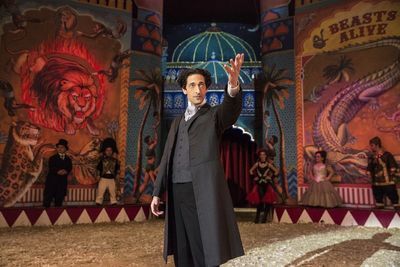
playful performance from Adrien Brody and the occasional sense of spectacle.
Harry Houdini notoriously debunked the spiritual world by giving his wife a
word that he would convey from the afterlife if any medium could reach him.
None did. This mini-series doesn’t bring him back to life either.

The one thing I can’t
seem to escape from is me
.”

Ugh. Trust me, I could pick out dozens of lines like this
that fall into the Things People Only Say in Movies category of screenwriting.
Most of them come in the too-common and overheated narration that “Houdini”
uses as a crutch, trying to add layers of self-realization to a story that didn’t
really need it. Harry Houdini was a masterful performer, someone who understood
that the art of marketing your magic was as important as the actual sleight of
hand. He challenged himself physically and his quest to top himself with every
new trick is something that is imminently relatable to a modern audience for
which every piece of entertainment needs to be more eye-popping than the last.
How did this man become a phenomenon? “Houdini,” even though it’s nearly three
slow hours, asks questions but never answers them. Literally. At one point,
Houdini asks “Why was I so compelled to
beat death?
” and the production never really gets to the heart of that
question.

It’s not through any fault, really, of Adrien Brody,
although he is over-directed in a few of the production’s more emotional beats.
Brody’s at his best here and most engaged with the material when it allows him
to have some fun with his naturally physical screen presence. Bouncing around
the stage, smiling like a con man (this performance feels inspired by his work
in the underrated “The Brothers Bloom” more than anything), and meeting with
his adoring fans—this is Brody in his element and he finds the core of the
showman in Harry Houdini. To be fair, the mini-series also sometimes captures
that sense of spectacle that a production like this needs. The best scenes, by
far, are the recreations of Houdini’s most notable tricks, including being
locked to a plank and dunked in a tank of water. The film comes alive in these
moments, and maintains a bit more of that life in the final act as Houdini
stages his war on those who would profit from the grieving.

There’s just way too much filler between those moments of
passion. Speaking of passion, Brody and Kristen Connolly, as his put-upon wife
who was more of an assistant than a partner, have zero chemistry, although it’s
not really the fault of the charming “House of Cards” star as much as the
screenwriters who gave her no character with which to work. Again, it comes
back to the writing. When Houdini and wife argue about how she’s putting him in a box in their marriage and she says “You’re only happy in a box!,” even the
most forgiving of melodrama fans will roll their eyes. No one in the real world
talks like that. Ever. Houdini was a showman, but the film mistakes the master of artifice for a soap
opera star. He may actually come back from the dead just to correct that
impression.

Source: http://www.rogerebert.com/demanders/the-history-channels-houdini-fails-to-capture-magic-of-its-subject


Categories
TV & Movies

The November Man

Thumb_novemberman-2014-1

“The November Man” is a strange and frustrating movie. On one hand, it seems to want to be a James Bond or Jason Bourne picture: the kind of film in which car chases are tracked by satellites and drones, super-competent assassins kill armies of henchmen while barely batting an eye, and good and bad guys alike often seem to just magically appear, a la Christopher Nolan superheroes, wherever the plot needs to them to be. At the same time, though, it wants to be a John Le Carre-type espionage drama, set in a version of dirty reality and mixing allusions to real-world geopolitical traumas (including Russian-Chechnyan conflict and CIA black ops) into the heroes’ derring-do. And the snarling, R-rated tough-guy worldview—which includes graphic shootings, knifings, rapes and sexist insults—sits rather uncomfortably with the movie’s desire to be a late-summer thrill ride. It wants to be taken seriously, and yet it doesn’t. This creates viewer whiplash, and makes the movie feel confused, at times dishonest.

The movie opens with a brief flash-forward. Government assassin Peter Devereaux (Pierce Brosnan) blasts his trainee, David Mason (Luke Bracey), for disobeying orders in an operation that was supposed to thwart an assassination but ended up causing a child’s death. Five years later, David is ordered to kill a former Russian double-agent named Celia (Caterina Scorsone) who broke into the office of the soon-to-be-elected president, Arkady Federov (Lazar Ristovski). Why? Without giving too much away, let’s just say that the CIA is up to no good, as is so often the case in movies and life, and that a self-interested power broker inside the agency wants to prevent the information that Celia stole from getting out and embarrassing the agency. Unfortunately for whoever did this, Devereaux has a deep bond with Celia, and embarks on a mission of revenge that also requires him to find a young woman named Alice Fournier (Olga Kurylenko) and prevent her from being killed by his former student David or by Russian killers (including the charismatic Natalia (Mediha Musliovic), a leggy mute with a stare that could burn holes in concrete. Meanwhile, David tries to thwart or kill his old mentor while struggling against the sneaking suspicion that his lethal proficiency and loyalty to the CIA are being abused for selfish purposes, in an off-the-books operation whose outlines he can barely discern.

Brosnan is perfectly cast as Devereaux. Handsome and lean but also grey and haggard, he has twenty years’ worth of experience playing these sorts of characters, starting with his version of James Bond, a colder, more self-loathing version of Ian Fleming’s super spy than fans were used to seeing. “I might as well ask you if all those vodka martinis ever silence the screams of all the men you’ve killed, or if you find forgiveness in the arms of all those willing women for all the dead ones you failed to protect,” another agent asked in “Goldeneye.”

“The November Man” is based on the seventh in a long-running series of novels about Devereaux by Bill Granger, but there are times when it seems to be a direct answer to that question, which Brosnan’s Bond answered with a knowing, faintly sad look. Devereaux is a highly functioning alcoholic who downs hard liquor the way other people drink water, and he admits to Alice that he has no life to speak of; he’s just a warm-blooded cipher living as far off the grid as he can, and trying to keep his personal relationships secret from the global espionage community so that they cannot be used against him. At one point Devereaux, who apparently quit the CIA out of long-delayed moral revulsion, lectures his former pupil on the need for moral clarity, telling him that you can be a man or a killer of men, “but not both, because one will eventually extinguish the other.”

This is all intriguingly regretful and angry stuff. It’s not at all the sort of thing you normally encounter in the sorts of films where people beat each other senseless in basements and make spectacular kill-shots while sailing through the air unloading handguns. Donaldson, who directed Brosnan in “Dante’s Peak,” is an unheralded master of down-and-dirty violence, and the film’s most brutal moments have a sting that has largely disappeared from Hollywood movies; when people get shot or stabbed or hit in the face with a blunt object, the audience gasps as if it happened right in front of them on the street, and that sort of visceral intensity shouldn’t be easily discounted.

But it’s all ultimately in the service of an ultimately retrograde, macho vision of lone heroes doing what lone heroes do, so it’s hard to accept it as anything other than a means of gussying up the usual Bourne-style super-fast mayhem with a world weariness, even cynicism, that the Bourne franchise did with a lot more conviction. Movies about assassins and gunfighters and other killers who come out of retirement for one last mission always have this insincerity problem. The characters pay lip service to the idea that being a paid killer rots the soul, but nobody who bought a ticket wants to see that character practice nonviolent resistance and play “Kumbaya” on a ukelele. “The November Man” also fails to earn the power it summons whenever it shows us scenes of people begin threatened with torture, or bloodily maimed, or raped. One character, an innocent, suffers mightily, and the film the character’s fear and physical pain seriously for a scene or two, then completely forgets about her; it also fails to develop the most important people in Devereaux’s life as characters, even obliquely, until the movie needs to terrorize them and jack up suspense and sympathy. Sam Peckinpah, this ain’t.

Source: http://www.rogerebert.com/reviews/the-november-man-2014


Categories
TV & Movies

#233 August 27, 2014

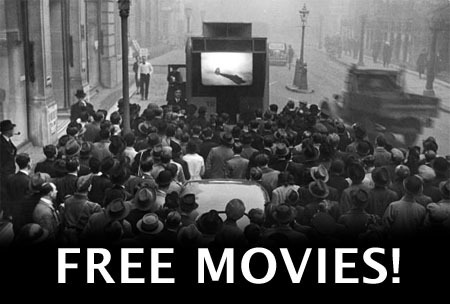
Free Movies

Sheila writes: Some long takes in cinema are gratuitous and flashy, some connect themselves to the theme of the movie, but all of them are fun to pick apart and deconstruct. The technological challenges are daunting and it’s fun to see film-makers rise to those challenges. I came across a video analyzing 12 long takes in cinema, and it should be a fun jumping-off point for discussion. What are your favorite long takes?

Trailers

’71 (2014). Directed by Yann Demange. Written by Gregory Burke. Starring Jack O’Connell,
Sean Harris,
Sam Reid. Synopsis: A young and disoriented British soldier is accidentally abandoned by his unit following a riot on the deadly streets of Belfast in 1971. Opens in the UK on October 10, 2014. Other release dates TBD.

Bird People (2014). Directed by Pascale Ferran. Written by Pascale Ferran and Guillaume Bréaud . Starring Josh Charles,
Anaïs Demoustier,
Roschdy Zem . Synopsis: An American arrives in Paris, checks into a hotel, turns off his cell phone and starts his life anew. Opens in the US on September 12, 2014. Other release dates TBD.

Automata (2014). Directed by Gabe Ibáñez. Written by Gabe Ibáñez and Igor Legarreta. Starring Antonio Banderas,
Birgitte Hjort Sørensen,
Melanie Griffith . Synopsis: Jacq Vaucan, an insurance agent of ROC robotics corporation, routinely investigates the case of manipulating a robot. What he discovers will have profound consequences for the future of humanity. Opens in the US on October 10, 2014. Other release dates TBD.

Far From Men (2014). Directed and written by David Oelhoffen. Starring Viggo Mortensen,
Reda Kateb,
Jérémie Vigot. Synopsis: A French teacher in a small Algerian village during the Algerian War forms an unexpected bond with a dissident is ordered to turn in to the authorities. Release dates TBD.

Force Majeure (2014). Directed and written by Ruben Östlund. Starring Brady Corbet,
Jakob Granqvist,
Kristofer Hivju . Synopsis: A Swedish family travels to the French Alps to enjoy a few days of skiing. The sun is shining and the slopes are spectacular but, during a lunch at a mountainside restaurant, an avalanche turns everything upside down. With diners fleeing in all directions, mother Ebba calls for her husband Tomas as she tries to protect their children. Tomas, meanwhile, is running for his life… The anticipated disaster failed to occur, and yet the family’s world has been shaken to its core, a question mark hanging over their father in particular. Tomas and Ebba’s marriage now hangs in the balance as Tomas struggles desperately to reclaim his role as family patriarch. Opens in Norway on October 24, 2014. Opens in the US in November, 2014. Other release dates TBD.

Amityville: The Awakening (2015). Written and directed by Franck Khalfoun. Starring Bella Thorne,
Cameron Monaghan,
Jennifer Jason Leigh. Synopsis: A single mother moves her three children into the haunted house not knowing of the house’s bloody history. Opens in the UK on January 1, 2015. Opens in the US on January 2, 2015.

Pride (2014). Directed by Matthew Warchus. Written by Stephen Beresford. Starring Bill Nighy,
Andrew Scott,
Dominic West . Synopsis: UK gay and lesbian activists work to help miners during their lengthy strike of the National Union of Mineworkers in the summer of 1984. Opens in the UK and Ireland on September 12, 2014. Opens in the US on September 19, 2014.

Men, Women & Children (2014). Written and directed by Jason Reitman (based on the novel by Chad Kultgen). Starring Ansel Elgort,
Adam Sandler,
Judy Greer . Synopsis: A look at the sexual frustrations that young teenagers and adults face in today’s world. Opens in the US in limited release on October 1, 2014, and opens to a wider release on October 17, 2014.

Queen of Carthage (2013). Directed by Mardana M. Mayginnes. Written by Mardana M. Mayginnes and Shiloh Fernandez. Starring Keisha Castle-Hughes,
Graham Candy,
Amanda Tito. Synopsis: An American Drifter discovers a New Zealand Singer and develops and obsession for him. Release dates TBD.

Annabelle (2014). Directed by John R. Leonetti. Written by Gary Dauberman. Starring Annabelle Wallis,
Alfre Woodard,
Eric Ladin. Synopsis: John Form has found the perfect gift for his expectant wife, Mia – a beautiful, rare vintage doll in a pure white wedding dress. But Mia’s delight with Annabelle doesn’t last long. On one horrific night, their home is invaded by members of a satanic cult, who violently attack the couple. Spilled blood and terror are not all they leave behind. The cultists have conjured an entity so malevolent that nothing they did will compare to the sinister conduit to the damned that is now… Annabelle. Opens in the US on October 3, 2014.

Outcast (2014). Directed by Nick Powell. Written by James Dormer. Starring Nicolas Cage,
Hayden Christensen,
Yifei Liu. Synopsis: A mysterious warrior teams up with the daughter and son of a deposed Chinese Emperor to defeat their cruel Uncle, who seeks their deaths. Opens in China on September 26, 2014. Other release dates TBD.

White Bird In a Blizzard (2014). * New trailer * Written and directed by Gregg Araki. Starring Shailene Woodley,
Eva Green,
Angela Bassett . Synopsis: In 1988, a teenage girl’s life is thrown into chaos when her mother disappears. Opens in the US on September 26, 2014.

Richard Attenborough 1923-2014

Sheila writes: Actor, director, producer Richard Attenborough died on August 24. Fandor has a great link roundup of tributes, obits, and essays.

“Apocalypse Now” Turns 35

Sheila writes: Francis Ford Coppola’s “Apocalypse Now” turned 35 this August, and director James Gray pays eloquent tribute to the film in Rolling Stone.

45 Greatest Concert Movies

Sheila writes: Another anniversary this August, that of the Woodstock music festival in 1969, led to Jason Bailey at Flavorwire writing a piece listing the 45 Greatest Concert Movies. Many I have seen, some I have not. What is your favorite concert movie?

Notorious (1946). Directed by Alfred Hitchcock. Starring Cary Grant, Ingrid Bergman, Claude Rains. Synopsis: A woman is asked to spy on a group of Nazi friends in South America. How far will she have to go to ingratiate herself with them?

Watch the great “Notorious.”

Man In the Attic (1953). Directed by Hugo Fregonese. Starring Jack Palance, Constance Smith. Synopsis: After an enigmatic, self-described pathologist rents the attic room of a Victorian house, his landlady begins to suspect her lodger is Jack the Ripper.

Watch “Man In the Attic.”

The Return of Dracula (1953). Directed by Paul Landres. Starring Francis Lederer, Norma Eberhardt, Ray Stricklyn. Synopsis: After a vampire leaves his native Balkans, he murders a Czech artist, assumes his identity, and moves in with the dead man’s American cousins.

Watch “The Return of Dracula.”

Source: http://www.rogerebert.com/ebert-club/233-august-27-2014


Categories
TV & Movies

Starred Up

Thumb_starredup-2014-1

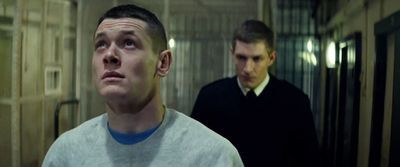
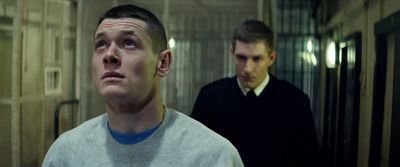
From the very first shot, there’s tension humming underneath
the phenomenal “Starred Up” that only intensifies as the characters deepen. The
opening shot is shaky, reflecting both movement and the disorientation that
comes with change. And the eyes of Jack O’Connell, a future star if ever I’ve
seen one, are tight and coiled, first looking down to gather his thoughts and
then glaring up at the unknown future of his destination. We see this young man
going through the process of moving from juvenile care to being admitted to an
adult prison, and it ends with his hands on his head and face. From there, in a
new cell he’ll occupy for what feels like a long time, he does push-ups, he
crafts a shiv, he paces like a caged animal—all before a single line of
dialogue. Director David Mackenzie trusts his actor and O’Connell puts more
performance up there on the screen in body language than most performers do
with an entire script. It’s almost ten minutes before he speaks (and even that,
to be fair, is so heavily accented and mumbled that I’m not sure I could tell
you what he says), but we know Eric already through visual composition,
physical performance, and the other tools that average films often ignore in
favor of over-expository dialogue and false declarations of emotion. “Starred
Up” is not an average film.

It’s hard to describe “Starred Up” without making it sound
generic. It’s another prison drama, a genre that felt exhausted many, many
years ago. And it’s another tale of a genetic predisposition for violence as we
soon learn that Eric’s father Neville (the great Ben Mendelsohn of “The Place
Beyond the Pines” and “Animal Kingdom”) is in the same prison as his son.
Neville first spies Eric across the yard and glares him down in the way a
disappointed parent does before a beating. Eric has been thrown into an ultra-violent,
alpha male world, and it’s not one where having your father around is
necessarily a good thing. Human connection, for both of these men, will prove
to be a double-edged sword. In many ways, it’s a work about a father’s anger
that both protects and derails his son.

Eric will have another father figure in his life, a group
therapist named Oliver (Rupert Friend), who convinces the prison Governor (Sam
Spruell) to give the young man a chance at rehabilitation after a particularly
violent incident. In group sessions that almost always end in outbursts and
violence, Oliver does his best to try a different parental tactic with Eric.
There’s a defining scene in which Eric flouts authority by lighting up a
cigarette in group and Oliver tries discipline—verbal admonition and
essentially putting the group in a “time out”—before Neville bursts in with the
physical response: “Problem is you’ve got
to come down on him full throttle; else it won’t register
.” It’s corporal
punishment versus detention even in the prison system. The dynamic between a
biological father and a father figure behind bars is fascinating; both men try
to protect him and both simply cannot in this kind of world.

While all of that subtext makes “Starred Up” fascinating, it
is primarily a character piece for the young Mr. O’Connell, an actor who
reminds one of Tom Hardy in “Bronson” or the early work of Ryan Gosling in his
fearlessness. There’s a scene early on in which Eric knows the guards are
coming for him. He races back to his cell, pours oil on the floor, and then
douses himself in the stuff too. It’ll make it harder to take him down. And he
grabs a couple of wooden planks for good measure. He’s not getting “out.” They
have nightsticks, helmets and shields. But he’ll do some damage on his way
down. “Starred Up” is a film about someone sliding out of society, and kicking,
screaming and punching as he does so. And O’Connell captures that in a way that
so many more experienced, well-known actors would miss. It’s in the incredible
physical balance between prison-earned toughness and youth. There’s just a hint of fear in O’Connell’s
eyes, reminding us that he was just a kid not that long ago. O’Connell’s
performance is matched but never upstaged by the increasingly fantastic Ben
Mendelsohn, an even more blatantly conflicted blend of rage and familial concern,
and Rupert Friend.

“Starred Up” is HEAVY with slang and accents. You won’t
understand a third of it. But there’s so much going in between the lines of
dialogue that you won’t care. We’ve seen many visually arresting films in
recent years and character studies are as common as film festivals, but it’s
the remarkable blend of the two here that makes “Starred Up” devastating. From Mackenzie’s
camera choices—often tracking in one shot from relative calm like inmates
playing ping pong to an outburst in the distance down the hall—to the sound
design of clanking metal doors and distant cries, “Starred Up” is a technical achievement
anchored by the clarity of character in O’Connell’s performance. It’s
fantastic.

Source: http://www.rogerebert.com/reviews/starred-up-2014


Categories
TV & Movies

Through a Lens Darkly: Black Photographers and the Emergence of a People

Thumb_throughalensdarkly-2014-1

One of the things I learned in watching Thomas Allen Harris’
engrossing documentary “Through a Lens Darkly”: George Eastman, of Eastman
Kodak fame, served on the board of Booker T. Washington’s Tuskegee Institute
and in the late 19th century helped the school set up a photography
program. That initiative not only reflected black leaders’ longstanding belief
that photography aided their cause, it also gave Washington the positive images
he needed in taking the case of African-Americans to the world.

At the Paris Exposition of 1900, the educator, then the most
famous African-American in the U.S., mounted an exhibit of photographs that
showed black Americans as productive, educated citizens not unlike their
middle-class white counterparts. Surely the first such display many Europeans
would have seen, the show was a hit, and it constituted a potent retort to
various exhibits by European powers that attempted to justify their colonial
exploitation of Africa by showing Africans as naked, primitive savages needing
the “civilized” guidance of their white masters.

It is difficult to cast our minds back to that time and
imagine what it would have been like to see such wildly opposing exhibits, but
the exercise is instructive, and it’s only one of many occasions for such
contemplation Harris’ film offers. Here, as in other cases, the images
articulate narratives and entire worldviews that stand in starkly dramatic
contrast to each other.

Likewise, the film itself has a dual nature, even if both of
its aspects might be united under the heading “family album.” One aspect has
Harris pondering the importance of photography in the lives of his and other black
families (his grandfather was an avid photographer who gave Harris his first
camera when he was six) and the various purposes it served, from recording
family histories to helping with the often ambivalent task of reflecting on
blackness itself.

The film’s other aspect, inspired by the acclaimed book
“Reflections in Black: Black Photographers from 1840-Present” by Deborah Willis
(who served as one of the film’s producers), considers the history of
photography of and by African-Americans as effectively comprising a kind of
family album of the culture. This chronicle produces countless fascinating
connections and poses intriguing questions, e.g., was it entirely coincidental
that the overthrow of slavery in the U.S. happened at the same time that the
still relatively new medium of photography was coming into widespread use?

Perhaps not. While the case against slavery before the Civil
War had largely been the province of the written word, by the time Union forces
swept through the South as the war raged, photographers who came in their wake
recorded the hideously despoiled flesh of whipped slaves, and these images
helped explain to Northerners why it was just and necessary to mount a massive
campaign against the “peculiar institution.”

After the war, newly freed blacks took control of their own
images in two senses. Some learned the trade of photography and created
pictures of their communities and acquaintances. And any African-American for a
modest fee could have photos made of oneself and loved ones that reflected the
subject’s own tastes in poses, attitudes, clothes and settings. The images
Harris shows from this period are among the most entrancing in the film, as
their projections of self-confidence, personal vitality and style, and in many
cases, newfound prosperity anticipate similar displays of exuberant
African-American pride following the civil rights victories a century later.

As Harris shows, black leaders understood the importance of
such images from early on. That Frederick Douglass became one of the most
photographed Americans of the 19th century surely testifies not just
to his healthy self-regard but also an understanding of how instructive and
inspiring these portraits could be to other blacks.

Yet the photographic and other proof of black talent,
aspiration and success prompted various kinds of push-back throughout the Jim
Crow era. Cartoons and advertising demeaning to blacks proliferated. D.W.
Griffith’s horrendously racist “The Birth of a Nation,” American cinema’s first
blockbuster, inspired the resurrection of the Ku Klux Klan, which had been
suppressed during Reconstruction. Perhaps worst of all, the lynchings and
public mutilations of blacks in different parts of the country inspired a
ghoulish mini-industry of postcards showing whites enjoying picnics and
laughing festively as blacks were hanged and burned in front of them.

Such horrific images would be used to opposite effect during
the civil rights era, however. At the funeral of brutally murdered teenager
Emmett Till, the boy’s mother insisted that his coffin be left open so that
photographers could record his grotesquely mutilated face. Those images shocked
the nation and pointed toward years in which images of peaceful civil rights
protestors being viciously attacked by racist Southern lawmen and mobs helped turned
the tide of public opinion toward the overthrow of Jim Crow.

In telling this story and exploring its meanings, Harris’
well-crafted film uses interviews with a number of historians and black
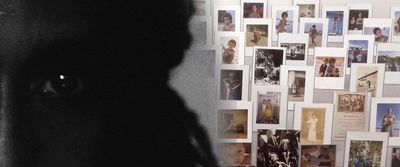
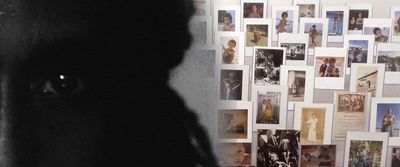
photographers. But its greatest asset is the trove of photographs it marshals.
Sometimes these are so striking and resonant that they almost overwhelm the
commentary meant to frame them, including Harris’ voice-over, which
occasionally stretches for academic or poetic notes it doesn’t quite reach. Yet
the old saw about a picture being worth a thousand words indicates the
extraordinary power of the images “Through a Lens Darkly” organizes so
thoughtfully and compellingly.

Source: http://www.rogerebert.com/reviews/through-a-lens-darkly-black-photographers-and-the-emergence-of-a-people-2014


Categories
TV & Movies

“The Art of John Alvin” Captures Lost Art of Movie Poster Magic

Thumb_collage

John Alvin changed the way that a generation and an industry
looked at film. It sounds like hyperbole, but so many of the iconic images that
I associate with the films of my youth may have been traced by the filmmakers
but were inked by Alvin. A true artist, the most important movie poster
designer of the ‘70s and ‘80s took the visuals of the industry and turned them
into art. When I was a teenager, I actually collected movie posters, framed and
hung on my wall, and I believe that Alvin’s approach to the form greatly
influenced my love of movies. This wasn’t advertising, it was art—an extension
of the art of filmmaking in the way it distilled the essence of a story down to
imagery.

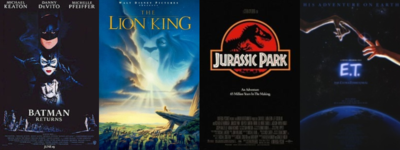
The raucous lunacy promised by the posters for “Blazing Saddles” and “Young
Frankenstein.” The iconic connection in the center of the poster for “E.T.” The
way the artwork for “Blade Runner” blended noir and a vision of the future. The
lyrical beauty of the posters of the ‘90s Disney renaissance. Even just the
perfect simplicity of “Jurassic Park.” John Alvin was an artist and a new book
about his work, “The Art of John Alvin,” is a must-own for fans of the lost art
of the movie poster.

“The Art of John Alvin,” available today, is a coffee table
book with some incredible archival material, including sketches for posters
that never saw the light of the multiplex, and the stories behind Alvin’s most
important works courtesy of his widow, Andrea Alvin. The book is filled with
amazing behind-the-scenes stories of how some of our most iconic film posters
came to be, but, as you might expect, is heavier on large reprints than text.
It’s a picture book for a visual artist, and it’s a great one.

John Alvin was a young freelance artist, a graduate of the
Art Center College of Design in L.A., when he was asked to create a poster for
a new comedy on spec. The comedy was “Blazing Saddles,” arguably the best of
all time, and Alvin’s art would become not just closely associated with the
film—many ‘70s film posters have been replaced on subsequent VHS/DVD/Blu-ray
covers but not this one—but remarkably influential. It launched a career,
helped push Brooks’ work to the center (he would instantly hire him to do “Young
Frankenstein” as well), and made clear that movie posters could have a life and
artistry of their own. Alvin, as she does with most of the key works of her
late husband’s career, details the process that led to the “Blazing Saddles”
poster, noting her contribution to the work and even detailing the process—he painted
it on a 30 x 40 illustration board.

John Alvin took the energy of that “Blazing Saddles” poster
and ran with it. His career includes the amazing work for “Phantom of the
Paradise,” “Star Wars, Episode VI: Return of the Jedi” (and you’ll see sketch
work on the legendary “Revenge of the Jedi” posters in the book), and “Blade
Runner.” The next huge leap forward would come with “E.T. The Extra-Terrestrial”
in 1982, and it’s clearly the work that Andrea Alvin considers essential to her
husband’s work, devoting the cover and ten pages to it, including early designs
and sketch work. According to the author, John Alvin was so involved in the art
for “E.T.” that he was there working on it back when it was called “A Boy’s
Life” and still filming. She even argues he influenced the final product. It
feels almost impossible today to have a visual poster artist that closely tied
to a major film as now posters and marketing are seen not as art but ways to
push product. Great trivia—perhaps the reason that John focused so heavily on
E.T.’s hand in the poster is because that’s all he had been allowed to see
during the top-secret production.

More ‘80s classics would pile up—“The Goonies,” “Short
Circuit,” “Legend,” “The Golden Child,” “The Lost Boys,” “Empire of the Sun.”
Some of the most interesting behind-the-scenes details come during the
production of Tim Burton’s “Batman.” As fans will remember, the art for that
film was kind of uninspired, focusing mostly on the Bat symbol, which even
Burton didn’t like, apparently (people complained it looked like a mouth).
Alvin designed some incredible work that never made it through the process but
is available here (and he’d get the chance again on “Batman Returns”). On a similar note, a later chapter in the book offers dozens
of unused “Jurassic Park” posters, half of which would be the most interesting
poster of the year were they in theaters this Summer. Pardon my cynicism but “The
Art of John Alvin” makes the “Floating Head” approach to marketing in the ‘10s
even more dispiriting.

Finally, there’s the undeniable fact that John Alvin played
a role in the childhood of millions. When Disney was looking to change its
image and revolutionize its animation house, they needed art that would stretch
their demographic. How can we sell this animated film to adults? Alvins’ work
on “Beauty & the Beast,” “The Lion King,” and “Aladdin” did just that,
selling these works not as cartoons but as art. The quality of the filmmaking
was essential but people needed to get into theaters to see the films and Alvin
helped make that happen. He played such an essential part of that process, one
that led to the domination of animated films today. John Alvin may not be
around to have that influence any more but it still resonates. And one hopes
that studios, producers, marketers, and artists pick up “The Art of John Alvin”
and remember a time when movie posters weren’t just ways to sell movies but
complements to them.

Source: http://www.rogerebert.com/balder-and-dash/the-art-of-john-alvin-captures-lost-art-of-movie-poster-magic