One of the things I learned in watching Thomas Allen Harris’
engrossing documentary “Through a Lens Darkly”: George Eastman, of Eastman
Kodak fame, served on the board of Booker T. Washington’s Tuskegee Institute
and in the late 19th century helped the school set up a photography
program. That initiative not only reflected black leaders’ longstanding belief
that photography aided their cause, it also gave Washington the positive images
he needed in taking the case of African-Americans to the world.
At the Paris Exposition of 1900, the educator, then the most
famous African-American in the U.S., mounted an exhibit of photographs that
showed black Americans as productive, educated citizens not unlike their
middle-class white counterparts. Surely the first such display many Europeans
would have seen, the show was a hit, and it constituted a potent retort to
various exhibits by European powers that attempted to justify their colonial
exploitation of Africa by showing Africans as naked, primitive savages needing
the “civilized” guidance of their white masters.
It is difficult to cast our minds back to that time and
imagine what it would have been like to see such wildly opposing exhibits, but
the exercise is instructive, and it’s only one of many occasions for such
contemplation Harris’ film offers. Here, as in other cases, the images
articulate narratives and entire worldviews that stand in starkly dramatic
contrast to each other.
Likewise, the film itself has a dual nature, even if both of
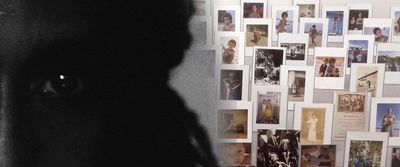
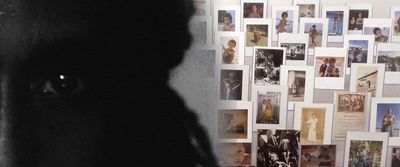
its aspects might be united under the heading “family album.” One aspect has
Harris pondering the importance of photography in the lives of his and other black
families (his grandfather was an avid photographer who gave Harris his first
camera when he was six) and the various purposes it served, from recording
family histories to helping with the often ambivalent task of reflecting on
blackness itself.
The film’s other aspect, inspired by the acclaimed book
“Reflections in Black: Black Photographers from 1840-Present” by Deborah Willis
(who served as one of the film’s producers), considers the history of
photography of and by African-Americans as effectively comprising a kind of
family album of the culture. This chronicle produces countless fascinating
connections and poses intriguing questions, e.g., was it entirely coincidental
that the overthrow of slavery in the U.S. happened at the same time that the
still relatively new medium of photography was coming into widespread use?
Perhaps not. While the case against slavery before the Civil
War had largely been the province of the written word, by the time Union forces
swept through the South as the war raged, photographers who came in their wake
recorded the hideously despoiled flesh of whipped slaves, and these images
helped explain to Northerners why it was just and necessary to mount a massive
campaign against the “peculiar institution.”
After the war, newly freed blacks took control of their own
images in two senses. Some learned the trade of photography and created
pictures of their communities and acquaintances. And any African-American for a
modest fee could have photos made of oneself and loved ones that reflected the
subject’s own tastes in poses, attitudes, clothes and settings. The images
Harris shows from this period are among the most entrancing in the film, as
their projections of self-confidence, personal vitality and style, and in many
cases, newfound prosperity anticipate similar displays of exuberant
African-American pride following the civil rights victories a century later.
As Harris shows, black leaders understood the importance of
such images from early on. That Frederick Douglass became one of the most
photographed Americans of the 19th century surely testifies not just
to his healthy self-regard but also an understanding of how instructive and
inspiring these portraits could be to other blacks.
Yet the photographic and other proof of black talent,
aspiration and success prompted various kinds of push-back throughout the Jim
Crow era. Cartoons and advertising demeaning to blacks proliferated. D.W.
Griffith’s horrendously racist “The Birth of a Nation,” American cinema’s first
blockbuster, inspired the resurrection of the Ku Klux Klan, which had been
suppressed during Reconstruction. Perhaps worst of all, the lynchings and
public mutilations of blacks in different parts of the country inspired a
ghoulish mini-industry of postcards showing whites enjoying picnics and
laughing festively as blacks were hanged and burned in front of them.
Such horrific images would be used to opposite effect during
the civil rights era, however. At the funeral of brutally murdered teenager
Emmett Till, the boy’s mother insisted that his coffin be left open so that
photographers could record his grotesquely mutilated face. Those images shocked
the nation and pointed toward years in which images of peaceful civil rights
protestors being viciously attacked by racist Southern lawmen and mobs helped turned
the tide of public opinion toward the overthrow of Jim Crow.
In telling this story and exploring its meanings, Harris’
well-crafted film uses interviews with a number of historians and black
photographers. But its greatest asset is the trove of photographs it marshals.
Sometimes these are so striking and resonant that they almost overwhelm the
commentary meant to frame them, including Harris’ voice-over, which
occasionally stretches for academic or poetic notes it doesn’t quite reach. Yet
the old saw about a picture being worth a thousand words indicates the
extraordinary power of the images “Through a Lens Darkly” organizes so
thoughtfully and compellingly.


