Categories
Tech

Google data shines light on whether coronavirus lockdowns worldwide are working


Google has published charts showing how the coronavirus has brought hard-hit Italy to a standstill, led to runs on grocery stores around the world and prompted a stark drop in going out between Mardi Gras and St. Patrick’s Day.

The analysis of location data from billions of Google users’ phones is the largest public data set available to help health authorities assess if people are abiding with shelter-in-place and similar orders issued across the world to rein in the virus.

The company released reports for 131 countries — including Canada — with charts that compare traffic from Feb. 16 to March 29 to retail and recreational venues, train and bus stations, grocery stores and workplaces with a five-week period earlier this year.

Google said it published the reports to avoid any confusion about what it was providing to authorities, given the global debate that has emerged about balancing privacy-invasive location tracking with the need to prevent further outbreaks.

The data often correlated with the severity of outbreaks and the harshness and breadth of orders imposed by governments.

Italy, Spain see major drops

Italy and Spain, two of the hardest-hit countries, both saw visits to retail and recreation locations such as restaurants and movie theatres plunge 94 per cent. The United Kingdom, France and Philippines had declines of more than 80 per cent while India, which went into a sudden 21-day lockdown on March 25, was also notable at 77 per cent.

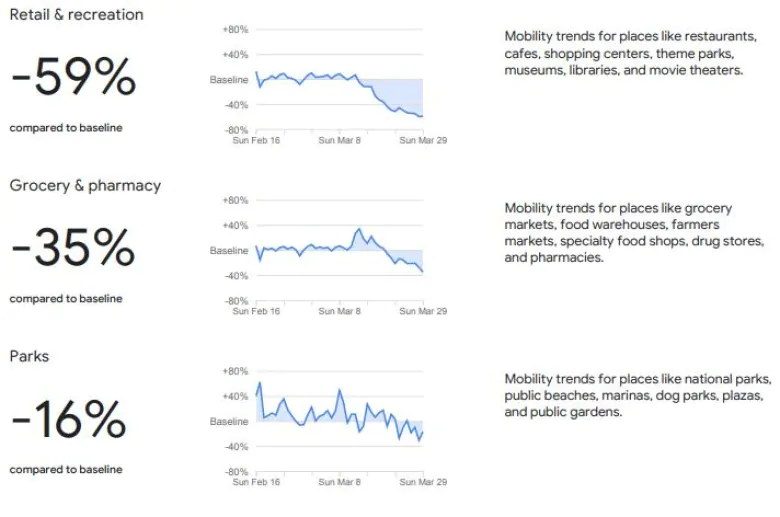
Canada has seen drops that are less steep, though still significant. Retail and recreation Canada-wide has gone down by 59 per cent, while Quebec — the hardest-hit province, with more than 5,500 cases  — has seen the greatest reduction, at 70 per cent. In New Brunswick, the data shows an increase in visits to parks, while Nova Scotia has a reduction of only five per cent.

Google’s mobility results for Canada, which show how movement has changed among Canadians during the COVID-19 pandemic. On average, trips to all types of sites have dropped, including a 70 per cent reduction to retail and recreation locations in Quebec. (Google)

In the United States, where state responses have varied greatly, and in Australia, where good weather initially prompted many people to go the beach before social distancing measures were ratcheted up, the drop in visits to retail and recreation sites were less steep, at under 50 per cent.

In contrast, in Japan and Sweden, where authorities have not imposed harsh restrictions, visits fell by roughly only a quarter. In South Korea, which has successfully contained a large outbreak through aggressive testing and contact tracing, the decline was just 19 per cent.

Challenges remain in keeping people apart

The data also underscore some challenges authorities have faced in keeping people apart. Grocery store visits surged in Singapore, the U.K. and elsewhere as travel restrictions were set to go into place. Visits to parks spiked in March in some San Francisco Bay Area counties under lockdown in California, forcing them to later put the sites off-limits.

The data also underscores how the mood of people around the world has shifted. In New Orleans, during its annual Mardi Gras celebrations Feb.16-25, which has with hindsight been criticized for helping spread the virus, there were off-the-chart increases in traffic to transit stations, parks and businesses.

But three weeks later in Dublin, the heart of St. Patrick’s holiday celebrations, traffic was down at retail and recreational venues as the country ordered big events cancelled.

A man wearing a shamrock suit walks along the normally bustling St. Patrick’s Day parade route on O’Connell Street in Dublin, March 17, 2020. The event that draws thousands of visitors to the island from across the world was cancelled by the Irish government in their response to the Covid-19 virus pandemic. (Charles McQuillan/Getty Images)

Within countries, there were wide gaps in behaviour by region. California, which was the first in the U.S. with a statewide lockdown, cut visits to retail and recreation locations by half. In New York state, the slide in such visits was gradual as officials waited to impose strict curbs, but they eventually fell 62 per cent. By contrast, Arkansas, one of the few states without a sweeping lockdown, had the smallest decline, at 29 per cent.

The coronavirus has infected more than one million people globally, and COVID-19, the respiratory illness it causes, has killed 53,000, according to a tally by Johns Hopkins University.

There were no reports for China and Iran, where Google services are blocked.

Balancing privacy

Data in Google’s reports come from users who enabled Google’s “Location History” feature on their devices. The company said it adopted technical measures to ensure that no individual could be identified through the new reports.

“These reports have been developed to be helpful while adhering to our stringent privacy protocols and policies,” Dr. Karen DeSalvo, chief health officer for Google Health and Jen Fitzpatrick, senior vice president for Google Geo, wrote in a blog post.

China, Singapore, South Korea and other countries have asked residents to use apps and other technology to track their compliance with quarantines, but privacy activists argue such measures can compromise individual liberties.

Infectious disease specialists have said analyzing travel across groups by age, income and other demographics could help shape public service announcements.

Google, which infers demographics from users’ internet use as well as some data given when signing up to Google services, said it was not reporting demographic information. The company said, though, it was open to including additional information and countries in follow-up reports.

Google said consultations with officials in the U.S. and the World Health Organization helped inform the data shared.

The company declined to comment on whether it has received any legal requests to share more detailed data to help with efforts to tackle the pandemic.

Facebook, which like Google has billions of users, has shared location data with non-governmental researchers that are producing similar reports for authorities in several countries. But the social media giant has not published any findings.


Source link

Categories
Tech

'People will make a sacrifice for the common good': How the fight against COVID-19 could extend to climate


Hello, people! This is our weekly newsletter on all things environmental, where we highlight trends and solutions that are moving us to a more sustainable world. (Sign up here to get it in your inbox every Thursday.)

This week:

  • ‘People will make a sacrifice for the common good’: How the fight against COVID-19 could extend to climate action
  • Coronavirus lockdowns are leading to less power demand in Europe
  • The deadly connection between wildlife markets and infectious diseases

‘People will make a sacrifice for the common good’: How the fight against COVID-19 could extend to climate action

(ECW Press)

In recent years, there has been significant momentum in the private sector to confront climate change. But the economic fallout of the coronavirus outbreak presents a significant challenge. Andre Mayer spoke to Tom Rand, the Toronto-based author of the new book The Case for Climate Capitalism: Economic Solutions for a Planet in Crisis, about environmental action at a time when the world is preoccupied with a more immediate threat.

Going into 2020, climate change was the biggest issue facing the world. COVID-19 has obviously changed the focus. What trends are you seeing in the way the business world is approaching climate action now?

It’s interesting to see telecommuting finally coming into its own. Not only are we avoiding getting on a plane for board meetings, but we’re getting more effective at working from home. There are limits – but it’s clearly possible to eliminate a large portion of business travel (a third to a half?) and work from home a couple of days a week. That would be a huge cut in carbon emissions and urban traffic.

Are any Canadian trends especially telling?

Canada has been hit doubly hard, and our heavy oil industry is under an existential threat. To my mind, COVID accelerated trends that were already inevitable over the long term: technology is the primary threat to heavy oil, not climate policy. Alberta’s heavy oil has long dominated our national dialogue, and sucks up an awful lot of political oxygen – far more than is warranted by its relatively small contribution to the national economy. It’s time to start talking about future economic trends – like e-vehicles, renewables and emerging telecommuting technologies. Perhaps this crisis will force us to look forward to economic opportunity, instead of being distracted by what’s in the rear-view mirror.

Do you think the coronavirus pandemic could have a lasting negative impact on climate action?

We’ve certainly emptied our public coffers. The cost of COVID far outstrips any climate effort I’ve ever seen, and it will be even harder to access public funds on the climate fight. But culture is just as important: perhaps our immediate fears over the pandemic, and the massive failure in the United States to prepare for it, will increase our respect for the experts ringing the climate alarm bells. What’s become clear over the past few weeks is the sense that we’re all in this together and must look to an empowered public sector to address systemic risks – like pandemics or climate. In the short term, we might continue with behaviours that reduce emissions, like avoiding unnecessary travel and working from home more.

Does the outbreak jeopardize investment in green projects?

I see little over the long term to affect the build-out of green projects. These things are getting built because they’re a better deal than fossil fuel counterparts, not because they’re goody-goody.

Your book argues that capitalism can have a significant role in creating a low-carbon world. How so?

Innovation, capital, jobs, technology – all of these are driven primarily by market forces. As we see with COVID, the public sector can (and must) provide a backstop to an economic crisis, but it can’t replace all that economic activity. At the same time, the business community must acknowledge that nibbling around the edges of our economy is not a sufficiently robust reaction to climate. Capitalism must be fundamentally rewired to address climate risk.

Are there any lessons to take from governmental responses to coronavirus that could be applied to climate?

When you can articulate a risk appropriately, people will make a sacrifice for the common good. Humans are fundamentally caring and decent. No one wants to unleash destabilizing forces that bring economic ruin. Only a sociopath would deny the need to address climate risk, just as only a sociopath wouldn’t endorse behaviours like physical isolation that reduce coronavirus risk.

This interview was conducted by email. It has been edited and condensed.


Reader feedback

Last week, we asked you how you’re managing to stay green while staying (mostly) indoors. Here are some of your responses.

“What do I do in this time of social distancing to stay green? I increase the size of my vegetable garden,” said Monika Caemmerer.

Paul Peckford wrote: “I have not been driving my vehicle, but instead walking virtually every day! Feels good to do my small part at this time.”

“So often lack of time is the reason why people don’t make green choices,” said Theresa Jantzen Reed. “Now that we have a ton of extra time, we are doing the following: hang-drying all of our clothes instead of using the dryer, started lettuce/greens in repurposed plastic containers from our house (i.e. yogurt containers), using cereal bag plastic in place of plastic bags/wrap, shredding kids art paper into compost and we’ve parked our vehicles and are using foot or bike to pick up essentials.”

Old issues of What on Earth? are right here.


The Big Picture: Drops in power demand

Coronavirus-related lockdowns around the world are having a demonstrable impact on outdoor life and air quality. While it’s fair to assume that more people are turning to online streaming to pass the time at home, reduced business activity is having a palpable effect on overall power demand. In figures compiled by the European Network of Transmission System Operators for Electricity and the British climate think-tank Ember, week-over-week electricity use in Europe  dropped precipitously, most notably in Italy and Spain. The graphic below captures the decrease in demand between the weeks of March 9-15 and 16-22.

(CBC)

Hot and bothered: Provocative ideas from around the web


Wildlife markets ‘a perfect opportunity’ for disease transmission

(Aaron Gekoski/World Animal Protection)

The continued existence of wildlife markets, which are considered potential breeding grounds for the spread of harmful viruses, means it’s just a matter of time before the world is hit with another deadly pandemic, some scientists suggest.

“If we do not deal with this, there is nothing to say that we could not in 18 months’ time have another outbreak, and it could be worse,” said Kerry Bowman, an assistant professor and bioethicist at the University of Toronto‘s Dalla Lana School of Public Health.

Scientists believe the novel coronavirus that causes the disease COVID-19 emerged from one of these wildlife markets — also known as “wet markets” — in the Chinese city of Wuhan, possibly through an infected bat.

Bats are just one of the animals that are sold at these markets, where customers come to purchase domestic livestock and wildlife, including pigs, chickens, civet cats, porcupines and pangolins.

Bowman said the main concern with these markets is a spillover event, when viruses transfer from one species to another and then cross over to humans.

In terms of the general concepts of infectious diseases, wildlife markets are “a perfect opportunity for the mixing of bacteria and viruses as well as transmission to other groups,” said Jason Stull, assistant professor at the University of Prince Edward Island’s Atlantic Veterinary College.

Not only that, stress and malnutrition reduce the immune system of animals and potentially exacerbate this problem, Stull said. For example, an animal under duress may be more likely to shed higher amounts of virus. “All of these things likely can contribute to movement back and forth of diseases.”

According to the EcoHealth Alliance, a New York-based organization that conducts scientific research into emerging infectious diseases, about three-fourths of all such diseases are somehow linked to wildlife.

William Karesh, executive vice-president for health and policy at the EcoHealth Alliance, said the current coronavirus outbreak was likely spread in two possible ways. It could have been a wild animal being sold in the market that contaminated the market. It’s also possible that a vendor in the market was infected somewhere else and then infected customers.

The animals that end up in the market are coming from two places — hunted in the wild or bred on farms. 

Bowman said there are deep cultural roots with this industry — thousands of years of tradition of eating wild animals. As well, the animals are used for traditional Chinese medicine, luxury goods and the pet trade.

“What’s really changed is that this has gone from occasional domestic use with emerging populations in combination with the burgeoning wealth to a massive commercial enterprise,” Bowman said.

Karesh said ending these practices will take time, likely generations, and can only be done through education and helping countries improve their food systems.

He suggested that instead of banning all wildlife trade, countries should focus on those animals that are more likely to have viruses that can be transmitted to humans — like rodents, bats and non-human primates.

He said the international community must come to grips with the growing and unsustainable use of wildlife, or we will “continue to see pandemics.”

“There are three to five emerging diseases every year, and only by luck and the grace of God … they don’t turn into pandemics each time.”

Mark Gollom


Stay in touch!

Are there issues you’d like us to cover? Questions you want answered? Do you just want to share a kind word? We’d love to hear from you. Email us at whatonearth@cbc.ca.

Sign up here to get What on Earth? in your inbox every Thursday.

Editor: Andre Mayer | Logo design: Sködt McNalty


Source link

Categories
Tech

'Zoom-bombing' attacks on video conferencing platform leave victims shaken


Zoom has emerged as an indispensable video conferencing tool for remote work and study as millions of people  are forced to stay home during the COVID-19 pandemic. But a growing number of so-called Zoom-bombing incidents is prompting warnings from the FBI and from the victims themselves.

People participating in meetings and lessons via video conference platforms like Zoom can find their screens hijacked by malicious actors who can put words and images on the screen and in the chat box or create havoc with the audio.  

Dennis Johnson said he was in the middle of a video conference defending his doctoral dissertation — about the struggles of African Americans in California’s education system — when he started seeing profanity appear on the screen.

“I’m talking about … students of colour, specifically black students,” said Johnson, 28, in a Skype interview from Long Beach, Calif. ” As I’m talking about this, I see a circle on my screen … then another circle and then I see another shape. It’s a penis.”

Then he saw letters spelling out the N-word.

Johnson says he froze. Seconds later, pornographic images began appearing all over the shared screen. Eventually, someone on the call was able to remove the uninvited culprit from the group.

WATCH | Dennis Johnson is helpless to stop an online attack during his PhD defence (graphic images and language have been blurred)

 Dennis Johnson was helpless to stop a racial slur and pornography appear on screen as he defended a dissertation Mar. 26 in Long Beach, Calif. 1:41

He is the first college graduate in his family, so his mother and 68-year-old grandmother were watching the presentation along with his professors. He says even after he regained his composure and was told he had passed, feelings of sadness replaced what should have been pride.

“I spent three years working on this paper, you know, working on this research,” he said. “This moment was taken away from me in front of my family, in front of my friends. I was disrespected on a level that I could never imagine.”

Zoom-bombing is becoming more frequent in Canada, as well, with unidentified visitors entering private online meetings and classrooms to spew racial and sexist slurs.

Russ Klein, the head of a Jewish high school in Vancouver, told CBC News that a community gathering the school was hosting on Zoom on Tuesday was infiltrated.

Earlier this week, a 250-guest virtual town hall held by Toronto’s YWCA to discuss the impact of COVID-19 on women was Zoom-bombed as well. 

“They started shouting racial epithets, they shouted the N-word,” said YWCA Canada CEO, Maya Roy. “Two YWCA employees were sexually harassed. Comments were made about them in the chat function.”

FBI issues warning, tips

The number of incidents, known among security experts as “video teleconferencing (VTC) hijacking,” has been alarming enough that it prompted a warning from the FBI earlier this week.

“The best mitigation strategy at this point is just to let a lot of the users know that this is going on, because they’re going to be the ones that are able to protect themselves best,” Boston-based FBI special agent Doug Domin, who primarily works on cyber cases, told CBC News.

The agency also released a tip sheet that included the following:

  • Keep VTC meetings private by issuing users a password or employing the “waiting room” function, which requires the host to invite each guest individually.
  • Don’t share invitation links on social media.
  • Keep software updated to stay on top of any security patches provided by VTC companies.

Response from Zoom

But both Roy and Johnson say they took precautions: Johnson says his faculty used the waiting room function to monitor who was part of the dissertation meeting, and Roy says while the YWCA town hall was promoted on Twitter, joining it was password-protected.

Dennis Johnson, the first college graduate in his family, says the racist Zoom-bombing during his dissertation defence affected him emotionally. (Submitted by Dennis Johnson)

They say Zoom — whose shares have doubled in price since the COVID-19 crisis erupted in January and has experienced record downloads — should take more responsibility.

Johnson started an online petition to compel the VTC company to improve its security features. By Thursday night, it had amassed more than 30,000 signatures.

Zoom, which has already been forced to apologize for not being forthcoming about its security limitations, says it’s providing guidance to help virtual classrooms and meetings stay safe. But it hasn’t specified any plans to offer additional controls for users to prevent harassment and online attacks.

“We strongly encourage hosts to review their settings, confirm that only the host can share their screen, and utilize features like host mute controls and ‘Waiting Room,'” Zoom said in a statement to CBC News.

Marginalized groups a target

Johnson and Roy say Zoom-bombing should be investigated as hate speech because marginalized groups appear to be the main targets.

“Women, people of colour, Jewish community groups and the queer community,” said Roy. “The onus shouldn’t be on us to protect ourselves against hate online.”

While Domin says the FBI is looking into a handful of incidents in Boston, “it’s a difficult process to conduct an investigation over borders.”

“There’s no accountability online,” he said.

The FBI also says it’s hard to quantify how these types of security invasions can affect people personally, but children in particular who are exposed to graphic material or racist messages in an online classroom, for example, can have a tough time understanding what happened and why.

Johnson says even as an adult, it’s been difficult to process his own experience. He says the incident will have a lasting effect.

“Whenever somebody says ‘Dr. Dennis Johnson,’ I’m going to remember that moment and I’m going to be saddened a little,” said Johnson. “But I’m also going to remember that you have to push and you have to continue and don’t stop.”


Source link

Categories
Tech

Solved mystery shows 3 hominins shared Africa 300,000 years ago


Scientists have solved a longstanding mystery over the age of a landmark skull found in 1921 in Zambia — the first fossil of an extinct human species discovered in Africa — in research with big implications for deciphering the origin of our own species.

The study published on Wednesday involved the so-called Broken Hill skull, also called the Kabwe skull in recognition of a nearby town, discovered by a Swiss miner working in the Broken Hill lead and zinc mine in what was then Northern Rhodesia. Until now, scientists had been in the dark about how old it was, making it difficult to know its place on the human family tree.

But two sophisticated dating methods have determined the skull to be about 299,000 years old, plus or minus 25,000 years, said geochronologist Rainer Grün of Griffith University in Australia, lead author of the study published in the journal Nature. Some experts had hypothesized it was 500,000 years old.

This indicates the species represented by the skull was unlikely to have been a direct ancestor of Homo sapiens as some had thought. Our species first appeared more than 300,000 years ago in Africa, later spreading worldwide.

Scientists initially assigned the skull to a species they called Homo rhodesiensis. Most scientists now assign it to the species Homo heidelbergensis, which inhabited parts of Africa and Europe starting about 600,000 years ago.

H. sapiens, H. heidelbergensis, H. Naledi 

Anthropologist Chris Stringer of the Natural History Museum in London said its age indicates at least three human species inhabited Africa around 300,000 years ago: Homo sapiens in places like Morocco and Ethiopia, Homo heidelbergensis in south-central Africa, and Homo naledi in South Africa, known for primitive features including traits suitable for tree-climbing.

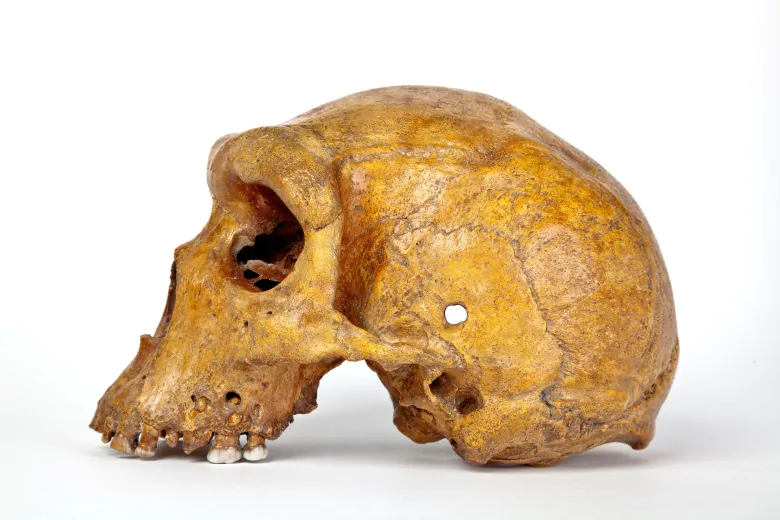
The Broken Hill skull, Homo heidelbergensis, a fossil of an extinct human species found in Zambia in 1921, is seen in this undated image taken at the Natural History Museum in London and provided to Reuters March 31, 2020. (Kevin Webb/NHM Image Resources/The Trustees of the Natural History Museum in London via Reuters)

Instead of linear evolution in which a new species supplants its predecessor, Africa may have been “a melting pot” involving interbreeding among multiple human species, the researchers said.

The skull, dubbed Rhodesian Man when it was discovered, possesses primitive features such as a large face, flat forehead and huge brow ridges. Its brain size fits in the range of our species.

“It’s a surprisingly late age estimate, as a fossil at about 300,000 years might be expected to show intermediate features between Homo heidelbergensis and Homo sapiens, but Broken Hill shows no significant features of our species,” said Stringer, a study co-author.

“Also, the latest research suggests that the facial shape of Homo heidelbergensis fossils does not fit an ancestral pattern for our species,” Stringer added.

The skull’s discovery provided the first evidence indicating the accuracy of British naturalist Charles Darwin’s prediction a half century earlier that humans originated in Africa because African apes were our closest living relatives. Prehistoric human fossils until that time all had been found in Europe and Asia.


Source link

Categories
Tech

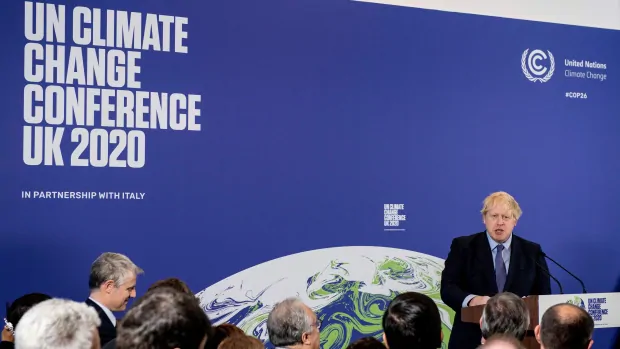
UN climate summit postponed until 2021 because of COVID-19


This year’s United Nations global climate summit is being postponed because of the coronavirus pandemic, host country Britain said Wednesday.

The U.K. government said the meeting, due to take place in Glasgow, Scotland, in November, will now be held next year at a date still to be determined.

The government said in a statement that “in light of the ongoing, worldwide effects of COVID-19, holding an ambitious, inclusive COP26 in November 2020 is no longer possible.” The meeting is formally known as the 26th Conference of the Parties.

The decision was made by the United Nations Framework Convention on Climate Change, Britain and Italy, which had been due to host some preparatory events.

Scottish First Minister Nicola Sturgeon tweeted that it was a “disappointing decision, but absolutely the right one as we all focus on the fight against .coronavirus.”

Summit venue now a temporary COVID-19 hospital

Glasgow’s SEC Arena, which had been due to host the event, has been named as the site of a temporary hospital for COVID-19 patients.

Prime Minister Boris Johnson has made tackling climate change a priority, but Britain’s tenure at the helm of the conference got off to a bumpy start even before the coronavirus pandemic. In January, Johnson fired Claire O’Neill, a former British government minister appointed last year to head the event, and replaced her with Business Secretary Alok Sharma.

“We will continue working tirelessly with our partners to deliver the ambition needed to tackle the climate crisis and I look forward to agreeing a new date for the conference,” Sharma said Wednesday.

Patricia Espinosa, who heads the U.N. climate office, said the new coronavirus “is the most urgent threat facing humanity today, but we cannot forget that climate change is the biggest threat facing humanity over the long term.”

U.N. Secretary-General Antonio Guterres stresses that safeguarding lives “is our foremost priority” but countries must step up action on climate change especially as they recover from the COVID-19 pandemic, U.N. spokesman Stephane Dujarric said.

“Countries must work to protect the health of people, and the planet has never been more at risk,” the U.N. chief’s spokesman said. “Solidarity and greater ambition is needed now more than ever to transition to a sustainable, resilient low carbon economy that limits global warming to 1.5 degrees Celsius.”

The meeting in Glasgow would have been held five years after the 2015 Paris climate accord was agreed. Countries that signed the landmark agreement are still expected to provide an update on their efforts to reduce greenhouse gas emissions driving global warming.

In the Paris Agreement, countries agreed to limit global warming to 2 degrees Celsius and do their best to keep it below 1.5 degrees C by the end of the century, compared with pre-industrial times.

President Donald Trump has triggered the United States’s withdrawal from the Paris accord, a move that formally comes into force in November. His Democratic rivals have said they would rejoin if elected.

Environmental activists agree

Environmental campaigners said postponing this year’s U.N. talks was the right move.

“It doesn’t make sense to bring people from every country together in the middle of a pandemic,” said Mohamed Adow, a longtime participant at U.N. climate meetings who heads the think-tank Power Shift Africa.]

Adow said postponing the conference mustn’t stop countries from taking action to curb global warming, though, and suggested plans to revive economies after the pandemic ends should avoid propping up the kinds of industries that contribute to climate change.

“Economies in the rich north must not be kick-started with dirty investment that will lead to climate suffering in the global south,” he said.

Environment officials are planning to hold a lower-level meeting online at the end of April.


Source link

Categories
Tech

Losing senses of taste, smell are diagnostic COVID-19 symptoms, study suggests


Losing your sense of smell and taste may be the best way to tell if you have COVID-19, according to a study of data collected via a symptom tracker app developed by British scientists to help monitor the pandemic caused by the new coronavirus.

Almost 60 per cent of patients who were subsequently confirmed as positive for COVID-19 had reported losing their sense of smell and taste, the data analyzed by the researchers showed.

That compared with 18 per cent of those who tested negative. Loss of taste and smell had previously been reported as a symptom that could be used for screening people for the disease.

These results, which were posted online but not peer-reviewed, were much stronger in predicting a positive COVID-19 diagnosis than self-reported fever, the researchers at King’s College London said.

Of 1.5 million app users between March 24 and March 29, 26 per cent reported one or more symptoms through the app. Of these, 1,702 also reported having been tested for COVID-19, with 579 positive results and 1,123 negative results.

Symptom means you should self-isolate

Using all the data collected, the research team developed a mathematical model to identify which combination of symptoms — ranging from loss of smell and taste, to fever, persistent cough, fatigue, diarrhea, abdominal pain and loss of appetite — was most accurate in predicting COVID-19 infection.

“When combined with other symptoms, people with loss of smell and taste appear to be three times more likely to have contracted COVID-19 according to our data, and should therefore self-isolate for seven days to reduce the spread of the disease,” said Tim Spector, a King’s professor who led the study.

Spector’s team applied their findings to the more than 400,000 people reporting symptoms via the app who had not yet had a COVID-19 test, and found that almost 13 per cent of them are likely to be infected.

This would suggest that some 50,000 people in Britain may have as-yet unconfirmed COVID-19 infections, Spector said.

Official figures showed confirmed cases rose 14 per cent in Britain between Monday and Tuesday to 25,150 as of Tuesday at 8 a.m. GMT. The government said 1,789 people have died in hospitals from coronavirus as of 4. p.m. GMT on Monday.


Source link