Categories
Tech

Germ-zapping robots: Your COVID-19 questions answered


We’re breaking down what you need to know about the pandemic by answering your questions. You can send your questions via email at COVID@cbc.ca and we’ll answer as many as we can. We’ll publish a selection of answers every weekday on our website, and we’re also putting some of your questions to the experts on the air during The National and News Network.  

So far we’ve received more than 20,000 emails from all corners of the country, including a number of questions about whether the virus can be transmitted through your ears, and how UV light could be harnessed to clean personal protective equipment (PPE) including this question from Laurie D. 

Does ultraviolet light destroy the virus? Can it be used on PPE?

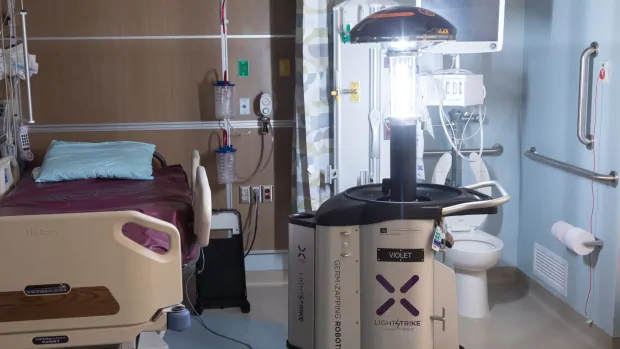
Sunlight emits three types of Ultraviolet (UV) radiation, but only one type, called UVC radiation, has the power to kill viruses. UVC is filtered out by the earth’s atmosphere, but scientists discovered how to artificially generate UVC to destroy microorganisms back in 1878.  UVC is now being used to disinfect a lot of different things including drinking water, laboratory equipment and hospitals, where some health-care facilities hard hit by COVID-19 are deploying high-tech UV light robots to zap germs.

But it’s not clear whether UVC tech can be used to disinfect PPE. A spokesperson for Xenex Disinfection Services, which manufactures germ-zapping robots, told CBC News some hospitals are using their LightStrike robots to disinfect N95 respirator masks so they can be reused.

“We are absolutely humbled to be in a position to help in the United States and across the globe,” said company spokesperson Irene Hahn.

Ron Hofmann, president of the International Ultraviolet Association and an expert in the use of UV light to treat water, said “we’re figuring things out on the fly.” He said new information is arriving “almost daily as we try to determine how to reuse the N95 respirator masks and other critical PPE that was never designed to be reused.”

Other experts agree this is new territory in the fight against COVID-19. Bill Anderson, a chemical engineering professor at the University of Waterloo, said “since PPE differs in materials, sizes, shapes, there will always be a little uncertainty about disinfection.” Another challenge is figuring out how to get UV light into all the little crevices and shadows in the interior of PPE where particles of the virus could be hiding, he said. 

Health Canada is monitoring how single use medical devices such as N95 masks could be safely reused during the COVID-19 pandemic. 

Here is a list of approved hard surface disinfectants for use against COVID-19. Remember, frequent hand washing with soap and water for at least 20 seconds is your best protection against the virus.

How do the doctors anticipate we return to a new normal?

Weeks have passed since the Canadian government and health officials began encouraging physical distancing and isolation measures. Canadians, including Dave B., are starting to wonder what’s next. How do we return back to our regular lives and what does that look like?

Dr. Michael Curry, an emergency room doctor at Delta Hospital in Vancouver and a professor at the University of British Columbia, predicts we’ll return to “a new normal” gradually, dubbing the process a “phased return.”

However, he explains that two variables will impact how those phases are carried out: antibody testing and a vaccine.

Antibody testing “may let us know who has been exposed to it and presumably may be immune to the COVID infection,” said Dr. Curry. This could be valuable information when deciding who is able to return to work first.

Dr. Curry also mentions the prospect of a vaccine, which right now is estimated to be released in 2021.

“Good antibody testing showing immunity or a vaccine would change those [phased return] plans dramatically.” 

You can watch more of Dr. Michael Curry’s answers on The National here:

Doctors answer your questions about the coronavirus, including if there’s any way of knowing how many asymptomatic people could be walking around when only symptomatic people are being tested.  4:20

Do you believe there will be a vaccine?

On the subject of vaccines, here’s a question from Renee answered on CBC News Network’s Morning Live with Heather Hiscox.

Dr. Isaac Bogoch, infectious disease specialist at the University Health Network, said he is confident there will be a vaccine. 

“I really always bet on human ingenuity.”

He says there are currently more than 40 “very qualified research groups and vaccine-specific groups” working on the development of the vaccine using a variety of methods. Some have started human trials. 

So will a vaccine be ready in 12-18 months? Dr. Bogoch couldn’t confirm. “Your guess is as good as mine … but hopefully it’s sooner rather than later.” 

Can the virus go through your ears?

By now, you’ve probably heard it a hundred times: Avoid touching your face because contaminated hands can spread the virus to your mouth, eyes or nose. But Joseph T. sent us an email wondering whether the virus can be transmitted through the ears. Here’s what we know:

A COVID-19 infection occurs when droplets containing the virus make contact with a mucosal membrane — the soft linings on our eyes, nose, mouth and elsewhere — including in the inner lining of our middle ears, which connects to the nose and mouth. 

However, it would be unlikely coronavirus droplets could enter through that lining, said Dr. Raiyan Chowdhury, a critical care and ears, nose, throat specialist. 

He said the ear has various defences that shield it from viruses; the ear canal and the ear drum protect the mucosal membrane. Ear wax also acts as a natural barrier. All these defences would have to fail, or there would have to be a hole in the eardrum, for the coronavirus to enter the ear’s inner lining, he said.

“It is far more likely that a droplet would enter through your eyes, nose or mouth rather than  through a hole in your ear drum.”

And if you are feeling squeamish about using your earbuds, he said it is not risky unless you’re sharing them with other people. 

“The earphones could then act as a vector to someone else using them. If they happened to touch the ear phones and get droplets on their hands, they could then easily have it move to their eyes, nose, or mouth if they touched their face.”

Can using ibuprofen make symptoms of COVID-19 worse and start pneumonia?

This question comes from Terry M. 

Right now, experts say COVID-19 patients can treat fever with ibuprofen and other drugs, despite previous confusion on their effects. The World Health Organization has clarified that advice stating there’s no evidence to suggest using ibuprofen to manage symptoms of COVID-19 will worsen the condition, compared to using Tylenol and other acetaminophen products, for example. You can read more about that here.

We’re also answering your questions every night on The National. Last night, your questions included, how to manage stress and loneliness during the COVID-19 pandemic. Watch here:

Doctors answer viewer questions about mental health during the COVID-19 pandemic, including what could be causing sleep issues. 3:48

Friday we answered questions about how to celebrate Easter and Passover during the pandemic. Read here.

Keep your questions coming by emailing us at COVID@cbc.ca.


Source link

Categories
Tech

Fire raging near Ukraine's Chornobyl poses radiation risk, activists warn


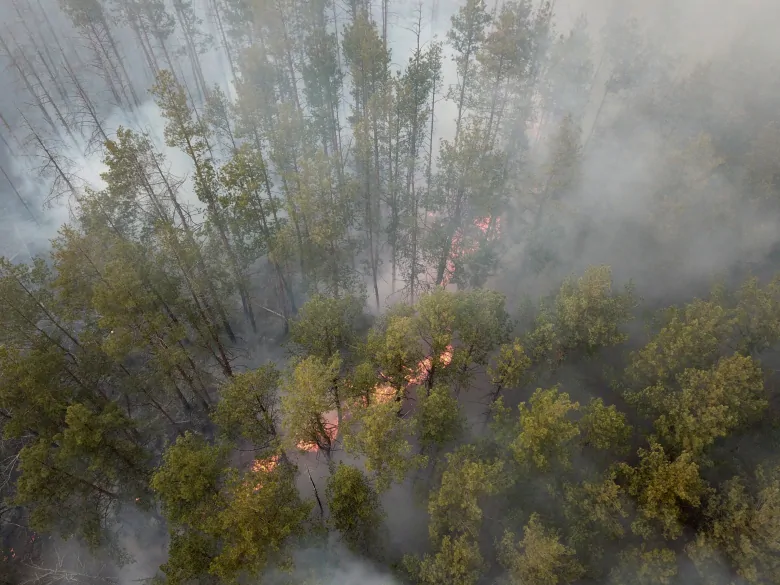
A huge forest fire in Ukraine that has been raging for more than a week is now just one kilometer from the defunct Chornobyl nuclear power plant and poses a radiation risk, Greenpeace Russia warned on Monday, citing satellite images.

Ukraine’s Emergency Situations Service said it was still fighting the fires, but that the situation was under control.

Video footage shot by Reuters on Sunday showed plumes of black smoke billowing into the sky and trees still ablaze, with firefighters in helicopters trying to put out the fires.

Aerial images of the 30-kilometre exclusion zone around the plant, site of the world’s worst nuclear accident in 1986, showed scorched, blackened earth and the charred stumps of still smoldering trees.

The Emergency Situations Service said radiation levels in the exclusion zone had not changed and those in nearby Kiev, the Ukrainian capital, “did not exceed natural background levels.”

Burned trees are seen after a forest fire outside the settlement of Poliske located in the 30-kilometre exclusion zone around the Chornobyl nuclear power plant on Sunday. (Reuters)

Greenpeace Russia said the situation is much worse than Ukrainian authorities believe, and that the fires cover an area one thousand times bigger than they claim.

On April 4 Ukrainian authorities said the blaze covered an area of 20 hectares, but Greenpeace cited satellite images showing it was around 12,000 hectares in size at that time.

“According to satellite images taken on Monday, the area of the largest fire has reached 34,400 hectares,” it said, adding that a second fire, stretching across 12,600 hectares, was just one kilometre away from the defunct plant.

Ukrainian officials did not immediately respond to a request for comment on those claims.

Rashid Alimov, head of energy projects at Greenpeace Russia, said the fires, fanned by the wind, could disperse radionuclides, atoms that emit radiation.

A forest fire is seen burning in a photo taken from the roof of the Chornobyl nuclear power plant on Friday. (Ukrainian Police Press Office via AP)

“A fire approaching a nuclear or hazardous radiation facility is always a risk,” Alimov said. “In this case we’re hoping for rain tomorrow.”

Chornobyl tour operator Yaroslav Yemelianenko, writing on Facebook, described the situation as critical.

He said the fire was rapidly expanding and had reached the abandoned city of Pripyat, two kilometers from where “the most highly active radiation waste of the whole Chornobyl zone is located.” He called on officials to warn people of the danger.

Satellite images taken by NASA Worldview and seen by Reuters showed the two fires had extended far into the exclusion zone.

A Geiger counter shows increased radiation levels against the background of a forest fire burning in the exclusion zone around the Chornobyl nuclear power plant on April 5. (Yaroslav Yemelianenko/Associated Press)

The fires, which follow unusually dry weather, began on April 3 in the western part of the exclusion zone and spread to nearby forests.

Police say they have identified a 27-year old local resident who they accuse of deliberately starting the blaze.

It remains unclear if the person, who has reportedly confessed to starting a number of fires “for fun,” is partly or fully responsible.


Source link

Categories
Tech

Biodiversity loss and wildlife trade are making pandemics like COVID-19 more likely, experts say


In Brazil, wide swaths of rainforest are being decimated for logging and farmland. In Asia, animals are being collected in the wild and sold in markets. In Africa, some animals are hunted down to near-extinction for their so-called medicinal qualities.

Meanwhile, in countries like Canada and the U.S., some natural habitats are being overtaken by dense, large-scale farming practices.

Experts believe this kind of destruction of our natural habitat is paving the way for emerging infectious diseases like COVID-19.

“The loss of biodiversity absolutely plays a role in the emergence of new diseases,” said Felicia Keesing, an ecologist and professor of biology at Bard College, in Annandale-on-Hudson, N.Y.

Keesing, a researcher on emerging diseases and nature, explained that when biodiversity declines — particularly as a result of habitat loss — it doesn’t do so in a random way; certain kinds of species are more likely to disappear than others.

“The ones that tend to thrive after biodiversity declines are the ones that are also most likely to give us new diseases,” Keesing said.

‘Spillover events’

When zoonotic diseases — those that move from a non-human animal to humans — cross over, it’s referred to as a “spillover event.” 

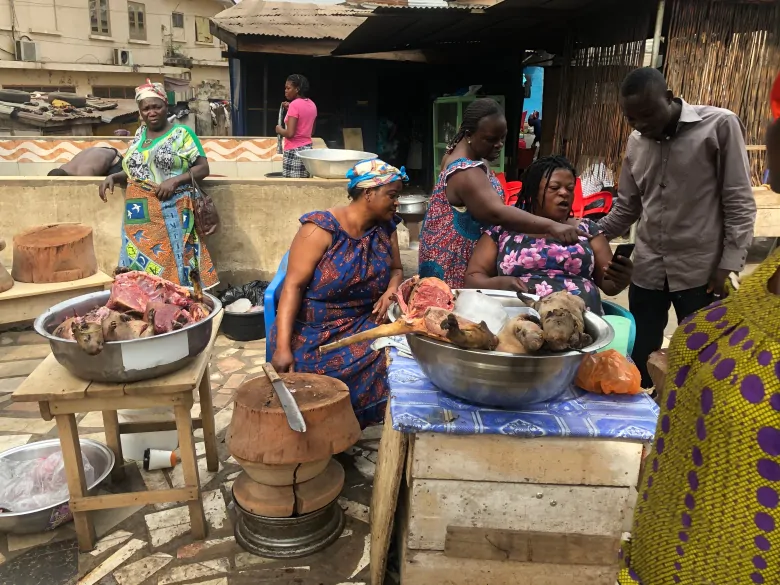
At so-called wet markets around the world, like this bushmeat market in Ghana, live animals are sold alongside dead ones. (World Animal Protection)

These spillover events are nothing new. Take the plague, for example, which likely originated in rats, though recent research suggests that it was spread by fleas. Then there’s rabies and Marburg.

These events typically move from mammals to humans. The novel coronavirus, which causes the disease COVID-19, has been traced back to a wildlife market in Wuhan, China, the centre of the outbreak. Some hypothesize that it originated in a bat.

WATCH | Where the novel coronavirus came from

It started with animal to human transmission. But the novel coronavirus is now spreading between people. 0:25

However, that doesn’t mean the bat was in the market itself. The virus could have moved from a bat to another animal that acted as an intermediate host. Someone could have contracted the virus in the wild while collecting animals for market and brought it to the market, where it rapidly spread.

“Likely there had been an intermediate host — that [the virus] didn’t [come] directly from the bat to humans,” said Sandra Junglen, leader of the working group Ecology of Emerging Arboviruses at the Institute of Virology, Charité University Medicine Berlin. “And maybe there was a civet cat or … a raccoon dog.” 

Markets are a ‘high-risk contact zone’

These so-called wet markets aren’t limited to China.

“Wet markets are, in a variety of different forms, very normal around Asia, generally … in South Asia, but certainly all over Southeast Asia, Indonesia, Malaysia, Thailand and elsewhere,” said Kai Chan, a professor at the Institute for Resources, Environment and Sustainability at the University of British Columbia. “It’s by no means a Chinese phenomenon.”

Keesing said these markets are a recipe for virus transmission. 

“This is creating a really high-risk contact zone between humans and wildlife, because … you’re basically creating a new ecological community that doesn’t exist anywhere in nature.”

An issue of density

Keesing said that when we disrupt natural habitats, either by cutting them down or removing some of their creatures, it’s the smaller, hardier animals that tend to survive.

They can move into areas with high human populations and transmit disease, such as rabies. She cited the example of mice and rats. 

If an animal’s habitat is destroyed, it tends to come into closer contact with humans – like rats in cities. (iStock)

“There’s a reason they thrive in degraded, low-biodiversity cities,” she said. “They’re really good at being scrappy.”

Density also plays an important role. Many large-scale farming operations butt up against forests where there could be a particular virus or pathogen.

“A high density of livestock is a challenge, because if a pathogen does jump from the forest into those livestock, it can spread very readily,” Keesing said. “Pathogens spread much better when their hosts are at high density. That’s what COVID is doing right now.”

Virus a result of ‘what we’re doing to nature’

In May 2019, the Intergovernmental Science-Policy Platform on Biodiversity and Ecosystem Services (IPBES) released a report that found more than a million species are threatened with extinction

Viruses could potentially pass from the forest to farm animals, one expert said. (Chris Helgren/Reuters)

What the long-term effects of this might be, particularly when it comes to pathogens and the potential for another virus to spill over, is uncertain. But scientists studying the relationship between pathogens and epidemics know it’s unlikely COVID-19 will be the last disease brought about by the destruction of nature.

“This is about what we’re doing to nature, not about what nature is doing to us,” Keesing said.

“If this isn’t a wake-up call for how small the planet really is and how much we need to care for each other and it, I don’t know what is.”


Source link

Categories
Tech

Poor planning for COVID-19 rings economic warning bell for climate: Don Pittis


Now that the COVID-19 threat is upon us, scientists and innovators are pulling out the stops to find ways of coping. That rush of invention is no surprise to historians — not just of science, but economics, too.

In the 1620s, living through the plague inspired economist and polymath William Petty to devise a system to count the cost of future calamity.

Part of the “political arithmetic” he invented includes concepts we use today to try to imagine how much it’s worth spending now to prevent something worse from happening several years down the road, said Canadian economist Aidan Vining.

Unfortunately, our failure to prepare for an outbreak that epidemiologists have repeatedly warned was coming is a reminder that humans are not very good at thinking themselves into the future.

The climate lesson

Economists I spoke to said that society’s blinkered approach to the future risk of disease provides a lesson for our failure to address the potentially catastrophic effects of climate change. In fact, history shows that the people who do think ahead are often ridiculed.

Vining said that in the 1840s, one follower of Petty’s cost-benefit analysis, Edwin Chadwick, was known as “the most hated man in England,” for promoting public health spending that Chadwick insisted would save lives and improve living conditions for millions.

“Why? Because he wanted to build sewer systems, and the elite were so opposed because of the public spending it would involve,” said Vining, professor emeritus at Simon Fraser University.

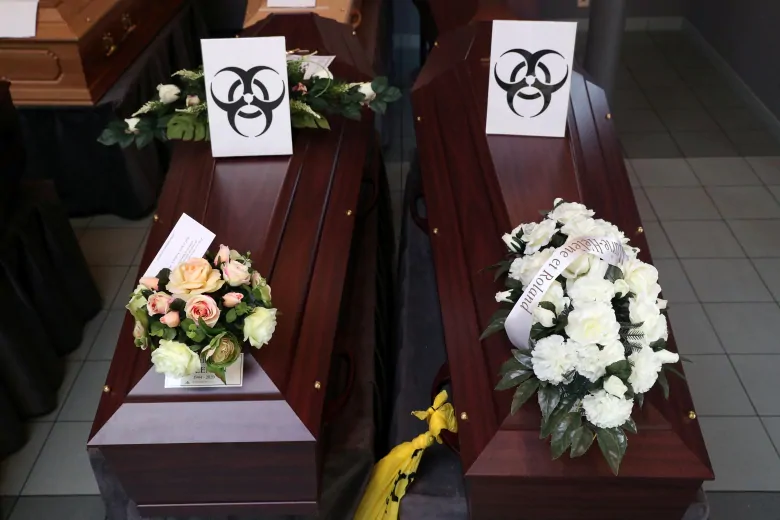
Biohazard warning signs are placed on the coffins of people who died of COVID-19 at a mortuary near the city of Charleroi, Belgium, on April 7. (Yves Herman/Reuters)

As it turns out, Chadwick lived to see his plans put in place, helping to lead the way in a global public health movement that ultimately saved uncounted lives and money.

But apart from people like Chadwick, behavioural economists have shown that even when we know we would benefit from worrying a bit more about our long-term future, humans are hard-wired for short-term thinking.

Brain scans show how deeply ingrained short-termism is, demonstrating that when we think about ourselves in the more distant future, our sense of self fades. There are various theories why, including the idea that as we evolved, immediate survival became the priority.

The price of preparedness

Long before brain scans, economists noted our preference to have something now rather than later, which is one of the justifications for interest rates. You can have that car or house today, but it will cost you — in large monthly interest payments.

In economics, a calculation of something called the social discount rate, an outgrowth of Petty’s political arithmetic, is an attempt to apply interest rates to show how much it is worth spending today to prevent something horrible from happening in the future.

Currently self-isolated in his Huntsville, Ont., home, economist David Burgess said it is pretty clear that no government in the world had invested enough in preparations for the current pandemic.

Despite the lessons of SARS, we did not have stockpiles of essential equipment. Many governments had made tax-saving cuts to medical services and the U.S. was already planning spending reductions at the Center for Disease Control and Prevention.

‘Big bag of uncertainty’

Burgess said that while social discount rate analysis works for deciding how much governments should spend on things like roads or bridges, it may not be appropriate for problems like epidemics and climate change. That’s because the future costs are so difficult to measure in dollar terms.

“It’s just a big bag of uncertainty,” said Burgess.

That hasn’t stopped some economists from trying — in the case of climate change, estimating various amounts for how much is worth spending now to prevent future economic fallout.

Abandoned fishing boats on a dried lake bed in Bolivia stand as a warning of how climate change will lead to mass migration and a devastating loss of food production. (David Mercado/Reuters)

One point of disagreement — including between Burgess and Vining — is the interest rate at which governments should calculate that spending.

But according to economist Carolyn Fischer, who among many other things works with the University of Ottawa’s pro-business Smart Prosperity Institute, another difficulty is calculating the present value of what the World Economic Forum has called the risk of planetary devastation.

In what you might call the asteroid-strike argument, if a potential future plague could lead to complete societal and economic breakdown similar to what happened during the Black Death, it is worth spending a lot to prevent it from happening, even if we cannot be sure if or when it will occur.

Averting a ‘tipping point’

Fischer said the same thing applies to climate change, where temperatures we have never experienced before would cause mass human migration that could overwhelm existing economies. A changing climate could also lead to the loss of food-growing capacity.

“A lot of people worry about us reaching a tipping point,” said Fischer.

Whether due to pandemic disease or climate change, if science tells us that economic ruin is the eventual result, it may be the job of governments to compensate for our natural tendency to worry about the short term and ignore the future.

“I don’t want to lose the message that, yeah, we have a crisis now, but there’s another crisis looming on the horizon,” said Fischer.

“Maybe we can draw some lessons from this one for what happens when you react too late.”

Follow Don on Twitter @don_pittis


Source link

Categories
Tech

Are physical distancing measures giving bikes a new lease on life?


Hello, people! This is our weekly newsletter on all things environmental, where we highlight trends and solutions that are moving us to a more sustainable world. (Sign up here to get it in your inbox every Thursday.)

This week:

  • Are physical distancing measures giving bikes a new lease on life?
  • As energy projects expand worldwide, renewable sources are surging
  • A coronavirus-related drop in global emissions seems like good news — right?

Are physical distancing measures giving bikes a new lease on life?

(Matthew Stockman/Getty Images)

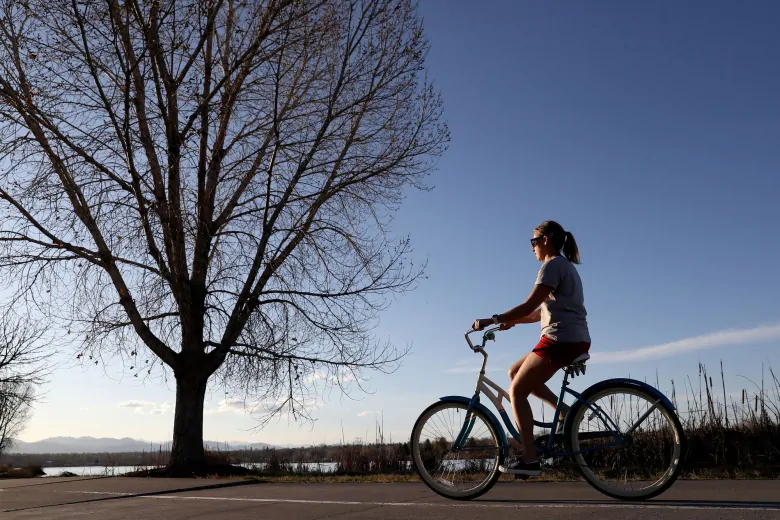
To slow the spread of coronavirus, we’ve had to physically distance ourselves from others, which has meant a lot of lifestyle changes, including the way we get around.

Getting into an enclosed bus or train with other passengers — or even a taxi or ride-hailing service with a driver — is no longer a recommended option. To make matters worse, many transit agencies are cutting back service. Yet many people still have to get to work and medical appointments. 

Meanwhile, we’re being told to stay home as much as possible, but also to get fresh air and exercise (while gyms are closed). An influx of park visitors — many of whom weren’t physically distant enough from each other — has caused governments to close parking lots at national, provincial and local parks.

The solution to this conundrum? In many cases, it’s getting on a bike.

New Yorkers have already done this in droves, with bike shops reporting double the sales they normally get at this time of year. Meanwhile, bike repair shops in the U.K. also say business is booming.

In Canada, so many people are cycling in cities like Winnipeg and Calgary that the municipalities are closing some lanes and roads to vehicles to give cyclists (and pedestrians) more space. Meanwhile, bike shops remain open as many provincial governments have recognized them as an essential service.

Brian Pincott, executive director of Vélo Canada Bikes, a group that promotes cycling and advocates for infrastructure to make the activity safer, said that kind of government support is welcome. 

He noted that many urban, lower-income people don’t have other good transportation options right now.

“So it is also a matter of equity to be able to have the appropriate infrastructure in place for people to actually go about their day-to-day [lives],” he said.

The COVID-19 pandemic has inadvertently improved cycling conditions by taking a lot of automobiles off the road. Pincott said the car-centric design of our cities often discourages people from taking a two-wheeler.

“Now that there are a lot fewer cars on the road, more and more people are seeing that cycling is a viable choice,” he said. “It’s a great family activity.”

But will the boost in cycling last after the pandemic is over and physical distancing measures are lifted?

Pincott thinks it depends on whether governments continue to make it safer and easier for people to ride their bikes. He thinks this is a great opportunity for cities to create space for it.

In the meantime, he hopes as the weather gets warmer, people will take advantage of the “perfect time” to get on their bikes.

“It’s impossible not to be happy when you’re getting around on your bike,” he said. “And God knows we need a little bit of happiness.”

Emily Chung


Reader feedback

Last week, we interviewed Tom Rand, author of the new book The Case for Climate Capitalism: Economic Solutions for a Planet in Crisis.

Reader Susan Bates was struck by Rand’s assertion that “when you can articulate a risk appropriately, people will make a sacrifice for the common good. Humans are fundamentally caring and decent.” Bates said that during the COVID-19 pandemic, “the government is articulating the risk appropriately through daily briefings, updated models, news alerts and more.”

“We need a laser-focused communication strategy for climate change in Ontario and Canada, and the response to this COVID pandemic has given us the blueprint.”

Old issues of What on Earth? are right here.


The Big Picture: Renewable energy growth

In 2019, renewable power capacity (including wind, solar, hydro and geothermal) grew by 176 gigawatts worldwide, according to the International Renewable Energy Agency (IRENA). That figure was a shade off the amount of renewable power capacity added in 2018 (179 GW). What’s notable about the 2019 statistics is that of all of the energy capacity added around the globe, 72 per cent of it was renewable, led by solar and wind.

(CBC)

Hot and bothered: Provocative ideas from around the web


A coronavirus-related drop in global emissions seems like good news — right?

(Colin Perkel/The Canadian Press)

The streets of big cities like Toronto, Vancouver and Montreal are empty. Shopping malls are shuttered. Restaurants sit in the dark. This isn’t just the case across Canada, but across the globe. 

Worldwide shutdowns over COVID-19 are having a deep economic impact, but they’re also having an unintended positive outcome: a reduction in carbon dioxide (CO2) emissions.

A decline in CO2 emissions has been observed in China — an estimated 25 per cent — and similar drops are expected in northern Europe, where countries like Italy have been under lockdown for more than a month. But it’s a drop in the bucket, scientists say.

That’s because of two main factors: one, there’s a difference in CO2 emissions and atmospheric concentrations of CO2; and two, any declines are expected to be short-lived.

Global warming “is still trying to catch up to the increased levels of greenhouse gases that are now in the atmosphere. And they will be catching up for many years,” said Deke Arndt, climate monitoring chief at the National Oceanic and Atmospheric Administration’s National Centers for Environmental Information. 

“Short-term variances or short-term departures from the trend, even in the downward sense … don’t reverse what we’ve seen and what we will continue to see for years to come.”

Katharine Hayhoe, a Canadian climate scientist at the Texas Tech University Climate Science Center, stressed that the amount that CO2 emissions decline in the current period will barely be noticeable in the longer term. That’s because of existing CO2 concentrations.

“Atmospheric CO2 is the cumulative effect of all of our emissions over decades to centuries,” she said. “Imagine if you were putting a block on a pile, and you’d been doing that every single month for 300 years, and then you don’t put a block on the pile, and you say, ‘Oh, there’s a big difference in the pile.’ But the naked eye can’t even see that difference. So that’s the difference between concentrations versus emissions.”

Another factor to consider is that the reduction in CO2 emissions likely won’t last — once cities or countries lift their lockdowns, industries will potentially ramp up production in an effort to overcome their financial losses. Indeed, that effect has already been observed in China. 

As well, though other parts of the world — including Canada — might see a drop in emissions during lockdowns, it may not be quite as dramatic as what was observed in China. 

Glen Peters, research director at Norway’s Center for International Climate Research, predicts that year-on-year emissions will drop in 2020, “but I would add a very large uncertainty around that.”

“The biggest challenge is that we are only one-quarter of the way into the year, and we have to make big assumptions about what happens for the next nine months of the year.”

Even if emissions were to go down a whopping 50 per cent in 2020, if they went back up to pre-COVID-19 levels, it would have “virtually no effect on climate.”

— Nicole Mortillaro


Stay in touch!

Are there issues you’d like us to cover? Questions you want answered? Do you just want to share a kind word? We’d love to hear from you. Email us at whatonearth@cbc.ca.

Sign up here to get What on Earth? in your inbox every Thursday.

Editor: Andre Mayer | Logo design: Sködt McNalty


Source link

Categories
Tech

What national COVID-19 modelling can tell us — and what it can't


Forecasting the future is never easy. When the forecast involves a pandemic’s effects on the world’s population and its economy, the stakes couldn’t be higher.

That’s why the COVID-19 modelling the federal government is presenting this morning needs to be read with an understanding of what these models can — and can’t — tell us.

CBCNews.ca will have full coverage of the government’s briefing on its modelling at 9 a.m. ET.

The projections that governments across the country are relying on now are imperfect but still important, because they allow those governments to assess their capacity to handle the spread of the virus, explain the reasons behind restrictive preventative measures and prepare for the future.

The number of COVID-19 cases and related deaths around the world continues to grow. In Canada, we’re still talking about relatively low numbers — about 20,000 confirmed cases and 500 deaths — but the experience of other countries shows us that where we are today is not where we will be tomorrow.

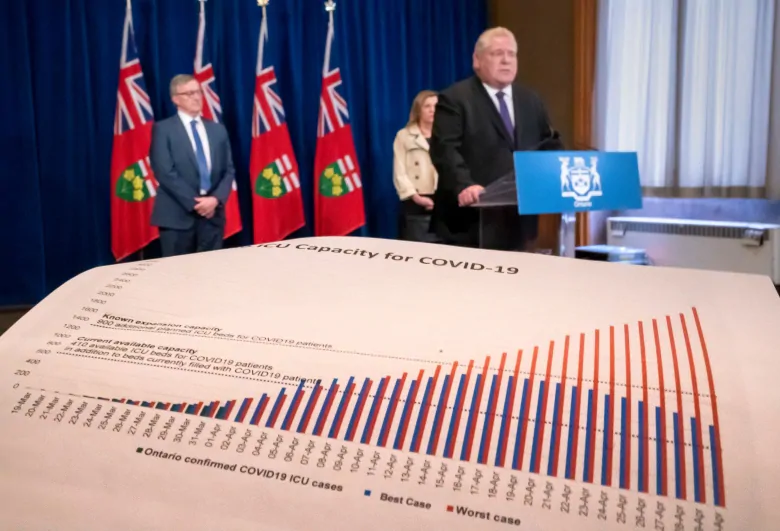
The short-term projections recently published by Ontario, Quebec and Alberta offered stark descriptions of what that could mean for Canada. Ontario estimates the number of deaths in the province by the end of this month could be 1,600. Quebec puts their lowball estimate of deaths by that point at just under 1,300 while Alberta estimates between 400 and 3,100 deaths by the end of the summer.

Extrapolating the Ontario, Alberta and Saskatchewan long-term models to the entire country — the three had similar numbers on a per capita basis — suggests that without any restrictive measures in place, the total toll from the coronavirus pandemic in Canada would be about 14 million infections and nearly 300,000 deaths.

That’s about the same as the total number of deaths in Canada every year from all causes.

These are the kinds of numbers that can concentrate the mind. Premiers Jason Kenney of Alberta and Doug Ford of Ontario have used them to justify the measures their governments have put in place — and to alarm people into taking those measures seriously.

But they also come with a lot of important caveats.

There are significant challenges involved in modelling the future that apply to all situations, from weather patterns to elections to pandemics. Models use existing data to make reasonable estimates of what could happen going forward, taking into account the relationship between different factors and how one thing affects another.

In the case of the COVID-19 pandemic, that means tracking the mortality rate of the disease, how quickly it can spread and what impact physical distancing and other measures have had on that spread — among many other factors.

Inconsistent data, uncertain forecasts

There is a limited amount of data with which to work. Models rely on how the virus has spread in this country, how it has spread in other countries and what has happened in past outbreaks of similar diseases.

But the numbers that do exist are inconsistent. The federal government needs to aggregate information from provincial health systems that compile it in different ways. For example: both Ontario and Saskatchewan have projected a best-case scenario death toll of about 3,000 people in their provinces — even though Ontario has 12.5 times the population of Saskatchewan.

This inconsistency extends to the data coming in from other countries. Those numbers are further complicated by the many differences between societies and the measures each country has taken to slow the spread within their borders (though Canada does benefit from being earlier in the cycle of the outbreak, giving it an opportunity to learn from other countries’ experiences).

Last week, Ontario Premier Doug Ford had his province’s COVID-19 projections published. They showed an estimate of 1,600 deaths from the disease by the end of April. (Frank Gunn/The Canadian Press)

Each of these complications adds another level of uncertainty to the projections and increases the risk that the assumptions made by any model turn out to be wrong.

That potential grows greater the further into the future a model extends. Speaking in French on Monday, Horacio Arruda, Quebec’s director of public health, said any forecasts extending beyond April 30 amount to “astrology.”

Projections of what will happen in the next week or two should be fairly accurate. It’s harder to predict what the situation will look like in May. It’s even harder to know what to expect over the summer. It’s like a game of “telephone” — errors pile up the longer the game goes on.

The first case of COVID-19 anywhere can be traced back to late last fall. That means no country has grappled with this virus for more than six months. So telling people where we’ll be this winter, or next year, can amount to little more than an educated guess; the patterns of past viral outbreaks might not apply to this one.

Uncertainty not a reason for doubt

Every model, no matter what it’s trying to forecast, comes with a great deal of uncertainty. It can’t be avoided. Indeed, there is every reason to doubt a model that has too much confidence in its forecasts.

So when you see wide ranges in forecasted outcomes, don’t regard that as a flaw in the model. It simply shows that there’s a lot we still have to learn and the choices we make will have an impact on those outcomes.

“Every prediction, every model shows us a great variability, depending on the actions that we take as individuals, as a society,” Prime Minister Justin Trudeau said Monday in French.

It’s very possible that the final death toll will be very different from the projections. If that happens, it won’t mean that the models were badly designed. While much depends on the assumptions the models make about the lethality of the virus, much also will depend on how effective the physical distancing measures are, and how closely people follow them.

“These numbers are not a done deal,” Kenney said in a broadcast to Albertans on Tuesday. “I want, instead, for Albertans to see them as a challenge, perhaps the greatest challenge of our generation. Those numbers are not inevitable. How this actually plays out … all of that depends on us and our choices.”

‘Better for me to have a forecast that is not perfect’

When the pandemic is behind us, there will be no awards given for the most accurate forecasts.

On Monday, Arruda said his experts were telling him “‘don’t announce anything, Horacio, they will cut your head off if you don’t have the right numbers.'” The health officials who presented Quebec’s forecasts on Tuesday were cautious and would make no projections beyond the end of April.

There is certainly a risk involved in making projections in the midst of a pandemic. But whether the projections turn out to be accurate later matters less than whether the models made reasonable assumptions with the best information available — because governments are using them to inform their decisions.

Public health numbers are shown on a screen as Deputy Chief Public Health Officer Howard Njoo listens to Chief Public Health Officer Theresa Tam speak during a news conference on Monday. (Adrian Wyld / Canadian Press)

The modelling released by British Columbia provides a practical example of this. It was focused not on future cases or fatalities, but rather on how many beds in intensive care units would be needed under various scenarios. That allowed the government to determine the likelihood that its health care system would be overburdened and decide what needs to be done in advance to prevent that from happening.

This sort of modelling gives governments the information they need to assess their stock of medical equipment, such as ventilators and masks. It provides an estimate of how long the economy will need to be shut down and how much financial support people will need.

There’s no way of coming to these kinds of conclusions without making some assumptions about what is likely to happen next.

“Better for me to have a forecast that is not perfect than not to have any forecast,” Quebec Premier François Legault said on Monday.

It’s not a prediction — it’s a reference point

“[Models] always describe a range of possibilities and these possibilities are for planning purposes,” Theresa Tam, Canada’s chief public health officer, said on Saturday. “They’re not actual crystal balls or real numbers.”

What goes into these models is supremely important and they need to be constantly updated. As more information becomes available, the forecasts will become more accurate. The numbers will fluctuate both because of new insights into COVID-19 and the actions taken by individuals.

The results act as a reference point for future decision-making, helping policymakers determine the efficacy of the measures they’ve put in place and decide when they can be safely ended. Those determinations might differ from one region or province to the next — and how lifting pandemic measures in one jurisdiction will affect its neighbours is yet another consideration for the models to incorporate. This is complicated stuff.

The numbers can be scary — particularly the worst-case scenarios — but they explain why governments have been willing to ask for tremendous sacrifices from Canadians. They’re still just estimates. The future can be forecast but it is not yet written.


Source link