Categories
Tech

'We have a whole globe to protect': Pandemic vaccine research speeds up


At least 70 research teams, including some in Canada, are racing to develop potential pandemic vaccines within a year — an accelerated pace in an unprecedented search for an end to humanity’s lockdowns.

So far, the number of vaccine developers that have shifted from lab studies in animals to early-stage clinical trials in human volunteers can be counted on one hand. But scientists are hopeful they can speed up the research and bypass some of the usual red tape that slows down the vaccine approval process.

In a pandemic, no one has immunity to the virus because it is new. The goal of a vaccine is to expose our immune system to part of the virus so our antibody fighters can prepare to attack the virus that causes COVID-19.

Dr. Scott Halperin, of the Canadian Immunization Research Network, said it’s important to have multiple versions of the vaccine that achieve the same purpose but work in different ways.

“Hopefully there’ll be five, six, seven, eight successful vaccines, because we have a whole globe that we need to protect,” the Halifax-based physician and researcher said. 

The first phase of clinical trials focuses on safety, with about 30 to 50 volunteers testing out different doses of shots.

A critical next step is Phase 2 trials in a larger number of people to look for signs that the jabs meet the goal of protecting against infection.

China’s CanSino Biologics is beginning the second phase of testing a vaccine candidate, adapted from the company’s Ebola research, according to China’s Ministry of Science and Technology. Another vaccine candidate is in Phase 1.

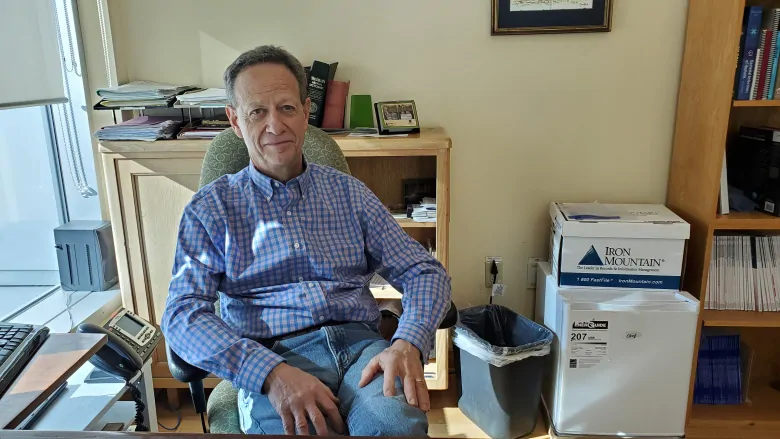
Normally, it takes up to 10 years to go from the vaccine lab to the arms of patients, says Dr. Scott Halperin, of the Canadian Immunization Research Network. (Brooklyn Currie/CBC)

In the U.S., Pennsylvania-based Inovio Pharmaceuticals began a Phase 1 trial last week of its vaccine candidate that uses the DNA sequence extracted from the key spike protein of SARS-CoV-2, the virus that causes COVID-19.

The idea is to train the person’s immune system to seek out the telltale crown, or corona of spikes that gives the coronavirus its name.

“It’s like an FBI poster,” said Inovio’s president and CEO, Andrew Kim. “Anytime you see any signature, something that looks like this spike, go pounce on that with the full force of your immune system.”

The big ‘if’

Earlier this week, the first person received a second dose of another potential U.S. vaccine from the National Institutes of Health (NIH) and Massachusetts-based biotech company Moderna Inc.

NIH infectious disease chief Dr. Anthony Fauci told The Associated Press there are “no red flags” so far and he hoped the next, larger phase of testing could begin around June.

If SARS-CoV-2 continues to circulate widely into fall, it might be possible to complete larger trials in human volunteers sooner than the 12 to 18 months he originally predicted.

“Please let me say this caveat: That is assuming that it’s effective. See, that’s the big ‘if,” Fauci said. “It’s got to be effective and it’s got to be safe.”

A potential vaccine from researchers at the University of Oxford in the U.K. is also listed as Phase 2, although doses for the trial are still being made.

Normally, it takes from seven to 10 years to go from the lab to the arms of patients, Halperin said. 

“What’s mainly being accelerated are the various administrative steps, not the safety steps,” he said.

WATCH | What mathematical simulations tell us about how the pandemic will play out

What mathematical simulations tell us about how the COVID-19 pandemic will play in the real world. 5:04

Halperin said Canadian researchers hope to have some potential vaccines in clinical trials within the next four to six weeks.

Jonathan Kimmelman, a biomedical ethics professor at McGill University in Montreal, is watching how both scientific and ethical standards are maintained while the pandemic vaccine trials progress at breakneck speed.

“My concern is that, in the fear and in the haste to develop a vaccine, we may be tempted to tolerate less than optimal science,” Kimmelman said. “That to me seems unacceptable. The stakes are just as high right now in a pandemic as they are in non-pandemic settings.”

To show how long the process can take, Kimmelman points to the example of the ongoing search for an effective HIV vaccine that began in the 1990s

Before healthy people worldwide receive a vaccine against SARS-CoV-2, the risk/benefit balance needs to tip in favour of the vaccine’s efficacy in offering protection over the potential risks, he said. The balance still exists even in the face of a virus wreaking an incalculable toll on human health and society.

Source link

Categories
Tech

Canadians value science, medical advice over economic factors in COVID-19 response: York U study


Elected officials should lean heavily on scientific evidence and advice from doctors to maintain the trust of Canadians during the COVID-19 pandemic, according to a new public opinion study.

A nationwide survey conducted by York University’s department of disaster and emergency management asked Canadians about the social impacts of the novel coronavirus.

The survey found that 82 per cent of Canadians believe scientific evidence should influence government decisions, while another 78 per cent said advice from doctors should be strongly considered.

Economic considerations placed “a distant third,” according to lead researcher Eric Kennedy, with just 48 per cent of Canadians listing the economy as one of the factors the government should consider. Respondents were allowed to choose up to three answers to the query.

“What they’re sending as a message pretty clearly is this notion that medical doctors and scientific evidence should be driving the response,” said Kennedy, an assistant professor of emergency management at York University.

“That’s a good sign and I think it speaks to the character of the country.”

The survey was completed by 2,029 Canadians between March 20 and April 12.

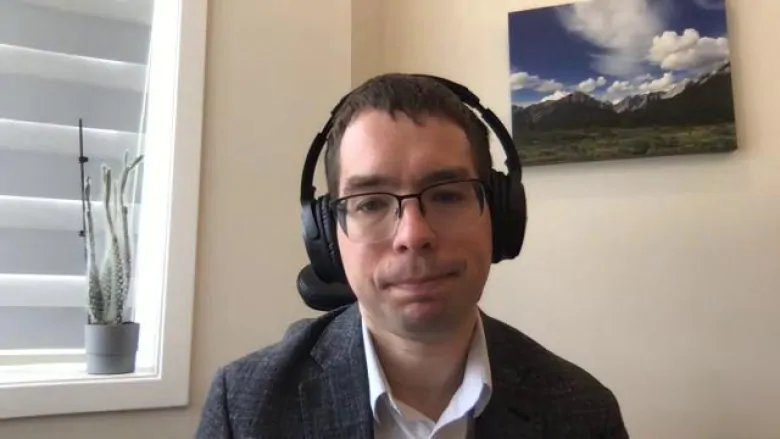
Lead researcher Eric Kennedy, an assistant professor who teaches emergency management at York University, says he’s reassured by the trust in science displayed in the survey results. (Zoom)

Promoting science may lead to improved public buy-in

While a strong majority of respondents pointed to scientific evidence and medical advice as the primary factors that should drive government interventions, the responses differed significantly when Canadians were asked what they think is actually driving policy.

Fifty-six per cent said they believe economic considerations are affecting decision making, while 53 per cent said they believe the government is prioritizing scientific evidence and medical advice.

In other words, nearly a third of Canadians (29 per cent) do not believe that science and medical advice are among the top three factors in government decision making, but that those factors ought to be more strongly considered.

With some forms of restrictions expected to continue into the foreseeable future, Kennedy said governments can help ensure public buy-in by stressing that scientific evidence and medical advice are the foundation for their policies, not politics or even the economy.

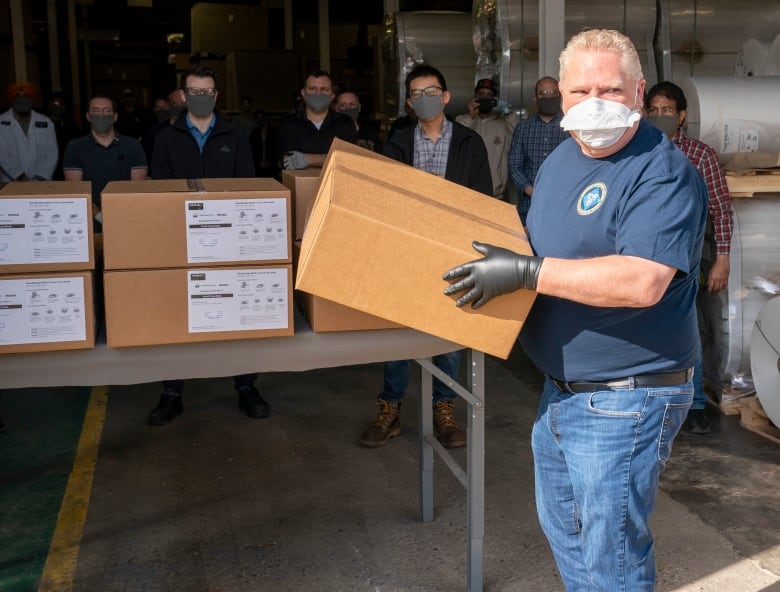
Ontario Premier Doug Ford says a potential resurgence of the coronavirus is his ‘biggest fear,’ and has promised to carefully restart Ontario’s economy. (Frank Gunn/The Canadian Press)

Ontario Premier Doug Ford, who came to power on a largely pro-business platform, has said he will wait for “the green light” from chief medical officer Dr. David Williams before restarting the economy.

“You just can’t flick the lights on,” Ford said on Monday, while citing polling that jobs and the economy are, in fact, the top priority for Ontarians.

“I just want to make sure we do it properly, cautiously and not just jump into this and open up the floodgates,” he said. “I think it would be irresponsible.”

New challenges in the summer

The York University study also found what Kennedy calls “broad public support” for existing interventions, but he noted that frustrations may emerge as the pandemic wears on.

The summer, he said, could pose new challenges as people become increasingly eager to leave their homes and spend time outdoors.

York University plans to continue distributing the survey and conducting interviews to gauge how the public’s perception of the crisis evolves.

“The big thing we’ll be looking for is how the frustrations ebb and flow over the months ahead,” Kennedy said.

Other findings of the survey include:

  • 94 per cent agreed that “getting sick with the coronavirus can be serious.”

  • 23 per cent agreed they “would probably get sick with the coronavirus.”

  • 44 per cent reported negative changes to their employment.

  • 96 per cent said they were limiting social gatherings.

  • 9 per cent said the Canadian government is exaggerating the risk of the coronavirus.


Source link

Categories
Tech

Scientists spot biggest supernova ever detected


Scientists have observed the biggest supernova — stellar explosion — ever detected, the violent death of a huge star up to 100 times more massive than our sun in a faraway galaxy.

The supernova, releasing twice as much energy as any other stellar explosion observed to date, occurred about 4.6 billion light years from Earth in a relatively small galaxy, scientists said. A light year is the distance light travels in a year, 9.5 trillion kilometres.

It might represent, they added, a type of supernova that until now has only been theorized.

Astrophysicist Matt Nicholl of the University of Birmingham in England said two very massive stars — each about 50 times the sun’s mass — may have merged to make one extremely massive star roughly 1,000 years before the explosion. They had been part of what is called a binary system with two stars gravitationally bound to each other.

The merged star exploded in a supernova, formally named SN2016aps, inside a very dense and hydrogen-rich envelope.

“We found that the supernova was able to become so bright because of a powerful collision between the debris ejected by the explosion and a shell of gas shaken off by the star a few years earlier,” said Nicholl, lead author of the study published this week in the journal Nature Astronomy.

Stars die in various different ways depending on their size and other properties. When a massive star – more than eight times the mass of our sun – uses up its fuel, it cools off and its core collapses, triggering shock waves that cause its outer layer to explode so violently that it can outshine entire galaxies.

May have been rare ‘pulsational pair-instability’ supernova

The researchers, who observed the explosion for two years until it diminished to 1 per cent of its maximum brightness, said it may have been an example of an extremely rare “pulsational pair-instability” supernova.

“Pulsational pair-instability is when very massive stars undergo pulsations which eject material away from the star,” said study co-author Peter Blanchard, a postdoctoral fellow in astrophysics at Northwestern University in Illinois.

“This discovery shows that there are many exciting and new phenomena left to be uncovered in the universe,” Blanchard added.

Very massive stars like this one were probably more common early in the universe’s history, Nicholl said.

“The nature of those first stars is one of the big questions in astronomy,” Nicholl added. “In astronomy, seeing things further away means looking back further and further in time. So we might actually be able to see the very first stars if they explode in a similar manner to this one. Now we know what to look for.”


Source link

Categories
Tech

Fires near Chornobyl nuclear plant have been put out, Ukraine officials say


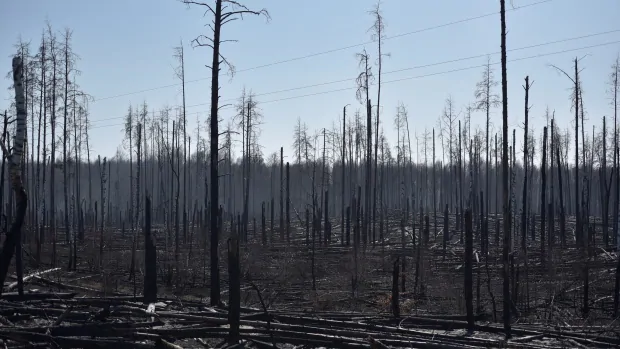
Ukrainian emergency officials said Tuesday they have extinguished forest fires in the radiation-contaminated area near the Chornobyl nuclear power plant, but acknowledged that grass was still smouldering in some areas.

Hundreds of firefighters backed by aircraft have been battling several forest fires around Chornobyl for the past 10 days. They contained the initial blazes, but new fires raged closer to the decommissioned plant.

Emergencies service chief Mykola Chechetkin reported to President Volodymyr Zelensky that rains helped firefighters put out the flames, but acknowledged that it would take a few more days to extinguish smouldering grass.

Chechetkin said emergency workers have prevented the fire from engulfing radioactive waste depots and other facilities in Chornobyl.

The 2,600-square-kilometre Chornobyl exclusion zone was established after the 1986 disaster at the plant that sent a cloud of radioactive fallout over much of Europe. The zone is largely unpopulated, although about 200 people have remained despite orders to leave.

Watch | Fires rage near Ukraine’s Chornobyl nuclear plant:

A forest fire in Ukraine that’s been raging for more than a week is moving closer to the Chornobyl nuclear plant. 1:26

Ukraine’s emergencies service said radiation levels in the capital, Kyiv, about 100 kilometres south of the plant, were within norms after the forest fires.

Zelensky urged Ukrainians not to panic.

‘Under control’

“We all remember the lessons of April 26, 1986,” he said in an online statement Tuesday. “No one is hiding the truth from you. Right now the truth is that the situation there is under control.”

On Monday, activists warned that the blazes were getting dangerously close to waste storage facilities.

Yaroslav Yemelyanenko, a member of the public council under the state agency in charge of the closed zone around the plant, said one fire was raging within two kilometres of one of the radioactive waste depots.

Last week, officials said they tracked down a person suspected of triggering the blaze by setting dry grass on fire in the area. The 27-year-old man said he burned grass “for fun” and then failed to extinguish the fire when the wind caused it to spread quickly.

On Monday, police said that another local resident burned waste and accidentally set dry grass ablaze, triggering another devastating forest fire. They said he failed to report the fire to the authorities.

Blazes in the area have been a regular occurrence. They often start when residents set dry grass on fire in the early spring — a widespread practice in Ukraine, Russia and some other former Soviet republics that often leads to devastating forest fires.


Source link

Categories
Tech

Scientists can record teeny-tiny earthquakes, thanks to lockdown quiet


For earthquake scientists, having hundreds of millions of people off the streets and out of the skies is providing a bonanza of data about the planet.

All those planes, trains and automobiles that aren’t running because of stay-home policies meant to fight the spread of COVID-19 have cut noise pollution in some cities by more than half, allowing seismologists to record sounds from inside Earth they never could before.

John Cassidy, an earthquake seismologist with Natural Resources Canada, says holidays like Christmas are the closest we ever get to these low levels of background noise and that’s only for a day at a time.

“It’s really unprecedented to see this level of quiet,” said Cassidy, who is also an adjunct professor at the University of Victoria.

Cassidy said things changed so quickly in terms of the lockdown few had thought much about the impact on noise until a scientist in Europe noticed it happening and the news began to spread through the community quickly.

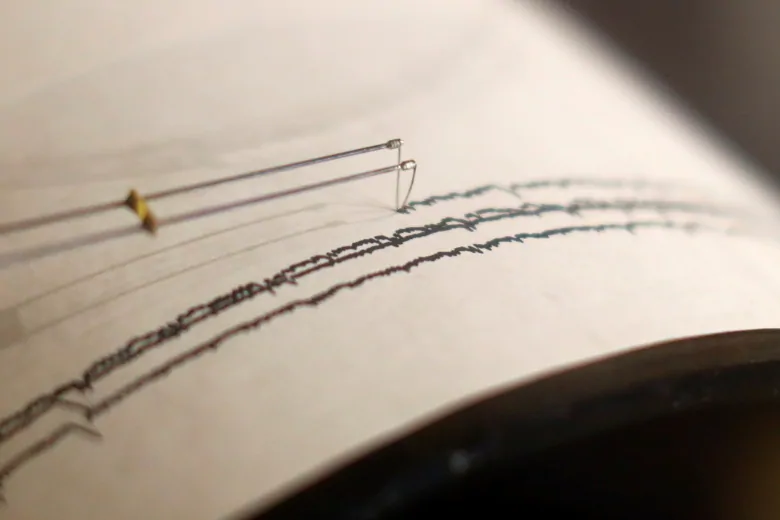
A working seismograph is shown in a display about earthquakes at the Discovery Cube Science Center in Santa Ana, California in 2018. For every 2.0-magnitude quake, which can be strong enough to sway trees or cause a small ripple on the surface of a lake, Canada will experience 10 earthquakes at 1.0 magnitude, which are only felt below the surface. (Mike Blake/Reuters)

In Canada, in the third week of March, major cities began to see traffic disappear almost to nothing, with normally packed freeways at times free entirely of cars. As international flights were cancelled, and domestic travel slowed, air traffic dropped significantly as well. Many big manufacturing plants also reduced hours or closed completely during the lockdown.

Many of Canada’s seismology stations are not in big cities on purpose, to reduce the noise pollution all the time. But for ones that are, like in Montreal and Ottawa, the drop in noise after the lockdowns began mid-March was immediately noticeable.

Up to 60% reduction in noise

In Montreal, noise dropped more than 40 per cent, in Ottawa 33 per cent and in Calgary, the drop was more than 60 per cent. In Victoria, where the station is located away from high-traffic areas, the noise drop was a bit smaller at almost 19 per cent.

In big cities that are considered high-risk earthquake zones, like Los Angeles, the data is particularly useful.

Highway traffic moves into Calgary, Alta., Wednesday, Feb. 8, 2017. The reduction in traffic due to COVID-19 lockdowns has reduced noise more than 60 per cent in Calgary, earthquake researchers say. (Jeff McIntosh/The Canadian Press)

Cassidy says without the seismographs picking up all the human-generated noise, scientists are recording small earthquakes all over the world that normally go unnoticed.

Canada normally records between 4,000 and 5,000 earthquakes a year, most of them on the smaller scale and not felt by people. Cassidy said for every 2.0-magnitude quake, which can be strong enough to sway trees or cause a small ripple on the surface of a lake, Canada will experience 10 earthquakes at 1.0 magnitude, which are only felt below the surface and noticed by seismology equipment.

And for every 1.0 quake, there are 100 that are magnitude zero. It is those magnitude-zero quakes, or some that are even smaller, which are now being detected.

The extra information is helpful for everything from monitoring active volcanoes to better defining fault zones and even developing better images of Earth’s structure.

Cassidy says that won’t help predict future big earthquakes yet but will be useful in helping engineers create better building codes for earthquake-prone regions.

Cassidy said knowing this is going to be temporary, seismologists are working hard to track the data while they can get it.

“It’s unusual times,” he said.


Source link

Categories
Tech

Scientists warned not to handle bats to prevent passing COVID-19 to millions of North American flying mammals


Biologists and wildlife-rehabilitation volunteers are being warned not to handle bats during the COVID-19 pandemic to reduce the possibility of infecting millions of the flying mammals in North America.

The Canadian Wildlife Health Co-Operative (CWHC) is about to recommend the suspension of fieldwork involving bats, said University of Winnipeg biologist Craig Willis, one of the wildlife disease experts developing this new advice.

The U.S. Fish and Wildlife Service has made a similar recommendation to American bat biologists.

While the chance of an infected biologist passing on COVID-19 to a bat is remote, the result would be disastrous, Willis said. 

The fear is millions of North American bats could become hosts for COVID-19, which is caused by a coronavirus similar to those present in Asian bats, he said.

“Even though the risk is low, I think the consequences for public health, but also bat conservation and people’s opinions of bats, would not be great. So people are just being extra, extra careful,” Willis said in an interview.

“We know that this virus can infect a range of species, or at least it appears that way. The question of course is … if it did spill back into bats or other wildlife, we would end up with another wildlife reservoir that could in turn pass it back to people.

“That would make eradicating it from North America, or Europe for that matter, extremely difficult, if not impossible.”

A big brown bat hangs in a hibernaculum. University of Winnipeg biology professor Craig Willis, who studies and tracks bats, is calling on the public to help researchers monitor bat populations this spring and summer. (Mary-Anne Collis)

SARS-CoV-2, the formal name of the coronavirus that causes COVID-19, has genetic similarities to a coronavirus found in Asian horseshoe bats.

The theory is those bats transmitted the virus to another species, where it evolved into the micro-organism that has so far killed more than 100,000 people and sickened nearly two million.

“We may never know actually … where this thing came from,” Willis said.

Nonetheless, Willis said it’s very likely that North American bat species, such as the little brown bat, could carry this new coronavirus.

“We know that our bats in North America carry coronaviruses, as many other species do. But this new one that’s making so many people sick and causing such problems for our public health system — that one certainly isn’t in our bats,” he said. 

“But there are other viruses that are in all sorts of wildlife, and I think one of the things that happened over the course of my career is we’ve started to recognize that people studying wildlife should probably do a little bit better job of wearing personal protective equipment when we’re working with our animals.”

The shortage of gloves, masks and other personal protective equipment for health-care workers means that equipment should not be used by biologists right now.

 “It’s very important to keep it in reserves for our frontline public health people. So that’s also one of the reasons we’re recommending not handling bats at the moment,” Willis said.

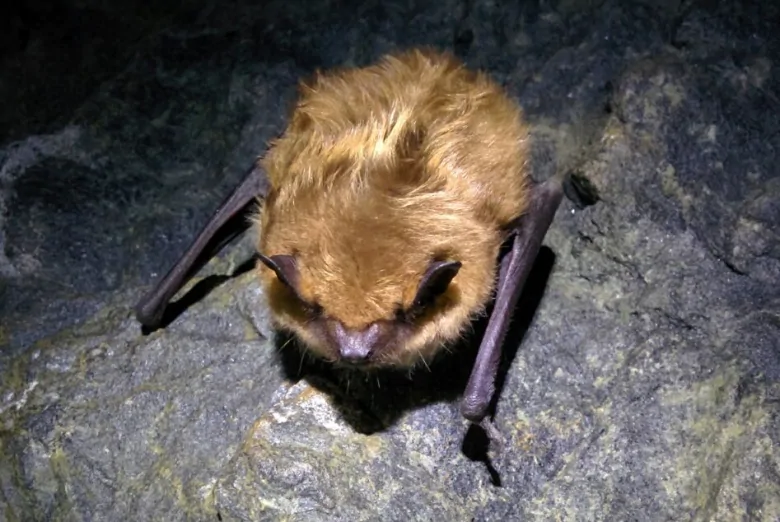
A bat with white-nose syndrome, a fungal infection that has killed millions of bats across North America. Researchers have found the fungus can weaken bats’ robust immune systems and allow them to shed more viruses. (U.S. Fish and Wildlife Service)

The novel coronavirus may not hurt a healthy North American bat, Willis said. As highly social creatures that congregate in huge numbers, bats have evolved very strong immune systems that can tolerate the presence of many pathogens, including a number of coronaviruses, he said.

Nonetheless, Willis and colleagues at the University of Saskatchewan found evidence the new coronavirus could harm North American bats already weakened by white-nose syndrome, a fungal disease that has killed millions of bats on this continent.

“We looked at levels of the naturally occurring coronavirus that our little brown bats carry around. It doesn’t make us sick, it doesn’t appear to make the bat sick. But when we looked at bats that were suffering from white-nose syndrome, they were expressing about 60 times as much virus as healthy, controlled bats,” Willis said. “That’s a bit of a worry.”

The transmission of viruses from animals to people is a consequence of wildlife habitat loss, where human development pushes into what used to be natural areas, Willis said.

Wildlife markets that confine stressed animals within a small space present a perfect opportunity for pathogens to jump from one species to another, he said. This risk is also increased by climate change, as animals move into environments that were once inhospitable to them.

Willis is encouraging Canadians in rural areas to help researchers keep track of bat populations, especially now that the pandemic has sidelined biologists.

“Now that we’re not able to go out and do fieldwork, it would be amazing if people can help us count their bats,” he said, noting the mammals are starting to emerge from their hibernacula, which include bat houses on private properties.

“That’s something people can do. And it’s really fun to do with your kids as a science project, [for] your home schooling.”

Willis warned rural residents not to violate public-health advisories against travel or to wander onto other people’s property.

Some of Canada’s bat biologists maintain a citizen-science website at batwatch.ca.


Source link