Categories
Tech

Hackers were paid ransom after attack on Canadian insurance firm, court documents reveal


A Canadian insurance company suffered a ransomware attack last fall that saw 1,000 of its computers infected, raising questions about what sensitive data may have been accessed by hackers and whether the firm disclosed the breach to its customers. The case has only now come to light because of recent court filings in Britain.

The unnamed firm had itself purchased coverage in case of a cyberattack. The company’s U.K.-based reinsurer paid $950,000 US to unlock the hijacked files and is now fighting to get the money back from criminals, according to court documents stemming from a hearing held in private.

“A hacker managed to infiltrate and bypass the firewall of [the Canadian company] and installed malware called BitPaymer,” reads a Dec. 13 ruling from England’s High Court in London. The document was published Jan. 17 and the case was first reported by the New Money Review.

British Justice Simon Bryan allowed the Canadian firm and its U.K.-based reinsurer to remain unnamed in public court documents. (U.K. Judicial Office)

The ruling simply refers to the Canadian firm as “the Insured Customer.” Its reinsurer also goes unnamed, having asked the court for anonymity. The case does not appear related to Andrew Agencies, a Manitoba-based insurance brokerage which recently acknowledged it had fallen victim to a separate ransomware incident.

The attack on the unnamed Canadian firm became apparent on Oct. 10, 2019, when computers began locking up and displaying a ransom note — a typical occurrence during such incidents.

“Your network was hacked and encrypted,” the message read, demanding a payment to release the machines and warning “no free decryption software is available on the web.” The cybercriminals threatened to encrypt the company’s files permanently if the episode were disclosed to the public, according to the court ruling.

The British reinsurer ultimately paid the hackers a $950,000 US ransom — negotiated down from an initial demand of $1.2 million — in the digital currency bitcoin. The Canadian company was then supplied with a digital decryption tool. It worked, but it took time. 

“The information before me is that it took decryption of 20 servers of the Insured Customer five days and 10 business days for 1,000 desktop computers,” Justice Simon Bryan wrote.

The case was heard by the Commercial Court, part of England’s High Court of Justice, based at the Rolls Building in London. (Gordon Bell/Shutterstock)

Attacks usually stay secret 

While ransomware attacks have grown more common, disclosures remain rare. Companies tend to shy away from publicly announcing they were targeted, for fear they could be struck again, or to avoid worrying customers.

Brett Callow, a B.C.-based spokesperson for the international cybersecurity firm Emsisoft, said only 10-20 per cent of firms hit with ransomware let it be known publicly.

“What’s really alarming is companies aren’t disclosing these incidents, so customers, vendors and business partners aren’t aware that their data has fallen into the hands of cybercriminals,” Callow wrote in an email.

In the case of the insurance firm, it’s unclear what data may have been accessed by hackers and whether they’ve held onto it since the computers were unlocked. Depending on the type of insurance the firm deals with, the machines could have been storing sensitive information on customers’ homes, health or finances.

Since 2018, Canadian privacy law requires companies to report to the Office of the Privacy Commissioner (OPC) any breach of personal information that could “pose a real risk of significant harm to individuals.”

On Wednesday, an OPC spokesperson declined to say whether this case had been reported, citing privacy concerns.

The Canadian company isn’t alone in buying coverage specifically for cyberattacks. What makes this case unusual is that it landed in court, with the British reinsurer attempting to recoup the ransom amount. So far, it successfully obtained an injunction to freeze much of the bitcoin payment.

Chainalysis, a U.S. firm which carries out digital currency investigations, confirmed to CBC News it helped trace 96 bitcoins (more than $890,000 US as of Wednesday) to an unnamed user of a cryptocurrency exchange site.

No hacker is identified by name in the court papers and a Chainalysis spokesperson declined to provide further details.

Should victims pay the ransom?

Cybersecurity experts typically recommend paying no ransom, since there’s no guarantee it will ensure any data is unlocked. What’s more, it can encourage hackers to re-target victims who have been willing to pay.

The RCMP strongly suggest victims refuse to pay, but acknowledges in online guidance that “there may be legitimate reasons for paying the ransom, such as the potential harm of not having access to the data as a result of no backup.”

Get in touch by email: thomas.daigle@cbc.ca.


Source link

Categories
Tech

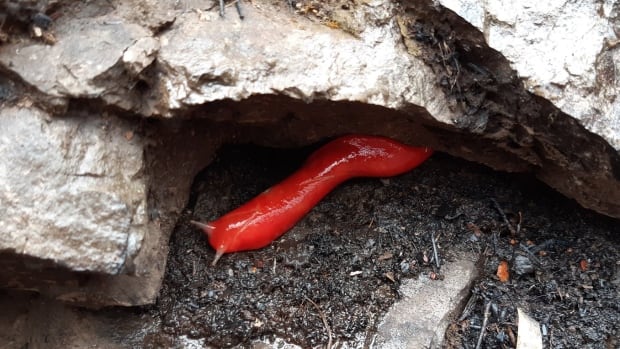
Endangered giant pink slugs found alive after Australia bushfires


Australian wildlife officials say dozens of endangered slugs found only at the top of an extinct volcano have survived the bushfires that ripped through their habitat.

About 60 Mount Kaputar slugs, also called Kaputar pink slugs because of their striking colour, were spotted by rangers after a recent rainfall following the bushfires. The New South Wales Parks and Wildlife Service posted the “positive news” on its Facebook page over the weekend, noting there “had been fears for this unusual species.”

They’re also huge for slugs, growing as long as 20 centimetres.

“They may not be as cute as koalas or wallabies, but this species also plays an important role in its ecosystem,” the post said.

Despite some survivors, around 90 per cent of the slug population is estimated to have been killed by the fires, as they shelter in bark and trees, Australian Museum biologist and snail specialist Frank Kohler told The Guardian

He said those that survived probably did so by hiding in rock crevices.

The slugs typically hide under woody debris, loose rocks and leaf litter during dry conditions. On rainy nights, they climb tree trunks to heights up to six storeys to feed on micro-algae and fungi on bark and rocks, says a description on the International Union for Conservation of Nature Red List of Threatened Species website.

The Mount Kaputar slug was listed as endangered in 2014, and was already close to the threshold for being critically endangered at that time due to its limited range. Its population was unknown.

The slug is one of nine species of land snails found only on the summit of the mountain and nowhere else on Earth, according to the Australian Museum.

Extinction threat from climate change

Even before the recent fires, biologists had already noted that human-caused climate change was likely to put this species “at very high risk of extinction in the near future” and not just due to more frequent fires.

The slug’s IUCN listing notes that it already occupies the highest parts of Mount Kaputar, so it can’t move to higher elevations, and warming at lower elevations will reduce the area of its habitat.

Grazing feral pigs that damage the slugs’ habitat and may also eat them are listed as another threat.

Mount Kaputar National Park is closed to visitors until Feb. 28 due to fire damage.


Source link

Categories
Tech

'This is uncomfortably close': 2 defunct satellites orbiting Earth at risk of colliding


Two defunct satellites orbiting Earth are at risk of colliding on Wednesday, according to private satellite-tracking company LeoLabs, though they may just simply pass dangerously close to each other.

Should the pair collide, they could potentially create hundreds of pieces of space debris that would threaten other satellites in a similar orbit.

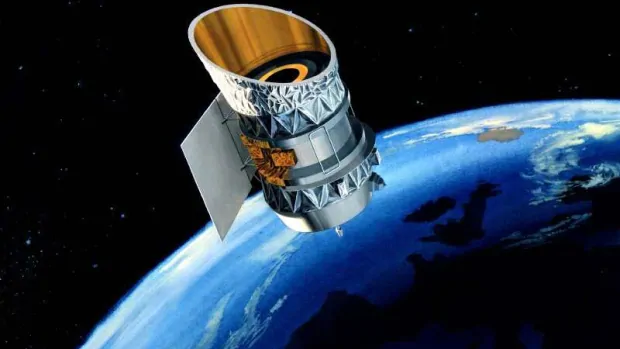
The first satellite, the Infrared Astronomical Satellite (IRAS), a joint venture between NASA and the Netherlands Agency for Aerospace Programmes, was launched in 1983 and is roughly 954 kilograms. The second, smaller GGSE-4 (also known as POPPY 5B) was launched by the U.S. Naval Research Laboratory in 1967 and weighs about 85 kilograms. 

Both are now inoperative.

Alan DeClerck, vice-president of business development and strategy for LeoLabs, told CBC News the satellites could miss one another by roughly 15 to 30 metres and that there is a 1 in 100 chance of a collision at a breakneck speed of 14.7 km/s. It would occur 900 kilometres above Pittsburgh at 6:59 p.m. ET.

“In terms of normal operations satellites, one in 10,000 is considered something that you want to take a very close look at. One in 1,000 is considered an emergency,” said DeClerck​​​​​​​. “One in 100 is something that any operator would certainly want to do manoeuvre around.” 

LeoLabs is a private company with radar in Alaska, Texas and New Zealand capable of tracking satellites and space debris roughly 10 centimetres in diameter. It has plans to track debris as small as about two centimetres in diameter.

In an email statement from a NASA spokesperson to CBC News, the U.S. air force’s Combined Space Operations Center, which is responsible for tracking satellites, has yet to inform the space agency of any pending collision.

However, DeClerck​​​​​​​, said the air force doesn’t track satellite debris, which is what the two defunct satellites would be considered.

And according to Jonathan McDowell, an astronomer at Harvard-Smithsonian Center for Astrophysics, who has been closely monitoring the situation, that might be because there are some uncertainties and that not all models will produce the same result.

“The uncertainty on the miss distance is greater than the miss distance,” McDowell said. “We’re in an era now where there are several independent companies as well as the Air Force that track satellites, and their solutions often don’t quite agree at the kilometre level.”

Using what McDowell said is the less reliable public data supplied by the Air Force on satellite orbits, he made his own calculations and got a miss distance of one-and-a-half kilometres, plus-or-minus two kilometres. 

“The best thing to say is that this is uncomfortably close,” he said. “It’s more likely there not to be a collision than there will be, but at the same time, a collision wouldn’t be astonishing. So we’ve got to watch it very closely and see if we see any debris afterwards or change in the satellites’ orbits.”

McDowell said there’s one other thing to take into account.

GGSE-4 has 18-metre-long protruding booms, which he doesn’t think are factored into the calculations. Even if those booms do strike the larger IRAS, it’s unclear what that would even do.

DeClerck said LeoLabs will continue to monitor the orbits in the coming hours of the time of closest approach (TCA), and there could be revisions to the orbits. And after the TCA, they will likely know within hours what actually occurred.

If the satellites do collide and produce debris, it won’t be a major addition to the 18,000 pieces of debris currently being tracked, McDowell said, but it could generate about 1,000 more. 

But what it does is up the chance of further collisions for satellites in the popular type of orbit called sun-synchronous.

If you’re concerned about pieces falling out of the sky, you needn’t worry: the threat is only to satellites. 

“It’s not a things-falling-out-of-the-sky-on-our-heads situation,” McDowell said. “It’s just an increase-in-the-amount-of-ambient-space-debris-in-a-particularly-valuable-orbit kind of thing.”


Source link

Categories
Tech

Albatrosses used as flying spies to detect illegal fishing boats


Sea birds with radar detectors attached to their backs can detect illegal fishing boats in real time, potentially allowing such boats to be caught by authorities, a new study shows.

Over six months last winter (summer in the southern hemisphere), 170 albatrosses monitored more than 47 million square kilometres of the southern Indian Ocean. That allowed research to estimate for this first time the proportion of unreported fishing boats in that region — about one third, says the report published this week in Proceedings of the Royal Academy of Sciences.

Illegal, unreported and unregulated fishing makes it challenging to estimate how much fish is actually being caught around the world and to manage fish stocks sustainably. 

That kind of fishing also poses a threat to “bycatch” — other animals unintentionally killed in the process — such as albatrosses, whose populations are declining and some of which are endangered. 

“The main reason is long-line fishing,” said Henri Weimerskirsch, a conservation biologist at the Centre d’Etudes Biologiques de Chizé, Centre national de la recherche scientifique in France, who led the study.

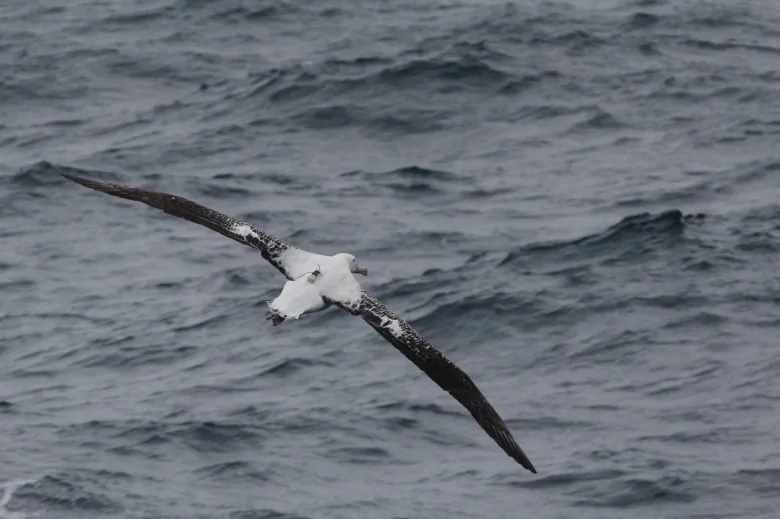
A wandering albatross equipped flies off the coast of the Kerguelen Islands in the Southern Indian Ocean. Adult albatrosses are attracted to fishing boats, and the logger detects the radar used by ships to avoid obstacles. ( C. Matheron/TAAF)

The birds, which are known to be attracted to fishing boats, prey on small fish and squid that are used as bait on hundreds or thousands of hooks dragged behind the boats in lines that are up to 100 kilometres long. When the birds take the bait from a hook, they often swallow the hook, get pulled under the water and drown. 

Weimerskirsch says regulated fisheries are required to take measures to prevent that from happening, such as: 

  • Setting lines at night.
  • Weighting them to keep them below the surface.
  • Using devices to scare off the birds.

 “But of course this is not used at all by illegal fishing boats,” he added, noting that the measures are complex and costly.

Might also save albatrosses

Weimerskirsch had been studying how to better conserve albatrosses, and was particularly interested in figuring out why young albatrosses in particular have such a high mortality rate. He wondered if fishing boats played a major role. 

He and his team developed tiny loggers, each device a little heavier than a golf ball, with a GPS to measure the bird’s location and a radar detector that can detect a ship’s radar at a distance of up to five kilometres.

This tagged juvenile wandering albatross is ready to fledge. The study found that juvenile birds were less attracted to ships, and therefore their high mortality was likely due to not finding enough food. (Adrien Pajot)

The loggers were attached to the backs of two species of albatross captured at breeding colonies in the Crozet, Kerguelen, and Amsterdam islands in the Southern Indian Ocean:

  • Wandering albatrosses, which are listed as vulnerable on the IUCN red list.
  • Amsterdam albatrosses, which as listed as endangered.

Between November 2018 and May 2019, the birds logged more than 600,000 GPS locations and made more than 5,000 radar detections from 353 different boats.

The data showed that in fact, juvenile albatrosses tend to avoid boats, and only become attracted to them as they mature. Weimerskirsch and his colleagues concluded that their high mortality rate was probably caused by not finding enough food.

But the data also showed something interesting that raised new research questions.

Detect illegal fishing?

Registered fishing boats broadcast their location and can be tracked via satellite using Vessel Monitoring Systems or  via radio signals using Automatic Identification Systems, which can also be detected from space. The latter is required on all boats above a certain tonnage, but can be switched off.

By comparing the birds’ radar signal detections with AIS signals, the researchers noticed that some boats had no AIS signal — suggesting that they might be fishing illegally.

That gave the researchers a new idea. Could this technique be used to get information about illegal or unreported fishing?

This map shows the foraging zone of Ocean sentinel albatrosses (blue line). The green dots mark the location of declared vessels, while the red dots represent unregistered vessels (red dots). The yellow lines mark the boundaries of national Exclusive Economic Zones managed by individual countries. Outside the yellow lines, ships are in international waters. (Weimerskirch et al./PNAS)

The team, which also includes researchers from New Zealand and the UK, managed to get funding through the European Research Council to test the technique through a program called Ocean Sentinel.

What they found was that more than one third of boats in international waters had no AIS signal.

The proportion of boats without an AIS signal was lower in national Exclusive Economic Zones, where fishing regulations are enforced by a particular country.

In such areas, all boats should have their AIS on, Weimerskirsch said, and detecting the location of boats without such signals can be used by countries to locate illegal boats.

That could help crack down on illegal fishing and reduce albatross mortality near their nesting grounds, which are on land.

In international waters farther from, it’s not yet compulsory to turn on the AIS system, Weimerskirsch said, but efforts are underway to make that a requirement. In such areas, the data may be useful for giving authorities a better estimate of unreported fishing vessels and their location, he added, but enforcement of regulations is up to the Regional Fisheries Management Organizations, and is complicated. 

What if birds get shot at?

Daniel Pauly is a biologist at the University of British Columbia who has estimated the impact of unreported fishing around the world and studied decline of seabirds since the 1950s, but was not involved in the new study.

He called the research and its findings “neat.”

“Technically, I think it’s beautiful,” he said. “This is a very good thing and it’s an additional tool for the detection of illegal fishing.”

But he was concerned that once illegal fishing operations hear about the study, the might start to target the birds.

“Pirates do horrible things,” he said, noting that illegal fishing operations have been known for engaging in slavery and other human rights violations. “Killing birds would be easy for them.”

More albatrosses have now been tagged in New Zealand and the South Georgia islands. (Julien Collet)

Weimerskirsch acknowledged the possibility in areas where the sea if relatively calm and where birds might approach close enough for the logger to be seen.

“Indeed, people if they want to use this kind of system, they should be careful,” he said.

He thinks there is little risk to the birds in the Southern Ocean, where the sea is very rough, where there are thousands of birds circling around boats, and where most albatrosses do not come closer to ships than about half a kilometre.

The researchers also tried to paint the loggers the same colour as the birds’ feathers.

Weimerskirsch said radar loggers are now being tested in New Zealand and in the British South Georgia Islands in the South Atlantic to see how big a role fishing plays in the decline of other albatross populations.


Source link

Categories
Tech

Beetle traps identify 100s of species new to P.E.I.


A federal government project has identified close to 300 species of beetle not identified on Prince Edward Island before, and maybe a couple that are entirely new to science.

Natural Resources Canada research scientist Jon Sweeney had a suspicion he would see some new things when he first set up his traps in 2018. There were just 899 beetle species identified on the Island, while there were close to 2,700 in New Brunswick and Nova Scotia.

“We found — so far, we’re still counting — over 290 new records of beetle species on the Island that weren’t known before, so hadn’t previously been recorded,” said Sweeney.

“We got a lot of beetles there, including three new records for North America, so previously not been found in North America.”

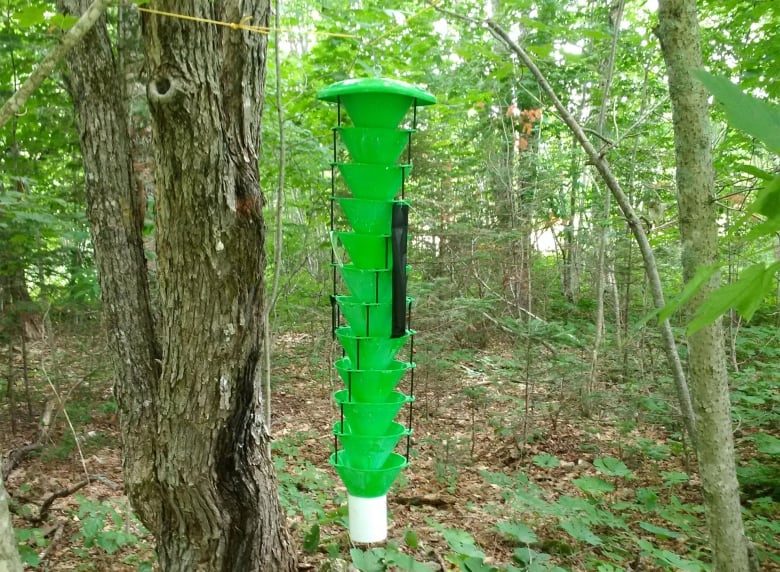
One of 36 beetle traps set up by Jon Sweeney to capture beetles on P.E.I. (Submitted by Jon Sweeney)

One of those three is a European native. The other two are not yet identified. They could be from Asia, but it is also possible they are entirely new to science.

‘A very complex ecosystem’

Sweeney said it is important to learn more about beetles on the Island. The insects are performing important functions: decomposing things, becoming food for other animals, eating other insects and keeping them under control.

“It’s a very complex ecosystem out there. The roles of these individual species, most of them we have no clue what they’re doing,” he said.

“The more we know about it the better we can monitor changes over time that might be happening over habitat loss, climate change and other changes that are happening, thanks to us.”

Ash-borer-free zone

It is also important to keep an eye on problematic pests, such as the emerald ash borer.

There is still no sign that the ash borer has established on the Island, but it has devastated forests on the mainland, killing millions and millions of ash trees, he said. All ash trees in North America are susceptible to the invasive species from Asia.

“It is in New Brunswick and Nova Scotia now and will very likely be coming your way,” said Sweeney.

John Sweeney will be back at work capturing beetles on P.E.I. this summer. (CBC)

“It’s probably the worst forest invasive species we have, in terms of killing trees.”

The ash borer is easily transported on firewood, he said, so it is important that people not bring wood from the mainland to P.E.I.

Sweeney’s team set traps in three locations in 2018 and 2019, in Auburn, Brookvale and Valleyfield. His research will continue in 2020, when he is looking to set traps in Thompson’s Woodlot.

More P.E.I. news


Source link

Categories
Tech

Giant Canadian construction project incorporates low carbon heating and cooling: Don Pittis


The company that made an international splash by air conditioning downtown Toronto without air conditioners has more energy-saving innovations in the works.

With the help of a gigantic purpose-built thermal reservoir, Enwave Energy will add an entire new neighbourhood to its underground low-carbon heating and cooling network with the project called The Well on the site that used to be headquarters for the Globe and Mail.

Not only will the seven-building retail, residential and office complex in the city’s business centre be added to Enwave’s lake-water cooling system, but the company is in the process of incorporating a series of revolutionary energy and carbon-saving techniques to keep residents and workers at The Well comfortable.

Digging deep

Even for construction-mad Toronto, the site is large, with more than a million square feet of office space, nearly 2,000 residences and more than 400 square feet of retail. The project’s backers estimate that it will serve about 11,000 people daily.

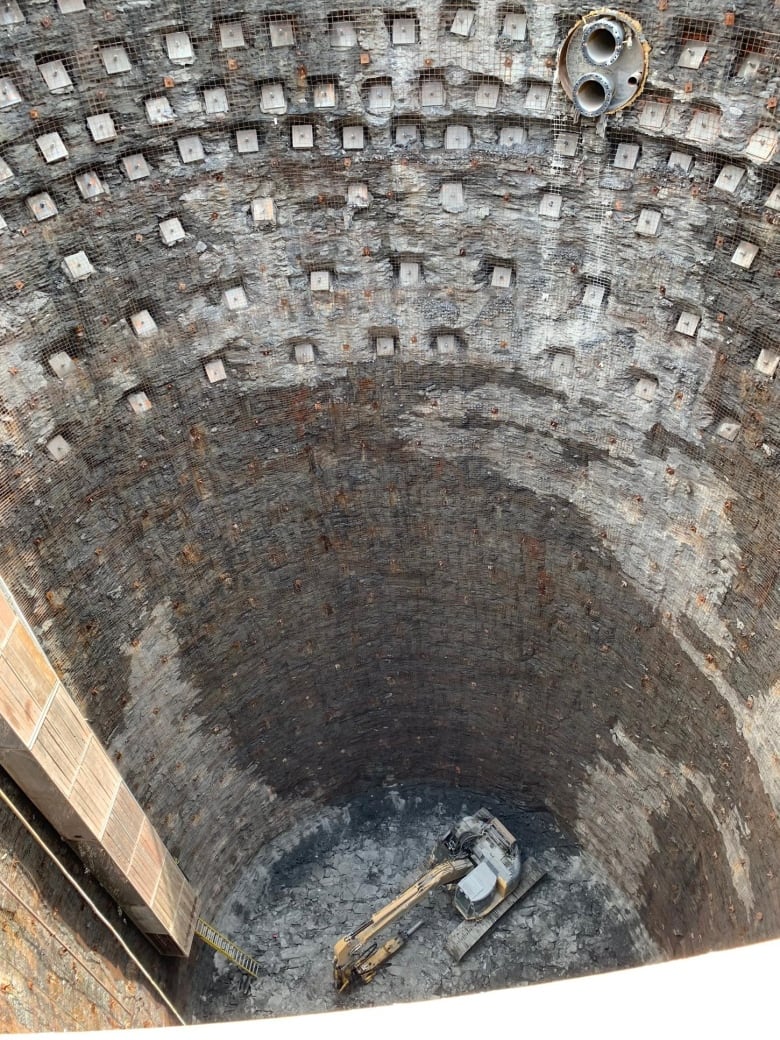
A view of the Enwave Well, under construction. (Enwave Energy)

“It’ll be 100 per cent heated and cooled by Enwave,” said Carson Gemmill, the company’s engineering lead for Toronto.

The project’s name has a double meaning, as its northern access is onto Wellington Street. But at the core of the project is the well itself, a multimillion-litre underground hole that extends into the bedrock from below the lowest parking level to a few metres above sea level. 

The solution stored in the well — it is not just water — will act as a giant thermal battery, said Gemming, cold in the summer for air conditioning and hot in the winter for heating.

Enwave, which began life as a publicly owned utility used to heat municipal buildings and hospitals in the city using a centralized or “district” network, garnered global media attention more than a decade ago for its innovation in low-energy cooling.

Using the drinking water supply that the city draws from the chilly depths of Lake Ontario, Enwave sucks out some of that coldness from the just-above-zero Celsius lake water, and circulates it in downtown buildings to cool them without the costly electricity usually required for air conditioning.

Power cuts

Although climate change was not at the top of political agendas in those days, Enwave decreased the city’s peak electricity load by cutting the need for power from the coal-generating stations that at that time still supplied much of Ontario’s power.

One efficiency of the well at The Well is also a matter of peak demand.  The tank is filled overnight with colder water when there are low periods of demand for air conditioning. Enwave, now owned by the conglomerate Brookfield, adds to the thermal battery without increasing its cooling or heating capacity. 

But a new heating innovation in the works is even more carbon-efficient, explained Gemmill. 

While traditional heating for large industrial buildings like hospitals uses steam boiled by natural gas-burning furnaces, the heating loop for The Well will be based on hot water of the type familiar to people who have radiators in their homes.

How the Enwave well heats at different times of the day. (Enwave)

This water to be pumped for heating doesn’t need to be boiled and that opens the door to green heating alternatives, including electric heat pumps, an energy efficient method of concentrating heat from lower heat sources. 

“One of the things that’s kind of interesting about our system is, people may not realize, in the winter months, even on days like today, we still actually have a significant cooling load because of the large data centre clients we serve,” said Gemmill.

Large urban centres around the world like Toronto have massive centralized server farms to act as nodes in data shared on the web to make it quicker to draw up frequently needed information. Individual companies such as banks have local data centres, as do cloud computing providers.

All are huge producers of heat that must be drawn away with cooling systems to prevent system breakdown. But whereas elsewhere that heat is vented to outdoor air, Enwave is engineering a system to capture and reuse it.

Pumped heat

“Really, like 13 C will be the temperature of our chill water coming back, but you run that through a heat pump,” said Gemmill. “So you can produce 60 C on the other side of the heat pump, which is useful for space heating.”

As Gemmill explains, heat pumps are like using a refrigerator in reverse, where heat is drawn out of air or water that may not feel especially warm.

After a recent CBC story on switching to lower carbon power electric heat, a number of readers pointed out that heating with electricity using baseboard resistance heaters can be prohibitively expensive outside Quebec. But as Gemmill explained, using a heat pump cuts that cost dramatically.

“Roughly, for every one unit of electricity you use [with a baseboard heater], you get one unit of useful heat,” said Gemmill. “Heat pumps are three to one. So they are three times more efficient.”

Currently the two giant steam generators Enwave operates to create steam for heat run on natural gas but the switch to hot water allows the new system to use leftover heat from the steam furnace, said Julia St. Michael, Enwave’s director of sustainability engagement.

“That hot water network right now is using waste heat from our facility, but in the future we’ll be able to add lower carbon sources of heat,” said St. Michael. As carbon taxes make gas more expensive, pumping heat from sewer water, industrial sources, as well as server farms, becomes more cost effective.

One of the biggest commercial efficiencies of Enwave’s district heating operation is that it means individual building managers don’t have to have their own air conditioners and heaters or the staff to run them. Centralized warming and cooling also means they have more space to lease out, said St. Michael.

But as Enwave showed with its deep water cooling system, the other advantage is that as new low-carbon technologies come into the mainstream, they can be introduced once at source and instantly apply to every building in the network.

Follow Don Pittis on Twitter @don_pittis  


Source link