The Little Salmon Carmacks First Nation in Yukon has entered into a partnership with an Alberta-based company to generate what’s described as a new type of green energy.
Eavor Technologies Inc. has developed a geothermal system, dubbed the Eavor-Loop, that harnesses the Earth’s natural heat, kilometres underground.
The heat underground is moved to the surface, where it can be used for heating or generating electricity.
John Redfern, president of Eavor, says the technology is different from conventional geothermal-based systems.
“Traditional geothermal is like oil and gas. You’re trying to find a formation that has a lot of permeability and then you’re going to drill down and try to extract either oil, or, in geothermal case, hot brine from that formation and produce it at the surface and extract heat from that,” said Redfern.
“So it involves a lot of water treatment, involves water injection and a lot of parasitic pump load, it involves fracking and sometimes can induce earthquakes.”
John Redfern, CEO of Eavor Technologies, with Cory Bellmore of the Carmacks Development Corporation. (Mike Rudyk/CBC)
The company says the Eavor-Loop system is different, as it has no greenhouse gas emissions, no fracking and no water use. It circulates a proprietary fluid that collects heat from below the earth’s surface in its 2.5-kilometre loop.
“Benign enough to literally fit in someone’s backyard,” according to the company’s website.
Yukon a ‘sweet spot’
A pilot project was launched in Alberta last year. The province’s infrastructure minister called the pilot project a “game-changer” after visiting the site near Rocky Mountain House.
Redfern calls Yukon a “sweet spot” for trying out the new geothermal-based technology that will soon be marketed around the world.
“It’s the best spot in Canada to do this, and so we’re viewing the project we want to do with Little Salmon Carmacks to be one of the first in the world, if not the first,” said Redfern.
Carmacks, Yukon, in winter. Redfern calls Yukon a ‘sweet spot’ for trying out his company’s geothermal-based technology. (Alexandra Byers/CBC)
He says the technology can be used almost anywhere.
“All we need is geological heat. We don’t need a particular reservoir, and Little Salmon Carmacks as well is right on the Whitehorse trough which is a nice sedimentary basin — so it’s a particularly good part of the Yukon.”
The First Nation’s development corporation says the partnership is new and the technology is environmentally-friendly.
“It also has a small footprint and doesn’t take anything out of the landscape or add anything to the landscape, so it’s really attractive to the First Nation and their traditional territory,” said Cory Bellmore, president of the Carmacks Development Corporation.
The First Nation is a joint-equity partner in the project, which is expected to cost $30-million to install. Redfern says construction could start early next year.
Similar to a radiator
Redfern describes the technology as a closed-loop process, similar to a radiator.
“Basically we take two wells drilled down several kilometres, turn horizontally and connect the well, toe to toe, to make a huge U-loop,” he said.
“Our primary market is electricity generation, but of course every single Eavor-Loop also has a waste heat stream that could be almost as a free bonus, that the community can use for whatever.”
Redfern says the Carmacks project could generate 3 megawatts of electricity. Larger-scale projects in the future could potentially create 3 gigawatts of power, he says.
He says an added bonus is that the system works well even in the cold winter months.
A Japanese government panel on Friday roughly accepted a draft proposal for releasing into the sea massive amounts of radioactive water now being stored at the tsunami-wrecked Fukushima nuclear plant.
The economy and industry ministry’s draft proposal said releasing the water gradually into the sea was the safer, more feasible method, though evaporation was also a proven method. The proposal in coming weeks will be submitted to the government for further discussion to decide when and how the water should be released.
Nearly nine years after the 2011 meltdowns of three reactor cores at the Fukushima Daiichi Nuclear Plant, it was a small step toward deciding what to do with the water and follows expert recommendations.
It is meant to solve a growing problem for the plant’s operator stuck between limited storage space for the water and an imminent backlash from the public and possibly neighbouring countries.
A Japanese government panel on Friday said releasing into the sea massive amounts of radioactive water now being stored at the tsunami-wrecked the nuclear plant was the safer, more feasible method. (Tomohiro Ohsumi/Getty Images)
Fishermen and residents fear possible health effects from releasing the radioactive water as well as harm to the region’s image and fishing and farm industry.
The water has been treated, and the plant operator, Tokyo Electric Power Co. (TEPCO), says all 62 radioactive elements it contains can be removed to levels not harmful to humans, except for tritium. Experts say there is no established method to fully separate tritium from water, but it is not a problem in small amounts. Government officials also say tritium is routinely released from existing nuclear power plants around the world.
In Friday’s proposal, the ministry said the controlled release to the sea is superior because its travelling route is predictable and easier to sample and monitor. The method, however, could immensely impact Fukushima’s still-struggling fishing industry.
The report acknowledges the water releases would harm industries that still face reluctant consumers despite diligent safety checks. It promised to reinforce monitoring of tritium levels and food safety checks in order to address safety concerns.
In 2011, three of Fukushima Dai-ichi’s reactor cores melted down following a tsunami. (Tomohiro Ohsumi/Getty Images)
TEPCO currently stores about 1.08 million tonnes of radioactive water and only has space to hold up to 1.24 million tonnes, or until the summer of 2022. The water — leakage of cooling water from damaged reactors mixed with contaminated groundwater — has accumulated since the accident.
The report ruled out long-term storage outside the plant — a method favoured by many Fukushima residents. It cited difficulties obtaining permission from landowners and transportation challenges, as well as the risk of leakage from corrosion, a tsunami or other disasters and accidents.
Hello, people! This is our weekly newsletter on all things environmental, where we highlight trends and solutions that are moving us to a more sustainable world. (Sign up here to get it in your inbox every Thursday.)
This week:
What’s the connection between climate change and infectious diseases?
Your electronics are energy suckers, even when you’re not using them
A primer on reusable, plastic-free menstrual products
What’s the connection between climate change and infectious diseases?
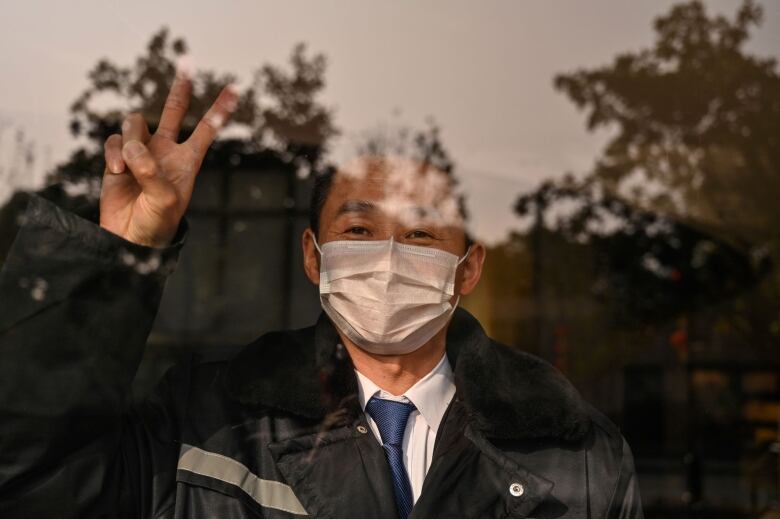
(Hector Retamal/Getty Images)
We still don’t know where the 2019 novel coronavirus came from. The leading suspicion is an animal host – a bat, likely – infected another animal that has more contact with humans.
That’s how the 2012 MERS (Middle East Respiratory Syndrome) outbreak is believed to have played out. A bat, at some point in the past, infected a camel, which may have sneezed on a human.
One of the reasons the human and animal worlds are bumping up against each other is a changing climate. Research suggests that warmer winters and springs are keeping bats, for example, around longer because the insects they feed on also like the warmth. And this may affect the spread of diseases bats carry.
“Climate change, coupled with other human environmental changes like urbanization and habitat destruction, is bringing us closer to wildlife,” said Dr. Katie Clow, a professor at the Ontario Veterinary College at the University of Guelph. “So there’s this very complex interplay of many different changes happening all at the same time.”
Clow’s research looks at the epidemiology of vector-borne diseases and a lot of her work involves trawling the woods for ticks. (She also has the pleasure of getting those little buggers in the mail.) The study of these insects provides some of the clearest evidence of the effect of a warming climate on the spread of infectious diseases.
Take the blacklegged tick, for example.
“We know that climate change has had a huge influence on allowing it to expand its range into more temperate areas,” Clow said. “The warm period of our summers and springs lasts longer than it used to. And [the blacklegged tick’s] reproduction and ability to sustain that reproduction is based on having a climate that’s warm enough, for long enough.”
This is dangerous because ticks can carry Lyme disease, which can cause rashes, joint pain and even serious neurological issues in humans and pets.
But this seemingly straightforward cause and effect hides complexity. Expanding the range and lifecycle of a tick is one part of a climate equation that may well involve humans spending more time outdoors because of those same warm temperatures. That complexity makes it hard to determine climate change’s effect on other pathogens, like the novel coronavirus or influenza.
“Generally, influenza viruses survive better when it’s cooler, especially in the tropics,” said Dr. Nicholas Ogden, a veterinary epidemiologist at the Public Health Agency of Canada. “Of course, in winter, people [also] tend to be congregated together. So there are some seasonal aspects that are difficult to tease apart.”
In essence, one environmental factor may contribute to the decrease of a specific pathogen while another may keep it alive. This complicates the search for clear cause and effect, and shows why other forecasted disease risks of climate change demand further research.
Here are some other potential risks that scientists have highlighted:
Severe flooding and heavy rainfall events may lead to water-borneillnesses such as cholera and leptospirosis.
Hotter temperatures can cause food-borne illnesses from a higher risk of food spoiling.
Human migration (because of climate, economic and sociopolitical factors) can cause non-native pathogens to be carried to new places in big numbers.
Scientists say there is a connection between climate change and the spread of disease, and figuring it out is the only way to develop better public health strategies.
“There is increasing evidence that climate change is having an impact on health,” Ogden said, adding that disease is “part of the impact that we need to identify, predict and be prepared to adapt to.”
— Anand Ram
Reader feedback
Last week, we published a story on microgrids in which we cited one built in Sendai, Japan, a decade ago as an “older” example. This prompted reader Mitch Wright to point out that the concept has existed for quite a while. “Many small towns in Ontario that were built on rivers installed their generation plants long before the towns were connected to an Ontario grid. This is because the grid did not exist yet. In Wingham, Ont., where I currently live, [power] generation was installed between 1900 and 1910 and ran for 20 to 30 years before the Ontario grid was extended to Wingham.”
The Big Picture: The phantom power of your electronics
Many of our modern devices are reliant on electricity, and a lot of us are quite content to leave them plugged in all day long. But these appliances draw electricity even when they’re not in use — so-called phantom power. According to the Ontario utility Hydro One, the average Canadian home contains more than 20 devices that draw phantom or “standby” power, which can account for up to 10 per cent of home energy use. Fixing the problem is as simple (or complicated) as unplugging every appliance you own when it’s not in use or deploying advanced power bars that can time out or sense when devices are idle. Here’s a look at the energy use of some typical electronic devices.
(CBC)
Hot and bothered: Provocative ideas from around the web
Plastic-free periods: Reusable menstrual products are going mainstream
(Shutterstock)
Every year, tens of billions of single-use pads and tampons go into landfills — material that takes hundreds of years to decompose. The average user goes through between 5,000 and 15,000 pads and/or tampons in a lifetime.
Amanda Laird, author of Heavy Flow: Breaking the Curse of Menstruation, believes our society’s reliance on disposable menstrual products began in the 1920s. “As a way to market the products, [advertisers] had to position periods as something that was dirty, gross and unsanitary,” she said.
Reusable menstrual products have been around for a while, but they’re becoming increasingly mainstream. Dr. Yolanda Kirkham, a gynecologist at Women’s College Hospital and Unity Health Toronto, said a lot of her patients have been using reusable products for several years, indicating those who make the switch end up sticking with it.
The main players on the reusable market right now are menstrual cups and period panties or pads.
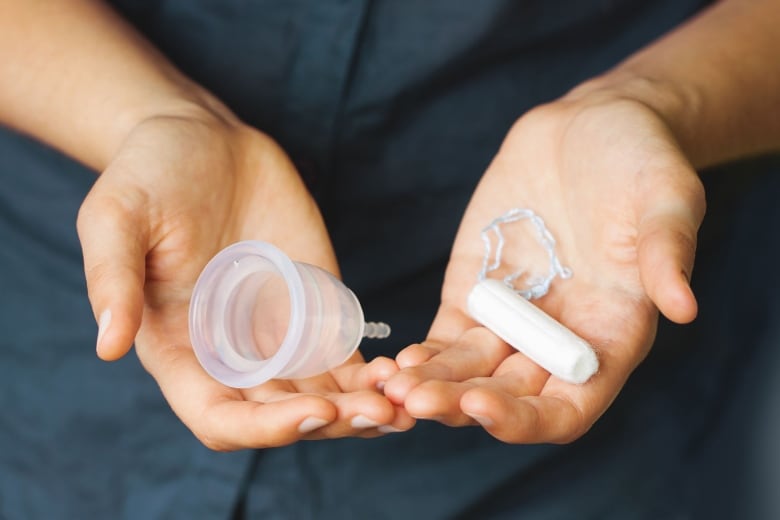
Menstrual cups (to the left in the photo above) are bell-shaped and typically made of silicon or latex rubber. To insert, users fold them tightly and push them through the vaginal canal like a tampon without an applicator. There are different sizes, depending on factors like flow and whether or not the user has given birth. Once released, the cup springs out to suction against the cervix, resting on the vaginal walls to catch fluid.
The other option is period panties or pads, made with layers of absorbent, moisture-wicking materials like organic cotton and polyester. Some choose to use them as a backup for cups or tampons, while others use them solo.
For cup care, Kirkham recommends rinsing it out every four to six hours, boiling it between cycles and replacing it if there’s damage. Manufacturers recommend replacing it every one to two years, but it can be used for up to 10 years, according to a 2019 study on menstrual cup safety.
External reusables like pads and panties should be rinsed and washed in warm water between use, said Kirkham. Most companies say to hang dry.
One rare risk associated with period products is toxic shock syndrome, a severe bacterial infection that can cause dizziness or faintness, vomiting, diarrhea and a rash on the palms, said Kirkham.
Infections can happen “any time there is a break in the barrier to our body system,” she said. “So anytime there’s a bit of friction, there’s a possibility for a micro tear and that’s how bacteria can get in.”
There’s no consensus among users about whether reusables or disposables are healthier. Some argue reusables are less hygienic, while others believe the chemicals in tampons and pads are harmful.
Menstrual cups and washable pads are “just as safe” as disposable products, while the latter contain smaller amounts of chemicals than many foods, said Kirkham. She advises avoiding products that aren’t well-recognized or medically regulated, such as crochet tampons and sea sponges, which are often marketed as natural and eco-friendly options.
While Laird believes reusable products are a great option for the environment, “we have to recognize that they aren’t right for everybody.”
“Not everybody can get up close and personal with their menstrual blood,” she said.
— Isabel Terrell
Stay in touch!
Are there issues you’d like us to cover? Questions you want answered? Do you just want to share a kind word? We’d love to hear from you. Email us at whatonearth@cbc.ca.
Sign up hereto get What on Earth? in your inbox every Thursday.
A national ban on many single-use plastics is on track for next year after a government report concluded Thursday that there is more than enough evidence proving plastic pollution is harmful, Environment Minister Jonathan Wilkinson said.
“We will be moving towards a ban on harmful single-use plastics and we will be doing that in 2021,” said Wilkinson.
The federal Liberals promised last June they’d seek to ban plastic versions of a number of products, such as straws, take-out containers and grocery bags. The ban would happen under the Canadian Environmental Protection Act, which requires a scientific assessment of the problem first.
A draft version of that assessment was released Thursday. It will be open to public comment until April 1.
The report says that in 2016, 29,000 tonnes of plastic garbage, the equivalent of about 2.3 billion single-use plastic water bottles, ended up as litter in Canada — on beaches, in parks, in lakes and even in the air.
Some of the litter is easily visible: pieces bigger than 5 mm are called “macroplastics.” But much of it is plastic most of us can’t easily see, called “microplastics” and “microfibres.” These are tiny remnants of plastic smaller than 5 mm resulting from larger pieces of plastic breaking apart, or being shed from items like clothes made of synthetic fabrics, fleece blankets and tires.
The assessment looks at the impact of all types of plastics and points to evidence that macroplastics are hurting wildlife: dead birds found with plastic in their intestines, or whales washing up on shore with stomachs filled with tonnes of plastic they ingested as they swam, including flip flops and nylon ropes.
In one case, a turtle was found emaciated and dying. When the plastic was removed from its digestive tract, the turtle recovered.
The evidence is less clear about the harmful impacts for people and wildlife of ingesting microplastics, and the scientists recommended further study. A new fund of $2.2 million over the next two years will fund research on microplastics.
List of banned items still to come
Wilkinson said the finding on macroplastics is enough to proceed with the ban.
He said the list of specific items to be banned is still being worked out with scientists. A list will be released in the next few months, he said.
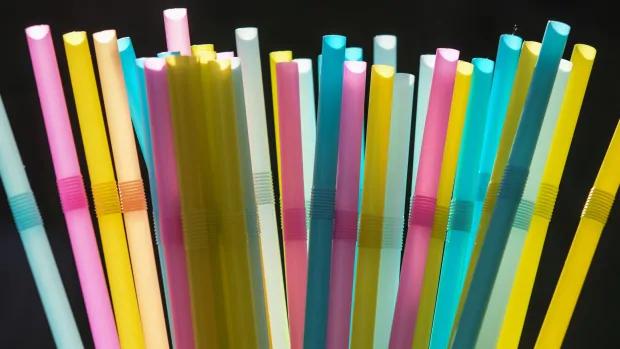
Plastic bags, straws, bottles and Styrofoam containers meant to be used once and discarded are all expected to be on the list, but nothing has been confirmed.
Wilkinson said businesses that rely on those products will be given time to adapt, but insisted the government is not going to wait several years.
Watch: Environment minister outlines plan to ban single-use plastics by 2021
Environment Minister Jonathan Wilkinson outlines how the government plans to move towards a ban on single use plastics following the release of the Draft Science Assessment of Plastic Pollution which was released today. 1:27
“I think the Canadian public wants to see action quickly, so certainly if there is a phase-in period, it won’t be an extensive one.”
A recent audit of Canada’s plastics industry found less than 10 per cent of the plastic produced in Canada is recycled. Canadian recyclers have very little capacity to do it because there’s not much demand for the material in Canada.
The audit found producing new plastic products and then throwing them away is usually cheaper than reusing, repairing or recycling them.
In 2018, when Canada hosted the G7 leaders’ summit, Canada and four other leading economies signed a charter pledging that by 2040 all plastic produced in their countries would be reused, recycled or burned to produce energy. The United States and Japan stayed out of that agreement.
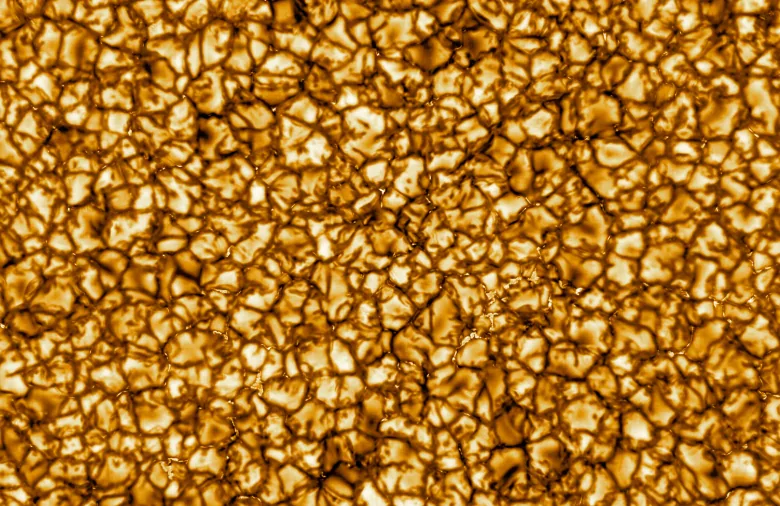
Images from a powerful new telescope installed atop a volcano in Hawaii show the surface of the sun in the closest detail yet, revealing features as small as 30 kilometres across.
They were captured by the National Science Foundation’s (NSF) Daniel K. Inouye Solar Telescope, which sits at around 3,000 metres above sea level near the summit of Haleakala volcano in Maui, Hawaii.
The telescope, which features the world’s largest solar four-metre mirror, could enable a greater understanding of the sun and its impact on our planet, according to the National Solar Observatory (NSO), a public research institute headquartered in Boulder, Colo.
A pattern of turbulent “boiling” gas is shown covering the sun, which is some 150 million kilometres from Earth.
Inside visible cell-like structures, each around the size of Texas state, hot plasma can be seen rising before cooling off and sinking below the surface in dark lanes, as part of a process called convection. (NSO/NSF/AURA/Handout via Reuters)
Inside visible cell-like structures, each around the size of Texas state, hot plasma can be seen rising before cooling off and sinking below the surface in dark lanes, as part of a process called convection.
Markers of magnetic fields are also visible with new clarity, the NSO said.
Studying the sun’s activity, or “space weather,” can help scientists predict problems on Earth. Magnetic eruptions on the sun can disrupt satellites, disable GPS, impact air travel, bring down power grids and cause blackouts.
“This telescope will improve our understanding of what drives space weather and ultimately help forecasters better predict solar storms,” said France Córdova, NSF’s director.
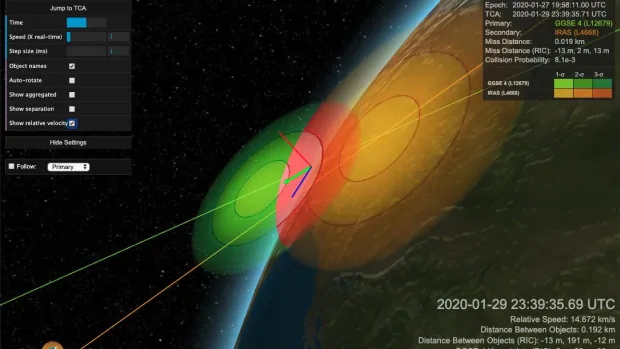
Two defunct satellites that looked as though they might collide Wednesday evening have missed each other.
Private satellite-tracking company LeoLabs tweeted that it was “pleased to report” that following the projected close encounter between the two satellites, it saw no evidence of new debris.
We are pleased to report that in the first several radar passes of the two objects after the close approach, we see no evidence of new debris. This event has served to highlight the collision risks caused by derelict satellites in LEO.
The company had predicted the two satellites would pass within 15 and 30 metres of each other above Pittsburgh on Wednesday at 6:39 p.m. ET. That put them at a 1-in-100 risk of a collision that could potentially create hundreds of pieces of space debris, threatening satellites in a similar orbit.
The first satellite, the Infrared Astronomical Satellite (IRAS), a joint venture between NASA and the Netherlands Agency for Aerospace Programmes, was launched in 1983 and is roughly 954 kilograms. The second, smaller GGSE-4 (also known as POPPY 5B) was launched by the U.S. Naval Research Laboratory in 1967 and weighs about 85 kilograms.
LeoLabs said the near miss “served to highlight the collision risks caused by derelict satellites in LEO [low-Earth orbit].”
It said it would continue to monitor the space environment for similar close approaches and flag high-risk scenarios.