Categories
Tech

How a DNA test and Facebook sleuthing helped this P.E.I. woman find her biological family


After decades of searching, Michelle Blanchard of Charlottetown finally tracked down her family, locating her biological mother, brother and sister in St. John’s.

Michelle found them in December with help from an online DNA test and other relatives playing detective on Facebook, and met them in early January.

“It was the most incredible day of my life,” Michelle said about the reunion.

Last September, Michelle decided to take an ancestry DNA test, which involves submitting a saliva sample in a test tube that she sent back in the mail. Her results arrived a month later.

“I found out I was British and Irish, not Acadian and francophone as I was raised,” she said. She had been adopted by Francis and Bertha Blanchard, who’d always been supportive of her quest to find blood relatives. 

After taking a DNA test, Michelle Blanchard found she had family scattered across the country. Some serious research later showed that all paths to find her biological family led to Newfoundland. Here is her story. 9:05

‘All paths led to Newfoundland’

The DNA testing company’s database linked Michelle with about 1,200 people who had also registered their DNA. Most of them were only distantly related, but she did find a couple of second cousins. She reached out to people who were matches, looking for closer relatives. 

Blanchard flew in early January to St. John’s to meet her birth family. (Submitted by Michelle Blanchard)

“The big surprise, as soon as I started to connect with people, was that all paths led to Newfoundland,” she said. 

She had sought information years earlier from the Prince Edward Island government, where adoption records are sealed — a law that’s poised to change in 2021. Michelle had been told both her biological parents were from Nova Scotia. All she had to go on was her birth name, Karen Marie Crocker. 

“So I was off on a wild goose chase for many years before the DNA happened, looking for people in Nova Scotia,” she said. 

One of the second cousins she found, who lives in Ontario but was originally from Newfoundland, wanted to help Michelle solve the mystery of her birth. She began asking aunts, uncles and cousins if they might know anything about a child born in P.E.I., or outside marriage — and discovered there had long been a family rumour of a child who had been adopted out, with the surname Crocker.

My entire life I felt like I was missing a sister.— Wendy Dunne

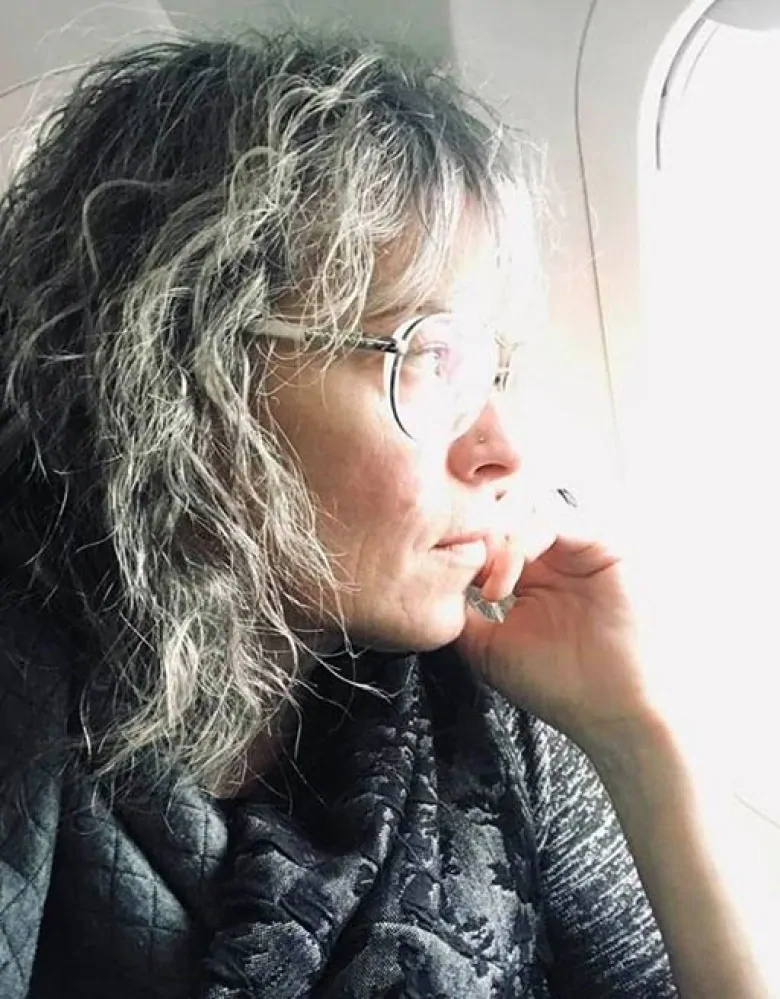
The same cousin began scouring other cousins’ Facebook profiles for anyone who resembled Michelle — and found a photo of Wendy Dunne of Newfoundland and Labrador. Wendy and Michelle both had the family’s trademark prematurely-white hair, and the maiden name of Wendy’s mother Jeanette was Crocker.

“As soon as I saw the photograph, I shook from head to foot,” Michelle said. “I never in my life had seen anybody who looked like me, let alone that much. Like it was literally my eyes in her head, and it was mind-boggling.” 

‘What a spectacular landscape. I met my mother, my sister, my brother and their families yesterday. I do not have a single photo to share though. We were all just enjoying being in the moment,’ Blanchard posted on Facebook. (Submitted by Michelle Blanchard)

Wendy had a very similar reaction in N.L. when the cousin shared a photo of Michelle.

“I was like, ‘Yeah, she’s my sister. I have no doubt.’ At that point, I went, ‘You’re going to have to send me a DNA kit,'” she recalled telling her cousin. 

After Wendy took the test, there were four weeks of waiting. Michelle said she restrained herself from reaching out to Wendy and her birth mother. 

“It was like, ‘Let’s just proceed slowly and gently here, because we might be about to blow up a family,'” Michelle said. 

Michelle said she’ll never forget logging onto the website to see the results, “full sister, Wendy Dunne.” 

‘And then there were three,’ Blanchard captioned this photo of her with her biological sister Wendy, centre, and brother Mark, left. Many in the family have prematurely grey hair, including them. (Submitted by Michelle Blanchard )

She found out she also had a biological brother, Mark, and that her mother Jeanette Dunne (formerly Jeanette Crocker) was still alive and living with Wendy in St. John’s. Their father Blaise died in 2011. 

Michelle and Wendy exchanged phone numbers and immediately began video-chatting. 

In St. John’s, Wendy had received the news from the DNA testing at work and was “thrilled.” She said it only took a few minutes for her to leave the office and drive home to break the news to her mother.

“I said ‘So, I know I have a sister,'” Wendy recalled. “And she started to cry. Then, I started to cry. Then, the conversation started.” 

“I think I was half-prepared,” said Jeanette. She had overheard some of Wendy’s communication with her cousin about DNA in previous weeks, but hadn’t said a word. She’d also caught a glimpse of Michelle’s photo on Wendy’s computer. 

“And when I glanced at the picture I thought, ‘Oh my God, I’m looking at myself,'” Jeanette said. 

Jeanette said although the news made her happy, the first few days she was too overwhelmed to talk to Michelle. 

“It was a relief, first of all,” Jeanette said, breaking down in tears. “It was very emotional, and it still is to a great degree.” 

The most important thing for Jeanette was that Mark and Wendy were OK with the news. 

‘Two peas in a pod,’ was Blanchard’s caption for this photo of her and sister Wendy, who dyed their hair purple after they met. Wendy said she thought it was a fun sister thing to do, and would annoy their mother. (Submitted by Michelle Blanchard)

‘I intrinsically knew her’

The siblings began planning to meet, and decided Michelle would fly to St. John’s on Jan. 11. Michelle suggested they meet at her hotel rather than the airport.

“It was the most incredible moment — we just hugged each other and held each other,” said Michelle, on meeting her biological mother. “I intrinsically knew her. She felt familiar to me, right? I felt an immediate connection to her. And we’ve missed our entire lives together.” 

Jeanette finally got to hold her, and said there were a lot of tears.

She was in my heart all those years but not in my arms.— Jeanette Dunne

“She was in my heart all those years but not in my arms,” said Jeanette, tearfully. She’s 75 and happy she’s alive to meet her eldest child.

The family talked for hours, too busy to even take photos that first day. The cousin who helped solve the mystery also joined them, as she’d been serendipitously in St. John’s for work.

“My entire life I felt like I was missing a sister,” Wendy said. “I told Michelle, ‘I feel like I was waiting for you my whole life.'” 

‘It’s how things were back then’

Jeanette was Catholic and 21, and just as she finished nursing school, got pregnant out of wedlock, which she said was “very taboo.” 

Her priest arranged to have her sent to Charlottetown to a home for unmarried mothers. She wasn’t allowed to see Michelle after she was born. 

“Families back in those days were close to their church,” Jeanette said, who’s no longer Catholic. “I don’t really remember the exact conversations that happened around it when I made it known that I was pregnant. It’s all a little bit foggy, but it’s how things were back then.”

Jeanette’s experience was not unique. According to a Senate of Canada report, between 1945 and 1971 nearly 600,000 so-called illegitimate births were recorded, and many, if not most women living in maternity homes, were pressured into surrendering their children for adoption.

Even though she had married Michelle’s birth father and later had Wendy and Mark, Jeanette said the couple didn’t try to find their first-born — although she said she often thought about her.

“It’s just the way it was,” Jeanette said. “You just carried on with your life.” 

Michelle believes “there’s much to be repaired here,” including an apology from government and free counselling services for those affected by adoption trauma.

Taking it one day at a time

The family is looking forward to seeing each other again, and more members of the extended family want to meet Michelle. 

‘It was a very very different time,’ when Blanchard was born in 1966 and kept secret until now, said her biological mother, Jeanette, left. (Gary Locke/CBC)

Michelle plans to return to the province as soon as possible.  

“I’m a Newfoundlander. It’s the best thing ever,” she said, with a laugh. She even mused on the possibility of moving there, noting “one North Atlantic windswept island to another isn’t really a big cultural change.”  

For now, she said the family is taking it one day at a time and seeing “where the new path is leading us all together.” 

For those considering a DNA test to find relatives, Michelle recommends it “with a grain of salt — if you’re looking for a fairy tale, you’re not going to find it on the other end.” She praised the DNA testing company for warning at each step that users be prepared for life-altering information. 

“Am I glad it turned out this way? You’re darn straight I am. It’s beyond my wildest expectations, but I was ready for whatever it was.”
More P.E.I. news


Source link

Categories
Tech

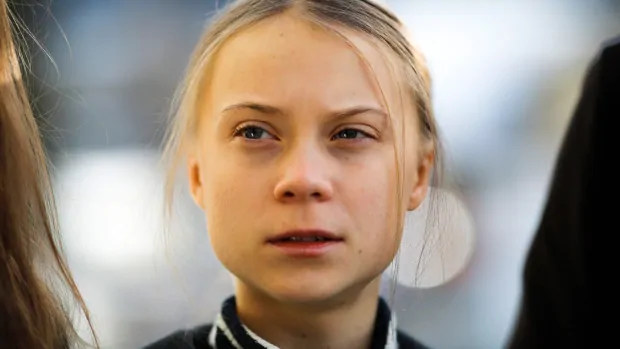
Greta Thunberg nominated for Nobel Peace Prize


Two lawmakers in Sweden have nominated Swedish teenage climate activist Greta Thunberg for the 2020 Nobel Peace Prize.

Jens Holm and Hakan Svenneling, who are both members of Sweden’s Left Party, said Monday that Thunberg “has worked hard to make politicians open their eyes to the climate crisis” and “action for reducing our emissions and complying with the Paris Agreement is therefore also an act of making peace.”

The 2015 landmark Paris climate deal asks both rich and poor countries to take action to curb the rise in global temperatures that is melting glaciers, raising sea levels and shifting rainfall patterns. It requires governments to present national plans to reduce emissions to limit global temperature rise to well below 2 Celsius (3.6 Fahrenheit).

Thunberg, 17, has encouraged students to skip school to join protests demanding faster action on climate change, a movement that has spread beyond Sweden to other European nations and around the world. She founded the Fridays for Future movement that has inspired similar actions by other young people.

Any national lawmaker can nominate somebody for the Nobel Peace Prize, and three members of the Norwegian Parliament nominated Thunberg last year.

In 2019, she was among four people named as the winners of a Right Livelihood Award, also known as the “Alternative Nobel” and she was named Time magazine’s “Person of the Year.”

The Norwegian Nobel Committee doesn’t publicly comment on nominations, which for 2020 had to be submitted by Feb. 1.


Source link

Categories
Tech

One big eye on the sky closes, but bigger one is on the way


After more than a decade and a half of scanning the skies, the Spitzer Space Telescope has been shut down for good. On January 30 the telescope was put in safe mode and ceased operation. Meanwhile, a much larger successor is being readied for launch.

The Spitzer Space Telescope is not as famous as its cousin Hubble, but it discovered aspects of the universe invisible to other telescopes because its instruments were tuned to infrared light. Many telescopes, including Hubble, see primarily in visible light, which is one reason Hubble pictures are so popular with the public. They show astronomical objects as they might appear to us (if our eyes were huge, super-sensitive and in orbit.)  

Spitzer saw the universe through infrared light, basically seeing heat (you may have seen infrared pictures of people where their faces glow brightly while hair and clothing are much darker). To do this, its instruments were super-cooled; it was placed in an orbit that kept it far away from the glow of Earth; and it had a shield that protected it from the heat of the sun. 

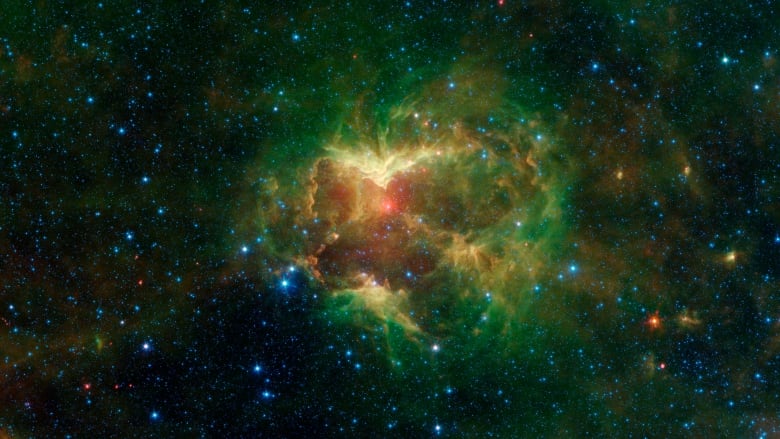
Nicknamed the “Jack-o’-lantern Nebula,” this Spitzer image captures powerful outflows of radiation and particles from a massive star carving through a cloud of dust and gas. (NASA/JPL-Caltech)

All this gave it the ability to see objects in the universe essentially by temperature instead of visible light, which reveals objects that are relatively cool and thus dark in visible light. This included the dust clouds that drift between the stars, and disks around stars that give birth to new planets. It was also able to see deeper into dust clouds that normally block the view of other telescopes.

The Spitzer telescope was named after astronomer Lyman Spitzer Jr., who was first to suggest placing telescopes in space to get a clearer view of the universe high above the Earth’s shimmering atmosphere. It was one of four great space-based observatories that included Hubble, the Chandra X-Ray Observatory, and the Compton Gamma Ray Observatory. Each telescope gave us a different view of the universe, which when combined, filled out details that are far beyond what the eye can see. 

Only Chandra and Hubble are still operating.

Launched in 2003, the Spitzer mission was designed to run for two-and-a-half years. But like many spacecraft, it lasted far beyond its base mission. Its cryogenic coolant ran out in 2009, then it began it’s “warm” phase, where scientists found that the telescope was still very good at studying planets going around other stars. 

One of its targets was the Trappist 1 system, with seven Earth-sized planets, three of them in the habitable zone where liquid water could exist on their surfaces.  

“The Spider and the Fly” nebulaeabounds in star formation, as seen in this infrared image from NASA’s Spitzer Space Telescope and the Two Micron All Sky Survey (2MASS). (NASA/JPL-Caltech)

During its extended life of more than a decade, Spitzer was even able to study the atmospheres of exoplanets, basically giving us weather reports on alien worlds. 

Now that Spitzer has been shut down, its successor, the James Webb Space Telescope is being prepared for launch. This project includes participation from the U.S., Europe and Canada. It involves a 6.5-metre mirror that is so big it had to be built in segments that fold up to fit into the nose-cone of a launch vehicle.

Webb will also see infrared but with a sensitivity that will enable it to peer further into the depths of the universe and further back in time toward the Big Bang than ever before.

Unfortunately, a recent report from the U.S. Government Accountability Department found that the the long-delayed and seriously over-budget Webb may be delayed once again, possibly missing its planned March 2021 launch date. Since development of the telescope began in 1996, the launch date has been pushed back several times and the budget has doubled to $9.7 billion. But whenever Webb does get off the ground and becomes operational, we will have the biggest, most powerful eye on the sky ever launched into space.

Every new type of telescope adds to our ever-expanding knowledge of this incredibly complex universe we live in.

Galileo was the first to point an instrument at the sky, and saw mountains on the moon, other moons orbiting Jupiter, and the sky went from being the domain of mythological creatures into the home of real worlds. As instruments grew larger, astronomers such as Edwin Hubble refined our cosmic address, showing that we live in just one of billions of galaxies spread across an ever-expanding universe. Radio astronomy revealed some of the most violent events, such as supernova and spinning neutron stars. Other instruments have seen the remnants of the big bang itself.

Who knows what we will see next?


Source link

Categories
Tech

Tracking coronaviruses post SARS — how science has made for rapid response


As public health officials around the world remain on high alert, epidemiologists are already much further ahead in their ability to track the current coronavirus outbreak than they were during the 2003 SARS crisis. 

“This virus, we think, has probably circulated in human populations for eight to 10 weeks or so. So it’s truly a brand new virus,” said Dr. David Fisman in conversation with Quirks & Quarks host Bob McDonald. Fisman is an infectious disease physician and professor of epidemiology at the University of Toronto’s Dalla Lana School of Public Health.

The ‘baddies’ that we’ve been experiencing over the last 20 years — the beta coronaviruses — are really animal viruses that jump from animal species to humans.– Dr. David Fisman, University of Toronto

When the SARS coronavirus was spreading around the world, public health officials were still in the dark about what kind of infectious disease pathogen they were dealing with. Even three to four months into the outbreak they still didn’t know if it was a bacteria or virus.

“We’re in a very different place with this virus because quite rapidly, within a couple of weeks of the start of the outbreak, scientists in China had not only sequenced this virus, but they’d made those sequences public,” said Fisman.

The virus behind the current outbreak, officially known as 2019-nCoV, is in the same virus family as those that started previous coronavirus outbreaks such as SARS in 2003 or the MERS outbreak in 2012 which has been contained in the Middle East. 

Coronavirus context for the current outbreak

The viruses behind these recent epidemics are not the same as the human coronaviruses scientists have known about since the mid 1960s — one of the causes behind the common cold. 

“As someone who trained in infectious diseases in the 1990s, coronavirus would sort of be shorthand for a lightweight pathogen — not a particularly worrisome infectious disease,” said Fisman. 

But those are “alpha” coronaviruses, which he said are quite different than the viruses responsible for SARS, MERS and now 2019-nCoV, which can result in much more severe health outcomes, even death. 

“The ‘baddies’ that we’ve been experiencing over the last 20 years, the ‘beta’ coronaviruses, are really animal viruses that jump from animal species to humans,” said Fisman.

He said the emerging concern with the virus that originated in Wuhan, China, is its particular combination of features.

“This virus may have sort of hit the sweet spot between virulence and transmissibility,” he said.

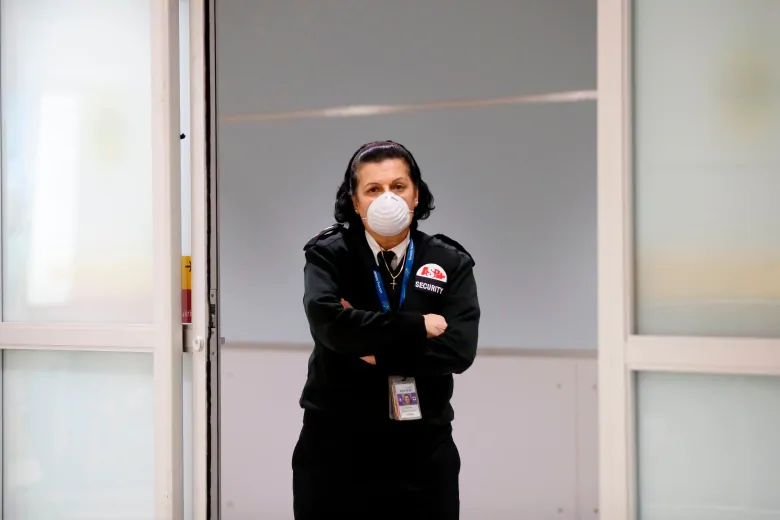
A security guard is seen wearing a mask at the international arrivals area at the Toronto Pearson Airport in Toronto on January 26, 2020. (Cole Burston/AFP via Getty Images)

Much more sophisticated epidemiological toolbox

Not only are scientists better equipped with rapid molecular diagnostic tools that allow them to genetically sequence the virus much more quickly than they were with SARS, but computational power has also given them new ways to use that genetic information to understand the disease and its spread. 

The virus slowly mutates as it spreads through populations. These mutations can be used to construct family trees for the virus, which Fisman said can be used to track how the virus moves around a population.

“Say we have one person infected in one part of China, one person infected in another part of China: We can use a ‘mutation clock’ to back-estimate how far those infections must be from each other in terms of how many people [the virus] passaged through,” said Fisman. 

He said this powerful tool can not only describe and track the current spread of the virus, but it can also inform epidemiologists if they may have missed some cases in their surveillance efforts based on the evolutionary distance between samples of the virus.

“We couldn’t do that in 2003 — it wasn’t a thing,” said Fisman.

Thai nurses and doctors check temperatures of travellers coming from Hong Kong at the Bangkok International Airport April 22, 2003 in Bangkok, Thailand. (Paula Bronstein/Getty Images)

Public health reality check 

It is still early in the current epidemic, but Fisman said public health officials already have a pretty good idea of the seriousness of this virus compared to past outbreaks.

The number of people dying from 2019-nCoV appears to be “quite a bit higher” than seasonal influenza, yet lower than SARS or MERS.

Fisman describes the risk from the current coronavirus to Canadians — as of Thursday, January 30 — as “zero.”

As Albert Camus said, people always think that plagues and wars or things that happen in times other than their own. And that really holds us back in terms of investing when times are good and we have resources.– Dr. David Fisman, University of Toronto

“I think people do overestimate the risk of emerging infectious diseases,” Fisman said. He pointed to work done by cognitive scientists that suggests people perceive risks to be greater when the risk is novel or something unknown. 

“It doesn’t get much more novel, and much more unknown, than a virus that emerged 10 weeks ago that we don’t really know very much about,” he added.

We still have a lot to learn about the coronavirus behind the current outbreak, but Fisman said one of the lessons we can already learn is we need to be more proactive in investing in preventative measures like vaccines. 

He points out that the WHO already knows a great deal about the families of infectious diseases likely to cause outbreaks, but nations invest relatively little in the kind of work necessary to prevent them. Most action and investment happen after a crisis has occurred.

“As Albert Camus said, people always think that plagues and wars or things that happen in times other than their own,” Fisman said. “And that really holds us back in terms of investing when times are good and we have resources.” 


Source link

Categories
Tech

A charger that works for all new smartphones? The EU wants to make it happen


It can be annoying to run out of smartphone battery power — and even more irritating to find someone with a charging cable in the nick of time, only to discover it’s not compatible with your device.

A solution may be coming from an unlikely source: the European Union.

EU lawmakers agreed this week to forge ahead with a plan to push device manufacturers — namely Apple — to all use the same, standard charger for their devices.

In Europe, it could spell the end of the iPhone’s signature Lightning cable. And despite protests from Apple, the decision may force the tech giant to adopt a universal charging cable for users around the world.

What does the EU want?

Aiming to cut down on electronic waste, European officials have been asking cellphone makers to agree on a common charging cable for more than a decade. In 2011, they even put out a video showing several people eating from the same spoon to illustrate how “life is easy when one solution satisfies all.”

WATCH| The European ad promoting a standardized charger for all smartphones.

[embedded content]

While most new devices now use the same type of USB connector, Apple products remain the major outliers, with iPhones and most iPads still charging and transferring data through the company’s proprietary Lightning port.

As early as 2009, major cellphone manufacturers agreed to harmonize their chargers and adopt the Micro-USB standard. Apple found a workaround, though: it sold adapters and ultimately kept its own, separate type of connector.

On Thursday, members of the European Parliament (MEPs) voted overwhelmingly (582-40) to finally get a handle on this problem, and soon. They ordered the EU Commission, the executive branch, to take action by July and “introduce the common charger without any further delay.”

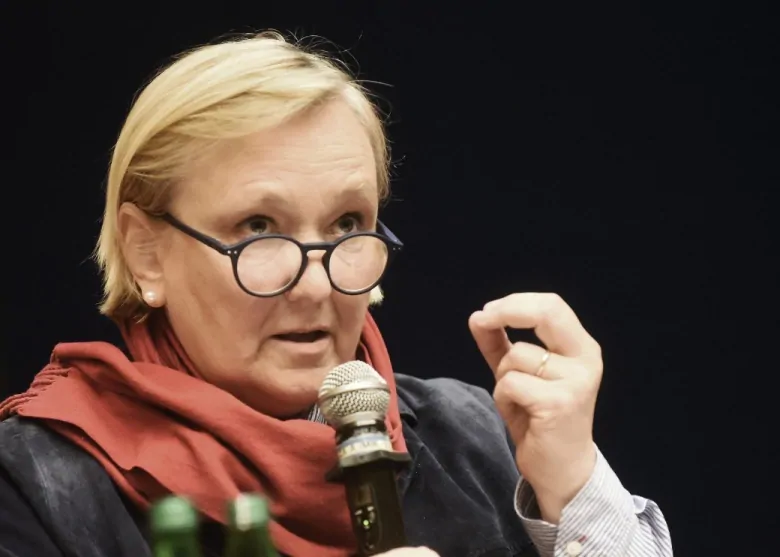
Polish MEP Roza Thun serves on the European Parliament’s consumer protection committee. (rozathun.pl)

Polish MEP Roza Thun said they expect a proposal to establish a standard common charger for smartphones, digital cameras, e-book readers and tablets and similar devices within the next six months.

The resolution doesn’t mention what type of charger should be adopted, but the USB-C standard is now the most common among newer devices.

Will this really help cut down on waste?

The European legislators say it will make a big difference in reducing electronic waste. Their resolution notes “around 50 million metric tons of e-waste is generated globally per year, with an average of more than 6 kg per person.” 

It says a growing number of people own more than one device and that the electronics tend not to last for very long.

“These trends lead to the production of additional e-waste, including chargers,” the resolution reads.

The MEPs’ goal is to cut down on the number of different chargers that users need to buy — and which ultimately end up in a landfill.

“We are drowning in an ocean of plastics, cables, chargers and other electronic waste,” Thun said.

Apple, though, says making users throw out their Lightning cables will actually create additional garbage and irk customers.

What could it mean for Canadians?

If Apple is forced to comply with European standards by installing a universal connector — eliminating its Lighting port — it’s unlikely the Silicon Valley behemoth would create Europe-specific iPhone and iPad models. In other words, such a major redesign would probably be rolled out across new Apple devices around the world.

The USB-C standard remains the most common connector for new smartphones, other than Apple’s iPhone. (Alexander Evgenyevich/Shutterstock )

Jean Philippe Bouchard, a vice-president at the communications and technology analysis firm IDC Canada, said Apple is “not the type of hardware manufacturer that will design a specific device just for a market.” He noted several slight variations of the iPhone exist for different countries, but mainly to adjust for locally used frequency bands.

What kinds of chargers are available now?

German MEP Andreas Schwab suggested European lawmakers were to thank for reducing the number chargers “from 30 to only 3” since 2009.

USB-C is now the most common type of charger for new smartphones. Recent Samsung, Google, Motorola, Huawei, HTC and LG models all have it. USB-C generally ensures faster charging and data transfers than older types of USB connectors. It’s also reversible, meaning a user is less likely to damage a device by trying to jam in the connector the wrong way. 

Micro-USB connectors may be older and slower, but they’re still used in lower-end models on the market.

Apple’s proprietary Lighting cable remains highly popular due to the sheer volume of iPhones on the market. Apple no longer publicly discloses how many it sells, but in 2018 the company said it had shipped some two billion mobile devices to date.

What does Apple say about the change?

Apple has pushed back against standardizing connectors, saying the change would create more waste and that eliminating the Lighting cable isn’t necessary.

“We believe regulation that forces conformity across the type of connector built into all smartphones stifles innovation rather than encouraging it, and would harm consumers in Europe and the economy as a whole,” Apple said in a statement earlier in January.

The company commissioned a study by the Copenhagen Economics research firm, which showed “consumer harm” —the cost to consumers — from a regulatory-mandated move to a common charger would cost at least 1.5 billion euros ($2.2 billion), and that environmental benefits would total less than 10 per cent of that amount.

Stuart Robinson, the U.K.-based director of the handset component technologies service at Strategy Analytics, said Apple’s resistance to change is likely due to the profit it makes from producing and selling its own accessories.

“They add a huge markup for chargers that can only be used for their devices,” he said.

But, for the sake of the environment, he said, they really ought to get on board with a standard connector.

What about wireless charging?

Wireless charging may yet prove to be a longer-term solution, but only if all smartphone makers can get behind a single standard, meaning one kind of charger could be used for various phones.

Manufacturers are already moving in that direction. Unlike charging cables, some wireless chargers can handle newer Apple, Samsung and LG phones, among others.

USB-C to Lightning cable adapters are seen at an Apple Store. (John Gress/Reuters)

Some chargers even come with a bonus feature: the ability to charge a phone, wireless earbuds and smartwatch, all at the same time.

The newer type of chargers remains less common, though, and Robinson noted they still aren’t widely available in cafes and airports.

“Wireless charging,” he said, “still is not utopia.”


Source link

Categories
Tech

Advertisers can digitally add product placements in TV and movies — tailored to your digital footprint


Advertisers are starting to deploy technology that can place products inside finished films and TV shows you stream online, and tailor those products specifically to your tastes. 

“We can take a 3D object and put it into the scene, and because the 3D objects sit in the cloud, we can change them based on almost any variable,” said Roy Taylor, the founder and CEO of Ryff, a company offering the technology.

This virtual product placement is based on the same ideas as the traditional version: advertisers believe if you see a movie star drinking a can of Coca-Cola in a scene, you’ll want to buy one yourself.

The new technology allows one of thousands of products in the cloud to be inserted, in real time, into online streaming content, Taylor told The Current’s Matt Galloway.

Traditional product placement generated over $11 billion US worldwide in 2019, according to figures from marketing and consumer data company Statista. On Sunday, millions will tune in to Super Bowl LIV, where a 30-second commercial will cost $5.6 million US.

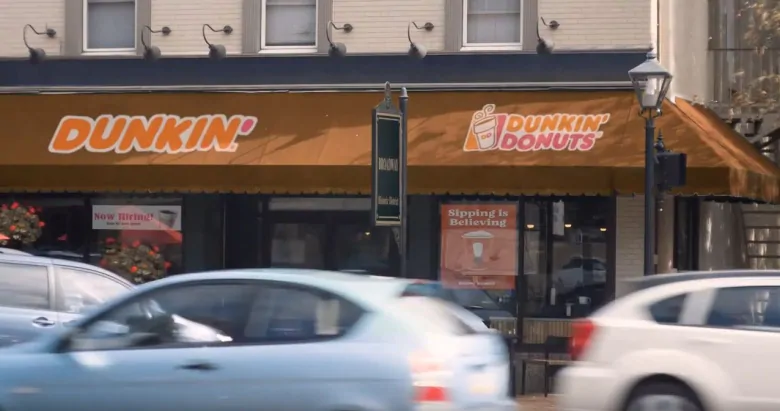
In Ryff’s promotional video, the Dunkin’ Donuts branding on the storefront has been digitally added to the scene. While targeted ads rely on broad demographics, they could one day be tailored to each individual’s shopping habits. (Ryff/YouTube)

Taylor said the burgeoning market for virtual product placement could be worth billions, and while it’s only being used in streaming services now, it could eventually be applied to live sports events like the Super Bowl.

“You can take the ability to use modern digital technology to completely revamp the advertising industry.”

Right now, the choice of product is based on broad demographics. The information compiled from your online activity — your age, location, gender, ethnicity, as well as sites you visit — puts you in a category of people like you who tend to buy certain things. 

But Taylor said the technology will advance to harvesting our individual online footprints. 

For instance, a meat-eater watching a movie could see chicken or beef products in a kitchen scene, while a vegan watching the same show — at the same time, but on a different screen — would see fruits and vegetables. 

“It will happen as soon as early next year,” he said.

[embedded content]

Technology removes ‘guesswork’

Companies have long placed products conspicuously in the media we consume in an effort to boost sales — but Taylor says it’s always required some guesswork.

“When you put a product into a scene, to a certain extent, you’re having to guess that the cultural relevance of your brand works for the widest audience,” he said.  

Even if studios know they want to advertise different products to different audiences (for example, based on the different products available in North America or Europe), they need to shoot the scene multiple times, or add the products using editing tools in post-production.

“But that’s slow and very expensive,” he said.

“Now that we, especially in streaming, we know who’s watching, we don’t have to guess anymore.”

The advertising world has figured out that if you serve an ad that someone is in a state of mind to accept, then they’ll accept it.– Tiffany Hsu

Galloway asked if there were any classic films or shows that would be deemed off limits, such as E.T., where the alien famously loves Reese’s Pieces. Could we see him one day eating a new flavour of M&Ms instead?

He acknowledged that with older movies and shows that have become fan favourites, tampering with the classics may not be such a good idea. 

“Just because you can doesn’t mean you should,” Taylor said.

“There are iconic pieces of content where we would probably be very unhappy if we were asked to support any change. But there are plenty of others where I don’t think the viewer would mind whatsoever.”

Advertisers may not want to tamper with some classic films, like E.T. the Extra-Terrestrial, Taylor said. (Universal)

Some viewers hate it: journalist

Journalist Tiffany Hsu said it’s hard to tell how effective the placements is, in terms of marketing a product. 

“There’s a group of consumers that absolutely hate it, and every time it comes on screen, they want to turn off whatever program they’re watching,” said Hsu, who covers the advertising industry for the New York Times.   

“But for a lot of other viewers, it’s just a blip — it goes by.”

She said people will generally respond well to advertising aimed at them. Younger viewers, for example, are willing to see ads aimed at their age group, but not for products directed at their grandparents or teachers. 

“This is why there’s so much of a focus on customizing ads, because the advertising world has figured out that if you serve an ad that someone is in a state of mind to accept, then they’ll accept it.”

Demcratic candidate Michael Bloomberg and U.S. President Donald Trump will air ads during this year’s Super Bowl, placing their campaigns in front of the large television audience. 3:10

Ads can even be the main event, she added. This weekend, viewers in the U.S. who record the Super Bowl on their TiVos will have the option to skip the football and just watch the ad breaks instead. (In Canada, the CRTC decision that directed Canadian networks to show U.S. ads was overturned in December.)

“TiVo understands that this is a special situation where people actually want to see those ads,” she told Galloway.

“Now, is TiVo doing this for the Oscars? Probably not.” 


Written by Padraig Moran. Produced by Peter Mitton and Ben Jamieson.


Source link