Categories
Tech

How Teck Frontier became a symbol of the future Canada refuses to confront


The spring of 2020 may be remembered as a pivotal season for both Justin Trudeau and the country — a time of reckoning and reconciling, of Wet’suwet’en and Teck Frontier and the future of the planet.

These are trying moments for the country and its leader. But it might also be harder these days to find a path through the tumult.

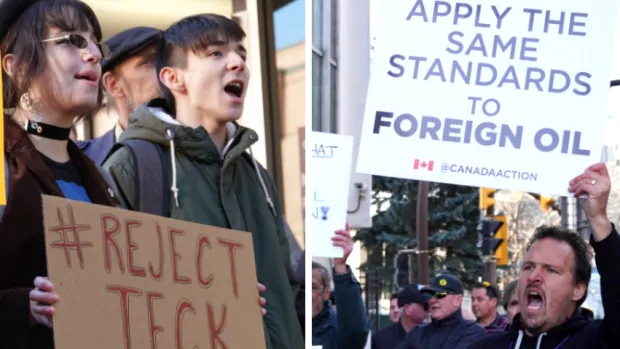
On its own merits, Teck Frontier probably didn’t deserve to be framed as a litmus test of anything. On one hand, its economic viability was in serious doubt; on the other, its emissions weren’t necessarily going to be decisive in Canada’s pursuit of its international climate targets. But its loudest proponents and opponents framed it as a referendum on the future of either the oil sector or the climate.

If more had been done over the last 30 years to settle the climate questions now casting a pall over the next 30 years — if Canada had a clear route to net-zero emissions and a better understanding of how the oil and gas industry would fit into that world — Teck Frontier wouldn’t have had to carry so much symbolic weight.

Given the crosses the project was being asked to bear, maybe it’s not surprising that its investors decided to walk away. It’s also possible that, if the project had a real chance of ever turning a profit, Teck Resource’s directors would have stuck it out.

Alberta Premier Jason Kenney, Opposition Leader Rachel Notley and Edmonton Mayor Don Iveson agree that the Frontier oilsands mine would have brought work to Alberta – but have different ideas about why the project failed to go forward. 3:08

Regardless, Alberta Premier Jason Kenney seems eager to lay all blame at Justin Trudeau’s feet. Teck’s withdrawal promises to be a significant new source of anxiety and anger.

The dispute over Wet’suwet’en territory in northern British Columbia is also less than perfectly simple — with new voices speaking out, it cannot even still be described as a conflict strictly between elected and hereditary chiefs. But it has become a focal point for questions about Indigenous rights and reconciliation that are long overdue for answers.

For good measure, the Alberta Court of Appeal ruled on Monday that the federal government’s carbon price is unconstitutional, contradicting rulings made in Ontario and Saskatchewan — news that seemed to significantly brighten Kenney’s mood. The matter was headed for the Supreme Court anyway, but the Alberta ruling was one more complicating factor for Trudeau at a time when he already has plenty.

The idea of reconciliation is synonymous with efforts to deal with the unresolved questions and injustices in the relationship between the modern Canadian state and the Indigenous peoples who first occupied this land. But the things at issue right now — what Trudeau has put at the forefront of his government’s agenda — are really three separate but overlapping matters in need of reconciliation.

There is that need to reconcile with Indigenous peoples. There is a need to reconcile with the current reality and future of Canada’s fossil fuel industries. There is a need to reconcile Canadian society and government policy with the goal of reducing this country’s greenhouse gas emissions to net-zero by 2050 — a goal that is in line with international efforts to limit the damage caused by climate change.

And then there’s the need to reconcile all of these things with each other.

The prime minister loses his balance

Broadly speaking, Trudeau has sought — implicitly or explicitly, through words and actions — to balance what are often competing interests. He implemented a national price on carbon and a new plan to protect the marine environment off the coast of British Columbia — and then he approved (and later purchased) the Trans Mountain expansion.

Profits from the existing pipeline have been committed to fund clean technology projects. Consultations with Indigenous and local communities have been held up as a priority, but no one community (or province) has been allowed to veto a project.

Essentially, he has tried to argue for doing three things simultaneously: advancing reconciliation, buttressing the short-term situation and medium-term future of the Prairie-based oil and gas sector, and reducing Canada’s emissions for the long-term.

That balancing act is very vulnerable to attack. For one thing, those goals will sometimes come into direct conflict — through Indigenous communities objecting to a pipeline, environmentalists condemning development of the oilsands or Alberta politicians condemning new environmental regulations.

On any issue, the loudest voices are the ones least likely to ever be satisfied. And Trudeau can be accused of not moving fast enough or far enough in any one direction.

Trudeau also can’t claim to have carried this off with elegance. Things have gotten messy.

Conservative Leader Andrew Scheer linked the Prime Minister Justin Trudeau’s response to blockades with Teck’s decision to withdraw its application to build a massive oilsands project in northern Alberta. 0:58

Trudeau’s political opponents have chosen to attack his approach by prioritizing different elements. In their rhetoric and their promises, the Conservatives emphasize resource development above all else. In the last federal campaign, Andrew Scheer’s party showed only a passing interest in reducing Canada’s greenhouse gas emissions. Until last week, Scheer had not used the word “reconciliation” in the House of Commons since becoming Conservative leader.

Jagmeet Singh’s New Democrats, meanwhile, are eager to call for stronger climate policy and quicker reconciliation, but generally take a dim view of resource development. Singh loudly opposed the Trans Mountain expansion (to the consternation of Rachel Notley, the former NDP premier of Alberta) and he then backed away from supporting LNG Canada (which has the support of John Horgan, the current NDP premier of British Columbia).

It is tempting to look at the protests and blockades of recent days and wish for something or someone to bring about calm and harmony. But it’s not obvious that the Conservative or NDP approaches would lead to less disagreement.

The Ontario Provincial Police have begun to remove demonstrators from the camp near Belleville, Ont. Protests by the Mohawks of Tyendinaga have shut down passenger and freight train traffic for more than two weeks. 7:58

A Prime Minister Scheer likely would be facing significant climate and Indigenous protests right now — though he apparently wouldn’t hesitate to order the police to break up any serious disruptions.

A Prime Minister Singh likely would have even more trouble in the Prairies. It’s one thing to insist on a speedy move away from fossil fuels, quite another to actually push through that change with the support of those who will be most directly affected. Though New Democrats are keen to talk about a “green new deal” and a “just transition” for energy workers, the NDP leader spent just one day in Saskatchewan during the last election campaign and skipped Alberta entirely.

Trudeau’s meditation on the current discourse last week suggests he’s been thinking about the state of things and, perhaps, sees some role for himself as a voice of reason.

Traditional chiefs of the Wet’suwet’en First Nation are in Kahnawake, Que., this week to tour Mohawk communities where blockades have been erected in solidarity with their cause, as the PM says the barricades on rail lines must come down. 12:56

“In this country, we are facing many important and deep debates, debates about the future livelihoods of our children, the future of our environment, our relations with countries around the world and our positioning on things that are fundamental at a time of anxiety,” he said. “More and more Canadians are impatient to see those answers. More and more people are frustrated that there is such uncertainty. More and more we see those debates carried with increasing intensity on the margins of our democratic conversations.

“Yes, there is always a place for Canadians to protest and express their frustrations, but we need to ensure we also listen to each other. The reality of populism, and its siren song in our democracies these days, is a desire to listen only to ourselves and to people who agree with us, and not to people of another perspective.”

The space between the extremes

Those on the left might dismiss all that as the talk of a squishy centrist. Those on the right doubtless would point out that Trudeau has not always acted like a model of humility or a leader interested in hearing other perspectives.

His remarks could be read as describing the twitterization of political debate and an era that rewards instantaneous reaction and outrage. (Hours before Teck Frontier seized the internet’s attention, Scheer was tweeting criticism of a university professor’s comments about the popular animated kid’s TV show Paw Patrol. The Russian agents using social media as a tool for sowing discord in western democracies know what they’re doing.)

But if these debates are being defined by voices at the margins, Trudeau could be asked whether he’s doing enough to occupy the space between those extremes — with both words and actions.

In times like these, platitudes and value statements might not suffice. No one needs to hear Trudeau say the economy and environmental protection go together. They need to hear how they go together.

Two years ago, Trudeau announced the government’s intention to move forward with a new framework for the recognition of Indigenous rights. After internal disagreement — Jody Wilson-Raybould was highly critical of the approach taken by Crown-Indigenous Relations Minister Carolyn Bennett — and external complaints, the Trudeau government put that framework on hold.

That framework might not have prevented the unrest of the last two weeks, but it would at least have been something for Trudeau could point to. As others have noted, reviving the conversation around rights recognition seems like the sort of thing that could push the debate forward now.

If Teck Frontier’s demise speaks to a foreseeable limit to the oil and gas industry, that only means the need to talk now about the future of Alberta’s economy and its possible paths of transition is newly urgent.

“Global capital markets are changing rapidly and investors and customers are increasingly looking for jurisdictions to have a framework in place that reconciles resource development and climate change,” Don Lindsay, chief executive officer of Teck Resources, wrote Sunday in a letter to Environment Minister Jonathan Wilkinson.

The Liberals can try to point to Jason Kenney’s intransigence on climate policy as a significant obstacle to such clarity — and the route to a low-carbon future goes through Alberta — but it’s the Liberals who have promised to lay out a path to net-zero emissions in 2050. An already challenging political promise may have become a market imperative.

The future arrived over the last two weeks. The obstacles to Trudeau’s reconciliation promises have been put in stark relief.

Canadians will now see whether he can chart a path forward.


Source link

Categories
Tech

'We've seen some weird stuff': Scientists release 1st findings from Mars InSight mission


Imagine living in a world where the nighttime temperature drops to –95 C and then barely reaches –10 C during the day. There is a constant threat of dust devils — small whirlwinds, similar to tornadoes. And the ground trembles.

For future humans exploring Mars, this could be their reality.

The first findings from NASA’s Mars InSight mission, which landed on November 2018, were published Monday in the journals, Nature Geoscience and Nature Communications. The five individual papers studied weather conditions, seismic activity (marsquakes rather than earthquakes), geology, the planet’s weak magnetic field and even sound.

Those findings are painting a picture of what living on Mars could one day look like.

“We’ve seen some weird stuff,” said Don Banfield of Cornell University, who leads InSight’s weather science and a lead author of one of the papers.

Banfield is particularly intrigued by one mystery on Mars: dust devils. The instruments on the InSight lander detected upwards of 10,000 “convective vortices,” where air pressure suddenly drops and then rises, indicative that air is swirling nearby. But the only thing is, they can’t see them. It’s like an invisible mini tornado.

These vortices show up on InSight’s pressure sensors, as well as the highly sensitive seismometer — which measures ground disturbances — but they’re not kicking up dust to make a visible dust devil.

“You can certainly have a vortex go by and it doesn’t kick up any dust, but it’s a dusty place [where] we landed,” Banfield said, referring to the lander’s location called Cerberus Fossae. “There are tonnes of these things going by, and yet every time we’ve looked — and it’s several hundred images that we’ve taken — we’ve seen absolutely zero dust devils.”

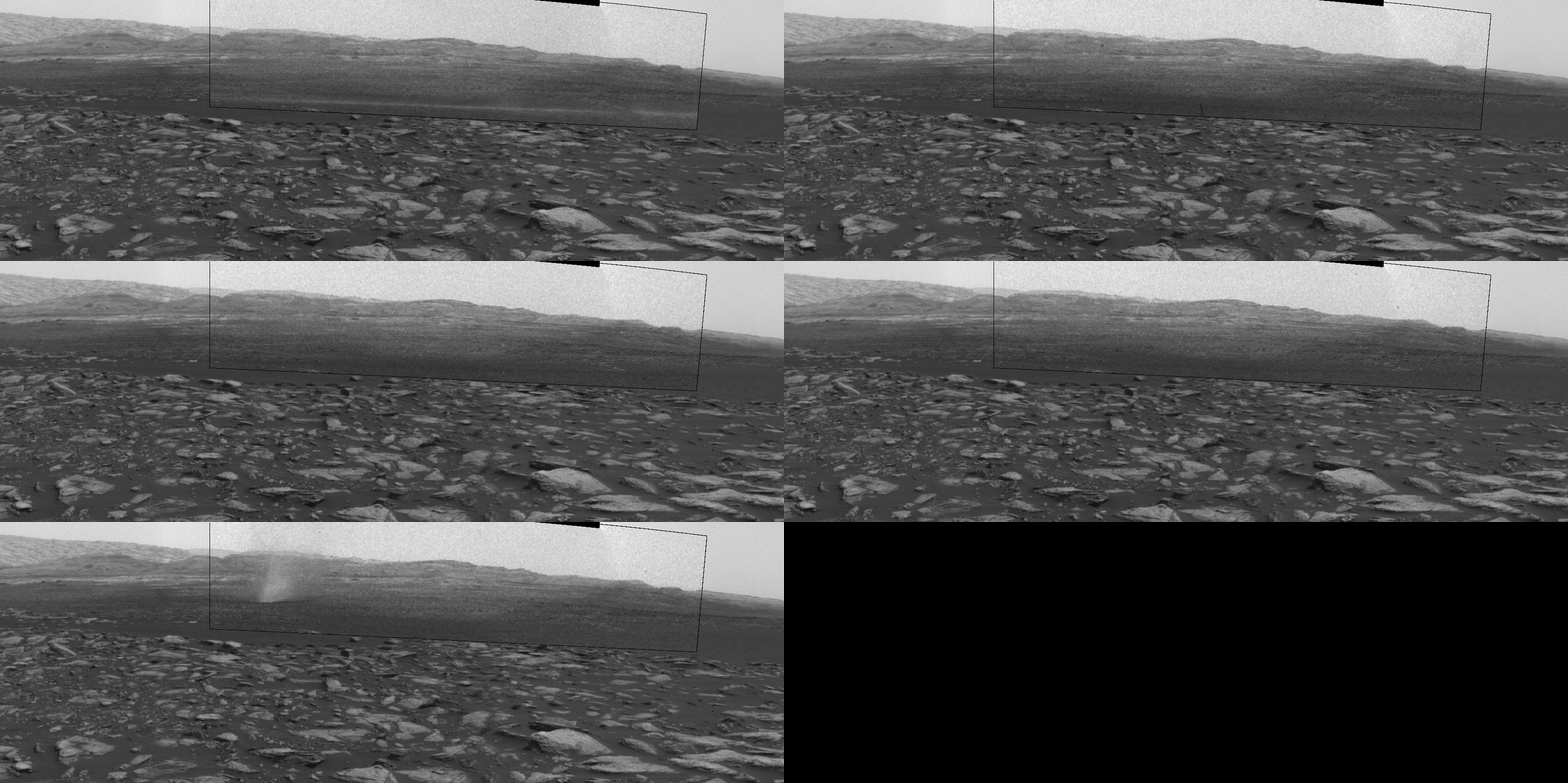
This sequence of images shows a dust-carrying whirlwind, called a dust devil, scooting across the ground inside Gale Crater, as observed on the local summer afternoon of NASA’s Curiosity Mars on Feb. 1, 2017. (NASA/JPL-Caltech/TAMU)

And the mystery deepens: Using NASA’s Mars Reconnaissance Orbiter’s High Resolution Imaging Science Experiment (HiRISE), they can see fresh tracks around InSight, confirming these vortices have been swirling around the lander.

“I think it suggests to us that we don’t understand dust-lifting on Mars,” Banfield said.

And it’s important that we do. On Earth water is the main driver of weather, but on Mars, it’s the dust. 

InSight has also done a fair bit of “listening” to Mars and has picked up infrasound, sound waves at frequencies lower than humans can typically hear, which is roughly 20 hertz. InSight can pick up sound as low as 10 hertz.

“Elephants could hear it,” Banfield said. “I guess if we had elephants on Mars, they’d be able to hear the stuff that InSight can hear.”

And this is something entirely new, he noted, which researchers hope to explore further to better understand the infrasound. 

InSight was also able to image noctilucent clouds, similar to those rare, electric-blue ones seen in polar regions on Earth.

NASA’s InSight photographed these noctilucent clouds at sunset on April 25, 2019. At centre is the lander’s seismometer. (NASA’s Mars InSight)

In general, clouds on Mars are quite remarkable, Banfield said.

The atmosphere on Mars consists of mostly carbon dioxide, or CO2, with some water vapour. (Earth’s atmosphere is mainly nitrogen.) 

But on Mars, the atmosphere is cold enough that the clouds might be frozen CO2. Basically, clouds on Mars could be dry ice.

Shaking it up

The seismometer also picked up marsquakes from deep below the ground. 

On our planet, earthquakes are caused mainly by shifting tectonic plates, large sheets of rock. But Mars doesn’t have tectonic plates. 

Suzanne Smrekar, InSight’s deputy principal investigator, said that, instead, the marsquakes could be caused by other sources, such as the cooling of the planet, volcanism or things slamming into the surface causing faults that weaken and shift.

Another hypothesis, Smrekar said, could be that water ice below the surface could be heated by magma, which pressurizes it and then allows it to escape through a crack in the rock. That in turn produces a unique frequency “like an organ” that has been picked up by InSight.

Watch and listen to marsquakes detected by InSight:

[embedded content]

“Certainly some of the types of quakes that we see are consistent with some of the types of quakes caused by the motion of magma or motion of water under the ground,” Smrekar said.  

“That doesn’t mean it’s the right explanation. It just means it’s a possibility.”

But future Martians needn’t worry: the quakes are believed to be so deep below the surface they wouldn’t be detectable. At least, that’s what the data has shown so far. 

Clues to Mars’s past

Scientists believe that billions of years ago Mars was a potentially habitable world, complete with an ocean covering most of the northern hemisphere and a magnetic field like Earth’s protecting any potential life below. 

But today, it is a dry, dusty planet, with barely any global magnetic field at all, rendering it inhospitable for life as we know it. 

Though NASA’s Mars Atmosphere and Volatile Evolution spacecraft (MAVEN) currently in orbit around the planet revealed that Mars did at one time have a magnetic field, scientists wanted to get more information from the ground, so they put an extremely sensitive instrument on board to measure magnetic fields. 

And so far, InSight’s findings have provided a few surprises.

“We were definitely surprised by how much stronger the [magnetic] field was: 10 times stronger,” said Catherine Johnson, planetary scientist at the University of British Columbia and Planetary Science Institute in Tucson, who is a co-investigator on the international team studying magnetic fields on Mars and lead author of one of the papers.

“It’s not unreasonably stronger, but because we didn’t know, we were like, “Wow, OK!'”

InSight snapped this image of sunset on Mars. Rather than being red on Earth, sunsets are blue on the planet. (NASA/JPL-Caltech)

As well, they found different sources of magnetization: from four-billion-year-old rocks buried kilometres below the surface to the changes between night and day to even magnetic pulses on the order of a second to minutes, which they didn’t think they’d detect. 

“That was a big surprise to many people who thought we just wouldn’t see things like that,” Johnson said.

In all, the findings are a meeting of the past and the future: it allows us to see the evolution of a planet that went from potentially habitable to devoid of any life we can detect, and it provides an opportunity to explore what future generations who might one day call Mars home can expect.

“I think we still have some work to do before we understand all the risks and challenges of putting people on Mars,” Banfield said.


Source link

Categories
Tech

Katherine Johnson, NASA mathematician portrayed in 'Hidden Figures,' has died


NASA says Katherine Johnson, a mathematician who worked on NASA’s early space missions and was portrayed in the film Hidden Figures, about pioneering black female aerospace workers, has died.

In a Monday morning tweet, the space agency said it celebrates her 101 years of life and her legacy of excellence and breaking down racial and social barriers.

Johnson was one of the so-called “computers” who calculated rocket trajectories and earth orbits by hand during NASA’s early years.

Until 1958, Johnson and other black women worked in a racially segregated computing unit at what is now called Langley Research Center in Hampton, Virginia. Their work was the focus of the Oscar-nominated 2016 film.

In 1961, Johnson worked on the first mission to carry an American into space. In 1962, she verified computer calculations that plotted John Glenn’s earth orbits.

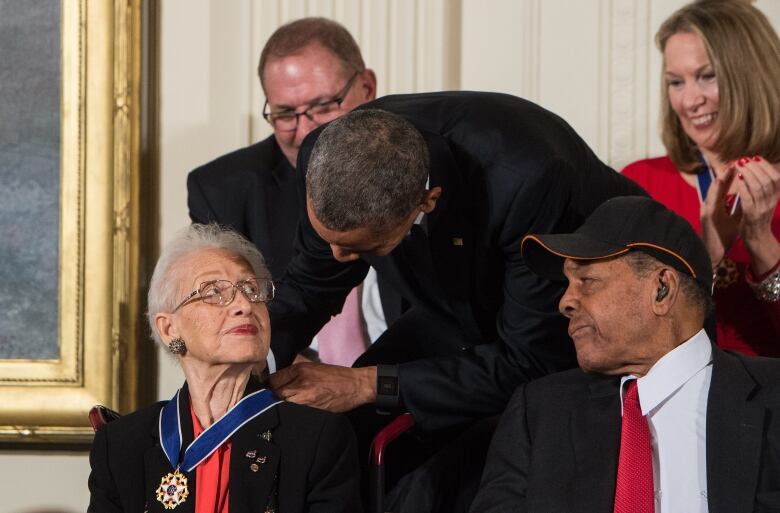
At age 97, Johnson received the Presidential Medal of Freedom, the nation’s highest civilian honour.

US President Barack Obama presents the Presidential Medal of Freedom to NASA mathematician and physicist Katherine Johnson at the White House in Washington, DC, on November 24, 2015. (Nicholas Kamm/AFP/Getty Images)


Source link

Categories
Tech

California man dies in rocket crash after launching to see if Earth is flat


A California man who said he wanted to fly to the edge of outer space to see for himself if the world is round has died after his home-built rocket blasted off into the desert sky and plunged back to earth.

“Mad” Mike Hughes was killed on Saturday afternoon after his rocket crashed on private property near Barstow, Calif.

Waldo Stakes, a colleague who was at the rocket launch, said Hughes, 64, was killed.

The Science Channel said on Twitter it had been chronicling Hughes’s journey and that “thoughts & prayers go out to his family & friends during this difficult time.”

“It was always his dream to do this launch,” the Twitter message said.

Hughes was also a limousine driver who held the Guinness world record for “longest limousine ramp jump,” for jumping 31 metres in a Lincoln Town Car stretch limousine, at a speedway in 2002.

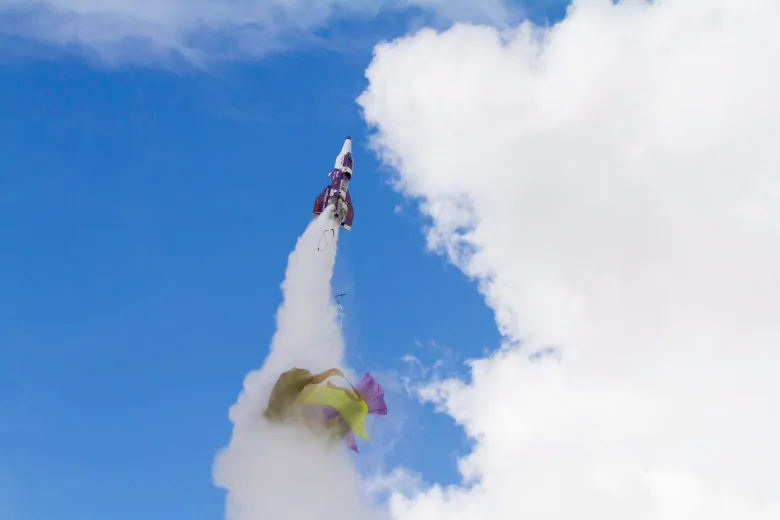
A video on TMZ.com showed the rocket taking off with what appears to be a parachute tearing off during the launch. The steam-powered rocket streaks upward, then takes around 10 seconds to fall straight back to earth. Shrieks can be heard as the rocket plows into the desert.

Freelance journalist Justin Chapman, who was at the scene, said the rocket appeared to rub against the launch apparatus, which might have caused the problem with the parachute.

Hughes’s rocket takes off Saturday with what appears to be a parachute tearing off during its launch near Barstow, Calif. Hughes said he wanted to fly to the edge of outer space to see if the world is flat or round. (Mercedes Blackehart via Associated Press)

In March 2018, Hughes propelled himself about 570 metres into the air. He deployed one parachute and then a second one, but he still had a hard landing in the Mojave Desert in California and injured his back.

“This thing wants to kill you 10 different ways,” Hughes said after that launch. “This thing will kill you in a heartbeat.”

‘I don’t want to take anyone else’s word for it’

He said in a video that his goal was to eventually fly to the edge of outer space to determine for himself whether the world is round.

“I don’t want to take anyone else’s word for it,” he said in the video, posted on the BBC News website. “I don’t know if the world is flat or round.”

The rocket plunged back to earth near Barstow, killing Hughes, 64. (Mercedes Blackehart via Associated Press)

In another video posted on his YouTube site, Hughes said he also wanted “to convince people they can do things that are extraordinary with their lives.”

“My story really is incredible,” Hughes once told The Associated Press. “It’s got a bunch of story lines — the garage-built thing. I’m an older guy. It’s out in the middle of nowhere, plus the Flat Earth. The problem is it brings out all the nuts also.”


Source link

Categories
Tech

Going green: Why some are 'letting nature do its thing' when it comes to burials


When it comes to choosing a final resting place, some advocates want people to skip the varnished casket — and think outside the box.

For Dawn Carson, the less that goes underground with you, the better.

“There is a way for us to give back to the earth in our last act rather than to further deteriorate it or to pollute it,” said Carson, chair of Green Burial Nova Scotia.

Eco-friendly burials typically involve skipping the embalming process and choosing a shroud, or a simple coffin.

The Ecology Action Centre working group is attempting to create more green burial options throughout the province to minimize the environmental impact of conventional North American burial practices.

“We’re trying to encourage landowners to develop green burial sites, or cemetery owners to convert over to green burial sites,” said Carson. 

“Then, on the other side, we’re trying to educate the public to ask funeral directors and cemetery owners about green burials and whether it’s available, and if they could do that.”

‘Letting nature do its thing’

Carson said a conventional burial often involves “digging a deep grave, lining it with concrete, putting in a steel-lined casket which typically would contain an embalmed body, and the wood to make the casket is usually some sort of exotic foreign wood.”

“All of that gets buried in the ground for no particular reason,” said Carson. “It’s not necessary to do all of that.

“That practice keeps the body from breaking down for decades as opposed to … letting nature do its thing.”

Aside from what’s going into the ground, the process of manufacturing and transporting caskets and headstones can also leave an ecological footprint.

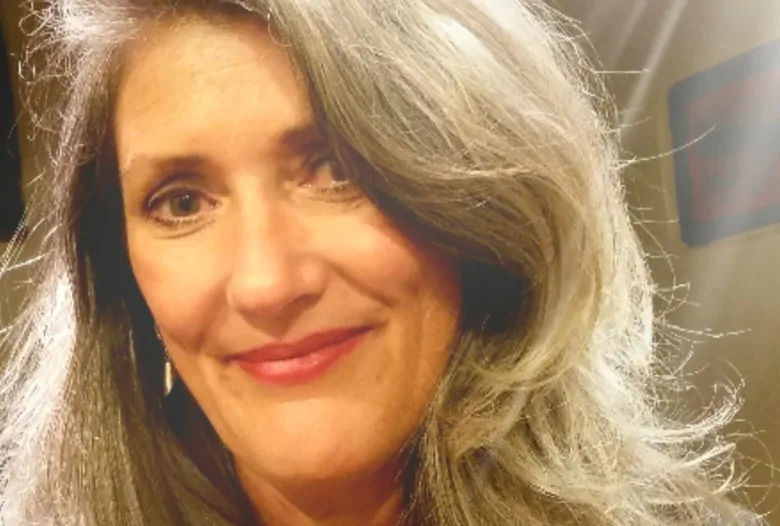
Dawn Carson is the chair of Green Burial Nova Scotia. (Submitted by Dawn Carson)


A green burial, meanwhile, allows the body to decompose as naturally as possible and aims to cut back on man-made products.

Cremation is also a no-no for those looking to have a green burial. While it may save some underground space, the Ecology Action Centre says a single cremation uses as much energy as an 800-kilometre car trip. 

Hybrid cemeteries

Nova Scotia doesn’t have any fully-green cemeteries, but some graveyards are adopting green burials.

The province is home to three “hybrid cemeteries” offering both conventional and green burials: Pleasant Hill Cemetery in Lower Sackville, the Burlington Cemetery in Burlington and the Sunrise Park Inter-Faith Cemetery in Hatchet Lake.

The green burial space at Sunrise Park Inter-Faith Cemetery. (Submitted by Catriona Hearn)

Wayne Hatcher, who owns the Sunrise Park cemetery, began hearing about green burials several years ago. With encouragement from the Ecology Action Centre, he decided to dedicate 600 plots of the 15-acre cemetery to the cause last year.

“I truly believe in green burials,” said Hatcher, adding that he plans to go out the green way.

“I was going to be cremated, but because of the environment[al] impact with cremation, I decided now that I’m going to be wrapped in a shroud.”

The park is certified as a green burial provider by the Green Burial Society of Canada.

The site has trees, wildflowers and birdhouses. Grave markers are made of granite stones from the cemetery, but people can choose to plant a tree or flowers to act as a more natural marker.

“It’s not like just going into an open field,” he said.

Wayne Hatcher and his wife, Juanita. (Submitted by Wayne Hatcher)


Hatcher said he’s had plenty of interest about green burials since he began doing them.

But that interest isn’t necessarily making its way into funeral homes.

Patrick Curry, a funeral director and the acting president of the Funeral Service Association of Nova Scotia, said he and the other association board members haven’t been getting a lot of questions on the topic.

“You get occasional curiosity about green burials, what they are, what you can do, what you can’t do, that kind of thing,” he said. 

“But on a day-to-day basis, truthfully, we do not have a lot of people asking to choose a green-burial path for their final disposition.”

A green burial tends to cost less than a conventional one. There are no mahogany caskets or ornate headstones.

While this may mean less money going to funeral homes if green funerals become more common, Curry doesn’t see it as a big issue.

“Of course, [funeral homes] are businesses and, you know, we have to keep the lights on and pay our taxes, just like every other business,” he said. “But … as markets shift you adapt to that market.”

This could mean funeral homes having fewer embalmers and keeping a smaller inventory of caskets, he said.

Environmental impact

Curry also noted there is little evidence to support that conventional burial practices, specifically the use of formaldehyde, have a negative impact on groundwater and soil.

A 1992 report from Ontario’s Ministry of the Environment, Conservation and Parks said analysis of groundwater samples collected from the wells of six cemeteries “indicated that cemeteries are not a significant source of groundwater contamination by formaldehyde.”

Other contaminants, though, like metals used to make coffins, could potentially pose an environmental risk.

In 2000, researchers tested soil from a large cemetery in Northwest Ohio and found zinc, copper, lead and iron. They also found increased levels of arsenic, which “indicate[s] contamination from embalming fluids or wood preservatives.”

Varnished wood or metal caskets might be harmful for the environment. (Shutterstock)

Back to the earth

Regardless of the environmental impact, there’s still something to be gained from opting for a green burial, according to Catriona Hearn, one of the founding members and current president of the Green Burial Society of Canada.

“I really see the fact that we come from the earth and go back to the earth as something really beautiful,” she said from Vancouver.

“Truly, the concept of resting in peace is really completely compatible with green burial.”

A big piece of the movement is getting more people on board with just learning how to think and talk about death — a topic that Hearn said “no one wants to talk about.”

But she said having open, compassionate conversations about the realities and inevitability of death can help people figure out what they really want when the time comes.

“I think what we need to do is be more mindful about how our values are translated right through our death and disposition,” she said.

Catriona Hearn is one of the founding members and current president of the Green Burial Society of Canada. (Submitted by Catriona Hearn)

Some might see expensive caskets and headstones as a sign of respect or honour for the deceased, but Hearn said fancier isn’t necessarily better.

“Not to be unkind, but to be honest with you, it’s worked for the funeral industry to push people to spend a lot of money on a beautiful casket, all the bells and whistles,” she said.

“It may be something that makes you feel like you’re being more respectful, but you have to ask yourself, is this really what the person, the deceased, would’ve wanted? Would they want you to spend $10,000 on a casket? Would this align with their environmental values?”

Curry, meanwhile, said it’s good for people to have options. When meeting with clients, he said he tells them they need to balance their wishes with their family’s needs “because once you’re gone these are the people that have to go through the grieving process.”

“I think … a natural burial is very appropriate for certain people, and in that case I think it’s excellent,” he said. 

“But it’s not for everybody. And that’s why these discussions have to take place.”

MORE TOP STORIES 


Source link

Categories
Tech

Canadian doctors demand more research into health impacts of Teck mining project


More than 170 doctors are calling on the federal government to withhold approval for a huge oilsands project in Alberta, just south of the Northwest Territories border, and requesting that more research be done on its potential impact on human health.

Earlier this month, the Canadian Association of Physicians for the Environment wrote a letter to Prime Minister Justin Trudeau and Environment Minister Jonathan Wilkinson, expressing concerns about the project’s potential health impacts.

Vancouver-based Teck Resources Ltd. is aiming to build the Frontier mine about 100 kilometres north of Fort McMurray. 

The fate of the proposed $20.6-billion Teck Frontier oilsands mine is set to be decided by the federal government next week. It is estimated to take up 29,217 hectares of land near Wood Buffalo National Park.

Over 170 doctors sign on

Yellowknife doctor Courtney Howard is president of the Canadian Association of Physicians for the Environment, and is one of over 170 doctors who signed the letter

Dr. Howard said there has been local demand for more research on the health impacts of oilsands for years.

“The local communities downstream from the mine have been asking for a comprehensive cumulative assessment of the health impacts of the oilsands for over a decade,” she said.

‘Grave consequences for the future’

Dr. John O’Connor, a physician in Fort McMurray who signed the letter, is one of the voices who has been asking for further research into the environmental health impacts for over a decade.

“I would still like to see an independent health study, a comprehensive health study,” he said. “Unfortunately with all the calls over the years…these recommendations have been ignored.”

In 2006, Dr. O’Connor raised concerns about rates of cancers downstream from major petroleum refineries in Fort Chipewyan, Alta.

Dr John O’Connor, a physician in Fort McMurray, has been asking for comprehensive research into the health impacts of the oilsands for over a decade. (Submitted by Dr. John O’Connor )

At the time, Health Canada physicians filed complaints against O’Connor with the College of Physicians and Surgeons of Alberta, accusing him of causing undue alarm.

An investigation done by the college found that O’Connor “made a number of inaccurate or untruthful claims with respect to the number of patients with confirmed cancers and the ages of patients dying from cancer.”

But in 2009, O’Connor was cleared of causing undue alarm, and a study the same year from the Alberta Cancer Board found that cancer rates were indeed higher than expected in Fort Chipewyan, by 30 per cent.

Subsequent studies have challenged those findings.

In 2010, the Royal Society of Canada concluded that there was no credible evidence of “environmental contaminant exposures from oilsands reaching Fort Chipewyan at levels expected to cause elevated human cancer rates.”

And in 2014, a follow-up study from the Alberta government found the community didn’t have higher overall rates of cancer.

Comprehensive study needed

Dr. O’Connor said he said he would like to see an independent and comprehensive health study of the project, regardless of whether it gets approved.

“The Teck project, if it does go ahead, will have grave consequences for the future — especially in the North,” he said. 

Those who signed the letter agree the assessment that was done of the project was not comprehensive in its explanation of what the health effects will be on future generations, and a comprehensive study is still needed.

Those who signed on also assert that the link between climate change and health is conclusive.

“Climate change is a health emergency and we need to treat it like a health emergency,” said Dr. Howard.

The project is expected to generate 4.1 million tonnes of carbon dioxide annually, and would operate for 41 years if approved.

The Frontier oilsands mine is a proposed 292-square-kilometre open-pit operation, located between Fort McMurray and Fort Chipewyan, pictured above, in northeast Alberta. (Jeff McIntosh/CP)

Health assessment of project

In July, a joint federal-provincial review panel gave conditional approval to the Frontier mine, finding it was in the national interest.

The review estimates that 7,000 jobs will be created in building the mine, and 2,500 workers will be needed to operate it.

The report completed a human health risk assessment of the project, and found that “the project is not likely to result in an increase in cancer risk.”

“Although we find that there will be significant adverse project and cumulative effects on certain environmental components and Indigenous communities … we consider these effects to be justified.”


Source link