Categories
Tech

Study finds federal regulations for methane more effective than Alberta's, but both can improve


A new study suggests that the federal government’s proposed regulations to reduce methane emissions, a potent greenhouse gas emitted by the oil and gas industry, would be more effective than competing regulations proposed by the Alberta government.

But there’s room for improvement for both, and a question mark over whether either set of regulations would meet Canada’s methane reduction targets.

The goal is to reduce methane emissions from the oil and gas industry by 40-45 per cent from 2012 levels by 2025. The goal stems from a leaders summit in 2016, when Mexico, the U.S. and Canada agreed to these methane reductions. The goal has now been incorporated into Canada’s official climate plan, the Pan-Canadian Framework.

“Absolutely that kind of methane reduction is achievable,” said Matthew Johnson, an engineering professor at Carleton University who is a leading expert on emissions in Canada’s energy sector.

“We would say that the federal government [proposal] will just meet that target. Are there things in here you could do to improve both regulations? Hundred per cent. Neither regulation is perfect.”

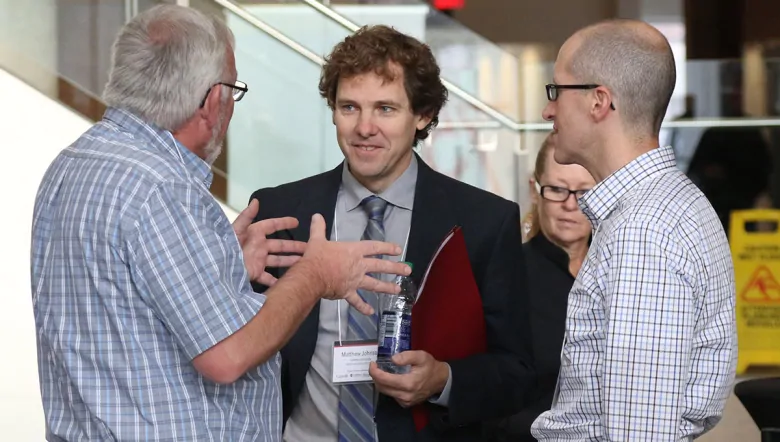
Matthew Johnson, a professor at Carleton University, is a leading expert on emissions from Canada’s energy sector. (Mike Pinder/Carleton University)

Alberta and the federal government are currently in equivalency negotiations to decide which methane regulations will go into effect. Under the law, Alberta’s regulations would apply if they are found to be as or more effective than the federal regulations. The negotiations are meant to determine if the provincial regulations are equivalent to the federal ones.

Both have proposed regulations aimed at reducing leaks of methane from conventional oil and gas facilities, through a swath of new requirements that target everything from how the facilities are run, how often they are inspected, the equipment they use and how methane leaks are detected.

There are leaks of methane throughout the extraction of oil and gas, from the wellheads, through pipelines and pumps to delivery to market.

Johnson’s analysis found that the federal government’s regulations would achieve net reductions of 40 per cent — just reaching the lower end of the goal — while Alberta’s regulations would be behind at 35 per cent reduction.

Methane gas is 25 times more potent than carbon dioxide as a greenhouse gas, and accounts for 15 per cent of Canada’s total greenhouse gas emissions, according to Environment and Climate Change Canada (ECCC). Reducing it is a key part of Canada’s climate change plan, and a major policy directed toward reducing emissions from the oil and gas sector.

But the methane regulations don’t apply to a significant part of that industry — Alberta’s oilsands mines. The oilsands are a completely different mining operation than upstream oil and gas facilities, and account for about 19 per cent of Alberta’s methane emissions. The current regulations are focused on the other sources of emissions, for which a clearer path to reduction exists.

Johnson’s study pointed out that even without any new regulations, methane emissions from sources that are not oilsands mines have fallen from 2012 to 2018. 

In contrast, emissions from oilsands mines have gone up. If emissions from the oilsands keep rising, it could cancel out any reductions from the new methane regulations.

“So which trend wins? If that oilsands trend increases faster than any additional non-regulation reductions at the top, then those targets are in jeopardy,” Johnson said.

The Alberta Energy Regulator and the federal ECCC, the departments that crafted the methane regulations, did not comment directly on Johnson’s paper. ECCC said the process of working toward an equivalency agreement requires comparing the “environmental outcomes” between the federal and provincial proposals.

“ECCC is always open to working with interested jurisdictions, including Alberta, toward equivalency agreements,” said an ECCC spokesperson in an emailed statement.

Johnson’s paper suggests several options for Alberta’s regulations to be tweaked to reach, or even exceed, the methane reduction targets. He said he hopes that the analysis in his paper can be used to improve the regulations in the next few years.

“Methane is not a solved problem. Not even close. And these regulations aren’t final, and I think that the regulators will tell you they’re not final,” Johnson said.

“To my understanding, there’s an intent for both the federal government and the provincial government to revisit these regulations, and look for opportunities to improve or adjust as things change in the near term.”



Source link

Categories
Tech

How artificial intelligence could improve global health


As we grapple with the coronavirus (COVID-19) pandemic, the pattern of viral spread may have been identified as early as Dec. 31, 2019, by Toronto-based BlueDot.

The group identified an association between a new form of pneumonia in China and a market in Wuhan, China, where animals were being sold and reported the pattern a full week ahead of the World Health Organization (which reported on Jan. 9) and the U.S. Centers for Disease Control and Prevention (which reported it on Jan. 6).

Dr. Kamran Khan, a professor of medicine and public health at the University of Toronto, founded the company in 2014, in large part after his experience as an infectious disease physician during the 2003 SARS epidemic.

The BlueDot team, which consists largely of doctors and programmers, numbering 40 employees, published their work in the Journal of Travel Medicine.

“Our message is that dangerous outbreaks are increasing in frequency, scale, and impact, and infectious diseases spread fast in our highly interconnected world,” Khan wrote via email. “If we want to get in front of these outbreaks, we are going to have to use the resources available to us — data, analytics, and digital technologies — to literally spread knowledge faster than the diseases spread themselves.”

Adarsh Natarajan founded Aindra after he recognized that mortality rates from cervical cancer in India were high in part due to a lack of pathologists. (Aindra Systems)

In the past, BlueDot has been able to predict other patterns of disease spread, such as Zika outbreak in south Florida. Now its list of clients includes the Canadian government and health and security departments around the world. They combine AI with human expertise to monitor risk of disease spread for over 150 different diseases and syndromes globally.

AI for cancer screening

BlueDot, as a company, speaks to the emerging trend of using AI for global health.

In India, for instance, Aindra Systems uses AI to assist in screening for cervical cancer. Globally, one woman dies every two minutes due to cervical cancer, and half a million women are newly diagnosed globally each year: 120,000 of these cases occur in India, where rates are increasing in rural areas.

Founded in 2012 by Adarsh Natarajan, the Aindra team recognized that, in India, mortality rates were high in part due to the six-week delay between collecting samples and reading pathology during cervical cancer screening programs. It was also a human resources issue: in India, one pathologist is expected to serve well over 134,000 Indians.

With the aim of reducing the workload burden and fatigue risk (misdiagnosis rates can increase if the reader is tired and overworked), Aindra built CervAstra. The automated program can stain up to 30 slides at a time and then identify, through an AI program called Clustr, the cells that most appear to be cancerous.

The pathologist then spends time on the flagged samples. Much like traditional global health programs, Aindra works closely with several hospitals and local NGOs in India, and hopes their technology may later be adopted by other developing countries.

“Point of care solutions like CervAstra are relevant to a lot of countries who suffer from forms of cancer but don’t have infrastructure or faculties to deal with it in population based screening programs,” Natarajan says.

Natarajan also points to other areas where AI is relevant in global health, such as drug discovery or assisting specific medical specialists in areas like radiology and pathology. Accenture was able to use AI to identify molecules of interest within 10 months as opposed to the typical timeline of up to 10 years.

Teaching the next generation of innovators

The Vector Institute, based in Toronto, is also plugging into the potential of AI and global health. It works as an umbrella for several AI startups, some with a health focus and all aiming to have a global impact.

Melissa Judd, director of academic partnerships at Vector Institute, points to the United Nations’ sustainable development goals as a framework upon which to help orient AI towards improving global health. Lyme disease, for instance, is a global health issue that also comes up against the topic of climate change, and recently a Vector-supported AI initiative was able to identify ticks that spread of Lyme disease in Ontario.

Melissa Judd. (Vector Institute)

Last December, the Vector Institute launched the Global Health and AI Challenge (GHAI) — a collaboration with the Dalla Lana School of Public Health to engage students from across the University of Toronto (from business to epidemiology to engineering) in critical dialogue and problem solving around a global health challenge.

The potential of AI for global health is immense. Major academic journals are also taking note. Last April the Lancet launched the Artificial Intelligence in Global Health report. By looking at 27 cases of how AI has been used in healthcare, editors proposed a framework to help accelerate the cost-effective use of AI in global health, primarily through collaboration between various stakeholders.

As well, a recent commentary in Science identified several key areas of potential for AI and global health, such as low-cost tools powered by AI (for instance an ultrasound powered through a smartphone) and improving data collection during epidemics.

Yet, the authors caution against seeing AI as a panacea and emphasize that empowering local, country-specific, technology talent will be key, as inequitable redistribution of access to AI technology could worsen the rich-poor divide in global health.

This warning aside, Khan with BlueDot is optimistic.

“We are just beginning to scratch the surface as there are many ways that AI can play a key role in global health. As access to data increases in volume, variety and velocity, we will need analytical tools to make sense of these data. AI can play a really important role in augmenting human intelligence,” Khan says.

Amitha Kalaichandran, M.H.S., M.D. is a physician, writer and 2019-2020 Asia Pacific Foundation Media Fellow based in Toronto.


Source link

Categories
Tech

Intelligence group secretly crafts new 'insider threat' policy


New rules to prevent an insider from betraying Canada’s most valuable information were quietly drafted in the weeks after a top RCMP employee was charged with passing along national secrets, according to officials.

The secretive Canadian Committee on National Security Systems is in charge of crafting official protocols for all the departments that need to access, view and protect prized intelligence and top secret information.

In December, the committee approved new standards on “insider threats”, said a spokesperson for the Communications Security Establishment — just a few months after Cameron Ortis’s September arrest.

Given the hushed nature of intelligence work, little is known about what the new guidelines say.

“The scope addresses the organizational, management and employee responsibilities within an insider threat program,” said CSE spokesperson Evan Koronewski. The cyber spy agency acts as the committee’s executive secretariat.

Ortis back in court Tuesday 

“Previous Government of Canada standards and guidance focused on specific technical and operational safeguards for IT systems and physical facilities,” he said. “The [committee] established a community work group to develop a standard on developing an insider threat program based on current best-practices.”

The first word of the new insider threat standard was tucked into a recent RCMP report, tabled in the House of Commons last week.

“The RCMP will continue to support the government of Canada’s priority to establish standard insider threat policies and procedures across all departments,” says the RCMP’s 2020-2021 departmental plan.

Ortis worked as the director general of the force’s national intelligence co-ordination centre and would have had access to intelligence gathered by both Canadian authorities and foreign allies.

He’s charged with revealing secrets to unnamed recipients back in 2015 and planning to give classified information to an unspecified foreign entity or a terrorist group in 2019.

Ortis is expected back in court on Tuesday.

Watchdog flagged insider threat problems in 2015

Koronewski said the government departments responsible for the national security system are reviewing the new insider threat standard. Once they sign off, each department will have one year to implement any specific changes.

The Canadian Committee on National Security Systems includes assistant deputy ministers from:

  • Communications Security Establishment
  • Department of National Defence
  • Privy Council Office
  • Royal Canadian Mounted Police
  • Canadian Security Intelligence Service
  • Public Safety Canada
  • Shared Services Canada
  • Treasury Board Secretariat
  • Global Affairs Canada
  • Transport Canada
  • Natural Resources Canada
  • Corrections Services Canada
  • Immigration and Refugees Citizenship Canada
  • Canada Border Services Agency

Their “main responsibility is to oversee the protection of [national security systems], while enabling secure inter-operability within the Canadian security and intelligence community, as well as with allied organizations, today and into the future,” Koronewski said.

The Security Intelligence Review Committee (SIRC), the former watchdog for Canada’s spy agency, warned about “insider threats” years ago — and flagged gaps in the way top secret information is accessed.

A 2015 SIRC report raised concerns about safeguards against insider threats, which the report describes as “any person with authorized access who causes harm, intentionally or otherwise, to the assets of the organization.”

The report specifically looked at what was being done at CSIS — but would have been written roughly around the time that Ortis is alleged to have first leaked sensitive information.

“In the aftermath of high-profile classified documents leaks such as those attributed to WikiLeaks, Edward Snowden and Sub-Lt. Jeffrey Paul Delisle, the Five Eyes community has elevated the concern posed by the ‘insider threat’ to a higher level,” says the SIRC report. (The Five Eyes is an intelligence-sharing alliance between Canada, the United States, the United Kingdom, Australia and New Zealand.)

“Intelligence agencies are paying increased attention to the insider threat in order to reduce its potential rate of occurrence and, failing that, to help limit the damage that can be caused by a malicious internal actor.”


Source link

Categories
Tech

Send in the trolls: Canada braces for an online disinformation assault on COVID-19


As if health worries, self-quarantines, market meltdowns, store shelves stripped bare and cancelled vacations were not enough, the COVID-19 pandemic has unleashed another menace: an online army of trolls.

While Canada gears up to battle the spread of COVID-19, it’s also bracing for a second, less tangible fight against a wave of disinformation that the country’s top military commander warns is already being assembled in cyberspace.

Gen. Jonathan Vance, the country’s chief of the defence staff, said he’s seen indications recently that Canada’s adversaries intend to exploit the uncertainty, confusion and fear that many people feel after a week marked by swift and extraordinary developments in the global pandemic crisis.

Chief of the Defence Staff Jonathan Vance says he’s “seen signs” of online disinformation efforts seeking to sow panic over COVID-19. (Justin Tang/Canadian Press)

Much of his assessment is based on what’s circulating in the classified realm, but his message to the public is clear: get ready for some noise.

“I can’t really talk about it, but yes, I have seen signs” of campaigns designed to discredit the country’s institutional response to COVID-19, Vance told CBC News.

“There is absolutely going to be efforts on the part of state-sponsored and non-state sponsored [actors] to try and make every step we take as a government, and indeed as allies, look bad.”

The United Kingdom’s National Health Service is already fighting that disinformation war, working with Twitter to suspend false accounts — some of which have been posing as hospitals — and ripping down inaccurate information about the number of virus cases.

On Tuesday, the NHS launched a specific initiative to push back against COVID-19 misinformation.

Canada’s National Security and Intelligence Committee of Parliamentarians warned in its annual report released Thursday that Russia and China remain the adversaries most likely to attempt to interfere with and discredit institutions in this country.

An inoculation against panic

Vance said he was not prepared to name names on Friday, but suggested that paying attention to — and trusting — Canada’s elected leaders and government officials is the best inoculation against a viral disinformation campaign.

“There will be adversaries, not necessarily military adversaries, but adversaries of all types wanting to put others in a position where they don’t look like they’re responding well, or they’re not dealing with it, to sow a lack of confidence in the population,” he said.

“I look to the minister of health and public health officials, including my surgeon general. And I think consuming information from trusted, recognized media, as well as government officials who know what they’re talking about, is the best way to avoid the disinformation.”

His remarks came two days after a Washington-based think-tank released a report that concluded a Moscow-backed disinformation campaign was behind COVID-19 protests in Ukraine related to the repatriation of Ukrainians citizens who had been Wuhan, China, the location of the original outbreak.

The Kremlin’s fingerprints

“The campaign’s tactics, timing and nature all point toward Kremlin involvement,” said the report by analyst George Barros.

“The campaign’s false information increased distrust of the Ukrainian government, caused protests in at least five different towns and forced the resignation of a Ukrainian governor.”

The report highlights how the Ukrainian government dropped the ball in terms of keeping the public adequately informed about decisions and safety measures related to the quarantine of the evacuees.

Still, the U.S. State Department warned last month Russia was behind thousands of social media accounts that have been spreading misinformation and conspiracy theories about COVID-19 and its origins.

Defence analyst Dave Perry of the Canadian Global Affairs Institute said that, after the experiences of the past week, nerves are pretty frayed within the government and among the general public.

“If there was somebody who wanted to do Canada or its interests harm, they would choose this moment to act,” said Perry.

Perry said the government’s full attention appears to be focused on managing the social, economic and political effects of the pandemic.

He said he is concerned about the potential for cyber attacks which could further disrupt already stressed public services.

Andriy Shevchenko, Ukraine’s ambassador to Canada, would not comment on Friday about the protests that rocked his country last month — but he did say Canadians should be on guard in the coming days and weeks.

“We should recognize the fact Russia lies on an industrial scale, and Russia has become quite successful in disinformation, especially in societies that rely on free speech,” he said.

“By now we have quite a good understanding of how this works. They specifically look for topics and subjects which can easily polarize opinions, which can divide the society, which are inflammatory by themselves.”


Source link

Categories
Tech

COVID-19 vaccine research takes on new urgency


Medical researchers are working on multiple approaches to experimental vaccines to protect against COVID-19.

The federal government announced $2.7 million in funding for vaccine candidates.

Internationally, the Coalition for Epidemic Preparedness Innovations (CEPI), a partnership between public, private, philanthropic, and civil organizations, is investing more than $23 million US in the development of new vaccines against COVID-19.

France’s president has announced a video summit of G7 leaders on Monday to discuss co-ordinating research on vaccines and treatments as well as an economic response to the pandemic.

A vaccine would prevent the pandemic from spreading as fast as it is now, said Charu Kaushic, scientific director of Canadian Institutes of Health Research‘s Institute of Infection and Immunity.

“It’s just spreading everywhere,” she said. “If we had a vaccine, we could control it.”

Kaushic said instead of putting all its eggs in one basket, CIHR is funding multiple projects in the hopes that at least one of them will work.

2 elements to a successful vaccine 

To work, a vaccine needs to succeed in getting our immune system to produce antibodies in the blood. The antibodies recognize, remember and defend against the virus if you’re exposed to it.

Kaushic, an immunologist and HIV vaccine researcher at McMaster University, said because COVID-19 is a lung infection, any vaccine needs to protect specifically against the virus getting into the lungs.

“Vaccines can fail because you can get very good antibodies and other things that work great in the blood, but not in the lungs. “You may not get protective immunity at all.”

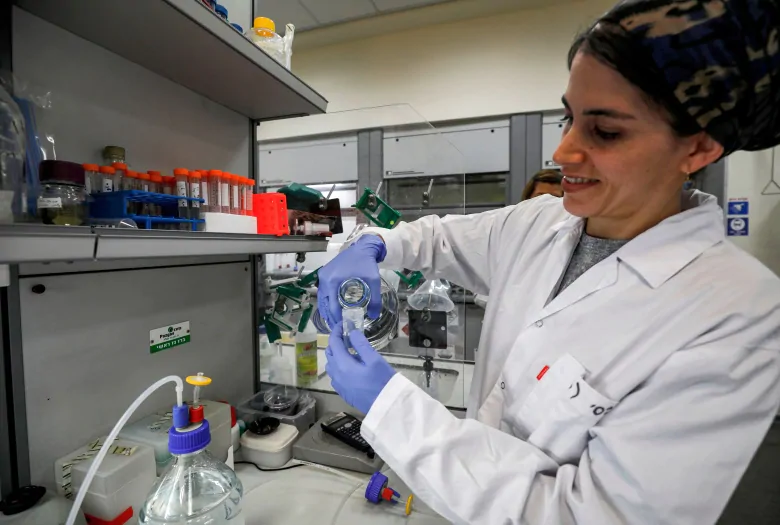
An Israeli scientist works at a laboratory at the MIGAL Research Institute in northern Israel this month, where efforts are underway to produce a vaccine against COVID-19. (Jalaa Marey/AFP/Getty)

Viruses, especially new ones, are particularly difficult because they aren’t well understood. For SARS-CoV2, the virus at the centre of the pandemic, scientists are still learning about how it is transmitted.

Even though multiple researchers are working on the problem, it is rare to get a new vaccine in under a year.

A top U.S. health official told a House committee that human trials for a potential vaccine could begin within a few weeks with the goal of going into the arms of the general public within 12 to 18 months.

Vaccine in a year? 

The U.S. National Institutes of Health (NIH) has been working with biotech company Moderna to develop a vaccine to prevent COVID-19.

“I want to make sure people understand, and I’ve said that over and over again, that does not mean we have a vaccine that we can use,” NIH director Dr. Anthony Fauci said. “We mean it’s record time to get it tested. It’s going to take a year to a year-and-a-half to really know if it works.”

Moderna’s vaccine uses genetic material from the virus in the form of nucleic acid. That tells the human body how to make proteins that mimic viral proteins and this should provoke an immune response.

Currently the pandemic coronavirus has infected more than 130,000 people worldwide. While most people have mild respiratory symptoms, a vaccine would be a safer way to protect people because it would reduce the risk of COVID-19, the disease caused by the virus.

Denis Leclerc, an infectious diseases researcher at Laval University in Quebec City, said the advantage of nucleic acid vaccines like Moderna’s is that they’re much faster to produce than other types.

Denis Leclerc and his colleagues at Laval University are hoping to develop a vaccine that could be stockpiled in case of future outbreaks. (Radio-Canada)

While relatively safe, nucleic acid vaccines are generally not the preferred strategy, Leclerc said, because they don’t have the same safety record as the traditional approach.

Leclerc’s team has a different approach. They are working with a small part of a protein from the virus that can be synthesized quickly and then attached to a platform to trigger an efficient immune response in humans.

“I was thinking of still using proteins to conserve very high safety and still get speed,” Leclerc said.

His team has animal data showing this approach might work for coronavirus and for other viruses that emerge in future.

Leclerc expects the proof-of-concept experiments for his COVID-19 vaccine will be ready in six months.

Even though it’s fast to develop, it may come too late for the current pandemic of COVID-19.

That’s what happened with Canada’s Ebola vaccine. The experiments happened more than two years previously, but the vaccine wasn’t manufactured in time for the 2014 epidemic that ravaged West Africa. The Ebola vaccine is being used now to control Congo’s outbreak.

Elsewhere in Quebec City, the biotech firm Medicago is producing another potential COVID-19 vaccine that uses particles that mimic the virus.

Researchers will mass produce that vaccine candidate quickly in plants instead of the slower traditional way of using animal cells or eggs. The company is using the same approach to produce seasonal flu vaccines, in an effort under review by Health Canada.


Source link

Categories
Tech

Trying to ward off the coronavirus? What products help and what may be a waste of money


Fear of catching the coronavirus has led to panic buying of products such as face masks, hand sanitizer and disposable gloves. But health experts warn some of these items may be ineffective, especially if they’re not used properly. 

Here’s what you need to know before stocking up on supplies during the coronavirus pandemic. 

Soap and sanitizer

The best way to prevent the spread of infections is to keep your hands clean, so it’s no surprise that as the coronavirus spreads, stores are running out of hand sanitizer. Fortunately, old-fashioned soap and water will also do the trick. 

Microbiologist Keith Warriner said, if you’re using a hand sanitizer, it must contain at least 60 per cent alcohol — the ingredient that kills the virus. 

“If you haven’t got enough [alcohol] in there, it doesn’t do anything. It has basically dried the virus onto your hand,” said Warriner, a professor at the University of Guelph.

Even if your sanitizer has the right ingredients, Warriner still believes washing with soap provides the best protection because it not only kills the virus, it also washes it away.

“You’re actually physically removing it.” 

Hand washing is a simple and effective way to remove bacteria from our hands, helping to protect ourselves, our families and others around us. 1:53

Medical microbiologist Dr. Jocelyn Srigley argues that either soap or hand sanitizer are equally effective — as long as when using either product, you cover all parts of your hands. That would include each finger, the fingernail area and the fronts and backs of your hands, all the way down to your wrists. 

“If you’re not following the proper technique, then it’s not going to be as effective, regardless of which method you’re using,” said Dr. Srigley, a practising physician and professor at the University of British Columbia.

Forget the face mask?

Dr. Srigley said that face masks are best used if you are sick, and want to protect others from getting infected when you cough or sneeze.

But she said a mask won’t necessarily protect you from catching the coronavirus because the main way people get it is by touching an infected surface and then touching their mouth, eyes or nose. 

She points out that people often end up touching their face when putting on, taking off or adjusting a face mask, plus it does nothing to protect a person’s eyes. 

“It’s actually not protecting you against the most common way the virus is spreading.”

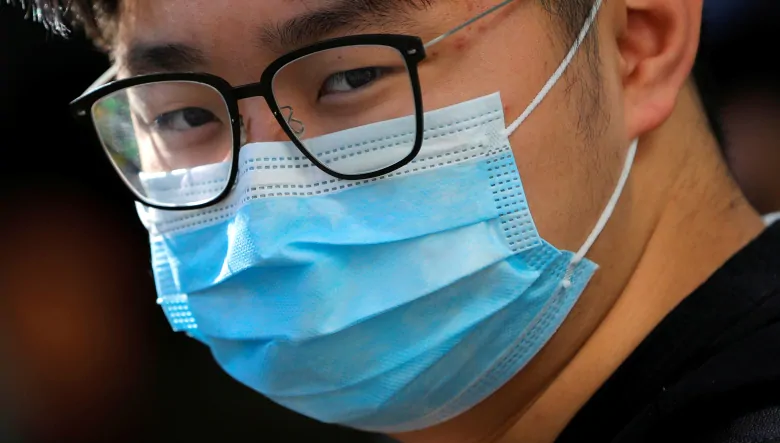
Microbiologist Keith Warriner said the coronavirus is so tiny, it can sneak through a disposable surgical mask which is typically made of paper material. (Andrew Kelly/Reuters)

If you still want to wear a face mask, there are two main types on the market. One is the disposable surgical mask made of paper material which Warriner warns is unable to completely block out the tiny coronavirus.

“It’s certainly not foolproof,” he said. “You can’t go and stand in the middle of a room with people with coronavirus and say, ‘Look at me. I’m immune to it.'”

The second type of mask is the called the N95 which has a firmer exterior. Warriner said it’s effective in blocking the virus, but that most people fail to wear it properly, allowing the virus to sneak in. 

Disposable gloves

Some shoppers are also stocking up on disposable gloves, in hope gloves will protect them from picking up the virus. 

But Dr. Srigley warns that wearing gloves could provide a false sense of security where people let down their guard. 

“If you think you’re protected because you’re wearing a glove, but if you then touch your face with the glove, then you’re at risk,” she said. 

Health experts say wearing disposable gloves may give you a false sense of security, as you may touch your face with contaminated gloves. (CBC/Sophia Harris)

Removing dirty gloves without getting contaminated can also be tricky. Considering these complications, Dr. Srigley says that frequently sanitizing or washing hands is a better option. 

Stock up on vitamins?

Some Canadians are hoping they can ward off the coronavirus by boosting their immune system with vitamins or other supplements. 

People with weak or compromised immune systems face a higher risk of getting seriously ill from the virus.

Warriner said the best way to stay healthy is not by popping vitamins, but instead by staying rested and drinking plenty of liquids.

“The thing that really takes our immune system down is being dehydrated, being stressed, lack of sleep.”

And when it comes to stocking up on food, people should be wary of perishables that, if they go bad, could compromise a person’s health, said Warriner.

“Basically, avoid food poisoning because that knocks our immune system [out].” 

What about toilet paper?

There have been reports across the globe that people are also stockpiling toilet paper. While the product is a necessity of life, it won’t help ward off the coronavirus.

Instead, the run on toilet paper is likely caused by panic buying which has caught on with many shoppers. 

Toilet paper has been a popular item at grocery stores since the COVID-19 pandemic reached Canada. (Richard Woodbury/CBC)

Warriner said people think “if someone’s buying it, then I have to buy it.” 

He also wonders whether some people may be confusing the coronavirus with the norovirus — a different virus which causes diarrhea.


Source link