Categories
Tech

How a lab in Sask. that focuses on animals became Canada's $23M hope for a COVID-19 vaccine


In the global race to find a COVID-19 vaccine, the federal government announced Monday it is pumping $23 million into an academic research lab in Saskatchewan. 

The Vaccine and Infectious Disease Organization – International Vaccine Centre (VIDO-InterVac) at the University of Saskatchewan started as a modest veterinary lab in 1975. But it has evolved into a world class facility that the Trudeau government is betting can develop a vaccine to stop the pandemic.

The Saskatoon lab already has a head start. It has been working on coronavirus vaccines, primarily for animals, for four decades, including successful vaccines for cattle and pigs.

Today, the vaccine centre is one of only a few high-level containment facilities in the world able to conduct research on a vaccine for COVID-19.

In a wide-ranging interview Friday, VIDO-InterVac research scientist Darryl Falzarano and associate director Paul Hodgson told CBC News that in the past, generating interest in funding research into a pan-coronavirus vaccine for humans has been a challenge.

While the focus is now on stopping COVID-19, Hodgson said finding a pan-coronavirus vaccine is their “vision statement,” much like a universal flu vaccine has been a goal of scientists for decades.

 “That’s something we’ve never been able to get funding for,” said Falzarano.

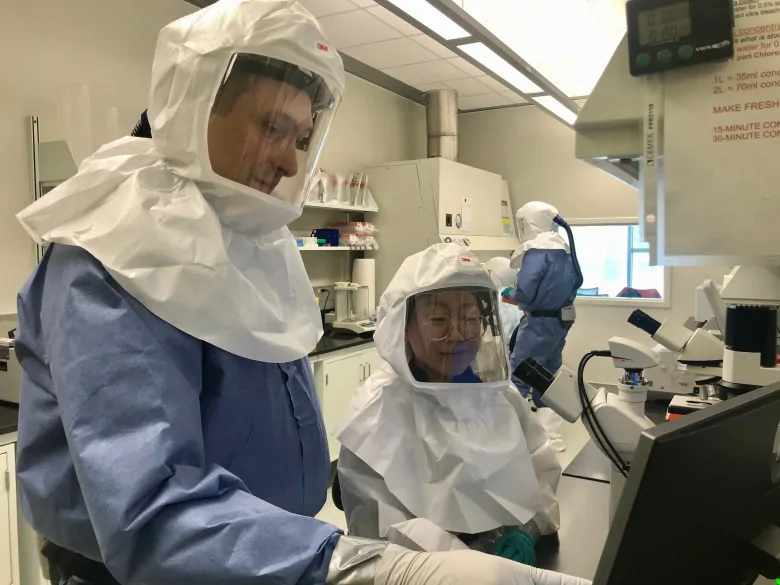
Falzarano, left, says the lab’s goal has long been to develop a pan-coronavirus vaccine. (Bonnie Allen/CBC)

But that has all changed, at least for the foreseeable future. Today, there are 160 people working at the lab — and up to 30 per cent of them are working on a coronavirus vaccine.

The Public Health Agency of Canada gave VIDO-InterVac the green light to start researching a vaccine for humans in late January. Researchers isolated the virus from a sample and have since grown the virus in a cell culture and are now testing a vaccine candidate in animals.

One of the questions Hodgson says he gets asked frequently these days is, “Why can’t you do a vaccine faster?”

The answer is complicated.

WATCH | Why we’re likely in this fight against COVID-19 for the long haul.

What mathematical simulations tell us about how the COVID-19 pandemic will play in the real world. 5:04

The federal government’s multimillion-dollar funding announcement, part of a global push to develop a vaccine, comes in the middle of an international health crisis that has already killed more than 18,000 people worldwide. As of Tuesday, Canada had more than 2,700 COVID-19 cases, resulting in 27 deaths.

Over the past two decades there have been global outbreaks of Severe Acute Respiratory Syndrome (SARS) and Middle East Respiratory Syndrome (MERS), both caused by coronaviruses. But when the outbreaks subsided, so did the research into a vaccine.

In 2003, VIDO-InterVac was part of the rush to develop a SARS vaccine in Canada, dubbed the SARS Accelerated Vaccine Initiative. Although promising candidates were developed in a relatively short period of time, ultimately a vaccine for SARS was never put through trials and no vaccine exists today.   

“Until MERS came along [in 2012], there probably wasn’t that strong of evidence that a coronavirus would be something that we should worry about, and that’s going to happen again,” Falzarano said.

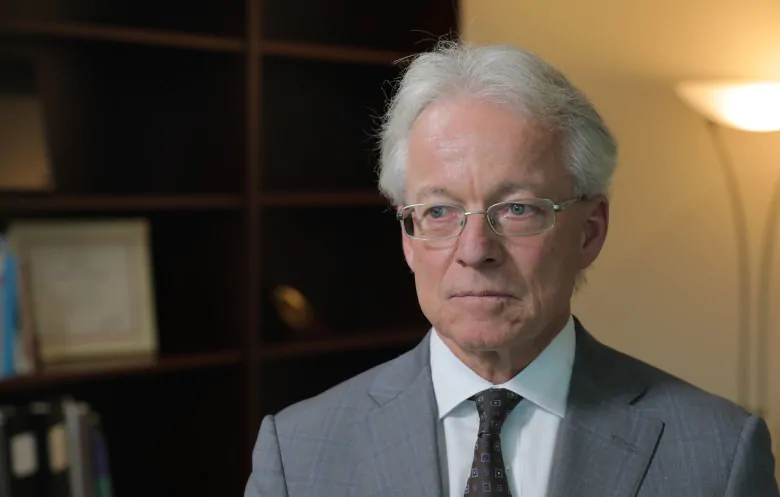
VIDO-InterVac associate director Paul Hodgson says finding funding for the lab’s coronavirus research has been difficult in the past. (VIDO-InterVac)

Hodgson said scientists are using knowledge gained from SARS and MERS. But for years prior to the current outbreak, finding a pan-coronavirus vaccine for humans wasn’t a priority for governments or the big pharmaceutical companies. And when it comes to finding vaccines, the research follows the money.

Two years ago, VIDO-InterVac earned a four-year grant from the Canadian Institutes of Health Research, the federal government’s funding agency. The government of Saudi Arabia also kicked in grant money. The research project? A vaccine that stops the transmission of MERS from camels to humans.

“We’ve been working more immediately on MERS vaccines and always moving, very slowly, looking at different ways you could start to try to sell the concept better of a pan-coronavirus vaccine,” Falzarano said. “It’s disappointing to me. It’s something that I planned to do when I worked here and then it seemed clear that nobody was too interested in [funding] that concept.”

Now, funding vaccine research has become imperative. The Trudeau government has committed $11 million to VIDO-InterVac’s vaccine research and an additional $12 million to increase manufacturing capabilities for clinical trials.

According to Hodgson, Canada’s capacity to manufacture a vaccine domestically is concerning.

Scientists at VIDO-InterVac recently developed a vaccine for a strain of coronavirus that killed 10 million pigs in North America. (Bonnie Allen/CBC)

“From a national security or emergency preparedness perspective, the manufacturing capacity we have has really started to go down,” Hodgson said.

VIDO-InterVac had been pushing the Canadian government to increase manufacturing capacity.

‘Our ultimate goal’

Three times a week, scientists from the Saskatoon lab start their long day on an early morning conference call with the World Health Organization as they spearhead Canada’s contribution to the global effort to find a vaccine.

So far, Canada is one of 10 countries participating in a research network the WHO calls Solidarity, which is studying existing drugs that could potentially treat COVID-19.

Dr. Tedros Adhanom Ghebreyesus, the WHO’s director-general, told a news conference Friday that international co-operation will provide the level of data necessary to determine the most effective treatments.

As of Friday, neither the U.S. nor China were listed by the WHO as participating in the Solidarity trials.

Back at VIDO-InterVac, the team is focused squarely on developing a vaccine to protect the world. 

“That’s our ultimate goal,” Hodgson said. “It would be fantastic if we developed a cure and made $100 million and were self-sufficient from this point forward, but our vision is protecting Canada and the world from infectious diseases.”

Source link

Categories
Tech

Trudeau leaves door open to using smartphone data to track Canadians' compliance with pandemic rules


Prime Minister Justin Trudeau hasn’t ruled out using smartphone data to track whether people are complying with public health officials’ pleas for them to stay inside to curb the COVID-19 pandemic — a notion that raises some thorny ethical dilemmas regarding public health and privacy rights.

Tracking where the coronavirus will strike next, and convincing people to self-isolate and avoid gatherings, have proven challenging for public health officials around the world. That’s prompted some governments to lean on mobile data to keep tabs on infections — even to predict where the virus is heading.

During his daily media briefing today, Trudeau was asked whether Canada would follow the example of those governments and use telecom data to track Canadians’ compliance with pandemic measures.

“I think we recognize that in an emergency situation we need to take certain steps that wouldn’t be taken in non-emergency situations, but as far as I know that is not a situation we’re looking at right now,” he said.

WATCH: Trudeau on cellphone tracking

Prime Minister Justin Trudeau answers a question about why the government was seeking new spending powers during the COVID-19 pandemic. 1:16

“But as I’ve said, all options are on the table to do what is necessary to keep Canadians safe in these exceptional times.”

Telecommunication companies are now sharing aggregate smartphone data with health authorities in Italy, Germany and Austria to monitor whether people are complying with self-isolation demands to slow the spread of COVID-19. 

China, Taiwan and South Korea have taken more invasive measures by using smartphone location pings to trace individuals who have tested positive, or to enforce quarantine orders.

In Israel, the government is being challenged after Prime Minister Benjamin Netanyahu ordered the domestic spy agency to sift through cellphone data that was covertly gathered to fight terrorism to retrace the steps of people who have contracted the novel coronavirus.

The issue was thrust into the Canadian spotlight this morning after Toronto Mayor John Tory mused about obtaining cellphone data from wireless companies to locate large gatherings.

As first reported by The Logic, Tory told an online video-conferencing event Monday night, hosted by TechTO, that data collection is “something we’re doing now.”

“I asked for it, and I’m getting it,” he’s quoted as telling the local meetup organization. “Because the biggest enemy of fighting this thing is people congregating close together.”

A spokesperson later clarified that the mayor was answering a question about ways technology could possibly help fight COVID-19.

“The mayor cited the example of an inquiry he had casually made after someone suggested it not knowing it wasn’t proceeding,” said Don Peat in a statement to CBC News.

“The City of Toronto is not collecting cellphone location data, nor has it received any such data.  The City of Toronto will not be using cellphone location data.”

Bell Canada open to sharing information

Canada’s Chief Public Health Officer Dr. Theresa Tam said the option shouldn’t be ruled out of efforts to flatten the caseload curve — the best way to keep the nation’s hospitals from being overwhelmed.

“I think there’s lots of innovative approaches and they should all be examined, obviously with due respect to privacy, ethics and all of those considerations,” she said when asked about data collection.

On Monday, Quebec Premier François Legault publicly floated the idea of tracking the past movements of people who tested positive for COVID-19 through their phones.

Bell Canada has said it’s willing to share personal information with governments if called upon.

WATCH: Tam on using personal data to slow down COVID-19

Canada’s Chief Public Health Officer Dr. Theresa Tam says some provinces have come up with innovative ways to tackle the spread of COVID-19, but the best approach is still for everyone to respect social distancing. 1:10

“We haven’t been asked by any governments for this kind of support, but would consider if it helps in the fight against COVID-19 while respecting privacy laws,” spokesperson Nathan Gibson said in an email. 

Rogers and Telus did not respond to CBC’s requests for comment.

Finding an ethical balance 

David Leslie, ethics fellow at the Alan Turing Institute in the U.K., said surveillance in a pandemic climate pits competing values against each other: individual civil liberties and public welfare.

But a balance can be struck between the two, he said.

“When I think about the capacity for us to actually do surveillance for the social good, it kind of brings this sort of tension to the forefront for me, which is this tension between autonomy, privacy, civil liberty and the potential to use our data, use our information for the public welfare,” Leslie said from London.

“There’s a right and perhaps a wrong way to go about using this, which is to say from a practical ethics standpoint it’s very important to think about issues like consent, issues like transparency, in the way that the innovation is developed and then deployed.”

David Fraser, a privacy lawyer with McInnes Cooper, said there are significant differences in the accuracy of data passed on by cellphone companies to governments, depending on whether they’re sharing identifying information or anonymous aggregate data.

For example, data generated by transit apps can offer a big-picture view of rider trends — but they don’t identify passengers.

“Which is different from anything that could tell you Bob is on the bus — or even maybe more troubling from a privacy perspective, but maybe completely justifiable, is Bob was in Mexico last week. Bob is supposed to be in his house. Bob is actually down at the down at the Home Depot. Send the cops to go get Bob,” he said.

Legal changes during a crisis 

The federal privacy commissioner has said that, during a public health crisis, privacy laws still apply but they shouldn’t be a barrier to appropriate information sharing.

“We fully understand the need to use all lawful and proportionate means to address the current health crisis. Legal authorities in this regard are quite broad,” said spokesperson Vito Pilieci.

“Still, organizations must ensure there is lawful authority for the sharing of personal information.”

Brian Beamish, the information and privacy commissioner of Ontario, said that — where possible — municipal governments should make efforts to use non-identifying information. However, he said in situations where identifying information is required, public health should be the priority. (CBC)

Pilieci said aggregate data collection is allowed, but warned that telecommunication companies and public authorities should be aware of accidentally re-identifying individuals.

Brian Beamish, the Information and Privacy Commissioner of Ontario, issued his own advice on Tuesday, stressing that in situations where identifying information is required, the interest of public health should be the priority.

But he added that any steps that would have a “dramatic impact on personal privacy” should come with clear rules on how and why the information is collected, how it will be used and how long it will be retained.

Concerns about a ‘new normal’

Fraser said that, historically, public health officials have had access to Canadians’ private health information without any major trust breaches.

I wouldn’t want to see this as the thin edge of the wedge or creating a new normal that will continue to be in place once this whole thing blows over.– Privacy lawyer David Fraser

“Personally, I have a fair amount of confidence in public health officials having access to information that otherwise normal people and the cops don’t get access to, for the purposes of doing their jobs related to public health,” he said.

“I don’t think that they have many ulterior motives.”

Still, he said, any sort of emergency legislative changes affecting privacy should be monitored closely for sunset clauses.  

“I wouldn’t want to see this as the thin edge of the wedge, or creating a new normal that will continue to be in place once this whole thing blows over, whether it’s in weeks, months or years,” he said.

“I wouldn’t want to see some sort of new normal where telcos are required to, in real time, dump tower location information into some central government database with a kind of ‘trust us’ attitude.”

While the Canadian government won’t commit either way to cellphone data collection, it’s already investing in artificial intelligence tracking linked to COVID-19.

As part of a $192 million investment package, the government announced support for BlueDot, a Toronto-based digital company focused on early warning technology for infectious diseases. It’s been billed as one of the first companies in the world to identify the outbreak in Wuhan in late December 2019.

The Public Health Agency of Canada will use its disease analytics platform to monitor the spread of COVID 19, according to a media release. A spokesperson for Innovation Minister Navdeep Bains said privacy remains a top government priority. 

BlueDot wasn’t available for an interview, but a spokesperson said their technology tracks the spread of cases of the disease and looks at where the hotspots are.


Source link

Categories
Tech

This ancient 'worm' was forerunner to most animals — including us


A worm-like creature smaller than a grain of rice that burrowed on the seafloor in search of meals like dead organic matter about 555 million years ago may be the evolutionary forerunner of most animals living today — including people.

Scientists on Monday announced the discovery in the Australian outback of fossils of this creature, named Ikaria wariootia, that represents one of the most important primordial animals ever found.

It appears to be the earliest-known member of the vast animal group called bilaterians — organisms with two symmetrical sides, a front and back, with a mouth and an anus and a gut connecting them to process food, said paleontologist and study lead author Scott Evans of the Smithsonian Institution’s National Museum of Natural History in Washington.

The advent of such a body plan during the Ediacaran Period was a pivotal moment in life’s evolution on Earth, paving the way for more advanced bilaterians such as fish, amphibians, reptiles, birds, mammals, starfish, mollusks, insects and more. The few non-bilaterian animals include sponges, corals, sea anemones and jellyfish.

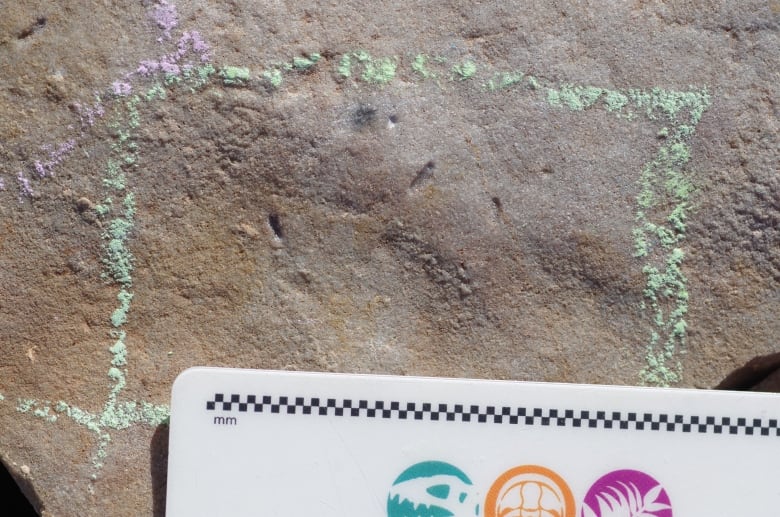
This rock shows three specimens of Ikaria wariootia from Nilpena. In total, the researchers identified the fossils showing the outside of the body of 118 Ikaria individuals using sophisticated scanning technology under a grant from NASA. (Scott D. Evans)

Up to six millimetres long, Ikaria had a worm-like appearance, though one end was larger than the other. Its discovery underscores the humble evolutionary beginnings of this large segment of the animal kingdom, humankind included, the researchers said.

“The origin and early evolution of bilaterians is a huge question for evolutionary biologists and paleobiologists because, of course, we are bilaterians. It is a natural instinct to want to know — when did our ancestors first appear and what did they look like,” said University of California Riverside geology professor and study co-author Mary Droser.

Lived alongside Dickinsonia

The researchers identified the fossils showing the outside of the body of 118 Ikaria individuals using sophisticated scanning technology under a grant from NASA. Ikaria’s fossils were associated with thousands of burrows previously found in South Australia state.

“It had been predicted that something like this should exist based on the burrows it left and from genetic studies of modern animals,” Evans said.

Dickinsonia fossils, found in Australia and Russia, range in size from a fingernail to some 1.22 metres (4 ½ feet) long. These animals lived at about the same time as Ikaria. (Australian National University)

Ikaria — meaning “meeting place” in a local Australian indigenous language — lived alongside another scientifically important primitive animal called Dickinsonia, which was much bigger and shaped vaguely like a lily pad but was not a bilaterian and is considered an evolutionary dead end.

Though none of its organs are known, a previous study of its burrows, led by co-author Jim Gehling of the South Australia Museum, indicated Ikaria used muscles to push through the sediment in a shallow marine environment to scavenge for nourishment in the form of dead organic matter including Dickinsonia corpses.

The research was published in the journal Proceedings of the National Academy of Sciences.


Source link

Categories
Tech

Canada-U.S. Atlantic ocean science mission scrubbed due to COVID-19


A joint Canadian-U.S. science mission to monitor ocean climate on the east coast this spring has been scrubbed because of the coronavirus outbreak.

Scientists from both countries were scheduled to leave Woods Hole Oceanographic Institution in Massachusetts last Thursday for a three-week cruise before the trip was cancelled.

The mission would have measured a wide range of physical and biological conditions.

“Given the precautions implemented to curb the spread of COVID-19, it was determined that the mission would not go forward,” Department of Fisheries and Oceans spokesperson Barre Campbell said in a statement to CBC News.

Canadian instruments sitting on a U.S. dock

In fact, instruments from Halifax were trucked down to Woods Hole in containers.

They were on the dock awaiting the arrival of Canadian scientists when the Americans called down all at-sea research trips, including this one, said DFO research scientist Dave Hebert.

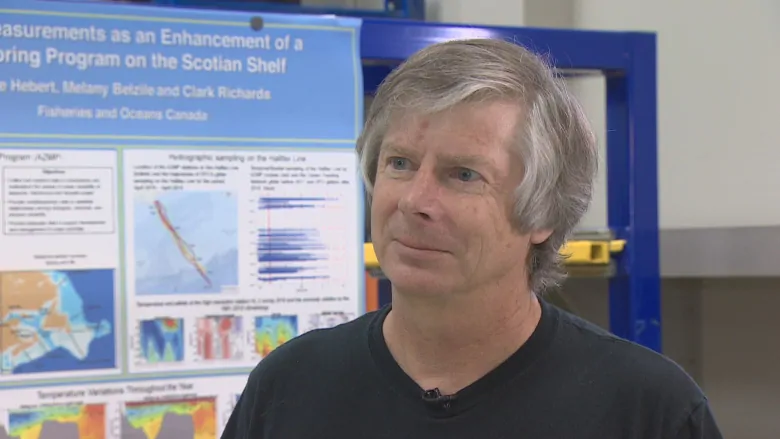
Hebert is principal investigator of the Atlantic Zone Monitoring Program (AZMP) — a twice-annual survey that measures ocean conditions on Canada’s east coast.

He was disappointed but not surprised to learn the mission was cancelled.

Dave Hebert is a research scientist with the Department of Fisheries and Oceans. (CBC)

He said he hopes the researchers can team up in future.

“There was a lot of effort by both sides to build up the collaboration on projects,” Hebert said.

“While we did informal work together in the past, to have a kind of agreement that actually says we’re working together on this project, understanding the Scotian Shelf and the Gulf of Maine is of interest to both countries,” he said.

Americans helping Canada out of a jam

For Canadian scientists like Hebert the cancellation is doubly disappointing.

Not only will survey sampling data be missed, but the mission was a lost opportunity to work on an advanced research vessel.

The Canadian Coast Guard Ship Hudson usually carries out this research but the offshore oceanographic vessel is unavailable — again.

The 57-year old ship is stuck in a St. John’s shipyard as a maintenance refit runs months longer than expected.

In its place, DFO chartered the 75-metre U.S. navy research vessel Neil Armstrong.

A collaboration agreement

The charter was the result of a signed collaboration agreement between DFO and Woods Hole, an internationally recognized private research facility in Falmouth, Mass.

The Americans were also providing scientists, sharing data and paying for some of the ship’s time.

Hebert said the R/V Neil Armstrong carries some of the same equipment that will be on board Hudson’s replacement when it arrives in 2024.

“What we’re planning to get, they have, we would have got to see that firsthand,” he said.

Mission helps monitor climate change in the ocean

The AZMP survey is one way Canada measures climate change in the ocean.

With this trip cancelled and Hudson’s prolonged refit, Canada will miss a year of data.

DFO says other sampling methods provide data, including ocean gliders, remote sensing platforms, fixed moorings and other cruises that monitor conditions.

No Coast Guard sailings impacted by COVID-19

No sailings involving Canadian Coast Guard vessels have been impacted by coronavirus, the department said.

“It is difficult to stay a prescribed distance away from your colleagues on a ship,” Campbell said in a statement.

“Marine search and rescue is an essential service and often a matter of life and death, and during a search and rescue response our crew members are required to work in very close proximity to each other.”

The statement went on to say that crew members are taking precautions to work at greater distances from each other, and anyone showing symptoms of COVID-19 will be asked to stay home and get tested for the virus.

“We are prepared to reprioritize people and assets as needed to maintain operational readiness,” said Campbell in the statement.

“Emergency situations in Canadian waters are a reality, and the Coast Guard stands ready to respond when they arise.”

MORE TOP STORIES:


Source link

Categories
Tech

Why a Canadian herring population is dying off


Canadian scientists have delivered a calamitous fish stock assessment in the southern Gulf of St Lawrence, predicting the spring spawning herring population is on a trajectory toward extinction in 10 years.

The grim projection was shared earlier this month by the Department of Fisheries and Oceans, just days before the spring herring fishery is set to open in Nova Scotia, New Brunswick, P.E.I. and Quebec.

Predation is killing six of 10 older fish each year and a warming ocean is knocking down a critical food source for young.

Spring spawners, as the population is called, have been in trouble for many years, but data gathered in 2018 and 2019 indicates very high levels of mortality, said Francois Turcotte, a marine biologist with DFO based in Moncton, N.B.

“So many fish are being removed, and not enough are coming in, that the biomass can only decrease,” he said in an interview last week.

Seals, tuna and warm water

Scientists believe the high level of natural mortality is the result of predation by grey seals and bluefin tuna, and are discounting other potential causes like disease or unreported fishing.

Warming ocean temperatures in the gulf are also contributing to the downward spiral. Herring larvae feed on a cold-water species of energy-rich microorganisms known as zooplankton. That zooplankton is declining.

Turcotte said fewer young are surviving to spawn, meaning as adults die off they are not being replaced.

The size of a fish population is measured by spawning stock biomass, which is an estimate of the weight of all the fish old enough to spawn. The spring spawner biomass is estimated at 33,000 tonnes, down from 200,000 tonnes in the 1980s and 1990s.

The DFO stock assessment predicts that at current levels, in 10 years the biomass will fall to 100 to 1,000 tonnes, a threshold where a population is so low it can be wiped out by random events, like extreme weather.

It’s not a guaranteed outcome, however. With fewer herring available, predators may switch to other prey, relieving some pressure.

“The decline is continuous but it’s hard to get to the level of certainty for such long predictions because there’s things we don’t know, like how predators react,” Turcotte said.

Cutting fishing may not work

A spring spawner fishery still exists, but Turcotte’s model shows it is so small — 1,250 tonnes in 2019 — that scrapping it may not reverse the trend.

“It’s concerning because there’s no lever we can pull to make things better,” he said. “The model does show that if you reduce fishing you do reduce the chances of declines, but only by seven or eight percent. There’s no guarantee here that even if you use the only tool you have you’re going to improve the status of the stock, that’s the concern.”

Confusingly, there are two herring populations in the southern gulf. The other one is a fall spawning stock. It is in better shape, with a biomass estimated at 174,000 tonnes, down from 600,000 tonnes in 2011.

MORE TOP STORIES


Source link

Categories
Tech

California utility to plead guilty to 84 counts of involuntary manslaughter in 2018 wildfires


Pacific Gas & Electric has agreed to plead guilty to 84 involuntary manslaughter counts in connection with the 2018 Camp Fire, the most destructive wildfire in California’s history.

The plea by California’s largest utility was announced on Monday by its parent PG&E Corp, three days after the utility accepted tighter oversight and pledged billions of dollars to improve safety and help wildfire victims, under an agreement approved by California Gov. Gavin Newsom.

That agreement ended a major roadblock to PG&E’s planned emergence from Chapter 11 bankruptcy, as Newsom devotes his attention to the coronavirus outbreak in his state.

“Our equipment started the fire. Those are the facts, and with this plea agreement we accept responsibility for our role in the fire,” PG&E CEO and president Bill Johnson said in a statement.

Pacific Gas & Electric said it entered its plea through a March 17 agreement with the Butte County District Attorney’s office, which would end all state criminal proceedings against the San Francisco-based company related to the Camp Fire.

Under the deal, PG&E also pleaded guilty to one count of unlawfully starting a fire and will pay a maximum $3.5 million US fine, plus $500,000 in costs. In addition, it will pay up to $15 million to provide water to residents after the fire destroyed the utility’s Miocene Canal in Butte County.

Utility could be put up for sale

The fire began on Nov. 8, 2018, and destroyed much of Paradise, a town of about 26,000 people, and nearby Concow. More than 18,000 buildings were destroyed.

Butte County officials have said 85 people died in the Camp Fire. It wasn’t immediately clear why PG&E pleaded guilty to 84 counts of involuntary manslaughter instead of 85.

“We cannot replace all that the fire destroyed, but our hope is that this plea agreement, along with our rebuilding efforts, will help the community move forward from this tragic incident,” Johnson said.

Some fire victims will receive payouts under PG&E’s proposed bankruptcy reorganization plan, which was submitted on March 16, PG&E said.

The settlement requires approval by the Butte County Superior Court, and by the federal bankruptcy court overseeing PG&E’s Chapter 11 case.

PG&E and its utility unit filed for bankruptcy in January 2019, citing more than $30 billion US in potential liabilities from California wildfires in 2017 and 2018 linked to its equipment.

The company previously reached $25.5 billion of settlements related to wildfires in 2015, 2017 and 2018, including $13.5 billion for victims and $12 billion for insurers, cities, counties and other public entities.

Under the settlement with Newsom, PG&E agreed to pay no shareholder dividends for three years, saving about $4 billion, and pursue a “rate-neutral” $7.5 billion financing package that would benefit ratepayers.

PG&E also agreed to put itself up for sale if it cannot emerge from Chapter 11 by a state-imposed June 30 deadline, before the next wildfire season begins.


Source link