Categories
Sports

Goals, heartbreak and a fractured skull: The Toronto Maple Leafs’ greatest season was also their most remarkable


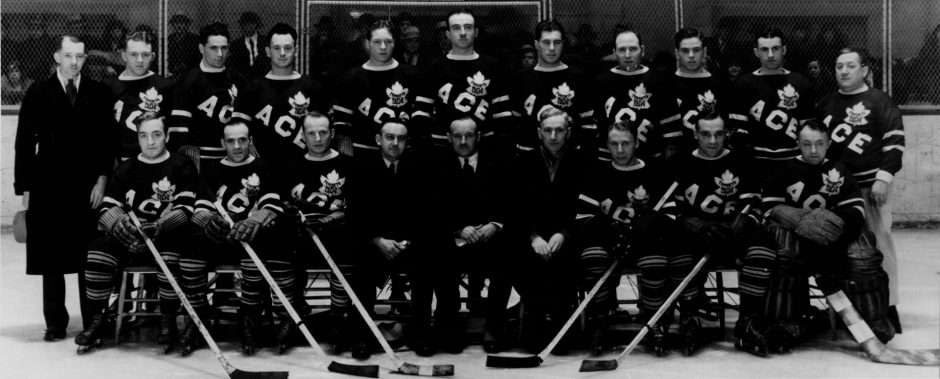
Imperial Oil-Turofsky / Hockey Hall of Fame

Before the days of Babcock or Quinn, of Sundin or Sittler, of Keon, Bower or Apps, there were the Toronto Maple Leafs of 1933-34 — the greatest Maple Leafs team of them all. They defended ably and scored at will. In seven different games, they rifled eight shots past rival goaltenders, and once netted nine against the New York Americans. Their 32-year-old captain and 38-year-old goalie were future Hall of Famers, as was the 24-year-old bull of a winger who led the league in goals and points.

On March 30, 1934, they were one win away from the Stanley Cup final.

The Leafs were in an unfamiliar place four nights earlier: down, two games to none, to the Detroit Red Wings in a best-of-five semifinal. Detroit had played the Leafs tough through the winter, once holding them to one point from three straight match-ups. But Toronto staved off elimination in Game 3, and then evened the series with a 5-1 victory.

“LAMBASTING LEAFS FORCE WEARY WINGS TO FOLD UP,” read the Toronto Daily Star’s front sports page the morning after Game 4. The Leafs had taken Detroit “by the neck and shook them over every inch of the torrid journey,” reported sports editor Lou Marsh. Game 5, it seemed, was theirs to lose.

A crowd of 14,500 watched the rubber match inside Detroit’s Olympia Stadium, the red-brick fortress where the Leafs had won the previous two games. The start was slow, and both offences ineffectual, until 14:35 of the first period, when Toronto’s top centre wedged his stick between an opponent’s skates and was escorted to the penalty box.

Half a minute into the power play, a Detroit defenceman named Ebbie Goodfellow was left alone by the Leafs crease, and made no mistake when a rebound fell at his feet. It was 1-0 Red Wings.

***

On Jan. 1, the Red Wings will be the present-day Leafs’ opponent in the Centennial Classic, an outdoor game on the Toronto Exhibition grounds to mark the franchise’s 100th season in the NHL. It is a century that spans more than 2,800 wins, 65 playoff berths and 13 Stanley Cups.

Through all those years, 1933-34 stands out. Toronto scored 174 goals in 48 games that regular season, 54 more than anyone else, and finished atop the nine-team NHL. Hockey Reference’s Simple Rating System, a metric that melds goal differential and strength of schedule, considers them the strongest Leafs team ever — by far.

Jack Boland / Postmedia Network

But these Leafs were not only good. Their season produced some of the most remarkable moments in hockey history, from a harrowing skull fracture and an overtime hat trick to an early all-star game and the most extravagant pre-game ceremony ever staged. And those moments were made all the more remarkable by the people involved — starting with the man at the top.

In 1927, a steely former University of Toronto hockey coach, Conn Smythe, leveraged his credentials as a sand and gravel businessman into the governorship of the Toronto St. Patricks, whom he soon renamed the Maple Leafs. “Through the decades that followed … those fortunate stalwarts Smythe selected to don his steel blades, to pull on his coveted jerseys of blue and white, became hockey exemplars, idolized by millions,” author Brian McFarlane wrote in the book Total Hockey.

Smythe’s coach was Dick Irvin, a retired forward who led a charge to the Stanley Cup in 1931-32, his first season behind the bench. Irvin’s captain was Hap Day, a defensive maestro who could move up to left wing in a pinch. And Day’s most celebrated teammate was King Clancy, a freewheeling blueliner who came to Toronto because of a horse race.

Clancy, an Ottawa native who starred for his hometown Senators through the 1920s, was the NHL’s most coveted player by September 1930. The Senators were in the throes of financial crisis, and made it known Clancy could be had for a price. Accordingly, Toronto’s board of directors offered $25,000 — but Smythe knew he’d need more.

Enter Rare Jewel, a two-year-old thoroughbred Smythe owned and planned to run in a stakes race at Woodbine Racetrack, despite the objections of his trainer and the filly’s winless career record. On his jockey’s advice, Smythe bet on the horse at 107-1 odds — and won well over $10,000 when she crossed the line first.

“Now,” he reportedly told two friends at the track, “I can buy King Clancy.”

Postmedia Network

At forward, the 1933-34 Leafs rolled out hockey’s most dangerous line: Joe Primeau, a smooth, defensively attentive playmaker at centre, between Charlie Conacher and Harvey “Busher” Jackson, two brash, defensively negligent snipers on the wings. Jackson, 22, could swerve with the puck on a dime; the 24-year-old Conacher, whose 32 goals and 52 points led the league that season, possessed a snapshot that once knocked New York Rangers goalie John Ross Roach out cold for five minutes.

Teamed with Primeau, 27, they formed the Kid Line. “(Primeau) would load the gun, and either Conacher or Jackson would shoot the bullets,” hockey historian Kevin Shea, author of The Toronto Maple Leaf Hockey Club: Official Centennial Publication, 1917-2017, said in an interview.

Postmedia Network

“They all just meshed.”

Two other players shone in the quirkiest games of 1933-34. George Hainsworth, a 38-year-old goalie traded to Toronto that October, kept the Senators at bay in a 4-1 win on Nov. 18 — a result Ottawa protested, unsuccessfully, on the grounds that the creases at Maple Leaf Gardens were too small. And on Jan. 16, the Leafs beat Ottawa 7-4 with three overtime goals, each of them scored by forward Ken Doraty. (At the time, overtime ran a full 10 minutes with unlimited scoring.)

In between, the season shifted seismically.

Behind Jackson on the depth chart, the Leafs had a left winger named Ace Bailey, a seven-year NHL veteran who, on Dec. 12 in Boston, had the misfortune of dropping back on defence to cover for a pinching Clancy — moments after Clancy dumped star Bruins defenceman Eddie Shore near the Toronto net. Shore made a beeline for the first Leaf he saw, and cracked him from behind.

“Bailey fell with a sickening thud, his head crashing against the ice,” the Daily Star reported. As he lay unconscious, Clancy’s defence partner, Red Horner, skated over and floored Shore with a single punch to the jaw. Bailey was driven by game’s end to a Boston hospital, bound for a neurosurgeon’s scalpel.

Smythe wasn’t happy. As he rushed from his owner’s perch to the Toronto dressing room, he instead started fighting a fan in the stands; he was arrested that night on assault and battery charges, having allegedly broken the man’s glasses and wounded his eye. Later, as the Leafs left the ice with a 4-1 win, they were pelted with game programs and other debris.

“Last night’s display of rowdyism … must go down on the books of professional hockey as one of the blackest marks of all time,” the Daily Star wrote the following day.

***

Bailey did not hold grudges. He told McFarlane as much in 1990, long after Shore’s blow fractured his skull and prompted fears he would not survive the week. Bailey lived, saved by the handiwork of two Boston doctors, though he never played another game.

Shore was suspended for 16 games and missed his team’s next trip to Toronto, in which the Bruins wore helmets in case of retaliation. But he returned to Maple Leaf Gardens on Feb. 14.

Postmedia Network

To dissuade Bailey from suing Shore for damages, the NHL proposed an all-star game — the first of its kind — pitting the Leafs against the rest of the league. That included Shore, the reigning winner of the Hart Trophy. The benefit raised more than $30,000 for Bailey and produced an iconic photograph: the injured winger, in a suit and a fedora, shaking hands with his assailant from the bench.

“The game itself was just one joyful jamboree,” Marsh wrote in the Daily Star. “(The players) were on their good behaviour like the junior second-class in the red schoolhouse out at the crossroads when the school inspector is on his rounds … no sticking bullfrogs down Mary’s neck or sinking a pin in Johnnie’s fanny.”

Even without Bailey, Toronto continued to score and win in bunches, clinching the NHL’s Canadian Division with weeks to spare. Their final home game of the regular season was a formality — but a memorable one.

The Leafs played host to the Rangers on March 17, St. Patrick’s Day, and used the occasion to celebrate their favourite Irish son: Clancy, who was wrapping up his best offensive season in years. Before puck drop, he was carried to centre ice on a throne — after several players rode out in parade-style floats, from a top hat to a boot to a boxing glove: decoys to fool the baying crowd.

Clancy wore a green jersey with a shamrock on the back to start the Leafs’ 3-2 win, though in doing so, he confused the Rangers and his suddenly pass-averse teammates in equal measure. After 20 minutes, he “went back into every day togs,” the Daily Star wrote, “and the night was saved for Ireland and Toronto.”

By March 19, the Leafs’ 26-13-9 record was set in stone, as was its semifinal with Detroit, the league’s second-best team. The playoff structure of the day called for the two division winners, Canadian and American, to immediately play for the “NHL championship,” despite the risk of crashing out before the real prize: the Stanley Cup.

Led by legendary coach Jack Adams, the Red Wings finished 1933-34 with 58 points, only three fewer than the Leafs. Still, Toronto may have expected to win in a waltz, at least judging by the apocalyptic tone Marsh took in print after Game 1.

“Oh Wirra! Wirra! And likewise ‘Oh, woe is me!’ — and to a lot of other folks this chill and frosty morning!” Marsh’s column began, mourning Toronto’s 2-1 overtime defeat. “The first game of the 1934 N.H.L. championship play-off is history, and the entry is so unexpectedly down on the debit side of the ledger that the boys and girls are well nigh speechless.”

It got worse after Game 2. Toronto lost 6-3 — and lost Clancy to hand and toe injuries. Jackson, held to one assist in two games, would be limited in Game 3 by a limp leg. And Smythe, the Daily Star reported, intended to rebuild his roster with younger players if the Leafs were swept.

Hans Deryk / National Post

But as the series moved to Detroit, the Leafs were not swept, nor were they beaten in four. Doraty scored twice in a 3-1 win, and the Kid Line combined for four goals two nights later — as Clancy, gamely gutting through his ailments, was knocked from the lineup for good on a check from Wings defenceman Doug Young.

Game 5 was scheduled for March 30, with three new Detroit forwards — the line of Gene Carrigan, Gus Marker and Ron Moffat — hastily recalled from the International Hockey League. Their job, whenever they vaulted the boards, was to stop the Leafs from scoring.

***

The call for a tripping penalty, Marsh wrote at the time, was unjust. Yes, Primeau’s stick had caught the shifty feet of Detroit centre Cooney Weiland. But in the decisive Game 5, it paled in the context of “a dozen more serious infractions.”

No matter. When Primeau emerged from the penalty box at 15:03 of the first period, the Red Wings led 1-0 — an advantage they clung to as the night ticked by.

The goalscorer was Goodfellow, but the key was the play of the minor leaguers, who set the tone for Detroit’s suffocating neutral zone trap. The Leafs “fried themselves to a frazzle trying to run the Wings into the ground,” Marsh wrote. A stick or body inevitably nudged the puck away each time.

Wilf Cude, a 23-year-old goaltender from Barry, Wales, faced just 15 shots in the Wings net, though one almost beat him: Conacher from the sideboards on a rare open rush. And a 16th shot nearly tied the game, when Leafs centre Andy Blair moved to tap in a cross-crease pass — only to be wrapped in an unpenalized bear hug.

Toronto could have used Clancy’s leadership in Game 5, Marsh wrote the next day, or that of a healthy Bailey. Mostly, they could have used goals. Their season instead ended on the final horn, to the sight of Detroit fans spilling over the boards and hoisting the Red Wings on their shoulders.

The off-season of 1934 was turbulent and tragic. In April, the Chicago Black Hawks emerged from a playoff among the next four best teams and defeated Detroit for the Stanley Cup. By August, two of their players were dead: Vezina Trophy-winning goalie Charlie Gardiner, collapsed of a brain hemorrhage at age 29, and 24-year-old centre Jack Leswick, discovered in the Assiniboine River, his death ruled an accident or suicide.

The Ottawa Senators, four years removed from selling King Clancy, moved to St. Louis for one doomed season before folding. They were followed by the Montreal Maroons in 1938 and the New York Americans in 1942, as the NHL slimmed to its historic configuration: the Original Six.

From 1933-34 on, Dick Irvin’s Maple Leafs did not just lose in heartbreaking fashion. They ritualized the practice, falling in each of the next two Cup finals — and five of the next six. Irvin took his leave after the last of the bunch, to be replaced by his long-time defensive anchor and captain, Hap Day.

Irvin’s teams “were astonishingly good,” said Shea, the historian. “By the middle of that decade, there was disappointment because they hadn’t won multiple Stanley Cup championships. The guys were injured. Slowly, the better players trickled away and went to other teams.

“But in the early part of the ’30s, they were so dominant.”

Dominant, and also memorable.

In the years after his benefit game, Ace Bailey took after Smythe and coached the University of Toronto. He served as a timekeeper at Maple Leaf Gardens. And he harboured hope that the NHL would establish a permanent all-star contest, highlighting the sport’s top talent at the start of each season.

Eventually, the league did just that. The first official All-Star Game was held Oct. 13, 1947 — with King Clancy as referee. Maurice Richard, Milt Schmidt, Ted Lindsay and other luminaries lined up together on one side. Irvin, by then the coach of the Montreal Canadiens, manned the bench.

They faced the defending Stanley Cup champions: the Toronto Maple Leafs.

Email: nfaris@postmedia.com | Twitter: @nickmfaris


Source link

Categories
Sports

Justin Gatlin fires coach, says he’s ‘shocked and surprised’ by allegations of ties to banned drugs


LONDON — World 100-metre champion Justin Gatlin says he has fired coach Dennis Mitchell following an undercover investigation that appeared to show people linked to the sprinter offering to supply performance-enhancing drugs.

Gatlin says on Instagram he was “shocked and surprised to learn that my coach would have anything to do with even the appearance of these current accusations. I fired him as soon as I found out about this.”

The Athletics Integrity Unit says it is investigating the allegations published in Tuesday’s edition of British newspaper The Daily Telegraph. IAAF President Sebastian Coe says “these allegations are extremely serious.”

The Telegraph reported that Mitchell and a track agent, Robert Wagner, offered to supply and administer testosterone and human growth hormone for an actor training for a film, for a fee of $250,000.

Gatlin, who also won the 100 metres at the 2004 Athens Olympics, has served two doping bans in his career.

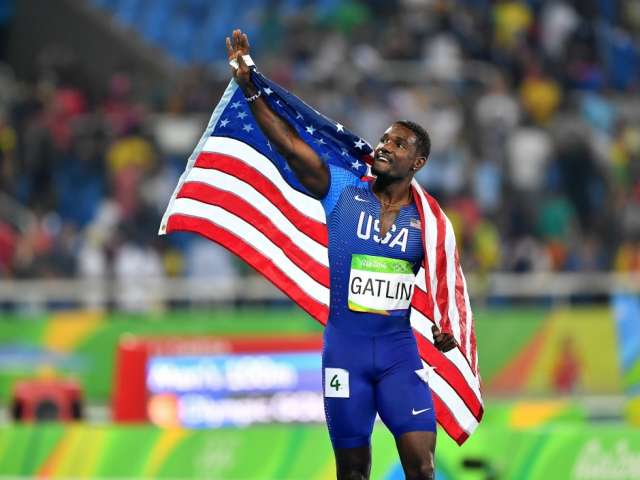
Justin Gatlin of the United States waves to the crowd after finishing second in the men’s 100-metre relay at the 2016 Rio Olympics. Pascal Le Segretain / Getty Images


Source link

Categories
Sports

Superpipe wins have all but assured Cassie Sharpe’s Olympic dreams — as long as she stays healthy


TORONTO — With less than two months until Pyeongchang 2018, these are agonizing times for potential Olympians. Even medal favourites have to earn their way on to the team, and a slip here or a stumble there in a qualifier is all it takes for that spot to go to someone else.

For many athletes, the qualifying process is more stressful than the Games themselves: it’s now when you find out if four years of training will pay off with the chance to compete in the biggest spectacle in sports. It’s now when those dreams can also be dashed.

For freestyle skier Cassie Sharpe, though, the goal between now and early February is blessedly simple: “Just stay healthy,” she says.

Sharpe, 25, of Comox, B.C., won an invite-only Dew Tour event last week in Colorado which, coupled with a World Cup win in New Zealand two months ago, all but punched her ticket to South Korea. The Canadian freestyle team won’t be formally named for several weeks yet, but for Sharpe it is just that, a formality.

Sharpe joined a handful of other Olympians in an airplane hangar at Pearson International Airport on Monday, where Air Canada announced an extension of its partnership with the Canadian Olympic Committee. The carrier will be the official airline of Team Canada through at least the 2020 Games in Tokyo.

Cassie Sharpe celebrates her Dew Tour superpipe win on Dec. 15. Matthew Stockman / Getty Images

Sitting in the shadow of a Boeing 787 freshly decked out in the logos of the COC and the Canadian Paralympic Committee, Sharpe said it “feels awesome” to know she is most of the way to Pyeongchang, figuratively speaking. Ski halfpipe, her event, was just added to the Olympic schedule before Sochi 2014, and so Sharpe has been looking toward this chance for a little more than four years. The win in New Zealand put her in excellent shape to qualify, the win last week in Breckenridge just confirmed it.

Sharpe says she has definitely had a few moments when the enormity of making the team has hit her.

“(After New Zealand) that kind of put me in a really good position and I just called my mom, crying,” she says, smiling at the memory of it. “I was just, ‘I think I’m going to go, I think I’m going to make it.’ That was just the moment that was, like, ‘Holy, I could go.’”

There are still a few events on the schedule before South Korea, but Sharpe says she doesn’t expect to change her approach.

“I’m so competitive, I always want to be the best no matter what I do,” she says. “Even though I know that I’m sitting pretty and I know that I’m OK, I still think I’m going to go into the events trying to win them. I’m just too competitive not to do that.”

The competitions also allow for excellent training, and a chance to further hone her runs in the lead-up to the Olympics. Sharpe skied the same runs with the same tricks in each round in Colorado and says she will likely stick to that plan.

“I do have a couple tricks in my back pocket that I’m holding onto,” she says. “I just feel that if I can win with the run that I have, why fix it if it’s not broken? But I definitely have a couple tricks that I want to break out before or at the Olympics.”

As it stands, her run does not lack for tricks: the winning performance at the Dew Tour included 900-degree rotations in each direction and several feats with mystifying names, such as the switch left 360 mute, the right flare tail and the straight air trucker. She learned this stuff at Mount Washington on Vancouver Island, where she and her two brothers were on the snow at a young age.

“It was just instinctual, really,” she says. “We kind of broke away from the ski school and we went to the (freestyle) park and we started skiing there.” She entered her first halfpipe contest five years ago and won it. “I sort of thought, ‘OK, maybe this is what I’m meant to do.’” Her younger brother, Darcy, 21, a slopestyle snowboarder, is also an Olympic hopeful.

“Watching him at contests really inspires me and I think vice versa, so we really feed off each other, for sure,” Sharpe says.

And so, with her spot all but assured, does that mean friends and family are planning to make the trip to Asia?

“Oh yes,” Sharpe says, and begins to rattle off the list: “Two sets of aunts and uncles, my mom and dad, my older brother, my dad’s best friend, my boyfriend, my boyfriend’s dad…”

This sounds like quite a gang, she is told.

“There’s a crew,” she says, laughing. “There’s a crew, for sure.”

So now all she has to do is stay healthy.

Email: sstinson@postmedia.com | Twitter: @scott_stinson


Source link

Categories
Sports

Hot Buttered Post: Could Diddy, Stephen Curry and Colin Kaepernick unite to own an NFL team?


Your midday sports snack.

Toast points

• Team Canada lost to the Czech Republic and Russia at a men’s Olympic hockey tune-up tournament over the weekend. The Canadians finished 1-2 at the Channel One Cup in Moscow after dropping a 4-1 decision to the Czechs on Friday and falling 2-0 to the Russians on Saturday. Longtime KHLer Matt Ellison scored Canada’s only goal over the two games, while Barry Brust and Ben Scrivens split goaltending duties. The Czechs and Russia finished atop the six-team round robin with three wins apiece.

• Your semi-regular Vegas hockey update, courtesy of TSN broadcaster Gord Miller:

Indeed, Vegas’ 21-9-2 record (a points percentage clip of .688) continues to keep them in elite company; they trail only Tampa Bay and Nashville league-wide. The Golden Knights are 13-2-1 at home, a mark only Tampa can match. The Lightning are in Vegas for an unexpectedly mammoth matchup Tuesday night.

• A public-service announcement to those in Toronto: The Maple Leafs play at 2 p.m. ET tomorrow. The Hurricanes are in town for a rare weekday afternoon tilt that will commemorate the Toronto franchise’s 100th birthday.

• Former 49ers quarterback Colin Kaepernick and Warriors superstar Stephen Curry want in on Sean (Diddy) Combs’ plan to buy the Carolina Panthers from Jerry Richardson, who said last night he’ll sell the team in the face of allegations of sexual misconduct and racism. Diddy’s tweeted declaration that he’d like to become the NFL’s first African-American majority owner drew supportive messages from Kaepernick, who has been a free agent all season, and Curry, who grew up in Charlotte and is in the first year of a five-year contract that averages US$40 million a year.

• Five of the NFL’s 12 playoff spots are now spoken for with two weeks left in the season. The Patriots (11-3) secured their ninth straight AFC East title with a dramatic 27-24 win over Pittsburgh yesterday; the Jaguars (10-4) clinched their first post-season berth in a decade with a 45-7 smackdown of Houston; and the Vikings (11-3) locked down the NFC North by rolling Cincinnati 34-7. The Steelers (11-3) and Eagles (12-2) were already through to the playoffs as of last week.

• John Skipper resigned suddenly as the president of ESPN this morning, telling employees in an email that he has struggled for years with an unspecified substance addiction and chose to step down “to take care of my problem.” Skipper, 62, has headed ESPN since January 2012; he reportedly signed a contract extension last month that would have kept him on through 2021. ESPN said Skipper’s predecessor as president, George Bodenheimer, will return to lead the network on an interim basis.

Nutritional analysis

During Sunday’s Packers-Panthers telecast, FOX’s Joe Buck mentioned that Carolina quarterback Cam Newton was only the third quarterback in NFL history to pass for 150 touchdowns and run for 4,000 yards. It seemed like it might be interesting to see what a plot of that would look like.

The three relevant players are noted: Newton — who threw four touchdown passes and ran 14 times for 58 yards in the 31-24 victory over Green Bay — Randall Cunningham and Steve Young. While the achievement seems noteworthy, in that so few players have reached that combination, the visualization of the data shows it might be much more interesting when someone with running ability also moves into an elite passing echelon.

Below is the same chart with the last eight Super Bowl-winning quarterbacks marked.

Among Cunningham, Newton and Young, only Young has a Super Bowl ring and only one of his three rings came when he was the starter. Newton has made a Super Bowl appearance, losing to Peyton Manning and the Broncos at the end of the 2015 season. Cunningham never got to the title game.

Running quarterbacks remain crowd-pleasers, but they don’t appear to be the ones who get the job done in January and February. Newton has a chance to break that mould if he can win more than one title. Russell Wilson needs fewer than 800 rushing yards to join the 150-4,000 club, and he also has a Super Bowl ring and two appearances.

It’s not exactly fair to compare Newton unfavourably to the last eight Super Bowl-winning quarterbacks, since five of them probably will be Hall of Famers and Eli might sneak into Canton as well. There are only 28 quarterbacks in the Hall of Fame; it’s an elite club.

Photos of the day

At the Indy 500, the winner gets a glass of milk. The Tour de France victor sips champagne during the final stage. And elsewhere in France, they reward downhill skiing dominance with cheese.

At nationalpost.com

• Fields of greyish mud. Glacial ice breaking off in chunks. Mountain ranges closed to the public for lack of snow. The troubling effects of climate change are being felt at Winter Olympic training sites across the world, the Associated Press reports, as alpine and freestyle skiers scramble to prepare for Pyeongchang at a dwindling number of suitable venues. From Whistler and the Rockies to Austria and the Alps, the problem is only going to get worse.

• Dubious playing conditions aren’t only an issue for the Olympics. One hundred years before the Canadiens and Senators faced off outdoors in Ottawa, early versions of those teams met for the first time on “very sticky” ice. Canadian Press reporter Jim Bronskill has the story of the first day in NHL history: Dec. 19, 1917, when last-minute contract disputes forced the Senators to play shorthanded and the Toronto Arenas and Montreal Wanderers combined to score 19 goals.

TV tonight

All times Eastern

3 p.m. Soccer: Premier League, Everton vs. Swansea TSN1,4
7 p.m. NHL: Columbus at Boston Sportsnet, TVAS
7 p.m. NBA: Boston at Indiana SN One
8 p.m. NBA: Portland at Minnesota TSN2
8:15 p.m. NFL: Atlanta at Tampa Bay TSN1,3-5, RDS
9 p.m. NHL: San Jose at Edmonton SN West
10:30 p.m. NBA: Golden State at LA Lakers SN One

Hot Buttered Post is served Monday through Thursday.


Source link

Categories
Sports

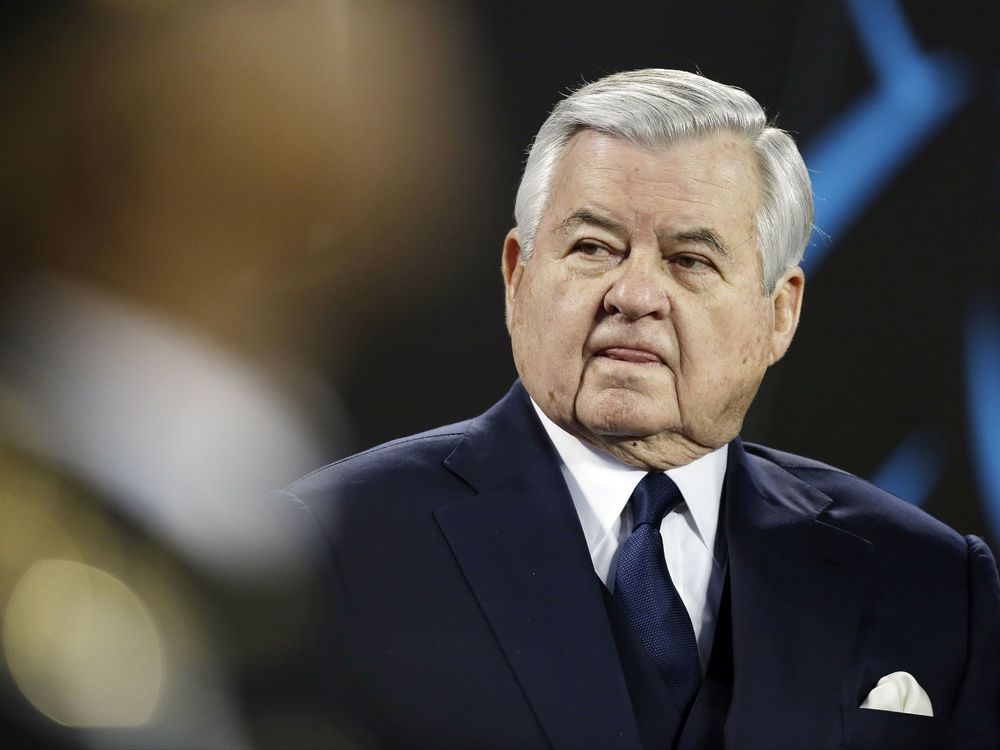
Facing investigation for sexual misconduct, Carolina Panthers owner says he will sell the team


CHARLOTTE, N.C. — Facing a growing investigation that accuses him of sexual misconduct and using racist language at work, Carolina Panthers owner Jerry Richardson announced Sunday that he will sell the NFL team after the season.

The team announced on Twitter that Richardson is selling the team, linking to a five-paragraph letter by the franchise’s only owner.

“I believe it is time to turn the franchise over to new ownership,” Richardson wrote, saying he wouldn’t begin discussions until after the season. The Panthers, who lost in the Super Bowl two seasons ago, are in playoff position again.

“I hope everyone in the organization, both on and off the field, will be firmly focused on one mission: to play and win the Super Bowl,” said Richardson, 81.

Richardson’s letter did not directly address the investigation or allegations against him.

The NFL awarded Richardson, a former player with the Baltimore Colts, an expansion franchise in 1993, and he has been the team’s only owner.

“There has been no greater mission or purpose in my life than to have brought an NFL franchise to Charlotte,” Richardson wrote. “The obstacles back then were significant and some even questioned whether or community could or would support professional football. But I always knew that if given the chance the Carolina would rise to the occasion. And you have.”

Richardson attended Sunday’s win over the Green Bay Packers at Bank of America Stadium and was photographed sitting beside his wife Rosalind in his luxury box.

He did not speak to reporters.

The NFL had no comment on the upcoming sale of the Panthers.

“While I will no longer be the team owner, I will always be the Panthers Number One fan,” Richardson’s letter said.

The Panthers are tied to Charlotte through June of 2019.

The city of Charlotte and the Panthers reached agreement on improvements for the team’s stadium in 2013. The plan called for the city to contribute about $87 million for renovations to Bank of America Stadium in exchange for a six-year hard tether to keep the Panthers in Charlotte.

The money is less than what the team was seeking for improvements of the stadium, which opened in 1996. Forbes estimates the Panthers worth at $2.3 billion. The Buffalo Bills sold in 2014 for $1.4 billion following the death of owner Ralph Wilson.

Richardson and his ownership group paid $206 million in 1993 for an expansion team.

Richardson’s announcement comes after a Sports Illustrated report Sunday that cited unnamed sources who said Richardson made sexually suggestive comments to women and on at least one occasion directed a racial slur at an African-American Panthers scout. The report states that the settlements came with non-disclosure requirements forbidding the parties from discussing the details.

The NFL on Sunday said it has taken over the investigation of allegations of workplace misconduct. Panthers spokesman Steven Drummond said Sunday the team requested the league take over the investigation for “transparency reasons.”

The Panthers began play in 1995 but have never delivered on Richardson’s promise of winning a Super Bowl. They lost after the 2003 and 2015 seasons.

Panthers interim general manager Marty Hurney said he had never seen any evidence of Richardson displaying any sexual or racial misconduct in the workplace.

“If this (sale) happens I think it is a significant loss for the NFL,” Hurney told The Associated Press. “I have the utmost respect for him as an owner. Our employees have the utmost respect for him. I came back because of the respect I have for him and for the organization he started and developed.”

Panthers quarterback Cam Newton said after Sunday’s win over Green Bay that Richardson has served as a father figure to him since his arrival in Carolina seven years ago.

“For me I hope things don’t alter my thinking of Mr. Richardson,” Newton said. “But I do know that he has given me some things that I will forever be appreciative of.”

Panthers coach Ron Rivera said after the game it is important to let the process play out.

“The only thing I can speak on is for what he has been to me as far as I’m concerned,” Rivera said. “A lot of you know I had a house fire, and he was there for (my wife) Stephanie and I. He was tremendous in supporting us. My brother passed, and Mr. Richardson was there and helped me get to the funeral and back. I can’t speak to anything other than that.”

Richardson was hospitalized 2008, one month after receiving a pacemaker for heart problems. He underwent quadruple bypass surgery in 2002 and was placed on a donor waiting list for a new heart. He received the new heart on Feb. 1, 2009, and has not had any known setbacks since.

It has been a wild year for the Panthers organization.

Team president Danny Morrison abruptly resigned in February. Richardson then fired general manager Dave Gettleman on the eve of training camp and replaced him with Hurney on an interim basis.


Source link

Categories
Sports

Climate change is threatening Winter Olympic training across the world — and it’s only getting worse


SAAS-FEE, Switzerland — The athletes’ half-hour commute in the Swiss Alps — up two gondolas, then through a tunnel in the world’s highest underground train to a glacier at 11,000 feet — served up daily grim reminders that global warming is threatening their line of work.

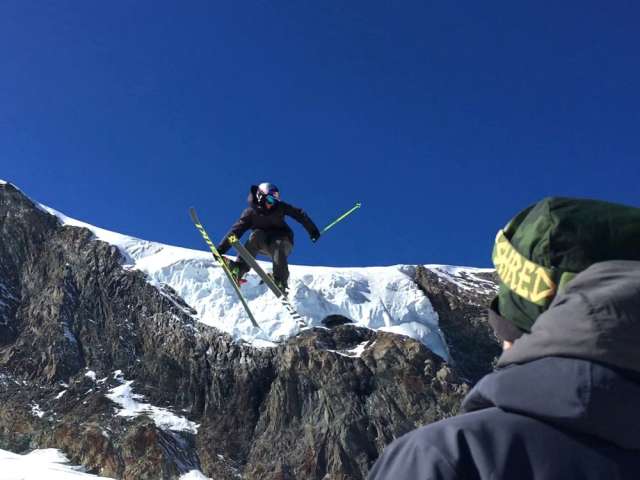
After exiting the train, they squelched through a field of greyish mud to reach shrinking snowfields scarred by new crevasses. Occasionally, they heard the sharp roars of glacial ice breaking off in monster chunks, then echoing across the peaks where they trained jumps, tricks and turns for the Pyeongchang Olympics. Most days, they basked in brilliant, snow-melting sunshine that bathed the whole scene in deceptive beauty.

Another subtle but telltale indicator of climate change’s disruptive impact on winter sports: Many athletes — here 8,000 kilometres away from the Rockies and 5,500 km from the Green Mountains of New England — had the letters “USA” emblazoned on their jackets. Americans once had little need to swap continents to guarantee off-season access to snow. But warming is forcing athletes to hunt farther from home for wintry conditions, particularly just months away from an Olympics.

“Without the snow and the cold in the places in the States where it’s normally cold, we have to travel over here and find a place on a glacier to get a couple of jumps off,” said Jon Lillis, world champion in aerials skiing. “Something that terrifies every winter athlete daily is the fact that the conditions are not as good as they used to be. You see videos of people skiing on glaciers back in the ’80s and ’70s, and half of that glacier doesn’t even exist anymore.”

This photo taken from a 4K video and dated Oct. 18, 2017, shows a skier performing a jump during training on the glacier above Saas-Fee, Switzerland. John Leicester / AP

Last year, the aerials team stopped water training at its headquarters in Park City, Utah, in mid-October, then sat and waited a month for snow that came late to the mountain that hosted the Winter Games 15 years ago. The World Cup season began in China, and the Americans were forced to travel there not having set foot on snow in months. The results, not surprisingly, were dismal: not a single podium and only one finish in the top five.

Lesson learned: This season, they uprooted to glaciers at Saas-Fee, Switzerland, and Ruka, Finland, for autumn training required to be competitive at February’s Winter Games in South Korea.

The hunt for off-season training spots like these is increasingly a scramble, and not just for the Americans. The hellishly named “Lucifer” heat wave that baked Europe in July and August wreaked havoc on teams’ schedules. Canadian skicross racers had to cancel plans to train on Italy’s Stelvio glacier that turned a sickly grey, rerouting to Mount Hood, Oregon, instead. Canadians endured issues elsewhere, scrubbing a planned summer training trip to Argentina because of hostile weather and extreme winds.

France’s moguls team cut short a July training camp on its home glacier in Tignes after a crevasse opened under the course, which this year had just one jump instead of the usual two because of a shortage of snow, said team member Ben Cavet.

He was shocked by the visible deterioration of his regular venue for summer training.

“It’s crazy, you know? I always thought global warming was like your granddad going, ‘Oh, I used to go and ski here 20 or 30 years ago and there was more snow,”‘ Cavet said in an interview. “But now we really are talking eight years. I can see a huge difference. Up on the glacier, now there’s this huge cliff — you know, like a big rock — that you couldn’t even see before.”

“It is worrying, very worrying,” he added. “What scares me about global warming is that you can see that the world is suffering in some of the most beautiful places on Earth.”

This photo taken from a 4K video and dated Oct. 17, 2017, shows Swiss aerial skier Mischa Gasser as he performs a jump during training on the glacier above Saas-Fee, Switzerland. John Leicester / AP

Other glaciers suffered, too:

• Austria’s Moelltaler Glacier closed from Aug. 15-Sept. 7 because of what its operators said were “water gutters in the ice” and other safety concerns.

• The Stubai Glacier, also in Austria, is deteriorating. U.S. coach Mike Jankowski, who brought some of the snowboarders and freeskiers there after the Saas-Fee trip, said there are concerns that some of the big buildings, drilled into the permafrost on the glacier, might not be stable for much longer.

• Italy’s Stelvio, billed as the Alps’ largest summer skiing area, shut for 21 days in August, a sobering first since the opening of its lifts in the 1950s. Italian athletes who still came to train were hauled up on snow-cats.

“Partly it was because of the heat,” said Umberto Capitani, in charge of the ski area. “But it’s also been three years that we’ve had very little snowfall.”

• The Horstman Glacier in Whistler, near the 2010 Olympic Alpine venue, has deteriorated so badly that a renowned recreational snowboard camp was cancelled, and other activities curtailed.

“There used to be, like, nine lanes for different camps there, and now it’s five or six,” said U.S. moguls skier Troy Murphy. “We still go there. It’s still pretty good. But the amount it’s shrunk, the snow is so much lower.”

• Glaciers of the French Alps lost an average of 25 per cent of their surface area between 2003 and 2015, and the rate of shrinkage nearly tripled, according to a study being readied for publication early next year.

French researcher Antoine Rabatel said it is “highly probable” that the same trends will show up at glaciers elsewhere in Europe, as winters get shorter and summers hotter.

Winter sports training, he said, is “going to become harder and harder.”

In this Feb. 12, 2010 file photo, Canadian ski jumper Trevor Morrice competes in qualifying at the Vancouver Olympics in Whistler, B.C. Al Charest / Postmedia Network

The quest for reliable spots is becoming more competitive, and securing training locales is increasingly using up coaches’ time and budgets.

“I need to be progressive and search out new spots,” said Jankowski, who has had to add more reliable European venues to a global travel schedule that already includes trips to New Zealand and other locations in the Southern Hemisphere.

In October, skiing and snowboard athletes from the U.S. and dozens of other nations lined up before dawn, doing warmup exercises in the dark as they waited, to squeeze aboard the first gondola up to Saas-Fee’s glacier. It also is in retreat, no longer reaching down to above the no-cars-allowed resort town, as it did in the 1930s.

Environmentally minded athletes are wrestling with the moral dilemma of contributing to atmospheric pollution with their widening search for snow.

“We take planes to go overseas. We take cars every day to go training,” said French snowboard-cross racer Pierre Vaultier, gold medallist at the 2014 Sochi Games. “We are not examples about how to decrease global warming.”

U.S. gold-medal snowboarder Jamie Anderson said it’s easy to get “sucked into the system, whether you want to or not.”

“It’s hard to get out until you consciously make the decision,” Anderson said. “With how passionate I am about snowboarding, it’s hard to make that shift.”

Well aware of the impact snow sports are having on the environment, Burton Snowboards recently announced a series of changes aimed at diminishing its environmental footprint.

The growing frequency of warm winters has, indeed, hurt the financial health of the industry, including ski resorts that form the backbone of the recreational side of the sport. A study commissioned by the Natural Resources Defence Council and the athletes’ group Protect Our Winters found that skier visits in New Hampshire were 17 per cent lower and ski resort revenue was $54 million less in the “low-snow” winters of 2001-02 and 2006-07, as compared with higher snowfall winters of 2007-08 and 2008-09. The differences between low- and high-snow seasons in Colorado were eight per cent in visits and $154 million in revenue.

It’s a scary thing right now for winter sports. There’s fewer and fewer places and all the glaciers are melting

The increased frequency of warm-weather race disruptions on the pro circuits also is causing alarm. Mild temperatures and lack of snow in Germany, Croatia and Michigan hit the 2015-16 season with multiple cancellations and venue changes. Last season began with events in Colorado and Alberta scrubbed because of lack of snow. This season’s early Alpine event in Beaver Creek, Colorado, was run on almost all man-made snow that turned glassy in the warming sunshine.

Biathlon venues such as Ruhpolding in Germany and Ostersund, Sweden, commonly now make thousands of cubic yards of snow at the end of winter and store it through summer beneath tarps and wood chips for early-season races the next winter.

“We used to have relatively reliable conditions at all biathlon venues around the world,” said Max Cobb, the president of U.S. Biathlon. “You can’t count on it anymore.”

Temperatures above 0 C greeted freestyle skiers and snowboarders at their world championships in Spain last March, creating mushy conditions like those that took some of the shine off the 2014 Sochi Games and the 2010 Olympics in Vancouver.

“It’s a scary thing right now for winter sports. There’s fewer and fewer places and all the glaciers are melting,” U.S. aerials coach Matt Saunders said in Saas-Fee. “It’s definitely getting harder and harder to get on snow early, for sure. We are having to travel further and further.”

Scientists warn that worse is to come for winter sports, and that more warming will render proven Olympic venues unsuitable, even with greater use of artificial snow-making. Much has been said about the scarcity of snow in Beijing and surrounding areas, which will host the 2022 Winter Games, though officials have frequently brushed off the problem and promised to make enough artificial snow.

Park City is in the mix for the 2026 and 2030 Olympics. The irony is not lost on Olympians who live there but had to travel the globe to train for Pyeongchang.

“In my career, a lot of times, it’s been really easy to chalk things up to it being a bad winter,” said U.S. aerialist Mac Bohonnon. “But (warming is) undeniable. And the more I’ve travelled, the more I’ve seen that it’s a pretty common theme wherever you go.”

AP Sports Writers Andrew Dampf in Rome and Eric Willemsen in Vienna contributed to this report.


Source link