Categories
Sports

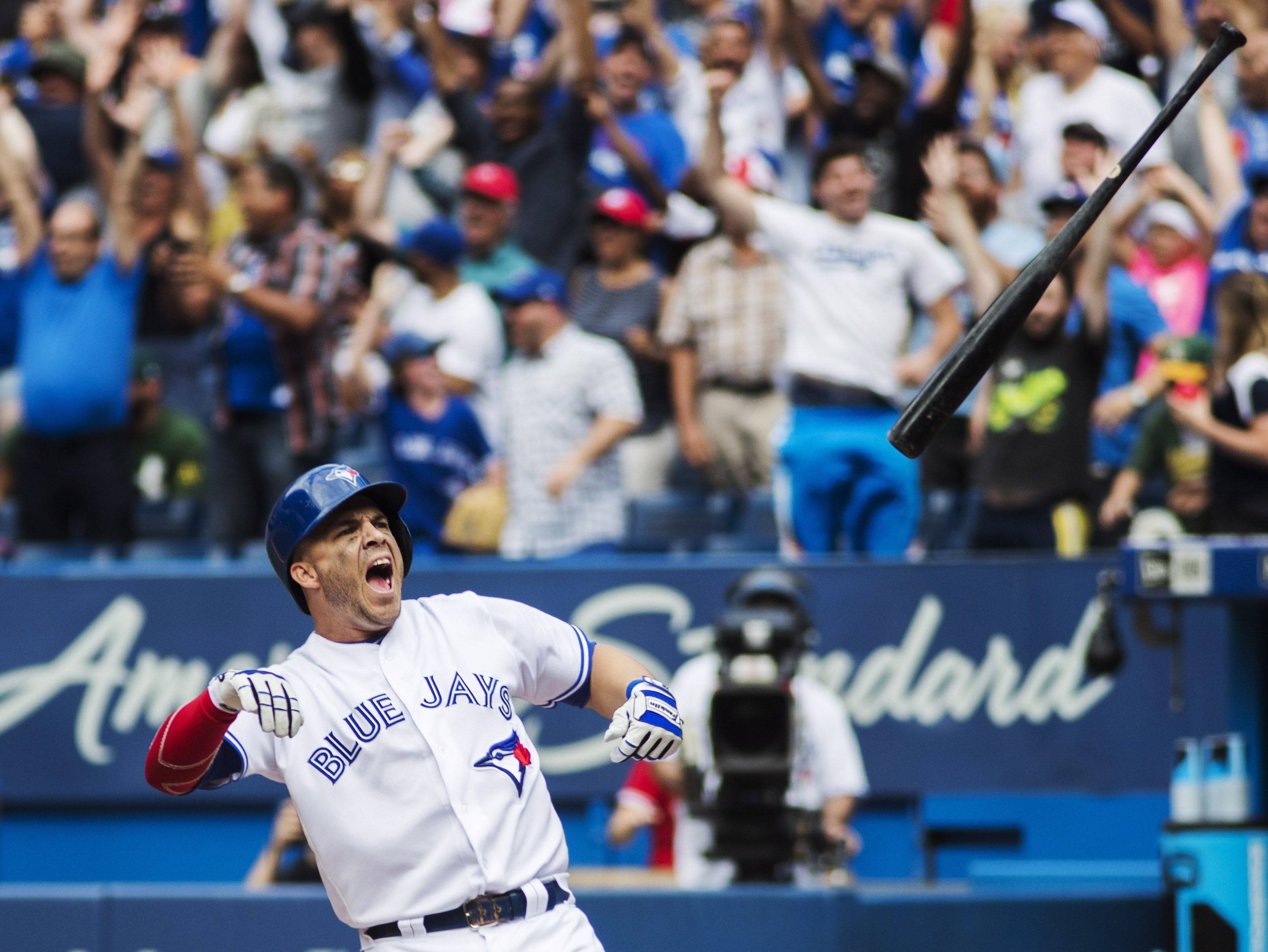
The year in gripping sports photos, from Julian Edelman’s catch to Steve Pearce’s walk-off grand slams


Your midday sports snack.

Toast points

• Canadian world junior goalie Carter Hart was stout yesterday in a 4-2 win over Finland, but he’ll watch from the bench tonight as Colton Point starts against Slovakia. The Slovaks were idle on the first day of the tournament in Buffalo, while Canada and the United States — 9-0 winners over Denmark — took an early lead atop Group A. Expect Hart to return to the crease when Canada and the U.S. face off outdoors at New Era Field on Friday afternoon.

• The other Canadian hockey team currently in action won its opening game at the Spengler Cup in Switzerland yesterday. Canada beat Czech club Mountfield HK 5-3 on a late shorthanded goal from David McIntyre and an empty-netter from P.A. Parenteau. Other ex-NHLers making their case for inclusion on Canada’s Olympic team this week include Andrew Ebbett, Chris Kelly, Maxim Lapierre, Jay McClement, Mason Raymond and Christian Thomas, as well as goalie Kevin Poulin. Canada plays the host team, HC Davos, tomorrow at 2:15 p.m. ET.

• James Harrison became a Patriot yesterday afternoon. The 39-year-old linebacker signed with AFC-leading New England three days after his release from Pittsburgh, the team that had employed him for 177 of his 192 career games. Harrison only played in five of the Steelers’ first 15 games this season, and Bill Belichick’s plans for his new acquisition are as clear as mud.

If nothing else, 40-year-old Tom Brady finally has a running mate in the locker room. After him and Harrison, the Patriots’ oldest player is linebacker David Harris, 33.

• The 2018 Winter Olympic organizing committee released updated ticket sales figures over the weekend, with overall sales reaching 61 per cent as of Dec. 21. South Koreans have only won Winter Olympic medals in three sports: figure skating and speed skating, both long- and short-track. Short-track has sold more than 74 per cent of its seats, but long-track (53 per cent) and figure skating (54 per cent) are lagging. Alpine skiing has sold the largest percentage, 81 per cent, while biathlon is only at 41 per cent.

• Disgraced Russian sports official Vitaly Mutko resigned today as the chief organizer of soccer’s 2018 World Cup. Mutko, Vladimir Putin’s deputy prime minister, was banned from the Olympics for life earlier this month for his alleged role in orchestrating a covert, state-sponsored doping program at Sochi 2014, when he was Russia’s sports minister. Mutko’s decision comes two days after he said he’d temporarily step down as president of the Russian Football Union to focus on litigating his Olympic ban through the Court of Arbitration for Sport.

Nutritional analysis

Early in the tenure of Raptors coach Dwane Casey, he used to tell reporters that his goal for team defence was to hold opponents below 43 per cent shooting. As it turned out, that was a worthy goal in his first season, 2011-12, when the Raptors held opponents to 43.5 per cent shooting.

The closest they’ve come since then is 44.4 per cent in 2015-16, although Casey’s target may have changed as his teams became offensive powerhouses and as the league evolved into trying to shoot as much as it could from the paint and from beyond the three-point line.

Last night’s dismal 98-93 loss in Dallas was beyond weird for the number of times the teams traded scoring runs, alternating wildly between being hot and cold. The Mavericks, in fact, shot only 42.6 per cent. The Raptors could only manage to shoot 33.7 per cent.

Below are a couple of charts showing how the Raptors’ offensive and defensive shooting percentages have evolved over Casey’s seven seasons.

Toronto’s 47.4 per cent shooting this season ranks seventh in the league; last season’s 46.4 mark was 11th. On defence, oddly, they rank 25th in both seasons with identical 44.9 marks.

The box plots above show the range of the Raptors per-game shooting percentages, with the box representing the range between the 25th and 75th percentile and the line in the middle of the box showing the median.

Although the Raptors haven’t moved the needle on their overall defensive percentage in the last two seasons, the spread between the offensive and defensive medians is at its highest level in Casey’s seven seasons. Last season, the spread was 2.0 percentage points (46.65 offence vs. 44.65 defence) and this season the spread is 1.6 percentage points (46.70 vs. 45.10), even as the team has tried to evolve into taking more three-point shots.

Photo of the day

As 2017 draws to an end, here are 12 momentous snapshots from the past year — one for each month.

At nationalpost.com

• Don Cherry was worried he was getting soft. When his wife, Luba, told him last year that he “used to be good,” the implication was clear. So the loudest hockey commentator on television wrote those words on three separate pieces of paper and posted them around his suburban Toronto home. Curtis Rush has the story of how Cherry decided to return to his old ways, a reawakening that has led the Coach’s Corner star to this conclusion: “I’m more of a bully. I’m more aggressive. I’m better.”

• When Johnny Bower was 15, writes Lance Hornby, he told Army officials he was a few years older to join the war effort in Europe. When he was 33, he said he was a few years younger — so that the team that had just claimed him from the AHL, the Maple Leafs, wouldn’t be summarily inclined to send him back. Bower, who died Tuesday at 93, went on to win two Vezina Trophies and four Stanley Cups in a Toronto uniform, becoming a name the franchise and its fans never stopped appreciating.

TV tonight

All times Eastern

1:30 p.m. NCAA Football: Independence Bowl, Southern Mississippi vs. Florida State TSN2
2 p.m. Hockey: Spengler Cup, HC Davos vs. Mountfield HK TSN5
2:45 p.m. Soccer: Premier League, Newcastle vs. Manchester City TSN4
3 p.m. Hockey: World junior, Belarus vs. Switzerland TSN1,3,5
7 p.m. Hockey: World junior, Canada vs. Slovakia TSN1,3,4
7 p.m. NHL
— Montreal at Carolina TSN2, RDS
— Ottawa at Boston TSN5, TVAS
8 p.m. NHL: Edmonton at Winnipeg Sportsnet
8 p.m. NBA: Toronto at Oklahoma City SN One
8:30 p.m. NCAA Football: Foster Farms Bowl, Arizona vs. Purdue FOX
10:30 p.m. NBA: Utah at Golden State SN One

Early Thursday
9 a.m. Hockey: Spengler Cup, Switzerland vs. HPK TSN5
Noon Hockey: World junior, Denmark vs. Finland TSN1,4
Noon Soccer: Premier League, Newcastle vs. Manchester City TSN3

Hot Buttered Post is served Monday through Thursday.


Source link

Categories
Sports

The reawakening of Don Cherry: Hockey’s loudest pundit thought he’d lost a step, so he became ‘more of a bully’


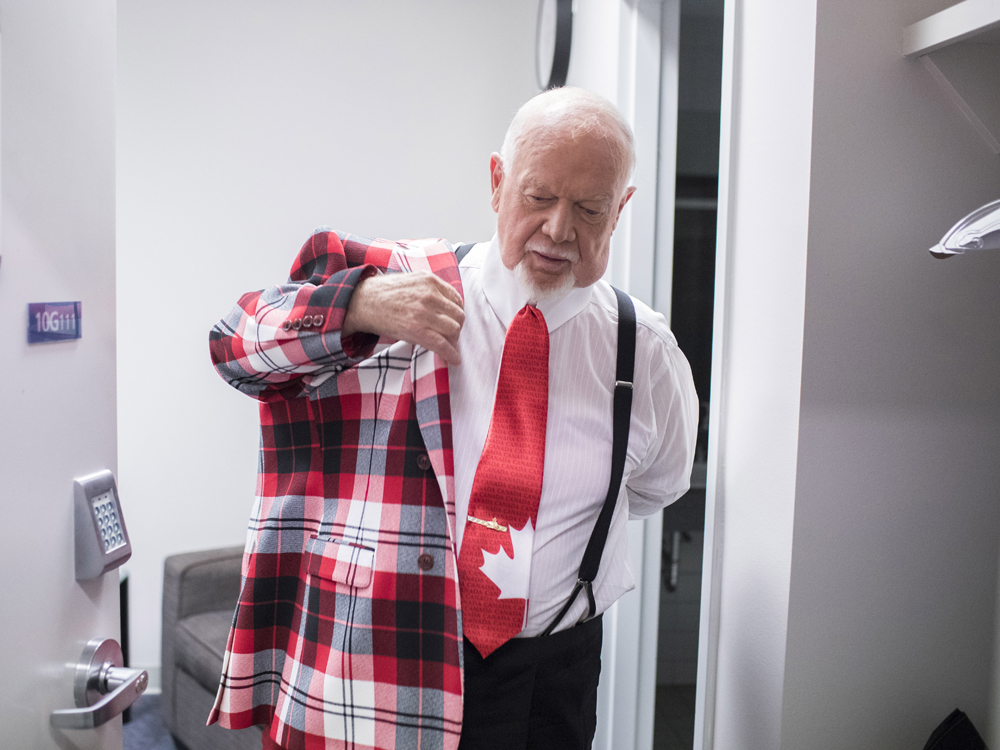
Don Cherry dresses for “Coach’s Corner” on Hockey Night in Canada in Toronto on Nov. 11.

Photograph by: Christopher Wahl

MISSISSAUGA, Ont. — Don Cherry, who can be as loud as the jackets he wears during his weekly “Coach’s Corner” segments on Hockey Night in Canada, was worried a year ago that he was losing his edge.

He was at risk of becoming a dinosaur, droning on about hockey’s best pugilists when the NHL was turning toward more skill and speed.

After careful introspection, and inspiration from his wife, Cherry, 83, has roared back to being Canada’s Lion in Winter and hockey’s most outspoken voice, well into his fourth decade as a broadcaster.

“Everyone on television knows more about hockey than me,” Cherry said. “But they don’t know hockey. There’s a difference. They know all the stats, they know all the players, the whole deal. But I can pick out things no one else picks out.”

Cherry put himself in precarious positions as a player and as a broadcaster for his uncompromising opinions, making it a practice to thumb his nose at authority. CBC tried several times to fire him, but Cherry came back stronger. And after it was announced in 2013 that Rogers Communications would take over Hockey Night in Canada and his detractors predicted his demise, Cherry had another act in him.

He has maintained a following of mostly male, hard-core hockey fans even amid the chorus of critics who say he is out of touch with the times.

“I told him that a lot of Canadian people say they don’t understand you, but the guys in the bar understand you,” said Ralph Mellanby, executive producer of Hockey Night in Canada who first hired Cherry in 1980. “You’re like the guy in the bar.”

Competition forced Cherry to evolve, said his producer, Kathy Broderick. The sheer volume of midweek games shown across multiple platforms means the best highlights are old by the time “Coach’s Corner” goes live on Saturday nights. So Cherry digs into the obscure elements of the game.

“I’ve never met anybody who has a keener eye for the game,” said Scott Moore, Cherry’s boss and president of Rogers’ Sportsnet and NHL properties.

And by establishing a Twitter presence, with an account of 800,000 followers that is managed by Broderick, Cherry is adapting to modern methods of communication.

When he wants to comment on Twitter, he will write down his thoughts on paper and call Broderick, who posts them and waits for the mentions to erupt.

An unabashed right-wing conservative, Cherry has used his TV platform to pay tribute to police and armed forces and has used Twitter to scold “left-wing media,” sentiments that have evoked comparisons to the American nationalism of President Donald Trump.

Connecting his hockey commentary with Canadian nationalism is a reason for his staying power, said Julie Stevens, associate professor in the sport management department of Brock University in St. Catharines, Ont.

“The key is that he is different from the relatively reserved demeanour of Canadians and will make claims that put Canada first,” she said.

But Cherry, with principles firmly rooted in the past, had his co-host, Ron MacLean, rolling his eyes by suggesting that women do not belong in male dressing rooms. He was forced to apologize after insulting three former NHL enforcers by calling them “pukes,” and he fuelled outrage across Canada, particularly in Quebec, by railing against “Europeans and French guys” who wear visors on their helmets to protect their faces.

Cherry, a native of Kingston, Ont., draws on a background that includes a Memorial Cup in junior hockey, four Calder Cups in the American Hockey League as a rugged defenceman, and the awards of AHL coach of the year with the Rochester Americans and NHL coach of the year with the Boston Bruins.

“Coach’s Corner” often reflects his interests in military history, honour and valour — values he embraced in reading about Sir Francis Drake and Horatio Nelson.

“I have to laugh when I see all the books about how to be a leader,” he said.

In his weekly six-to-seven-minute sermons, Cherry tries to be the conscience of the league. MacLean calls the segment “six minutes of psychotherapy for athletes.”

Cherry campaigned for no-touch icing to cut down on injuries caused by crashes into the boards, and changes were made. He now rants at officials who do not apply the rule properly. He has also lectured coaches against calling out their star players and about the right way to pull a goaltender. Do it between periods only, he advised.

“Never pull them during the game,” Cherry cried out. “You embarrass them.”

Cherry tries to avoid contact with players, coaches and general managers, because, in his code of honour, if you are friendly to them, you can’t criticize them.

Twice a week, though, Cherry attends youth hockey games with his son, Tim, 54, who scouts prospects for the Ontario Hockey League. It was during these outings that Cherry first laid eyes on superstars Steven Stamkos and Connor McDavid.

As Cherry surveys the action, he will sometimes pick out a player who may not be a top star. He will tell his son, “Keep an eye on that kid.”

Tim said: “Eventually toward the end of the year, the kid will start to rise. All I can say is it’s a feeling he gets.”

To prepare for “Coach’s Corner,” Cherry and MacLean will scribble notes during the week and let Broderick know which video clips to retrieve. On Friday, Broderick sends out an email to both of them with possible options. Cherry and MacLean talk at 9:30 a.m. Saturday, and a final list is drafted. Cherry speaks to Broderick around 11 a.m., signing off with the phrase, “I’m going to be brilliant as usual.”

On game day, Cherry abstains from eating after 1 p.m., and downs a couple of coffees before the show to get an edge. Afterward, Cherry will watch the replay by himself and review “Coach’s Corner” later at home. He might make some small complaints, perhaps about the lighting.

“His shoulders are sometimes not lit, or his jacket may not pop or shine as much,” Broderick said.

Last year, his wife, Luba, unwittingly lit a fire under him. She showed him some old tapes and said, “You used to be good.”

Cherry replied, “What do you mean, used to be good?”

Luba explained, “Well, what I meant was that you’re not the bully you used to be.”

“You’re absolutely right,” Cherry said. “As I get older, I don’t want to cause any trouble.”

Cherry took three scraps of paper, wrote, “Used to be good,” and plastered them around the house as motivation.

“I decided to go back to the way I was,” he said. “And right now, I’m like I was 20 years ago. I’m more of a bully. I’m more aggressive. I’m better.”

Away from the camera, the man affectionately known as Grapes has softer edges and a prankster’s guile.

In October, Cherry changed the location of an interview from his house to his son’s home, just around the corner in suburban Toronto.

“Come around nine in the morning and you’ll see me sitting on the white veranda,” Cherry said in a voicemail message.

At the appointed time, a skeleton was sitting where Cherry was supposed to be on the Halloween-themed veranda. His son, Tim, opened the door and dryly remarked that his father had been on a strict diet of late.

A few minutes later, Cherry made a less-than-grand entrance, wearing checkered track pants, a T-shirt and a windbreaker.

“It’s a funny thing,” he said. “I can go to Home Depot, and if I’m dressed like this, maybe five out of 10 people will recognize me. But if I put on a shirt and tie, you can’t believe it. Everybody wants a picture.”

Cherry said his fashion sense came from his father, Delmar, a master electrician and a “dandy who was the sharpest dresser of all time,” and his mother, Maude, who was a tailor at Royal Military College.

Cherry’s leap to TV came in 1980 after he wore out his welcome as coach in Boston and Colorado. Mellanby hired Cherry as a guest analyst in the Stanley Cup Final, even though he knew how volatile Cherry could be.

In 1978, when Cherry was coaching the Bruins in the finals against Montreal, Boston’s Stan Jonathan broke Pierre Bouchard’s nose in a flurry of punches, but the replay was not shown on TV.

Cherry believed that fighting was a big part of the game and should be showcased. During the next game in Montreal, one of Boston’s little-known fighters was cut in a fight, and Cherry stormed down the hall and confronted Mellanby in the control room.

“I bet you’re going to show that one,” he yelled. Mellanby said no — he had a mandate to stop glorifying fights.

“He was yelling and screaming at me,” Mellanby said. “It was one of the strangest events in the history of television for me because the play had started and there was nobody coaching the Bruins. I said, ‘Don, the play has started, you’d better get out and coach.’ And off he went in a huff.”

Mellanby loved Cherry’s showmanship, but by the early 1980s, CBC executives wanted him out because he was mangling names and butchering the language. “I said, ‘If Cherry goes, I go,’” Mellanby said, and management backed off.

When MacLean took over co-hosting in 1986, he said, he thought Cherry might last five years “the way he was putting his neck in the noose the way Don does.”

With the move in 2013 to Rogers, a nongovernment entity, Cherry seems to receive less criticism, although he suspects it’s largely because his long tenure at CBC afforded him more time to offend.

He remembered a columnist calling him a troglodyte and a misogynist, and he laughed it off because he did not know what the words meant. But after more scathing reviews, Cherry began developing a thicker skin.

“When I get a bad write-up, it doesn’t bother me anymore,” he said. “A lot of people don’t like me. I’m right wing. I’m Donald Trump.”

MacLean does not think that Cherry is a softer target now. “You’re either beholden to the dollar or you’re beholden to the government,” he said. “Either one will shackle you.”

Cherry earns about $1 million a year, which is less than market value, but he does not care. He negotiates his own contracts and the talks last about 90 seconds, he said.

“I never hold out for money,” he said. “I enjoy what I do. When I don’t enjoy it anymore, I’ll get out.”

Moore will not talk about a succession plan yet.

“All I will say,” he said, “is to quote a U.S. broadcast consultant who said you don’t want to be the guy who replaces Walter Cronkite. You want to be the guy who replaces the guy who replaces Walter Cronkite.”

Original source article: The reawakening of Don Cherry: Hockey’s loudest pundit thought he’d lost a step, so he became ‘more of a bully’


Source link

Categories
Sports

Dante Fabbro takes charge: Canadian defenceman played and shone through foot injury against Finland


BUFFALO — If Dante Fabbro is still hurting from what is believed to be a badly bruised foot, the Team Canada defenceman didn’t show it in a 4-2 win against Finland.

Fabbro, who missed practically all of the selection camp and both exhibition games leading up to the world juniors, was not given the green light to play until hours before the tournament opener. But despite starting the game as the seventh defenceman, the 19-year-old worked his way up to the top pairing, where he fired four shots in more than 18 minutes of ice time.

“It felt good. Obviously in the first period I was trying to feel things out,” said Fabbro, a first-round pick of the Nashville Predators who is one of seven returning players from last year’s Canadian team. “I felt better in every period.”

The addition of Fabbro meant Josh Mahura was returned to the WHL’s Regina Pats. And though Fabbro may or may not be 100 per cent, his college coach believes the 19-year-old could have a huge impact on the tournament.

“He’s evolved into more an elite defender,” said Boston University head coach David Quinn. “No. 1, I think he’s in much better shape and has continued to grow off the ice. His game is more well rounded and he’s taking more of a charge from an offensive standpoint.”

Fabbro’s evolution has come out of necessity. Last year, he was on a team with Charlie McAvoy and might have deferred to the higher profile defenceman, who has five goals and 19 points with the Boston Bruins this season.

But with McAvoy gone, more is expected out of Fabbro. And with four goals and 12 points in 18 games, he has stepped up — something Team Canada is also hoping for him to continue at the world juniors.

“It’s a psychological lift,” Quinn said of McAvoy leaving Boston University. “Not that they don’t want them on the team, but they think, ‘ok, now I’ve got a chance to take on more responsibility, not only on the ice but off the ice.’ I think that’s what’s happened with Dante. He’s a phenomenal kid.”

Katchouk hustles way to opening goal

On a team full of world-class sprinters, Boris Katchouk is the first to admit that his stride isn’t the strongest or smoothest. But he certainly didn’t look slow when he rushed the puck to the net on the game’s first goal, beating a couple of Finnish defencemen in the process.

“Maybe I got some magic speed there,” said Katchouk, laughing. “No, it’s hard work and trying to get my nose to the net. Good things happen.”

It’s part of Canada’s early identity. While the team might not have the same sort of jaw-dropping skill that past Canadian lineups have shown, this year’s edition is built around an ability to hunt the puck and catch opponents flat-footed.

“If we’re able to outskate teams, I think we have a chance,” said Victor Mete, whose end-to-end rush in the first period led to an easy tap-in goal from Drake Batherson.

“We have a lot of good skaters on this team and a lot of the European teams are used to playing on the bigger ice, so for them to get used to the smaller ice, there’s not a lot of room for them. If we can use our speed and burn them, we’ll use that to our advantage.”

OHL line looks in sync

It’s early, but don’t expect head coach Dominique Ducharme to juggle his lines much in this year’s tournament. From the very first practice, Team Canada has stuck with the same combinations, which has resulted in familiarity between players.

One trio that looks like they’ve been playing together for years — not weeks — are OHL forwards Katchouk, Robert Thomas and Taylor Raddysh.

“We connected right away,” said Katchouk, who along with Thomas is ranked in the top five in OHL goals and points. “We know each other through the Ontario Hockey League and we’ve become good friends with each other. I think that’s helped with us finding each other on the ice.”

Hart’s spotty beard inches along

Carter Hart, like most goalies, is really superstitious.

Every game, he follows the same routine. He not only eats the same meal, but eats it at the exact same time. He also has to be the last one off the ice after warm-ups, which led to a game of chicken with the Finnish backup goalie prior to Tuesday’s game.

A new superstition Hart has adopted for the world juniors is a playoff-style beard. But being a baby-faced 19-year-old, it’s something that is coming along slower than those of most NHLers.

“It’s been going for a bit — two weeks,” said Hart, laughing at the sparse hair dotting his jawline. “Plus I’m pretty lazy about shaving. I don’t really like shaving. This is about as thick as it’s going to get. It’s not too bad.”

Hart draws on experience of last 12 months

Hart, who was in net for Canada during last year’s overtime shootout loss to Team USA, said he is more confident and comfortable on the world stage that he was 12 months ago.

“It’s knowing what that level is and what the next level is,” said Hart, a second-round pick of the Philadelphia Flyers who spent time in the AHL after last season ended. “Going up to the American League and just kind of learning about the pro game and what it means to be a pro, I definitely learned a lot.”

Hart, who entered this year’s tournament with a .961 save percentage while playing with the Everett Silvertips, is one of the hottest goalies in the WHL — something he hopes to continue throughout the rest of the preliminary round and beyond.

“As the year goes by, you’re always going to grow as a goaltender,” he said. “But the experiences you have last year at the world juniors and having gone through the whole experience before definitely helps coming into this game and coming into this tournament.”


Source link

Categories
Sports

Johnny Bower dies at 93: Toronto Maple Leafs legend won four Stanley Cups and remained beloved for years


TORONTO — Canadian hockey legend Johnny Bower has died.

A statement from his family says the 93-year-old died after a short battle with pneumonia.

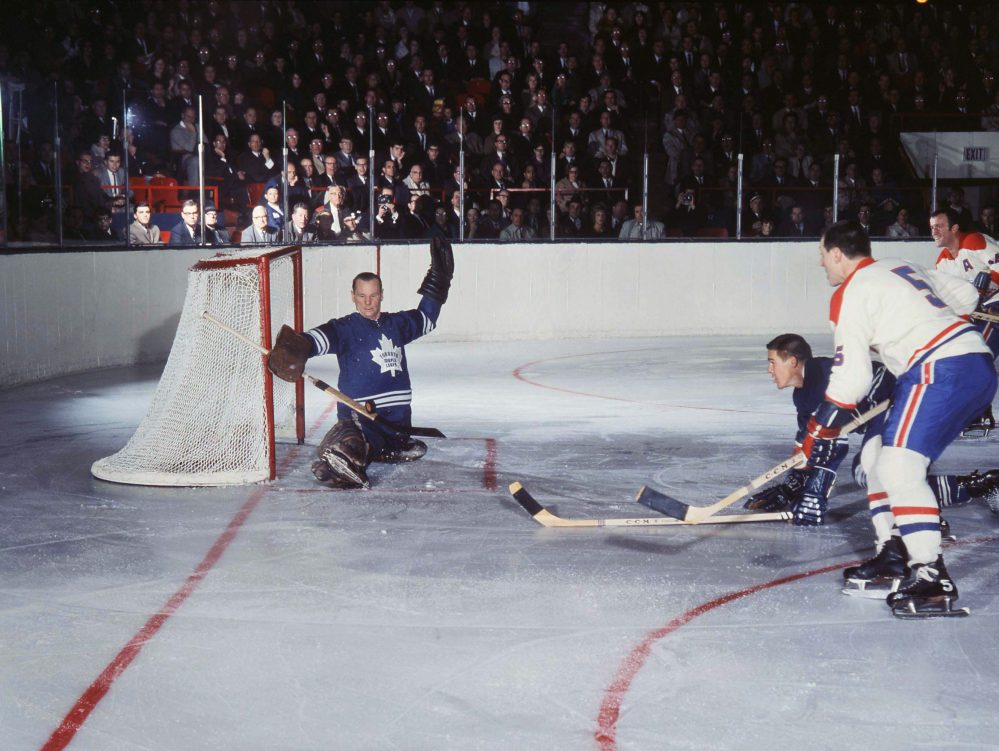
Bower was a two-time Vezina Trophy winner who helped the Toronto Maple Leafs win their last Stanley Cup championship in 1967.

Bower, who became known as the China Wall, remained one of the most beloved ex-Leafs years after retiring.

Toronto honoured Bower on the occasion of his 90th birthday on Nov. 8, 2014, during a game against the New York Rangers, his first team.

Bower’s career took off after the Leafs claimed him in a 1958 intra-league draft. Bower went on to play 475 regular-season games and win four Stanley Cups for the Leafs, playing his trade mostly without a mask.

Bower won the Vezina Trophy in 1961 and the Leafs hoisted the Stanley Cup in 1962, 1963, 1964, with Bower and Terry Sawchuk sharing the Vezina in 1965. In 1967, again sharing the job with Sawchuk, he helped Toronto win its last title at the age of 43.


Source link

Categories
Sports

No star power, no problem: Balanced Canadian offence overpowers Finland in first game at world juniors


BUFFALO — A little luck and a lot of opportunistic scoring.

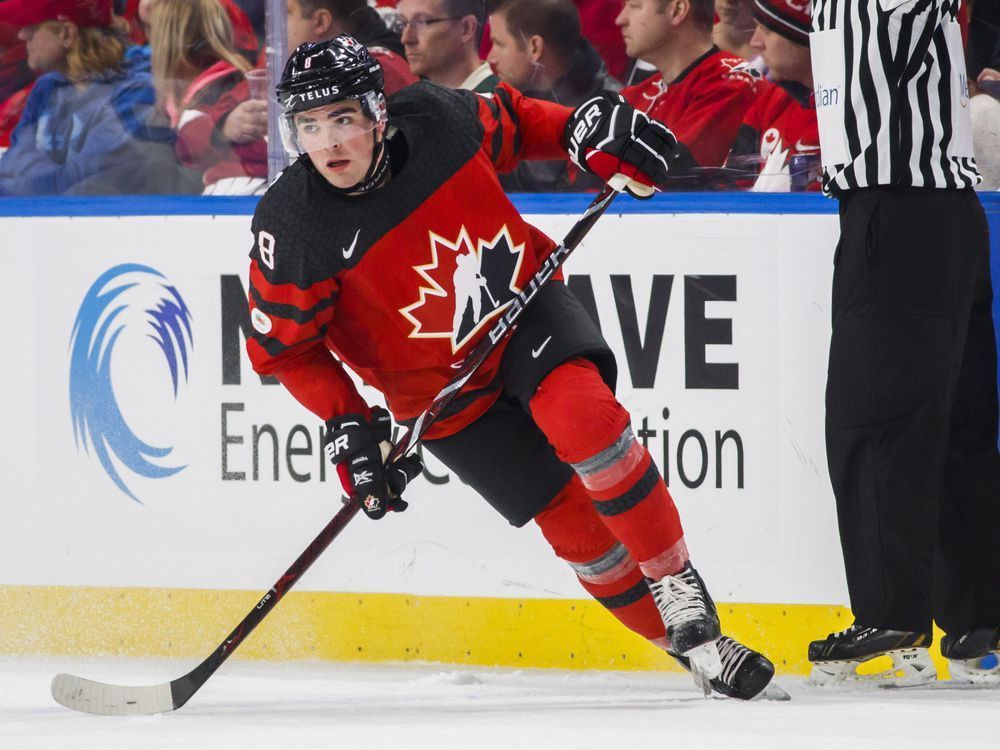
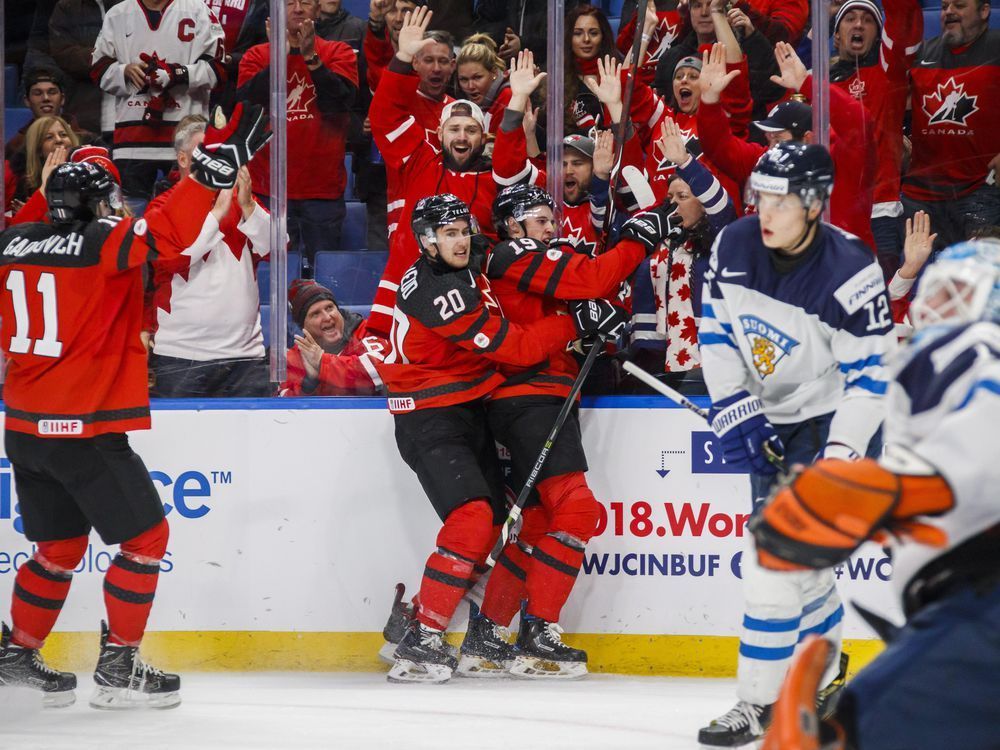
That’s essentially how Canada defeated Finland 4-2 in their first game of the world junior hockey championship on Tuesday. It wasn’t necessarily pretty. But at the same time, there was a lot to like from the Canadian side, which received goals from four different players and a 29-save effort from goalie Carter Hart.

In the end, consider this a warm-up game — for both the players and fans.

Playing out of the same rink as the NHL’s Buffalo Sabres, the KeyBank Center was barely half full on Day 1 of the tournament. Those who did come to watch clearly had crossed the border, as this was as close to a home game as you could get for Canada.

From the beginning, the boys in red-and-white gave the sparse crowd something to cheer about. The Canadians, who have no draft-eligible players and only one top-10 draft pick on their roster, don’t have a star player like Connor McDavid or even Dylan Strome this time around. But they certainly aren’t lacking in speed or balanced scoring.

Both were on display in an overpowering — if not one-sided — win against Finland.

Canada next plays Slovakia on Wednesday, before taking on the defending Americans in an outdoor game on Friday and then Denmark on Saturday to conclude the preliminary round.

It was difficult to pick just one difference-maker from Canada. Nearly every player on the team did something to affect the game, whether it was forward Alex Forementon setting the tone with an early open-ice hit or defenceman Cal Foote saving a goal by gloving a puck out of the crease.

For a team that was put together a week or so ago, it was remarkable how quickly they have come together and assumed roles. No matter the line or the ice time, one thing is clear: every player on this team can fly and fill the net.

Each of the first three goals came from a different line, as Canada jumped out to a 3-1 lead in the first period thanks to a breakaway goal from Boris Katchouk and tap-ins from Sam Steel and Drake Batherson. The Finnish goalie really didn’t have a chance.

Team Canada didn’t overpower Finland with a ton of shots. In fact, Finland outshot Canada 12-7 in the first period. But what stood out is how easily the offence came.

Canada had defeated Switzerland 8-1, the Czech Republic 9-0 and Denmark 5-2 in pre-tournament exhibition games. And while those meaningless games are hardly an indicator of a country’s gold-medal chances, it did showcase just how dangerous Canada’s offence is.

Katchouk, a Tampa Bay Lightning prospect who has scored 27 goals in 30 games with the Sault Ste. Marie Greyhounds, was too much for Finland’s defence to handle as the 6-foot-3 power forward charged up the ice and took the puck hard to the net on a partial breakaway early in the first period.

The goal probably shouldn’t have counted, considering that Katchouk knocked the net off during his backhand deke. But a video review determined that the puck had already crossed the line by that point.

The controversial goal seemed to stun the Finns, who promptly took a slashing penalty and then went down 2-0 when Steel scored on the ensuing power play less than 30 seconds later.

Even when Finland did score, Canada refused to give up momentum. Half a minute after Aleksi Heponiemi cut into Canada’s lead, Ottawa Senators prospect Drake Batherson finished off a rush from Montreal Canadiens defenceman Victor Mete to make it 3-1.

Canada then went up 4-2 five minutes after a Finland goal when Taylor Raddysh knocked a puck out of the air, spun around and beat the goalie with a blocker-side shot.

Hart, meanwhile, was rock-solid for Canada in net. Neither of the two goals the returning goalie allowed were his fault. On one goal, a Canadian player cleared the puck right onto a Finnish player’s stick. On the other, Canada’s Jonah Gadjovich accidentally redirected a point shot past Hart.

When Hart needed help, his defence was there. Late in the third period, with Finland pressing to try and get back into the game, Footed save a goal when he dove behind Hart and used his glove to swat a puck that was rolling over the line out of danger.

It was a team effort from a team that lacks that one star player. And if the Canadians hope to win gold, they will need more of it as the tournament continues.

Email: mtraikos@postmedia.com | Twitter: @michael_traikos


Source link

Categories
Sports

U.S. junior forward Brady Tkachuk is exactly like his brother Matthew — just bigger, faster and nastier


For the record, Brady Tkachuk has not speared anyone from the bench this year. Nor has he instigated an on-ice brawl by jabbing the blade of his stick in the stomach of an opponent. In fact, he hasn’t used his stick to pick up a single suspension or even a match penalty.

That’s where the differences between Tkachuk and his older brother end.

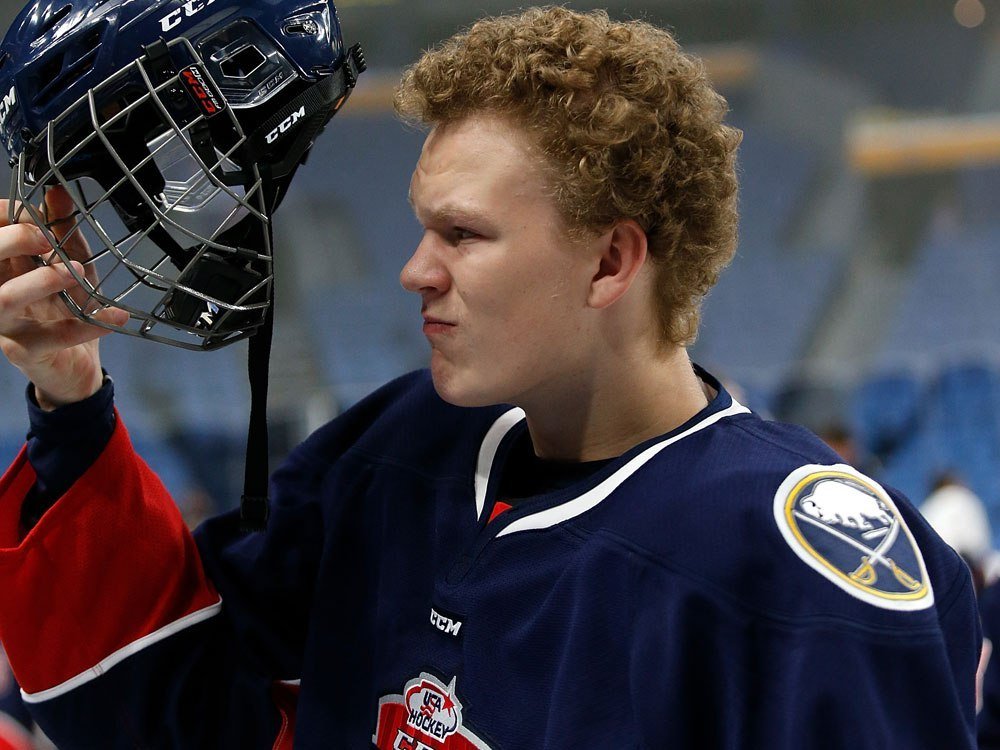
Like Matthew Tkachuk, who is a shift-disturbing pain in the you-know-what for the Calgary Flames, the younger Tkachuk spends his time deep in the margins of what is often deemed acceptable. He crashes and bangs and drives to the net like a runaway car that’s lost its brakes. And he does it all, said his coach, with a “giant smirk on his face.”

The fact that he can also hurt you on the scoreboard is what really makes him dangerous.

“He’s a lot bigger than me, a lot faster than me,” Matthew Tkachuk said of his brother. “He’s kind of that dual threat where he can beat you with speed, power and with quick, tight plays as well.”

Described as a nastier version than his older brother — a thought that is scary considering Matthew’s rap sheet already — the 6-foot-2 and 194-pound Brady Tkachuk is also a bit more skilled with the puck. It is why the 18-year-old, whom one scout called “the best Tkachuk — period” is expected to be a top-five pick in next year’s NHL Entry Draft (Matthew was selected sixth overall in 2016). And it is also why opponents at this year’s world junior hockey championships in Buffalo should have their heads on a swivel whenever the American power forward is on the ice.

“There’s something in the DNA there that they’re putting together with these boys, because they’re playing the game hard and heavy with a lot of talent,” said Team USA head coach Bob Motzko. “No question, as this guy goes through his career, the sky’s the limit, because No. 1, he’s got the size and he’s got an unbelievable skill set and hands, but his motor is what catches everybody.

“When this kid starts his motor, he goes from 0 to 100 real quick and he wants to do everything at a high pace and heavy and hard. And he’s just (18) and his best hockey is ahead of him.”

Two years younger than his older brother, Brady and Matthew Tkachuk come about their pugnacity quite naturally. Their father, Keith, was a 19th-overall pick who scored 538 goals and 1,065 points in 1,201 games, while also racking up 2,219 penalty minutes. Growing up, the boys were taught to play hard — whether at the rink or in the basement.

Not surprisingly, there were times when the brothers bodychecked each other through the wall. But that’s why their parents always had drywall compound nearby — as well as a couple of pairs of boxing gloves for the ensuing sparring bout.

“I think anything we did was always a competition and it was always getting a little physical,” said Brady Tkachuk. “When we were kids, he was bigger and a lot stronger, so he won a lot. But we were just both really competitive, whether it was football in the backyard or basketball in the driveway. I was always trying to win. I think that’s how we both got our competitive nature. I think it was definitely awesome to have him and learn from him. My younger sister, when she got older, would join in too. It was fun.”

There is, however, a limit to how many holes you can put in a wall. Matthew Tkachuk, who has been suspended twice this season, is discovering that already. And so did Brady, who, after racking up 73 penalty minutes in just 24 games with the U.S. National Under-18 Team last year — 24 more than the next-highest player — has toned down the extracurricular parts to his game as a college freshman with Boston University.

“You never want to put your team into trouble by taking a bad penalty, so I definitely think I’ve matured in that area with being smart after the whistle and not doing anything stupid,” said Tkachuk, who has four goals and 14 points in 19 games. “How we kind of play, it gets you involved in a way, and some guys might not like that and it gets under their skin.”

“He’s only got nine penalties this year and I bet only five of them are coincidental,” said Boston University head coach David Quinn. “So it’s not like he takes a lot of penalties. I think he’s done a good job of that this year with us. But I don’t want him to stop being the agitator. I don’t want to take away his strengths and part of his strengths is playing on the edge, and as long as you’re not taking dumb penalties, I want him to push other people’s buttons and agitate people.”

Indeed, Matthew Tkachuk was at his most dangerous during his one year with the London Knights, when he scored 107 points and had 80 penalty minutes in 57 games. For Brady, who has even more offensive potential, it’s about finding a similar balance.

“He has a little more finesse to his game,” said Dan Marr, director of scouting with NHL Central Scouting. “Matthew and their dad could go right through the door at you, but Brady may be a little more deceptive with his skill set. But he still has the same drive and tenacity that drives him to the net — except he can also get there with an end-to-end rush.

“He just stands out a little differently.”

Email: mtraikos@postmedia.com | Twitter: @michael_traikos

Tkachuk brothers: Tale of the tape

Matthew Tkachuk
6-foot-2, 202 pounds
Drafted: 6th overall, Calgary Flames, 2016

U.S. Under-17 Team
33 GP 5 G 12 A 17 PTS 18 PIMs

U.S. Under-18 Team
24 GP 13 G 20 A 33 PTS 75 PIMs

Brady Tkachuk
6-foot-2, 194 pounds
Drafted: Eligible in 2018

 U.S. Under-17 Team
32 GP 4 G 4 A 8 PTS 36 PIMs

U.S. Under-18 Team
24 GP 12 G 11 A 23 PTS 73 PIMs


Source link