Categories
Sports

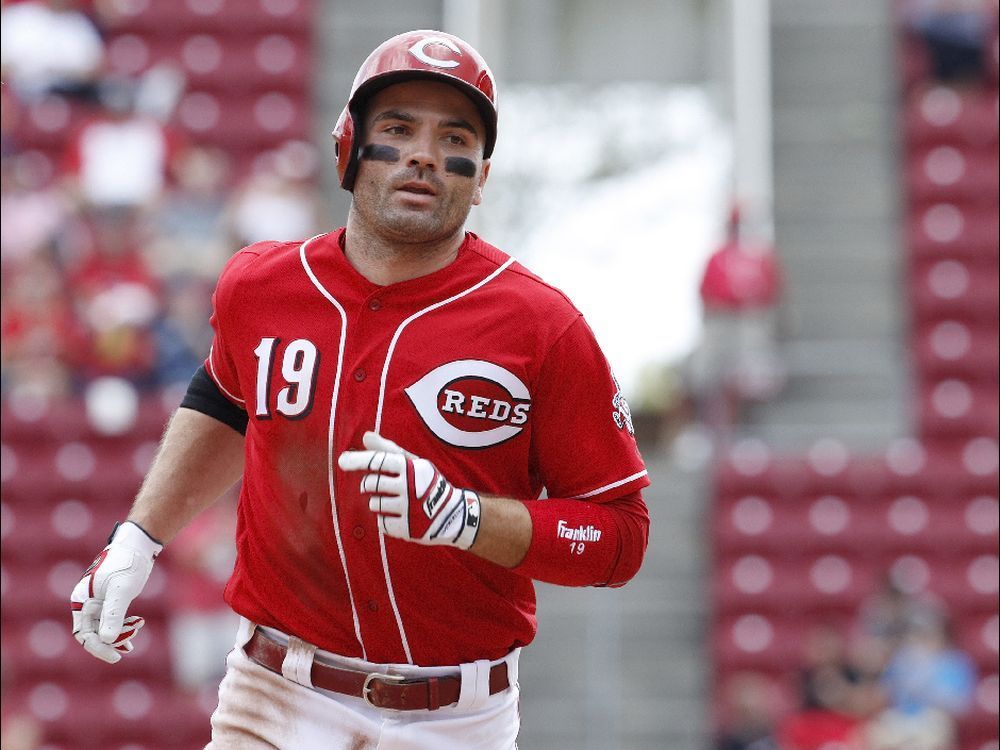
Joey Votto, MVP finalist and one of baseball’s greatest artists, named Postmedia’s male athlete of the year


Joey Votto is an artist. Or maybe he’s a scientist.

For the purpose of this discussion, let us say that the job of standing at the plate in a baseball game and trying to help your team score runs is more art than science. The act of squaring a round bat to a round ball is definitely a physics problem, but there are countless ways to do it well. Add in all the other elements — the head games, the pitching matchup, the balance between patience and aggression — and baseball feels a lot more impressionist.

And so, Joey Votto: Not just an artist, but one of the greatest such artists ever.

Votto, the 34-year-old first baseman for the Cincinnati Reds, was voted the Postmedia Male Athlete of the Year after a season in which he lost the National League’s MVP race to Giancarlo Stanton in the closest vote for that award since 1979.

The recognition from the Postmedia voting panel came for a season in which Votto, seven years after he did win the NL MVP, put up another absurd bunch of numbers: a slash line of .320/.454/.578, plus 36 home runs, 106 runs scored, 100 RBIs and a league-leading 134 walks.

“Thanks,” says Votto over the phone. “I’m ecstatic about the way I performed this past season.”

But what is remarkable about Votto, who learned to play on the ballparks and parking lots of west Toronto, is not just that his 2017 was extraordinary, but that it was kind of typical of him. When he is healthy — and he played 162 games this season, the statistic of which he said he was most proud — he is just that good.

How exceptional is Votto, the artist? To consider that, let us take a side tour into the science of statistics, but we promise it will be brief.

One of the fundamental underpinnings of today’s assessment of player value is that the single most important factor in creating offence is getting runners on base. This is why on-base percentage (OBP) has come to be recognized as more important than batting average and why a statistic like on-base plus slugging (OPS), which reflects both the ability to get on base and to hit for power, is the best measurement of a player’s offensive contribution. Votto led the National League in both in 2017, in a season in which Stanton hit 59 home runs for Miami.

Votto also led the NL in intentional walks with 20, a reflection of the fact that he piled up all those remarkable numbers as the third hitter in a lineup that was young and free-swinging. Adam Duvall had 31 home runs as the usual hitter behind Votto, but he also struck out 170 times.

Votto had just 83 strikeouts on the season and he had a stretch of reaching base two or more times that lasted 20 straight games, a mark only bettered by Ted Williams in 1948. Ted Williams was pretty good. Votto also went 36 straight games reaching base safely at least once in 2017, which was still 10 games short of his career best set in 2015.

But that is just what Votto does. One more statistic: OPS+ takes OPS and adjusts it for the league and the ballpark in which the hitter plays. The OPS+ of a league-average hitter is 100. Votto owns a career OPS+ of 158. That is, among hitters who played after 1900 and for at least 10 seasons, tied for 12th all-time. The players above Votto on that list are a roll call of the sport’s legends: Babe Ruth, Williams, Mickey Mantle, Lou Gehrig, plus extra old-timey types like Ty Cobb and Shoeless Joe Jackson. Votto is in the company here of guys who wore baggy cloth uniforms and handlebar moustaches. The only sort-of contemporaries of Votto who played more than a decade and are better than him in OPS+ are Barry Bonds and Mark McGwire. Insert asterisk here.

Votto’s greatness, though, is a thing appreciated more by baseball people than by casual fans, in part because he’s not a wall-banging masher like Stanton or Aaron Judge and in part because he plays in Cincinnati, a small market, for a Reds team that has been not good.

“It’s not easy,” Votto says of playing on a Reds team that was 68-94, last in the NL Central and 21 games out of a wild-card playoff berth. It was the third straight year in which the Reds won fewer than 70 games. Votto, for all he has done individually over 11 seasons, has played in just nine post-season games.

“It’s tough losing,” he says. “It sucks seeing other teams win on your field, and it sucks seeing the stadium empty.”

Cincinnati, long considered such a baseball town that the Reds had the moxie to name their stadium the Great American Ball Park, drew just 1.8 million fans to that park in 2017, second-worst in the National League.

“I leave my house, and I go to get groceries or something, and people will see me and they will still say hello,” Votto says. “But in the past, there was a genuine excitement there. Cincinnati doesn’t have that right now.

“And then I go home to Toronto,” Votto says, “and everyone’s asking me, do you know Jose Bautista? Do you know Edwin (Encarnacion)? And it’s like, ‘God-dang, that’s what I want.’”

But if he is going to get back to that in Cincinnati, it will likely take some time. The Reds are very young, with only Votto and starting pitcher Homer Bailey (31) older than 30. Shortstop Zack Cozart, 32, who was the second-most valuable player on the Reds by wins above replacement last season, left as a free agent for the Los Angeles Angels. And Votto still has six years left, plus a team option, on his 10-year, US$225-million contract. But he dismisses any notion of asking for a trade to somewhere else.

“Baseball is not really one of those sports,” he says, adding that players who can get guaranteed contracts and no-trade clauses know that there is a give-and-take when you sign a big-dollar deal. “I’ve never felt like I’ve not wanted to be here.”

When he played at the Rogers Centre for the first time since 2009 this past season, Votto allowed that when he was a teenager, “the thought of playing for the Jays was at the top.” But, Votto said: “There’s something about joining a club and building a relationship and a commitment to a team.”

Votto has also said, though, that he takes particular pride in his eastern roots, since most of the very few successful Canadian major leaguers had longer seasons in mild West Coast winters. Votto, as a kid, was out there on the snow and ice, banging balls against a schoolyard wall.

He says he doesn’t think too much, yet, about the kids who might look at him and realize that someone from a hockey-mad country can not just make Major League Baseball, but be exceptionally good at it.

“I think that those are things that athletes think about when they are done playing,” he says. “But, yeah, if boys or girls decide to play baseball, or any sport, because of watching me, that’s great.”

Then, Votto adds: “Male or female, that’s important.”

It’s a fitting postscript. Joey Votto can inspire us all.

Email: sstinson@postmedia.com | Twitter: @scott_stinson
Original source article: Joey Votto, MVP finalist and one of baseball’s greatest artists, named Postmedia’s male athlete of the year


Source link

Categories
Sports

‘Those guys are crazy, man’: Canada’s Winter Olympians reveal the sports that secretly terrify them


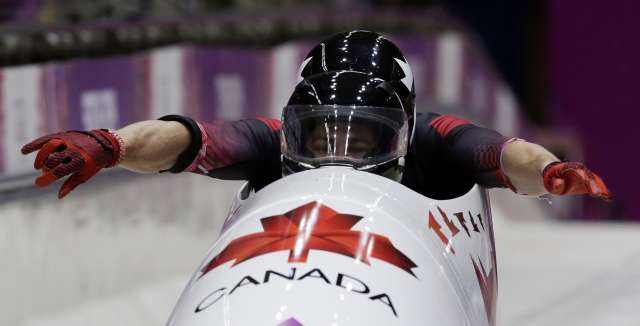
Christopher Spring has been clocked at 154.5 km/h, driving straight downhill on glare ice.

Not in his van, you understand. In a bobsled.

It’s his job, and the combination of ice and speed scares the Canadian Olympian just enough to make him one of the best pilots in the world.

And there are other winter sports that scare him a lot more.

“I have tried luge, and I would tell the lugers this: it is ridiculously hard to drive those things and it scares the crap out of me,” Spring said. “I’ve tried skeleton and luge — there is no way I would be on a luge sled. Those guys are insane.”

In this Feb. 17, 2014 file photo, Christopher Spring pilots a Canadian bobsled at the Sochi Olympics. Michael Sohn / AP

The 33-year-old is also wary of alpine skiing.

“I’m an OK skier, a bit better snowboarder,” he said. “Those guys are ripping over 150 km/h on glass. It’s not even snow anymore. It’s just ice, you know.

“They’re in the air for 100 and some feet, doing 100 and something kilometres an hour. That is scary.

“I go into the park, I hit these extra small jumps and I think I’m in the air for awhile. My buddy got his GoPro on and he’s doing video and I’m, like, two feet in the air for six feet. I feel like I’m flying through the air, and these guys are doing literally 20 times the distance of that and at a speed that is insane. Those guys are crazy, man.”

We checked in with several other Canadian winter sport athletes to see which one scares them too much to try.

Natasha Bodnarchuk – Ski jumping

“I kind of think ski racing is scarier than ski jumping, just because they’re going so fast. One mistake and you’re done. I probably wouldn’t do that.”

Kim Boutin – Short track

“The sport that I dread the most is skeleton. Since this is a fast-paced sport, I do not feel that I would have the confidence to go so fast if I control everything.”

Mackenzie Boyd-Clowes – Ski jumping

“I think ski racing is probably the scariest for me as far as winter sports go. The speed skiing stuff is very extreme to me. My sport doesn’t seem that extreme because I haven’t had too many serious injuries that were not my fault.”

In this Feb. 7, 2014 file photo, Canadian ski jumper Mackenzie Boyd-Clowes trains for the Sochi Olympics. John MacDougall / AFP / Getty Images

Jane Channell – Skeleton

“I think skiing and snowboarding (are) crazy. I think it’s so scary. I had a season’s pass growing up, for a couple years. I think I went up maybe all of two times. It’s the outside factor that gets me. In skeleton, it’s me and the track and the clock, that’s it. But with skiing and snowboarding, at least when I was learning, it’s me and the hill but with everybody else out there. I find that to be scary.”

Samuel Edney — Luge

“Oh, downhill alpine skiing. Those guys are nuts. I have a lot of respect for the Erik Guays and Manny Osborne-Paradis and Dustin Cooks of the world. I love skiing. I grew up ski racing and wanted to be a racer. I think I found something that was comparable but not as exposed. Those guys are nuts. I tip my hat to them.”

Samuel Girard – Short track

“The sport I think is too scary to try is for sure the ski jumping, because first you need a lot of practice to be able to fly in the air like that, and the jump is so high, I can’t imagine doing it. It’s just crazy!”

Dave Greszczyszyn — Skeleton

“We talk about this all the time. It’s interesting that certain athletes think our sport is crazy, because our face is a couple inches off the ice and we’re going at speeds in Whistler over 140 km/h.

“I think alpine skiing is pretty crazy. I don’t know what their speeds are, but on TV I know I’ve seen 120, sometimes 140, and they’re standing up, and they’re not on a frozen water slide. They’re on the side of a mountain. That’s pretty crazy to me.

“Ski jumping, I don’t think I would try that. Not aerials and moguls, either.

“That’s the interesting thing about winter sports. They’re exciting. There’s that factor of seeing the skill and what these athletes can do. And there’s always that chance that something could go wrong.”

Canadian skeleton racer Dave Greszczyszyn comes to a stop at a World Cup race in Whistler, B.C., on Nov. 25. Darryl Dyck / The Canadian Press

Taylor Henrich – Ski jumping

“I will try everything. I surf when I’m not jumping. I wakeboard. I water ski. I’ve even tried skydiving.”

Marsha Hudey – Speed skating

“I think it would have to be luge or skeleton. Going down a slippery slope on a sled by myself … I would never! To me, that would be my worst fear.”

Nathaniel Mah – Nordic combined

“Obviously, hockey is dangerous as all heck. I would never play competitive hockey at any point. Especially with my experience with concussions and me being 59 kilograms and those guys being more like 90. No chance. That’s something I would never do.

“Ski jumping is not a dangerous sport. We’re three metres off the ground at the most. We’re not going very fast. We’re going 90 to 100 km/h.”

Denny Morrison – Speed skating

“I don’t think that any Olympic sport is too scary to try. I think everyone should try each sport once and see what they fall in love with.”

 Marie-Philip Poulin — Hockey

“I think skeleton would be mine. It’s pretty scary. I can’t believe they go head first at 120 km/h. Pretty fast.”

Cassie Sharpe – Freestyle skiing

“Skeleton. One hundred per cent. Going face down on the icy race course scares the bejeebers out of me. I would never try skeleton. I would try bobsled because you’re a little bit protected. Skeleton would be my final answer.”

Email: dbarnes@postmedia.com | Twitter: @sportsdanbarnes


Source link

Categories
Sports

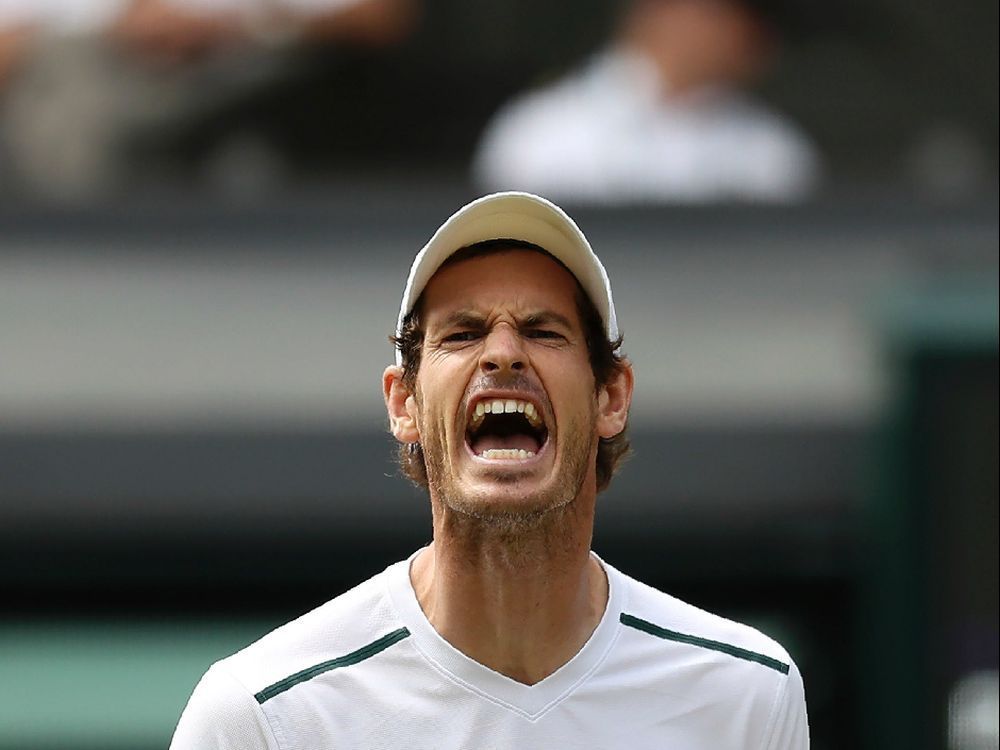
Andy Murray at a crossroad: has the punishment of elite tennis taken its toll?


There can be a heavy cost of chasing greatness, as Andy Murray is discovering. The wanderlust he embraced in those dark winter days of 2016, harvesting ranking points everywhere from Beijing to Vienna in his quest to topple Novak Djokovic as world No 1, has played havoc with his hip. What looked at first like an innocuous twinge has developed, to judge by the strong suggestions that he could miss next month’s Australian Open, into the greatest challenge of his career.

Whichever way you slice it, it is rank rotten fortune. Murray’s usurping of Djokovic atop the rankings had looked as if it would herald a dynastic shift, from the twin totems of Roger Federer and Rafael Nadal to the Scot and the Serb born just a week apart, who shared the same gift for filleting opponents from the back of the court. Sadly, Murray’s encore in 2017 was the equivalent of Paul McCartney following 15 choruses of Hey Jude with the ghastly Ob-La-Di, Ob-La-Da.

Even before his hip problem, he did not so much plateau as regress, losing in Melbourne to one-dimensional serve-and-volleyer Mischa Zverev, whom Federer subsequently dispatched for the loss of only eight games. Today, partly through results but mostly through enforced absence, Murray finds himself the world No. 16, at a critical crossroads. It is doubly galling that he is at risk of missing Australia, the one major where he could be forgiven for thinking that history owes him. No player besides Murray, male or female, has reached the final of the same slam five times and lost on every occasion. Four of those defeats, much to his bitter regret, have come against Djokovic. Even Martina Navratilova had the decency, by losing a Wimbledon semi-final to Hana Mandlikova in 1981, to let Chris Evert take the odd All England Club title. She would win nine of them, after all.

It is a peculiar quirk of fate that Murray should be the member of the big four in the most precarious health. Just when Federer looked like obeying the normal rules of anno domini, when Nadal seemed likely never to recover full strength in his knees, and when Djokovic’s attritional approach forced him into brief exile with tennis elbow, it is Murray who has fallen off the radar. Always scrupulous about his conditioning, he has been stricken by chronic injury when he needed it least. What should have been his time to make hay is instead a period of limbo, in which he frets about whether the resilience that helped yield three slams and two Olympic golds is compromised for good.

We should, for now, know better than to doubt him too much. Murray underwent a serious back operation after his Wimbledon triumph in 2013 and rallied to make at least the quarter-finals of each major the following season.

But hip trouble among tennis players is unusually recalcitrant. Nick Kyrgios, the gangly if prodigiously talented Australian, has struggled to shake it off, playing with the truculent attitude of a 22-year-old but the awkward movement of a 52-year-old.

It is one thing, as Federer has demonstrated, to switch to a more sparing schedule to hold back the onset of time. But it is another matter altogether to adapt one’s style for the sake of self-preservation. There is little question that the baseline duelling beloved of Murray and so many of his peers is increasingly driving them into the dust. The World Tour Finals were notable less for the unstarry final between Grigor Dimitrov and David Goffin than for injury tales. Murray, of course, has been the most conspicuous casualty, but it is too glib a remedy to suggest that he should go easy on the 47-stroke hardcourt rallies, especially when these have been so central to his success.

So far, Murray has avoided using the word surgery, but it is apt to ask whether the rest and recuperation strategy is working. He was visibly uncomfortable at his exhibition match with Federer last month, struggling both with changing direction and charging to the net. With arguably the most physically draining slam less than four weeks away, that is not an encouraging signal.

There is genuine sadness about this chapter for Murray, which should have been his moment to throw off his casting as a pageboy to a trio with 47 major glories between them. He had talked confidently of being able to sustain his career for another five years, and his relentless discipline in training under Ivan Lendl gave reason to take him at his word. Now Lendl has retreated to his pick of Florida’s finest golf courses, and Murray is left to confront an uncertain convalescence.

If we have truly seen Murray’s pomp curtailed, then we can take comfort from having seen the kind of player with which this country is not familiar. But it feels far too premature to pension him off to a life of leisure with his two Border Terriers. Murray, as cussed as they come, would doubtless agree.

The anxiety is whether the latest murmurs from his camp signal a bump in the road or the end of one. Murray is 30, the same age as Andy Roddick when the American wisecracked his way into retirement. Be in no doubt that this is a pivotal moment, as Murray faces the prospect that his last competitive years could, if he is not careful, be his lost years.


Source link

Categories
Sports

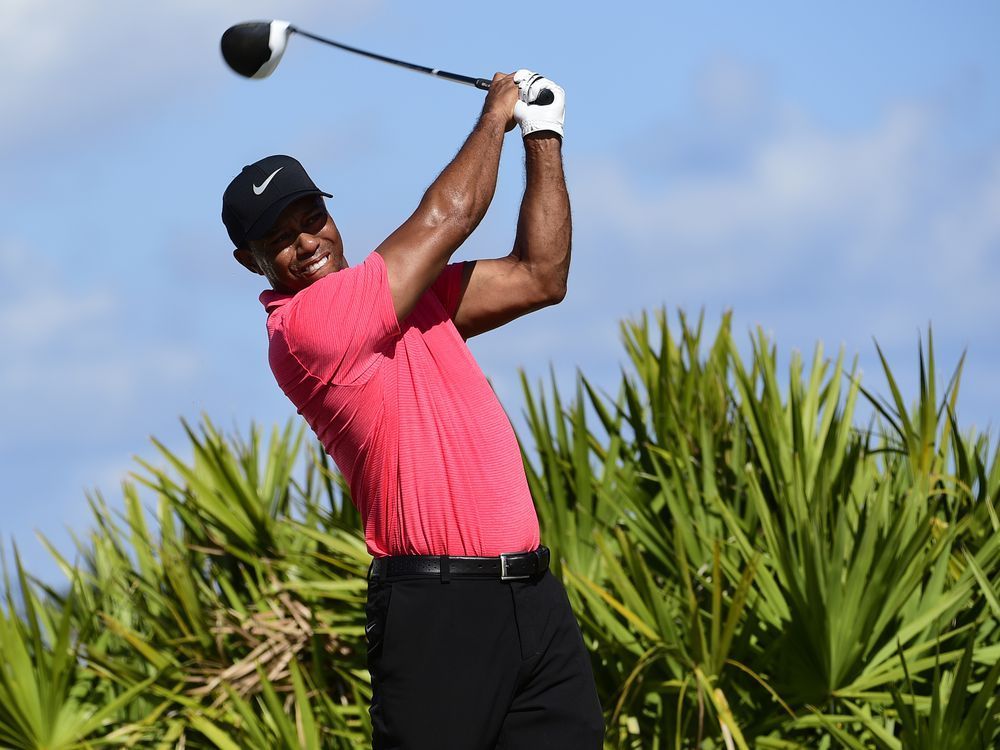
Tiger Woods will embark on his latest comeback without a swing coach


Tiger Woods is embarking on his latest comeback without a swing coach.

Woods said Friday on Twitter that since fusion surgery on his lower back in April, he has been relearning his body and his golf swing by relying on feel and the previous three years of work with Dallas-based Chris Como.

“For now, I think it’s best for me to continue to do this on my own,” Woods said. “I’m grateful to Chris Como for his past work, and I have nothing but respect for him.”

Como was not in the Bahamas when Woods returned following his fourth back surgery. In his first competition in 10 months, Woods had plenty of speed and power in his swing, shot three rounds in the 60s at the Hero World Challenge and tied for ninth against an 18-man field, 10 shots behind Rickie Fowler.

More important than his score was his form: Woods looked strong and fit with his swing and his posture all through the week.

He has not said where he will play first in 2018.

Unlike the previous three coaches employed by Woods — Butch Harmon, Hank Haney and Sean Foley — Como was not as steady a presence in public even when Woods played an 11-event schedule in 2015.

Notah Begay, who has known Woods since they played together at Stanford, introduced him to Como in the summer of 2014. Woods hired him as a consultant late that year as he talked about a “new old swing” he would try to employ.

Como said in a text message that Woods’ “electrifying play” in the Bahamas was the byproduct of “a lot of hard work over the last few years while fighting through injury and pain,” and he felt there was plenty of enthusiasm for next year.

“When our professional relationship began, I was asked to help Tiger utilize his own instincts and feel while playing pain free,” Como said. “I think we’ve accomplished that and I’m proud of the results. Tiger is ready to have an incredible run in his career. I’m eager to watch what will be one of the most exciting sports comebacks of all time.”


Source link

Categories
Sports

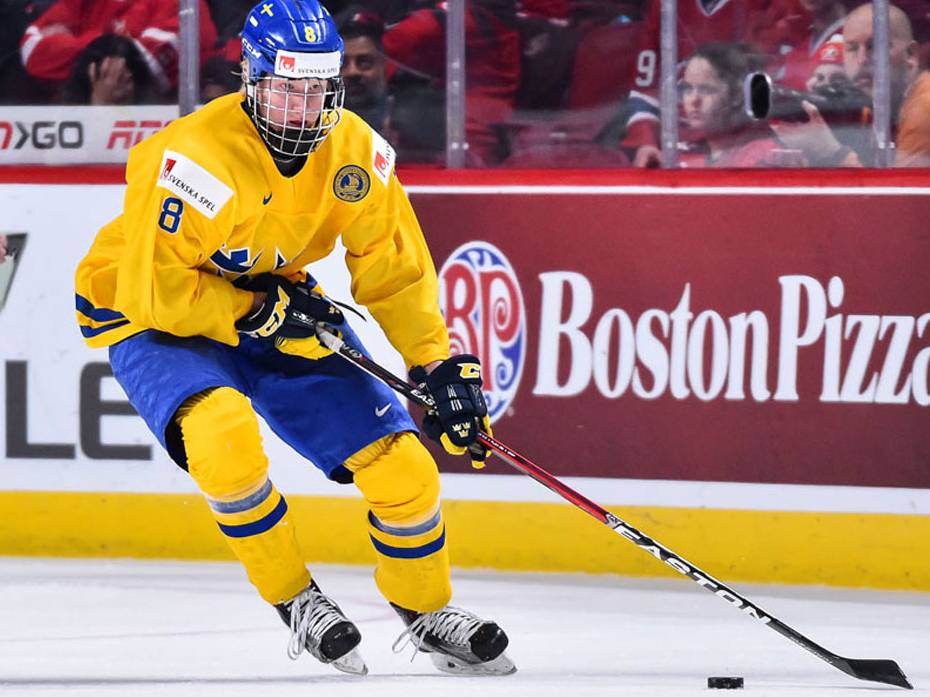
Meet Swedish defenceman Rasmus Dahlin, the 17-year-old scouts say will be better than Erik Karlsson


In terms of hype, this one is getting a bit out of hand.

It’s one thing to be called the next Nicklas Lidstrom or to get compared to Erik Karlsson, Victor Hedman or Oliver Ekman-Larsson. It’s quite another for scouts to flat out say that Rasmus Dahlin is going to be even better than those giants on defence.

According to some, it’s not even up for debate.

“He is probably the next big superstar,” said one European-based scout.

“I never seen anyone like him,” said a veteran Swedish hockey reporter. “No one was even close to what he is doing creatively with the puck.”

Only 17 years old, Dahlin is expected to be a breakout player for Sweden at the under-20 world junior championship in Buffalo. From there, he will likely represent the country at the Olympics and the world championships, before becoming the first Swede since Mats Sundin in 1989 to be picked first overall in next year’s NHL Entry Draft.

Based on what people are saying about him, you might as well also start engraving his name on the Norris Trophy.

“Compared to guys like Erik Karlsson and Victor Hedman, this guy is better,” said Anders Forsberg, a former Ottawa Senators scout who drafted Karlsson and coached Hedman and Ekman-Larsson as junior-aged players. “I had a lot to do with Hedman and know him like a friend also, but this is better. I coached Oliver Ekman-Larsson. He was not even close to this. This is something special.”

Just how big is the hype surrounding Dahlin? Media requests have been so frequent this year that Swedish men’s team Frolunda, where Dahlin has five goals and 11 points in 26 games, has at times cut off access to their young star, something Sweden’s national junior team has done in the days leading up to the world juniors.

Prior to coming over to Buffalo for this year’s tournament, Dahlin conducted a news conference separate from the rest of the team (“Totally unheard of when it comes to Swedish players,” said Swedish hockey reporter Uffe Bodin), and he has been off-limits since then.

“It’s fun that people appreciate what I do, but I’d like to focus on hockey, the world juniors, eating and sleeping,” Dahlin said at last week’s news conference. “Those are my priorities. On the ice, I’m prepared for anything. There will be some whacks and slashes, but you just have to keep on going. There’s not a whole lot else you can do.”

Whether or not he speaks much, Dahlin is likely to be a talking point during the tournament and in the months leading up to the draft. “I think it’s kind of going to be a yearlong party for him,” said Dan Marr, director of scouting for NHL Central Scouting.

“I’m sure he’s going to be one of the big stars at the world juniors,” said Goran Stubb, the NHL’s director of European scouting. “He’s more or less a complete player. He’s an excellent skater, an excellent puck-handler and he sees the ice very well. His only weak point right now is that he is so good that he tries too much. He should try to make his game a little easier and simpler.”

An offensive-minded defenceman, Dahlin plays as though he is unaware of the magnitude of the games. His primary concern seems to be trying to put smiles on every face in the crowd, which might explain why he rushes the puck up the ice whenever possible and relies on spin-o-ramas and toe-drags to evade checks.

[embedded content]

But the 6-foot-2 and 185-pound Dahlin also has a physical edge to his game, often catching opponents with the kind of big hits that Niklas Kronwall has made a career out of.

“He has the whole package,” said Forsberg. “I haven’t seen that with anyone before. If you take Erik Karlsson at the same age, he was like a disaster in his own zone when he was in his draft year. This guy is already at the top of the men’s league already. Normally, these skilled guys from Sweden don’t play the physical game and they have a little bit of a problem with it. But this guy plays hard. He can be mean. The timing is so good when it comes to that part of the game.”

It was at last year’s tournament in Montreal where Dahlin made his world junior debut at the age of 16, something Sidney Crosby, Connor McDavid and few others have been able to do. He scored a goal and an assist in seven games, becoming the youngest Swede to record a point in the tournament. But his ice time and role were limited to what his coach described as a “super seventh” defenceman.

This year, the shackles are coming off.

“We look at him as a top-two D-man,” said Swedish head coach Tomas Monten. “He’s going to carry a lot of ice time and be a big part of everything. He’s going to play on our power play and our PK and be one of the go-to guys.”

It’s a lot to ask of a 17-year-old in a tournament that is typically dominated by 19-year-olds. But Dahlin, who Swedish national team coach Rickard Gronberg said is also “in the mix ” for the Olympic team, should be able to handle it.

After all, this is the next Nicklas Lidstrom we’re talking about.

“All sports need the superstars,” said Stubb. “It’s not easy to be a superstar because there is a lot of pressure on you. And now we have Rasmus Dahlin. I think he’s one of those special players, for sure.”

Email: mtraikos@postmedia.com | Twitter: @michael_traikos

***

Here’s how some of Sweden’s top defencemen have performed at the world juniors.

Adam Larsson, 4th overall, 2011

2010: Bronze, 17 years old
6 GP 1 G 3 A 4PTS

2011: 4th, 18 years old
6GP 1G 3A 4PTS

Oliver Ekman-Larsson, 6th overall, 2009

2010: Bronze, 18 years old
6GP 2G 3A 5PTS

Victor Hedman, 2nd overall, 2009

2008: Silver, 17 years old
6GP 0G 1A 1PTS

2009: Silver, 18 years old
6GP 0G 2A 2PTS

Erik Karlsson, 15th overall, 2008

2009: Silver, 18 years old
6GP 2G 7A 9PTS

Niklas Kronwall, 29th overall, 2000

2000: 5th, 18 years old
7GP 5G 1A 6PTS

2001: 4th, 19 years old
5GP 0G 1A 1PTS

Nicklas Lidstrom, 53rd overall, 1989

1990: 5th, 19 years old
7GP 3G 3A 6PTS


Source link

Categories
Sports

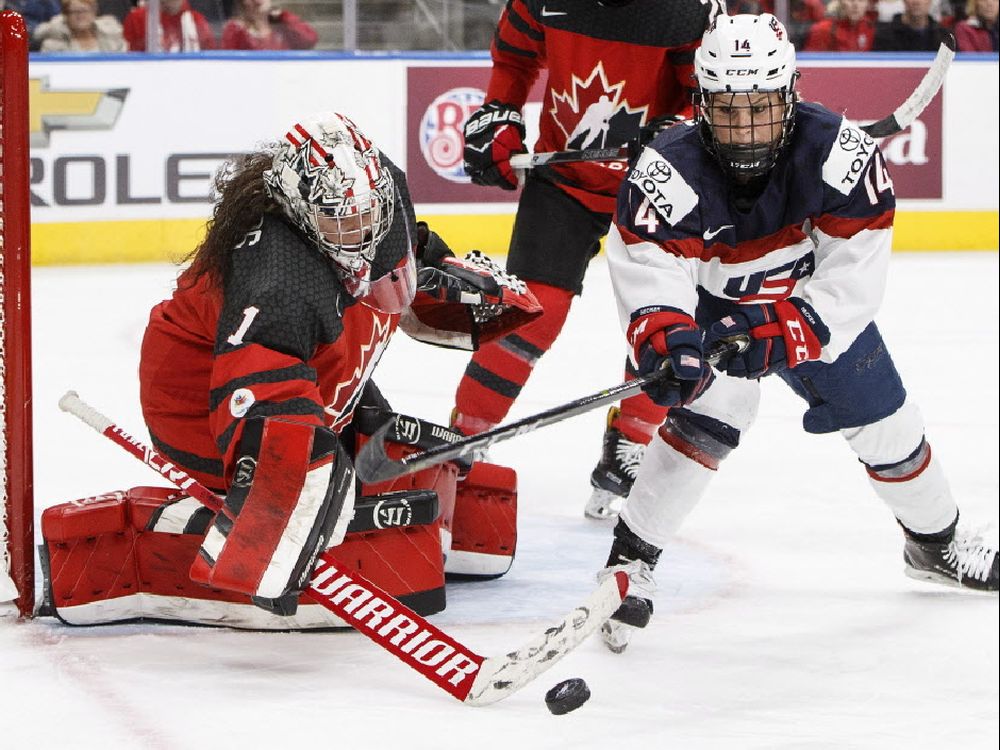
Canada’s Olympic women’s hockey team named, seeking fifth straight gold medal


CALGARY — The Canadian women’s hockey team released three players and unveiled its roster for February’s Winter Olympics on Friday.

Head coach Laura Schuler named three goaltenders, six defencemen and 14 forwards to the team that will attempt to defend gold in Pyeongchang, South Korea.

Canada has won four consecutive gold medals in women’s hockey.

Defenders Halli Krzyzaniak of Neepawa, Man., and Micah Zandee-Hart of Saanichton, B.C., and forward Sarah Potomak of Aldergrove, B.C., were the last cuts from the team.

Twenty-eight players were invited in May to try out for the 2018 Olympic team. The players began training full time in August in preparation for the Winter Games.

Veteran forwards Marie-Philip Poulin of Beauceville, Que., Meghan Agosta of Ruthven, Ont., Brianne Jenner of Oakville, Ont., and defender Meaghan Mikkelson of St. Albert, Alta., are expected to lead the women in their bid for another gold.

Roster

Goal

Shannon Szabados, Edmonton; Genevieve Lacasse, Kingston, Ont., Calgary (CWHL); Ann-Renee Desbiens, La Malbaie, Que., University of Wisconsin (WCHA).

Defence

Jocelyne Larocque, Ste. Anne, Man., Markham (CWHL); Brigette Lacquette, Mallard, Man., Calgary (CWHL); Lauriane Rougeau, Beaconsfield, Que., Montreal (CWHL); Laura Fortino, Hamilton, Markham (CWHL); Meaghan Mikkelson, St. Albert, Alta., Calgary (CWHL); Renata Fast, Burlington, Ont., Toronto (CWHL).

Forward

Meghan Agosta, Ruthven, Ont., Hockey Canada; Rebecca Johnston, Sudbury, Ont., Calgary (CWHL); Laura Stacey, Kleinburg, Ont., Markham (CWHL); Jennifer Wakefield, Pickering, Ont., Linkoeping HC (SWE); Jillian Saulnier, Halifax, Calgary (CWHL); Melodie Daoust, Valleyfield, Que., Montreal (CWHL); Bailey Bram, St. Anne, Man., Calgary (CWHL); Brianne Jenner, Oakville, Ont., Calgary (CWHL); Sarah Nurse, Hamilton, University of Wisconsin (WCHA); Haley Irwin, Thunder Bay, Ont., Calgary (CWHL); Natalie Spooner, Toronto, Toronto (CWHL); Emily Clark, Saskatoon, University of Wisconsin (WCHA); Marie-Philip Poulin, Beauceville, Que., Montreal (CWHL); Blayre Turnbull, Stellarton, N.S., Calgary (CWHL).

Head coach: Laura Schuler, Toronto, Dartmouth (ECAC); Assistant coaches: Dwayne Gylywoychuk, Winnipeg; Troy Ryan, Spryfield, N.S.


Source link