Categories
Alberta Economic Ft Mac Health Politics

New 2017 Carbon Tax Introduced by Alberta Will Affect Local Economy

carbon tax, Alberta

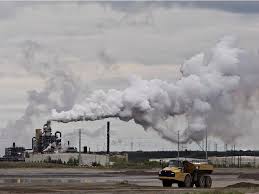
A new carbon tax set to be implemented in 2017 by Alberta could have a big impact on the local economy, the residents of Wood Buffalo, and every household in the entire province. The tax will be economy wide and was set in place in order to address climate change and do more to lower the carbon emissions that the industry has. Complaints that the province, which is where the Canadian oil sands are located, has not done enough to fight global change was part of the reason for the new carbon tax. According to provincial government estimates the pal and the resulting tax could help generate annual revenue that may be as much as $2.25 billion.

Premier Rachel Notley defended the Alberta carbon tax and explained “It will help us access new markets for our energy products, and diversify our economy with renewable energy and energy efficiency technology. Alberta is showing leadership on one of the world’s biggest problems.” It is not just oil and energy companies who work in the oil sands who will be affected though. The average household in Alberta would see an increase in cost of around C$320 for 2017 and around C$470 in 2the year 2018. For many households in Wood Buffalo these added costs could be hard to cover while the economy is struggling and more people than ever have needed some type of assistance just to survive. What do you think of the new Alberta carbon tax plan? Is it a good idea or a costly mistake?
Categories
Alberta Economic Ft Mac

A Growing Demand for Food Causes Fort McMurray Food Bank to Reduce Basket Size

Fort McMurray Food Bank, growing demand for food

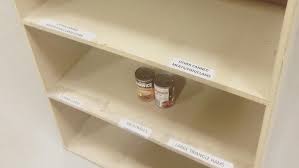
The Fort McMurray Food Bank is seeing a growing demand for food as the local economy struggles and many people find themselves in need for the first time. In fact many people who used to donate food to the food bank are now asking for help as a result of the change in their economic and financial situations. According to Mayor Melissa Blake “We’ve seen job lay-offs and certainly shifting and transitioning in the community … draws heavily on our non-profit society, but first and foremost it’s got to be our food bank. It’s hugely concerning that we’ve had the people in our community affected as they have been by the sustained low oil pricing.” The food bank has seen requests for food assistance rise 70% over the same time period for last year and this increase is alarming.

The growing demand for food assistance has left the Fort McMurray Food Bank struggling to meet the needs of the local population. Arianna Johnson, the executive director of the food bank, explained “It just makes us worry that we’re going to have to work that much harder to raise the funds necessary because as need goes up, our expense goes up whereas the donor base is going down. We certainly are having to do a lot of things to stretch our food stocks further and make sure that we have enough food to give some to everybody,” Johnson also explained “Coming into the fall and the Christmas season of course, our food stocks increase drastically because that’s when the majority of our food drives are. We know how isolated we are and therefore we know we have to take care of each other. We are a village that makes sure nobody goes without.”

Categories
Alberta Canada Economic Ft Mac

Is Suncor Energy Playing on Fear to Succeed in Takeover Bid? Canadian Oil Sands Says Yes!

Suncor Energy, fear

Canadian Oil Sands is accusing Suncor Energy of playing on fear in an attempt to succeed in their hostile takeover bid. The accusations started flying after Suncor sent a letter to shareholders of COS urging these individuals to accept the bid in spite of the fact that the COS board of directors firmly rejected the bid. The bid will expire in a few weeks and the letter may have been designed to speed things up and resolve the bid before it ends. A statement released by COS CEO Ryan Kubik stated “If Suncor had confidence in the merits of its bid, it wouldn’t be trying to ram it through by challenging our Shareholder Rights Plan. It would not need to try to steal time for a decision from our shareholders. Suncor is clearly not listening when our shareholders tell them the same thing they are saying to us — this bid won’t fly. Shareholders don’t need to do anything to reject this unwelcome and underwhelming bid. In fact, save yourself the time and hang up when Suncor or one of its paid brokers call.”

The statement continued by saying “As recently demonstrated in COS’ third quarter results, Syncrude is entering a new era of lower cost operations, COS can remain resilient through this period of low oil prices. Suncor wants to take value out of your pocket and put it into theirs.” Only time will tell whether the bid by Suncor Energy is successful, and whether the fear tactics that COS is accusing the company of work. What do you think of the hostile takeover bid?

Categories
Alberta Economic Health

Transportation Safety Board Releases Report on 2013 Pipeline Rupture

2013 pipeline rupture, Transportation Safety Board

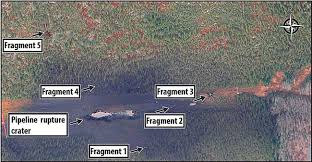
A report on the 2013 pipeline rupture was recently released by the Transportation Safety Board, and this report explains that the accident was caused at least in part by poor testing and by miscommunication. When the natural gas pipeline ruptured early in the morning on October 17, 2013 left a crater that was 50 metres wide. The rupture occurred to the south of Fort McMurray. Around 16,500 litres of natural gas was released from the rupture in the pipeline and five fragments of the pipeline were launched distances of up to 130 metres from where the blast happened. The TSB report indicates that one of the 5 fragments was a burst pipe elbow that had failed hydrostatic testing before construction occurred. The pipe failed because the wall thickness did not meet the requirements.

The Transportation Safety Board report also concluded that the 2013 pipeline rupture involved other factors as well. The investigation showed that in the 50 days immediately before the rupture the temperature in the pipeline fluctuated between 42 degrees Celsius and 48 degrees Celsius, The pipeline was not designed to handle these heats, although it was supposed to be capable f up to 58 degrees Celsius. The contractor responsible for the work only tested the pipes to 45 degrees Celsius maximum. According to the TSB report “The maximum possible discharge temperature had not been effectively communicated among the project team members and contractors at the design stage, resulting in the use of a lower temperature during the design process.”

Categories
Alberta Economic Ft Mac

Letter to Shareholders of Canadian Oil Sands Urges Takeover Bid Acceptance

Canadian Oil Sands, letter to shareholders

The fight between Canadian Oil Sands and Suncor Energy worsened recently when Suncor sent a letter to shareholders of COS urging these shareholders to accept the takeover bid that the company made. Suncor asked the shareholders to accept the bid for a hostile takeover to the tune of $4.7 billion and to ignore the COS board of directors. The letter states that the current leaders at Canadian Oil Sands have a past of “underperformance, financial challenges, and significant vulnerability in a ‘lower for longer’ oil price market.” Canadian Oil Sands also currently has an estimated amount of outstanding debt that is approximately $2.2 billion. The total estimated value of the takeover transaction is around $6.9 billion according to Suncor. According to a company statement COS shares would see a premium of 57% if the takeover succeeds.

The letter to shareholders of Canadian Oil Sands has not changed the direction that COS has taken. The COS board of directors recently announced that their decision to reject the bid by Suncor was firm, and their statement explained that the bid by Suncor was “undervalued, opportunistic and exploitive.” Steve Williams, the CEO of Suncor, released a statement that said “The COS Board and management are telling COS shareholders to ‘do nothing’ to protect the value of their investment. This would be saying no to the premium value of our offer, and the opportunity for greater upside and lower risk as a Suncor shareholder. Rejecting our Offer represents real risk to COS shareholders, and we urge them to consider the facts and accept our Offer.”

Categories
Alberta Economic Ft Mac Politics

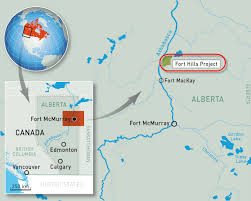
The Fort Hills Commuter Policy Has Been Reversed by Suncor Energy

Suncor Energy, commuter policy

Suncor Energy previously set a commuter only policy for the new Fort Hills project and this had some local residents, businesses, and politicians in Wood Buffalo very upset. The company has announced that they have reversed this policy, and the reversal may have been the result of push back from the community that the company was getting for their decision. When the controversial commuter policy was first announced Suncor defended it as necessary but they have done a complete turnaround. Suncor Energy executive vice-president of upstream operations Mark Little met with municipal councilors and the change was released the next morning in an email from the company. The email stated “There’s no community on the surface of this earth that’s more important to us than Fort McMurray. We’re hoping and encouraging any and all Fort McMurray residents to apply for any and all jobs in the region and join Suncor.”

The reversal f the commuter policy by Suncor Energy was explained by company spokesperson Sneh Seetal “We want, and absolutely need, qualified people regardless of where they are located. I understand people in Fort McMurray felt they were turned away. We apologize, because that was not our intention. If a Fort McMurray resident feels they were turned away, I would ask they would reapply or attend the career fair.” Brian Jean, the Wildose leader, sent Suncor a letter asking them to reconsider the commuter policy for Fort Hills. After the policy was reversed Jean said “Suncor’s an awesome part of our community, but it just seemed very contrary to the interests of what was in the interests of the local economy. I’ve always believed it was important to consider locals first, Albertans second and other Canadians third.”