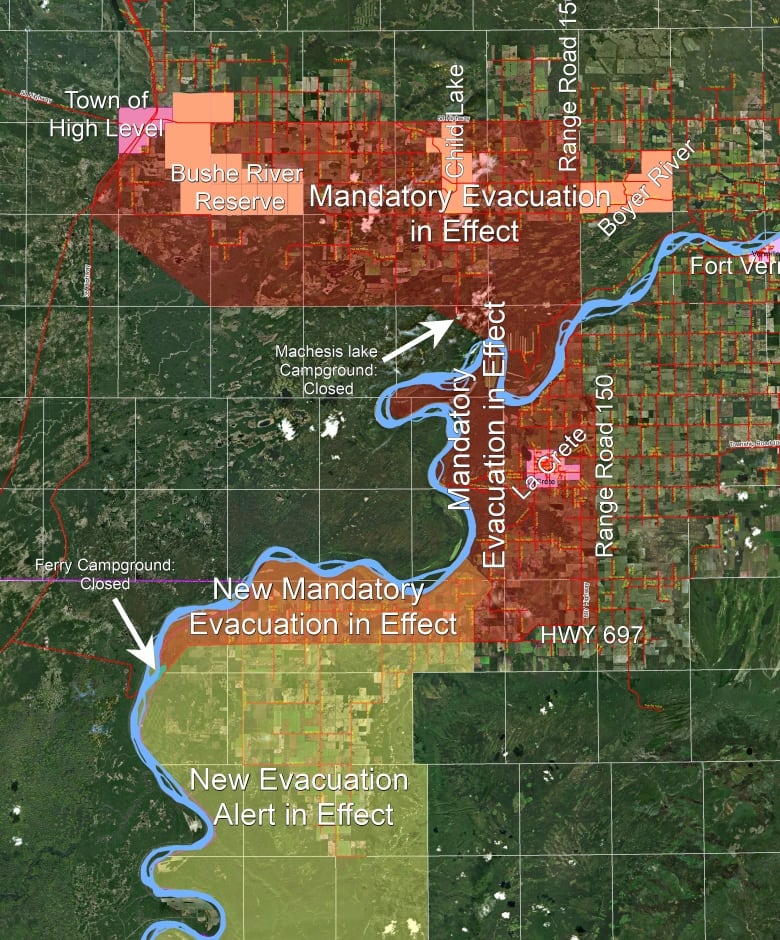
There’s no timeline for when thousands of residents in Mackenzie County in northern Alberta forced out by wildfires can return home, Reeve Josh Knelsen said Friday.
“Right now we want to make sure that everyone is safe and it’s safe to go home before allowing anyone to come back,” Knelsen said.
Officials are trying to avoid a situation where people return only to be told a few days later they have to leave again, he said.
Seniors at two lodges in La Crête and Fort Vermilion were evacuated from their homes and invited to return only to be evacuated a second time, Knelsen said.
“It takes a toll.”
He acknowledged residents are frustrated by not knowing when they can return to gardens, livestock and farms that need tending, he said.
“And people need to make money. They’re off the job right now and they have bills to pay, so I mean the stress levels are definitely high,” Knelsen said.
Knelsen thanked residents for their patience.
“This fire has been going on for over a month and it’s been quite the journey for a lot of people already,” he said.
So far, 7,046 people have registered with the Emergency Coordination Centre and officials are asking the remaining few evacuees who have not yet registered to do so.
Registration lets officials know that people are safe and ensures they have access to assistance from the province, said Caitlin Smith, public information officer for the county.
The out-of-control Chuckegg Creek fire is the largest of the seven active wildfires in the High Level forest area. It is now approximately 331,000 hectares in size, with the perimeter of the fire measuring 539 kilometres, Leslie Lozinski, information officer with Alberta Wildfire said Friday.
Two controlled burns are planned over the next couple of days, should the winds cooperate, she said.
“Wildfire is a lot like a chess game, there’s a lot of strategy that goes into fighting a wildfire,” Lozinski said. “A lot of strategy, a lot of science and a little bit of art, and a lot of help from Mother Nature.”
There is some good news to report on the fire, Lozinski said.
While efforts have been focused on the east side of the fire, which has been more active lately, rain on the north and west sides has helped firefighting efforts, she said.
While any bit of rain helps, about 20 millimetres is needed across the fire to make a significant difference, Lozinski said.