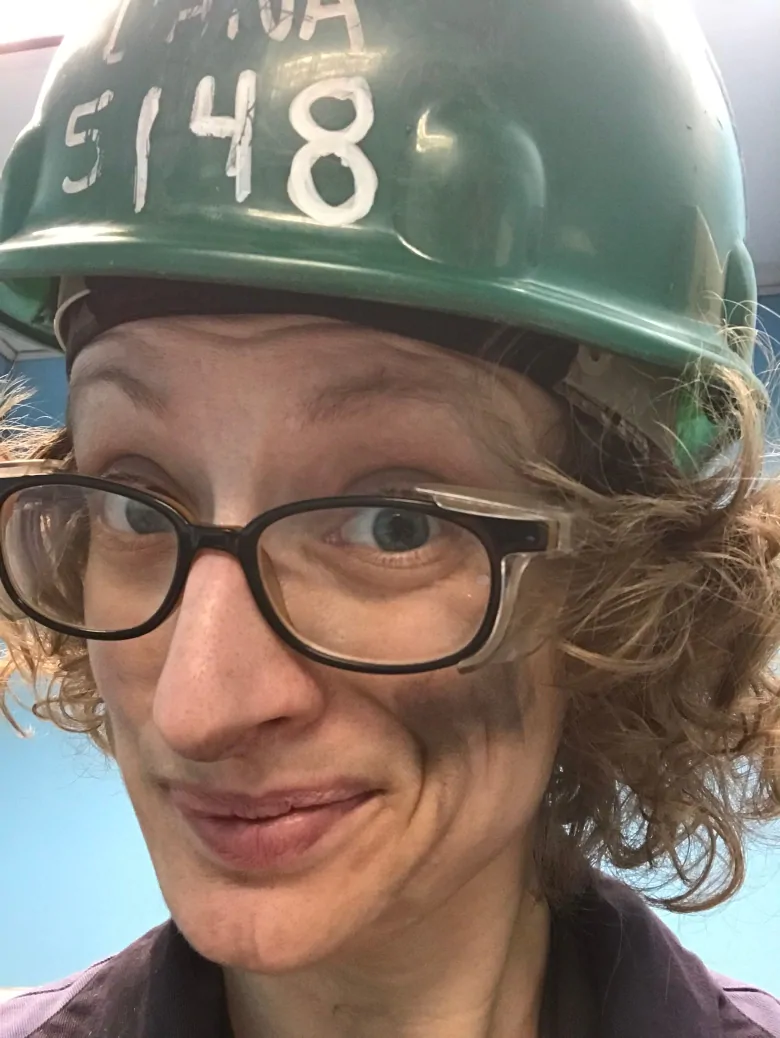
After working at an oilsands plant for two years, Dana Francis became pregnant.
When she told her manager, Francis said they were at loss.
“You might have thought that the plant had blown up. They were in shock,” she told CBC’s Radio Active Tuesday.
“They’re like, ‘There’s no procedure for this. What are we supposed to do with a pregnant woman?’ and they immediately tried to get me into an office.”
Francis said she insisted she stay out working on tools.
“I had to fight for that, believe it or not.”
But eventually, Francis said, she ran into a problem when she had no way to protect her unborn child’s hearing from the noise she was exposed to at work.
So, they fired her, she said.
“On one of my days off they booted me. They had one of my coworkers pack up my lockers,” she said, “It was really heartbreaking.”
Francis said the practice was part of a loophole in the system, in which contractors can kick an employee off a work site if the person is unable to perform their duties for any reason, including illness — or in her case, pregnancy.
Francis was fired in 2016, but even two-and-a-half years later, she’d still encourage women to work in the oilpatch today.
“It’s awesome,” she said.
She said she found it rewarding to take a concept on paper, build it and put it to use in a plant.
Francis also benefited from her income doubling after obtaining her Red Seal, a national stamp of approval for a tradesperson’s capabilities.
“You have to grow a really thick skin in order to shrug off the negative attitudes … but ultimately it’s awesome,” Francis said.
“The majority of men I work with are like brothers to me. I couldn’t ask for any more support or recognition.”
Companies need to catch up
Sara Dorow, a sociologist at the University of Alberta who researches mobile workers in Fort McMurray and northern Alberta, said she’s asked CEOs about the scenario Francis described.
While larger companies may have more progressive policies, they told her, they can’t control what smaller contracting firms do.
Dana Francis worked in the oilpatch before she was sent away from her worksite when she was pregnant with her daughter. (Dana Francis)
“There’s everything from pregnancy being a reason to let somebody go, to not being well equipped to having women in these jobs,” Dorrow said.
One example was women working in heavy-haul trucking, having to bounce around for a 12-hour day while experiencing extreme menstrual pain, she said.
“Those kind of things have come up in my interviews [with employees] as the ways in which the system has not caught up with the gendered reality of who is in those positions.”
Francis, whose daughter is now two and half years old, is currently working as a labourer in Nisku because she hasn’t been able to find a job that requires her qualifications.
It’s difficult to find a job that doesn’t require excessive overtime, keeping her away from her daughter for 10 or 11 hour each day, she said.
“I think it’s just going to be a matter of a cultural shift, because it’s very easy to feel like an outsider when you’re the only woman on the floor,” she said.
“But there are definitely others out there like me who enjoy doing this.”