Ten people died of an illicit drug overdose every day in Canada in the two years leading up to March 2018, according to a new federal analysis aimed at giving a better picture of those at greatest risk from the burgeoning overdose crisis.
The Public Health Agency of Canada study shows victims range from employed people who have never had contact with the justice, social assistance or hospital systems to those with little work history and long-term legal and social issues.
The new analysis, released Tuesday, comes from what will be a series of articles examining the social and economic backgrounds of overdose victims in B.C., where the agency says the national overdose crisis is most acute.
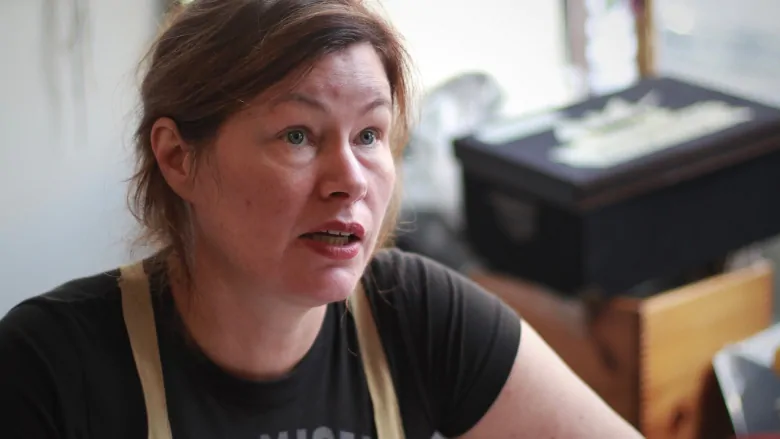
Sarah Blyth, who pioneered the model for many overdose prevention sites in Vancouver, said many overdose deaths can come down to a loss of hope.
“The more bad experiences a person has in their life, the more hopeless they feel and the less likely they might be to care.”
“If you’re living in an alley and everything’s going wrong, your life continues to spiral in a way where there’s nothing positive,” said Blyth, who co-founded the Overdose Prevention Society in 2016.
Sarah Blyth co-founded the Overdose Prevention Society and, along with a group of volunteers, has set up unsanctioned, pop-up supervised injection sites. (Rafferty Baker/CBC)
Majority of victims are men aged 25-54
Across the country, an average of 10 people have died of an illicit drug overdose every day between January 2016 and March 2018, according to Tuesday’s data.
The analysis showed that in B.C., the number of people who died of an illicit drug overdose more than doubled over five years — from 293 in 2011 to 639 in 2016.
Nearly 75 per cent of those victims are men between the ages of 25 and 54, and most overdoses happen when people are using alone indoors, the analysis found.

Paramedics respond to an overdose in Vancouver’s Downtown Eastside in 2016. (Natalie Clancy/CBC)
Almost a quarter of victims visited an emergency room the year before they died. Around 17 per cent of those hospitalizations were for opioid poisoning or mental health issues.
Blyth said it’s common for users who want treatment for their addiction to go in and end up back on the street “within a week.”
Mental health
The B.C. Coroners Service has previously said more than half of overdose victims in B.C. in 2016 and 2017 had been diagnosed with a mental health disorder or had evidence of being mentally ill.
In September, chief coroner Lisa Lapointe said it’s clear only a “hodgepodge” of services are available when it comes to mental health in B.C.
“We know from speaking with families of those who died that many times families are beside themselves trying to find help for their loved ones and trying to find help perhaps in that window of opportunity where the individual is looking for help or willing to accept help,” Lapointe said.

B.C.’s chief coroner Lisa Lapointe has said ‘we wouldn’t be seeing the deaths we’re seeing … if not for fentanyl.’ (CBC)
Victims who were employed made less
The analysis found only a quarter of people who died were employed in their last five years of life. Those who did have a job made a little more than $28,400 — less than half the B.C. average.
About a fifth of those workers had jobs in construction, with 13 per cent working in building maintenance, waste management and other support service industries.
Around 40 per cent of people who died of an overdose didn’t receive any social assistance benefits in their last five years.
Police contact up
The majority of people who died of an illicit drug overdose didn’t have any contact with police in their last two years of life.
Those who were accused of a crime in their last two years were most often accused of shoplifting. One-third of those died within three months of that police contact.
Blyth said drug users’ interactions with police — and officials — need to be less about criminalization and more about getting help.
“They need help. You can do that by not having police arresting drug users all the time and sending them on to be treated in a health-based way,” she said Tuesday.
“All of it points to safe drug supply, more detox, more decriminalization.”
With files from Yvette Brend and the Canadian Press