A Fredericton company that trains Indigenous people to work in the growing information and communications technology industry is celebrating its Alberta expansion this month.
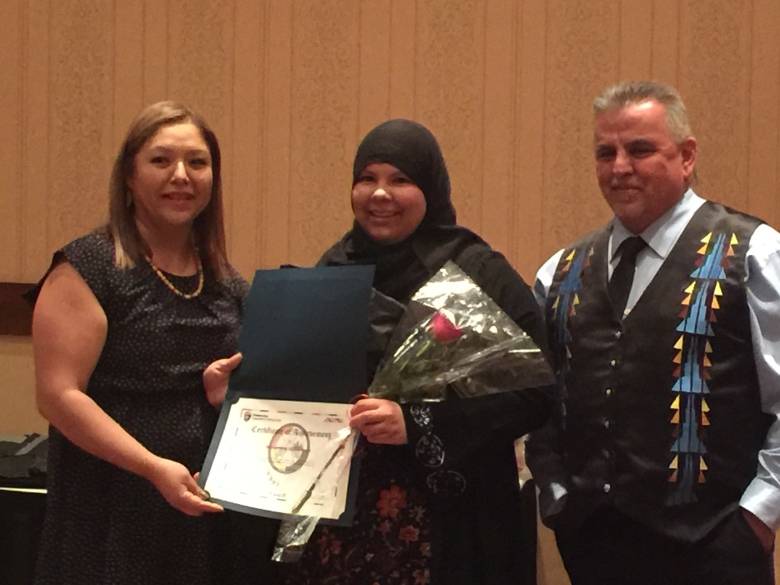
The Oteenow Employment and Training Society in Edmonton held a ceremony on Thursday for the first cohort of graduates from a program that aims to create 45 new tech jobs here over the next three years.
The program is a partnership between Oteenow and the Professional Aboriginal Testing Organization (or PLATO Testing). PLATO Testing is a branch of the software testing services company Professional Quality Assurance, or PQA.
Seven of the 10 people who enrolled in the first training program of its kind in Alberta graduated and are now working as software testers for PQA.
“Before September, these students didn’t have these specialized skills or tech jobs. Some of them didn’t have meaningful employment at all,” Roberta Bearhead, Oteenow’s executive director, said in a news release last week.
“We are very proud of what they have achieved.”
First pics of the Oteenow Software Testing Program Grad. What a wonderful job by the Oteenow team to celebrate the graduates’ hard work. <a href=”https://twitter.com/hashtag/oteenowgrad?src=hash&ref_src=twsrc%5Etfw”>#oteenowgrad</a> <a href=”https://twitter.com/hashtag/softwaretesting?src=hash&ref_src=twsrc%5Etfw”>#softwaretesting</a> <a href=”https://t.co/oTX24yTxTt”>pic.twitter.com/oTX24yTxTt</a>
—@oteenowyeg
Testing software for bugs
During the program, which included months of hands-on, in-classroom training with PLATO Testing instructors and an internship with an IT department, students learned how to find bugs in video games, websites and mobile apps.
Students also worked on their public speaking skills and practised writing letters and resumés.
Shantehl El Bakkali, a recent graduate, said she applied for the program because she was interested in computers and met the application requirements. The former receptionist is Indigenous and was looking to get back into the workforce after staying home for nearly four years to take care of her two daughters.
Shantehl El Bakkali, centre, holds her certificate after graduating from a software testing program in Edmonton. Melissa Yellowknee and Lyle Donald of Oteenow Employment and Training Society stand beside her. (Progress Unlimited Inc.)
“We jumped into group activities right away, which was really nice because I wasn’t used to being around people other than my little circle of friends and family,” El Bakkali said Tuesday on CBC’s Radio Active.
She told CBC it has been a struggle to balance work and family life, but that the program gave her new skills and confidence. Through a contract with PQA, she’s currently working full-time for IBM.
Responding to industry demand
The Information Communications Technology Council, a national non-profit organization, projects a need for more than 200,000 digital workers by 2021.
“We’ve increased our connection to technology and we need the people to be able to help us ensure that it’s running well,” said Melissa Yellowknee, a career counsellor at Oteenow who taught and supported students during the software testing program.
Industry experts predict domestic workers alone will not be able to fill all the available jobs.
Training and hiring women, young people, Indigenous people and people with disabilities will be “critical in mitigating the talent shortage,” the ICTC advised in a 2016 report on digital talent.
Though the proportion of Indigenous people with jobs in the digital economy has risen steadily in the past decade, the group is still under-represented in the information and communications technology industry.
In 2016, about five per cent of the population in Canada identified as Indigenous, but according to Statistics Canada labour force surveys from that year, Indigenous people made up approximately 1.2 per cent of all ICT professionals.
Last month, Oteenow received $474,375 from the federal government’s Western Diversification Program to run the software testing program for three years.