Even well-educated parents may struggle to comprehend how to manage their child’s medications and tests to prevent relapses of a chronic disease, according to Canadian specialists.
Children with nephrotic syndrome, a chronic kidney disease, frequently relapse and need their parents to manage their care by regularly testing urine, giving medications by following a complicated schedule, monitoring signs and symptoms, and adjusting doses.
In Friday’s issue of the journal Pediatrics, researchers at Toronto’s Hospital for Sick Children tested the “health literacy” of 190 parents of children with the syndrome and followed their outcomes.
“Having a sick child is difficult for families to cope with,” said Dr. Rulan Parekh, associate chief of clinical research at Sick Kids and a nephrologist. “When you first get all that information put to you, I think that’s a really difficult time for families to comprehend everything.”
Hospital staff recognized this difficulty, and nurses started an outpatient program to teach parents how to monitor their children.
About 80 per cent of the parents had an adequate high literacy score on a standard test, but some still had comprehension issues when it came to managing their child’s condition, the researchers report.

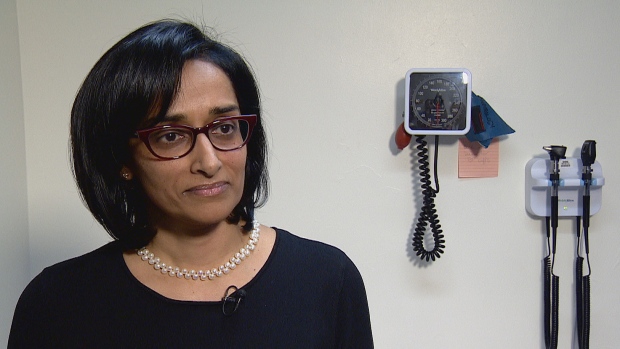
“Having a sick child is difficult for families to cope with. When you first get all that information put to you, I think that’s a really difficult time for families to comprehend everything,’ says Dr. Rulan Parekh, associate chief of clinical research at Toronto’s Hospital for Sick Children. (CBC)
After adjusting for immigration, education and income, those who had a higher health literacy had a longer time to relapse (about 100 days), compared with those in the lowest group (50 days), Parekh said.
“What was very surprising was that the correlation between education and literacy wasn’t always there.”
It means doctors can’t assume everyone will understand the instructions.
Laurie and Matt Robertson of Toronto became part of the study when their daughter, Holly, was diagnosed with the syndrome 18 months ago.
“It was overwhelming just to know she was sick, even the word disease, chronic, those trigger words, I was sort of at a loss even to understand that,” Laurie recalled of the diagnosis.
With time, the Robertsons began to understand how to adjust Holly’s diet and medications and appreciate how to manage the illness.
The researchers say their findings may also extend to other children.
“In other diseases, like Type 1 diabetes and asthma, there are also home-based management that gets done by parents. I think we should start considering should we spread this type of [health literacy] testing to every kind of clinic,” Parekh said.
To overcome the comprehension issues, the researchers suggested giving parents a refresher, such as an app to look up information when needed to reinforce lessons from a nurse.