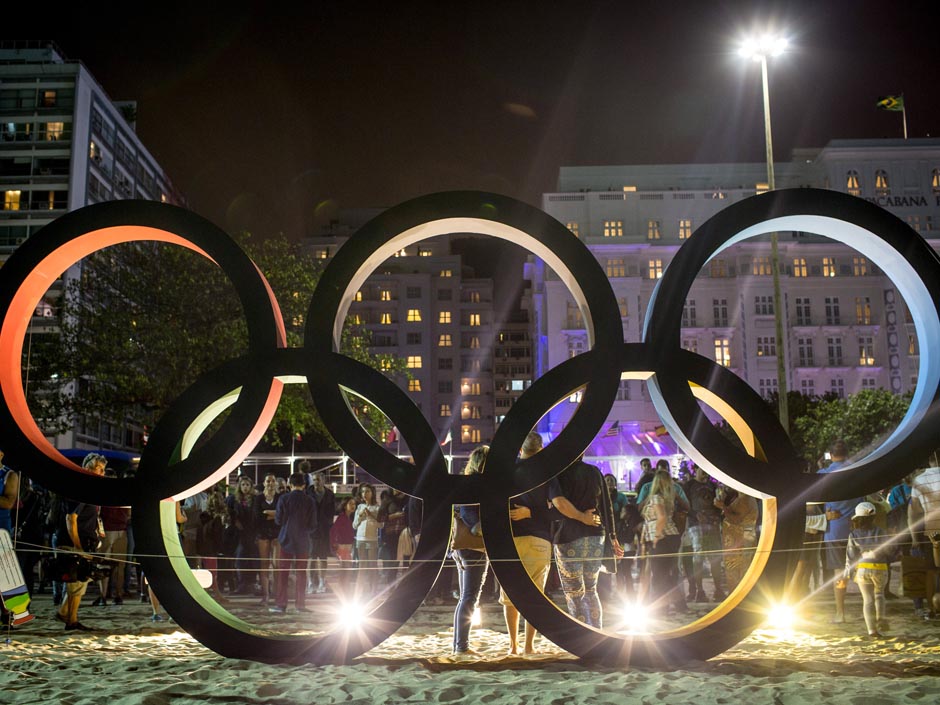

RIO DE JANEIRO — It’s hump day in Rio, which means there’s just 94 more bus rides until we’re home. Speaking of things that are long and boring, here’s an Olympic edition of the Monday morning musings and meditations on the world of sports.
• They tell this story about Steve Jobs in Brazil.
When the Brazilian economy was smoking in the late aughts, Apple looked to move part of its manufacturing operation into northern Brazil. Jobs flew in for meetings, then left a couple of days later exasperated over the bureaucracy, red tape and general goofiness he found.
Perhaps the story is apocryphal. But if you’ve spent any time in Brazil, there is a very loud ring of truth to it.
They do things differently in this country. To order a cheeseburger at the press venue, you have to go through five people before you actually get the cheeseburger.
To get a Brazilian visa — no, sorry, we don’t have the time for that. The point is this country will drive you crazy if a) you’re in a hurry and b) are accustomed to a certain standard of efficiency.
It should come as no surprise, then, that these Olympics aren’t exactly Swiss-like in their organization. But, somehow, some way, they’re still working in their own eccentric Brazilian way and this says so much about this country.
Okay, we’re aware the water in the diving pool turned green. We’re also aware the transportation system is completely random and subject to the whims of the Brazilian bus gods. But this just wouldn’t be an Olympics in Brazil if things ran smoothly and predictably.
The violence issue, meanwhile, is another story for another time and we don’t mean to diminish it here. This is a beautiful place. It can also be a dangerous place. That too is part of Rio. There’s not much more to say on the subject.
But the winter Olympics in Sochi two years ago were clean, pristine and an organizational marvel. The buses ran on time. The venues were new and lovely. They were conveniently located.
But they were also joyless. On Saturday, your agent sat in a fairly empty beach volleyball venue, watched the waves roll into Copacabana and listened to a samba band playing in the distance. Then the volleyball started and the place rocked like AC/DC.
All things considered, I’ll take Rio in all it’s infuriating, imperfect glory.
• In the wake of a substandard performance at the Olympic regatta, Rowing Canada is facing a regime change.
The next question is what that change will look like but, whatever they do, Rowing Canada can’t recycle another mediocrity from the pool of international coaches.
Peter Shakespear, who currently oversees the developmental program, is one candidate for a larger role. Tom Morris, the coach for the silver-medal winning double of Lindsay Jennerich and Patricia Obee should be handed a larger portfolio.
But the most intriguing name is Mike Spracklen, the veteran coach whose crews produced seven medals over five Olympics for Canada, including gold for the men’s eights in Barcelona and Beijing.
Spracklen, of course, has a long and complicated history with Rowing Canada and the mention of his name will cause some heads to explode in the rowing community. He’s also 78.
But dude produces medals and his ties to the Canadian program are deep. Hiring Spracklen would also allow him to mentor a younger coach who’s familiar with rowing in Canada. Ben Rutledge rowed for Spracklen in Beijing and coached the Russian women’s eight for 18 months. Barney Williams, a silver medal winner in ’04, is passionate about rowing.
Somewhere between the decision to disband the men’s eights and the depressing results in Rio, something was broken in the Canadian rowing program. The best way to mend it is to return to its roots.
• And while we’re on the subject, Rowing Canada runs two training centres: London for the women, Victoria for the men. Does this make sense, especially when Fanshawe Lake in London is unavailable for training during the winter?
• It would be churlish in the extreme to celebrate the American women’s loss to Sweden in soccer so we’ll just say this.
Team USA may have been denied victory by a controversial official’s call. As it was, they lost on penalties when Hope Solo made one stop but couldn’t make the one that mattered.
And, afterwards, Solo revealed her true character to the world when she said the Swedes, “Played like cowards.”
Perfect. Absolutely perfect. There are moments like this that make you think there really are gods in sports and, eventually, they will square all accounts.
• And finally, following their loss to Australia in the gold-medal game of the women’s rugby sevens last week, the gutted New Zealand team solemnly marched in front of their fans, formed a line and performed a version of the Haka, the traditional Maori war dance.
They were in tears. Their supporters were in tears. In the centre of the line stood Portia Woodman, the fierce star winger of the team whose father Kawhene and uncle Fred played for the All Blacks. As she danced, she wept openly.
That moment — so intimate, so powerful — blew up on social media and played to a global audience. You can decide for yourself what that says about our world. But the Olympics, which are so deeply flawed on so many levels, still produce scenes like this; scenes we remember, scenes that move us to the core of our being.
There is an Olympic ideal. Sometimes it’s harder to find than a black pearl, but when you see it, you know it and you saw it in the women of New Zealand.
ewilles@theprovince.com