Categories
Economic Ft Mac

Additional Degree Programs Now Offered by Keyano College

Keyano College, degree programs

Keyano College has added two more degree programs in order to assist the local community and provide programs that are relevant in the area. This means that students can choose from 4 different degree programs now instead of the previous two. The school explained that the new programs were added to meet local demand. The new programs are the Bachelor of Science in Environmental Science and the Bachelor of Business Administration degrees. According to Keyano College academic affairs vice-president Catherine Koch “The employability is better with a degree level than the diploma level in our local market.” Keyano School of Arts, Science, Business, and Education Dean Guy Harmer said “We have had a diploma in Environmental Technology for a while. And all of (our advisory board) told us that they would prefer to have bachelor’s degrees.”

The advisory board of Keyano College which recommended the new degree programs is made up of industry partner representatives. This includes representatives from Syncrude, Suncor, and other oil and energy companies that operate in the area. Both of the new degree programs are offered in partnership with Alberta Universities. Harmer explained “We’ve been building this room with giant 80-inch monitors, so you’ll be able to see the professor in the class at Mount Royal and they’ll be able to see us. When you ask a question, your face fills one of the monitors…in that way, you always see whose talking, as you would in a normal classroom. We’re interested in having a set of programs that you can finish at the baccalaureate level so that you don’t have to leave town. When you’re sending people away, chances are they might not come back.”

Categories
TV & Movies

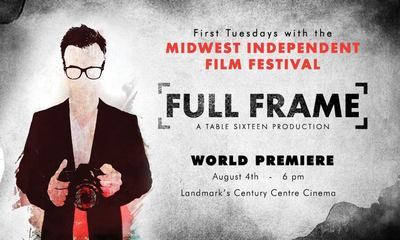
World Premiere of “Full Frame” at the Midwest Independent Film Festival

Thumb_11751410_10153214480148451_2022104707929636025_n

Though the topic at hand was technically “the art of the pitch,” last night’s installment of the Midwest Independent Film Festival turned out to be a testament to the vitality of collaboration and how it can enable artists to accomplish far more than they ever could on their own. Three filmmakers took part in a pre-screening panel moderated by the Chicago Tribune’s Nina Metz, and each spoke about the close working relationship they have forged with their key collaborators. Sharon Greene of The Neo-Futurists said that writing a script with someone else pushes you to explain every one of your choices, which provides a great practice ground for the eventual pitch. “Operator,” the film Greene made with her wife, Logan Kibens, was initially hurt and then helped by Spike Jonze’s “Her” during pitch sessions, due to the coincidental similarity of its subject matter. Actors Martin Starr and Mae Whitman wrapped production on the film in Chicago last week.

“It’s about a man who designs digital customer service voices for a living,” explained Greene. “We meet him on the day that one of his voices—an Ed Debevic’s-style voice for a health care company—is bombing spectacularly. Under pressure and given a week, he decides to redesign the voice based on his wife, and the film is about what happens when he analyzes, breaks down and replicates the woman he loves the most. He’s trying to freeze her at a time when she’s undergoing rapid change.”

Erica Weiss spoke about her 12-year collaboration with creative partner Caitlyn Parrish, who has several writing credits for TV programs including the upcoming “Supergirl.” The pair co-founded the local company, Teleporter Productions, and have co-directed their first feature, “A View from Tall,” which explores the unlikely friendship between a 17-year-old girl and her wheelchair-bound therapist. The film’s cast, crew and locations are all from the Chicagoland area. Weiss spoke memorably about the interesting balance that must be struck while pitching a project.

“You have to figure out a way to make your film sound like something that no one has ever seen before, while also describing it in a way that enables people to relate it to other films they’ve seen,” said Weiss.

The final guest on the panel, Victoria Kelley, raised numerous eyebrows when she revealed that “Full Frame,” the latest film she made with her husband, writer/director Christopher Kelley, had an $8,000 budget, the majority of which was spent on music licensing and catering. The film was shot in Quincy, Illinois, with local citizens volunteering as the cast and crew. Since the Kelleys have numerous connections around town, they were able to utilize multiple locations free of charge, while three couples played a crucial role in providing necessary funds.

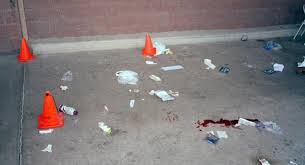
Following the panel was the world premiere screening of “Full Frame,” a noir thriller about a photographer who stumbles upon the corpse of a beautiful blonde. Kelley’s influences are apparent from the get-go, with the opening shot of a burning photo reassembling itself (much like the disappearing Polaroid image in “Memento”). There’s a nice nod to the famous close-up of Ingrid Bergman clutching the MacGuffin in Hitchcock’s “Notorious,” as well as a few references to one of Kelley’s favorite films, “Mulholland Dr.” The photographer has more than a passing resemblance to Justin Theroux’s character in David Lynch’s 2001 masterpiece, and there’s even a scene where he hammers a villain’s car with a baseball bat. By that point, however, the photographer is clad in a mask that causes him to resemble a rogue Weird Al Yankovic.

I’ll confess that it took me about half the picture to get on its goofy wavelength. The pedestrian nature of the dialogue and acting were too much of a distraction, and the scenes that were often most effective were the ones that didn’t involve talking. At its best, the film serves as a showcase for Kelley’s remarkable versatility. Entire stretches of the film are carried purely on the strength of Kelley’s editing, and his equally impressive sound design earns laughs with small touches, such as how the main baddie chomps on a communion wafer. It’s impossible to take any of this very seriously, and once I allowed myself to laugh at the film’s moments of inspired absurdity—particularly when a man turns to resemble the picture of himself hanging on the wall behind him (a la “Airplane!”)—I found myself starting to enjoy it.

Stealing scenes in the final reel is Charles Whitcomb, the owner of an archery shop in Quincy, whose grave line delivery would give Michael Caine and Anthony Hopkins a run for their money. He has a few moments toward the end that could very well earn him cult status, and during the festival’s post-screening Q&A, he garnered the biggest laugh of the night. While explaining that many of the customers at his shop are naturally hunters, he quipped that most people in Chicago don’t know very much about hunting. Suddenly, the voice of what appeared to be a disgruntled “Lion Lives Matter” activist in the audience hollered out, “We didn’t kill Cecil, though!” Undeterred by the voice, Whitcomb dryly replied, “That’s my business—killing animals.”

For more information on the Midwest Independent Film Festival, visit its official site. You can also follow it on Facebook and Twitter.

Source:: http://www.rogerebert.com/festivals-and-awards/world-premiere-of-full-frame-at-the-midwest-independent-film-festival


Categories
TV & Movies

Freaky times at Fantasia Fest 2015

Thumb_white_planet_2-620x349

Luke Jaden’s short “The Listing” embodies everything
that Montreal’s Fantasia Fest is about. The film takes a classic horror premise—the
haunted house—and puts a twist on it, imagining a ghoul-infested property in
the moments before a realtor shows up to get it ready for the market. The film
was shot far outside of Hollywood, in the Detroit area, with a cast of talented
unknowns. And Jaden isn’t exactly a run-of-the-mill genre filmmaker either. He’s
19 years old, and just graduated high school. Or to put it another way: He’s
exactly the same age as Fantasia.

Since 1996 (when the event was called Fant-Asia, and focused
mainly on movies from Hong Kong and Japan), the Fantasia International Film
Festival has developed a reputation as a horror/fantasy/science-fiction/action
showcase unlike any other. Ostensibly, Fantasia and its ilk take the kind of
movies that usually get consigned to other festivals’ “midnight madness”
programs and make them the entire show—which in Fantasia’s case means spending
three weeks spotlighting offbeat projects from around the world.

It’s especially apt that this is happening in Canada, a
country that’s been “future cult film”-friendly since the 1970s, when favorable
tax laws encouraged local impresarios to flood the market with low-budget
slasher and sexploitation pictures, some of which (like “Porky’s” and “My
Bloody Valentine”) became surprise hits in the United States. Over the past
two decades, the Toronto International Film Festival’s midnight movies have
exposed North American cinephiles to the cutting edge in Hong Kong action,
Japanese horror, and all manner of oddities and extremities from Australia,
France, Spain, and the UK.

Fantasia has taken this basic idea—the celebration of the
dark, the strange, and the shoestring—and has fashioned it into a culture unto
itself. Filmmakers who get into the festival’s program tend to become part of the
Fantasia family, and often come back again year after year, even if it’s just
to socialize with their peers and to be part of the audience. Attendees have
developed their own identity too. When the house-lights go dark, the audience
meows like cats (as a call-back to a short film in a Fantasia program long
ago). When there’s an especially clever kill in a horror movie or
pulse-pounding set-piece in a thriller, they whoop—sometimes disturbingly.

But they’re also broad-minded enough to accept an expansive
definition of “genre.” In 2015, that included such seemingly off-model projects
as “Tangerine” (a micro-budget gender-bending comedy shot entirely
on an iPhone), “(T)ERROR” (a nerve-wracking documentary that embeds
with an undercover FBI informant), and “Miss Hokusai” (a
genteel anime feature about the complicated relationship between two
generations of Japanese artists).

This year’s festival also featured plenty of what most would
expect from an event dubbed “Fantasia.” “Ant-Man” was the
opening night film, and two of the centerpiece slots were occupied by “Cop
Car”
and “Dark Places,” both noir-inflected indies
with well-known actors in lead roles—Kevin Bacon as an amoral small-town
sheriff in the former, and Charlize Theron in the latter as a crime victim
trying to capitalize on her fame. The programmers also landed three films by
eclectic Japanese oddball Sion Sono, running the gamut from musical comedies to
manga adaptations to pure surrealism.

Still, the appeal of Fantasia for many of its regulars is in
the new discoveries—not necessarily of great new films and filmmakers, but of
memorable monsters, bold ideas, evocative locations, and startling sequences.
Genre pictures are frequently defined by their best pieces. Here’s a lucky 13
of characters, places, and moments from this year’s Fantasia Fest:

  • In writer-director Hur Bum-wook’s animated Korean
    science-fiction drama “On the White Planet,” a rare flesh-colored
    human in a monochrome world smears his skin with black goop and burgles a mansion
    in a beautifully designed and drawn caper scene.
  • The Rear Window/The Conversation/Kill List
    mash-up “Observance” sports multiple suspenseful and
    supernatural turns in its story of a professional voyeur who sees too much,
    although the movie’s most squirm-inducing shot is a lengthy close-up of a man
    trying to bait a hook with hideous looking splayed worms without puncturing his
    own fingers.
  • Douglas Schulze’s mostly dialogue-free “The Dark Below” plunges a skilled diver (well-played by Lauren Shafer) beneath the
    iced-over surface of a Michigan lake, and then watches as she struggles to find
    her way out before succumbing to frostbite.

  • The title object in the Irish occult shocker “Cherry
    Tree”
    has the spooky, mystical look that Brendan McCarthy’s
    screenplay requires, especially when director David Keating plunges under its
    roots to find a witches’ chamber populated by giant cocoons and millipedes.
  • Most of the action in the taut (if somewhat ridiculous)
    German teen cyber-thriller “Boy 7″ takes place in a
    remarkable detention compound, shot by director Özgür Yildirim to resemble the
    secret lair of a team of supervillains.
  • The Ethiopian post-apocalyptic mood-piece “Crumbs” is set in a landscape strewn with forgotten and misinterpreted pieces of
    popular culture, protected by a gaunt man who wears a Santa Claus suit and
    claims to be able to grant wishes.

  • Shortly after director Hallvard Bræin dedicates his
    road-chase comedy “Børning” to Hollywood stunt king Hal
    Needham, he dives into a sequence that sees a married couple in a muscle car
    play chicken with a fellow motorist and end up flipping their vehicle over,
    just before the pregnant wife’s water breaks, drenching her face and hair.
  • Gabriel Carrer’s moody vigilante movie “The Demolisher” pays proper homage to Carpenter, Mann, and Walter Hill in an early image of
    its black-helmeted protagonist beating up crooks in front of a storefront
    fringed with neon.

  • Some Kind of Hate”’s slasher is an original:
    It’s the reincarnated spirit of a depressed teenage “cutter,” who wears a
    necklace of razorblades and gives other kids fatal wounds whenever she slices
    her own skin.
  • The Blaine brothers’ “Nina Forever” has
    its own creepily metaphorical undead villainess, in the form of a dead
    ex-girlfriend who starts crashing the dates of the boy who survived her.

  • In the star-studded, slickly produced omnibus “Tales
    of Halloween
    ,” one of the segments features a sentient jack-o’-lantern
    who crawls around town on tendril-like vines and eats people with its jagged
    carved mouth.
  • Daigo Matsui’s lyrical and loopy “Wonderful World End” is about a low-level internet celebrity whose life is so affected by an
    encounter with a shy fan that she cuts herself off from the internet, “retiring”
    in a scene for which Matsui covers up her face in the frame with the image of
    the cell phone screen where she’s making her announcement.

  • “Room 237” producer Tim Kirk works again with that
    film’s director Rodney Ascher on the smartly meta “Director’s Commentary:
    Terror of Frankenstein
    ,” which takes an actual 1977 horror film and adds
    a fake DVD commentary between two ex-collaborators who keep circling back to
    painful memories from the shoot. Between their bickering—and the intimations of
    an infamous crime connected to the movie—there’s one hilarious scene where the
    commenters commiserate over one bit player’s terrible performance, taking the
    piss out of some poor schmoe who happened to put in a day’s work on “Terror
    of Frankenstein” nearly 40 years ago.

What do all these films have in common? Not much, beyond an
enthusiasm for their forms, and a sincere desire to replicate for other
audiences what their creators experienced when they were becoming movie buffs.

The word “exploitation” has a negative connotation to some,
because it’s so often used to describe a person being used for someone else’s
gain. But in cinema the term mainly refers to any product with elements that
are “exploitable” for marketing purposes—be it something sexy, scary, or
otherwise exciting. To say that Fantasia’s crop of young, obscure, and/or
foreign filmmakers are in the exploitation business isn’t a knock. On the
contrary, what’s so fascinating about the festival is that most of its
programming is poised at the intersection between scrappy personal expression
and crass commercialism. Most of these filmmakers have grasped the first key
lesson of working within popular genres: If they give the viewers just a little
of what they’re looking for in the center of the frame, they can spend the rest
of their time doodling obsessively in the margins.

Source:: http://www.rogerebert.com/festivals-and-awards/freaky-times-at-fantasia-fest-2015


Categories
TV & Movies

#258 August 5, 2015

Sheila writes: Quentin Tarantino’s films are often tributes to other films, to other genres, to actors who have made their marks in the past. He loves it all, he has enthusiasm for all. Here, in this really fun Press Play video, Tarantino’s visual references to other films are made explicit, shot for shot.

Trailers

Steve Jobs: The Man in the Machine (2015). Directed by Alex Gibney. Synopsis: A look at the personal and private life of the late Apple CEO, Steve Jobs. Opens in the US on September 4, 2015.

Stonewall (2015). Directed by Roland Emmerich. Written by Jon Robin Baitz. Starring Jonathan Rhys Meyers,
Joey King,
Ron Perlman. Synopsis: A young man’s political awakening and coming of age during the days and weeks leading up to the Stonewall Riots. Opens in US theaters on September 25, 2015.

Son of Saul (2015). Directed by László Nemes. Written by László Nemes,
Clara Royer. Starring Géza Röhrig,
Levente Molnár,
Urs Rechn. Synopsis: In the horror of 1944 Auschwitz, a prisoner forced to burn the corpses of his own people finds moral survival upon trying to salvage from the flames the body of a boy he takes for his son. Release dates TBD.

Peace Officer (2015). Directed by Brad Barber,
Scott Christopherson. Synopsis: A former sheriff will stop at nothing to confront the SWAT team he founded. Release dates TBD.

The Assassin (2015). Directed by Hou Hsiao-hsien. Written by Cheng Ah , T’ien-wen Chu. Starring Qi Shu,
Chen Chang,
Satoshi Tsumabuki. Synopsis: The film is set during the mighty Tang Dynasty-period in Chinese history. Nie Yinniang returns to her family after several years in exile. The mission of her order is to eliminate the tyranny of the Governors who avoid the authority of the Emperor. Now she will have to either sacrifice the man she loves or break definitively with the “order of the Assassins”. Opens in China on August 27, 2015. Other release dates TBD.

Beasts of No Nation (2015). Written and directed by Cary Fukunaga (based on the novel by Uzodinma Iweala). Starring Idris Elba,
Ama Abebrese,
Abraham Attah . Synopsis: A drama based on the experiences of Agu, a child soldier fighting in the civil war of an unnamed African country. Opens in US theaters on October 16, 2015.

Goodnight Mommy (2014). Written and directed by Severin Fiala,
Veronika Franz. Starring Susanne Wuest,
Elias Schwarz,
Lukas Schwarz. Synopsis: In the heat of the summer. A lonesome house in the countryside between woods and corn fields. Nine-year-old twin brothers are waiting for their mother. When she comes home, bandaged after cosmetic surgery, nothing is like before. The children start to doubt that this woman is actually their mother. An existential struggle emerges for identity and fundamental trust. Opens in US theaters on August 14, 2015.

6 Years (2015). Written and directed by Hannah Fidell. Starring Taissa Farmiga,
Ben Rosenfield,
Joshua Leonard . Synopsis: A young couple bound by a seemingly ideal love, begins to unravel as unexpected opportunities spin them down a volatile and violent path and threaten the future they had always imagined. Opens in the US on August 18, 2015.

Drunk Stoned Brilliant Dead: The Story of the National Lampoon (2015). Directed by Douglas Tirola. Written by Douglas Tirola,
Mark Monroe. Synopsis: A look at the history of the American comedy publication and production company, National Lampoon, from its beginning in the 1970s to 2010, featuring rare and never-before-seen footage. Opens in US theaters on September 25, 2015.

Zoolander 2 (2016). Directed by Ben Stiller. Written by Justin Theroux . Starring Ben Stiller, Owen Wilson, Christine Taylor, Kristen Wiig, Will Ferrell. Synopsis: Derek and Hansel are modelling again when an opposing company attempts to take them out from the business. Opens in US theaters on February 12, 2016.

A War (2015). Written and directed by Tobias Lindholm. Starring Pilou Asbæk,
Tuva Novotny,
Dar Salim . Synopsis: Company commander Claus Michael Pedersen (Pilou Asbæk) and his men are stationed in Helmand, Afghanistan. Meanwhile back in Denmark, with a husband at war and three children missing their father, everyday life is a struggle for Claus’ wife Maria (Tuva Novotny). During a routine mission, the soldiers are caught in heavy Taliban crossfire. In order to save his men, Claus makes a decision that ultimately sees him return to Denmark accused of a war crime. Release dates TBD.

Entertainment (2015). Directed by Rick Alverson. Written by Rick Alverson, Tim Heidecker
, Gregg Turkington
. Starring Michael Cera,
Tye Sheridan,
John C. Reilly . Synopsis: En route to meet his estranged daughter and attempting to revive his dwindling career, a broken, aging comedian plays a string of dead-end shows in the Mojave desert. Opens in US theaters on November 13, 2015.

Cemetery of Splendor (2015). Directed by Apichatpong Weerasethakul. Starring Banlop Lomnoi,
Jenjira Pongpas,
Jarinpattra Rueangram . Synopsis: a lonesome middle-age housewife who tends a soldier with sleeping sickness and falls into a hallucination that triggers strange dreams, phantoms, and romance. Opens in France on September 2, 2015. Other release dates TBD.

Room (2015). Directed by Lenny Abrahamson. Written by Emma Donoghue (based on her novel). Starring Brie Larson,
Megan Park,
William H. Macy . Synopsis: A modern-day story about the boundless love between mother and child; young Jack knows nothing of the world except for the single room in which he was born and raised. Opens in US theaters on October 16, 2015.

A Brilliant Young Mind (2014). Directed by Morgan Matthews. Written by James Graham. Starring Asa Butterfield,
Rafe Spall,
Sally Hawkins. Synopsis: A socially awkward teenage math prodigy finds new confidence and new friendships when he lands a spot on the British squad at the International Mathematics Olympiad. Opens in US theaters on September 11, 2015.

Spotlight (2015). Directed by Tom McCarthy . Written by Josh Singer , Tom McCarthy. Starring Rachel McAdams,
Liev Schreiber,
Mark Ruffalo , Michael Keaton. Synopsis: The true story of how the Boston Globe uncovered the massive scandal of child molestation and cover-up within the local Catholic Archdiocese, shaking the entire Catholic Church to its core. Opens in US theaters on November 6, 2015.

Roddy Piper 1954-2015

Sheila writes: Beloved wrestling star and actor “Rowdy” Roddy Piper died on July 31, 2015, and Rogerebert.com’s Bob Calhoun has written a moving and personal tribute. Calhoun writes: “That crazy glint in Roddy’s eye that made him a top attraction during the WWF’s (now WWE) 1980s WrestleMania boom period, also made him so believable as John Carpenter’s alien-blasting bindlestiff in ‘They Live.’ Sure, Kurt Russell, Carpenter’s muse in so many similar films in the 1980s, could have acted circles around Piper, but he wouldn’t have put in a better performance.” You can read the tribute here.

Marlon Brando‘s Secret Acting School

Sheila writes: In 2001, the legendary Marlon Brando held a secret acting workshop for A-Listers and stars such as Sean Penn, Robin Williams, Nick Nolte, Edward James Olmos, Whoopi Goldberg and Harry Dean Stanton. Edward James Olmos said, “Was he serious about the class? As serious as a heart attack. Brando had never taught an acting class before — this was the only time in his whole life. This was going to be his legacy to the acting community.” The Hollywood Reporter has the story, as told by the people who experienced it.

Sex, Death, and Kubrick: How ‘Eyes Wide Shut’ Changed Tom Cruise’s Career

Sheila writes: Over at Grantland, Amos Barshad has written a fascinating analysis of Stanley Kubrick’s final film, “Eyes Wide Shut.” The story of the shoot is already well-known, but Barshad re-visits that territory, examining how Cruise’s devoted participation helped change his career. With “Mission Impossible” in theaters now, it’s well worth taking a look at “Eyes Wide Shut” again, especially in terms of Cruise’s performance. You can read Barshad’s piece here.

Free Movies

We’re Not Married (1952). Directed by Edmund Goulding. Starring Ginger Rogers,
Marilyn Monroe,
Victor Moore . Synopsis: In separate stories, five wedded couples learn that they are not legally married.
Watch “We’re Not Married.”

Private Number (1936). Directed by Roy Del Ruth. Starring Robert Taylor,
Loretta Young,
Basil Rathbone. Synopsis: Ellen Neal is hired as a servant in the house of the wealthy Winfield family by the butler, Thomas Wroxton, who covets her romantically. To Wroxton’s great irritation, Neal resists his advances. Instead, during the family’s vacation in New England she becomes romantically involved with the Winfields’ son, Richard.
Watch “Private Number.”

Ride in the Whirlwind (1966). Directed by Monte Hellman. Starring Jack Nicholson,
Cameron Mitchell,
Millie Perkins. Synopsis: Three cowboys, mistaken for members of an outlaw gang, are relentlessly pursued by a posse.
Watch “Ride in the Whirlwind.”

Source:: http://www.rogerebert.com/ebert-club/258-august-5-2015


Categories
Ft Mac

Fort MacMurray Shooting Victim is Improving, Upgraded to Stable but Serious

Fort MacMurray, shooting victim

The most recent Fort MacMurray shooting victim is improving after being shot on Friday, July 24th. Initially the 38 year old victim was taken to the local hospital for injuries that were life threatening, but his condition was upgraded to stable but serious condition last Tuesday. RCMP spokesperson Mylene Michon explained that the victim still faces challenges, cautioning that “There’s always the risk of complications.” The victim was found at around 2 am on the morning of Friday, July 24th, and the press release about the incident stated that the victim was unresponsive when found in the Fort MacMurray area of Quarry Ridge. Police found the male after receiving a report of gunshots in the area. No description of any suspect has been released yet. Police ask that anyone who saw or heard any suspicious activity or suspicious people on the date of the shooting in the vicinities of Beacon Hill and Gregoire to report what they know.

According to an RCMP release about the crime and the Fort MacMurray shooting victim “It is unknown at this time, if this incident is related to other recent events involving firearms in the greater Fort McMurray area.” This hooting is just the last in a number of local shootings that has some in the community on edge. There were several shootings in May, and also one in June, in addition to this latest crime. This has led some to question whether the community is safe, and right now the police are not discussing whether some of the crimes are connected or related in any way.

Categories
TV & Movies

Comfortable Shoes: Joel Edgerton on “The Gift”

Thumb_the-gift-19_gift_584_df-02058_rgb

Joel Edgerton has spent a lot of time around incredible
directors. Not only is he good friends with David Michod (“Animal Kingdom”) and
Gavin O’Connor (“Warrior”), but he’s worked with Kathryn Bigelow (“Zero Dark
Thirty”), Ridley Scott (“Exodus: Gods and Kings”), Baz Luhrmann (“The Great
Gatsby”), and many more, absorbing the lessons he learned on set to inform his
directorial debut, “The Gift,” opening this weekend. (He’ll also appear in
upcoming, highly anticipated films “Black Mass” and “Midnight Special”).
Written and directed by Edgerton, “The Gift” stars Jason Bateman and Rebecca
Hall as Simon and Robyn, a nice couple moving back to his hometown for a fresh
start. Shortly after buying a beautiful new home, they run into Gordo
(Edgerton), an old classmate of Simon’s. At first, Gordo seems like a dangerous
third party, the kind of mentally deranged loner that we’ve become accustomed
to in cinema, but there’s more to “The Gift” than meets the eye.

Edgerton recently sat down with us in Chicago for a lively
conversation about audience expectations, socially resonant cinema, the edge of
Jason Bateman, and the best advice he’s received from his director friends.

Jason Blum, who
produced this movie, and I were talking a few years ago about the changing ways
people see movies. Are you on board with the “however you can see it, see it”
mentality of VOD, streaming, etc.?

Look, I used to be very much “Everything Has to Be Shot on
Film” and “Everyone Has to Go to the Cinema,” but I recall a friend talking
about how sad it was that they had to close the drive-in cinema and I remember
as a kid going, “Who cares?” It’s really about the majority. Yes, I still would
say to you that I would prefer to shoot a movie on film and I would prefer you
to see the movie in the cinema. Preference is one thing. The way things
actually operate is different. It’s more the case that I haven’t gone “I prefer
you to watch it on an iPhone,” but I’m more OK with that. I’m more OK with the
idea of a movie being day and date on Netflix.

I made a movie in Australia not too long ago called “Felony”
and it was set in a particular area, and the people who lived in the area in
which it was set were writing to us on Facebook going, “We have to drive more
than half an hour to see the movie in the cinema.” Give it them on Netflix.
Give it to them on Hulu. HBO. Amazon. Whatever it is, let them watch the movie
however they need to watch it. Just make sure they watch the movie.

There is an argument
that streaming services allow for a more diverse array of films to get to a
wider audience. Look at the documentaries on Netflix or the Criterion
Collection on Hulu.

Yeah. Look at what movies get made these days. Our movie’s
original. That’s rare. It’s not a prequel or sequel or book. The majority of movies
that get made by a studio nowadays are big tentpole movies. Or you got these
smaller independent things. But there’s not much middle ground. My buddy David
Michod is about to launch into this project with Brad Pitt called “War Machine,”
which is more of a middle budget thing, but it’s going day and date with the
cinema and Netflix. It’s the first time, I think. Anyway, look, you want to
make movies and you want to tell stories and get them out there however you
can.

Something like this
you note is not a tentpole but it’s surrounded by them in the first week of
August. How do you compete? What are your expectations?

They call it counter-programming. I call it “Everybody Fend
For Yourself.” (Laughs.) You go in there with a small movie and duke it out
with the big ones. It doesn’t mean at the end of the day that you expect to
come away with #1 at the box office. You need to cover your own niche. I don’t
know if there’s ever a good day to release a movie like this. We make what we
make. I always figure that I’ll make the movie and then be less involved with
marketing because there’s people whose job it is and are expert at doing that.
They feel like it’s a good time to release the movie. I think that there are
enough interesting things about the movie on a marketing level to entice people
to come see it.

I was struck by the
difficulty, without spoiling, of having two central characters with whom
audience loyalty is tricky. We’re not sure who to trust, who to believe, who to
like, other than Rebecca Hall. How delicately do you balance the “good guy, bad
guy” aspect of your male leads and was keeping that gray a concern for you?

I wanted to invite people into a familiar genre. By that I
mean, “Fatal Attraction,” “Cape Fear,” “Single White Female”—that kind of a
world. The typical well-meaning couple besieged by the third freak. Even when
you look at a movie like “Fatal Attraction,” Michael Douglas’ character is very
gray. The whole thing kicks off because of his grayness in having an affair.
What I wanted to do was say, “Welcome to this movie that’s familiar. It’s a
nice couple. Fresh start. Here comes this guy.” Once that was set-up and we
established the constant visitation by the awkward acquaintance from high
school, I wanted to bend the rules a bit and take it into new territory. What
would it be like if that bad guy sort of vanished; sort of left them alone, but
didn’t really? The tension exists in changing the familiarity of the genre. You
take the dog away from the couple—he’s stolen the dog. What’s going to happen?
Of course, the dog is going to end up in five pieces. But then you do the
opposite. You constantly jostle around. What I wanted to do was swap the roles
of the villain of the hero. As much as the film is about the bad things you’ve
done in your past and what if they came back to haunt you, it’s also about who
are the people we’re living with that we think we know.

That’s difficult in thriller
form. Was there ever pressure to “cut the dog up into five pieces”? You bring
up “Fatal Attraction,” which was notoriously altered to give it a bigger
ending. Did you feel pressure to give it more traditional thriller elements?

No, strangely enough. There would have been a very easy way
to turn this into a straight thriller. But I feel like the whole point of even
wanting to make a movie was that my promise to everyone was to make a movie
that had one foot in the genre world, but there’s another foot in something
else. I want to say something as well. I want to say something about the nature
of people and whether they change or don’t change. The nature of the roles we
played in high school, and at what age we’re culpable for what we do and say.
The power of words and ideas and how they affect other people’s lives. And all
sort of wrapped up in this parcel of a genre movie. I wanted it to be
suspenseful and scary, but I wanted the monster to be something that could be
in any one of our lives.

It reminded me of ‘70s
thrillers, which more often very clearly had social subtext. Were there
specific cinematic influences from that era?

Definitely. “The Shining” was big for me. “Rosemary’s Baby”
was a big influence. In fact, there are little mini-homages to both of those
movies in the film. Michael Haneke was a big touchstone for me, particularly “Cache.”
The villain in the shadows was very significant.

And how the idea of
something can tear people apart.

Yeah. And “Cache”—when the idea is out there in the mist,
the relationship falls into itself. A lot of stuff. The triangle thrillers like
“Pacific Heights”—some of those films are really dated but the ideas never date.
I didn’t want to just make a triangle thriller that was reduced into Psychopath
vs. Lovely Couple. I figured it could be more than that. I’m really happy that
you mentioned films that had a social context and resonance. There’s something a
little bit more to take away than a bag of scares. The reduction of that kind
of a movie is fine, but I’d rather not take my time making it because someone
could do it better than me.

There’s tension
produced by knowledgeable audience expectation. We expect the plot to go a
certain direction, so the tension exists because of the films that came before
it.

This is EXACTLY what my plan was. Take the dog away and go
isn’t it more confusing if the dog comes back?

Casting is essential
for a project like this. Jason has an everyman quality but also a very
believable dark side, and Rebecca is always great. How did you find both of
them and how do they make the project different?

Rebecca was kind of the obvious choice. She’s the center.
She’s the one with no hidden corners. She’s open, honest, straightforward. I
was looking for that, plus someone I could believe when she says she wasn’t
such an outgoing person in school. School wasn’t an easy ride for her. She wasn’t
gifted everything. There’s a certain beautiful awkwardness and honesty. It was
a real coup. Jason was a more out of the box choice because the obvious choice
is more of a typical jock 20 years later. Jason was someone who I believed got
by on his wits more, which can often be a more viper-tongued, vicious human
being. That version of the character was really interesting to me.

Jason came into my head as someone—I had seen him play parts
in “Disconnect” and his dramatic stuff in “The Kingdom” and “State of Play.” I
was like that guy is just good. A lot of comic actors inevitably prove it to
the world when they take a dramatic turn. Steve Carell. Jim Carrey. Comic
actors are better than drama more than dramatic actors are ever going to be
suddenly funny.

It’s the old axiom
that comedy is harder than drama.

It is. So I knew he was capable of it and I got excited that
if I could get him to do that for a whole movie, I would almost be doing
something new with him. And he was very excited about taking a walk in that
arena. There’s an element to his comedy that is very interesting because he can
pull off the straight man but still get laughs. He has this ability to be the
smartest guy in the room.

And that makes you
want to listen to him, which is essential to this part.

Jason and I had many conversations about levels of deceit.
When is the lie changing? Super-intelligent guy. And, on a side note, having
been in the director’s chair twice now, he was an excellent producing partner.

Do you go with anyone
else you worked with and are friends with for directorial advice?

Yeah. Definitely.

How do the directors
that you know help you make your directorial debut?

Just by being in their presence. I said to someone recently—most
directors won’t ever get to watch another director direct. They might visit the
set once or twice. I’ve been on the set for the duration and watched Jeff
Nichols make a movie, watched Scott Cooper make a movie, watched Ridley Scott
make a movie, watched Gavin O’Connor make two movies. That is an incredible
privilege if you care to open your eyes and ears to what’s going on. You learn
the good parts and the bad parts. You start filling your bag with good and bad
ideas. As friends, you can call them up and ask for advice. Someone told me you
should wear a comfortable pair of shoes. You should change your shoes at
lunchtime. That was great advice! Take your feet on a holiday. (Laughs). From
Ridley, I learned how to make real clear decisions, which you can only do if
you’re incredibly well-prepared. Know what your own strengths are. I loved
Scott Cooper because he really trusts actors and he lets them play. I’ve had
the privilege of having many discussions about directing. I’m in a privileged
seat as an actor to learn so much about directing. I know that in my future
that I’d like to be directing more movies and so my only concern was was I
going to enjoy it or not? I felt like I could do an OK job of it, but would I
be good at it? And could I really love it? And then I’ll do it again.

I did love it for sure.

Source:: http://www.rogerebert.com/interviews/comfortable-shoes-joel-edgerton-on-the-gift