Categories
TV & Movies

Short Films in Focus: “The OceanMaker”

Thumb_oceanmaker_katrina2

“The
OceanMaker” is like a summer blockbuster in miniature. It accomplishes in 10
minutes what many bloated, over-blown franchise installments cannot accomplish
in 2-hours-plus. It creates its own world, puts the viewer in the cockpit along
with the main character (who never says a word) and gives a clear sense of
everything at stake. It plays with the action movie sub-genre of the Loner in a
Desolate Wasteland and follows it through with the kind of emotional climax
George Miller went for with “Mad Max: Fury Road.” It does all this under the
conviction of an environmental message about water preservation (a portion of
the proceeds for the film goes to EarthDay Network 2015 as part of The Canopy
Project, in which every purchase will help plant a tree), but it does not preach
or beat anyone over the head with an agenda.

The story
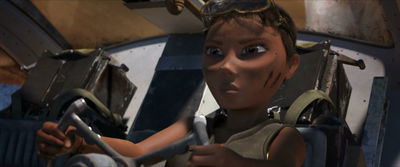
centers on Katrina, a lone fighter pilot who flies over the baron wasteland of
what used to be an ocean. A lighthouse stands among submarines and freighters
stuck in sand, the sun beating down on them mercilessly and with only a couple
clouds in the sky. It appears that rain has not fallen in quite
some time, but Katrina has created a machine that could get a rain shower going
again. All she needs is a cloud to fly over. She flips a few switches, drops
some yellow dye onto a cloud and suddenly, rain falls. Of course, it can’t be
that simple, as there are many cloud thieves out there who try to siphon water
from what few clouds currently exist (presumably to monetize it somehow). Aerial
dogfights ensue between Katrina and the water bandits over who will get control
of the clouds.

The
dogfight scenes carry a thrill to them that evoke Steven Spielberg at the
height of his abilities as a visual storyteller. Aside from a cheer, “The OceanMaker”
has not one single line of dialogue. It lets the emotions expressed on
Katrina’s face tell the bigger story while also perfectly underscoring the
importance of the events through action. Writer-Director Lucas Martell and his
team of animators and editors have clearly studied the best action sequences in
order to give a the viewer a perfectly realized geography of the dogfights. The
photorealistic animation gives the film a beautiful, tangible quality (when I
first saw the film, I had no idea it was animated until I saw Katrina’s face).
Martell also deserves special props for hiring a full orchestra to perform the
score instead of hiring one person to compose it digitally, a rare feat for a
short film.

“The
OceanMaker” makes for a great summertime diversion and a welcome relief for
those of us who curate short films for festivals and who rarely ever get to see
a full-blown action movie interrupt the steady stream of coming-of-age films
and dark, personal tales of woe. I also highly recommend Martell’s earlier
short film, the hilarious (and also wordless) “Pigeon: Impossible,” which was
written about a few years ago on this very site.

Q&A with LUCAS MARTELL

How did this idea come about?

Spoiler alert! Towards
the end of the film is a shot with the two planes flying straight at each
other with the cloud in the middle. I had that visual in my head for years
and always thought it was the climax to a great story, but I never knew what
the rest of the story was. One day I was playing around with the idea and
thought that perhaps the planes were fighting over the cloud… the idea of the
world without water and cloud harvesting came from that one image in order to
support this notion of a world where clouds are worth fighting for.

In one of your production videos, you said you had to bribe a bunch of
animators to come out to the Caribbean to work on the film. Why the
Caribbean? How long did production last?

There were 8 of us on
Caye Caulker in Belize for a month and a half. Animation can be done
anywhere, but I kept noticing that most of the life of a professional
animator is spent in windowless rooms in big cities. I knew that I wanted a
dedicated team of professionals working full-time on the project, not
piecemeal like most indie animated short films get made. We quickly realized
that we didn’t have enough to pay everyone their proper professional rates,
but moving the production to a tropical island turned the production from a
job into an amazing life experience that was too good to pass up. Ultimately
we finished about half of the film in Belize, which is insanely fast for
something this ambitious. The rest of it was done a little more piecemeal
over the following year, but the real groundwork was all laid on the island
during that artist retreat.

Talk a little about photo-realistic animation versus traditional
animation. Is the process harder, easier or about the same?

It’s not necessarily
harder, it’s just different. The decision to go more photorealistic was
primarily a creative one. We wanted the environment to feel tactile and
harsh, and a more photorealistic look really created that tone we were after.
You’ll also notice that we chose to make the characters geometrically
stylized, but with very realistic skin and surface details. That helped fit
them into this realistic world, but also gave us more range for the animators
to work with and helped avoid the uncanny
valley. (that’s a wikipedia link)

You went above and beyond what most filmmakers would do for a short
film with regards to the music by hiring a full orchestra rather than doing
everything digitally. Why was having that organic sound so important to you?

Without dialogue, the
music is really the narrator of the film, and even in the first draft of the
script I envisioned the last half of the movie being nothing but music… not
even sound effects. Because it was so exposed, we knew that we had to knock
it out of the park. Plus, I was a music major (saxophone) in college, so
music is something I lean very heavily on as a storyteller. The composer
Chris Reyman is a former roommate of mine who has scored all of my projects,
and we agreed that doing the score digitally would really limit the range of
what he could write. Fortunately we’ve got a lot of very good musician
friends, so between ourselves and our music supervisor Shelly Eager we were
able to pull some favors to make it happen with real musicians.

I saw this film before I saw Mad
Max: Fury Road
and the comparisons now seem inevitable with the world you
created and the idea of the hero being female, which for a time was atypical
for this genre. What did you think of George Miller’s Mad Max films (if
you’ve seen them) and is there a direct influence here? Or perhaps another
action director?

I LOVE “Fury
Road” and the originals were definitely a stylistic influence,
especially for that “junk-punk” aesthetic. We started the project in 2012 and
started playing film festivals in 2014, so “Fury Road” wasn’t even
announced until we were well into production. The one major difference was
that we said from the beginning that we wanted to do a post-apocalyptic film
about hope. It’s still a little bit dark, but unlike most films in the genre,
it’s not about survival. It’s about trying to fix this enormous problem that
seems insurmountable. With all the environmental issues we’re facing, it’s
very relevant, yet still tells that story in a fun, action-filled way that
doesn’t hit people over the head.

It was such a thrill to see this on the big screen at the Chicago
Critics Film Festival. What has been the highlight(s) of your festival
experience so far with this film?

The festivals have been
great, especially the Chicago Critics Film Festival. Probably the biggest
highlight for me was that we were invited to screen the film at Pixar.
Showing it to many of the people who invented computer animation was a dream
come true, and to see how they responded to the story was amazing.

What’s next for you?

There’s several projects
in the hopper, but the most relevant one is a feature version of “The
OceanMaker.” I’ve already written a pretty detailed treatment that picks
up where the short leaves off, following the little girl in the lighthouse
who eventually becomes “The OceanMaker.” We’re just trying to put together
the necessary pieces to make that happen.

The OceanMaker from Mighty Coconut on Vimeo.

After the seas have disappeared, a courageous pilot fights against vicious sky pirates for control of the last remaining source of water: the clouds.

The bulk of the film was made using nothing but laptops during a 7-week artist retreat on a small caribbean island. Be sure to check out our behind the scenes videos at the bottom of its Vimeo page.

Source:: http://www.rogerebert.com/balder-and-dash/short-films-in-focus-the-oceanmaker


Categories
Alberta Politics

Comprehensive Bail Process Review to be Launched by Alberta

Alberta, comprehensive bail process review

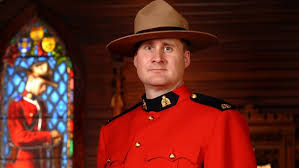
The Alberta government will launch a a highly comprehensive bail process review after the killing of a St. Albert Mountie, and this review was recommended by a recent report into St. Albert RCMP Const. David Wynn’s fatal shooting. The report looked at the Alberta Crown Prosecution service, the involvement of this service with Shawn Rehn who shot Wynn, and other possible variables. Alberta’s Minister of Justice and Solicitor General Kathleen Ganley explained “This is a crucial system. It’s important to review it, to determine if there is anything we can do to make it better. The review that we are going to be doing is going to concentrate specifically on how bail hearings are conducted, and how information travels within the system, to ensure that the best information is in front of the person conducting the review, and whether the right person is conducting the review.” One potential answer is police involvement in bail hearings.

The comprehensive bail process review that will be launched by Alberta will be designed to help improve on the current system and process. Brent Rathgeber, the Edmonton-St. Albert Independent MP, has currently tabled Dave Wynn’s law. This law, also known as Bill C-686, would close current loopholes that the bail process contains with the requirement that any past failure to appeal incidents and any outstanding convictions are part of full disclosure during this process. After the review is complete areas where there are problems can be addressed so that the bail process is more effective.

Categories
TV & Movies

The Unloved, Part 20: “Down with Love” and “The Break-up”

Thumb_dwl

Director Peyton Reed became persona non grata with a particular kind of fanboy when it was announced that he would replace Edgar Wright as the director of a project that Wright originated at Marvel, “Ant Man.” The finished film went on to become a hit and make a lot of money, but there was residual grumbling that a lot of what people liked about “Ant Man” was really the residual work of Wright’s pre-production work and all the work he did on the screenplay with his regular writing partner Simon Pegg (who were rewritten by star Paul Rudd and “Anchorman” director/cowriter Adam McKay).

This is ultimately a movie credits detective story that will be sorted out at some future date, maybe in a tell-all book. The worst part of the whole “Ant Man” kerfuffle was that it made people momentarily think ill of Reed, who was filling a slot that would’ve been filled by someone else if he’d said no, and whose own movies have wit and style.

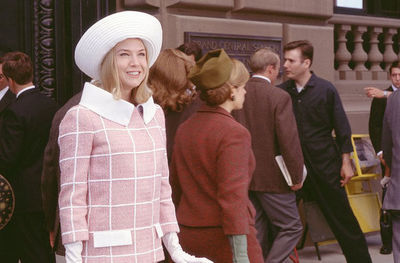
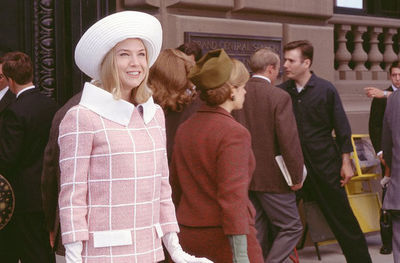
His biggest hit is still the cheerleader comedy “Bring it On,” a classic of sorts, but he’s made a lot of good movies. Scout Tayoya’s latest “Unloved” video essay celebrates two of Reed’s best but somehow less appreciated works, “Down with Love” and “The Break-Up.” The former is a 1962 period piece modeled on the Rock Hudson-Doris Day romantic comedies, in CinemaScope with split-screens, fantastic outfits, and a knack for mocking the mores of the day but not so harshly that the film comes off seeming smug. “The Break-Up” is a surprisingly edgy romantic comedy that was too sour to become a hit, although stars Vince Vaughn and Jennifer Aniston won some well-deserved plaudits for their performances as the main characters, a couple who incarnate Mars-Venus stereotypes about women and men.—Matt Zoller Seitz

The Unloved – Down With Love & The Break-Up from Scout Tafoya on Vimeo.

Scout Tafoya’s series for RogerEbert.com on neglected films continues with a double feature of great throwbacks from the underrated stylist Peyton Reed

Source:: http://www.rogerebert.com/mzs/the-unloved-part-20-down-with-love-and-the-break-up


Categories
TV & Movies

Fantasia Fest’s Frontières market is trying to change how genre films get made

Thumb_frontieresfeat

On the fourth day of the 2015 Fantasia Festival’s Frontières
market, writer-director-producer Graham Reznick is still energized, and still
eager to share what he calls his “hilarious elevator pitch” for his new project
“The Designer.” “It’s In
the Mouth of Madness meets Short
Cuts meets eXistenZ…
meets Citizen Kane.
” And
though Reznick says this with a smile, he’s not kidding.

On the market’s first morning, Reznick stood beside his
producing partners, Peter Phok and veteran horror filmmaker Larry Fessenden
(both from the production company Glass Eye Pix) and told an auditorium full of
industry types his plan for a kind of interwoven omnibus film, about a reporter
investigating the mystery of a missing video-game inventor. When they finished,
Reznick, Phok and Fessenden walked across the street to two adjoining classroom
spaces at Concordia University, where for the four days of Montreal’s
Frontières, they and 19 other sets of writers, directors and producers sit at
small tables and take meetings—20 minutes at a time.

By design, Frontières is an inversion of the usual Hollywood
power-dynamic. After making their initial pitch en masse, filmmakers spend the
weekend entertaining distributors, financiers, casting agents, and
post-production houses, in what’s been likened to a “speed-dating” spin on
deal-making. People with money and resources approach the artists with ideas
for how they can help. And when the bell dings, they all shake hands, and
rotate to another table.

The Frontières market is one of the major ways that Fantasia
Fest has been setting itself apart from the dozens of other genre-focused film
festivals that keep popping up around the world. Begun in 2012, Frontières aims
to be like the Sundance Institute, but for artists who prefer horror and action
pictures to muted family dramas and quirky comedies. According to the market’s
director Lindsay Peters, “We’re working
to build a community—a circuit.

Writer-director Todd E. Freeman and his co-producer Lara
Cuddy know what that’s about. They came to Frontières for the first time last
year with their project “Love Sick,”
an expansion of a short they’d landed in “The ABCs of Death 2.” They took a shot at Frontières because,
according to Cuddy, “We already had the
budget and the schedule, we had the cast attached, we had promotional photos,
we’d done effects tests. We thought, ‘We’ve got all this stuff, let’s just put
it all together and go and see what happens.’
” What happened was that they
walked away with something pretty close to full financing; and the
Portland-based duo are due to start shooting “Love Sick” in Ontario early next year.

In the meantime, rather than sitting idle, Freeman and Cuddy
hurriedly polished up a script for another
film, called “The Beautiful”: a
racially tinged “southern gothic” drama. They did this mainly because they knew
they were coming back to Fantasia, and wanted to have a good answer to the
question, “What’s next?” But they ended
up landing “The Beautiful” in
Frontières too, and shot a proof-of-concept trailer so that they could get the
market wheels rolling, Last year, all they really needed was money. This year,
they’re getting a fuller sense of all that Frontières has to offer, and have
been listening to suggestions about casting and special effects. In just two
years, Freeman and Cuddy have represented the gamut that Peters says she wants
Frontières to run: from films that are barely out of the word-processor to
projects that are just a couple of pieces away from being ready to roll.

Even though Frontières is working toward its own network of
alumni, it’s not that common for filmmakers to come back in consecutive years.
Frontières is competitive—so much so that Fantasia has added a second edition
in Brussels, headed up by Julie Bergeron. (“There
was a need for it,
” Bergeron says. “Of
course, there are many fantastic film festivals everywhere, but organized as a
market, this is the only one.
”) Only twenty projects are featured in each,
and during their four-day weekend, in addition to the initial pitch and the
whirlwind sessions of meetings, the filmmakers can participate in seminars
focused on specific aspects of the movie business, and targeted networking “power
hours” that force people to work past the usual cocktail party cliquishness.
(Though Frontières features plenty of cocktails, too.)

For Reznick, who’s been active in the movie business for
over a decade, Frontières has been a new experience. “I’m used to pitching one-on-one and kind of reading people and giving
them a sense of the story,
” he says. But there he was on Thursday,
explaining “The Designer” to a
crowd, which included everyone else with a project in the market. He loves that
after giving his spiel once, he didn’t have to repeat it to every new person
who showed up at his table. “Everyone’s
on the same page,
” he explains.

One new wrinkle for the 2015
Frontières was an emphasis on works-in-progress—some from earlier markets, and
some just from Fantasia-friendly artists. At a Saturday morning event, four
sets of filmmakers showed footage from movies in various stages of completion,
from the documentary “78/52”
(an in-depth historical and critical analysis of the shower scene from “Psycho”) to the genre-bending “Bad Blood” (a lysergic
horror/detective hybrid about rapidly mutating “were-frogs”). Then there
are the completed films that came up through the market, like the 1980s sci-fi
throwback “Turbo Kid,” which
was a part of the very first Frontières in 2012 (after being born of a short in
the first “The ABCs of Death”
anthology). After a successful festival run that kicked off earlier this year
at Sundance, the creators of “Turbo
Kid” took a victory lap of sorts at Fantasia, with a sold-out screening
on Thursday and a “how we did it” panel on Friday.

This is all partly an extension of what Peters means when
she talks about building up a Frontières community. Reznick says that he was
encouraged to enter the market this year by Phok, who attended the Brussels
edition earlier this year and was so excited by what he saw that he wanted to
be a part of it. As Freeman explains, there’s an element of support and renewal
to Frontières, especially for those who attend Fantasia every year. “Everyone sort of meets back up here to see
what’s coming next,
” Freeman says.

But there’s also a real effort
being made here to change the way that all the components of the filmmaking
process interact. One of the goals trying to make the process more efficient
than even the recent crowd-funding craze (which is often more about
accumulating money than in using it wisely). Reznick admits that he and his
Glass Eye cohorts came to Frontières mainly seeking financial backing, since
they already have a network of collaborators and partners that can get a movie
made. But he adds, “The interesting thing
about this market is not what we came here looking for, but what we’ve learned
we actually need.

The team behind “The Designer” have talked with agents
who could possibly get a bigger-name actor to do a few day’s work in one of the
film’s many small roles, to help raise its profile. And they’ve talked with
players in the foreign markets, who’ve given them some idea of what they can do
to make “The Designer” easier
to sell abroad.

It’s not that it’s going to affect necessarily the content of the film,
Reznick says. “But just getting involved
with international sales people ahead of time means that I know when we make
this movie it’ll be seen in France, or wherever. Which is great, because making
movies in a vacuum is not a great way to do it.

Unlike Sundance or the Toronto
International Film Festival—where
distributors sometimes try to shut out all other bidders by making pre-emptive
offers—Frontières is more like an ongoing
conversation, which might blossom into something days, months, or even years
after Fantasia ends. On day two of this year’s Frontières, the wrestling-themed
horror project “El Gigante”
sold to Raven Banner Entertainment, but those kind of announcements are rare,
at least during the fest. (Peters notes that after the “El Gigante” announcement, the sales action heated up more than
it ever has at Fantasia, but a lot of that’s being kept private for now.)

Instead, the vibe at Frontières
is more social than mercenary. On the last day of the market, Reznick confesses
that he’s talked so much that his throat is sore, and he jokes that, “Someone needs to invent a pill that makes
your voice not disappear during
a film festival.
” But he’s also certain that he’s accomplished something
here. Even if nothing immediately comes of the 20-minute blitz-meetings and
cocktail party chit-chat that he and Fessenden and Phok have done all weekend, “It’s still a win.” At the least, they’ve
met people who might be able to pitch in on the next Glass Eye project.

And why not hear their ideas?” Reznick says. “It all only helps.

Source:: http://www.rogerebert.com/festivals-and-awards/fantasia-fests-fronti%C3%A8res-market-is-trying-to-change-how-genre-films-get-made


Categories
TV & Movies

Thumbnails 8/3/15

Thumb_crouch-cruise-motorcycle-1200

1.

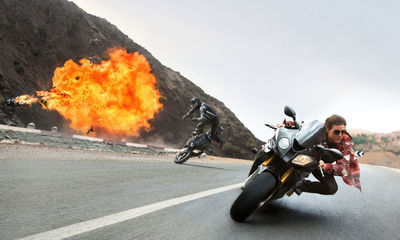
“Tom Cruise: The Good Kind of Crazy”: A terrific essay from The New Yorker‘s Ian Crouch on the controversial actor who nevertheless continues to please crowds at multiplexes.

“‘What’s your problem, dude? Can’t you just chill out?’ Fallon asked Cruise about his latest daredevilry and his well-documented insistence that he perform nearly all of his own stunts. Fallon’s expression was less of criticism than of admiration and simple awe. But it was nonetheless an essential question, perhaps the essential question when it comes to considering Cruise’s more than thirty years as a movie star. For a moment it seemed that Cruise might take the question seriously, plumbing whatever depths lurk within him to produce a startling answer. I can’t help it. I can’t stop. Help me! Instead he gestured toward the audience and said, smiling, ‘I do it because it’s entertaining to you all. I want to entertain you.’ At fifty-three years old, Cruise remains the nation’s premier action hero, thanks in large part to his own rather miraculous durability—he is, as Anthony Lane writes, ‘the Dorian Gray of action movies.’ But this status also owes to the concurrent durability, and ongoing reinvigoration, of the ‘Mission: Impossible’ series, of which he is not only the star but, as its producer, the architect as well. Cruise selects the directors, approves the cast, and sets the terms of his own participation in the action. That, in Cruise’s case, means being involved in as many stunts as he can.”

2.

“Read John Hughes’s Original National Lampoon Vacation Story That Started the Movie Franchise”: Reposted at The Hollywood Reporter.

“It was nice to see Dad excited about our trip. For months Mom had to act moody and beg to get him to drive out to California. ‘What good will it do the kids to see their country from an airplane seat?’ she wanted to know. Finally, Dad gave in and said we would get a station wagon and drive the 2,448 miles from 74 Rivard Boulevard, Grosse Pointe, Michigan, to 1313 Harbor Boulevard, Anaheim, California. It took almost all day Friday to pack the car. Dad loaded and unloaded it again and again to save a square foot here, a square inch there. Then he simonized the car and hung litter bags in the front and back seats, attached a compass to the dashboard, and put a first aid kit in the glove compartment. Then he called everyone outside to take one item apiece out of the car so he could close the back. After dinner, Dad ran the Plymouth up to Richie’s Marathon Service to gas up and have Richie check under the hood and see if everything was A-O.K. When Dad backed out of the driveway the car scraped bottom. Not a little scrape but a sccccccrrrrraaaape! Dad got back at 8:00. We heard the scccrrrraaaaape! and knew it was him. Richie had said that everything was beautiful under the hood. The car was gassed up, there was plenty of oil, the tire pressure was perfect, the AAA maps were organized in the glove compartment, and the speedometer read exactly 20.00 miles.”

3.

Charlie Hebdo’s Multi-Million-Dollar Pile of Tragedy Money”: An illuminating article from Vanity Fair‘s Roger Cohen.

“P&L, for Charlie Hebdo, was always more about peace and love than profit and loss. Born (under another name) in the heady communal spirit of the 1960s, it carries in its DNA the heritance of an anarchist left hostile to the perceived ravages of capitalism. This attitude long sat comfortably enough because Charlie has more often been poor than rich. No more: as Gérard Biard, the new editor in chief, remarked in his first editorial after two jihadist killers, the Kouachi brothers, murdered a dozen people at the paper on January 7 to avenge the caricatured Prophet Muhammad, ‘For a week now, Charlie, an atheist paper, has accomplished more miracles than all the saints and prophets together.’ Foremost among those miracles is newfound wealth. In the space of a few months, a publication with a storied past but uncertain future, beset by dwindling revenues and readership, casting around for financial support, has been transformed into a cash cow. People who had scarcely heard of the paper now flaunt the ubiquitous ‘Je suis Charlie’ badge. The post-massacre edition, No. 1178, sold some eight million copies, an increase of more than 13,000 percent over previous levels. Subscriptions have soared to more than 200,000 from about 10,000. Donations have multiplied, from Google, the French government, and sympathizers across the world. One Web site garnered close to $2 million through the contributions of 24,500 individuals. As a result, Charlie Hebdo, irreverent mocker of all forms of power, reportedly finds itself sitting on more than $33 million in cash, a once unthinkable sum. (The owners have put the figure lower, at roughly $18 million, from sales and donations.)”

4.

“A Dream Undone”: At The New York Times, Jim Rutenberg provides an in-depth report on the “50-year campaign to roll back the Voting Rights Act.”

“In the decades that followed, Frye and hundreds of other new black legislators built on the promise of the Voting Rights Act, not just easing access to the ballot but finding ways to actively encourage voting, with new state laws allowing people to register at the Department of Motor Vehicles and public-assistance offices; to register and vote on the same day; to have ballots count even when filed in the wrong precinct; to vote by mail; and, perhaps most significant, to vote weeks before Election Day. All of those advances were protected by the Voting Rights Act, and they helped black registration increase steadily. In 2008, for the first time, black turnout was nearly equal to white turnout, and Barack Obama was elected the nation’s first black president. Since then, however, the legal trend has abruptly reversed. In 2010, Republicans flipped control of 11 state legislatures and, raising the specter of voter fraud, began undoing much of the work of Frye and subsequent generations of state legislators. They rolled back early voting, eliminated same-day registration, disqualified ballots filed outside home precincts and created new demands for photo ID at polling places. In 2013, the Supreme Court, in the case of Shelby County v. Holder, directly countermanded the Section 5 authority of the Justice Department to dispute any of these changes in the states Section 5 covered. Chief Justice John Roberts Jr., writing for the majority, declared that the Voting Rights Act had done its job, and it was time to move on. Republican state legislators proceeded with a new round of even more restrictive voting laws.”

5.

“The Wandering Years”: Longreads posts a series of travel journals from poet and painter Lawrence Ferlinghetti, soon to be featured in his book, “Writing Across the Landscape.”

“I have two hours before the bus to that Sea. I go to the Public Library. It’s Saturday afternoon, and it’s closed. Naturally. People that work during the week naturally have no time to go to the Library on their day off. I must think of something else. I go to a barber’s, that should take at least half an hour, maybe more if I divert the barber with witticisms or dirty jokes. No luck. He whips me thru in a little over 10 minutes, including a swipe at my eyebrows and sideburns, which I duck. He drops the comb on the greasy floor several times and wipes it off on his pants and continues. In the meantime I listen to him haranguing the other barber (who looks like a local football player) about how to skin a buck & how to remove its horns & how much you can count a full-grown buck coming to in net-weight after it’s skinned. The other barber keeps saying ‘Yeah — yeah’ like a little halfhearted football cheer. I have a feeling that if I had got this young football barber instead of the old geezer and had a hunting license to show him, he would have cut my hair for free. As it is, I have to pay for my scalping. (The old geezer keeps nicking me every time he gets to a good part of the description of how to skin a buck.) When I am down to ‘net-weight,’ he steps back with a sour grin, as if to say it’s a pretty sad carcass.”

Image of the Day

Good‘s Laura Feinstein says that “Werner Herzog Motivational Posters are the Best Thing on the Internet,” and it’s hard not to agree.

Video of the Day

RPG from Sadie Rogers on Vimeo.

The terrific short film, RPG, features a great ensemble of Chicago actors: Sadie Rogers (who also wrote and directed), Bob Kruse, Danny Rhodes, Maggie Suma, Shane Simmons and Marty Shousboe.

Source:: http://www.rogerebert.com/thumbnails/thumbnails-8315


Categories
Canada

Going Topless in Public: Is This Discrimination Against Women Even Legal?

Bare With Us, discrimination against women

Three Canadian sisters from Ontario are organizing a Bare With Us campaign after being stopped while riding bicycles down a public street because they were topless. Alysha Brilla, a well known musician and a tireless advocate for women’s rights, was riding with two sisters down their peaceful residential street when the trio was stopped by a police officer in a marked car. According to the sisters the cop engaged in discrimination against women because the officer told them that they needed to put on shirts because this was the law. Brilla also reported that the officer changed things when she started to video record him, stating that he was just checking to verify that their bikes had the proper lights and bells. According to Brilla all the sisters want is an apology and a public admission that they were within the law and their rights to go topless.

In addition to organizing the Bare With Us event Brilla says that the sisters will be filing a formal complaint against the officer for discrimination against women. While it is illegal in much of Canada for adult women to go in public without a shirt on there are exceptions. The country has a number of designated clothing optional or topless beaches. In June there was a similar incident involving an 8 year old girl, Marlee McLean, who was asked to cover up by swimming pool employees because she was in the pool wearing only a pair of swim bottoms. Do yu think women should go topless in public? Why or why not?