Categories
Uncategorized

Government of Canada commemorates the discovery of insulin on 100th anniversary of this life-saving medical breakthrough


November 12, 2021                     Toronto, Ontario                     Parks Canada Agency

Canadians truly appreciate the power of medical research and discovery to improve the health and welfare of humankind. The Government of Canada is committed to honouring and celebrating such ground-breaking Canadian accomplishments.

Today, Sonia Sidhu, Member of Parliament for Brampton South, on behalf of the Honourable Steven Guilbeault, Minister of Environment and Climate Change Canada and Minister responsible for Parks Canada, participated in a ceremony to unveil a plaque recognizing the importance of the discovery of insulin as an event of national historic significance. The ceremony was held in collaboration with the University of Toronto at their Myhal Centre for Engineering Innovation and Entrepreneurship.

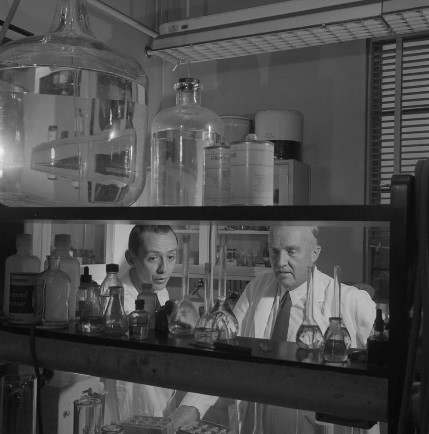
This year marks the 100th anniversary of the discovery of insulin, an extraordinary development in medical science, saving millions of lives worldwide. Up until the early 20th century, diabetes was a fatal disease. Thanks to a Canadian team of researchers – Frederick Banting, Charles Herbert Best, John J.R. Macleod, and James Bertram Collip – a treatment was discovered in 1921, when they succeeded in isolating and purifying insulin. Following this discovery, they successfully treated diabetic patients at the Toronto General Hospital, making headlines around the world.

In 1923, Banting and Macleod received a Nobel Prize in medicine for their work on the discovery of insulin, stimulating further medical research in Canada. Today, we recognize all four Canadian researchers – Banting, Macleod, Best and Collip – for contributing to one of Canada’s greatest accomplishments in medical research.

Under the National Program of Historical Commemoration, the Historic Sites and Monuments Board of Canada advises the Government of Canada on significant persons, places, and events that have shaped our country. National historic designations are one way of helping Canadians connect with their past. By sharing these stories with Canadians, we hope to foster understanding and reflection on the diverse histories, cultures, legacies, and realities of Canada’s past and present.



Source link

Categories
Uncategorized

Transport Canada announces up to $300K in new funding to support local and Indigenous community-based rail safety engagement


December 8, 2021         Ottawa              Transport Canada

The Government is committed to strengthening engagement with local and Indigenous groups as part of broader efforts to strengthen the safety of Canada’s railway system and better protect those living and working near Canada’s rail corridors.

Today, the Minister of Transport, the Honourable Omar Alghabra, announced a new rail safety component under the Community Participation Funding Program and launched a call for proposals for 2021-22 with up to $300K available in funding.

The objectives of the Community Participation Funding Program-Rail Safety Component include:

  • supporting the participation of, and collaboration with, local and Indigenous communities and organizations in Transport Canada’s engagement processes; and
  • increasing awareness and improving information sharing regarding risks and mitigations associated with railway safety.

The Community Participation Funding Program-Rail Safety Component aims to provide short-term grants with the goal of supporting the participation of eligible communities and organizations in the development and improvement of Canada’s rail safety transportation system. Recipients will be encouraged to share their knowledge and expertise of local environments to help inform rail safety initiatives and future programming.

Those interested in learning more about the Community Participation Funding Program-Rail Safety Component are invited to consult Transport Canada’s website.

Transport Canada recognizes the importance of supporting opportunities for local and Indigenous communities and organizations to participate in the development and improvement of Canada’s rail transportation system in Canada that may impact their daily activities and communities. 


Source link

Categories
Uncategorized

Government of Canada launches annual call for proposals to help conserve heritage places


A total of up to $2 million will be available under Parks Canada’s National Cost-Sharing Program for Heritage Places in 2022-23

November 29, 2021                          Ottawa, Ontario               Parks Canada Agency

The Government of Canada is committed to protecting and conserving heritage places in Canada. These irreplaceable sites reflect the rich and varied heritage of our country and provide an opportunity for Canadians to learn more about our diverse history.

Today, the Honourable Steven Guilbeault, Minister of Environment and Climate Change and Minister responsible for Parks Canada, launched the call for proposals for Parks Canada’s National Cost-Sharing Program for Heritage Places. For 2022-23, a total of up to $2 million is available to help ensure the protection of national historic sites, heritage lighthouses, and heritage railway stations.

The Cost-Sharing Program is a contribution program whereby up to 50% of eligible costs incurred in the conservation and presentation of heritage places can be reimbursed. Funding is available to heritage places that have been formally recognized, but are not administered, by the federal government. Project funding will help ensure these sites remain vibrant and support tourism and job creation in the community. Special consideration will also be given to projects that seek to better represent the diversity and complexity of Canadian history, address the effects of climate change, or advance accessibility or inclusion at heritage places. As a pilot project in this round of funding and to better understand the needs of heritage places administered by Indigenous organizations, projects which do not fully meet the normal program requirements may be considered.

Heritage places illustrate the defining moments in the story of Canada. Together, they tell the stories of who we are and connect us to our past, enriching our understanding of ourselves, each other, and our country. National historic sites, heritage lighthouses, and heritage railway stations provide a wide range of cultural, social, economic, and environmental benefits to their communities.

The deadline to submit an application is January 7, 2022. Additional information and application forms are available on Parks Canada’s website

                                                                                  -30-


Source link

Categories
Uncategorized

Indigenous Services Canada receives the Parliamentary Budget Officer’s report on clean water for First Nations


Ottawa, Ontario (December 1, 2021) — The Minister of Indigenous Services, Patty Hajdu, issued the following statement today:

“We welcome the Parliamentary Budget Officer (PBO)’s report and share the PBO’s commitment to providing adequate funding for safe drinking water in First Nations communities.

Indigenous Services Canada (ISC) remains focused on working with First Nations to support them in resolving outstanding issues they face in accessing safe drinking water. Reconciliation requires taking action to support Indigenous Peoples on their path forward and addressing long-standing funding gaps.  

In partnership with First Nations leadership and communities across the country, the Government of Canada has made significant investments in water-related infrastructure on reserves. Since Budget 2016, Canada has committed $5.2 billion to support First Nations to bring safe drinking water to their communities.

The results of the PBO report are encouraging, showing that our investments to date have closed the capital funding gap identified in the 2017 report.

The report also identifies operations and maintenance as essential to sustainable access to a safe water supply in First Nations communities. We strongly agree with the PBO, and that is why we have increased support for operations and maintenance so that 100% of water and wastewater operations and maintenance costs will be covered—up from 80%—based on an updated funding formula that more accurately reflects current costs.

By 2025–26, we will have increased the annual funding provided to support the operations and maintenance of water and wastewater systems by almost four times since 2019–20.

While we are making progress, there is still more work to do. With support from ISC, First Nations have lifted 119 long-term drinking water advisories. However, 43 advisories remain in 31 communities. We are working with our partners to lift those advisories that are still in effect as quickly as possible. We have decreased the number of high- and medium-risk systems, but we need to continue our efforts to lower these risk ratings because we know there is no acceptable number of drinking water advisories beyond zero.

The government will continue to support First Nations in implementing sustainable solutions that best suit their communities’ needs and supporting healthy, safe and prosperous communities.”


Source link

Categories
Uncategorized

Government of Canada announces new heritage lighthouse designation in Ontario


Burlington Canal Main Lighthouse protected under the Heritage Lighthouse Protection Act

December 2, 2021                            Ottawa, Ontario                Parks Canada Agency

Heritage places reflect the rich and varied stories of Canada and provide an opportunity for Canadians to learn more about our diverse history.

Today, the Minister of Environment and Climate Change and Minister responsible for Parks Canada, the Honourable Steven Guilbeault, announced the designation of the Burlington Canal Main Lighthouse under Canada’s Heritage Lighthouse Protection Act.

The Burlington Canal Main Lighthouse is a 16.7 metre (55 feet) tall, circular, tapered, limestone tower with an iron lantern and catwalk. The lighthouse marks the entrance to the Burlington Canal. It supported the passage of vessels from Lake Ontario to Burlington Bay, now known as Hamilton Harbour.

With this new designation, 106 lighthouses in eight provinces have now been protected under the Heritage Lighthouse Protection Act. They include some of the country’s most architecturally and historically significant lighthouses, including Triple Island in British Columbia, Île du Pot à l’Eau-de-Vie in Quebec, and Cape Spear in Newfoundland and Labrador, which are treasured symbols of our country’s maritime heritage.

The Government of Canada continues to work in close collaboration with community groups and other levels of government to facilitate the designation of heritage lighthouses and ensure their protection for the benefit and enjoyment of generations to come. Designations under the Heritage Lighthouse Protection Act are made by the Minister of Environment and Climate Change on the recommendation of the Historic Sites and Monuments Board of Canada.

                                                                                            -30-


Source link

Categories
Uncategorized

Heritage Lighthouse Protection Act – Canada.ca


The Heritage Lighthouse Protection Act is designed to conserve and protect federally-owned lighthouses that have significant heritage value. To date, a total of 106 lighthouses have been designated and protected under the Act. Heritage lighthouses are designated by the Minister responsible for Parks Canada (the Minister of Environment and Climate Change) on the advice of the Historic Sites and Monuments Board of Canada.

The Heritage Lighthouse Protection Act protects the heritage character of designated heritage lighthouses. Designated heritage lighthouses must be reasonably maintained and any alterations must be consistent with national and international standards for conservation. The Act also facilitates the sale or transfer of a heritage lighthouse to other levels of government, to community organizations, or to individuals, in order to ensure an ongoing public purpose for the lighthouse and its long-term conservation. Any sale or transfer of a heritage lighthouse out of the federal portfolio must provide for the protection of its heritage character.

Canadians play an important role in the long-term conservation of heritage lighthouses. Under the Act, a lighthouse that is no longer required by the federal government can only be designated if a new owner is identified who can protect its heritage character. Fisheries and Oceans Canada and the Canadian Coast Guard have been working with community-based organizations and other levels of government to find responsible, viable new owners for many cherished lighthouses across Canada. To date, sale or transfer agreements have been completed for 63 heritage lighthouses. 

Since 2012, lighthouses from across the country have been recognized, reflecting the Canadian lighthouse system as a whole. The designation criteria identify lighthouses with exceptional heritage values, or a combination of noteworthy elements, in order to promote designations among a wide variety of lighthouses. Many of the country’s architecturally and historically significant lighthouses have been designated, including Triple Island in British Columbia, Île du Pot à l’Eau-de-Vie in Quebec, and Cape Spear in Newfoundland and Labrador. A group of four lighthouses were the first to be designated in 2012: three “pepper pot” style towers in Ontario (McNab Point, Saugeen River Front and Rear Range), as well as St. Paul Island Southwest, a cast-iron cylindrical tower in Nova Scotia. Though modest in nature, these four lighthouses are treasured symbols of their maritime communities, as are all of the lighthouses designated under the Act.  

Fisheries and Oceans Canada and the Canadian Coast Guard will continue to work with Canadians to identify responsible new owners for other cherished lighthouses. New owners of heritage lighthouses may be eligible to apply for funding to support conservation and presentation projects through Parks Canada’s National Cost-Sharing Program for Heritage Places.

                                                                                      -30-


Source link