Categories
Uncategorized

Parks Canada’s new Coastie Initiative gets you in the picture with science


Citizen-centred research with the University of Windsor will help monitor coastal changes at five national parks

October 15, 2021                           Gatineau, Québec                    Parks Canada Agency

When you take a photo of yourself, that’s a selfie. When you take a photo of the coast, that’s a coastie!

Parks Canada is launching the Coastie Initiative, a new citizen science program in five Parks Canada administered places. Pictures taken by visitors at these locations will help us monitor coastal change over time.

Cell phone cradles will be installed in specific locations at the coastal sites this year. To participate in the Coastie Initiative, visitors will be invited to either scan the QR code at the Coastie site, submit their photos to coastiecanada.ca, or share their photos on social media using the #Coastie hashtag. Instructions on how to share photos will be on site at each Coastie research location. 

The photos will be analyzed and the data will be made available to the University of Windsor, who will use it to track coastal changes, such as shoreline retreat, dune erosion and recovery, storm surge and ice cover, vegetation structure, beach use, and rip current locations.

The program will launch in Prince Edward Island National Park, Fundy National Park, Kouchibouguac National Park, Point Pelee National Park, and Sable Island National Park Reserve. Between one and three Coastie stands will be installed at each site. Visitors will be able to participate even more in 2022 when more national parks join the Coastie Initiative. 

The Coastie Initiative was a winning project on the crowdsourced Innovation Competition for Parks Canada employees. The Innovation Competition was a contest to promote innovative solutions to natural resource conservation challenges. Employees from across the Agency had the opportunity to propose projects directly linked to one of Parks Canada’s conservation priorities.      

                                                                                   -30-


Source link

Categories
Uncategorized

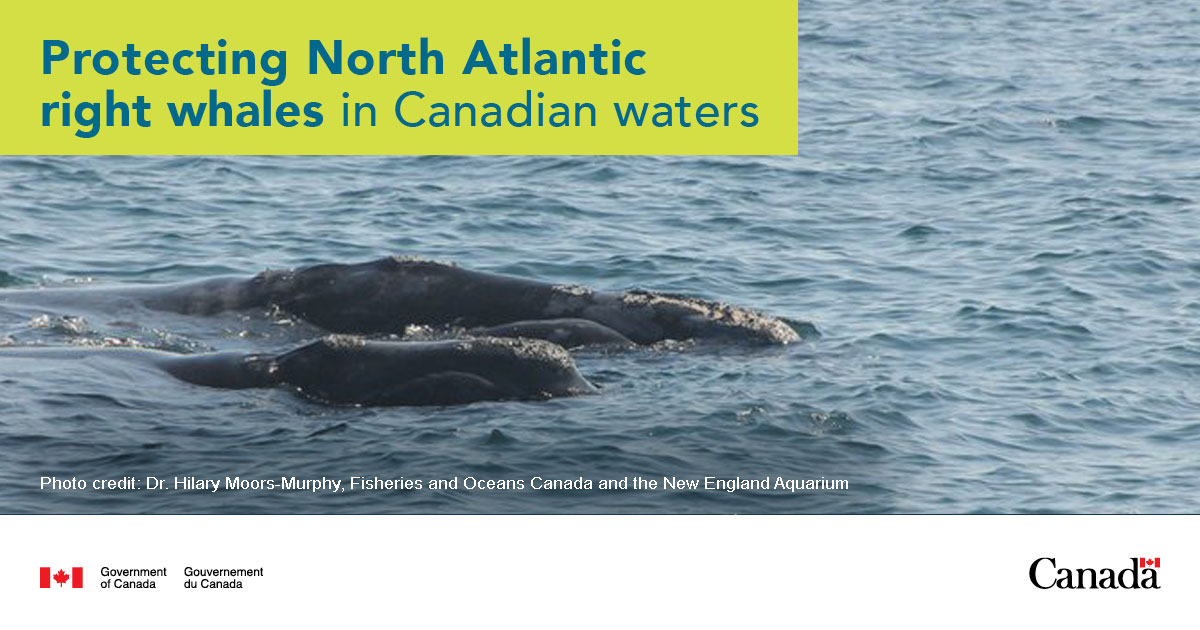
Government of Canada continues to help protect North Atlantic right whales


November 24, 2021                                                                                                       

Ottawa, Ontario – The Government of Canada continues to take action to protect the endangered North Atlantic right whale. For the second year in a row, there have been no reported deaths of North Atlantic right whales in Canadian waters. However, with recent estimates that only 336 North Atlantic right whales remain in the world, the Government of Canada continues to work with scientific experts, industry, Indigenous and non-Indigenous harvesters, environmental groups, and the United States’ National Oceanic and Atmospheric Administration to protect and support the recovery of this species.   

In 2021, the Government of Canada took the following measures:

  • To help protect the whales from entanglements in fishing gear, Fisheries and Oceans Canada adjusted the times of fishing seasons and continued to implement seasonal and temporary fishing area closures when and where whales were detected. In 2021, approximately 38,325 square kilometres (an area almost seven times the size of Prince Edward Island) was closed to fishing based on right whale detections. In this overall total, 26,764 square kilometres was closed for the season.
  • To help protect the whales from collisions with vessels in the Gulf of St. Lawrence, Transport Canada continued to implement vessel traffic management measures, including speed restrictions and a restricted access area, that covered approximately 72,000 square kilometres. These measures aimed to reduce collision risks to the whales from vessel traffic over the course of the season, without jeopardizing the safety and security of mariners. This year, there was an over 99.9% compliance rate with the mandatory vessel traffic measures.

The Government of Canada uses a variety of tools to monitor and detect North Atlantic right whales, such as aerial surveillance, at-sea surveillance, and underwater acoustic technologies. Fishery officers will continue to watch for North Atlantic right whales in our waters throughout the year through aerial surveillance. Given recent detections of North Atlantic right whales in the Gulf of St. Lawrence, Transport Canada is asking mariners to remain vigilant and to continue, voluntarily, to maintain a maximum speed of 10 knots over ground whenever safe to do so.

In 2021, at least 120 individual North Atlantic right whales were identified in Canadian waters, representing approximately one third of the estimated global population. 


Source link

Categories
Uncategorized

Parks Canada and Protected and Conserved Areas Around the World Sign First Ever Joint Statement on Climate Change and Biodiversity


Canada is taking part in the international campaign to support the statement with call to arms #UniteForNature

November 5, 2021                             Glasgow, UK                       Parks Canada Agency

The organizations in charge of some of the largest tracts of protected landscapes and marine environments on the planet, including Parks Canada, have come together for the first time to invite world leaders to support the work of the global Protected Areas and Conserved Areas family as the vanguard of the fight against Climate Change and Biodiversity loss.

In a joint statement led by National Parks UK, as the host nation for this year’s United Nations Framework Convention on Climate Change (UNFCCC) Conference of the Parties (COP) 26, signatories acknowledge that no single site or organization can address the global crisis of climate change nor the exacerbating impact of climate change on biodiversity loss. However, as a family of protected and conserved areas distributed all around the World, and focusing on collaboration and global ambitions for rapid and far-reaching actions to tackle climate change and biodiversity loss, our global network aspires to be the “first 30 per cent” that inspires nature-based solutions and informs land and sea use choices across the planet – the places where billions of people connect with nature and become inspired to play an active part in combatting the dual crises.

Parks Canada administers one of the finest and most extensive systems of natural and cultural heritage places in the world, which are a source of shared pride for all Canadians. Ron Hallman, President & CEO of Parks Canada Agency, signed the Statement virtually today, as part of the COP26 Youth Day events.

                                                                          -30-


Source link

Categories
Uncategorized

Economic growth in Quebec’s Indigenous communities—The Government of Canada announces the renewal of the True North Treasure and Forest Full Value initiatives


November 26, 2021 — Ottawa, Traditional Algonquin Territory, Ontario — Indigenous Services Canada

The inclusion of Indigenous Peoples in key sectors of the Canadian and Quebec economies is an important part of our post-COVID-19 economic recovery.

While the Grand Economic Circle of Indigenous People and Quebec is taking place in Montreal, the Honourable Patty Hajdu, Minister of Indigenous Services, announced the renewal of two key Strategic Partnership Initiatives (SPIs) that contribute to the economic self-sufficiency of Indigenous communities in Quebec, specifically the True North Treasure Initiative, with a contribution of $4.5 million, and the Forest Full Value Initiatives, with a contribution of $4.5 million.

Mining is an important part of Quebec’s economic growth. The True North Treasure Initiative aims to support Indigenous participation in this key economic sector by facilitating partnerships between Indigenous communities and the private and public sectors. Renewing this initiative will help Indigenous communities build on the momentum of recent years to continue to train qualified workers, create jobs in the mining sector and develop business opportunities.

The Forest Full Value Initiative aims to help Indigenous communities take advantage of a growing number of opportunities in forest bioeconomy in Quebec thanks to targeted investments that will allow them to leverage forest resources in a sustainable manner. The renewal of this initiative will help First Nations communities establish important partnerships, create jobs and improve their economic activities related to the food and energy sectors while honouring their cultures and traditions.


Source link

Categories
Uncategorized

Government of Canada Recognizes the National Historic Significance of the Discovery of Insulin


November 10, 2021                      Toronto, Ontario                      Parks Canada

Sonia Sidhu, Member of Parliament for Brampton-South, will take part in a Historic Sites and Monuments Board of Canada plaque unveiling ceremony to commemorate the Discovery of Insulin as an event of national historic significance.

The discovery of insulin is the most celebrated Canadian medical discovery of the 20th century, saving millions of lives worldwide, winning a Nobel Prize in 1923, and stimulating further medical research in Canada.

MP Sidhu will make the announcement on behalf of the Minister of Environment and Climate Change and Minister responsible for Parks Canada, Steven Guilbeault.

Please note that this advisory is subject to change without notice.
 

The details are as follows:

Date:                November 12, 2021

Time:               Ceremony starts at 1 p.m. (ET)

Location:        Lee & Margaret Lau Auditorium
                          Myhal Centre for Engineering Innovation & Entrepreneurship
                          University of Toronto – St. George Campus
                          55 Saint George St
                          Toronto, Ontario

Due to COVID-19, there is limited capacity at this event. Members of the media are asked to RSVP to the in-person event by contacting Julia Grcevic, Public Relations and Communications Officer, at 905-357-8331.

Those wishing to attend the in-person event will require proof of full vaccination along with identification.

A YouTube livestream will be accessible for those interested in watching the event virtually: https://youtu.be/JiUS79-csx0.

-30-


Source link

Categories
Uncategorized

Canada and Long Plain First Nation reach settlement agreement on 1916 Surrender – Mismanagement of Sales Specific Claim


November 30, 2021 – Long Plain First Nation, Treaty One Territory, Manitoba – Crown–Indigenous Relations and Northern Affairs Canada

Honouring Canada’s legal obligations to Indigenous Peoples and working collaboratively to resolve historical grievances is fundamental to advancing reconciliation in Canada.  

Today, Chief Dennis Meeches and the Honourable Marc Miller, Minister of Crown–Indigenous Relations, announced that Long Plain First Nation and the Government of Canada have reached a settlement on the 1916 Surrender – Mismanagement of Sales Specific Claim. This achievement marks a significant step toward addressing the wrongs done to the community and rebuilding Canada’s relationship with Long Plain First Nation.

Submitted by Long Plain First Nation in November 1999, this specific claim concerns the sale of First Nation reserve land in 1916, whereby Canada failed to administer the land sales according to the terms of the surrender. Canada accepted the claim for negotiations in September 2011 and has worked alongside the community to achieve a settlement. The First Nation held a successful ratification vote on August 1, 2021. The settlement agreement was executed by Minister Miller on November 8, 2021, formally concluding the claim.

In the settlement agreement, Canada agreed to provide $31,942,680 in compensation, and to provide the option for the First Nation to acquire up to 1,750 acres of land and apply to have that land added to reserve.

Through mutual collaboration and the community’s engagement, this agreement between Long Plain First Nation and Canada represents a mutual understanding to rectify the error in our history for the members of the community, and for the generations to come. The successful resolution of this settlement, which is due to Long Plain First Nation, is a key step in Canada’s commitment toward reconciliation—one that demonstrates our commitment to rebuilding trust and one that acknowledges and respects the Treaty relationship and helps build a better future for all Canadians.


Source link