Categories
Tech

Federal budget will focus on coronavirus response, climate change


Finance Minister Bill Morneau’s upcoming budget will include measures to deal with the immediate threat COVID-19 presents to the Canadian economy, while also focusing on the long-term need to transform the economy to adapt to climate change.

In a speech on Friday, Morneau promised support would be coming next week for Canadians who have to be quarantined to prevent the spread of the novel coronavirus and COVID-19, the infectious respiratory disease caused by the virus.

Morneau also said he would include a larger-than-normal risk adjustment in his budget — essentially a contingency plan — to make sure Canada has the fiscal firepower to respond to the virus-related slump hitting the global economy.

“We are continuing to monitor the impact on businesses and workers. We have the tools to respond quickly,” said Morneau.

Morneau also spoke of the need to position Canada as a global leader in the fight against climate change, which he called “the defining issue of our time.”

“There is no path forward for Canadian businesses that doesn’t include reducing their carbon emissions. Investors just won’t be there,” Morneau said on Friday. “For the energy sector, we intend on working together on approaches that reduce emissions and create more economic opportunities for the workers and businesses, including in the Prairies.”

A senior government official told CBC News this budget will make a start on answering a fundamental question: “What does clean growth look like in Canada?”

It will build on the message Prime Minister Justin Trudeau delivered recently to a mining conference about the need to find common ground on the path to reaching net-zero carbon emissions in 2050.

“We’re not anti-oil. We’re not anti-steel. We’re anti-carbon,” the senior official said.

The budget’s climate measures are expected to focus on three main areas: meeting emissions targets, helping the fossil fuel sector transform itself, and offering support to workers displaced by that transformation.

Prime Minister Justin Trudeau pushed the need to find common ground between climate change, the economy and Indigenous communities at a mining conference in Toronto. 1:51

But the official cautioned that the budget will only be a starting point; Trudeau has said that consultations with industry and Indigenous communities will start in earnest in April on how to reach net-zero emissions by 2050 without crippling resource industries.

Both of these issues will land on the first ministers’ table next week, when the premiers come to Ottawa to meet with Trudeau. There will be political pressure on all levels of government to work together on a coordinated health and economic response to the COVID-19 outbreak.

But there also will be political tensions over the state of resource development in the country and outstanding provincial demands for larger cash transfers from the federal government.

The premiers — led by Alberta’s Jason Kenney — are demanding an overhaul of the fiscal stabilization program that would send billions to struggling oil-producing provinces like Alberta, Saskatchewan and Newfoundland and Labrador.

Mornreau agreed in December to review the program. So far, however, he hasn’t announced any changes to the program or sent any new money to the provinces.

Since then, Alberta has tabled a budget that projects a $6.8 billion deficit, while Newfoundland and Labrador Premier Dwight Ball announced that he would resign later this year once the provincial Liberal Party chooses a successor. 

A senior Newfoundland and Labrador government source said the province’s fiscal position was a big factor in Ball’s decision to step aside. The global commodity slump is hammering provincial revenues; the source said that Ball, who leads a minority government, wasn’t convinced he had the political capital to win support for a bad-news budget.

The government of Newfoundland and Labrador Premier Dwight Ball is counting on federal adjustments to the fiscal stabilization program to help it get past a resource revenue slump. (CBC)

A second Newfoundland and Labrador source said the provincial government won’t table its budget until after Morneau tables his — and the province is counting on changes to the fiscal stabilization program.

All of these factors will test Morneau’s goal, expressed in his speech Friday, to keep spending to “practical and prudent” levels. The finance minister admitted that the coronavirus’s economic impacts “cannot be known, until they are known.”

Speaking Friday in Montreal, Economic Development Minister Mélanie Joly offered a sense of how the outbreak is hitting the Canadian economy in ways large and small.

“Chinese tourists have a $2 billion impact in Canada and we expect that to go down by $550 million by June,” Joly said. “To give you another example, the duty-free boutique at the Vancouver airport is down 50 per cent of its revenue.”



Source link

Categories
Tech

2 strains of COVID-19 virus? Scientists track mutations for insights


Viruses naturally evolve by gathering mutations, gaining the ability to pass more easily between people or becoming deadlier. That’s why scientists are watching closely to track how COVID-19 changes.

Scientific sleuths look at the genetic sequence of a virus like a fingerprint at a crime scene. They’re focused on finding sudden changes in the sequence over time — a mutation.

This week, Chinese researchers analyzed 103 publicly available genomes from infected patients in several countries.

The results suggest the virus isn’t mutating into a more dangerous version. In fact, it’s possible newer mutations are making the virus less deadly. 

The results from the team at Peking University point to two strains: a more aggressive one that originated with the first cases in Wuhan, China and another, less aggressive type.

About 70 per cent of the patient samples were from the more aggressive type of SARS-Co-V, the virus that causes COVID-19. 

This illustration provided by the U.S. Centers for Disease Control and Prevention (CDC) in January shows the 2019 Novel Coronavirus (2019-nCoV). (THE CANADIAN PRESS)

After early January, the frequency of the newer strain started to drop. Researchers speculated that human interventions, such as large-scale quarantine efforts in China, resulted in the newer strain spreading less. 

“This work provides new insights into the factors driving the evolution of the SARS-CoV-2 and its pattern of spread through the human population,” researchers concluded.

Human to human spread

Matthew Miller studies viruses, and immune responses to them, at McMaster University in Hamilton, Ont. He wasn’t involved in the study, which he said might offer good news for illnesses. 

“This is why the sequencing is so important,” Miller said. “On one hand, it can tell us exactly what strain is causing the infection and secondly it can help us to disentangle how the case fatality rate depends on the virus itself versus the country or location in which the infections are occurring.”

Virologist Stephen Griffin is an associate professor at the University of Leeds in the U.K. who commented on the study

“It is usually the case that when RNA viruses first cross species barriers into humans they aren’t particularly well adapted to their new host (us!),” Griffin wrote.  

“Thus, they usually undergo some changes allowing them to adapt and become better able to replicate within, and spread from human to human.” 

Griffin cautioned that the Chinese study hasn’t tested if the virus could replicate, or make copies of itself in human cells or animals, so it isn’t possible to say whether this is what’s happened to the epidemic virus.


Source link

Categories
Tech

More than a pipe dream: How turning on your tap could create electricity


Hello, people! This is our weekly newsletter on all things environmental, where we highlight trends and solutions that are moving us to a more sustainable world. (Sign up here to get it in your inbox every Thursday.)

This week:

  • ‘In-pipe power’ generates electricity when people run their taps
  • The worldwide migration to cities poses an environmental challenge
  • The fix is in: The repair movement is gaining momentum

More than a pipe dream: How one city generates power when people run their taps

(Shutterstock)

Hydroelectricity is a greener way to generate power than burning fossil fuels, but big hydro dams come with their own environmental problems. Those can include greenhouse gas emissions from flooded and rotting vegetation and the potential to kill fish.

But there are smaller-scale sources of hydro generation that can have a lower impact. In fact, one of them is right under our feet — namely, the pipes that make water flow when we turn on the tap.

Halifax is the first city in Canada to exploit in-pipe power. In a 2014 pilot project, it installed a turbine — basically a water pump that runs in reverse — in a single pipe in a Halifax suburb. Since then, the 31-kilowatt turbine has been generating roughly enough electricity annually to power 25 homes and selling that back to the grid for about $30,000 a year.

“The technology has, I would say, a lot of great potential,” said James Campbell, a spokesperson for Halifax Water. “On larger scales, that could really be quite significant.”

Campbell noted that there’s a lot of energy already in a municipal water distribution system: “It’s a constantly renewable resource that’s flowing anyway.”

The energy comes from the fact that water is under high pressure when it flows downhill from a water treatment plant. That pressure has to be reduced as it moves through the system, “or else it would just be blowing the taps into people’s homes,” Campbell said.

Typically, the system relies on pressure-reducing valves that use friction to release the extra energy as heat. Capturing the energy is a matter of running the water through a turbine instead. The turbine, which is made by U.S.-based Rentricity, has an estimated 40-year lifespan and has required little maintenance so far.

Frank Zammataro, CEO and co-founder of Rentricity, said the technology was originally designed following the 9/11 attacks as a way to generate emergency power using water towers in New York City. Rentricity has 15 installations so far, mostly in U.S. municipal drinking water systems, although it’s expanding into industries like agriculture.

Zammataro estimates about 75 per cent of municipal systems in North America have the right conditions for installation — sufficient flow and pressure generated by gravity when a water source is at a higher elevation (such as on a mountain or in a tower).

Besides Rentricity, at least nine other companies are testing similar technology around the world, from Portland, Ore., to Israel to the Philippines.

The challenge, Zammataro said, is that municipalities and especially industry want the system to pay for itself in a short period of time.

The in-pipe turbine in Halifax was funded by grants and a provincial program that allowed small electricity producers to sell power to the grid at guaranteed rates. At those rates, not taking into account the grants, Halifax Water’s $500,000 turbine would be paid off after 17 years in operation. However, the provincial “feed-in tariff” was cancelled in 2015, and no other in-pipe turbines have been installed.

Zammataro said the cost and efficiency can be optimized if water system upgrades and expansions are planned and designed with in-pipe turbines in mind.

Emily Chung


Reader feedback

Share your thoughts!

Old issues of What on Earth? are right here.


The Big Picture: Urban living

One of the biggest trends of the last century is urbanization. According to the United Nations, between 1950 and 2018, the number of people living in cities worldwide increased from 751 million to 4.2 billion. (Urban population surpassed rural population in 2009.) The main factor is that cities are increasingly where the jobs are. But there are environmental considerations to accommodating more people in concrete jungles, from the power sources that keep the lights on to modes of transportation. Here’s a glimpse at the percentage of city dwellers in various regions of the world in 2015.

(CBC)

Hot and bothered: Provocative ideas from around the web

  • This Rolling Stone story opens with a sobering statistic: “Every human on Earth is ingesting nearly 2,000 particles of plastic a week.” The article goes on to explore the historical relationship between Big Oil and Big Soda in helping perpetuate the plastic problem, which is clogging the oceans and, indeed, our bodies.

The fix is in: The repair movement is gaining momentum

(Doug Husby/CBC)

We’ve all heard the phrase, “They don’t make things like they used to.” Now, a growing number of eco-minded Canadians are deciding that just won’t do.

“A lot of things these days break quite easily,” said Wai Chu Cheng, co-founder of Repair Café Toronto, a non-profit organization with 800 volunteers eager to teach people how to fix household items like lamps, toasters and kettles. “People aren’t sure they can repair it themselves, and we show them how.”

The Repair Café holds monthly gatherings, where its volunteers help people fix small appliances and other household goods, as well as clothing.

When the Repair Café started in Canada seven years ago, there was only one chapter, in Calgary. Now, there are 47 Café-type organizations across the country providing the same type of services — for free. And Cheng said more are coming.

The cost of replacement has always been a motivation to repair things, but Cheng said climate and waste concerns are driving a surging interest, particularly with young people. “The main reason for me to fix things is to be able to reuse stuff and keep it out of the landfill,” said Anita Neufeld, who came to a recent Repair Café in Toronto with a broken tape deck.

For-profit companies are also on top of the trend. Mobile Klinik, a chain of 80 stores that repair mobile devices across the country, was recently ranked the 12th-fastest growing company in Canada. Its CEO, Tim McGuire, said Mobile Klinik plans to have 200 locations coast to coast in the next three years. 

McGuire said it’s not uncommon for manufacturers to advise consumers to buy a new device instead of having an old one fixed. But it appears many people are loath to incur that expense or contribute to Canada’s waste situation.

“If you go back two years, the average phone lasted about 2 1/4 years. Now, customers are keeping their phones for over three years, and we see that continuing to increase every year,” McGuire said.

At a recent Repair Café event, some of those in attendance blamed manufacturers for building devices with “planned obsolescence” in mind in order to boost sales. 

In a statement to CBC News, the Association of Home Appliance Manufacturers cautioned “an untrained or uncertified person performing a repair may not be aware of or understand how to ensure an appliance continues to meet the various safety standards required to keep Canadians safe.”

Ontario MPP Michael Coteau introduced a private member’s bill last year proposing a requirement for manufacturers to make parts and repair instructions widely available. (It was voted down by Ontario’s Conservative majority government.)

Coteau pointed out that the European Union parliament is on course to pass “right to repair” legislation, specifying the number of years a manufacturer must make reasonably priced parts available, among other measures to promote repairability in appliances. In addition, 20 U.S. states are considering similar legislation, according to the Washington-based Public Interest Research Group.

Many Canadians refuse to wait for legislation or for manufacturers to act. 

For example, Charmaine Iding came to a recent Repair Café in Toronto to get her phone fixed — and got a necklace restrung while she was there. “The real problem is in design, where they don’t make things to be fixed — they make things to be obsolete, so people will keep consuming. That is the real problem.”

Dianne Buckner


Stay in touch!

Are there issues you’d like us to cover? Questions you want answered? Do you just want to share a kind word? We’d love to hear from you. Email us at whatonearth@cbc.ca.

Sign up here to get What on Earth? in your inbox every Thursday.

Editor: Andre Mayer | Logo design: Sködt McNalty


Source link

Categories
Tech

Mars 2020 rover gets new name ahead of July launch: Perseverance


NASA’s next Mars rover finally has a name. Perseverance, a six-wheeled robotic explorer, will blast off this summer to collect Martian samples for eventual return to Earth.

The name was suggested by Alex Mather, a Virginia seventh-grader, as part of a naming contest for U.S. schoolchildren. The U.S. space agency announced it Thursday at Alex’s school in Burke, Virginia, and he got to read his winning essay live on NASA TV.

“We are a species of explorers and we will meet many setbacks on the way to Mars. However, we can persevere,” Alex wrote. “We, not as a nation, but as humans, will not give up. The human race will always persevere into the future.”

Virginia Middle School Student Earns Honour of Naming NASA’s Next Mars Rover

[embedded content]

NASA’s associate administrator for science missions, Thomas Zurbuchen, noted that the space agency’s Curiosity rover has been roaming around Mars since 2012, when Alex and his classmates were babies or little kids.

“Perseverance and curiosity together are what exploration is all about,” he said.

Nearly 4,700 volunteer judges had narrowed a pool of 28,000 contest entries down to 155 semifinalists. Once it was down to nine finalists, the public was invited to vote online.

Mather and his family won a trip to Cape Canaveral, Florida, to watch Perseverance get launched into space. The boy became enamoured with space at age 11 while attending Space Camp in Huntsville, Alabama. That’s when video games took a back seat. He said he wants to become an engineer and work for NASA.

The rover is undergoing final preparations at NASA’s Kennedy Space Center. The nameplate will be on the rover’s robot arm and serve as a protective rock guard.


Source link

Categories
Tech

Australia bushfires have clear link to climate change, scientists say


Devastating bushfires that swept Australia in recent months were at least 30 per cent more likely as a result of climate change, scientists said on Wednesday, warning such fires may create unmanageable risks as emissions and temperatures rise further.

An eight-week study into how heat and drought contributed to the fires found that hotter-than-normal conditions in Australia, in particular, showed a strong link to climate change.

It also suggested scientific models may be vastly underestimating coming impacts from rising heat.

As climate-heating emissions continue to increase, “we will be facing these extreme conditions more often than in the past,” said Maarten van Aalst, a climate scientist and director of the Red Cross Red Crescent Climate Centre.

Should we be worried about this? Yes, very.– Maarten van Aalst, director, Red Cross Red Crescent Climate Centre

“Should we be worried about this? Yes, very,” he told journalists.

He and other researchers from Australia, Europe and the United States carried out the analysis under the World Weather Attribution project, which provides rapid scientific evidence on how much climate change is fuelling extreme weather events.

The group and other scientists have so far conducted more than 230 such studies, linking last year’s record-breaking heatwave in France and extreme rainfall during Tropical Storm Imelda in Texas, for instance, to climate change.

Not all the events analyzed show a connection to global warming. The Australia bushfires study, for instance, did not find a clear climate-change driver for the record low rainfall that also contributed to the recent fires.

But the researchers said devastating fire seasons will be at least four times more common in Australia than they were in 1900 if global average temperatures rise two degrees Celsius above pre-industrial times.

Current heat models ‘clearly underestimate the trend’ 

Temperatures have already heated up by a little over 1 C, and the world is on track for at least 3 C of warming, even if all countries meet their commitments to cut emissions under the 2015 Paris Agreement on climate change.

Scientists said current heat models for Australia “clearly underestimate the trend” for more devastating bushfires as climate change strengthens.

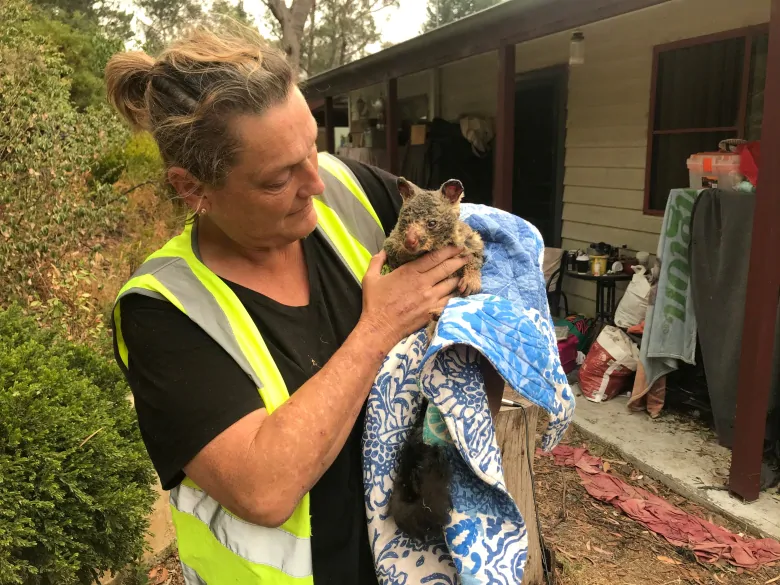
Wildlife Information, Rescue and Education Services (WIRES) volunteer and carer Tracy Burgess holds a severely burnt brushtail possum rescued from fires near Australia’s Blue Mountains, December 29, 2019. The fires are estimated to have killed 1.5 billion animals. (Jill Gralow/Reuters)

The country’s unprecedented summer fires, only fully contained this month, burned 19 million hectares and claimed 34 human lives and about 1.5 billion animals, said Sophie Lewis, a climate scientist at the University of New South Wales in Canberra.

“This was an event that had an enormous ecological and human cost…. It’s so important to understand this,” said Lewis, who said her own family had to cancel their summer beach holiday and spend months inside their home to avoid smoke and heat.

Van Aalst said the fires showed that even a country well-prepared for disasters, like Australia, may face difficulties in coping with climate extremes and related consequences.

Some volunteer firefighters worked up to 100 days straight fighting the blazes, he noted, which suggests “at some points you’re reaching the limits of what those systems can do.”

Efforts to prepare for and adapt to worsening fires — from early warning systems to more robust building codes — could help, but ultimately keeping risks manageable will require slashing global emissions, he and other scientists said.


Source link

Categories
Tech

Plant-based? Compostable? What you need to know about bioplastics


Plastics are an integral part of our lives, but they also pose some big environmental problems.

They generate a lot of waste, most of which isn’t recycled. A recent study from Environment and Climate Change Canada found that even in our country, only nine per cent of plastics are recycled — the rest is either incinerated, landfilled or ends up in the environment, where it can harm wildlife such as whales, turtles or seabirds. Those are some of the reasons the federal government plans to ban many single-use plastics by 2021

But the plastic problem is global. As of 2015, humankind had produced 8.3 billion tonnes of plastic, one study estimated, of which 70 per cent had already become waste. 

Plastic production and its disposal by incineration also generates greenhouse gas emissions linked to climate change. A 2019 study from the Center for International Environmental Law estimates that if plastics production grows at its current rate, emissions from plastics could reach 1.2 gigatonnes per year, equivalent to the emissions of 295 new 500-megawatt coal-fired power plants.

“Bioplastics” aim to curb both those environmental impacts. 

They’re one of the solutions touted by Canadian supermarkets who say they’ve taken steps to reduce the massive amounts of plastic waste they generate, after a CBC Marketplace report found they’ve been slow to act. Marketplace will share their update on plastic waste in supermarkets Friday.

In the meantime, here’s what you need to know about bioplastics.

‘Bioplastic’ can mean 3 different things.

Plastics are moldable materials that are typically made from long chains of smaller molecules joined together, which is why their names often start with the prefix “poly” — for example polystyrene or polyethylene.

Traditionally, they’ve been made from fossil fuels and take a very long time to break down in the environment — sometimes hundreds of years.

Bioplastics are plastics that can be:

  • Biobased; that is, derived from biological sources such as corn, potatoes, wood, food waste or lobster shells.

  • Biodegradable, meaning they can be broken down by microbes into natural substances such as water, carbon dioxide and compost under certain conditions. 

  • Both biobased and biodegradable (some examples in the first bullet point fall into this category).

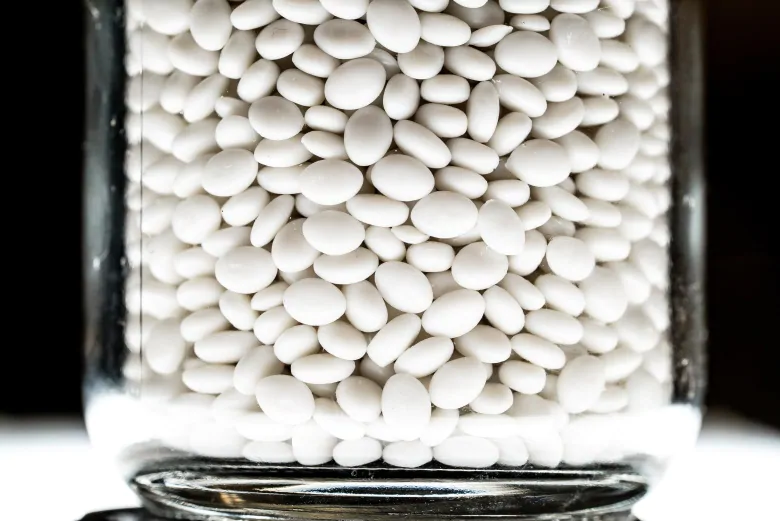
Toronto-based Genecis uses bacteria to convert food waste into pellets of a compostable bioplastic called PHA. Bio-based bioplastics can be made from a variety of other biological materials, including wood, sugar cane and lobster shells. (Craig Chivers/CBC)

Many bioplastics aren’t biodegradable. And some are chemically identical to regular plastics.

The only difference between biopolyethylene or bio-PET (used in Coke’s “PlantBottle”) and regular polyethylene or PET is they use a raw ingredient from plants (ethanol) instead of fossil fuels to make the same material.  

Those kinds of plastics are known as “drop-in” plastics because they can be dropped in as direct replacements for traditional plastics and mixed with them in any quantity (the PlantBottle originally included 30 per cent plant-based ingredients and 70 per cent regular PET that still represents 7 per cent of the company’s bottles sold around the world. Coca-Cola has since also made a 100 per cent bio-PET version).

Because they’re identical, they take just as long as traditional plastics to break down. 

Plastics made mostly or entirely from fossil fuels can be called ‘biobased’ and ‘bioplastics’, respectively.

To be labelled a “biobased” product in the U.S. under Department of Agriculture rules (Canada has no equivalent rules), it only need contain a minimum of 25 per cent carbon from biological as opposed to fossil sources — that is, up to 75 per cent of the carbon can come from fossil fuel sources.

In fact, a plastic that is made 100 per cent from fossil fuels can still be considered a bioplastic if it’s biodegradable.

For example, a plastic called PBAT (polybutylene adipate terephthalate), sold by chemical company BASF under the name “ecoflex,” is a completely fossil fuel-derived plastic that’s certified compostable and biodegradable — and is therefore considered a bioplastic.

Coca-Cola’s original PlantBottle, unveiled for the 2010 Vancouver Olympics, contained 30 per cent bio-PET. The company has since made a version that is 100 per cent bio-PET. It’s chemically identical to regular plastic bottles. (The Coca-Cola Company)

Bioplastics can help reduce carbon emissions. But not always a lot.

Bio-based bioplastics typically generate fewer carbon emissions over their life cycle compared to traditional plastics. That’s because growing plants suck in and store carbon, which is released later if the bioplastics are burned or decomposed.

“You’re not adding extra carbon dioxide to the atmosphere,” said Amar Mohanty, distinguished research chair in sustainable biomaterials at the University of Guelph, who has been developing and researching bioplastic and biobased materials for more than 30 years.

In practice, things are more complicated than that because energy is used to grow crops and for transportation, manufacturing, processing and distribution — and that may generate emissions.

How big the difference in emissions is between the two can vary a lot depending on the types of biobased ingredients used, how they were grown, how locally the bioplastic was manufactured, what happened to it at the end of its useful life and exactly what plastics are being compared. 

For example, one study found the bioplastic PHA, made from corn leaves, stalks and husks, generates 80 per cent fewer emissions per kilogram over its lifetime, compared to fossil-derived PET or polystyrene.

Farmer Tom Brus, left, and Russell Mier from New Ventures Ag Tech Initiative, kneel in Brus’s recently harvested corn field near Walcott, Iowa, with a hand full of corn stover. Stover can be used to make ethanol, which can be turned into bioplastic. ( John Schultz/Quad-City Times/Associated Press)

But a 2018 study by the European Commission’s Joint Research Centre found that in Europe there would be no real difference in lifetime emissions between traditional PET bottles and those made from bioplastics. That’s largely because regular PET is manufactured in Europe, while bio-PET is mostly manufactured in the U.S. and lots of emissions would be generated during transport.

As mentioned, some bio-based plastics are not biodegradable and can remain for hundreds of years. Some researchers have argued burying such plastics at their end of life is one way to store carbon captured by plants and keep it from getting into the atmosphere.

Compostable plastics often end their life in places where they don’t break down.

A benefit of degradable or compostable plastics is that they can theoretically reduce harm to wildlife and ecosystems caused by traditional plastics and reduce the need for landfill space, which is a problem in some countries. That’s because they can be broken down completely into carbon dioxide, water and compost under certain conditions without leaving behind microplastics. Mohanty describes it as “natural recycling.”

That said, even popular compostable plastics such as PLA (polylactic acid), which is used to make drinking cups, clamshell containers and plastic cutlery, are not accepted by most municipal and commercial composting programs in Canada and are typically sent to landfill, where one study estimated they would take more than a century to break down and another found they would release the potent greenhouse gas methane during decomposition

Nor do they necessarily break down in a timely fashion in places like the ocean (where they pose the biggest threat to wildlife) or the soil. Ecoflex, PLA, and two other kinds of biodegradable plastics all survived a year in either seawater or freshwater without breaking down, a 2017 University of Bayreuth study showed. A 2019 University of Plymouth study found that “compostable” bags buried in soil were still there after 27 months, and “biodegradable” bags could still hold groceries after three months in the ocean.

This cutlery is made from the compostable and recyclable plastic PLA. However, most municipal organics programs will not accept compostable plastics and most recycling programs won’t accept them either, so they typically end up in the landfill. (David Donnelly/CBC)

Bioplastics are often recyclable, but often aren’t recycled.

As might be expected, bio-based versions of recyclable plastics such as bio-PET are recyclable with the regular, fossil-fuel based versions of the same plastic.

PLA is also theoretically recyclable. It’s not currently accepted by most recycling programs, but that may change in the future.

Bioplastics could potentially have environmental drawbacks.

A number of studies have calculated that huge net emissions are generated if rainforests, peatlands, savannahs or grasslands are converted to agriculture in order to grow crops to produce bioplastics. 

But bioplastics are only a tiny fraction of plastic in the world today.

In 2019, land used to grow crops for bioplastics represented just 0.016 per cent of farmland, according to an estimate by European Bioplastics, which represents the bioplastics industry in Europe.

They’re just one per cent of the 359 million tonnes of plastic produced around the world each year, estimates European Bioplastics.


Source link